Mainline Celebrity Blues

The word for mainline Protestants these days, apparently, is progressive. I guess this is what happens when you are no longer mainline. This isn’t gloating. How could an Orthodox Presbyterian ridicule progressives for joining the sideline? For a while (maybe 1890 to 1970) they were the mainline. The OPC (and the rest of NAPARC, TKNY’s presence notwithstanding) never was mainline.

Still, Carol Howard Merrit’s reflections on celebrity culture at various Protestant conferences do an injustice to what the mainline was.

In Progressive Protestant circles, David Heim makes the case that we don’t really have celebrities. We’re uncomfortable with them. We assume that if they have glitz then they must be shallow. And if they have an audience then they must be dumbing things down.

The post in question from the Century’s editor, David Heim, makes a similar point:

Occasionally the Century editors sit down to talk with experts in magazine marketing. They sometimes tells us that we need to do more with celebrities–feature a celebrity on the cover of the magazine, for example.

No, they’re not pressing us to feature Brad Pitt or Lindsay Lohan. What they have in mind is featuring the celebrities of our world, that is, the celebrities of the mainline Protestant world.

We usually respond: “But mainline Protestants don’t really have celebrities.” When the experts look doubtful, the editors look at one another. “Well, we might come up with a few living semi-celebrities–but that would take care of only two months worth of covers.”

The absence of a celebrity culture seems like one of the healthy things about the mainline Protestant world, even if it limits marketing opportunities. We tend to get uneasy when a person’s charisma or accomplishment is the focus of attention. Adulation seems not only naïve and credulous but also ignorant of the mysterious and paradoxical ways God chooses to work.

Nothing wrong about this, but I wonder if the editors of the Century were concerned about the health of the mainline churches when the likes of Henry Sloane Coffin (1926), Reinhold Nieburh (1948), Henry Pitney Van Dusen (1946), Karl Barth (1962), and Eugene Carson Blake (1961) adorned the covers of Time magazine. Once upon a time the mainline did have celebrities and those celebrities were responsible for giving the mainline coherence and brand loyalty. And you can chart the decline of the mainline by Time’s covers. Jerry Falwell made it in 1985, Billy Graham in 1993, 1996, and 2007.

To be sure, that kind of dependence can be damaging to the spiritual health of the church. So the change at the Century is a welcome development. But is revisionist history to say that the mainline has no celebrities or that progressive Protestants have always understood healthy churches this way (though it is indicative of how difficult it is to maintain celebrity status in the former mainline when those former celebrities don’t measure up to today’s progressive standards and so are dispensed in the dustbin of dead white European men).

I Want A Church In Which I Can Feel Influential (not about me)

In a follow up to yesterday’s plaint about the plight of Reformed Protestantism comes a jumble of comments about what people are looking for in a church. One of the problems that Reformed Protestants face is that their provisions are so meager, more cheeze-wiz than brie. Paul did seem to be on to this in his first epistle to those saints in Corinth who wanted a glorious church. Preaching is folly, both its content and form. And these days, the ministry of the Word cannot sustain the show that would-be ministries can. “You preach the Bible and your services are full of Scripture?” “Great, but what about Trayvon Martin and the Muslim Brotherhood?” “You don’t get out much, do you?”

So what will millennials who think biblical instruction so 1990s find if they follow Rachel Held Evans?

What millennials really want from the church is not a change in style but a change in substance.

We want an end to the culture wars. We want a truce between science and faith. We want to be known for what we stand for, not what we are against.

We want to ask questions that don’t have predetermined answers.

We want churches that emphasize an allegiance to the kingdom of God over an allegiance to a single political party or a single nation.

We want our LGBT friends to feel truly welcome in our faith communities.

We want to be challenged to live lives of holiness, not only when it comes to sex, but also when it comes to living simply, caring for the poor and oppressed, pursuing reconciliation, engaging in creation care and becoming peacemakers.

Well, she could find some of this in a confessional Reformed church minus the bits on sex and welfare, but I’m not holding my breath that Ms. Evans will be joining even the PCA soon.

Jake Meador, whom I assume to be a millennial, thinks Evans is bluffing (or worse):

It’s true that the younger evangelicals doing their Chicken Little routine are completely ignoring what happened to the last generation to insist that “Christianity must change or die.” But the far more amusing thing is not the historical ignorance on display in such comments, but the ecclesiastical arrogance of such declarations. Hearing it, one can’t help being reminded of the late George Carlin’s rant about environmentalists intent on “saving the planet”:

The planet has been through a lot worse than us. Been through all kinds of things worse than us. Been through earthquakes, volcanoes, plate tectonics, continental drift, solar flares, sun spots, magnetic storms, the magnetic reversal of the poles…hundreds of thousands of years of bombardment by comets and asteroids and meteors, worldwide floods, tidal waves, worldwide fires, erosion, cosmic rays, recurring ice ages…And we think some plastic bags, and some aluminum cans are going to make a difference?

Meanwhile, Anthony Bradley calls Evans bluff and ask why she doesn’t find the United Methodist Church to be the communion millennials are looking for:

The UMC is outside of the culture wars. It has no conflicts with science and faith and clearly teaches what they are for instead of against. The UMC is a place where LGBT friends are welcomed. Moreover, if anyone knows anything about Wesleyanism, you know that Methodists have a deep emphasis on personal holiness and social action. Again, the Jesus that Evans wants to find is waiting for her and her followers in the UMC.

Again, herein lies the core question: Why doesn’t Evans, and others who embrace her critique of “the church,” simply encourage Millennials, who do not believe Jesus “is found” in their churches, to join churches like the UMC? If someone is passionate about Jesus and is truly looking for him, but doesn’t find him in one church, wouldn’t it stand to reason that a genuine search would lead that person to another church where it is believed Jesus actually is? It makes me wonder if the Evans critique is not about something else.

One reason Evans may not join the UMC is that she might find there another version of the culture wars, one that goes on under the old name, Social Gospel. Here, for instance, is a description of the United Church of Christ’s General Synod (John Winthrop and John Williamson Nevin are turning in their graves, though in opposite rotations):

Earnest discussion and debate focused on the status of women in society, tax reform, immigration reform, financial support for seminary students (backed up with a synod offering), mountaintop removal coal mining, racism, discrimination, and denominational restructure. An outdoor rally in celebration of the Supreme Court’s ruling on DOMA affirmed the church’s position on gay marriage. Delegates and speakers lamented the ruling on voting rights.

Deep commitment to advocacy and justice matters was and is inspiring. I hope for critical thinking about gospel justice and advocacy at any RCA General Synod. In Long Beach, as discussions wound up and down, I marveled at the impassioned advocacy. Yet, my RCA yen for a solid biblical foundation kicked in. Sometimes I yearned to hear a word of scripture or more of the theological premise behind a passionate speech.

Worries about the Social Gospel even exist among Protestant converts to Rome, where the Social Teaching of the Church has become one of the top items on the list indicating the Vatican’s superiority and which Francis appears to be stretching in ways that call upon various and sundry lay Roman Catholics to explain what the Holy Father is up to. Here is one worried priest:

The social gospel is a heresy, and like every heresy, it is not completely wrong. It is only half right. We are supposed to feed the hungry, house the homeless, heal the sick and work for justice and peace, but this is the fruit of our faith in Christ. It is the result of our redemption, not the primary point of our faith. The first objective is the salvation of our souls, and from this faith in Christ we are transformed into his likeness, and as we are transformed into his likeness we begin to do his work in the world. If we jump straight to the good works, then we are guilty of the old heresy of Pelagianism: trying to be good enough under our own steam.

The reason I say this is a problem for the new pope is not because I think he teaches the social gospel, but because it will be perceived and promoted that he does. I am convinced (despite the worries of some of my friends) that Pope Francis is God’s man for the church today. I’m convinced that he is fully orthodox, and that he will not compromise the Catholic faith at all, but instead will build up Christ’s church and be a wonderful global evangelist.

What concerns me is that the man and his message will be hi jacked by the worldly powers who would love nothing more than to emasculate the message of Jesus Christ and reduce the whole of the Catholic faith to an nice system of inspiring people to be nicer to one another. The stupid worldly powers try to persecute and obliterate the church. The really smart ones embrace the church and use it for their own ends. Henry VIII, for example, was one of the smart ones. He did not seek to abolish the Catholic Church. He simply stole it and turned it into an instrument of English nationalism and a force for consolidating his power over the English people.

Likewise the really smart worldly powers of today would like nothing better than to co-opt the Catholic Church into a one world system of bringing about peace, justice and niceness for all. If the Christian gospel can be reduced to a message of good will and kindliness, and if the Christian religion can be reduced to a network of soup kitchens and homeless hostels, the worldly powers will be happy.

We have seen the capitulation of most Christian groups in the developed world to this agenda already. The mainstream liberal Protestant denominations adopted the social gospel long ago, and are now not much more than a group of peace and justice campaigners who meet on Sunday for strategy sessions. The hip Evangelicals have gone a different, but similar route. Increasingly their message is one of self help, success strategies, rehab therapies, good parenting and how to manage your money. The cross of Christ and the need for repentance and redemption is quietly downplayed, diluted and discarded.

Pope Francis’ admirable emphasis on simplicity, ministry to the poor and justice for the marginalized will play into this tendency in our modern world. That’s why he is, at least at present, such a media darling. The mainstream media will play up his social gospel appearance and quietly ignore everything he says about true Catholicism. They will ignore any call for repentance and the need for forgiveness. They will ignore the cross where Christ the Lord was sacrificed for the sins of mankind. They will ignore everything he says about the Mass, the communion of the saints, the reality of heaven and hell and the need for the salvation of souls.

Meanwhile, for millenials thinking that the High Church traditions may hold the solution, consider this (thanks to Jeff Polet). Maybe I should say no thanks since not even the feline factor can redeem such blasphemy.

All of this makes me very thankful (all about me) for a local church where the pastor proclaims the word and administers the Supper every Sunday. It’s not very flashy. Then again, neither was manna in the wilderness.

Hollow (read: no) Victory

Along with the last rites being administered to the GOP, students of evangelicalism are also reassessing what had looked like such a strong showing by born-again Protestants in the culture wars since 1980. It turns out, according to some, that rather than being sidelined by evangelical Protestants, the mainline churches were the real winners in late-twentieth-century American Protestantism. John Turner puts it this way:

Liberal Protestants may have ultimately lost the battle for membership, but they won the larger cultural struggle. A trenchant quote from the sociologist Christian Smith: “Liberal Protestantism’s organizational decline has been accompanied by and is in part arguably the consequence of the fact that liberal Protestantism has won a decisive, larger cultural victory.” One could turn to a host of other scholars to buttress Hedstrom’s contentions: David Hollinger and Leigh Schmidt immediately come to mind. Through their embrace of religious pluralism and more universal mystical religious experiences, liberal Protestants imperiled their own institutional strength but persuaded many Americans of the value of their ideas.

Turner bases this view on a book by Matthew Hedstrom, author of The Rise of Liberal Religion. According to Hedstrom, what some people call secularization is simply a change within religion itself:

Let’s look at Harry Emerson Fosdick, probably the most famous preacher in the United States from the 1920s through the 1940s. He was a star on radio, a bestselling author, and the founding preacher of the Rockefeller-backed Riverside Church in New York. As the leader of a major church, he clearly cared about church life. Yet in As I See Religion, his bestseller from 1932, he argued that the heart of religion is reverence for personality—by which he meant the sacred uniqueness of each human being as well as the divine personality—and experiences of beauty, which for him were the clearest pathway to the transcendent. These sensibilities might be cultivated in church or they might not.

Is this secularization? What Hollinger calls Christian survivalists—those who can only see religion as the perpetuation of a certain kind of Christianity—might think so. I guess I’d say that for some, liberal Protestantism is precisely what has allowed them to remain Christian. For others, it has been a halfway house to post-Protestant and post-Christian religious sensibilities. But this is transformation of religion, not secularization.

David Hollinger himself, one of the leading intellectual historians, contributed to this line of argument in an interview he did with Christian Century:

Q.What role did ecumenical Protestants play in shaping contemporary culture that are perhaps too easily forgotten today?

A. Ecumenical Protestants were way ahead of the evangelicals in accepting a role for sex beyond procreation and in supporting an expanded role for women in society. The ecumenical Protestants understood full well that the Jim Crow system could not be overturned without the application of state power, rejecting the standard line of Billy Graham and many other evangelicals that racism was an individual sin rather than a civil evil. The ecumenical Protestants developed a capacity for empathic identification with foreign peoples that led them to revise their foreign missionary project, diminishing its culturally imperialist aspects—and that led them, further, to the forefront of ethnoracially pluralist and egalitarian initiatives as carried out by white Americans. The ecumenical Protestants resoundingly renounced the idea that the United States is a Christian nation, while countless evangelical leaders continue to espouse this deeply parochial idea.

If the barometer of religious health is how a group is faring in party politics, then evangelical clout is clearly on the wane and its gambit of backing the Republicans is looking questionable. John Turner puts the current evangelical predicament this way:

. . . I tend to agree with Albert Mohler that evangelicals had better get ready for a sojourn in the political wilderness. I remember (but could not find to link) a splendid editorial by the Christian Century’s David Heim (some uncertainty about the author) from quite a few years ago (presumably before the 2008 election) wryly encouraging evangelicals to enjoy their moment in the political and cultural limelight because it would prove fleeting. In a short time, they’d be with their erstwhile liberal Protestant bedfellows in the scrapheap of political history.

True enough, but notice where that leaves the mainline — still on the scrapheap of history, now having to scoot over to make room for evangelicals. Notice also, that evangelicals of the nineteenth-century — folks like Finney no less — were responsible for teaching later mainline Protestants about equality, women, race, and the value of evangelizing non-Europeans. What is striking in the stakes between evangelicals and mainliners is that some contemporary evangelicals still read Finney and take great pride in the progressivism of the Second Pretty Good Awakening (e.g. Jerry Falwell). But does anyone in the mainline read Fosdick? Have the culturally spiritual people even heard of Fosdick? Probably not. Which makes the notion of mainline Protestants taking credit for shifts in the culture outside the churches a tad fanciful, sort of like the Sixers taking encouragement from only losing to the Heat by five points.

But the real difficulty with this interpretation of the mainline’s ongoing influence and relevance is that we generally do not permit such moral victories in other realms of historical understanding. Was Protestantism simply the transformation of Roman Catholicism or did the Reformers break with Rome? Was Ronald Reagan simply the transformation of the Democratic Party or was he a Republican? Did removing prayer and Bible reading from public schools represent another form of prayer and Bible reading or were the Supreme Court’s decisions the signal of post-Protestant America’s arrival?

Mind you, I am no fan of trying to pump more antibiotics into the diseased-ridden evangelical body political. But it does seem to me naive if not dishonest to highlight evangelicalism’s poor health by declaring the Protestant corpse in the adjacent bed to be alive.

Freedom's Boomerang

On the eve of July 4th — here in Hillsdale residents are gearing up for the city’s annual parade — many Americans may give a thought or two to the ideal of political freedom. Roman Catholics in the U.S. have been having more than a couple thoughts of late since they have been observing what the American bishops have called a “Fortnight for Freedom.” According to the United States Conference of Catholic Bishops website:

The fourteen days from June 21—the vigil of the Feasts of St. John Fisher and St. Thomas More—to July 4, Independence Day, are dedicated to this “fortnight for freedom”—a great hymn of prayer for our country. Our liturgical calendar celebrates a series of great martyrs who remained faithful in the face of persecution by political power—St. John Fisher and St. Thomas More, St. John the Baptist, SS. Peter and Paul, and the First Martyrs of the Church of Rome. Culminating on Independence Day, this special period of prayer, study, catechesis, and public action will emphasize both our Christian and American heritage of liberty. Dioceses and parishes around the country have scheduled special events that support a great national campaign of teaching and witness for religious liberty.

But now to spoil the fun or complicate the prayers comes a piece at Religion & Politics on the limits of the bishops’ stand for freedom. Jessica Coblentz reports on parts of the American church where skepticism about the bishops’ project are evident:

Catholics for Choice (CFC), a reproductive rights group, has orchestrated the most expansive effort to actively engage the USCCB argument about religious liberty. In a statement, CFC asks the question, “Whose religious freedom are we talking about?” They argue, “No-cost contraception for the average woman, including many Catholic women, can mean following her religious beliefs, following her conscience.” Likewise, parishioners at The Shrine of the Most Blessed Sacrament parish in Washington D.C. released a public statement criticizing the campaign’s narrow depiction of religious liberty. “We, the faithful, are in danger of becoming pawns,” they stated. “In no way do we feel that our religious freedom is at risk. We find it grotesque to have the call for this ‘Fortnight’ evoke the names of holy martyrs who died resisting tyranny.” Other Catholics, from the editors of Commonweal Magazine to Bishop Stephen Blaire of Stockton, California, have criticized the shortsighted, partisan nature of the USCCB’s charge that the mandate poses a threat to religious freedom.

I for one am not about to instruct Roman Catholics on their understanding of religious liberty. Part of the problem stems from apparently conflicting teachings on religious freedom and liberty of conscience. While Vatican I denounced freedom of conscience, Vatican II took a much more expansive and positive view of human rights and freedoms. One plausible attempt to reconcile this tension is here (though how well the bishops are doing at instructing the faithful on the nooks and crannies of church teaching is another matter). What does make sense is that Rome would never construe freedom of conscience in such a way as to permit sinful acts.

An observation a Protestant onlooker may responsibly make concerns the slipperiness of freedom for Christians in the United States. For almost two centuries Protestants believed that their religion was not simply the best to preserve American freedoms, but also that the nature of religious and civil liberty were virtually indistinguishable when Protestants were the ones holding the reins of liberty. This was, of course, a major source of anti-Catholicism among U.S. Protestants: believers loyal to a foreign prince (the Pope) were incapable of participating in a free republic. But this identification of religious and civil liberty was American Protestantism’s undoing. During the 1960s, when the complaints of African-Americans, women, and war protesters raised genuine questions about the extent of “liberty for all” in the United States, Protestant endorsements of political liberty looked remarkably hollow. In response, the Protestant mainline churches went from the biggest apologists for the United States and the West to one of the nation’s constant critics (they found their “prophetic” voice).

It looks like the Roman Catholic Church, with its appeal to religious freedom, may be experiencing the tension that afflicted Protestants. Granted, the bishops are not part of an informal ecclesiastical establishment the way that mainline Protestants were in the 1950s. Also different is the setting for the bishops’ effort — contested federal policies that potentially hurt and definitely disrupt Roman Catholic agencies.

Still, what is similar is the way that liberty is always contested. The liberties one group wants inevitably involve the loss of another group’s prerogatives. In the United States we used to have a political mechanism for resolving this tension — it was called federalism. What the Roman Catholic Church has to resolve the conflict in its midst over the nature and scope of religious freedom is another matter. Whether Roman Catholic officials have the gumption to quell this debate by appealing to the power of church hierarchy is a matter best left to Roman Catholic speculation. Still, it would be a curious feat to see the church resort to clerical authority in the name of religious freedom and liberty of conscience.

Does Anyone in the United States Care about Presbyterianism?

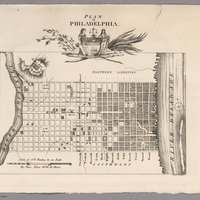
The oldest presbytery in North or South America is moving. Actually, the offices are relocating since it is hard to move a jurisdiction or the congregations within it. But the Presbytery of Philadelphia (PCUSA), founded in 1706, is moving from its Center City location at 22nd and Locust to the Mt. Airy neighborhood in the northwest section of the city.

One curious aspect of this move – aside from giving up a very handsome building and reasonably good location – is that no one seems to notice or care. A search at Google for news stories reveals that no editors, even religious ones, have the New World’s oldest presbytery on their horizon. But when the Mormons plan to build a Temple in Center City, well, now you’re talking news copy and readers.

Another consideration is what this move may indicate about the declining fortunes of the mainline Protestant churches. Back in 1989 the United Churches of Christ moved from its Manhattan offices to Cleveland. Nothing wrong with the latter city, and maybe the UCC staff were able to enjoy Lebron’s exploits (they sure beat the Knick’s recent performance). But I’m not sure an NBA game makes up in stature for headquarters in the Big Apple. Tim Keller likely agrees.

Presbyterians had actually begun the trend of denominational downsizing by leaving New York City’s high overhead and big britches reputation to bridge the gap between bureaucrats and regular church folk. After the 1983 merger of the UPCUSA (North) and the PCUS (South) into the present iteration of the PCUSA, the mainline denomination in 1988 gave up its New York City address for Louisville, the biggest city in the old border state of Kentucky. (Another consequence of the merger was that the denomination could not maintain both archival centers, the one in Philadelphia at the Presbyterian Historical Society and the one in Montreat, NC, at the Montreat Historical Society. In 2005 the denomination decided to move the southern materials to Philadelphia, where they are in very good hands but farther from the hands most willing to sort through them.)

Now the denomination’s oldest presbytery is moving its offices from the center of Philadelphia to one of its peripheral neighborhoods. The presbytery’s website gives no reason but the “for sale” sign on the old location suggests that cheaper real estate is a factor. Mt. Airy is a fine neighborhood but it is not Center City nor was it part of William Penn’s original boundaries for his “Holy Experiment.” The move is a significant development in the life of New World Presbyterianism. But no one seems to care. They don’t even know.