
 Mark Horne apparently thinks he has landed a damaging jab against 2k by ridiculing Jason Stellman’s point about the discontinuity between culture here and the new heavens and new earth – a point raised in Keith Mathison’s review of David VanDrunen’s new book, Living in God’s Two Kingdoms. Stellman wrote:
If my marriage to my wife will not survive into the age to come, then why would I think her wedding ring will? Sure, it’s a nice ring and very well-made, but it’s hardly a higher example of human productivity than our marriage is.
For what it’s worth, the absence of marriage in the new heavens and new earth would certainly seem to unravel arguments that look at redemption as the restoration of creation. If marriage existed as part of the created order and then vanishes in the glorified order, something is going on that seems to escape the average neo-Calvinist’s redemptive-historical horizon.
But Horne does not consider Stellman’s point for very long and rushes instead to his own – perhaps listening to too much Focus on the Family – about the difference that Christianity makes for marriages and child rearing. He writes:
If we use this principle for a generalized defense of R2K, then we must state that there are no such things as Christian marriages or Christian families. Jesus does not want us wasting our time talking about how husbands and wives should behave or raising their children according to God’s word. This is all a compromise of the Gospel and a confusion of law and grace. We should leave family issues to secular family counselors just as we should leave the economy to Bernanke.
(By the way, humans rear children; they raise cows. And I’ll take my chances with Bernake over Gary North running the economy.)
First, marriage is a legal status determined by the state. As such, Christian marriages do not exist unless we want to turn matrimony into a sacrament. But when you refuse the categories of holy, common, and profane, how else to make marriage meaningful except to baptize it?
Second, since marriage as an institution is not Christian but a creation ordinance that is open to all human beings (except for gay ones – lest anti-2k hysteria surface), then the issue is whether a Christian’s vocation is married or single. Christianity has to do with persons, not with institutions (other than the church). Christians who are married have clear instruction from Scripture about how they should conduct themselves as spouse or parent or both. But that does not mean that the institution of marriage (or the church for that matter) will survive in the new heavens and new earth. I mean, the Bible gives some instruction about the Lord’s Supper but does that mean we’ll still be observing that meal in remembrance of the Lord whom we see with our resurrected eyes?
Horne concludes with this whopper – the antithesis doesn’t come any more antithetical:
It is one or the other. Either you affirm that Jesus is “ruler of the kings of the earth†or you deny that it is “the Father, from whom every family in heaven and on earth is named.â€
Huh? Since when does denial of Jesus as ruler of the earth unseat him as King of Kings and Lord of Lords? This is where the literal mindedness of 2k’s critics is most revealing. They do not seem to have any conception for Christ ruling all things in different ways (you know, some as redeemer and others as creator and redeemer). Which means in the case of marriage that Christ rules all marriages, whether entered by believers or unbelievers. And those people who deny Christ as Lord are no less married than those who confess his name. To implicitly question the legitimacy of unbelievers’ marriages is to throw all conventions that support a measure of good social order to the wind. The implication of Horne’s antithesis is – if you don’t have Christ in your heart, be who you really are, a hell raiser. Since I’ve had hell raisers as neighbors, I much prefer those unbelievers who follow the order of creation even if they can’t identify the creator in a multiple choice test.
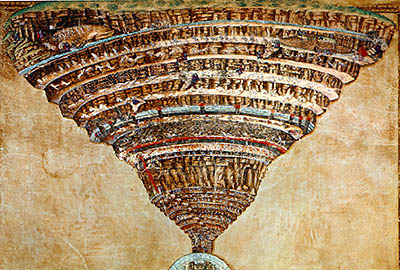
And speaking of hell, I wonder if it has ever occurred to 2k critics like Mark Horne that Christ is Lord of both Heaven and Hell, and that his rule in those places is markedly different. If Christ is indeed Lord of the cursed and the blessed, then it may be possible to imagine that Christ’s rule in a Christian home will be different from his sovereignty within a secular family. And if this is the case, then Christians need neither force non-believers to live like Christians nor inaugurate the eschaton by having the state start the judgments that Christ will execute when he returns. In other words, if Christians will simply follow what their Lord has told them to do – attend the means of grace, live quiet and peaceful lives, and glorify God and love neighbors in their work – Christ, who is Lord, will take care of the rest.
Uncanny how Christ does that without our ruling in his name.

 Old Life