Should a Reformed Protestant Receive Treatment at a Roman Catholic Hospital?

(From the Winter 2010 Nicotine Theological Journal)

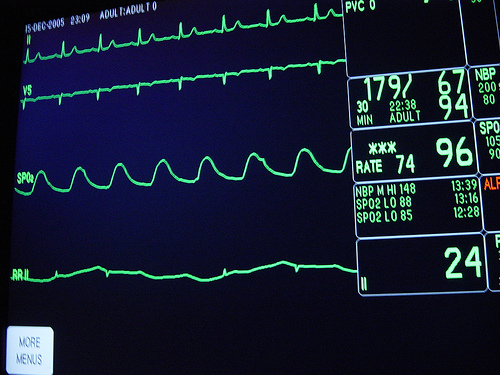
After a visit to my father at his local hospital, I had a worldview moment. What should have alerted me from the outset was the name of the place – St. Mary’s. But then I noticed that the spiritual services wing of the hospital had dropped off for him a brochure about their activities which was included with information about television channels and daily menus – talk about trivializing the eschaton. But the kicker was the crucifix in my dad’s ICU room. Shazzam!!! That’s a whole lot of idolatry for a man who is on a heart monitor.

But is Roman Catholic medicine really any different from Reformed medicine or even – dare I say – secular medicine. If worldviews go all the way down to the very tips of our toes, and if we can’t escape the claims of Christ in any parts of our lives, can I really look the other way in good conscience when entering a hospital room that displays an image of Christ on a cross?

And then there is the concern for quality of health care. If Abraham Kuyper was right that Roman Catholicism “represents an older and lower stage of development in the history of mankind” and if Protestantism occupies a “higher standpoint,” shouldn’t my dad try to find treatment at a Protestant hospital? Kuyper, by the way, wasn’t real complimentary of Roman Catholicism on science either.

It could be that I have once again misunderstood the claims of neo-Calvinism and that some algorithm exists for taking the gold of scientific advances from the dross of defective worldviews. But it could also be that the language of worldviews and the difference they make for every aspect of human existence is overdone, simply a rallying cry for inspiring the faithful, but not anything that would prevent my father from receiving treatment from unbelieving nurses employed by Roman Catholic administrators. Then again, the power of modernity is stunning, making all of those religious claims about connections between spiritual and physical reality look fairly foolish – as if a creed actually produces better medicine.

I mean no disrespect to the neo- Calvinists and their epistemological purity. But if they could help me out on this one, I’d be grateful. Does a Reformed worldview really make a difference for modern medicine and the ordinary decisions a sick believer must make in seeking a physician or hospital – under the oversight, of course, not of the elders but the insurance company?

A Common Complaint from W-wers

Carlton Wynne objects to natural law and its influence among Reformed Protestants:

I believe this aspect of the Natural Law theory in view–that people can reason their way to actionable truths apart from God’s special revelation–is too optimistic about the powers of unaided reason after the fall. The general revelation of God in nature and beneath conscience must be “carefully distinguished from the reaction that sinful man makes to this revelation” (Van Til). The apostle Paul says that unbelievers “suppress the truth” that they know (including the truth of their moral obligation to God), that they are, at root, “hostile to God” (Rom 8:7); that they have become “futile in their thinking” (Rom 1:21). They are, Paul says elsewhere, “darkened in their understanding, alienated from the life of God because of the ignorance that is in them, due to their hardness of heart” (Eph 4:18).

These are hard words, no doubt. But they point to one side of what has been called the “antithesis” between belief and unbelief, a moral and spiritual conflict of basic commitments that touch all that Christians and non-Christians think about and discuss. According to this Scriptural principle, fallen man is slavishly committed to his own moral autonomy, while Christians are to view all things under the Lordship of Christ and the light of His Word. This means that, at the deepest level, there is no mutually acknowledged common ground between Christian and non-Christian. And this, it seems to me, leaves NL proponents calling for peace when there is no peace.

Fine.

If true, do you then only go to Christian physicians?

And if true, why would you ever let non-Christians into positions of political authority? If you assert the antithesis you wind up theonomic.

Will “common grace” really explain why you, a person who believes in the anti-thesis, choose a non-Christian physician or politician over Christian ones?

With Friends Like These

Matt Tuininga qualifies and then insinuates:

we cannot simply take Calvin’s thought and apply it to our own time without substantial reflection. Calvin assumed the existence of Christendom. We inhabit a pluralistic society increasingly devoted to secular liberalism. There are self-proclaimed two kingdoms advocates today who would claim the two kingdoms distinction calls us to keep religion and politics entirely separate, as if they are hermetically sealed realms that have nothing to do with each other. Yet such is clearly a distortion of Calvin’s thought, which is decisively rooted in the New Testament’s rich distinction between the present age and the age to come.

Does he have Machen in mind?

In the second place, you cannot expect from a true Christian church any official pronouncements upon the political or social questions of the day, and you cannot expect cooperation with the state in anything involving the use of force. Important are the functions of the police, and members of the church, either individually or in such special associations as they may choose to form, should aid the police in every lawful way in the exercise of those functions. But the function of the church in its corporate capacity is of an entirely different kind. Its weapons against evil are spiritual, not carnal; and by becoming a political lobby, through the advocacy of political measures whether good or bad, the church is turning aside from its proper mission. . . .

To advance the conversation, why not comment on whether the deaconate should do medicine as Calvin recommended:

The fourth order of ecclesiastical government, namely, the deacons

There have always been two kinds of these in the early Church. One has to receive, distribute and care for the goods of the poor (i.e. daily alms as well as possessions, rents and pensions); the other has to tend and look after the sick and administer the allowances to the poor as is customary. [In order to avoid confusion], since we have officials and hospital staff, [one of the four officials of the said hospital should be responsible for the whole of its property and revenues and he should have an adequate salary in order to do his work properly.]

Concerning the hospital

Care should be taken to see that the general hospital is properly maintained. This applies to the sick, to old people no longer able to work, to widows, orphans, children and other poor people. These are to be kept apart and separate from others and to form their own community.

Care for the poor who are scattered throughout the city shall be the responsibility of the officials. In addition to the hospital for those visiting the city, which is to be kept up, separate arrangements are to be made for those who need special treatment. To this end a room must be set apart to act as a reception room for those that are sent there by the officials..

Further, both for the poor people in the hospital and for those in the city who have no means, there must be a good physician and surgeon provided at the city’s expense…

As for the plague hospital, it must be kept entirely separate.

Instead of looking at the theory (theology), why not look at the circumstances and sciences that have differentiated a host of life’s affairs so that the church and religion is one among many spheres of life? But Lordship of Christ folks think, like Gregory VII during the Investiture Controversy, that the direct pipeline of Christianity to God trumps most spheres so that Christians have authority in medicine, biology, history, and dog-catching by virtue of — what? — faith.

2kers want answers. Simply repeating inspiring calls to engage the world doesn’t give them.

Should a Reformed Christian Receive Treatment at a Roman Catholic Hospital?

heart-monitorAfter a visit to my father at his local hospital, I had a worldview moment. What should have alerted me from the outset was the name of the place – St. Mary’s. But then I noticed that the spiritual services wing of the hospital had dropped off for him a brochure about their activities which was included with information about television channels and daily menus – talk about trivializing the eschaton. But the kicker was the crucifix in my dad’s ICU room. Shazzam!!! That’s a whole lot of idolatry for a man who is on a heart monitor.

But is Roman Catholic medicine really any different from Reformed medicine or even – dare I say – secular medicine. If worldviews go all the way down to the very tips of our toes, and if we can’t escape the claims of Christ in any parts of our lives, can I really look the other way in good conscience when entering a hospital room that displays an image of Christ on a cross?

And then there is the concern for quality of health care. If Abraham Kuyper was right that Roman Catholicism “represents and older and lower stage of development in the history of mankind” and if Protestantism occupies a “higher standpoint,” shouldn’t my dad try to find treatment at a Protestant hospital? Kuyper, by the way, wasn’t real complimentary of Roman Catholicism on science either.

It could be that I have once again misunderstood the claims of neo-Calvinism and that some algorithm exists for taking the gold of scientific advances from the dross of defective worldviews. But it could also be that the language of worldviews and the difference they make for every aspect of human existence is overdone, simply a rallying cry for inspiring the faithful, but not anything that would prevent my father from receiving treatment from unbelieving nurses employed by Roman Catholic administrators. Then again, the power of modernity is stunning, making all of those religious claims about connections between spiritual and physical reality look fairly foolish – as if a creed actually produces better medicine.

I mean no disrespect to the neo-Calvinists and their epistemological purity. But if they could help me out on this one, I’d be grateful. Does a Reformed worldview really make a difference for modern medicine and the ordinary decisions a sick believer must make in seeking a physician or hospital – under the oversight, of course, not of the elders but the insurance company.

Postscript: yes, I am preoccupied with neo-Calvinism. Shouldn’t Keller’s fans be happy? Oh, wait a minute.