Making Sense of the PCA

From the Archives: Nicotine Theological Journal (Spring, 2009)

Making Sense of the PCA

I have been a minister of the Presbyterian Church in America from its founding. I attended the Convocation of Sessions, the Advisory Convention, and the first General Assembly in 1973. I have not been what one would call “a player” over the past 30 years, but I have been “involved.” I was one of the early Reformed University Ministry (RUM) campus ministers, had a full term as a member of the Committee on Mission to the World, and served on the Creation Study Committee. I edited work for children’s curriculum for Great Commission Publications. I have traveled to Japan, Philippines, Ukraine, France, and Turkey in connection with MTW mission work.

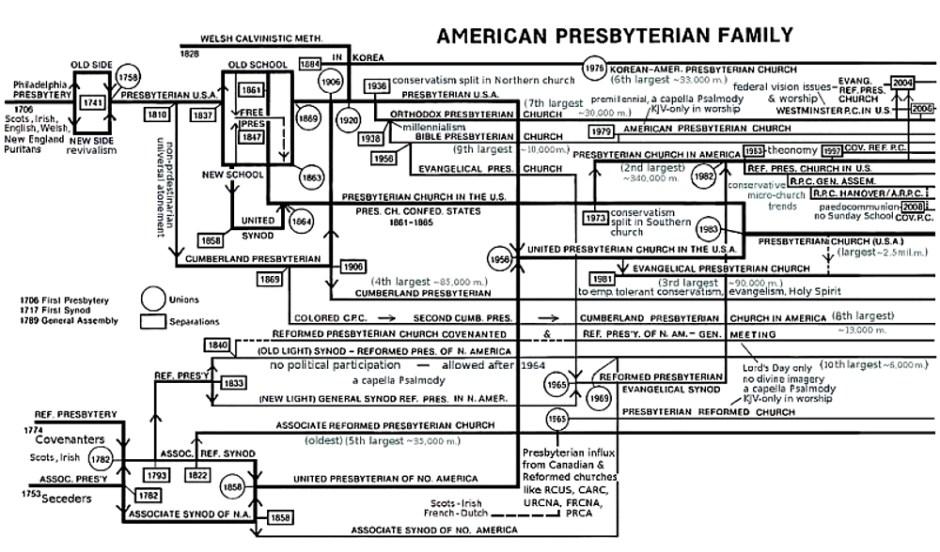
As our denomination has experienced recent tensions about confessional subscription, our mission, and worship, I have struggled to understand how we got here. My working hypothesis is that the PCA is a majority New Side/New School Presbyterian Church, with a substantial minority that is either New Side/Old School or Old Side/Old School.

The differences between the Old and New Side Presbyterians focused primarily on their differing views of revivals. The New Side believed the revivals or George Whitefield, which first disturbed and then converted sinners within and without the church and awakened and stirred to holiness and action true believers, had biblical precedents. Itinerant ordained and non-ordained speakers were often the instruments of revival. Religious experience was intensely personal and greatly concerned with whether or not one had been genuinely converted.

Old Siders had a higher view of the church as an institution, more confidence in the work of settled, ordained ministers carrying out the ordinary ministry of word and sacrament, and a greater emphasis on corporate religious life. Tensions over subscription pushed New Siders toward a looser view, with the Old Side arguing for strictness. Neither side was monolithic.

If the First Great Awakening balkanized the Old and New Sides, the Second Great Awakening returned the favor for the Old and New School Presbyterians. Despite this similarity, the major issue in the nineteenth century was not revivalism but confessionalism. Old Schoolers had differing appraisals of the earlier awakenings, but they shared a growing unease about the Second Great Awakening with its Arminian theology and its new measures.

In order to defend the theology of the Second Awakening New Schoolers had to take a broad view of the Westminster Standards and a much weaker view of what was involved in an officer’s ordination vows. The New School strongly favored mission over theology while the Old School held that theology defines and directs mission. Because of its emphasis on mission the New School favored working with parachurch societies to accomplish evangelism and missions, while the Old School believed the church alone was responsible for spreading the gospel and building up the saints. Part of the mission-orientation of the New School was its commitment to engage social issues, such as slavery and temperance, as part of an effort to Christianize America. Old Schoolers countered with the spirituality of the church. Not surprisingly, the New School had a low view of the church while the Old School maintained and defended jure divino Presbyterianism.

How does this explain the PCA? In my view, the majority of the PCA consists of three groups all of which share a New Side/New School orientation: the Columbia Seminary founding generation, the Reformed Presbyterian Church, Evangelical Synod (RPCES) influx, and the rising leadership consisting primarily of large urban/metropolitan church pastors and denominational executives.

Most of the founders of the PCA had been educated at the most conservative of the PCUS (Southern Presbyterian) seminaries in the 1950s and 1960s. While Columbia could trace her heritage all the way back to Thornwell, the most eloquent Southern Old School voice, little remained of Thornwell’s influence (William Childs Robinson being the exception) by the time PCA leaders received their training at Columbia. Students were considerably more conservative than the faculty at Columbia, but they were never much exposed to the old Confessional orthodoxy of the Southern Church. They believed in the Bible, in “the fundamentals,” in the gospel, and in evangelism and missions. They took their ordination vows with sincerity but they did not consider how those vows bound them to the Westminster Confession. In fact, many of these brothers were influenced by teachings that were inconsistent with Calvinism. I think of semi-Pelagianian, Invitation System revivalism, dispensationalism, and perfectionism. In addition, they were suspicious of church institutions and authority (having witnessed and experienced the corruption and abuse of the mainline Southern church) and were eager to cooperate with any evangelicals to win the world for Christ, maybe even “in this generation.”

It was not clear at the time of Joining and Receiving (J&R) in 1982 what the impact of the influx of the RPCES would be, but time has proved that it broadened and strengthened the New Side/New School segment of the PCA. The RPCES was the result of the union of the dwindling Reformed Presbyterian Church in North America, General Synod (a “new light” break-off from the Covenanters), and the larger Evangelical Presbyterian Church (from the McIntire wing of 1936.) Although RPCES was more Reformed and Presbyterian than McIntire’s Bible Presbyterians, its roots remained New School, and, though there was some indication the RPCES might move toward Princeton Old School positions, this did not materialize. The RPCES was and remains New Side/New School and so injected into the PCA another dose of New Side/New Schoolism.

What then of the rising leadership? The one word, which best catches the outlook and agenda of this group, consisting primarily of large urban pastors and denominational executives, is “missional.” In the New Side/New School tradition, mission is the church’s defining characteristic and responsible for its vitality and unity.

This “missional” orientation has been notably evident in recent worship services at the General Assembly. Mission requires us to rethink what it means to be church and to sit loose on doctrinal formulations, on polity issues, on how we worship, and on what the nature of the mission of the church is, so that as we understand more of this “post-everything” culture and figure out how to respond, we can make the necessary adjustments to further the church’s mission. This is decidedly the New Side/New School outlook, dressed in new clothes, but with the substance of the body unchanged.

This represents the majority of the PCA’ teaching and ruling elders. A majority holds to the New Side/New School type of Presbyterianism. At the same time a substantial minority in our church, with Old and New Side proclivities, holds to Old School Presbyterianism. This means that issues of doctrine, polity, subscription, worship, and mission remain live ones for the foreseeable future. The soul of the church is at stake for both the majority and minority.

William H. Smith is pastor of Covenant Presbyterian Church (PCA) in Louisville, Mississippi.
Between Whitefield and the Vatican

A winsome Oldlifer reminded me yesterday of how troubling the First Great Pretty Good Awakening was and is. He was referring specifically to George Whitefield’s sermon on Romans 14:17, “The Kingdom of God.” There Whitefield does exactly what John Williamson Nevin detected when he experienced a revival, namely, the outlook of revivalists that the church and her ordinances “are more a bar than a help to the process” of becoming a Christian.

Here are three points that Whitefield makes:

The kingdom of God, or true and undefiled religion, does not consist in being of this or that particular sect or communion.

. . . neither does [the kingdom of God] consist in being baptized when you were young. . .

. . . neither does it consist in being orthodox in our notions, or being able to talk fluently of the doctrines of the Gospel.

These are sentiments that explain why Whitefield can express the sort of disregard for denominational differences that would become common among Protestants in the so-called ecumenical movement and continue to afflict The Gospel Coalition (and which by the way would make mid-twentieth-century mainline historians and ecumenistsfans of the First Great Pretty Good Awakening):

. . . there are Christians among other sects that may differe from us in the outward worship of God. Therefore, my dear friends, learn to be more catholic, more unconfined in your notions; for if you place the kingdom of God merely in a sect, you place it in that in which it does not consist.

Whitefield is arguably one of the biggest problems facing confessional Protestants because his effort to do justice to the Spirit winds up doing an injustice to the Word and the ordinances the Bible prescribes. Consequently, when confessional Protestants become sticklers about worship or church government or even doctrine (as we tend to do with Gospel Coalition types), then followers of Whitefield construe us as as being liberal Protestants (only protecting the order of the church) or even Roman Catholic (having too high a view of the church).

Seeing support for Whitefield among conservative Presbyterians (Iain Murray, for instance, but the vast majority of Presbyterians in the U.S.A. after the Plan of Union, 1758) who subscribe the Westminster Standards, is equally frustrating since the evangelist took dead aim at the confession’s teaching (whether he knew it or not):

2. The visible church, which is also catholic or universal under the gospel (not confined to one nation, as before under the law), consists of all those throughout the world that profess the true religion; and of their children: and is the kingdom of the Lord Jesus Christ, the house and family of God, out of which there is no ordinary possibility of salvation.

3. Unto this catholic visible church Christ hath given the ministry, oracles, and ordinances of God, for the gathering and perfecting of the saints, in this life, to the end of the world: and doth, by his own presence and Spirit, according to his promise, make them effectual thereunto. (ch. 25)

So the line confessional Protestants walk is the real via media, between the enthusiasts who justify what they do by appealing to the Spirit (without the Word) and the Romanists (who rarely let the Spirit get in the way of the magisterium). The Reformation was about Word and Spirit, about ordinances and godliness, about a churchly pattern of piety. It is too formal for Whitefield and too loose for Rome. But that’s where we are — in the moderate middle, plain, vanilla, simple, buttoned-down (but never perfect).

Two Kingdom Tuesday: Machen Was All Wet

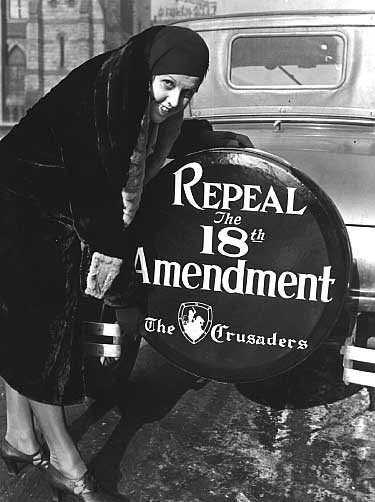
The resolution endorsing the Eighteenth Amendment or the Volstead Act was introduced to the Presbytery of New Brunswick at the very end of the meting on April 13, 1926. The attendance, which had been large during the early part of the session, had dwindled until only a very few persons were present – y estimate would be ten or twelve, exclusive of the officers, though I believe someone else estimates the number at about five. Under these conditions, the resolution was put to a viva voce vote. I voted “No”; but I did not speak to the motion or in any way ask that my vote should be recorded. . . .

It is a misrepresentation to say that by this vote I expressed any opinion on the merits of the Eighteenth Amendment or the Volstead Act – and still less on the general question of Prohibition. On the contrary, my vote was directed against a policy which places the church in its corporate capacity, as distinguished from the activities of its members, on record with regard to such political questions. And I also thought it improper for so small a group of men as were then in attendance to attempt to express the attitude of a court of the church with regard to such an important question. . . .

Such are the facts about my vote. I desire now to say one or two things about my attitude regarding the issues involved.

In the first place, no one has a greater horror of the evils of drunkenness than I or a greater detestation of any corrupt traffic which has sought to make profit out of this terrible sin. It is clearly the duty of the church to combat this evil

With regard to the exact form, however, in which the power of civil government is to be used in this battle, there may be different of opinion. Zeal for temperance, for example, would hardly justify an order that all drunkards should be summarily butchered. The end in that case would not justify the means. Some men hold that the Eighteenth Amendment and the Volstead Act are not a wise method of dealing with the problem of intemperance, and that indeed those measures, in the effort to accomplish moral good, are really causing moral harm. I am not expressing any opinion on this question now, and did not do so by my vote in the Presbytery of New Brunswick. But I do maintain that those who hold the view that I have just mentioned have a perfect right to their opinion, so far as the law of our church is concerned, and should not be coerced in any way by ecclesiastical authority. The church has a right to exercise discipline where authority for condemnation of an act can be found in Scripture, but it has no such right in other cases. And certainly Scripture authority cannot be found in the particular matter of the Eighteenth Amendment and the Volstead Act.

Moreover, the church, I hold, ought to refrain from entering, in its corporate capacity, into the political field. Chapter XXXI, Article iv, of the Confession of Faith reads as follows:

Synods and councils are to handle, or conclude nothing, but that which is ecclesiastical: and are not to intermeddle with civil affairs which concern the commonwealth, unless by way of humble petition in cases extraordinary; or, by way of advice, for satisfaction of conscience, if they be thereunto required by the civil magistrate.

This section, I think, established a very great principle which was violated by the Presbyter of New Brunswick. . . .

In making of itself, moreover, in so many instances primarily an agency of law enforcement, and thus engaging in the duties of the police, the church, I am constrained to think, is in danger of losing sight of its proper function, which is that of bringing to bear upon human soul the sweet and gracious influences of the gospel. Important indeed are the function of the police, and members of the church, in their capacity as citizens, should aid by every proper means within their power in securing the discharge of those functions. But the duty of the church in its corporate capacity is of quite a different nature. (J. Gresham Machen, “Statement on the Eighteenth Amendment”)