New Year's Sobrieties

In observance of the seventy-seventh anniversary of J. Gresham Machen’s death (Jan. 1, 1937), what follows is an excerpt from a Westminster Seminary commencement address (1931) that reflects a measure of sympathy for an otherworldly Roman Catholicism that embodied it in significant cultural expressions, and has the added benefit of exposing the provincialism of evangelical Manhattanophiles.

About one week ago I stood on the one hundred and second story of the great Empire State Building in the very city of New York. From there I looked down upon a scene like nothing else upon this earth. I watched the elevated trains, which from that distance seemed to be like slow caterpillars crawling along the rails; I listened to the ceaseless roar of the city ascending from a vast area to that great height. And I looked down upon that strange city which has been created on Manhattan Island within the last five or ten years — gigantic, bizarre, magnificently ugly. It seemed like some weird, tortured imagination of things in another world. I came down from that building very greatly impressed.

But as I reflected upon what I had seen, there came into my mind the memory of other buildings that I had contemplated in the course of my life. I thought of an English cathedral rising from the infinite greenness of some quiet cathedral close and above the ancient trees. I thought of the west facade of some continental cathedral, produced at a time when Gothic architecture was not what it is today, imitative and cold and dead, but a living expression of the human soul; when every carving in every obscure corner, never perhaps to be seen by human eye, was an act of worship of Almighty God.

As I revived these memories, certain thoughts came into my mind. The modern builders, I thought, can uplift the body; they uplifted my body in express elevators twelve hundred and forty feet in record time. But whereas the modern builders, in an age of unbelief, can uplift thee body, the ancient builders, in an age of faith, could uplift the soul. As one stands before the tower of a medieval cathedral — with one century laying the foundation there below, another century contributing its quota in the middle distance, and another century bringing the vast conception to its climax in a spire greater than the twelve hundred and forty feet of the Empire State Building; one is uplifted not by some rebellious tower of Babel seeking to reach unto heaven by human pride, but rather on the wings of faith, up and up until one seem to stand in the very presence of the infinite God.

I am no medievalist, my friends; and I do not want you to be medievalists. I rejoice with all my heart in the marvelous widening of our knowledge of this mysterious universe that has come in modern times; I rejoice in the wonderful technical achievements of our day. I trust that you, my brethren will never fall into the “Touch not, taste not, handle not” attitude which Paul condemned in his time; I hope you will never fall into that ancient heresy of forgetting that this is God’s world and that neither its good things nor its wonders should be despised by those upon whom, through God’s bounty, they have been bestowed. I trust that you will consecrate to God not an impoverished man, narrowed in interests, narrowed in mind and heart, but a man with all God-given powers developed to the full.

Moreover, I cherish in my soul a vague yet glorious hope — the hope of a time when these material achievements, instead of making man the victim of his own machines, may be used in the expression of some wondrous thought. There may come a time when God will send to the world the fire of genius, which he has taken from it in our time, and when he will send something far greater than genius — a humble heart finding in his worship the highest use of all knowledge and of all power. There may come a time when men will wonder at their former obsession with these material things, when they will see that these modern inventions in the material realm are in themselves as valueless as the ugly little bits of metal type in a printer’s composing room, and that they true value will be found only when they become the means of expressing some glorious poem. (“Consolations in the Midst of Battle,” Selected Shorter Writings, 203-205)

If You Needed More Reasons to Resent New York City

Upstate New York is lovely. Long Island has its charms. Even New York City has appeal — until the boosters start whooping. Christian boosters are even tougher to take because of that little matter of pride. This leaves me wondering if New York exceptionalism is worse than American exceptionalism. For the history of Presbyterianism, New York wins hands down. All of American Presbyterianism’s major controversies started over New York’s excesses — Old Side-New Side (Edwards and Tennent), Old School-New School (Barnes), fundamentalist-modernist (Fosdick), Old Life-New Life (Keller).

But now we hear that New York is experiencing a spiritual renaissance:

As the 80’s came to a close, a man considered by many to be one of the most influential pastors of our time answered a call to New York City to start a church: Tim Keller planted Redeemer Presbyterian, hailed as one of the most vital congregations in New York City.

By that time, the abortion rate in New York City had skyrocketed. Through the planting of Redeemer, a need for a crisis pregnancy center was identified. Subsequently, Midtown Pregnancy Support Center was founded. Other Redeemer members saw the need for a classical Christian school in New York City. So, the Geneva School was formed. That brought families into the city that wanted their children to attend that school.

As the year 2000 neared, New Yorkers saw more than the turn of a new century; they found ways to intellectually examine faith.

The King’s College opened its doors in a 34,000 square foot space the Empire State Building—after a short period of closure—in 1999 (the school is now located in the financial district). This placed the next generation of Christian thinkers in the hub of New York—and American—culture. Because of the placement of The King’s College, hundreds of young people are flooding the churches in the Big Apple.

In 2000, Metaxas started Socrates In the City, a monthly forum that facilitates discussion around “the bigger questions in life.” This event has seen growth over the 13 years in existence, and consistently attracts what Metaxas calls “The cultural elite.” Topics covered at these forums include: the existence of evil, the implications of science in faith, and the role of suffering.

In 2001, New Yorkers saw the terrorist attacks at the World Trade Center. “These events focused hearts on New York City,” said Metaxas. “This caused a lot of people to move to the city and start churches and other ministries.”

A post-September 11 New York City would see the emergence of many new churches, such as Journey in 2002, Trinity Grace in 2006, and Hillsong NYC in 2011—representing a wide variety of theological and worship styles. More parachurch organizations, like Q, have popped up. Founded by Gabe Lyons in 2007, Q exists to help church and cultural leaders engage the Gospel in public life.

“Now, there are so many churches in town, I don’t know the names of all of them. I know that the Lord is in all of this,” said Metaxas. “I am convinced we are on the verge of some kind of faith renaissance in New York City that will blow a lot of minds.”

A curious feature of this story is that the writer is Joy Allmond, “a web writer for the Billy Graham Evangelistic Association, and a freelance writer. She lives in Charlotte, N.C., with her husband, two teenage stepsons and two dogs.”

No offense to Ms. Allmond, but I’d take her piece a little more seriously (though mainstream journalists usually put religion stories in the features sections where tough questions seldom go) if she actually lived and breathed in New York. On the ground in the Big Apple, the story is not Christianity but the new mayor, the Democrat, Bill deBlasio, and there the story even has a religious dimension, though Keller, Metaxas, and Thornbury are nowhere to be found. (Parenthetically, World magazine did report on the Republican loser, Joe Lohta, and his meeting with Tim Keller in September.)

First the numbers:

Protestants were the largest religious segment of voters in the Democratic primary, making up 31% of the voters. Because evangelicals make up the great majority of Protestants in the city, most likely the large majority of the Protestant Democratic voters are evangelical Protestants. Over two-thirds of evangelical Protestants are African American or Hispanic. Over one-third of evangelical Protestants reside in Brooklyn.

Catholic voters were the next largest religious segment of voters in the Democratic primary, making up 25% of the voters. The Catholic voters were less likely to vote in the primary elections. Most surveys have found that Catholics make up around 40-44% of the city’s population. Catholic charismatics, who were endorsed by Pope Paul II, are similar to Pentecostal Protestants in their values and voting behavior.

Jews were the third largest segment. Although Jews make up perhaps 10% of NYC’s population, 19% of the Democratic primary voters identified themselves as Jewish. The proportion of Jews who vote is significantly higher than that for the other main religious groups.

Was it a decisive turn to the left?

So de Blasio did not win the votes of unprecedented number of New Yorkers. And many of those who did vote for him also supported Bloomberg. That doesn’t mean that they like everything Bloomberg did. But there’s no evidence here of a progressive tsunami.

What about de Blasio’s career? The tabloid press paid a great deal of attention to de Blasio’s visits to communist Nicaragua and the Soviet Union as a young man. More recently, however, de Blasio worked as a HUD staffer under Andrew Cuomo, and as campaign manager for Hillary Clinton. De Blasio took liberal positions during his tenure on the city council, particularly on symbolic issues involving gay rights. But this is not the resume of a professional radical.

It’s true that de Blasio made “a tale of two cities” the central theme of his campaign. As many observers have pointed out, however, he lacks the authority to enact his signature proposals: a tax increase on high earners, to be used to fund universal pre-K. Nothing’s impossible, but the chances of the state legislature approving such a tax hike are slim. The same goes for several of de Blasio’s other ideas, including a city-only minimum wage higher than the state’s minimum and the issuance of driver’s licenses to illegal immigrants.

The real issues under the de Blasio’s administration will be matters over which the mayor has some direct control. That means, above all, contracts with city workers, and policing. Will de Blasio blow the budget to satisfy public employee unions? And will he keep crime under control after eliminating stop-and-frisk ?

Where is New York City’s spiritual renaissance in all this?

For one thing, Keller focused his church plant on the city’s urban professionals, a class of people who, by definition, don’t necessarily mesh well with either the city’s dwindling stock of middle-class earners, or its increasing number of people of even lowlier social standing. If de Blasio is going to start playing class warfare, Redeemer’s target demographic may tire of being perceived as an economic liability.

For another, ministry in urban markets already struggles with the intense impermanence of career-chasing members who transition into and out of cities at the behest of job opportunities. Should de Blasio give New York’s corporate citizens a cold shoulder, there’s little keeping many companies in the city other than the recruiting edge they get from Gotham’s hedonistic urban allure. Such intangibles could become prohibitive quickly if companies are forced to re-evaluate their balance sheets.

Plus, socially liberal urban politicians are not known for embracing quality-of-life issues as much as their suburban counterparts are, or for their crime-fighting discipline, or their concern for traditional, proven educational practices in public schools. As it is, private schools in New York can cost more than $40,000 per year per pupil, demand is so great.

Indeed, you’d have to be an exceptionally devoted – and brazenly idealistic – New Yorker to not be concerned that the Big Apple’s rewards risk renewed marginalization under de Blasio’s management.

Although it’s not exactly a sin to increase taxes to pay for pre-K programs, or lawyers for renters going to Housing Court, such tactics do not represent a mindset of thrift, expediency, and personal responsibility when a city’s budget already requires astoundingly high tax rates. Such proposals by de Blasio indicate that just as Giulianni and Bloomberg might have given too much leeway to certain business leaders, a renewed emphasis on social liberalism may undermine the city’s economic vitality and endorse certain lifestyles that pose an economic liability for taxpayers.

There’s little in de Blasio’s manifesto that doesn’t presume individual citizens to be more righteous than those they may be accusing of wrongdoing. If equity is something voters thought was missing in the way Giulianni and Bloomberg governed, de Blasio is simply turning the tables towards a different sort of inequity. An inequity that likely will be much more expensive to maintain.

It’s an inequity that could also validate the suspicions that New York’s native poor have towards interloping rich whites, the type of people attending Keller’s various congregations throughout Manhattan. It’s also an inequity that banks on charity not as an opportunity for advancement, but as simply another enabler for attitudes and lifestyles that perpetuate poverty cycles instead of break them.

None of this adds up to a decisive point about urban ministry or the alleged renaissance in Gotham. It does indicate that the hype surrounding Christians in New York City is far removed from the realities of the very city for which they perform cartwheels. If they were spirituality of the church guys, then being silent about the city’s politics and economics in cheers for the revival might make sense. Even then, just as Charles Finney figured, we have natural ways of explaining what appears to be spiritual vitality. Reporters from North Carolina, however, aren’t going to help with those explanations.

A Saturday Morning Joke

Why is Redeemer PCA, NYC, not in the Gospel Coalition’s Church Directory?

Because TKNY is a brand and the Coalition is only an outlet.

Not sure that is as funny as “how many Teamsters does it take to change a light bulb? Ten, you got a problem with that?” But it was a curious discovery today when in response to a friend’s email about churches in NYC for a relative living there, I looked at the OPC’s church directory (none in Manhattan) and then went kicking and screaming to the Coalition’s website to look at the Church Directory. I assumed Keller’s congregation would be there but that I might find other evangelical congregations downtown. I was surprised to see that Redeemer was not there.

Maybe the directory is not up to date. Of course, the Coalition is comprised of individuals whose congregations need not be part of the allies. But a search at Redeemer’s website for TGC shows only one hit. So it looks like my conclusion is sound, even if the joke is not.

This points to another curious feature of Tim Keller’s status in the Presbyterian and evangelical worlds. Part of the point I tried to make in Engaging with Keller was that he does not fit in with the rules or expectations of his Presbyterian communion. It appears the same is true of the Gospel Coalition. That would seem to put Keller in John Wesley territory where the world is his parish.

Shouldn't You Let Others Say This?

While Detroit burns, it’s heady times in the Big Apple (even though the editors at New Yorker and New York Review of Books haven’t received the press release):

A good friend of mine, Greg Thornbury, says we need to learn how to change culture from the CENTER of culture—not just from the margins. And where do we find the center of culture? Places like Hollywood and New York City, where I live.

Greg, to my great delight, was recently appointed president of The King’s College, an evangelical school located in the heart of New York City. It’s a small college—just 500 or so students—but its new president may be onto something big.

And King’s is important to the spread and influence of Christianity. Why? Because, as Thornbury explains, “Movements do not typically progress beyond or rise above the defining academic institutions of their cause.” And “the most important and strategic [colleges] in this country are located in or near major urban centers. But for some reason, Christian higher education does not seem to have gotten this message.”

Many Christian schools are, instead, tucked away in small towns away from centers of influence—that’s not a criticism, just an observation.
Thornbury echoes the teaching of sociologist James Davison Hunter, who writes that real cultural change won’t happen without strong links between networks of top-drawer intellectuals and leaders. Astonishingly, in the last decade or so, these links have begun to form among evangelicals right here in New York City—a place not exactly known for being a hotbed of evangelical fervor. Greg calls the formation of these links “a remarkable and unprecedented renaissance of Christian life and thought.”

As an example, we see Tim Keller’s hugely popular Redeemer Church—the kind of evangelical church that nobody thought could flourish in the Big Apple. It’s attended by many of the city’s movers and shakers; and then there’s Socrates in the City, a forum for busy professionals to help them examine life’s big questions, founded by yours truly.

Greg also reminds us of the importance of Christians in the arts. “At the level of high culture,” Greg notes, “the people that shape the ideas that wind up becoming a worldview are people in the arts, [as well as] people in the university.” It may surprise you to learn that New York has its share of Christian artists—there’s my friend Mako Fujimura, and my friend, the writer Sally Lloyd-Jones. There’s also Carolyn Copeland, producer of the off-Broadway hit “Freud’s Last Session,” and who is now working on a Broadway show about John Newton, the former slave-trader and author of “Amazing Grace.” Oh yes, she’s also a friend!

Even if (BIG I BIG F) it were true, this is unbecoming. But who will intervene when the New Yorkers are so high on themselves?

Two Kingdoms, Five Burroughs (obsolete variation of borough)

From a real East Coast correspondent came this story about Orthodox Jews in Brooklyn taking modesty into their own hands, better their own furrowed brows:

The Brooklyn shopkeeper was already home for the night when her phone rang: a man who said he was from a neighborhood “modesty committee” was concerned that the mannequins in her store’s window, used to display women’s clothing, might inadvertently arouse passing men and boys.

In many neighborhoods, a store owner might shrug off such a call. But on Lee Avenue, the commercial spine of Hasidic Williamsburg, the warning carried an implied threat — comply with community standards or be shunned. It is a potent threat in a neighborhood where shadowy, sometimes self-appointed modesty squads use social and economic leverage to enforce conformity.

The owner wrestled with the request for a day or two, but decided to follow it. “We can sell it without mannequins, so we might as well do what the public wants,” the owner told the manager, who asked not to be identified because of fear of reprisals for talking.

In the close-knit world of ultra-Orthodox Judaism, community members know the modesty rules as well as Wall Street bankers who show up for work in a Brooks Brothers suit. Women wear long skirts and long-sleeved, high-necked blouses on the street; men do not wear Bermuda shorts in summer. Schools prescribe the color and thickness of girls’ stockings.

The rules are spoken and unspoken, enforced by social pressure but also, in ways that some find increasingly disturbing, by the modesty committees. Their power is evident in the fact that of the half dozen women’s clothing stores along Lee Avenue, only one features mannequins, and those are relatively shapeless, fully clothed torsos.

On the one hand, it is another indication of the way that ancient faiths adapt or don’t adapt to the diversity and freedoms of modern society, right there with Muslims advocating sharia law and theonomists supporting the Old Testament. On the other hand, it is also a case of a religious community exercising the freedom of association, which includes defining who is in and practicing the faith, and who isn’t.

Not sure what more to say.

What A Turkey! Part II: Was Paul a Failure?

Tourists in Turkey cannot help but be amazed by the collected remains of Ephesus. It is of course a place haunted by the apostle Paul who stirred up much opposition from the idol makers who worked for the temple of Demetrius. It is also the place where Timothy received two letters from Paul. Our group was even privileged to visit a cave (according to legend) where Paul lived, possibly to avoid the antagonism of the Ephesians. Ephesus is also the largest archaeological site featuring Greek and Roman remains in Turkey (I think). The reason has something to do with Ephesus being the fourth largest city in the Roman Empire at the time of Paul’s ministry.

What is striking today is how much Ephesus has changed and how little Christian presence is evident. Thoughts about the remains of New York City in 3500 AD come to mind. Will any of the foundations, facades, subways, sewers, or beams remain of the city’s structures for future archaeologists? What happens if global warming floods Manhattan and leaves Harlem as the only point above water? And will the inhabitants of the area we now call New York live there? Will they have moved to Buffalo? And will they be Christian?

The transformationalists don’t seem to think about cultural decay, archaeological ruins, or shifting populations. They seem to think that establishing the kingdom of God here and now means that what they do in the name of Christ in changing a city’s culture will last. But if Paul is any example, the work that he did lasted only to the extent that he proclaimed the gospel and established a pattern for the churches to proclaim that message and disciple believers. Chances are most transformationalists would judge Paul a success. If they ever visited Ephesus they’d likely have a different opinion, unless they changed their minds about the nature of transformation and how the kingdom really grows.

Does Anyone in the United States Care about Presbyterianism?

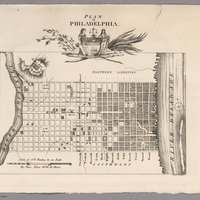
The oldest presbytery in North or South America is moving. Actually, the offices are relocating since it is hard to move a jurisdiction or the congregations within it. But the Presbytery of Philadelphia (PCUSA), founded in 1706, is moving from its Center City location at 22nd and Locust to the Mt. Airy neighborhood in the northwest section of the city.

One curious aspect of this move – aside from giving up a very handsome building and reasonably good location – is that no one seems to notice or care. A search at Google for news stories reveals that no editors, even religious ones, have the New World’s oldest presbytery on their horizon. But when the Mormons plan to build a Temple in Center City, well, now you’re talking news copy and readers.

Another consideration is what this move may indicate about the declining fortunes of the mainline Protestant churches. Back in 1989 the United Churches of Christ moved from its Manhattan offices to Cleveland. Nothing wrong with the latter city, and maybe the UCC staff were able to enjoy Lebron’s exploits (they sure beat the Knick’s recent performance). But I’m not sure an NBA game makes up in stature for headquarters in the Big Apple. Tim Keller likely agrees.

Presbyterians had actually begun the trend of denominational downsizing by leaving New York City’s high overhead and big britches reputation to bridge the gap between bureaucrats and regular church folk. After the 1983 merger of the UPCUSA (North) and the PCUS (South) into the present iteration of the PCUSA, the mainline denomination in 1988 gave up its New York City address for Louisville, the biggest city in the old border state of Kentucky. (Another consequence of the merger was that the denomination could not maintain both archival centers, the one in Philadelphia at the Presbyterian Historical Society and the one in Montreat, NC, at the Montreat Historical Society. In 2005 the denomination decided to move the southern materials to Philadelphia, where they are in very good hands but farther from the hands most willing to sort through them.)

Now the denomination’s oldest presbytery is moving its offices from the center of Philadelphia to one of its peripheral neighborhoods. The presbytery’s website gives no reason but the “for sale” sign on the old location suggests that cheaper real estate is a factor. Mt. Airy is a fine neighborhood but it is not Center City nor was it part of William Penn’s original boundaries for his “Holy Experiment.” The move is a significant development in the life of New World Presbyterianism. But no one seems to care. They don’t even know.

TKNY Update

chopped liverJustin Taylor gives a helpful tip about the health of Tim Keller’s mojo. Apparently, he hasn’t lost it. The proof is a feature in New York Magazine with the unfortunate title, “Tim Keller Wants to Save Your Yuppie Soul” (which invites the question, “what must I do to be yuppie?”).

Mr. Taylor’s point seems to be that we were wrong to suggest a decline in Keller’s popularity by his appearance on “The 700 Club.” Actually, our point was to call attention to what Keller’s fans notice or don’t notice.

In which case, Taylor’s post only confirms our point. When Keller appears with Pat Robertson, Keller’s advocates yawn. But when Keller generates buzz in NYC, then he is the “it” man. (Just go to Google blog search and look for references to Keller’s appearance with Robertson compared to this feature story in New York Magazine.)

This suggests that for many evangelical Presbyterians who follow Keller, Virginia Beach is chopped liver compared to the Big Apple. The Reformed Chicks Blabbing at Belief.net give voice to this infatuation. “It’s amazing to me that the gospel can be preached in New York and New Yorkers are responding to it. They may not like everything they hear (as the journalist notes) but they at least giving the message a fair hearing. If jaded New Yorkers haven’t rejected the message, then there must be something of value in it.” Not only does this reveal a certain kind of provincialism – “gee, golly, look at all those big buildings in New York City” – but it also expresses a very un-Van Tillian apologetic – “we need to judge the merits of Christianity by whether sophisticated New Yorkers believe it.”

When Chicago Magazine, or Philadelphia Magazine, or Wichita Magazine run features on Keller, then we will know that his mojo is truly national and not simply confined to evangelicals in awe of Manhattan. But like that sophomore philosophy class question about trees falling in the woods, if Keller fans don’t notice the feature story on the most celebrated Presbyterian pastor, did the report really happen?