
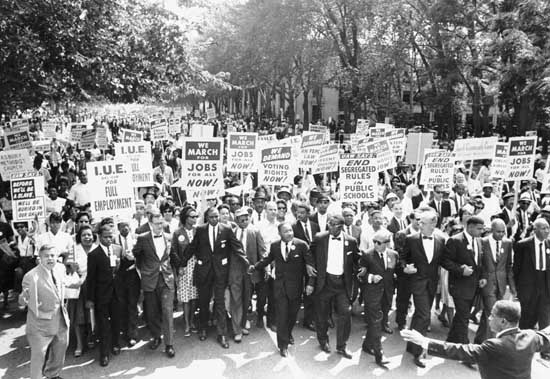
What’s To Prevent the Nationality of the Church?

I have already wondered where the PCA’s corporate confession of the sin of racism will lead. Sean Lucas’ article on the spirituality of the church in the freshly e-minted theological journal, Reformed Faith and Practice, makes me wonder more.

One of the takeaways of Lucas’ article is the fair point that Southern Presbyterian ministers and assemblies used the spirituality of the church to avoid speaking out about Jim Crow or even to defend white supremacy. Lucas makes that point stick when he observes the way that Presbyterians ignored the spirituality of the church when it came to alcohol or evolution:

And southern Presbyterians had a difficult time knowing where the line was between spiritual and secular realms. One example of this was the church’s long-standing support and advocacy of abstinence from alcohol. From 1862 on, the southern Presbyterian General Assembly repeatedly advocated teetotalism, reprobated the sale of beverage alcohol, and urged people to “use all legitimate means for its banishment from the land.” Finally, in 1914, as the political process began that would produce the Volstead Act, the General Assembly declared, “We are in hearty favor of National Constitutional Prohibition, and will do all properly within our power to secure the adoption of an amendment to the Constitution forever prohibiting the sale, manufacture for sale, transportation for sale, importation for sale, and exportation for sale of intoxicating liquors for beverage purposes in the United States.” Notably, there was no hue and cry in the Presbyterian papers by conservatives about this action as a violation of the spiritual mission of the church.[11]

Another example of blurring the lines between the so-called spiritual and secular realms occurred in the 1920s over the teaching of evolution in the public schools. In North Carolina, the key leaders who opposed evolution both in the public schools and at the University of North Carolina were Presbyterian ministers, Albert Sidney Johnson and William P. McCorkle. In 1925, the Synod of North Carolina adopted resolutions that called for “a closer supervision to prevent teaching anything [in the public schools]…[that contradicted] Christian truths as revealed in the Word of God.” They also “demanded the removal of teachers found guilty of teaching evolution ‘as a fact.’” Again, beyond the rightness or wrongness of the action, the main point here is that the spirituality of the church doctrine did not prevent these Presbyterians from intermeddling in civil affairs outside the “spiritual” realm of the church.[12]

But does inconsistency really invalidate the principle? Political conservatives argue for U.S. independence in foreign affairs and then turn around and support a big military and wars of intervention in the Middle East. So we forget the policy and just send more troops to Syria? Or do you perhaps think about reaffirming the wisdom of the policy in the face of the inconsistency and ask for practice to reflect doctrine?

The problem is that Lucas is not merely calling for the PCA to be consistent. He wants the church to bring transformational grace to the world:

. . . the way forward for all of us will be our common commitment to what the church as church should be and should be doing. Central to that life together will be the ministry of the Word, the administration of the sacraments, and prayer. And as we use these effectual means of our salvation, what we will find is that the grace that comes to us through them will transform us. It will drive us out into our world to share the Good News of Jesus, but also to live that transforming Gospel in tangible ways, as we love justice and mercy, as we extend ourselves in risky ways into the lives of our neighbors. This Gospel will not leave us alone and cannot leave us the same. After all, King Jesus is making his world new now through you and me—his grace transforms everything.

That sounds pretty good, as if the world will be better when we stop erecting boundaries that cut “off the ‘spiritual’ from the rest of life.” But surely, Lucas recognizes the value of making distinctions between the civil and ecclesiastical realms. I mean, would he want the PCA to affirm a motion that called for the United States to make Christianity the official religion? Or would he want the PCA to endorse a roster of political candidates — Clinton over Trump? Or how about the PCA being salt and light with the State Department and opening diplomatic talks with North Korea? Does the ministry of the word, administration of baptism and the Lord’s Supper, or church discipline give the PCA leverage to apply its spiritual insights to the secular and temporal affairs of U.S. politics? Why stop with national borders? Why not Europe? Why not the world? I can’t believe Lucas favors that kind of mission creep. But from the Baylys in the Rust Belt to Tim Keller in NYC, many in the PCA want the communion to be transformational. Is race really the way to do this?

This is an odd development since the point of the spirituality of the church seems evident to many who are not even Machen groupies. Paul Helm once again contrasts favorably two-kingdom theology to the medieval one-kingdom approach among those nostalgic for Christendom:

The current focus on the Two Kingdoms has been on secular society and the fact that it is distinct from the church. That’s freedom, we rightly think, to be free from such things as the obligation to transform culture in the name of Christ. But actually it is only one side of freedom. Christian freedom has not only to do what we are commanded to do or to abstain from doing by the government of the day, but also from what some church or sect, or social group or cultural mood, may try to require of us, or do require of us, that would be sinful. Not permitted by the Word of God, but forbidden by it.

Meanwhile, Carl Trueman comes out for the Benedict Option precisely because of the inherent problems of ecclesiastical overreach:

Maybe the Benedict Option and my own proposed Calvary Option are really two ways of saying the same thing—that the church needs to be the church and Christians need first and foremost to be Christians before they engage the civic sphere. Maybe our current problem is therefore not that society is secularizing but rather the opposite—that the American church is finally being forced to desecularize. This will be painful. It will involve hard choices. It will involve increasingly obvious differences between the church and the world.

I doubt either Helm or Trueman would disapprove of efforts to acknowledge the racism that sometimes lurked among the proponents of the spirituality of the church. But does that acknowledgment necessarily involve abandoning a distinction between the kingdom of grace and the civil kingdom, between grace and the world, between redemption and external justice?

Why you can’t apologize for racism (in other ways) and continue to support the spirituality of the church is beyond me.

That Clears It Up (for the PCA)

Among the matters that Greg Jao, vice president of InterVarsity, clarified to Rod Dreher:

You state that Michelle Higgins spoke as a representative of BlackLivesMatter. That is not correct. Michelle Higgins primary affiliation from Urbana’s perspective is as a minister of South City Church, a PCA congregation which engages in justice activism in St. Louis as part of its ministry. She spoke as a Christian minister (who does affirm our Doctrinal Basis) from the St. Louis area who has worked alongside the BlackLivesMatter movement. The distinction is important.

Advancing the Conversation?

It was not so long ago, after Michael Brown’s death, that lots of people in Reformed circles were calling for a conversation about race. After almost two years and after listening to some of the chatter, I am not so hopeful. Anyone who wants a version of how that conversation is going among people without faith — in this case a journalist and an Ivy League student newspaper editor — give a listen and embrace the suck.

But in the interest of avoiding a bad ending for the PCA, where the conversation has escalated more than anywhere else in NAPARC circles, I offer the latest musings on blackness from Michael Eric Dyson:

There is the symbolic blackness that the president perfectly embodies. By this I mean the representative sort, in which his blackness is the blackness of the masses; his lean body carries the weight of the race, and the words of James Baldwin meet those of pioneering scholar Anna Julia Cooper: To paraphrase Cooper, when and where a black figure like Obama enters, black folk automatically enter with him, as he bears what Baldwin termed the “burden of representation.” Like other symbolic blacks before him, Obama has no choice in the matter—one fittingly symbolized in nonnegotiable terms of existence that are nearly Cartesian: he is, therefore we are.

There is, too, substitute blackness, in which luminaries like Michelle Obama and former Attorney General Eric Holder supply the blackness—the resonant cultural tropes, the signifying gestures, the explicit mention of race in context—that a figure like Obama, bound on all sides by demands and constraints, can barely acknowledge, much less embrace. Historical contingency and political necessity meld to determine Obama’s role, versus that of substitute blacks, when it comes to speaking about race: he can’t, but they can.

Then there is surplus blackness, which is too much blackness for many outside the race, and some inside it. Al Sharpton and Jesse Jackson are some noted examples, figures whose blackness is never in question, even if the use and force of it depends on the situation at hand or the need of the group at the moment. If substitute blackness is a conditional stand-in for blackness, surplus blackness is the display of blackness—in fact, blackness as display. The nearly exclusive imperative of surplus blackness is to stand up for black folk in public, whether after a police killing of an innocent black or a neighbor-to-neighbor murder or a cry for racial justice in the courts. Obama’s symbolic blackness also sometimes takes up the cause of black folk, but more often judges them. When it comes to defending black people: he won’t, but they will.

Finally, there is subversive blackness, glimpsed most recently in the activism of Black Lives Matter, where the meanings of blackness compete and collide, where blackness is at once self-subverting and self-regenerating. Subversive blackness glances sideways at symbolic, substitute and surplus blackness, preferring, instead, to grasp what’s been left out of the official narratives of blackness and to fill in the blanks. It is perhaps summed up in Kanye West’s credo, “Everything I’m not made me everything I am,” which nicely captures the irreverence that Obama spurns but subversive blackness embraces: he isn’t, but they are.

I assume Michelle Higgins wants subversive blackness. But is that what Ligon Duncan, Jemar Tisby, and Sean Lucas were bargaining for?

Today's Theme is Breadth

After hearing from Pastor Sauls on the valuable contributions from those who disagree, we read Mark Jones who has his own objections to the narrow road. Maybe Pastor Sauls qualifies as one of Jones’ Reformed irenics since the former is not beholden to Reformed orthodoxy. But I suspect Sauls would fall short because he doesn’t know enough historical theology. Those who do know the breadth of the Reformed tradition as Jones does are different from and less appealing than the Truly Reformed who read the Reformed confessions in a wooden manner (unlike someone trained in historical theology):

Among this group, I sometimes worry that their zeal for Confessional fidelity – a noble zeal, in and of itself – can sometimes reflect an overly restricted reading of the diversity of the Reformed tradition and our Reformed confessional history. They can read our confessions in a somewhat a-historical manner. Thus they tend to draw the lines of orthodoxy quite narrowly, excluding views from the tradition that have quite a bit of historical precedent. We must admit: our tradition has lots of diversity. Lots. And this diversity is present in the way our Confessions were formed, if one reads them carefully (e.g., the nature of Adam’s reward is ambiguous).

A recognition of diversity leads to an awareness of how narrow our conservative Presbyterian world in North America is:

When we consider the Christian world, and just how broad it is, it doesn’t make much sense for us in the Reformed Confessional tradition to be too narrow. We are, after all, a tiny minority. We should, as far as we are able, and without compromising our confessional heritage, embrace or respect other Christian traditions, viewpoints, and values. It is actually a firm confidence in our Reformed Confessional heritage that allows us to do this.

If I may be allowed a minute at the historical microphone, let me assert that historical theology is not church history. And church history teaches a couple of lessons that Dr. Jones’ historical theology apparently leaves out.

First, a confession is not a work of historical theology. It is a legal standard for a Christian communion. Does it mean that it doesn’t have a history or that context isn’t important for understanding the words and arguments of the Confession? No. But it does mean that a confession for a specific denomination functions in a very different way from a theologian highly regarded by people in a theological tradition. The Confession of Faith is a secondary standard for the PCA and the OPC. John Calvin and John Owen are not such legal standards. And the reason churches have confessions is very different from the aim that animates historical theologians; churches need criteria and consensus for ordination and discipline while historical theologians, like Dr. Jones at least, can marvel at the diversity.

Second, church history also teaches why some Presbyterian communions are narrow. The reason is that some Presbyterian communions became broad — as in Leffert Loetscher’s Broadening Church, the history of the PCUSA. In addition, one of the reasons mainline Presbyterians celebrated breadth owed in part to the discovery of Christians in other parts of the world and a concomitant recognition of how seemingly foreign the West’s creeds and confessions were to non-Westerners.

Dr. Jones may not be celebrating breadth and diversity in the same way, but when he lectures us about history, I wish he would take more history into account.

Maybe He Needs MmmeeeeeEEEEEE

Scott Sauls may have spent too much time with Tim Keller, the author of Center Church, because Pastor Sauls seems to think that he is at the center of Presbyterianism. The reason for saying this is that he admits that he needs to hear from those with whom he differs. Here’s his list:

I don’t know where I would be without the influence of others who see certain non-essentials differently than I do. I need the wisdom, reasoning, and apologetics of CS Lewis, though his take on some of the finer points of theology are different than mine. I need the preaching and charisma of Charles Spurgeon, though his view of baptism is different than mine. I need the Kingdom vision of NT Wright and the theology of Jonathan Edwards, though their views on church government are different than mine. I need the passion and prophetic courage of Martin Luther King, Jr., the cultural intelligence of Soong Chan Rah, and the Confessions of Saint Augustine, though their ethnicities are different than mine. I need the reconciliation spirit of Miroslav Volf, though his nationality is different than mine. I need the spiritual thirst and love impulse of Brennan Manning and the prophetic wit of GK Chesterton, though both were Roman Catholics and I am a Protestant. I need the hymns and personal holiness of John and Charles Wesley, though some of our doctrinal distinctives are different. I need the glorious weakness of Joni Eareckson Tada, the spirituality of Marva Dawn, the trusting perseverance of Elisabeth Elliott, the longsuffering of Amy Carmichael, the honesty of Rebekah Lyons, the thankfulness of Anne Voskamp, the theological precision of Kathy Keller, and the integrity of Patti Sauls, though their gender is different than mine.

In the world of hipster Protestantism this is cool but not Snapchattingly trendy. If I were to assemble my own list of those with whom I disagree theologically but who have shaped my thinking in profound ways it would include: Orhan Pamuk, Joel Coen, Tom Stoppard, F. Scott Fitzgerald, H. L. Mencken, Aaron Sorkin, Wendell Berry, Michael Oakeshott, Edward Shils, David Simon, John McWhorter, Andrew Sullivan, Louis Menand, David Hackett Fischer, Henry May, Richard John Neuhaus, Joseph Epstein, and Ethan Coen. See what I did there? I went outside Christian circles with most of that list. Do I get points for being really cool and cosmopolitan?

The thing is, none of those writers really helped me understand the nature of the Christian ministry as Presbyterians understand it. I’ve learned greatly from these figures about being human, which comes in handy for overseeing a congregation or participating in a church assembly. But I don’t look to these people for my life in the church.

But here’s the kicker for Pastor Sauls: what if he learned from those with whom he disagrees about Presbyterianism like Old Schoolers? What might his ministry look like then?

My sense is that because Pastor Sauls via Keller thinks he is in the heart of Presbyterianism or conservative Protestantism or evangelicalism, he already has his Presbyterian bases covered.

And in that case, boy does he need to understand the nature of disagreement.

Vanilla Presbyterianism

Bryan Chapell serves a modest and healthy variety of Reformed Protestantism to Ed Stetzer:

Ed Stetzer: What are some of the distinctives that make you different than other Evangelical groups?

Bryan Chapell: The PCA affirms the inerrancy of Scripture and places a high value on biblical preaching and worship. This is because we believe the Bible is our only infallible rule of faith and practice. By the design of the Holy Spirit, all that is necessary for a life of godliness are within its pages. The Bible was never intended to address every subject or science that we may confront in our world, but it does provide the standards for truth and life that we require to honor God in every situation.

While holding its Confessional standards secondary to the authority of Scripture, the PCA seeks to maintain its peace and purity by requiring ordained pastors and officers to subscribe to the theological doctrines detailed in the Westminster Standards (i.e., the Westminster Confession of Faith with its Larger and Shorter Catechisms).

Those standards also indicate that we believe churches should be in accountability relationships with one another, just as individual church members are. So we have regional presbyteries (gatherings of pastors and elders that seek to do ministry and mission together). Local churches are governed by elders and pastors elected by the local congregation. We practice the sacraments of the Lord’s Supper and Baptism, as the Scriptures instruct. We believe the Scriptures teach that baptism is for adult believers and their children. We do not practice infant baptism out of tradition and sentiment, but out of the understanding that God pledges his faithfulness in covenant relationships that are consistently taught in the Bible.
The PCA affirms the inerrancy of Scripture and places a high value on biblical preaching and worship.

Our Reformation heritage is reflected in a “Reformed/Calvinistic” system of doctrine. The first thing most think of in this category is an emphasis on the sovereignty of God in salvation. We believe that a necessary implication of the Bible’s teaching about our all-knowing and all-powerful God is that he must elect and predestine those who will be saved. The Bible uses these terms and we accept them. We also affirm that God accomplishes our salvation without “doing violence” to our will. . . .

The subject of sovereignty is not exhausted in discussions about salvation processes. Our Reformed commitments teach the sovereignty of God over “the whole of life.” The Lord of all creation is not confined by the walls of the church. That means that there is no sphere of life, no occupation, no recreation, no craft or art that is beyond the bounds of his concern or without obligation for his glory. We believe that the church does not do its work on Sunday, if it is not preparing its people for Monday – and every other day. All occupations and recreations need to be considered as opportunities for glorifying God. There are no secondary callings.

The PCA has a commitment to the “regulative principle” of Christian worship (i.e., only what God instructs in his Word should be practiced in corporate worship). But, because this principle results in rather general requirements about practices related to the Word, sacraments and prayer, worship styles vary greatly between local churches.

That’s the skinny. If you want a “fatter” version of Presbyterian distinctions, see my autobiographical description in “Why I am an Evangelical and a Presbyterian,” in Why We Belong: Evangelical Unity and Denominational Diversity, eds. Anthony Chute, Christopher Morgan and Robert Peterson (Wheaton, IL: Crossway, 2013).

I guess that makes TKNY the Rocky Road and really fattening version of the PCA.

If only PCA leaders like Chapell could keep Presbyterianism that simple and that by the book. Is this a sign of an Old School Presbyterian return? Or is this how you distinguish yourself from a w-w Southern Baptist?

Where is the PCA's Glenn Loury?

Recent travels sent me again to the inter-web in search of podcasts that inform, provoke, and keep me awake. My latest favorite source for vigorous exchanges is The Glenn Show at bloggingheadstv.com. You can watch the discussion on-line — it’s the weird images of talking heads in Skype session. Or you can download a show as an audio recording. (Who knew that mp audio formats had climbed to 4?)

Glenn Loury is an economist who teaches at Brown University, an on-and-off-again black conservative intellectual who broke with the Republic establishment (as I understand it) over the reception of Charles Murray’s The Bell Curve. A frequent guest on Glenn’s show is John McWhorter, an African-American linguist at Columbia University who wants to defy political categories but because he is often critical of the left he gets pigeon-holed a conservative. (Full disclosure: the missus and I heard McWhorter at a book festival in Philadelphia a few years ago and from the audience I asked him if he had seen The Wire and if so who is favorite character was. He became enthusiastic about The Wire in a George Whitefield way and declared Omar his favorite character. I was delighted in my frigid Old Life way.)

The reason for asking about the PCA is that the sort of ideas about race relations you hear from Glenn and McWhorter you don’t hear in NAPARC circles. Consider, for instance, a couple of columns that McWhorter wrote this summer at the Daily Beast. First, McWhorter opines that all the talk of structural racism may be well meaning but it doesn’t actually do anything (and whenever I read the African-American pastors I am left wondering what I’m supposed to do):

No, the fact that Hillary Clinton is referring to structural racism in her speeches does not qualify this as a portentous “moment” for black concerns. Her heart is surely in the right place, but talking about structural racism has never gotten us anywhere significant. Hurricane Katrina was 10 years ago; there was a great deal of talk then about how that event could herald some serious movement on structural racism. Well, here we are. There was similar talk after the 1992 riots in Los Angeles after the Rodney King verdict and, well, here we are.

The old-time Civil Rights leaders did things; too often these days we think talking about things is doing something. But what, really, are we talking about in terms of doing?

Who among us genuinely supposes that our Congress, amidst its clear and implacable polarization, is really going to arrive at any “decisions” aimed at overturning America’s basic power structure in favor of poor black people?

So instead of merely talking about structures that to abolish would require a slate almost as clean as the one the Puritans encountered when the landed at Massachusetts Bay (and yes, I know they weren’t the first ones there), McWhorter recommends real policy. Reformed Protestants won’t like these but they do give specifics to those who want to know what might be done:

1. The War on Drugs must be eliminated. It creates a black market economy that tempts underserved black men from finishing school or seeking legal employment and imprisons them for long periods, removing them from their children and all but assuring them of lowly existences afterward.

2. We have known for decades how to teach poor black children to read: phonics-based approaches called Direct Instruction, solidly proven to work in the ’60s by Siegfried Engelmann’s Project Follow Through study. School districts claiming that poor black children be taught to read via the whole-word method, or a combination of this and phonics, should be considered perpetrators of a kind of child abuse. Children with shaky reading skills are incapable of engaging any other school subject meaningfully, with predictable life results.

3. Long-Acting Reproductive Contraceptives should be given free to poor black women (and other poor ones too). It is well known that people who finish high school, hold a job, and do not have children until they are 21 and have a steady partner are almost never poor. We must make it so that more poor black women have the opportunity to follow that path. . . .

4. We must revise the notion that attending a four-year college is the mark of being a legitimate American, and return to truly valuing working-class jobs. Attending four years of college is a tough, expensive, and even unappealing proposition for many poor people (as well as middle-class and rich ones). Yet poor people can, with up to two years’ training at a vocational institution, make solid livings as electricians, plumbers, hospital technicians, cable television installers, and many other jobs. Across America, we must instill a sense that vocational school—not “college” in the traditional sense—is a valued option for people who want to get beyond what they grew up in.

Note that none of these things involve white people “realizing” anything. These are the kinds of concrete policy goals that people genuinely interested in seeing change ought to espouse. If these things seem somehow less attractive than calling for revolutionary changes in how white people think and how the nation operates, then this is for emotional reasons, not political ones. A black identity founded on how other people think about us is a broken one indeed, and we will have more of a sense of victory in having won the game we’re in rather than insisting that for us and only us, the rules have to be rewritten.

In another column, McWhorter explains why we don’t hear specific policy proposals in church circles but instead hear a lot about the vagueries of white supremacy. He argues that anti-racism is a religion (and that plays directly to the Reformed case against racism) and it is dogmatic:

The Antiracism religion, then, has clergy, creed, and also even a conception of Original Sin. Note the current idea that the enlightened white person is to, I assume regularly (ritually?), “acknowledge” that they possess White Privilege. Classes, seminars, teach-ins are devoted to making whites understand the need for this. Nominally, this acknowledgment of White Privilege is couched as a prelude to activism, but in practice, the acknowledgment itself is treated as the main meal, as I have noted in this space. A typical presentation getting around lately is 11 Things White People Need to Realize About Race, where the purpose of the “acknowledgment” is couched as “moving the conversation forward.” A little vague, no? More conversation? About what? Why not actually say that the purpose is policy and legislation?

Because this isn’t what is actually on the Antiracists’ mind. The call for people to soberly “acknowledge” their White Privilege as a self-standing, totemic act is based on the same justification as acknowledging one’s fundamental sinfulness is as a Christian. One is born marked by original sin; to be white is to be born with the stain of unearned privilege.

The proper response to original sin is to embrace the teachings of Jesus, although one will remain always a sinner nevertheless. The proper response to White Privilege is to embrace the teachings of—well, you can fill in the name or substitute others—with the understanding that you will always harbor the Privilege nevertheless. Note that many embrace the idea of inculcating white kids with their responsibility to acknowledge Privilege from as early an age as possible, in sessions starting as early as elementary school. This, in the Naciremian sense, is Sunday school.

This will keep you awake on a long drive to Baltimore.

No one has to agree. But if some folks want us to have a conversation about race in the Presbyterian and Reformed churches, are those same people calling for the conversation willing to listen to the comments of Glenn Loury and John McWhorter? And if others are wanting the church to confess their sins, might they want to consider Anti-Racism as the religious source more than the gospel?

Let the conversation go on but make sure we include all the voices. They are only a download away.

Can You Confess Sins To Yourself?

Rick Phillips’ post about corporate confession of sins got me thinking about the PCA’s proposed resolution on race and civil rights. That personal resolution from Ligon Duncan and Sean Lucas confesses the church’s complicity with racial injustice.

Phillips attempts to find a biblical procedure for such confession.

But if he were to use the Book of Discipline from his sister communion, the OPC, he’d find judicial processes laid out quite thoroughly.

I imagine the General Assembly of the PCA would come as its own accuser:

When a person comes before a judicatory as his own accuser, the judicatory may proceed to judgment without full process, determining first, what offense, if any has been committed, and, if a serious offense (cf. Chapter III, Section 7.b [6]) has been committed, what censure shall be pronounced. (5.1)

Next comes the the work of the trial judicatory in establishing the seriousness of the sin and determining the level of censure:

In judicial discipline there are five degrees of censure: admonition, rebuke, suspension, deposition, and excommunication. Censures shall be pronounced in the name and by the authority of the Lord Jesus Christ, as an act of the whole church, by the moderator on behalf of the trial judicatory. (6.A.1)

This raises a real problem since everyone in this scenario would be guilty of the sin and so finding someone to serve on the trial judicatory could be difficult if not impossible. Everyone is guilty. Can the sinner determine his own form of censure? Would he not have mixed motives?

And then there is the question of the sin’s seriousness. What kind of censure will the PCA General Assembly apply to itself?

1. Admonition

Admonition consists in tenderly and solemnly confronting the offender with his sin, warning him of his danger, and exhorting him to repentance and to greater fidelity to the Lord Jesus Christ.

2. Rebuke

Rebuke is a form of censure more severe than admonition. It consists in setting forth the serious character of the offense, reproving the offender, and exhorting him to repentance and to more perfect fidelity to the Lord Jesus Christ.

3. Suspension

a. Suspension is a form of censure by which one is deprived of the privileges of membership in the church, of office, or of both. It may be for a definite or an indefinite time. Suspension of an officer from the privileges of membership shall always be accompanied by suspension from office, but the latter does not necessarily involve the former.

b. An officer or other member of the church, while under suspension, shall be the object of deep solicitude and earnest dealing to the end that he may be restored. When the trial judicatory which pronounced the censure is satisfied of the penitence of the offender, or when the time of suspension has expired, the censure shall be removed and the offender shall be restored. This restoration shall be accompanied by a solemn admonition. Restoration to the privileges of membership may take place without restoration to those of office.

c. When a minister has been indefinitely suspended, the judicatory shall immediately notify all the presbyteries of the church.

4. Deposition

a. Deposition is a form of censure more severe than suspension. It consists in a solemn declaration by the trial judicatory that the offender is no longer an officer in the church.

b. When a minister is deposed from his office, the presbytery shall erase his name from the roll of the ministerial members of the presbytery and dismiss him to a particular church or enroll him as a member of the regional church without membership in a particular church.

c. Deposition of a pastor or his suspension for an indefinite time involves the dissolution of the pastoral tie. The sentence of deposition or suspension shall be read before the congregation, and the pulpit shall be declared vacant. In case of suspension for a definite period the presbytery, after giving the session an opportunity to be heard, shall decide whether the pastoral relation shall be dissolved.

d. When a minister has been deposed, the judicatory shall immediately notify all the presbyteries of the church.

5. Excommunication

Excommunication is the most severe form of censure and is resorted to only in cases of offenses aggravated by persistent impenitence. It consists in a solemn declaration by an ecclesiastical judicatory that the offender is no longer considered a member of the body of Christ. (6.B)

Depending on to whom you listen, racism is pretty grievous sin. But if it were sufficiently serious that the PCA General Assembly pronounced a censure of Deposition on itself, the recent graduates of Reformed seminaries might be grateful for the new calls available, but is the Assembly really prepared to wipe out its entire set of elders and deacons? Depose Tim Keller?

But if the Assembly only rebukes itself, would those most offended by racism be satisfied?

I wonder if those who support this corporate confession of sin understand how complicated it might be.

Collective Guilt

At first I thought I was clear because I’m not Tim Bayly, Tim Keller, or PCA:

Bayly Blog has published a piece by Lucas Weeks, an assistant pastor at Clearnote Church, in which he argues that the root of abortion is feminism. He contends that the PCA soft-peddles feminism; thus the PCA is complicit in the acceptance of and practice of abortion. The PCA needs to repent:

We must never forget that the blood sacrifice for feminism is abortion, and if we really desire to live in a nation free from the bloody slaughter of abortion, we must repent of our feminism. Regardless of the brand of feminism we’re talking about, the vampire that has been feeding on the blood of our children for decades was unleashed by our sexual sin and our rebellion against the very simple and easy to understand words of Scripture regarding manhood and womanhood. Whether it’s the hard-core leftist feminism of Camille Paglia and Sallie Tisdale, or the soft-peddled feminism that’s increasingly common in the PCA, or even the Sarah Palin style of feminism within the GOP, the rejection of God’s clear Word is the same.

In the discussion that followed among those who have not offended the patriarchs of patriarchy to the point of being banned one brother questioned Weeks’ words about the PCA. This provoked Fr. Tim himself to write even stronger words, taking aim at one of his favorite targets, Tim Keller:

To say that conservative Reformed denominations like the PCA are responsible for the continuation of abortion in our country is an unassailable truth, as I see it. The most influential pastor of the PCA brags about not preaching against abortion and claims this is an effective tool in opposing abortion. But of course, every pastor knows why we avoid preaching against abortion, and it’s not because we believe it’s an effective technique in stopping abortion.

So that pastor and all the many pastors who mimic him in his conflict avoidance are responsible for little babies being killed in their congregations who would have lived had their pastors warned their mothers and fathers (and grandmothers and grandfathers) not to murder their unborn. As Pastor Weeks wrote, this is the fruit of feminism. Preaching against abortion is seen as anti-women’s-rights and male pastors will do almost anything to avoid any accusation that we’re anti-women’s-rights.

Then I was feeling pretty good that it’s okay that I’m not nice (which Mrs. Hart has long known but the cats, Kibbles prostitutes that they are, don’t):

In Galatians 5, Paul contrasts the qualities of fleshly, worldly people with the qualities of Spirit-filled, godly people. He lists the fruit of the Spirit, those character traits that ought to mark God’s people, saying, “But the fruit of the Spirit is love, joy, peace, patience, kindness, goodness, faithfulness, gentleness, self-control; against such things there is no law” (vv. 22–23). Conspicuously absent from Paul’s list is niceness. Kindness is there; patience and gentleness too. But not niceness.

But then I had a wake-up call. Even though I am a Canadian trapped in an American body, I am still an American and have bigger problems:

Today is the seventieth anniversary of Hiroshima. On this day, seventy years ago, the United States used an atomic bomb in warfare for the first time in history. Another would follow, dropped on Nagasaki three days later. It is no exaggeration to say that since that time the world has been fixated on making sure that no nuclear weapon is ever used again. At this very time the American Congress debates whether or not to support President Obama’s recent agreement with Iran, designed to prevent Iran from attaining the capability the United States already used against Japan a lifetime ago.

The single bomb used on this day, August 6, was not used against a military target. It was dropped on an urban area, a major population center with hundreds of thousands of civilians, including the elderly, women, and children. Some 85,000 people were killed either instantly or within the first day. Many, many more died in the days and months following. Within four months the death toll reached as high as 165,000, the vast majority of whom were civilians. For the survivors, that was just the beginning of the ordeal. . . .

In fact, both arguments – that the United States was justified in using the atomic bomb against Hiroshima and Nagasaki in 1945, and that the United States is justified in bombing Iran should it develop nuclear weapons today – are flatly contradictory to classic Christian just war theory. This is hard for patriotic American Christians to admit, but it is no less clear for that.

Matt Tuininga’s point — if he is correct about just war and the bomb — that sin is deep and profound is a good one, though I’m not sure why he thinks a social gospel will remedy the social aspects of sin. We live on this side of racism, segregation, slavery, and Hiroshima. A society or group cannot go back to a point of prior innocence. History does not work that way. Maybe we simply have to live in a perpetual state of knowing we are guilty and our only hope is a glorified existence. (Imagine what that sense would to outrage porn.)

But the earlier thought that I was without sin, and the later recognition of my guilt, did make me wonder about the propriety of such public calls for repentance. If we have no possible way of making restoration, then what good is the call for repentance other than saying something about the caller? Isn’t the caller as guilty as I am? So why is he throwing the first stone?

Where Do You Stop?

If you object to the Confederate Flag, why not to Alabama’s and Florida’s. If you notice the design, you have a diagonal cross similar to the Scottish flag, but with a white background and maroon bars. Historians of Florida are currently debating whether the Florida flag owes its features to the Confederate one. But how can you not see a resemblance between the banner of the Spanish empire and the Florida flag (or Alabama)? And how can you not remember that Florida’s European roots go back to the Spanish Empire, not to snow-birds from the Northeast?

And if the Confederate Flag has problems because of white supremacy, imagine the difficulty for Europeans who followed in the trail of the Spanish to Florida and the southeast (where the PCA hatched). Here is how Alan Taylor describes one of the Spanish conquistadors:

During the years 1539-43, Vaca’s report inspired two great conquistador expeditions northward. From Cuba, Hernando de Soto led the first to Florida and through what is now the American southeast. From Mexico, Francisco Vasquez de Coronado marched the second expedition into and across the American southwest to the Great Plains. Although officially instructed to practice restrain, Soto and Coronado instead unleashed waves of violence, destruction, and disease that devastated the native peoples in their way. . . .

Beginning in the spring of 1539, Soto led six hundred men on a violent rampage through the carefully cultivated and densely populated heartland of the Mississippian culture. The conquistadores traversed present-day Florida, Georgia, South Carolina, North Carolina, Tennessee, Alabama, Mississippi, Arkansas, and east Texas. . . . When faced with the slightest resistance, Soto employed terror tactics to intimidate the survivors. Some Indians suffered the loss of a nose or a hand; others were thrown to the war dogs or burned alive. Archaeologists excavating the sites of villages visited by Soto have found many Indian skeletons scarred by steel weapons. American Colonies, 72

I bring this up not to make life difficult for Florida Seminole fans (but if you’re worried about the mascot of the NFL franchise in the nation’s capital. . .) but to remind those in pursuit of racism within the PCA that they need to be careful. When a generation from now someone finds out that the folks who need to bring a 92-year old man to ecclesiastical justice for racism (even while likely celebrating the forgiveness recommended by Charleston AME church members) — when future church officers discover that the anti-racists were soft on the parts of American history and culture that brought such devastation to native Americans, will their ministry also be compromised? When they find out that ministers in the PCA who opposed racism graduated from the University of Florida and the University of Alabama and did nothing to protest the heritage of those states which included a ruthless treatment of native populations which made slavery look civilized, what will their verdict be and will today’s generation be brought up on charges?

(Oh, by the way, making these matters public via social media is not exactly the Matthew 18 model of calling for repentance and may open you up to civil proceedings. Old Life aphorism of the day: How do you know someone is self-righteous? When the rules don’t apply to them.)

If these accusers don’t stop, they will be yet the latest example of Nathaniel Hawthorne’s short story, “Earth’s Holocaust,” which recounts the absurd lengths to which reformers go to arrive at a perfect society or institution, so absurd that activists forget to look in the mirror because they threw it into the fire:

“What but the human heart itself?” said the dark-visaged stranger, with a portentous grin. “And, unless they hit upon some method of purifying that foul cavern, forth from it will reissue all the shapes of wrong and misery—the same old shapes or worse ones—which they have taken such a vast deal of trouble to consume to ashes. I have stood by this livelong night and laughed in my sleeve at the whole business. O, take my word for it, it will be the old world yet!”

This brief conversation supplied me with a theme for lengthened thought. How sad a truth, if true it were, that man’s age-long endeavor for perfection had served only to render him the mockery of the evil principle, from the fatal circumstance of an error at the very root of the matter! The heart, the heart, there was the little yet boundless sphere wherein existed the original wrong of which the crime and misery of this outward world were merely types. Purify that inward sphere, and the many shapes of evil that haunt the outward, and which now seem almost our only realities, will turn to shadowy phantoms and vanish of their own accord; but if we go no deeper than the intellect, and strive, with merely that feeble instrument, to discern and rectify what is wrong, our whole accomplishment will be a dream, so unsubstantial that it matters little whether the bonfire, which I have so faithfully described, were what we choose to call a real event and a flame that would scorch the finger, or only a phosphoric radiance and a parable of my own brain.