
 This past Sunday my wife and I visited a Baptist church in a seaside town that fifty years ago would have been the worship option for our both sets of parents when vacationing. The half-hour of singing during the first half of the service, punctuated by insights from the pianist-minister-of-music, was not surprising. This liturgical practice of unceasing song is now standard almost everywhere that Protestants do not use a prayer book even though Pentecostals were the first to introduce the period of praise songs as the way to enter into God’s presence (the invocation used to take care of that).
What was surprising, though, was that this form of service – a half-hour of song, followed by a half-hour sermon – could transpire without an order of service in the bulletin. The songs appeared on the screen above the baptistry, the singers and musicians in the front found the right music, and when the singing was finished the pastor assumed his place behind the pulpit. It seemed to transpire in an orderly way. But what happened to a prayer of praise, one of confession, one of thanksgiving? Or what about different readings from parts of Scripture? What about the dialogue between God and his people? This seemed to be one monologue (song) followed by another (sermon). The only part of the service that remained unchanged from our youth was the Lord’s Supper that concluded the service. It was a memorial of Christ’s death.
As I struggled to think about the words on the screen during the first half of the service – I could not sing because the tunes are difficult, unfamiliar and only the musicians up front had music (so much for the priesthood of all believers) – I began to wonder how this congregation would do if the power went out. Well, they would not be able to sing because the projector would not work, the microphones would also be off, and some of the instruments would no longer function. Plus, the pastor would have to do without that nifty microphone headset that made it look like he was wearing braces. Still, the sun was bright enough to let us use the hymnals, especially if the sexton would have opened the shades that darkened the room sufficiently for the projector to do its work.
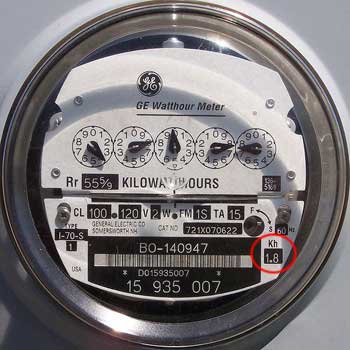
This led me to think that if evangelicals really are becoming green and owning their environmental responsibilities, then perhaps such statements as “An Evangelical Declaration on the Care of Creation†should include as one of its policy proposals the banning of all Praise & Worship worship. This would mean saving all the electricity that is used to support the praise bands, the singers, and the projectors and computers. The proposal should also call for worship music that uses only hymnals and pianos.
Of course, trees need to be felled to produce hymn books and to make parts of pianos. In which case, evangelicals might consider that the form of worship with the smallest carbon footprint is exclusive psalm-singing unaccompanied by musical instruments. Yes, the psalter still requires the demolition of trees. But unlike most hymnals that weigh in with close to 700 hymns, the psalter only has 150 songs, and so requires less paper. And without the need of a piano, organ, electric guitar, or synthesizer, psalm-singing further reduces the consumption of fossil fuels.
So if evangelicals are truly serious about the environment, one way to look for it is with a return to the worship of Geneva. Who knew Calvin was such a sensitive and trendy guy?
 Old Life