
In honor of the Bard’s birth which occurred sometime before his baptism recorded on April 26, 1564 — puts the Elizabeth in Elizabethan English.

In honor of the Bard’s birth which occurred sometime before his baptism recorded on April 26, 1564 — puts the Elizabeth in Elizabethan English.

Hello.
Father Dwight again challenges reason:
The priest’s robes are a ceremonial vesture—a uniform of their sacred office. They are meant to effectively obliterate the priest’s personality. They are also, by the way, meant to be unobtrusive. They should not be creative or clever or call attention to the smart vestment designer or the wonderful seamstress. They are simply to dignify the office of the priest and dignify and beautify the celebration of Mass.
If the Mass is the Royal Marriage Feast of the Lamb, then the priest should dress up for his entrance into the royal court. The robes should therefore be regal in their dignity, their simplicity and their style. As much as possible their beauty should be shown, not by cleverness of design or ornamentation, but through quality materials and fine workmanship.
Why should the priest dress like a king? Because he reminds the whole people of God that they serve Christ the King, and the priest is in persona Christi. Furthermore, they remind the people of God that they too are a chosen people, and a royal priesthood. The priest focuses in his own person and ministry the royal priesthood of the people of God.
The question is why priests still dress in a medieval manner when the church has opened the windows to and come alongside the modern world. Not even Queen Elizabeth dresses like a priest.
I have long thought that the monarchy in Europe is largely ornamental. And given the press’ coverage of the papacy, I also wondered if Pope Francis has more authority than, say, Queen Elizabeth. But yesterday, the Queen of England spoke to Parliament and outlined the policies that “her” government was going to pursue in the upcoming months.
The speech to parliament put the economic recovery at its centre, opening with a pledge to continue bringing down the deficit and cutting taxes “to increase people’s financial security”.
With the threat that the Bank of England will increase the base rate before the General Election, there is also a pledge to keep mortgage and interest rates low and to continue to promote the Help to Buy scheme.
David Cameron had suggested he could amend the scheme after Bank of England Governor Mark Carney warned in an interview with Sky News that rising house prices were the biggest threat to economic recovery in the UK.
In an attempt to tackle the housing shortage, the Government announced plans to give developers powers to push through applications without council approval and allowing the Government to sell off unused land for development.
A new garden city will also be built in the Thames estuary at Ebbsfleet in Kent to tackle the housing shortage.
The Prime Minister and his Deputy Nick Clegg claimed the measures laid out in the Queen’s Speech were “unashamedly pro-work, pro-business and pro-aspiration”.
Just 11 new bills were introduced by the Queen at the State Opening of Parliament, which will bolster Labour’s claims the coalition is now a “zombie government” which has run out of steam. Last year there were 19 new bills.
Mr Cameron hit back at claims there was “not enough” in the speech. He told the House of Commons: “We’re creating new laws on producing shale gas… new laws to help build high speed rail… new laws to reform planning to build more homes… we’re outlawing modern slavery; confiscating assets from criminals; protecting people who volunteer; cutting red tape and curbing the abuse of zero-hour contracts.
“This is a packed programme of a busy and radical government.”
I am not sure about the propriety of describing a monarchical government as radical since the republics of the U.S. and France were supposed to be the ones that broke with Europe’s conservative order. But given the way that life goes on in the UK under a monarch and the way that the U.S. republic has evolved into an empire, I wonder if republicanism is all it’s sometimes cracked up to be. Maybe an independent Scotland will show the way.
 During the events surrounding the United States’ bicentennial, Queen Elizabeth took participated in a ceremony held in my beloved Philadelphia, the nation’s first capital. The Queen presented a Bicentennial Bell to the United States, with the help of strong assistants (likely overpaid and under worked members of one of the city’s unions). Her remarks were remarkable for their graciousness and wisdom, especially considering that soldiers and citizens on both sides of the revolutionary war died. The text of the speech (below) is also preserved at the wall of the bell tower in Old City Philadelphia, at the southeast corner of 3rd and Chestnut Streets. It is not a bad way to reflect on the significance of July 4th.
Remarks Of Queen Elizabeth II At The Presentation Of The Bicentennial Bell, July 6, 1976
I speak to you as the direct descendant of King George III. He was the last Crowned Sovereign to rule in this country, and it is therefore with a particular personal interest that I view those events which took place 200 years ago.
It seems to me that Independence Day, the Fourth of July, should be celebrated as much in Britain as in America. Not in rejoicing at the separation of the American Colonies from the British Crown but in sincere gratitude to the Founding Fathers of this great Republic for having taught Britain a very valuable lesson.
We lost the American colonies because we lacked that statesmanship “to know the right time, and the manner of yielding, what is impossible to keep.”
But the lesson was learned. In the next century and a half we kept more closely to the principles of Magna Carta which have been the common heritage of both our countries.
We learned to respect the right of others to govern themselves in their own ways. This was the outcome of experience learned the hard way in 1776. Without that great act in the cause of liberty performed in Independence Hall two hundred years ago, we could never have transformed an Empire into a Commonwealth!
Ultimately peace brought a renewal of friendship which has continued and grown over the years and has played a vital part in world affairs. Together we have fought in two world wars in the defence of our common heritage of freedom. Together we have striven to keep the peace so dearly won. Together, as friends and allies, we can face the uncertainties of the future, and this is something for which we in Britain can also celebrate the Fourth of July.
This morning I saw the famous Liberty Bell. It came here over 200 years ago when Philadelphia, after London, was the largest English speaking city in the world. It was cast to commemorate the Pennsylvania Charter of Privileges, but is better known for its association with the Declaration of Independence.
Today, to mark the 200th anniversary of that declaration, it gives me the greatest pleasure, on behalf of the British people, to present a new bell to the people of the United States of America. It comes from the same foundry as the Liberty Bell, but written on the side of the Bicentennial Bell are the words “Let Freedom Ring”.
It is a message in which both our people can join and which I hope will be heard around the world for centuries to come.
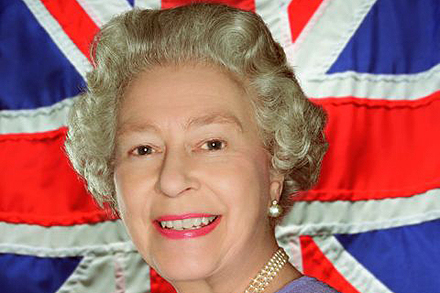 Over the weekend I was doing a little internet searching for churches that still confess the 16th and 17th century Reformed teachings on the civil magistrate’s role. Practically all of the Reformed and Presbyterian churches, both mainline and conservative, have modified the creeds of the Reformation and scholastic eras, even to the point, in the case of the Christian Reformed Church (circa 1958), of calling the original Belgic Confession’s construction “unbiblical.”
One set of churches, I thought, might actually still hold to the original Westminster Assembly’s teaching — that church being the Confederation of Reformed Evangelical Churches, which emanates from Doug Wilson’s Christ Church in Moscow, Idaho. So I went to Christ Church’s website and was not surprised to see the original Westminster Confession in force “for use in doctrinal accountability for officers of the church.” What was surprising was to see a set of creeds, almost like a Book of Confessions, adopted by Christ Church, including the Thirty-Nine Articles of the Church of England.
The Thirty-Nine Articles are noteworthy in their teaching on the civil magistrate because they specify the magistrate in view. This makes a lot of sense since the monarch of the United Kingdom is also the supreme head of the Church of England. But this is different from the other Reformed confessions which provide a general description of the magistrate’s responsibilities that can then be applied in various lands and political orders. Here is the bulk of Article XXXVII (see how the NFL unwittingly helps in the ecclesiastical realm?):
The Queen’s Majesty hath the chief power in this realm of England and other her dominions, unto whom the chief government of all estates of this realm, whether they be ecclesiastical or civil, in all causes doth appertain, and is not nor ought to be subject to any foreign jurisdiction.
Where we attribute to the Queen’s Majesty the chief government, by which titles we understand the minds of some slanderous folks to be offended, we give not to our princes the ministering either of God’s word or of sacraments, the which thing the Injunctions also lately set forth by Elizabeth our Queen doth most plainly testify: but that only prerogative which we see to have been given always to all godly princes in Holy Scriptures by God himself, that is, that they should rule all estates and degrees committed to their charge by God, whether they be ecclesiastical or temporal, and restrain with the civil sword the stubborn and evil-doers. The Bishop of Rome hath no jurisdiction in this realm of England.
It is indeed odd for Christians to confess allegiance to a particular civil authority as part of their profession, as if Christ died specifically for the subjects of the English crown. It is also odd for citizens of the United States to confess the supreme authority of the English monarch over the Church of England. And to keep the oddity going, it is indeed strange for members of a church outside the Church of England to confess anything about the Church of England. The introductory statement at Christ Church leaves me all the more perplexed: “we therefore commend the Thirty-Nine Articles of Religion as an faithful and historic testimony of the martyr church. . .” What kind of martyrdom is it that professes the sovereignty of a monarchy that did its fair share in producing martyrs and non-conformists? Can martyrs really identify with the establishment?
This is one of those examples of what happens when you try to add to your confessional play book. You think you are affirming the catholicity of the church and situating yourself in that breadth of voices. Meanwhile, you have so many documents to confess that you lose track of the disagreements among those voices.
 Old Life