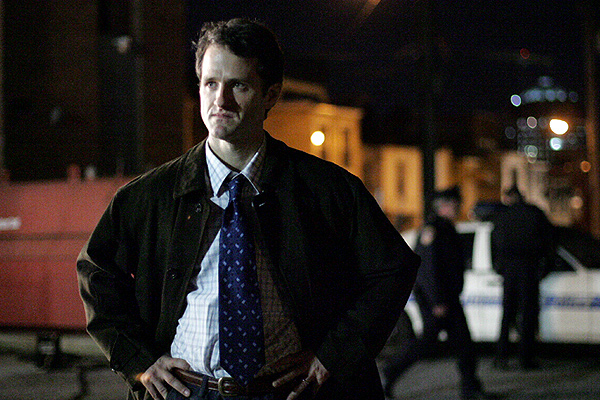
If Department of Justice Had only Watched “The Wire”

Peter Moskos continues to dissect the Department of Justice’s report on the Baltimore Police Department. It sounds just like the HBO series:

The system has several key deficiencies. First, BPD sets thresholds of activity that trigger “alerts” to supervisors about potentially problematic conduct that are too high. Because of these high thresholds, BPD supervisors often are not made aware of troubling behavioral patterns until after officers commit egregious misconduct. Second, even where alerts are triggered, we found that BPD supervisors do not consistently take appropriate action to counsel the officer, consider additional training, or otherwise intervene in a way that will correct the behavior before an adverse event occurs. Third, critical information is omitted or expunged from the EIS that could help address officer training or support needs or help prevent future misconduct.

It is clear that the Department has been unable to interrupt serious patterns of misconduct. Our investigation found that numerous officers had recurring patterns of misconduct that were not adequately addressed. Similarly, we note that, in the past five years, 25 BPD officers were separately sued four or more times for Fourth Amendment violations.

Minus the sex, of course:

Officers suffer from being supplied with outdated, broken, or in some cases, no equipment. As one officer noted to the Fraternal Order of Police in a focus group, “How am I supposed to pull someone over for having a taillight out when my car has two?”

Officers have no computers in their cars, forcing them to return to the district station to type reports, and even those computers are often not working…. Taking officers off the street to type reports at the district takes away from time that could be spent on law enforcement or community building activities. It also creates inefficiencies for officers who often must write reports on paper in the field while their memories of incidents are fresh, and then type the same information into computer databases after arriving at the district station at the end of their shift.

Jimmy and Freamon Never Had It This Good

Back then they needed a search warrant. Not now:

Shemar Taylor was charged with robbing a pizza delivery driver at gunpoint. The police got a warrant to search his home and arrested him after learning that the cell phone used to order the pizza was located in his house. How the police tracked down the location of that cell phone is what Taylor’s attorney wanted to know.

The Baltimore police detective called to the stand in Taylor’s trial was evasive. “There’s equipment we would use that I’m not going to discuss,” he said. When Judge Barry Williams ordered him to discuss it, he still refused, insisting that his department had signed a nondisclosure agreement with the FBI.

“You don’t have a nondisclosure agreement with the court,” replied the judge, threatening to hold the detective in contempt if he did not answer. And yet he refused again. In the end, rather than reveal the technology that had located Taylor’s cell phone to the court, prosecutors decided to withdraw the evidence, jeopardizing their case.

And don’t imagine that this courtroom scene was unique or even out of the ordinary these days. In fact, it was just one sign of a striking nationwide attempt to keep an invasive, constitutionally questionable technology from being scrutinized, whether by courts or communities.

The technology at issue is known as a “Stingray,” a brand name for what’s generically called a cell site simulator or IMSI catcher. By mimicking a cell phone tower, this device, developed for overseas battlefields, gets nearby cell phones to connect to it. It operates a bit like the children’s game Marco Polo. “Marco,” the cell-site simulator shouts out and every cell phone on that network in the vicinity replies, “Polo, and here’s my ID!”

Thanks to this call-and-response process, the Stingray knows both what cell phones are in the area and where they are. In other words, it gathers information not only about a specific suspect, but any bystanders in the area as well.

And they wouldn’t even need Pryzbylewski to break the code.

No peace, no justice.