And why don’t more serious Christians, the kind who worry about what their vote says about theeeehhhhhhmmmmmm, worry about profaning a holy day?
Remember that Protestants and Roman Catholics technically agree about the Lord’s Day even though they number the commandment differently (four and three respectively). Boniface recently wrote:
One final thing: even though the disappearance of a real catechesis about the Lord’s Day is a post-Conciliar phenomenon (perhaps with the exception of St. John Paul II’s Dies Domini), do not be tempted to think that flaunting the prohibitions against work on the Lord’s Day is something modern. As far back in history as one can find homilies, one can find examples of preaching against servile labor on Sundays. Even in the “golden age” of the 13th century, surviving homiletics reveal that working on Sundays and Holy Days was endemic; several chapters in the Fioretti of St. Francis are devoted to describing the misfortunes of peasants who worked on Holy Days. It is certainly not a post-Vatican II novelty. So please, no comments about how in the “old days” no Catholic would have ever dared work on Sunday.
We also should remember, in the Middle Ages there were many more days that were considered Holy Days where work was prohibited – so many so that many common folk complained about not having enough time to finish their work. I cannot cite the source, but I remember reading in one scholarly work on medieval calendars that in some places as many as 100 days out of the year were nominally supposed to be work-free. This was, of course, excessive, and by the 13th century many of these days were no longer being observed. This cluster happened as a result of the accumulation of universal and regional festal days over the centuries; it was not until after Lateran IV and the reforms of the late Middle Ages that the status of many of these feasts changed to make their observance more manageable.
Why then do the devout turn the other way when rooting for members of their tribe between the white lines? Here’s a piece on the Mets’ Rene Rivera that might tighten Boniface’s jaws:
Our own natural families grow bigger when we are part of the Catholic Church. Our fellow Catholics may not be related to us by blood, but they are related to us spiritually. That connection is one of the things that makes walking into a church so reassuring and peaceful.
Even more than that, though, is the real presence of Jesus in the Eucharist. Every Catholic parish has Jesus in the tabernacle, so that means you can feel comfortable spending all the time in the world there. If you’re praying in a Catholic parish, you’re not alone. Jesus is always there, and so is God the Father and Holy Spirit. Mary and the angels and saints are there, too.
Home plate is where I like to be for baseball, home with my family is where I like to be even more, and being “at home” in church is the very best place anyone can possibly be.
But what about Protestants (and the New Calvinists who root root root for them)? (Thanks to our southern correspondent) the Cubs’ Ben Zobrist seems to know (as does his pastor father) that he shouldn’t play on Sunday but that doesn’t stop him (or the Gospel Allies from rooting):
Ben and Julianna are both committed to the local church, even if finding a workable process took a few years to sort out, Yawn said.
“Ben is a hardcore local church guy,” Yawn says. “He cares about what’s happening at the local church level.”
Part of that rootedness comes from growing up in Eureka, where, after 28 years, his dad is still the pastor.
“We felt like Ben’s spiritual life was more important than his sports life,” his father says. “We wanted him to understand the importance of the local church. We didn’t let him play on teams that played on Sundays. . . . Nothing is more important than the Lord. I don’t think children make that connection if the parents don’t have that commitment.”
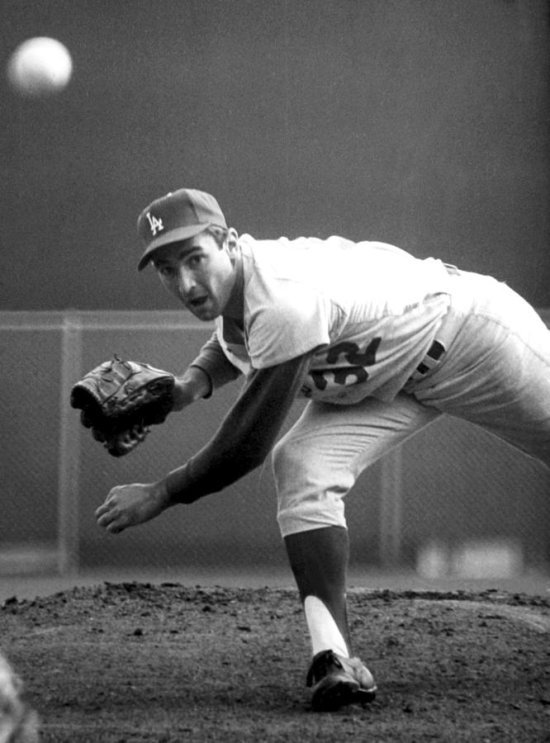
So Zobrist plays on Sunday, why? Even Sandy Koufax tried to observe the high holy days of Judaism much to Walter Sobchak‘s approval. Why can’t professing Christian athletes and their professing fans do the same?
 Old Life