 Apparently the Brothers B have dyslexia, though I am open to other explanations for how they garble other peoples’ writings and ideas. Tim Bayly has written yet another blast of their loud trumpet against 2k theology. This time they identify with the plow boy who knows right from wrong and they pit the common person against the egg-head academics who argue for a two-kingdom perspective and do so by often invoking the apostle Paul. Never mind that the simple apostle, Peter, like the Baylys apparently, found Paul hard to understand sometimes. The plow boy in the Baylys is a cocky little fellow who knows what he knows and disregards any instruction even after he steps in a big pile of mule manure because he was reading Bayly Blog on his I-Phone.
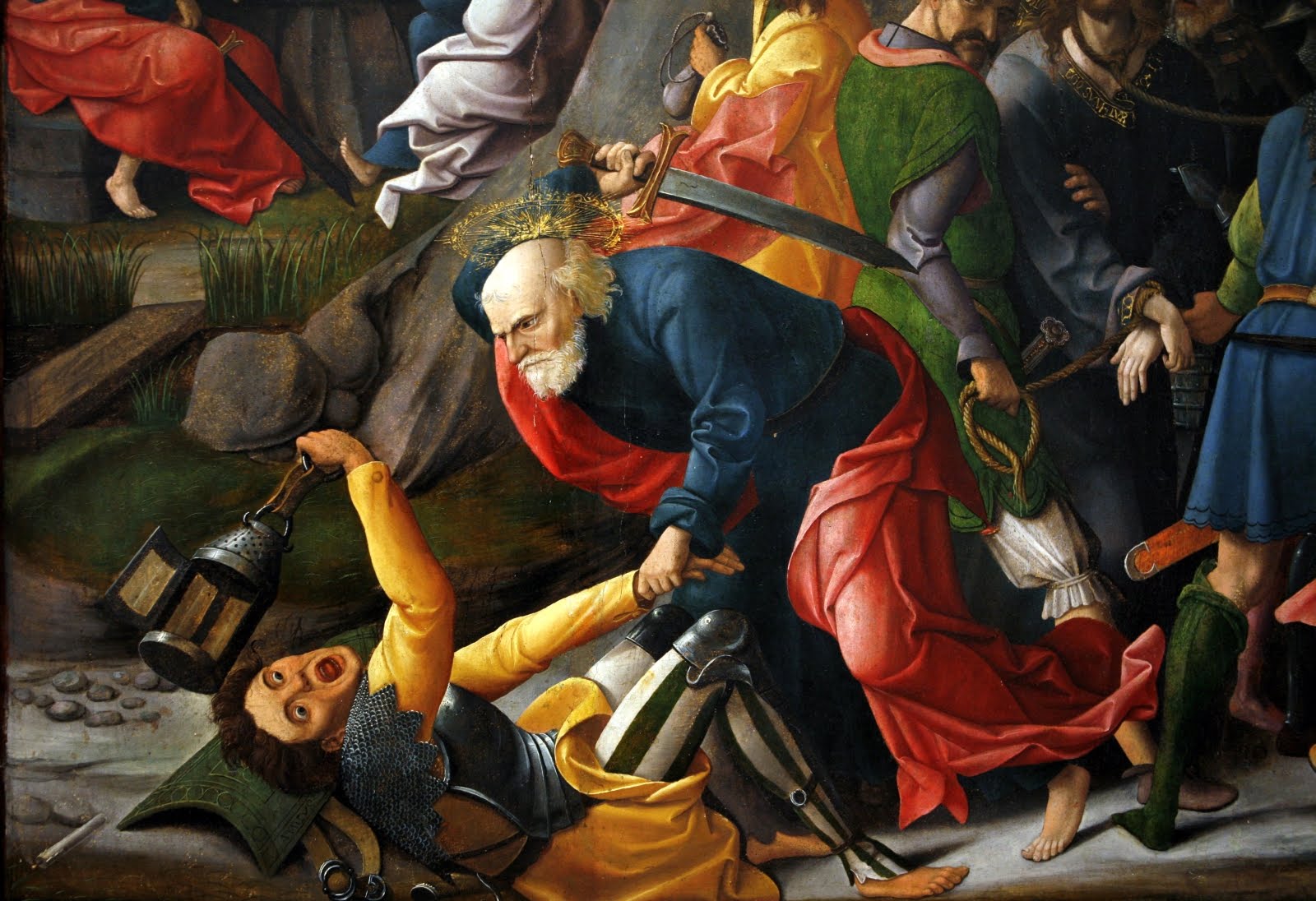
Aside from identifying with Peter’s roots as a man of the fishermen, the Baylys seem to be fond of rushing to judgment and action like the apostle did when evil is prevailing over the good. It was Peter, after all, who committed the only act of outright political defiance by the apostles when he raised the sword and took a swipe at one of the soldiers who arrested Jesus. Anyone with an ounce of sympathy for Christ can also appreciated Peter’s desire and courage in defense of his Lord at a time of great injustice. But Peter still didn’t understand, like the Baylys, that Christ’s kingdom comes not by a physical but a spiritual sword.
That is what 2k strives to clarify, the spiritual nature of the church.
But here is how the Baylys once again misrepresent 2k in tones quite out of tune with the love the repeatedly profess:
They [2k men] are fixated on silencing the voice of their fellow citizens who are religious, particularly those citizens who profess faith in Jesus Christ. Their endless political message is that no man may speak for God outside the privacy of his own home and church-house; and that if he does choose to speak as a citizen of these United States, he must be ever so careful to make it clear he’s not speaking for God or His Church. Our form of government requires him to parse his words and mince his sentences and nuance his tone so that no civil magistrate or fellow citizen will feel threatened by Christians-as-Christians, let alone Church-members-as-Church-members or Church-officers-as-Church-officers. This is the nature of our civil compact, and if religious people speak for God and His Church and people, they are violating that civil compact.
Wrong! The Bible actually requires ministers to parse their words carefully. And the Reformed interpretation of Scripture insists that ministers have a biblical warrant for when they declare what the Lord requires. And lo and behold, one of the doctrines the Bible teaches is liberty of conscience. Again, the egg-headed apostle Paul, did a good job of teaching a doctrine that plow boys and Brothers Bayly have trouble grasping when he talked about the liberty that Christians have to eat meat offered to idols.
According to the Bible, idolatry is wrong.
Also, according to the Bible, meat produced by idolatry is not wrong.
Also, according to the silence of Scripture, ministers are not required to shut down the butchers who sell the meat produced in false temples.
Let’s see about the Baylys red-letter edition of the Ten Commandments.
According to the Decalogue, murder is wrong.
Also, according to the Bible, the penalty for murder is not specified (unless you are a theonomist), which means Christians are free to support and oppose the death penalty.
Also, according to the Bible, ministers are not required to petition the government to punish murderers. Christians themselves as citizens may be free to do so.
But ministers cannot condemn as sinful something about which Scripture is silent.
In which case, the Baylys have substituted their word for the word of God in denouncing as sinful 2k theology.
Here’s the icing on the cake: 2k theology was the doctrine that informed J. Gresham Machen’s opposition to the church’s support for Prohibition and teaching Scripture in public schools. According to Machen:
. . . you cannot expect from a true Christian church any official pronouncements upon the political or social questions of the day, and you cannot expect cooperation with the state in anything involving the use of force. Important are the functions of the police, and members of the church, either individually or in such special associations as they may choose to form, should aid the police in every lawful way in the exercise of those functions. But the function of the church in its corporate capacity is of an entirely different kind. Its weapons against evil are spiritual, not carnal; and by becoming a political lobby, through the advocacy of political measures whether good or bad, the church is turning aside from its proper mission. . . .
Now, of course, the Baylys are not required to affirm Machen’s argument, and their previous credentials within a communion that excommunicated Machen might account for their lack of sympathy for his spirituality of the church idea. But if they are going to re-write the informal rules governing conservative Presbyterianism post-1950 and banish Machen from the list of worthies, they will need to do more than blow their trumpet. They might actually need to read and think about Machen’s reading of Scripture.


 Old Life