I told you so:
There’s another problem here. Many of the best pollsters lack a deep understanding of the subtle outlines of the thing they’re trying to measure. It’s hard enough to quantify evangelicalism when you basically, if vaguely, grasp what it is, but it’s almost impossible to do so if you’re otherwise unable to tell a Pentecostal from a Presbyterian. So it would seem like the pollsters best-qualified to tackle this tricky business would be those with a first-hand, native-born understanding of what American evangelical Christianity is really like — knowledge that comes from living it on the inside.
But there’s a little problem with that, and a big problem with that. The little problem, as we’ve already mentioned, is that evangelical Christians themselves aren’t usually any better able to limn the outlines of their category than anyone else — hence the NAE turning to a British scholar of religious history to describe for them who they are. As the old joke says, if you want to know what water is like, don’t ask a fish.
The big problem, though, is a doozy. Part of the character of evangelical Christianity is that it is contentious and disputed. Bebbington didn’t include this in his quadrilateral, but it has been true ever since at least the Reformation, and it greatly intensified throughout the 20th century. Evangelicalism is, among other things, a category of people who are perpetually arguing over which among them does and does not legitimately belong in that category. The definition of “evangelical” provided by any given evangelical, therefore, tends to be fraught. Evangelicals have a hard time measuring their group without taking the opportunity to declare that others aren’t measuring up and don’t legitimately belong with the rest.
So even though we have some very skilled evangelical pollsters and data-crunchers, and even though they’ve done some laudable work trying to refine their measurements and metrics, these folks also tend to be bound up and beholden to the very same evangelical institutions involved in the tradition’s never-ending disputes over legitimacy. When those institutions seek a head-count of evangelicals or a measure of evangelical opinions, they’re almost always also seeking to count others out.
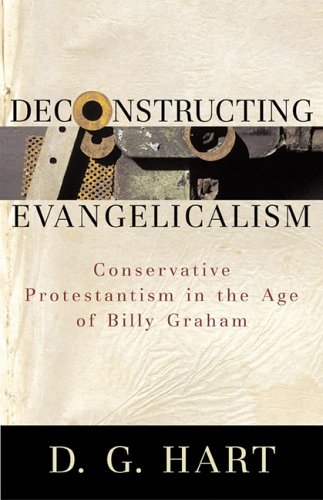
Back then W. was in the White House, evangelicals had access to power, and White Christian America was only in critical condition. Deconstructing evangelicalism then was a lot harder to do than it is in the age of Trump.

 Old Life