 Not exactly, but the pastor of Redeemer Presbyterian Church in New York City did say in his interview with Mike Horton at the White Horse Inn that confessional Christianity is the answer to the problems confronting the contemporary church. Okay, he said, “confessional evangelical†Christianity, which to confessional Protestants is a bit of an oxymoron since evangelical stands closer to pietist than confessional on the spectrum of Protestant Christianity. Even so, there Keller was telling Mike and company that teaching the Heidelberg, and adding more liturgy, is what the ailing Protestant witness needs. Along the way, Keller said that confessional churches were the proper antidote to megachurches, which at least in his experience are too slick, too entertainment oriented, and too consumerist for the sophisticates who reside in Manhattan.
I sure wish Mike had asked Keller more about confessional Protestantism and where Redeemer Church is exactly on the faith and practice of Reformed Christianity. Granted, Keller was on to talk about his book, Reasons for God, which is a work of apologetics, not pastoral ministry. Even so, the discussion was revealing if only because reaching unbelievers is something that has bound Redeemer closer to Willow Creek than Keller let on with his contrast between confessional and megachurch churches.
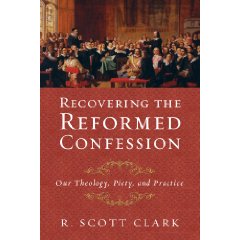
What Keller did not concede is that he and Bill Hybels have emerged as gurus for an approach to church planting that is “seeker-sensitive.†The seekers may be suburban Chicagoans or cosmopolitan New Yorkers. But in both cases the stress has been more on winning people over than on discipling the won in the whole counsel of God, as in the Great Commission’s “everything I have commanded you.†This is not to say that evangelism is wrong or bad. It is to question whether evangelism is the paradigm for a full-service church in the tradition of Reformed confessionalism. I mean, if you classify your worship services according to musical style as Redeemer does – classical or jazz – you may not exactly have read through Clark’s Recovering the Reformed Confession about the nature and piety of confessional Protestantism.
What makes this point even more plausible is something that Keller wrote about a month before appearing on Horton’s show. At his blog Keller wrote:
The time at Willow led me to reflect on how much criticism this church has taken over the years. On the one hand, my own ‘camp’ — the non-mainline Reformed world — has been critical of its pragmatism, its lack of emphasis on sound doctrine. On the other hand, the emerging and post-modern ministries and leaders have disdained Willow’s individualism, its program-centered, ‘corporate’ ethos. These critiques, I think, are partly right, but when you are actually there you realize many of the most negative evaluations are caricatures.
Keller goes on to say that with the assistance of John Frame he has come to a new appreciation for Hybels and Willow Creek. (Note: Keller and Frame share more than tri-perspectivalism in common; they also understand the nature and character of Reformed worship in ways that contravene the regulative principle as found in both the Westminster Standards and the Three Forms of Unity.) According to Keller, applying Frame, Willow Creek manifests a “a ‘kingly’ emphasis on leadership, strategic thinking, and wise administration.†Keller admits that sometimes the Willow Creek model “obscures how organic and spontaneous church life can be.â€
But that concession leads Keller once again to give another of his “with-presbyters-like-this-who-needs-evangelicals†stands for the Reformed tradition. He writes that “Reformed churches have a ‘prophetic’ emphasis on preaching, teaching, and doctrine†but the danger is “a naïve and unBiblical view†which assumes “that, if we just expound the Word faithfully, everything else in the church — leader development, community building, stewardship of resources, unified vision — will just happen by themselves.†(To complete Frame’s triangle, Keller credits the emergent church with an emphasis on community, liturgy and sacraments.â€)
This perspective on the Reformed ministry does explain why Keller didn’t endorse Clark’s book. It also indicates why Keller and the rest of Redeemer’s staff need to read it. Confessional Protestants do not believe simply, to paraphrase a line from Field of Dreams, “if you preach it, they will come.†I know pastors in the Redeemer NYC diocese who accuse the Reformed tradition of being logocentric. If that means affirming the formal principle (sola scriptura) of the Reformation, then I’ll accept the label.
But church life is much more than preaching and teaching the Bible and our Reformed confessions teach this. They say all sorts of interesting things about word, sacraments, prayer, discipline, worship, the Lord’s Day, communion, ordination, and polity. They all assume that these teachings require the efforts of pastors and elders who attend session and consistory meetings, presbyter and classis, General Assembly and Synod, visit with families in their homes and the sick in hospitals, catechize the youth, practice hospitality, and prepare high-carb casseroles and jello salads for pot-luck suppers.
That kind of hands-on, local ministry is what animates confessional Presbyterianism. As Old Lifers know, it is seeker-sensitive in the best sense of the phrase, namely, serving the God who seeks Christians who worship in spirit and truth.



 Old Life