
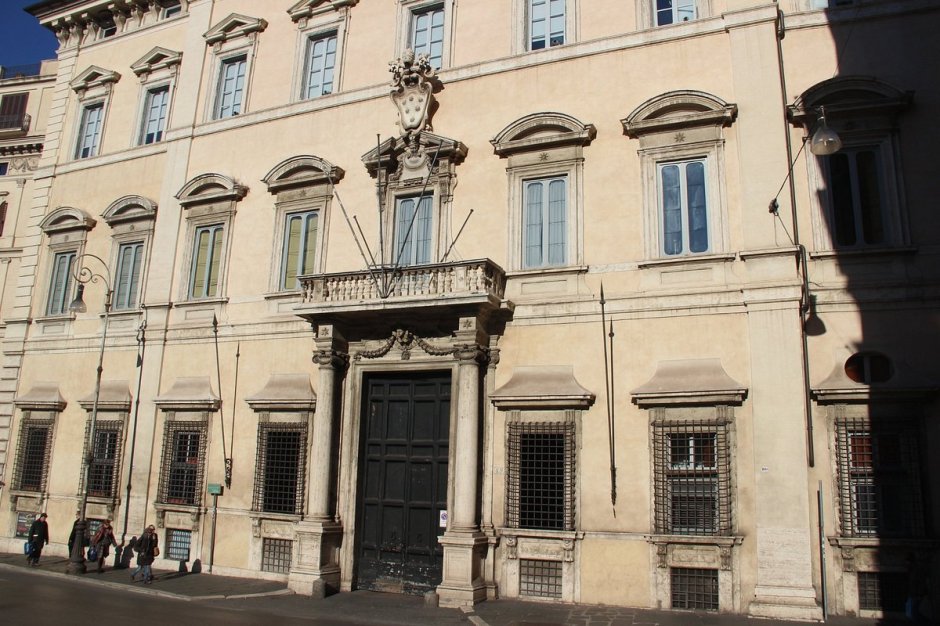
About a decade ago, while in Rome for a seminar and some sight-seeing on the side, I worshiped at St. Andrew’s Church, Rome (a reminder of which came from discovering a short pamphlet on the congregation’s history). What follows are a couple paragraphs from the congregation’s booklet on the early history of Presbyterianism in Rome. Not only is the illegality of Presbyterian worship striking, but so to is the kind of cooperation that ministry overseas encourages among Protestants from different communions. (For another example, consider the example of Seceders, Church of Scotlanders, and Free Church Presbyterians at odds and then cooperating to for the Presbyterian Church of Canada.)
The Church in a House
The experiment began in the Apostolic manner in “a hired house” and in a room holding thirty-five people. Being within the walls of Rome, meeting for Protestant worship within a house constituted an illegal act. In March 1862 Mr. Laughton reported to Edinburgh that “as he” he had not “been interfered with by the police.” This small, valiant group of Presbyterians, drawn mainly from Scotland and America, continued in their clandestine worship under the shadow of the Inquisition until 1864. By drawing their visiting chaplains from the three Presbyterian churches then prevailing in Scotland, they gave within the walls of Rome, historic instance of non-Roman ecumenical cooperation.
In 1864 Dr. James Lewis of Leith was appointed the first permanent minster. By then the activities of the Scots Kirk had attracted the attention of the police, and those who came to worship were warned to carry no Bibles openly, and to leave the house in twos and threes. Despite the fact that no advertising was allowed, the congregation grew, and had to move to a larger room in Via del Babuino.
The Church in the Garden
The story of that achievement is full of adventure. As Dr. Lewis used to say while the church was being built “It is more in danger from the bombs of Italian troops than from the Bulls of the Pope.” When the building was opened on the second Sunday of 1871, Rome had been freed from Vatican control four months earlier, on 20th September, 1870. As the worshipers entered their new sanctuary on Italian territory, they could enjoy the scent of violets from the surrounding fields and a clear view of St. Peter’s across the Tiber, looking lovely but lonely, its Pontiff a prisoner within his own Vatican walls.
The ministry of that church was limited by a twenty year lease, by the growing congregation for which it was proving inadequate, and perhaps above all, by the death of Dr. Lewis a year after its completion. From 1872 until the appointment of Dr. J. Gordon Gray in 1881, the church was supplied by a succession of distinguished ministers from all three Scottish churches for about three months at a time. It was a spectacle of Presbyterian brethren dwelling and working together in unity; something which could not be said of all churches then in Rome.

