
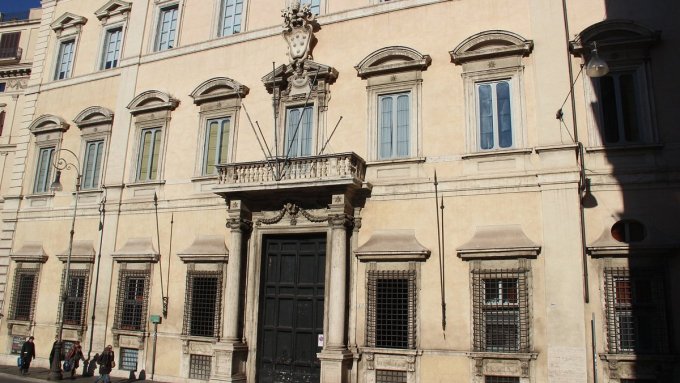
About a decade ago, while in Rome for a seminar and some sight-seeing on the side, I worshiped at St. Andrew’s Church, Rome (a reminder of which came from discovering a short pamphlet on the… More
Reformed Faith and Practice
About a decade ago, while in Rome for a seminar and some sight-seeing on the side, I worshiped at St. Andrew’s Church, Rome (a reminder of which came from discovering a short pamphlet on the… More

Reactions to the terrorist attack then and now (25 years later) have been hard to miss or experience. One conferee this past weekend in Baltimore who gathered to honor H. L. Mencken’s cynical wit (and… More
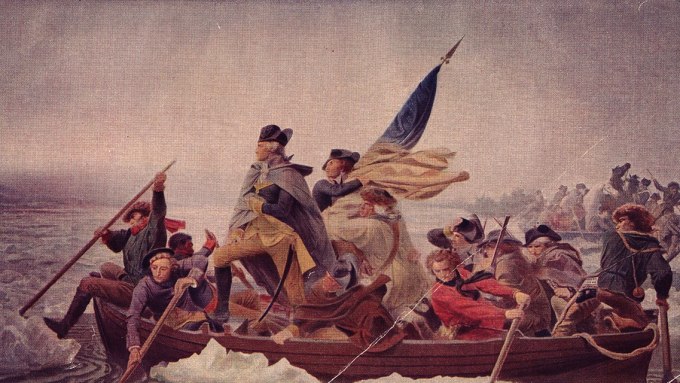
If George Washington were alive today, what a shining mark he would be for the whole camorra of uplifters, forward-lookers and professional patriots! He was the Rockefeller of his time, the richest man in the… More
What is it about the younger generation of manly Protestants who dabble in Christian nationalism and write for outlets like American Reformer and Davenant? With all of the calls for Protestant ressourcement (the last syllable pronounced “maw”!), the awareness of the past among some of these writers is surprisingly limited when it comes to recent history. The case of evangelical elites as scholars with standing in the mainstream academy is a case in point.
A couple of recent complaints about the failure of evangelical institutions to hire and sustain scholars of distinction echo Aaron Renn’s argument about the absence of evangelical elites. [link to first article. One asserts that evangelical colleges do not snatch up “credentialed, talented, and scholarly” Protestants as they should. Why didn’t said institutions either snatch them up for themselves or work to propel them to “mainstream” posts? The piece goes into accusation mode:
You, Evangelical elite, are not retaining potential talent, those people who fit the bill, who are “200% respectable,” as Renn put it. If you fail in this regard, you will not be able to reproduce or extend your rule. You aspire to elite status, you take all your cues from the broad mainstream elite world, but you neither staff your own colleges (i.e., elite production) nor staff those outside your predominantly clerical institutions.
The other complaint faults evangelicals for failing to think in theological categories about their scholarly work:
The bottom line is that Catholic intellectuals tend to assume that all theology is relevant to all areas of intellectual endeavor. If it’s not obvious how, it’s still worth assuming it nevertheless until it becomes apparent. On the other hand, theology for the evangelical scholar tends to be a sort of God-of-the-gaps, an occasional mortar to stick in crumbling joinery.
What both of these writers, as well as Aaron Renn, miss is that as recently as twenty-five years ago evangelical scholars were actually elites in American universities. The October 2000 issue of The Atlantic Monthly devoted a cover story to scholars at (then) Calvin College and Wheaton College as part of “The Opening of the Evangelical Mind.” Part of Alan Wolfe’s conclusion after covering the breadth of evangelical colleges and scholarship was a warning:
So long as they continue to marginalize themselves, evangelicals will be unable to equal the accomplishments of the generation that brought us Marsden, Noll, Plantinga, and Wolterstorff. That would be the true scandal of the evangelical mind.
That negative judgment should not obscure the recognition that evangelical institutions actually had nurtured elite scholars in philosophy, history, and sociology (for starters). To be sure, Wolfe faults evangelicalism for separatism and parochialism which could support those calling for more and better evangelical elites. Someone could say that with all the accomplishments of the generation of scholars associated with Mark Noll and George Marsden, they were still unable to create a set of institutions that reliably produce elite professionals.
And yet, those calling for evangelical scholars today do not consider the effort to create an evangelical mind that began roughly in the 1970s (I am currently writing a book about this, tentatively titled, The Rise and Fall of the Evangelical Mind). That collective endeavor which went from Gordon College in the East to Westmont College in the West, and depended on the Rust Belt center of gravity at Calvin, Wheaton, and Notre Dame (thanks to a Protestant provost), lasted all the way until 2015 or so (which coincides with Renn’s point about the start of the Negative World). Today’s proponents of Protestant scholarship could well consider the earlier building blocks of the evangelical mind and how it unraveled.
But the failure to consider the recent past is not the fault alone of the recent advocates of an evangelical elite. Even those who promoted the creation of an evangelical mind, complete with a Kuyperian w(orld-and-life-vie)-w had not studied the efforts of mainline Protestants in the 1950s who themselves argued for a Protestant mind. Those Christian scholars were remarkably successful in creating religion departments at colleges and universities where undergraduates studied Scripture, ethics, and church history. That endeavor also ran out of gas eventually, partly because the professionalization of religion as an academic discipline inevitably watered down the aggressively Protestant character of religious studies. But this is another case from which advocates of an evangelical elite might learn about the arguments, scholarship, and institutions that made a Protestant mind possible.
Despite the lessons that history might teach about the creation of an evangelical elite now, a fundamental hiccup in the ideal, whether mainline Protestant, evangelical, or Christian nationalist, is the distinction between the sacred and the secular that pietists (high and low brow) refuse. Simply put, teaching Sunday school and preaching is different from teaching an undergraduate seminar at a private college. The church is not the academy. The credentials the Christian ministry requires – a seminary degree and ordination – is not the same as the gate by which scholars may enter the academy – a terminal degree and accreditation. The church is a private and voluntary institution in ways the academic is public and involuntary (through government oversight and regulation).
Some proponents of aggressive Protestantism may object to the academy’s use of standards other than the ones that govern the church. They could argue that all institutions should submit to Christ (which is the academic version of Christian nationalism). But that is not how the world of universities and specialized research works. Nor is the lack of a Christian vision the reason that Protestants use for using evaluating academic, medical, and legal experts whether or not they are Christian.
What makes scholarship special is its capacity to make sense of most parts of the world, not that it is based on the Christian faith of the scholar. To suggest that Christians need Christian scholars so that believers can have trustworthy learning is as pietistic as it is fundamentalist.
Trying to situate Aaron Renn on the landscape of twenty-first century American Protestantism is a tall order. The Indiana native, who consults on urban planning and opines about churches, describes himself as a writer who covers “the human, cultural, and institutional foundations of American flourishing during an era of transition.” (Full disclosure: as someone who considers himself an urbanist, I regularly read and benefit from Renn’s social media links and commentary on urban planning, politics, and economies.)
Renn came to the attention of many with his First Things article (Feb. 2022) on the three worlds of evangelicalism, a scheme that identified 2014 as the beginning of an era when being Christian in America was no longer an asset but a defect. This was around the same time that he helped to found “American Reformer” as an outlet for aggressively Protestant reflection about politics and society. Over time, “American Reformer” became a platform for pronouncements on Christian nationalism, though Renn never seemed to embrace the label. His outlook about the importance of Christians establishing culture-shaping institutions is clearly compatible with Christian nationalism but Renn himself has not waded into those turbulent and sometimes dirty waters.
One other part of Renn’s body of work so far to attract attention is his lament about the absence of evangelical elites. Again at First Things (where the editor, Rusty Reno, features an odd selection of Protestant writers), Renn wrote the provocative article, “The Problem with the Evangelical Elite” (December 2025). The problem comes at readers fast and hard in Renn’s opening paragraph:
The problem with the evangelical elite is that there isn’t one. All too few evangelical Christians hold senior positions in the ―culture-shap―ing domains of American ―society. Evangelicals don’t run movie studios or serve as editors in chief of major newspapers or as presidents of elite universities. There are no evangelicals on the Supreme Court. There are hardly any leading evangelical academics or artists. There are few evangelicals at commanding heights of finance. The prominent evangelicals in Silicon Valley can be counted on one hand. There are not even many evangelicals leading influential conservative think tanks and publications, despite the fact that evangelicals are one of the largest and most critical voting blocs in the Republican coalition.
Renn goes on to offer an explanation for the problem. Evangelicals stress soul-winning over vocation and lack institutions that incubate leaders in business, law, technology, and higher education. But his analysis comes with a reason to be concerned about the lack of evangelical elites. Renn views the United States as a society coded Protestant. Consequently, for the country to go forward in a healthy way, it needs people who come from America’s historic religious heritage. “America needs Protestants to take on the leadership burdens of society,” he writes, “and in view of the dramatic decline of mainline Protestantism, they must come from evangelical ranks.”
Renn does concede the presence of evangelicals in certain elite positions but deems this inadequate for providing real leadership. The one place where evangelicals produce “elites” is in Christian ministry. Renn writes, “evangelicals overwhelmingly fund and support people who focus on Christian ministry” and create “pathways to sponsorship for missionaries, church planters, and campus ministers.” They do not do the same for “people engaged in secular domains and activities.” Renn used Grok to supply the receipts. When asked about the top evangelical leaders, AI supplied the names of “fifteen evangelical elites” that was “100 percent pastors and other professional Christians.” A similar query for Roman Catholics produced a list where only 20 percent were clergy.
Renn’s nonchalance about evangelical pastors and theologians may explain why he pays so little attention to the communions that belong to NAPARC. He does not say this explicitly, but it comes through in the people he does interview on his podcast. He has hosted leaders of the Reconquista in mainline Protestantism, both Jake Dell (another contributor to First Things), a Congregationalist in Woodbury, Connecticut, and Richard Ackerman of Redeemed Zoomer fame, as an apologist for the PCUSA. In fact, when Rusty Reno interviewed Renn as a follow up to his article on evangelical elites for the First Things podcast, the Hoosier consultant praised the Social Gospel, political Progressives, and the mainline churches that spread those movements a century ago. This is not meant to score points by brushing Renn with the guilt of Progressivism and the Social Gospel. It is, though, an observation that suggests Renn has a soft spot for Protestants whose theology and practice did not measure up even as they transformed (for a time) American society.
NAPARC does register occasionally on Renn’s radar. At “American Reformer,” Renn wrote positively about two PCA pastors who have articulated a “positive vision for America.” One is C. R. Wiley’s First Presbyterian Church of Battle Ground, Washington. Renn observes that this church is “creating well-paying jobs and paying taxes, turning vacant downtown buildings into a farmers’ market and bakery, and building an architecturally significant new church that provides needed community and conference-center space.” More than a church, First Presbyterian is also building community.
The other NAPARC exception is the exceptional Tim Keller. Renn argues that Keller’s book Every Good Endeavor explains the doctrine of vocation in a way that “comprehends the exercise of power—that validates and valorizes people who reform public policy, invent new technologies, become presidents of elite universities, acquire major media properties or foundations, organize research teams, or serve as Supreme Court justices.”
Renn also credits Keller’s last white paper, “The Decline and Renewal of the American Church,” with calling for the “creation of a think tank, the endowment of chairs at top universities, the creation of grants for young Christian scholars, and the establishment of a Christian equivalent to the Federalist Society.” This is the sort of infrastructure necessary to cultivate evangelical elites. In his “American Reformer” article, Renn added “people today could learn from figures like Keller, who built an influential institution grounded in an expansive vision of the future.” The New York City PCA pastor was doing what Protestant leaders “have done throughout our national history,” namely, created “the institutions and norms that are absent today.”
What is especially odd about Renn’s reflections on Protestant churches and American society is that the institution-building conservative Protestants performed after liberalism and the Social Gospel captured the mainline denominations – creating seminaries, denominations, colleges, magazines, publishing companies – don’t register on Renn’s elite Protestant meter. Of course, they should not because these conservative Protestant institutions are not producing the leaders of Silicon Valley or qualifying for nominations to the U.S. Supreme Court. But for a man who pays attention to institutions, it is surprising that Renn pays so little to the institutions that comprise NAPARC — the very institutions that shaped Renn’s beloved Keller. Instead, he himself starts new institutions like “American Reformer.”
The other odd part of Renn’s institutional analysis is a failure to see where churches becoming leaders in the community leads. This is a lesson that ChristNats should also consider. The mainline churches a century ago abandoned the teaching of orthodox pastors and theologians who were not obvious leaders in their communities but leaders in the church, charged with trying to remain true to the teachings of Scripture and the practices of their communions. What led to the failure of Protestantism in the United States at elite levels was the loss of Protestant faith at elite levels. Mainline Protestants remained moral and culturally Protestant (especially in opposition to Roman Catholicism and in support of American exceptionalism). But in the words of H. L. Mencken, they tried “to get rid of all the logical difficulties of religion” and were left with “ a row of hollow platitudes, as empty as of psychological force. . . as so many nursery rhymes.”
Aaron Renn is a smart fellow and well worth reading about urban planning, economic development, rents, architecture, traffic rotaries, and mass transit, but he has apparently yet to consider the paradox that haunts Christianity. Christ taught in Matthew 16:25: “For whoever would save his life will lose it, but whoever loses his life for my sake will find it.” That verse need not relegate Christians to a perpetual underclass of underachievers. But Christ’s words suggest a paradoxical relationship between Christian devotion and cultural success that moved John Newton to write in his famous hymn, “Glorious Things of Thee Are Spoken”:
Fading is the worldling’s pleasures,
all his boasted pomp and show;
solid joys and lasting treasures
none but Zion’s children know.
Every honest student of church history has seen near term success turn into fool’s gold of apostasy. Surely, Renn could offer a few warnings about the dangers of elite Christianity.

Part one is here.
In the seventh chapter of The Case for Christian Nationalism, Stephen Wolfe tries really hard to sound like David VanDrunen. That is, he traffics strongly – two lanes worth – in the two-kingdom distinction between Christ’s rule as creator and redeemer. 2kers employ that distinction to elaborate how Christ’s rule over the state is different from his rule over the church even if both governments derive their power from the same Lord.
This distinction between creation and redemption, between civil authority and church power, also often explains 2kers’ willingness to affirm the legitimacy of civil authorities who are not professing Christians. Because pagans and Christians both use natural law to govern society, requiring civil magistrates to be Christian shows hesitation about the integrity of the creational and redemptive spheres, not to mention having doubts about Christ’s capacity to rule the civil sphere through the magistrates he providentially appoints.
These distinctions and worries inform Wolfe’s discussion of “The Christian Prince.” He sounds the most 2k when he quotes Calvin and Rutherford approvingly. Calvin distinguishes between one government which pertains to eternal life (spiritual) and the other which “pertains only to civil institutions and the external regulations of manners.” [301] Rutherford echoes Calvin when he contrasts civil and spiritual power. The civil authority is “coactive by the Sword, the other free, voluntary by the Word.” [303] Wolfe carries this distinction forward when he insists that “no ecclesiastical institution wields civil-like power over itself or over its members.” Churches are subject to civil authorities in such matters as building codes and emergency orders. But the church’s divine ministry – preaching, the sacraments, church discipline – “are outside the civil jurisdiction.”
Those distinctions between earthly and eternal matters, between repairing potholes and baptizing babies, are ones that Wolfe tries to explain and affirm. He acknowledges that discussions of church and state cannot escape 2k’s host of contrasts – “civil/spiritual, natural/gracious, earthly/heavenly, power/grace, or outward/inward.” He does not include sacred/secular but it is another in the 2k toolkit, however much Kuyperians have demeaned the distinction with the bumper-sticker phrase, “every square inch.” (Don’t the Dutch use the metric system?)
But Wolfe ties himself in knots when he tries to find ways for the Christian Prince to order civil affairs so that his subjects will – trigger warning – gain eternal life. For instance, he writes, “Christ’s mediatorial reign does extend to all things in a way, in that all things ought to be ordered to the spiritual kingdom.” He adds that the civil kingdom, “by its nature, is obligated to order the people to the things of eternal life” and those things are only found in “Christ’s spiritual kingdom.” For this reason, Christ’s “spiritual reign extends to the civil kingdom.” “Christ as spiritual Head of his church has instituted what the civil kingdom ought to order itself to.” [306]
At that point, Wolfe takes away the 2k that he had previously offered by way of Calvin and Rutherford. Instead of keeping the distinctions between creation and redemption intact, Wolfe collapses them.
Maybe the best example comes a page later after trying to give the civil kingdom spiritual significance. He does so by distinguishing Christians as church members versus Christians as the people of God:
Since the spiritual kingdom does not possess civil power, the civil kingdom cannot arise out of the spiritual kingdom. Nor does the civil kingdom arise out of the visible church (strictly speaking), for the visible church is the externalized spiritual kingdom. Civil power is indeed divine in origin but still natural to man as man. It is an instrument of human institutions. It originates in God, the creator, and is devolved through human consent.
So far, so 2k.
Hence, a Christian people can erect a civil kingdom, though not as the visible church but as the people of God. It is worth citing Franciscus Junius again: ‘For to the extent that we may be Christians, we do not cease being humans, but we are Christian human beings.’ A civil kingdom, instituted by a group of the people of God, is fundamentally human, follows natural principles, and possesses the same kind of civil power as all civil kingdoms. Yet, as I’ve repeatedly stressed, the fact that it is fundamentally human does not (like the family) preclude it from being Christian.
That last series of sentences reveals the main problem. Wolfe can acknowledge the legitimacy of “all civil kingdoms,” Christian or not, because their origins are creational or natural. But simply leaving civil authority on the relatively stable basis of the created order is not sufficient for Wolfe who wants – you may have heard – a Christian civil government (or nation). For that reason, he equivocates — just because the government formed by Christians is fundamentally human and natural does not mean it cannot be Christian.
This is a problem as the heart of Wolfe’s proposal. The civil government’s true purpose really is what is unusual if not controversial about Wolfe’s argument. He grants to the Christian prince a Christian mission:
The Christian prince is a civil ruler (as divinely ordained in nature) who possess and uses powers (both civil and interpersonal) to order his people to commodious temporal life and to eternal life in Christ.
That is Wolfe’s own definition. He adds, “if the prince must order his people to eternal life (by natural duty), and eternal life is attained only in Christ, the prince ought to order his people to eternal life in Christ.” Wolfe explains that the prince does this by laws, custom, personal example – not through word and sacrament.
This is a view of the prince that has no basis in the New Testament. Paul and Peter understood that the pagan emperors were divinely appointed to administer the laws of nature, but they would have been gobsmacked to think the Roman governors, Jewish kings, or Rome’s emperors were called to direct people to eternal life.
Wolfe invokes Calvin’s preface to the Institutes where he appeals to Francis I, King of France, to ensure that God’s glory and truth be preserved on earth. What Wolfe does not do is cite exchanges between Calvin and Geneva’s city government. When Calvin went beyond what the Christian councilors wanted on powers of excommunication, the Christian magistrates of Geneva told Calvin to take a hike.
The question Wolfe needs to answer is how he comes up with the idea that civil government’s purpose is to direct people to eternal life. Is it because he needs all things in life to be explicitly devout and reassuring? It is because he has lost confidence in the church as the means of carrying out the plan of salvation? Is it simply a function of the status envy that haunts members of NAPARC churches when they realize how small and marginal their denominations are?
Whatever the reason, the Christian prince that Wolfe defines and advocates would have been inconceivable to Jesus and the apostles for accomplishing the Great Commission.

Christian nationalists (hereafter ChristNats) tell us that the modern church has lost its way, not on the gospel or worship (though I wish they’d pay attention to the songs Protestants sing). Contemporary Presbyterians, ChristNats tell us, have lost the teaching of the Reformed churches on politics. Dating the instance of this loss can be tricky.
Did it happen with the American Founding, which many scholars associate with Lockean liberalism? Even if the American instance of political liberalism was a break with Christendom, ChristNats insist that the Founders were aggressively Protestant. That means that for most of the nineteenth century America still had a Christian government even though Covenanters were dissatisfied and wanted an amendment to the U.S. Constitution to make it truly Christian.
Sometimes ChristNats say positive things about Progressives, mainline Protestants, and the Social Gospel because those Americans were still trying for a Christian government.
This chronology leads many ChristNats to locate the origins of American Presbyterians’ loss of political moxie in the period after World War II, the so-called POSTWAR consensus (“postwar” capitalized because the United States has been involved in many wars resulting in many “POSTWAR!!!” eras).
Whatever the timing, ChristNats insist that contemporary Presbyterians “do the reading” of older Protestant theologians on politics and government. Such immersion in the sources will awaken people in the churches to a truly Christian understanding of government and ideally lead to a healthier society. Substituting Christian politics for POSTWAR liberalism will restore order, decency, and stability at least to the United States if not to all countries where Protestantism was the dominant faith.
This way of framing of Christian Nationalism – as the product of having done did the reading – could well confuse readers of Stephen Wolfe who was the first out of the blocks with a case for a recovery of Christian politics. His 2022 book, The Case for Christian Nationalism ignited discussions that prompted the PCA to commission a report on Christian nationalism. In the run-up to the 2026 General Assembly, Wolfe along with Zachary Garris and Sean McGowan wrote Report on Reformed Christian Politics in which the authors provided greater precision and historical examples in support of Wolfe’s 2022 book. Both of these publications promise instruction about a proper understanding of government based on Protestant sources older than the corruptions introduced by twentieth-century Presbyterians cooking, like frogs in the kettle, of American liberalism.
What is striking about this recent explanation of traditional Protestant politics is how difficult it is to understand. If someone wanted a guide to an unfamiliar subject, the teacher might use a primer or basic guide that walked a student through the elementary categories before subsequent lessons handling conceptually challenging material.
This relatively simple approach is exactly what readers find in the Westminster Confession chapter twenty-three on the civil magistrate, whether the 1646 original or the 1788 revision. The four paragraphs outline the foundational truths of Reformed politics as follows:
Each of the confession’s paragraphs say more, but the basic outline is straightforward. It explains where the authority of civil government comes from (God), reassures that Christians may actually bear the sword if called to serve in government, distinguishes the godly origins of the magistrate from the church’s spiritual responsibilities, and calls for Christians to be good subjects. In other words, God grants the sword, Christians may wield the sword, the sword is not redemptive, and believers are obligated to submit to the sword.
Some political theorists may quibble with the outline. But it is clear. And it represents the way seventeenth-century English and Scottish Protestants distilled their thoughts about government when speaking to fellow Christians in the pews and in Parliament. It is, in other words, a decent introduction for those who have not done the reading.
Compare this outline then to what Stephen Wolfe produced in the 2026 Report on Christian Politics. Keep in mind that in the book’s first chapter, Wolfe tries to clarify his argument from the 2022 Case for Christian Nationalism. As the introduction to Report explains, this “chapter, in part, is a philosophical argument for our main proposition: that civil government must promote true religion. The author grounds this claim in nature and follows the proper principia of practical philosophy (viz., nature and reason) while also demonstrating how revealed theology further specifies political conclusions, making possible a distinctly Christian politics that promotes the Christian religion.”
That is quite a wind up.
Here is the pitch, or the subheadings of the first chapter, “Reformed Political Theory”:
I. Distinguishing Theology, Ethics, Politics
II. The Definition of Politics
III. The Fundamental Principles of Civil Order and Common and Natural
A. Commonness
B. Nature and Grace
C. Natural Religion as Necessary to Commonwealths
D. The Magistrate’s Cognizance of True Religion
E. Civil Powers over Pastors
F. The Magistrate as Mediator
G. Civil Law
IV. Natural Affection
A. Affection, Duty, Action
B. Does Grace Relativize Nature?
C. Brothers and Sisters in Christ
D. How Grace Does Not Relativize Nature
V. Civil Power is Granted to Rulers Solely by the Consent of the People
A. Consent
B. Nations are Real
C. Nationalism
VI. Civil Politics as a Prudential Art
A. Religious Toleration
B. Christian America
That, as the kids used to say, is a mouthful.
Wolfe’s outline is also several steps removed from the basic categories of seventeenth-century Protestants. That could sound like a gotcha – see! SEE??!! – Wolfe is not a confessional Protestant. Since he is not an officer of a Reformed communion, we have no reason to expect him to hold to the Westminster Standards or Three Forms of Unity.
But what we might reasonably expect is for a recovery of Protestant politics to start with Reformed Politics 101, not with a seminar in political philosophy with flourishes of theological reflections on nature and grace, creation and redemption.
Perhaps the Westminster Divines were thinking all of Wolfe’s thoughts before him when they came up with the basic categories on the civil magistrate to be subscribed by church officers. Perhaps they would agree with Wolfe on “Commonness” or the “Magistrate’s Cognizance of True Religion” before then boiling down ideas about civil government for a confession of faith.
But chances are that Wolfe may be guilty of imbibing too much of the POSTWAR!!! consensus that he laments. If so, the cause of such error stems from spending too much time in graduate school and learning the ways that political theorists, steeped in the ways of American higher education downstream from the POSTWAR!!! consensus.
Wolfe was not wrong to go to graduate school. He is certainly not wrong to bring his training to bear on debates about Christian government and social decay. But his proposals are hardly thinking political thoughts after Althusius and Rutherford. The Case for Christian Nationalism and the Report on Christian Politics have a lot of twenty-first-century fingerprints on them. If Wolfe and other ChristNats want to recover the sources, then why not try to figure out why the Westminster Divines ordered their thoughts about the civil magistrate the way that they did?

Christian nationalists do not seem to consider that Christian magistrates or the laws that they write and enforce could ever have unintended consequences. If the advocates of Christian government ever read about the PREWAR consensus, the period that runs from 1870 to 1940, not only might they encounter Machen, the Presbyterian controversy, Progressivism, and liberal Presbyterianism, they might also have second thoughts when pining for a Christian government and laws that support Christian norms.
One example of Christian government encouraging religion for the public good is prayer and Bible reading in public schools. For some Protestants, these practices look wholesome and straightforward: a little dip into the Bible and a prayer at the beginning of the school day; what could possibly go wrong?
Machen supplied an answer:
I think I am just about as strongly opposed to the reading of the Bible in state-controlled schools as any atheist could be.
For one thing, the reading of the Bible is very difficult to separate from propaganda about the Bible. I remember, for example, a book of selections from the Bible for school reading, which was placed in my hands some time ago. Whether it is used now I do not know, but it is typical of what will inevitably occur if the Bible is read in public schools. Under the guise of being a book of selections for Bible-reading, it really presupposed the current naturalistic view of the Old Testament Scriptures.
But even where such errors are avoided, even where the Bible itself is read, and not in one of the mistranslations but in the Authorized Version, the Bible still may be so read as to obscure and even contradict its true message. When, for example, the great and glorious promises of the Bible to the redeemed children of God are read as though they belonged of right to man as man, have we not an attack upon the very heart and core of the Bible’s teaching? What could be more terrible, for example, from the Christian point of view, than the reading of the Lord’s Prayer to non-Christian children, as though they could use it without becoming Christians, as though persons who have never been purchased by the blood of Christ could possibly say to God, ‘Our Father, which art in Heaven’? The truth is that a garbled Bible may be a falsified Bible; and when any hope is held out to lost humanity from the so-called ethical portions of the Bible apart from its great redemptive core, then the Bible is represented as saying the direct opposite of what it really says. (On the Necessity of the Christian School)
Somehow Christian nationalists would have us believe that even of public school superintendants might garble the Bible, the Speaker of the House or the Secretary of State will not?
To borrow a line from Harry Emerson Fosdick, “what incredible folly.”

Did any American author write as forthrightly about death?
If it were possible for all of us to make our exits at great moments, swiftly, cleanly, decorously, and in fine attitudes, then the experience would be something to face heroically and with high and beautiful words. But we commonly go off in no such gorgeous, poetical way. Instead, we die in raucous prose--of arterio-sclerosis, of diabetes, of toxemia, of a noisome perforation in the ileo-caecal region, of carcinoma of the liver. The abominable acidosis . . . sneaks upon us, gradually paralyzing the adrenals, flabbergasting the thyroid, crippling the poor old liver, and throwing its fog upon the brain. Thus the ontogenetic process is recapitulated in reverse order, and we pass into the mental obscurity of infancy, and then into the blank unconsciousness of the prenatal state, and finally into the condition of undifferentiated protoplasm. A man does not die quickly and brilliantly, like a lightning stroke; he passes out by inches, hesitatingly and, one may almost add, gingerly. It is hard to say just when he is fully dead. Long after his heart has ceased to beat and his lungs have ceased to swell him up with the vanity of his species, there are remote and obscure parts of him that still live on, quite unconcerned about the central catastrophe. Dr. Alexis Carrel has cut them out and kept them alive for months. The hair keeps on growing for a long while. Every time another one of the corpses of Barbarossa or King James I is examined it is found that the hair is longer than it was the last time. No doubt there are many parts of the body, and perhaps even whole organs, which wonder what it is all about when they find that they are on the way to the crematory. Burn a man's mortal remains, and you inevitably burn a good portion of him alive, and no doubt that portion sends alarmed messages to the unconscious brain, like dissected tissue under anæsthesia, and the resultant shock brings the deceased before the hierarchy of heaven in a state of collapse, with his face white, sweat bespangling his forehead and a great thirst upon him. It would not be pulling the nose of reason to argue that many a cremated Sunday-school super-intendent thus confronting the ultimate tribunal in the aspect of a man taken with the goods, has been put down as suffering from an uneasy conscience when what actually ailed him was simply surgical shock. The cosmic process is not only incurably idiotic; it is also indecently unjust. . . .

the finish of a civilian in a luxurious hospital, with trained nurses fluttering over him and his pastor whooping and heaving for him at the foot of his bed, is often quite as terrible as any form of exitus witnessed in war. It is, in fact, always an unpleasant business. Let the poets disguise it all they may and the theologians obscure the issue with promises of post-mortem felicity, the plain truth remains that it gives one pause to reflect that, on some day not far away, one must yield supinely to acidosis, sink into the mental darkness of an idiot, and so suffer a withdrawal from these engaging scenes. "No. 8," says the nurse in faded pink, tripping down the corridor with a hooch of rye for the diabetic in No. 2, "has just passed out." "Which is No. 8?" asks the new nurse. "The one whose wife wore that awful hat this afternoon?" ... But all the authorities, it is pleasant to know, report that the final scene is placid enough. . . . The dying man doesn't struggle much and he isn't much afraid. As his alkalies give out he succumbs to a blest stupidity. His mind fogs. His will power vanishes. He submits decently. He scarcely gives a damn. (Exeunt Omnes, 1921)
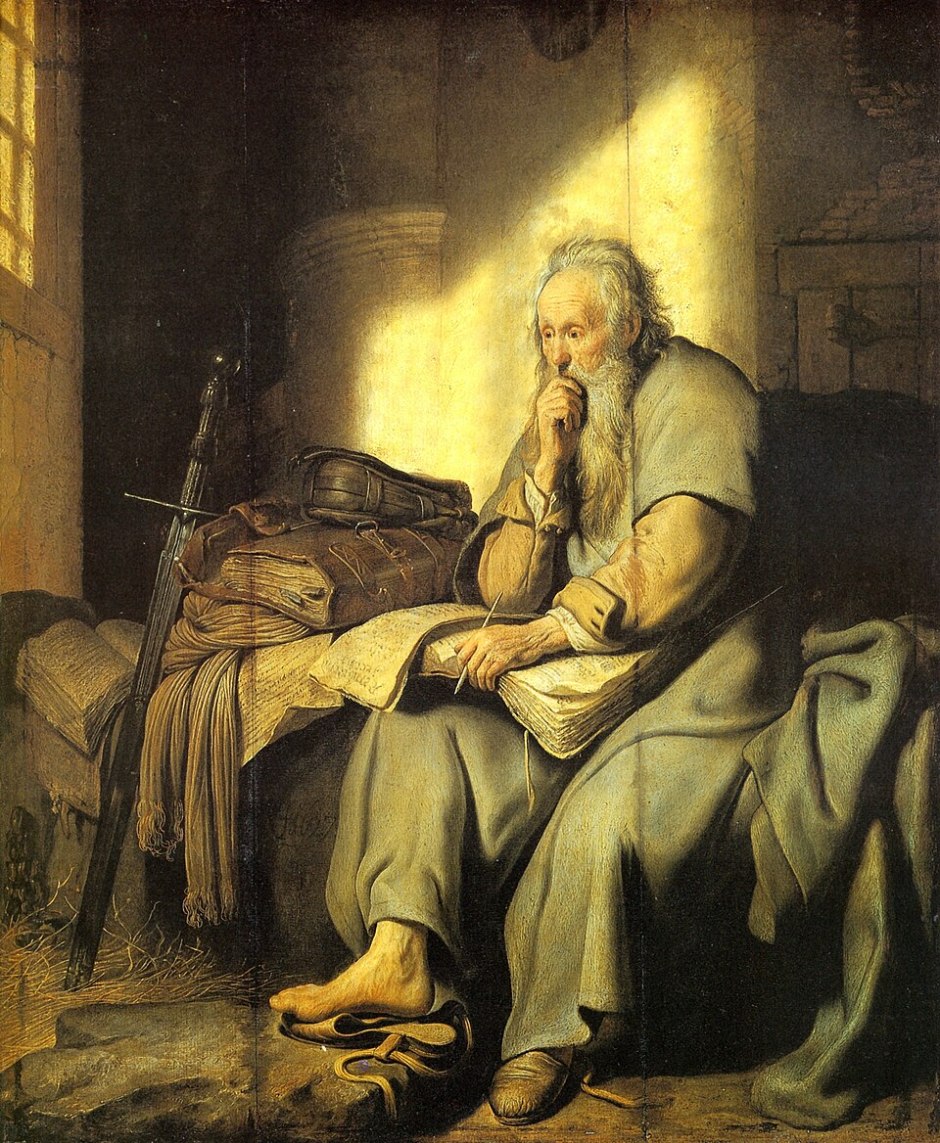
That feeling when scholarship nurtures devotion.
The relation of Paul to Christ is a relation of love; and love exists only between persons. It is not a group of ideas that is to be explained, if Paulinism is to be accounted for, but the love of Paul for his Saviour. And that love is rooted, not in what Christ had said, but in what Christ had done. He “loved me and gave Himself for me.” There lies the basis of the religion of Paul; there lies the basis of all of Christianity. That basis is confirmed by the account of Jesus which is given in the Gospels, and given, indeed, in all the sources. It is opposed only by modern reconstructions. And those reconstructions are all breaking down. The religion of Paul was not founded upon a complex of ideas derived from Judaism or from paganism. It was founded upon the historical Jesus. But the historical Jesus upon whom it was founded was not the Jesus of modem reconstruction, but the Jesus of the whole New Testament and of Christian faith; not a teacher who survived only in the memory of His disciples, but the Saviour who after His redeeming work was done still lived and could still be loved. (The Origin of Paul’s Religion, p. 302)
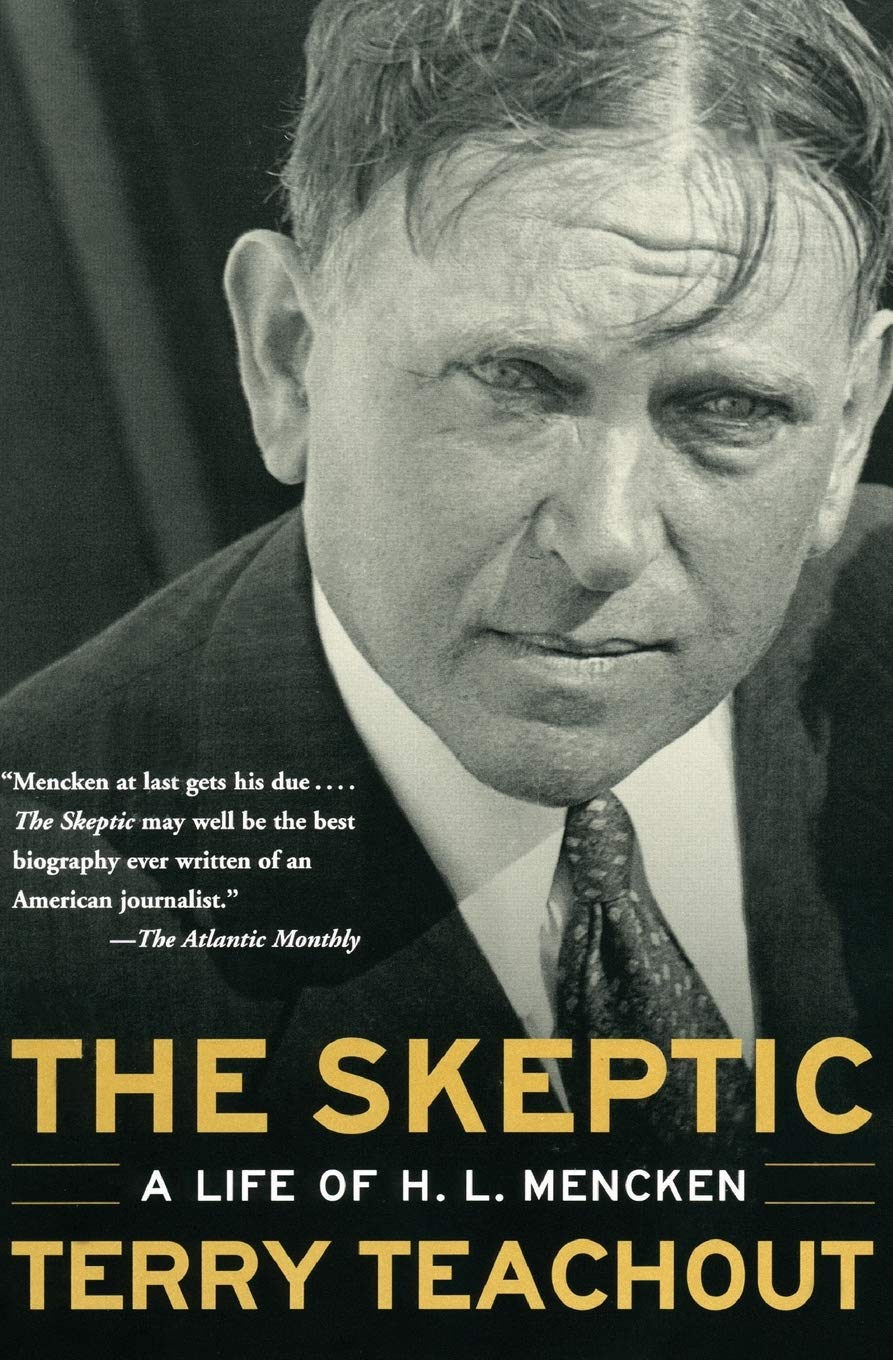
Holy Clerks
Around no class of men do more false assumptions cluster than around the rev. clergy, our lawful commissioners at the Throne of Grace. I proceed at once to a crass example: the assumption that clergymen are necessarily religious. Obviously, it is widely cherished, even by clergymen themselves. The most ribald of us, in the presence of a holy clerk, is a bit self-conscious, reticent and awed. I am myself given to criticizing Divine Providence somewhat freely, but in the company of the rector of my parish, even at the Biertisch, I tone down my animadversions to a level of feeble and polite remonstrance. I know the fellow too well, of course, to have any actual belief in his piety. He is, in fact, rather less pious than the average right-thinking Americano, and I doubt gravely that the sorceries he engages in professionally every day awaken in him any emotion more lofty than boredom. I have heard him pray for Coolidge, for the heathen and for rain, but I have never heard him pray for himself. Nevertheless, the public assumption that he is highly devout, though I dispute it, colors all my intercourse with him, and deprives him of hearing some of my most searching and intelligent observations.
All that is needed to expose the hollowness of this ancient delusion is to consider the chain of causes which brings a young man to taking holy orders. Is it, in point of fact, an irresistible religious impulse that sets him to studying exegetics, homiletics and the dog-Greek of the New Testament, and on irresistible religious impulse only, or is it something quite different? I believe that it is something quite different, and that that something may be described briefly as a desire to shine in the world without too much effort. The young theologue, in brief, is commonly an ambitious but somewhat lazy and incompetent fellow, and he studies theology instead of medicine or law because it offers a quicker and easier route to an assured job and public respect. The sacred sciences may be nonsensical bores, but they at least have the vast virtue of short-circuiting, so to speak, the climb up the ladder of security. The young doctor, for a number of years after he graduates, either has to work for nothing or to content himself with the dregs of practise, and the young lawyer, unless he has unusual influence or complete atrophy of the conscience, often teeters on the edge of actual starvation. But the young divine is a safe and distinguished man the moment he is ordained; indeed, his popularity, especially among the faithful who are fair, is often greater at that moment than it ever is afterward. His livelihood is assured instantly. At one stroke, he becomes a person of dignity and importance, eminent in his community, deferred to even by those who question his magic, and vaguely and pleasantly feared by those who credit it.
These facts, you may be sure, are not concealed from ambitious young men of the sort I have mentioned. Such young men have eyes, and even a certain capacity for ratiocination. They observe the nine sons of the police sergeant: one a priest at twenty-five, with a fine house to live in, invitations to all christenings and birthday parties for miles around, and plenty of time to go to the ball-game on Summer afternoons; the others struggling desperately to make their livings as piano-movers, tin-roofers, motormen or bootleggers. They observe the young Methodist dominie in his Ford sedan, flitting about among the women while their husbands labor down in the yards district, a clean collar around his neck, a solid meal of fried chicken in his gizzard, and his name in the local paper every day. They observe the Baptist dervish in his white necktie, raiding saloons, touring the bawdy-houses and raising hell generally, his tabernacle packed every Sunday night, a noble clink of silver in his collection-plates, and a fat purse for him now and then from the Ladies’ Aid or the Ku Klux Klan. Only crazy women ever fall in love with young doctors or lawyers, but every young clergyman, if he is so inclined, may have a whole harem, and with infinitely less danger than a struggling lawyer, a bootlegger or a bank clerk runs every day. Even if he is celibate, the gals bathe him in their smiles; in truth, the more celibate he is, the more attention he gets from them. No wonder his high privileges and immunities propagate the sin of envy! No wonder there are still candidates for the holy shroud, despite the vast growth of atheism among us!
It seems to me that the majority of the young men who are thus sucked into holy orders are not actually pious at all, but rather somewhat excessively realistic—that genuine piety is far more apt to keep a youth out of the pulpit than to take him into it. The true devotee, frequenting the sacred edifice constantly, becomes too familiar with the daily duties of a clergyman to see any religious satisfaction in them. In the main, they have nothing to do with religion at all, but are basically social or commercial. In so far as a clergyman works at all, he works as the general manager of a corporation, and only too often it is in financial difficulties and rent by factions among the stockholders. His specifically religious duties are of a routine and monotonous nature, and must needs depress him mightily, as a surgeon is depressed by the endless snaring of tonsils and excision of appendices. He debases spiritual exaltation by reducing it to a hollow and meaningless formality, as a politician debases patriotism and a lady of joy debases love. He becomes, in the end, quite anæsthetic to religion, and even hostile to it. The fact is made distressingly visible by the right rev. the bench of bishops. For a bishop to fall on his knees spontaneously and begin to pray to God would make almost as great a scandal as if he mounted his throne in a bathing-suit. The piety of the ecclesiastic, on such high levels, becomes wholly formal and theoretical. The servant of God has been lifted so near to the saints and become so familiar with the inner workings of the divine machinery that the sense of awe and wonder has oozed out of him. He can no more undergo a genuine religious experience than a veteran scene-shifter can laugh at the wheezes of the First Gravedigger. It is, perhaps, well that this is so. If the higher clergy were actually religious some of their own sermons and pastoral epistles would scare them to death. (Prejudices: Fourth Series 1924)
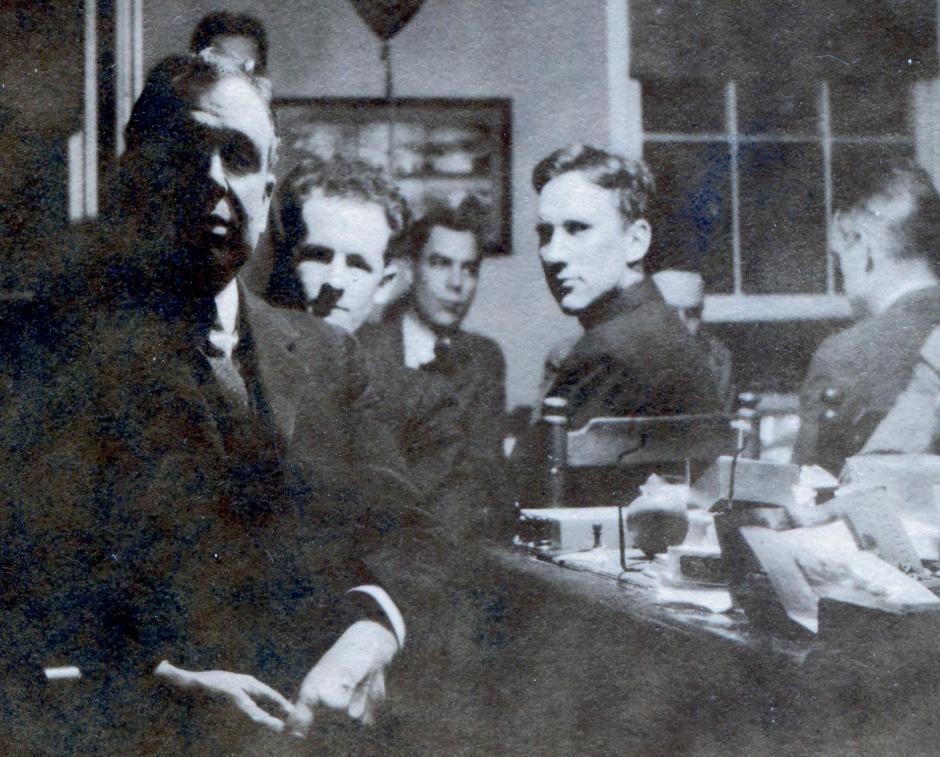
Machen was a problem solver:
This dependence of Christianity upon a particular conception of its origin and of its Founder is now indeed being made the object of vigorous attack. There are many who maintain that Christianity is the same no matter what its origin was, and that therefore the problem of origin should be kept entirely separate from the present religious interests of the Church. Obviously, however, this indifference to the question as to what the origin of Christianity was depends upon a particular conception of what Christianity now is; it depends upon the conception which makes of Christianity simply a manner of life. That conception is indeed widespread, but it is by no means universal; there are still hosts of earnest Christians who regard Christianity, not simply as a manner of life, but as a manner of life founded upon a message-upon a message with regard to the Founder of the Christian movement. For such persons the question of the origin of Christianity is rather to be called the question of the truth of Christianity, and that question is to them the most important practical question of their lives . Even if these persons are wrong, the refutation of their supposed error naturally proceeds, and has in recent years almost always proceeded, primarily by means of that very discussion of the origin of the Christian movement which is finally to be shorn of its practical interest. The most important practical question for the modern Church is still the question how Christianity came into being. (Origin of Paul’s Religion, pp. 3-4)
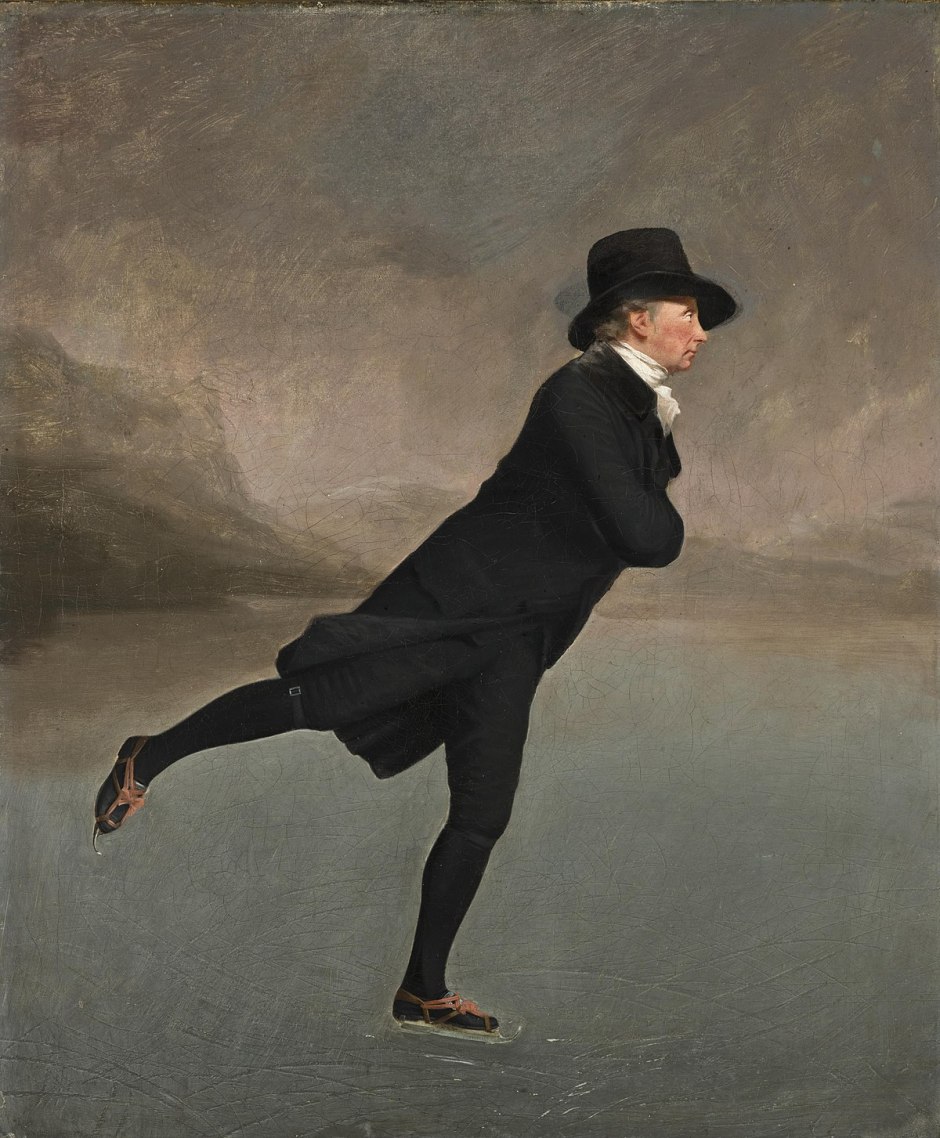
One of the tendencies in the critics of Kevin DeYoung’s defense of John Witherspoon and the American revision of the Westminster Confession (not mentioned here) is a need to base contemporary political reflection and action – even – on past Protestant models. The critics of DeYoung did this by reference to the meaning of the Westminster Confession. Others at American Reformer have also argued for a recovery of early modern Protestant politics. The advantage of this argument is that it paints Witherspoon, American Presbyterians, and always 2k advocates in the corner of departing from Reformed orthodoxy.
But what if you don’t need pre-Lockean understandings of politics and the good society to have a Protestant voice in liberal political structures? What if today’s Protestants who want to advocate for Christian norms looked to Presbyterians who both accepted the terms of liberal democracy and free markets and advocated Protestant-friendly positions on matters of political debate? What if you could be a kind of Christian nationalist without needing to read all of the pre- or early-modern Protestant theologians on the divine mandate for the Christian magistrate and a godly commonwealth?
That is what happened in the 19th century in England, Scotland, Ireland, Canada, and the United States. Presbyterianism began in 16th century England and Scotland as a force of opposition to rule by bishops and continued as a form of checks upon elites in both government and the church, Presbyterians saw overcoming injustices of the past with improvements that led to a fairer future. Such a disposition almost always places Presbyterians on the side of freedom and limited government whether in the form of freedom of conscience or ecclesiastical autonomy from meddling magistrates. This cast of mind nurtured in Presbyterians at least sympathy if not outright support for political and economic reforms that reduced the authority and wealth of the few and expanded society’s benefits as broadly as possible. Such an outlook, as in the case of the United States, could lend support for small government and reliance on voluntary associations for improving social conditions. But even where the state’s footprint in managing the forces of modernization was larger than the American form of government, Presbyterians generally supported those “good” governments whose rule extended the blessings of modern society as widely as possible.
For this reason, increase in suffrage, more extensive representation in government, free trade and better distribution of goods for more affordable prices, higher rates of literacy and advanced learning, and greater suppression of vices, not to mention the separation of church and state were all policies on Presbyterians’ horizon on the phase of their particular nation’s evolution.
Among the proponents of these views were Charles Hodge in the United States, William McKerrow in England, Thomas Chalmers in Scotland, Henry Cooke in Ireland, George Monro Grant in Canada, and James McCosh – can you believe it – in Scotland, Ireland, and the United States. These Presbyterians may have been on different places on the page of Reformed theology and Presbyterian worship, but their outlook on government and society stemmed from their understanding of Presbyterianism in its modern, liberal, political version. Advocates of the spirituality of the church or its 2k nomenclature may take issue with these Presbyterians, but they show you don’t need to turn the clock back before 1789 to have Presbyterian politics.
It goes without saying that the constellation of political and economic positions adopted by these Presbyterians was a long way from the godly commonwealth of the Scottish Reformation or England’s Second Reformation. But after the Glorious Revolution (1689), Presbyterians learned by experience and reflection that the same political arrangements that lightened the church’s burden from an overreaching magistrate were also among the tools by which modern nations could fashion a generically Christian society.

