Christian Church (not Christian Nation) even in the Psalms?

After listening to Chris Gordon and Brad Isbell talk about Christian nationalism and two-kingdoms theology (where it did sound like Chris said “R two Gay” instead of “R two K”), I was surprised to read Martin Luther this morning on Psalm 87. That Psalm reads:

1 On the holy mount stands the city he founded;
2     the Lord loves the gates of Zion
    more than all the dwelling places of Jacob.
3 Glorious things of you are spoken,
    O city of God. Selah

4 Among those who know me I mention Rahab and Babylon;
    behold, Philistia and Tyre, with Cush —
    “This one was born there,” they say.
5 And of Zion it shall be said,
    “This one and that one were born in her”;
    for the Most High himself will establish her.
6 The Lord records as he registers the peoples,
    “This one was born there.” Selah

7 Singers and dancers alike say,
    “All my springs are in you.”

Here is how the two-kingdom Luther introduced the Psalm:

The 87th psalm is a prophecy of the Holy Christian Church, that it shall be a city as wide as the earth is, and in it shall be born Ethiopians, Egyptians, Babylonians, Philistines, residents of Tyre, and people of other lands and tongues. This shall all happen through the Gospel, which shall preach marvelous things of God, namely the knowledge of God, how one may come to God, be freed from sin, and be saved from death, through Christ. And the worship of God in this city shall also be singing and dancing, that is, they will proclaim, praise, and thank God’s grace with joy. In that city, no Moses shall plague and torment us with his Law.

Here is a sixteenth-century two-kingdom advocate, not someone from the 1990s reacting to theonomy, reading the city of God in the Old Testament and identifying it not with empire, kingdom, or nation but with the church. Of course, Luther needed a Christian magistrate (a Roman Catholic one, to boot). Without one he would have been executed. But his thoughts were on matters other than a Christian politics when looking for the kingdom of God.

What may be especially upsetting to those who subscribe recent versions of Christian nationalism is Luther’s throwing down a welcome mat at the door of the church to all tribes and ethnicities. It sure must seem odd to think of the Christian church as multi-ethnic and multi-racial when some insist that ethnic homogeneity is necessary for a Christian nation.

The jab at Moses’ law could, however, confirm the anti-nominan reputation of two-kingdom proponents. No one’s perfect.

After All These Years It’s Still Theonomy vs. 2K

From David VanDrunen’s review of Brad Littlejohn’s Called to Freedom: Retrieving Christian Liberty in an Age of License.

On a general level, Littlejohn at times seems to jump from the observation that without certain virtues, people won’t use their outward freedoms well the conclusion that civil officials may therefore legitimately restrict these freedoms. But although the observation is valid, the conclusion doesn’t necessarily follow. On what basis do civil officials have authority, for example, to restrict market transactions or prohibit non-Christian religions for the “common good” when no force or fraud is involved?

Perhaps instructive is Littlejohn’s understanding of civil authorities as “fathers of their people” who ought to “exercise paternal care” for them. There is some similarity between fathers and civil magistrates, but there are also so many differences that it seems dangerous to invoke this analogy as grounds for specific government regulations. For one thing, fathers have extensive authority over even minute details of their children’s lives. On that analogy, civil officials could regulate almost anything. Perhaps even worse, the analogy presumes that citizens are children. This seems to work at cross-purposes to Littlejohn’s oft-stated ideal that citizens be morally mature and self-governing.

We see another reason for Littlejohn’s openness to extensive government authority in his support for the “classical Protestant theory of religious liberty.” He explains this theory as follows: In Romans 13 and 1 Peter 2, God calls civil authorities to punish evil and praise the good (although not, contra Littlejohn, to “reward” or “promote” the good). The natural moral law defines what is evil and good. The Ten Commandments summarize the natural moral law. This means, in Littlejohn’s telling, that civil officials have authority to enforce the “full scope” of the Ten Commandments.

But there’s a problem with this reasoning. The fact that civil officials punish evil and praise the good doesn’t entail giving them jurisdiction over all that is evil and good. What’s more, the natural moral law—what we know about right and wrong from the testimony of nature—doesn’t provide nearly enough guidance for civil authorities on which religion to promote or restrain. The testimony of nature itself doesn’t reveal truths about the Trinity, atonement for sin, the church, and other core matters.

At best, Littlejohn’s belief that civil magistrates may restrain non-Christian worship and proselytizing needs more extensive argument. Could Scripture provide it? One might appeal to the precedent of Old Testament kings under the Mosaic theocracy, which is exactly what many pre-modern Christian theologians did. But since contemporary political communities are not God’s holy people, in redemptive covenant with God, such appeals are highly problematic. Littlejohn briefly glances at these issues but doesn’t really discuss them.

At one point, Littlejohn states that Christians can disregard ungodly rulers when they issue clear commands to transgress Scripture. Yet in other cases, he argues, we can cheerfully tolerate them. Are there really no other instances when Christians might justly disregard such rulers? When rulers act contrary to the laws of their own community, for example, shouldn’t citizens commit to following the law instead?

Littlejohn himself, when discussing political freedom as liberty under law, appeals to the classical notion that law should be consensual. In other words, it ought to emerge from “time-tested customs and communal practices, unwritten laws that written laws should respect.” This is indeed a noble idea. But if we take it seriously, it requires the people to have a great deal of independence to forge their own ways of life, which entails corresponding limitations on civil authority. It would have been interesting to see Littlejohn develop this theme and reflect more on its implications.

Even if Littlejohn’s conception of the extent of civil authority needs further defense, his larger perspective on Christian liberty is solid, insightful, and sometimes eloquent. Called to Freedom usefully clarifies the issues at stake, even if it doesn’t settle all of them. It should stimulate, but not end, important discussions on what it means to be free.

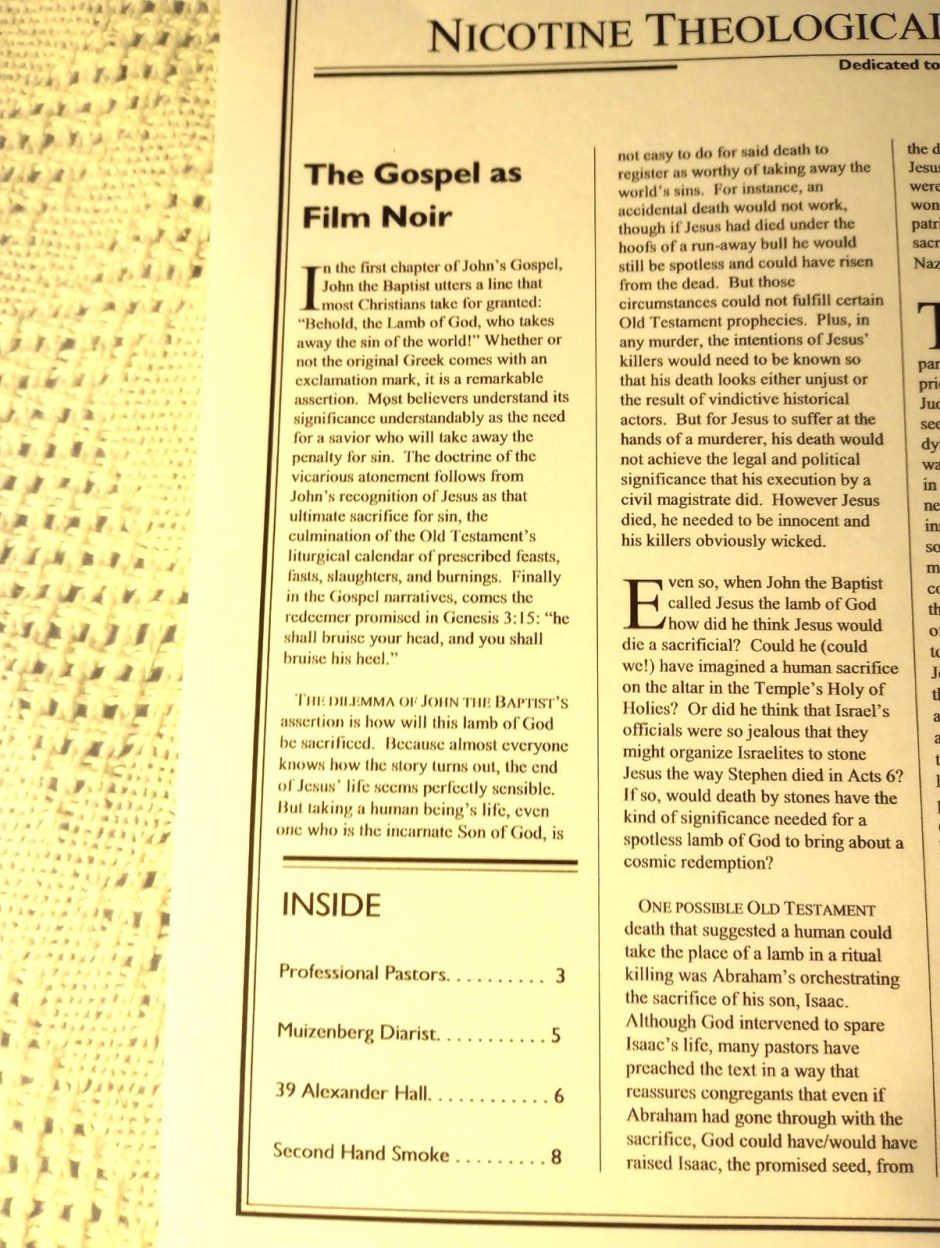
Summer 2023 NTJ Available (pdf)

To repeat, this is not a typo. The Summer 2023 issue is now available at Oldlife.org. Huzzah? Maybe not.

In it, readers will find a case for shorter (8-10 years) pastorates as opposed to the increasingly common one of decades long tenures for pastors. Here is an excerpt:

In lengthy pastoral tenures a congregation becomes so comfortable with their minister (and vice versa) that the identity of the place has more to do with the people in this particular setting than with the denomination. Such a situation makes it harder to find a successor to the long-term pastor. A congregation might need to conduct a lengthy search to find that one person who has just the right gifts for this group of Christian. At that point, the congregation might well forget the nature of the ministry according to the common standards of the denomination. They might want “our guy” more than, for instance, a generic Presbyterian pastor who can do all the things that a man trained for the Reformed ministry is supposed to do. The congregation might forget what it means to belong to a certain communion because it functions largely within its own local context with its own pastor. A pastoral search could then depend more on personal qualities than on the demands of presbytery and the denomination’s corporate witness.

Conversely, expectations for relatively short pastorates, say from five to seven years, likely nurture a sense of belonging to a wider communion in which ideally all of the ministers should be able to serve in any congregation. Instead of building up a kind of co-dependency between minister and congregation thanks to a long tenure, a series of medium-term calls may encourage church members to deepen their membership in the broader communion beyond the congregation.

Machen Death Day 2025

My conscience troubles me about continuing to act in this particular movement [the YMCA]. What a joy it would be, on the other hand to continue the proclamation of the gospel and the teaching of the Bible!

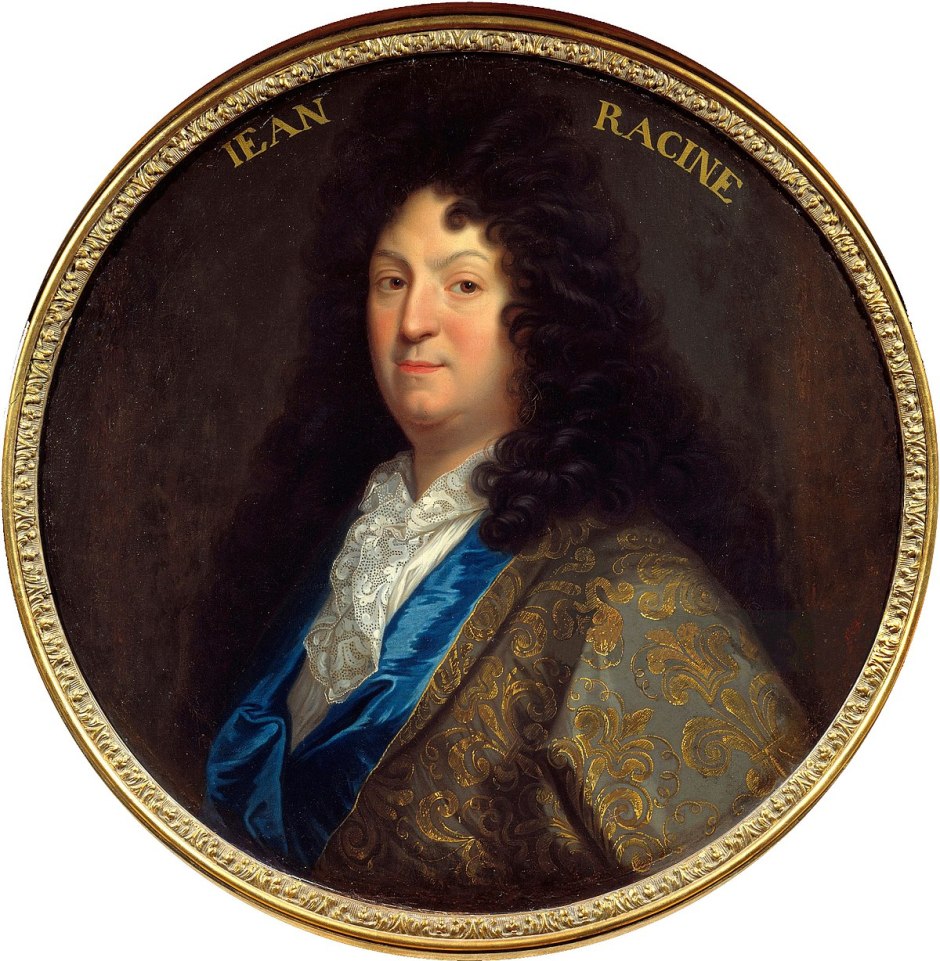
If my conscience were quite at rest on the matter of principle, upon which Dr. Stevenson and I differ so widely, I should be happy now. I have drowned my troubles in a perfect debauch of classical French drama. Christmas day was typical. There was a magnificent offering at the Théâtre Français for the matinee and the Odeon for the evening. On Dec. 24, I had a severe moral struggle. It had been reported that the Paris division wanted speakers for the Christmas services. I did not want to miss the incomparable dramatic opportunities of the day. But even after I had my tickets I could not bear to think of a Christmas entirely selfish. Texts like “Woe is me if I preach not the gospel” kept coming back into my mind. So about five o’clock I called at the office of the Paris division. I did so with fear and trembling. Just suppose I should have to miss “Esther”! What was my delight? The engagement that was given me was for the morning! Hurrah! Duty was combined with pleasure. So I spent my Christmas as follows: In the morning I went out to a camp at Clichy and preached a Christmas sermon. . . . In the afternoon beginning at 1.30 P.M. I had Racine — “Esther” followed by “Les Plaideurs.” Madame Romano in “Esther” was simply superb; I do not remember when I have seen a piece of acting that impressed me more. (J. Gresham Machen to Mary Gresham Machen, Dec. 29, 1918, from The Letters from the Front, edited by Barry Waugh, pp. 243-44)

Mencken Day 2024

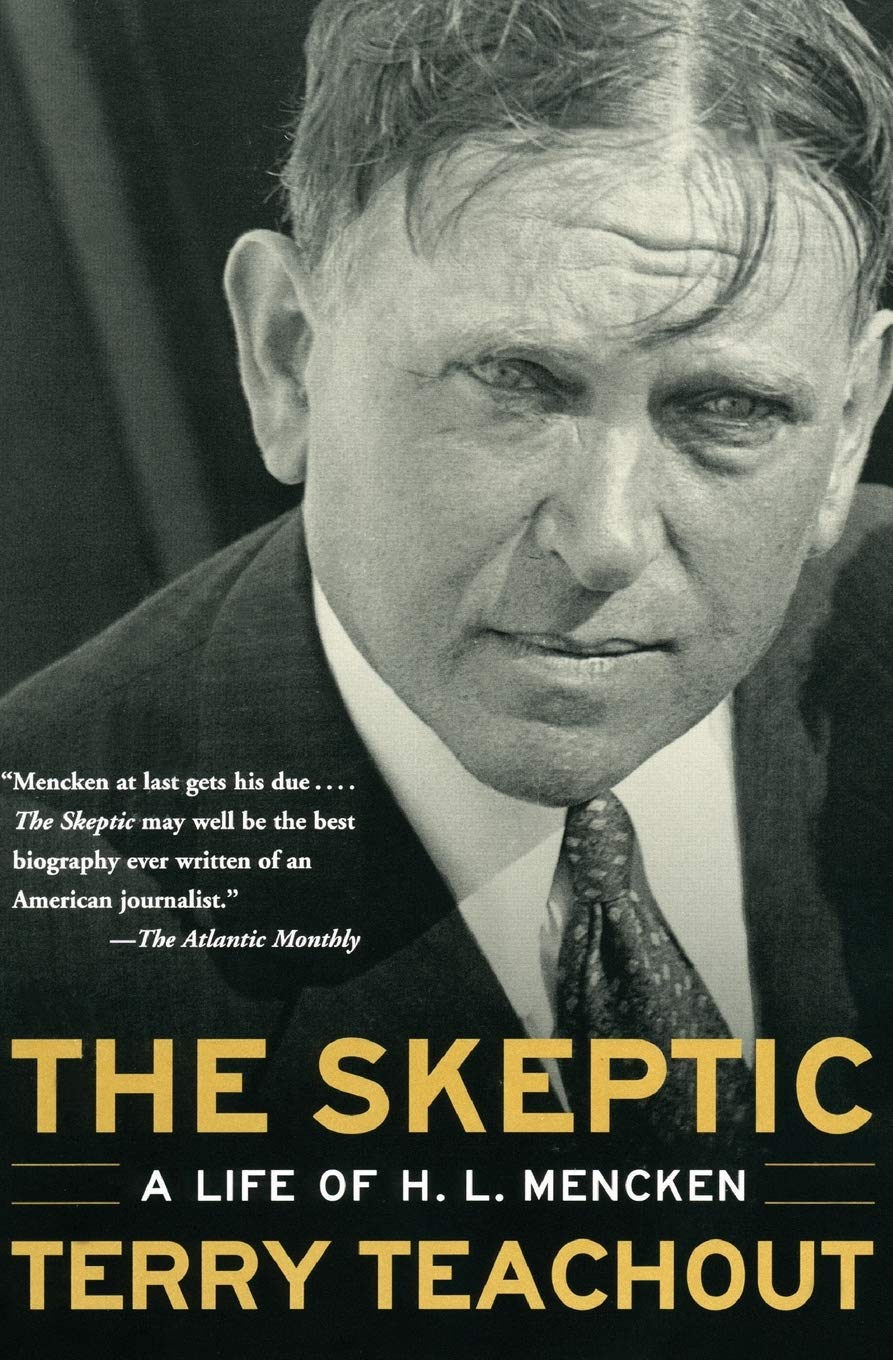
In human history a moral victory is always a disaster, for it debauches and degrades both the victor and the vanquished. The triumph of sin in 1865 would have stimulated and helped to civilize both sides. (“The Calamity of Appomattox,” 1930)

Machen Day 2024

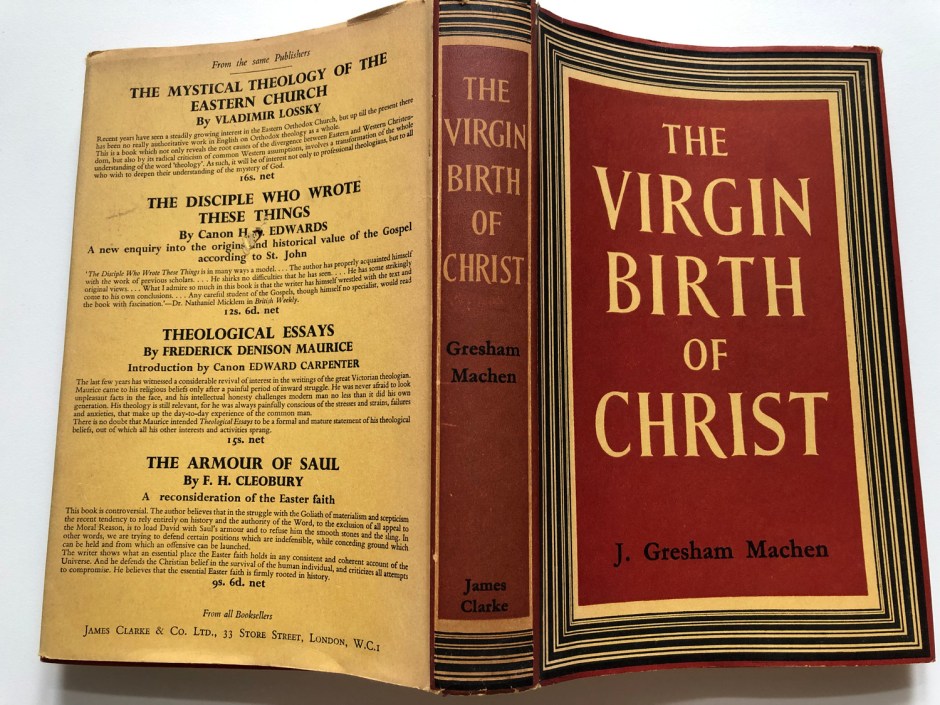
J. Gresham Machen, The Virgin Birth of Christ (1930), page 394-95.

Would our knowledge of our Saviour be essentially complete if the New Testament did not contain the passages which narrate the virgin birth?

That question, we think, should be answered with an emphatic negative; without the story of the virgin birth our knowledge of our Saviour would be impoverished in a very serious way. Exaggerations, indeed, should be avoided at this point. Even without the infancy narratives we should have much upon which to rest our faith. Christ would still be presented in the New Testament as both God and man in two distinct natures and one person forever; the significance of His Cross would still stand out in all its glorious clearness; He would still be offered to us in the gospel as our Saviour.

Yet there would be a serious gap in our knowledge of Him, and questions would arise which would be full of menace for the souls of men. How did this eternal Son of God enter into the world? Did the Son of God unite with the man Jesus at the baptism as the Gnostics supposed; was the man Jesus received up gradually into union with the eternal Son? Erroneous answers to such questions would, without the story of the virgin birth, be all too ready to hand. No doubt those erroneous answers would still be capable of refutation to a mind ideally logical and really filled with the convictions which all the Gospels and Epistles would provide. Yet they would be only too natural to the minds of men as they actually are. Without the story of the virgin birth we should be living constantly in a region of surmises like the errors of the heresiarchs in the ancient Church.

Such surmises would deprive us of the full doctrine of the incarnation upon which our souls can rest. To that doctrine it is essential that the Son of God should live a complete human life upon this earth. But the human life would not be complete unless it began in the mother’s womb. At no later time, therefore, should the incarnation be put, but at that moment when the babe was conceived. There, then, should be found the stupendous event when the eternal Son of God assumed our nature, so that from then on He was both God and man. Our knowledge of the virgin birth, therefore, is important because it fixes for us the time of the incarnation. And
what comfort that gives to our souls! Marcion, the second-century dualist, was very severe upon those who thought that the Son of God was born as a man; he poured out the vials of his scorn upon those who brought Christ into connection with the birth-pangs and the nine months’ time. But we, unlike Marcion and his modern disciples, glory just in the story of those things. The eternal Son of God, He through whom the universe was made, did not despise the virgin’s womb! What a wonder is there! It is not strange that it has always given offence to the natural man. But in that wonder we find God’s redeeming love, and in that babe who lay in Mary’s womb we find our Saviour who thus became man to die for our sins and bring us into peace with God.

Moreover, the knowledge of the virgin birth is important because of its bearing upon our view of the solidarity of the race in the guilt and power of sin. If we hold a Pelagian view of sin, we shall be little interested in the virgin birth of our Lord; we shall have little difficulty in understanding how a sinless One could be born as other men are born. But if we believe, as the Bible teaches, that all mankind are under an awful curse, then we shall rejoice in knowing that there entered into the sinful race from the outside One upon whom the curse did not rest save as He bore it for those whom He redeemed by His blood.

How, except by the virgin birth, could our Saviour have lived a complete human life from the mother’s womb, and yet have been from the very beginning no product of what had gone before, but a supernatural Person come into the world from the outside to redeem the sinful race? We may not, indeed, set limits to the power of God; we cannot say what God might or might not have done. Yet we can say at least that no other way can be conceived by us. Deny or give up the story of the virgin birth, and inevitably you are led to evade either the high Biblical doctrine of sin or else the full Biblical presentation of the supernatural Person of our Lord. A noble man in whom the divine life merely pulsated in greater power than in other men would have been born by ordinary generation from a human pair; the eternal Son of God, come by a voluntary act to redeem us from the guilt and power of sin, was conceived in the virgin’s womb by the Holy Ghost.

Spring 2023 NTJ Available (pdf)

The publishing plan – such as it is – is to make available recent issues (after three months) of the Nicotine Theological Journal to anyone by way of this website where a pdf will be posted. Subscribers (those who send an email address) will receive current issues as soon as they have been reformatted courtesy of Adobe’s wonder working powers.

Herewith is the Spring issue for 2023 — not a typo. That is why calling this a “publishing plan” could provoke snickers.

Summer 2023 NTJ (not a typo) Is Out

For those who have subscribed (simply by sending an email address), the Summer 2023 issue of the Nicotine Theological Journal is in their inbox. In that number readers will see the entire short piece that begins this way:

Idolatry in the Negative World

Aaron Renn says that American Christians now experience a culture that is hostile to the Christian faith in contrast to previous eras that either viewed Christianity positively or in which believing was neutral, neither offensive nor appealing. He argues the change came sometime around 2014.

Another change seems to have occurred that may say more about American Protestants than about the nation they inhabit. Somewhere in the mix of changing perceptions of American society and churches, conservative Protestants developed a different conception of sin. One sign of this change was a worship service recently broadcast from Moody Memorial Church in Chicago (Moody, of course, named after the urban evangelist, Dwight L. Moody). The broadcast included the prayer of confession. In it the pastor asked forgiveness on behalf of the congregation for desiring sex, money, and power.

That trilogy struck this listener as odd. . .

David French is No Tim Keller (even if he thinks he’s third-wayist)

My instinct tells me that Tim Keller’s fingerprints are on the PCA’s invitation to David French to participate on a panel on polarization in American politics. The people responsible for the invitation and the program continue to think of the PCA as an influential denomination that has pundits like David French in its network of influencers. I also suspect that the people who issued the invitation are unaware of how polarizing a figure David French is — mainly because they do not follow politics closely or the arguments in the conservative world carefully. They likely perceive that French, who used to be a member in the PCA, is a Christian with a presence at the New York Times and that makes him someone people in the church would likely want to hear. If French is receiving criticism, it must be from extremists because otherwise he is the political conservative that many liberals like to read. That must make him neither hard-left or extreme-right but safely in the faithful Christian middle.

Will those who offered the invitation think differently now that they see the way David French nurses a grudge? I actually hoped that he would rise above the rescinded invitation and go on with his opining. How could not speaking at 8:00 in the morning to Presbyterian officers from a smallish conservative denomination make any difference to a man who has risen through the ranks of opinion-journalism? If French were simply a professional, and tried to rise above whatever personal embarrassment came with the PCA’s about-face, he might keep score, be wary of future involvement with the denomination, but let the whole affair go. Instead, he used the convening of the PCA’s General Assembly (this week in Richmond) to write about his experience with and history in the PCA. No surprise, the meaning of the incident is all about hhiiiimmmmmm:

When I left the Republican Party, I thought a shared faith would preserve my denominational home. But I was wrong. Race and politics trumped truth and grace, and now I’m no longer welcome in the church I loved.

David French claimed to be a friend of Tim Keller. He was probably but a lot of people who looked up to the New York City and had spent time with him considered Keller to be a friend of some kind. Whatever is the case, when James Wood wrote a piece critical of Keller (sort of kind of), French pounced. Wood’s point was that Keller’s version of apologetics were no longer as plausible in a negative world. To which French wrote:

it’s because my friend Tim shuns political tribalism (emphasizing a “third way” between red and blue) and strives, in Wood’s words, to be “‘winsome,’ missional, and ‘gospel-centered’” in his approach. Wood says that Tim recognizes “though the gospel is unavoidably offensive, we must work hard to make sure people are offended by the gospel itself rather than our personal, cultural, and political derivations.”

The rescinding of the Kuyper Prize from Princeton Seminary to Keller was one of Wood’s examples of the change in American society. But French scoffed that this was some sort of leading cultural indicator:

Imagine trying to even explain this to an apostle. “There’s this famous and influential Christian pastor, and . . .” Paul would stop you right there. That very idea would be novel to him, as would the idea that revoking a prize but delivering a lecture would be evidence of any kind of crisis requiring one to change a “winsome, missional, and gospel-centered” approach to the public square.

Did David French imagine what Paul would have thought if a church had disinvited him from speaking at a conference? The apostles modelled being thick skinned only to make the world safe for French’s thin variety?

In fact, French’s admiration for Keller’s reaction to Princeton’s cancelling the award — the New York pastor even suggested to the seminary’s president how to save face by not giving the award and allowing Keller to go forward with the Kuyper Lecture — suggests he learned very little from Keller’s moderation. It’s as if being a friend of Keller gives French a sense of being on the right side of current Christianity, which in turn means that any critics are low, mean, and bigoted.

But if he could counter James Wood’s criticism of Keller with an appeal to the fruit of the Holy Spirit, couldn’t he self-apply that exhortation?

Paul called Christians to exhibit the fruit of the spirit even when they were being nailed to crosses and clawed by lions. Peter called on Christians to give a defense of their faith with “gentleness and reverence” even when they “suffer for righteousness.”

Someone is tempted to think — okay I am — that David French has no sense of optics and that without that awareness he makes life even more difficult for himself and his family than he can imagine.

And then you (I) remember that David French is a columnist at the New York Times, and if you can make it in New York you can make it anywhere.

Christian Historians Are more like John MacArthur Than They Admit

A couple of recent posts by historians that identify with the work of doing Christian history leads to the excerpt below which is a critique of trying to follow scholarly standards while believing you are doing so in the name of Jesus.

The first complained about Christian academics failing to come to the defense of a fellow Christian professor (historian) after the latter had criticized both moderate evangelicals and Christian nationalists for “[craving] genocidal rage against Palestinians” and “[wishing] to turn the Gaza Strip into a ‘parking lot.'” Some with less zeal could imagine why defending that opinion might not be a high priority. Instead, the historian feared for his and his family’s lives when the reaction of Andrew Walker at Southern Seminary “set in motion the ire of a cadre of critics, including Mollie Hemingway, William Wolfe, Tom Ascol, and Meghan Basham.”

This post led to another that praised Christian historians for a critical perspective on U.S. history too often lacking in popular evangelical pundits (think the difference between George Marsden and Francis Schaeffer). Historians add value by recognizing that “history must be critical, even prophetic” as opposed to popular leaders who “have seen long-term political goals as more important than the truth of history.”

Thinking that the current generation (or even previous ones) were innocent of politics is fairly remarkable.

All of this wind-up leads to the pitch which is that evangelical historians can come in for criticism too because they mix advocacy (political, theological, moral) with scholarly inquiry just like pastors do. What follows is part of a chapter that faults evangelical historians for having their cake – scholarship – and eating it too – adding Christian faith. They may have better credentials that Francis Schaeffer or John MacArthur, but at some level within the academy their religiously inflected scholarship looks odd, maybe not as odd as non-academic evangelicals, but still strange. (This essay was published in History and the Christian Historian, edited by Ronald A. Wells, under the title “History in Search of Meaning: The Conference on Faith and History.”)

Do Christian historians have a particular perspective or share a set of assumptions that make their writing and teaching different from that of their non-believing colleagues? Though many factors led to the founding of the Conference on Faith in History in 1967, the conviction that the faith of the Christian historian set his or her scholarship apart from that produced by the rest of the profession was probably the greatest reason for organizing the Conference almost thirty years ago and has sustained its meetings and publications ever since. According to Charles Miller, the group who met to begin the CFH came up with three qualifications for a Christian historian: a “profound faith in the God and father of our Lord Jesus Christ”; an “understanding through revelation of “the nature of man, of time, and of the universe”; and a “mastery of the craft and of the art of historian.”

What happens, then, when one of the Conference’s more accomplished members publishes a book on a significant epoch in the history of American Christianity that according to church leaders not only falls well short of demonstrating a Christian philosophy of history but also appears to deny the hand of God in the development of the evangelical movement? This is precisely what happened when Harry S. Stout, Yale University’s Jonathan Edwards Professor of American Christianity, published his study of George Whitefield, entitled The Divine Dramatist: George Whitefield and the Rise of Modern Evangelicalism. This book, which linked the revivalist’s success in part to his theatrics and business acumen, and revealed the less sanctified aspects of Whitefield’s pilgrimage, caused something of a stir among those English-speaking evangelicals of a Calvinistic persuasion who read the Banner of Truth magazine and its publisher’s many reprints of Puritan and Presbyterian pastors and theologians. Not only had Stout presented the English revivalist warts and all. But worse was the implicit conclusion that human techniques, sometimes overtly manipulative, not the work of the third person of the trinity, had been responsible for the many conversions that followed Whitefield’s itinerant preaching throughout the colonies and British isles.

The cries of “say it ain’t so, Skip, say it ain’t so,” first came in a Banner of Truth review of Stout’s biography. The portrait of Whitefield that emerged, a “bombast and showman” guilty of “shameless egocentricity,” was “barely recognisable” to readers long accustomed to Whitefield as the last Calvinistic revivalist. According to David White, the reviewer, “[i]t is fallacious and absurd to trace the origins of modern campaign evangelicalism, with its expensive publicity, deliberate conditioning by a highly charged musical atmosphere and the manipulation of massed choirs, to the straightforward proclamation of a Whitefield who stood in the best tradition of the Puritans.” Iain H. Murray, the editorial director of the Banner of Truth Trust, biographer of Jonathan Edwards and also a historian of Anglo-American revivalism, kept up the attack, using the publication of the papers from an Institute for the Study of American Evangelicals conference on trans-Atlantic evangelicalism in which Stout had a chapter as the occasion for offering his estimate of the new Whitefield. What is lacking in Stout’s handling of Whitefield, as well as in the “new approach to evangelical history,” according to Murray, is a failure to write history from “the standpoint of supernaturalism.” In fact, the whole tone of this history left Murray wondering what these so-called evangelical historians would do to the book of Acts “if they determined to re-interpret its events without reference to God.”

Stout’s response to these charges, printed in both the Banner of Truth and the Evangelical Studies Bulletin, raised and answered important questions about the nature of believers practicing the craft of history. He wrote that “professional” historians “agree to settle for something less that ultimate explanations,” and that academic “canons of evidence and interpretation” leave “off the field” notions of providence and the work of the Holy Spirit. Still, the damage had been done. A member of a body whose purpose was to reflect upon the significance of Christian teachings about creation, providence and salvation for doing history was guilty of saying that in good history, that is, history practiced by university professors, such questions did not matter.

Not being the Evangelical Theological Society which has purged from its membership scholars who appeared to deny the divine origins of Scripture, the Conference on Faith and History took no formal action against the highly regarded Yale professor. Moreover, some of its members have undoubtedly sided in this debate with Stout, in part because they agree with his assessment of the role of faith in the practice of history and also because, remembering the historic warfare between science and theology, they fear the restrictions of church dogma upon the pursuit of historical truth. But despite the tendency of CFH members as academics to prefer the cultural capital offered by Yale University over that available through the Banner of Truth Trust, Iain Murray’s defense of neo-providentialism and the supernatural in the writing of history are much closer than Stout’s critical history to the purposes and contributions of the Conference on Faith and History. Writers for Fides et Historia as well as historians who have presented at the conference’s meetings have argued overwhelmingly against a secular reading of history and have attempted in a variety of ways to articulate a Christian philosophy not just of history but also of historical research and writing.

Pointing out the resemblance between Murray’s charges and the Conference on Faith and History’s mission does not mean that Stout should be banned from the conference or prohibited from attending all conference gatherings. But his biography of Whitefield and subsequent exchange with Murray cast the aims and purposes of the Conference on Faith and History in a different light, one which reveals the difficult terrain the conference has tried to circumnavigate by promoting scholarship of the highest caliber that springs from Christian convictions. What I plan to do in this paper, then, is point out some of these connections between the Conference on Faith and History and the Banner of Truth Trust. In a nutshell, my argument will be that the writings sponsored by the conference and produced by its members show that the kind of history Iain Murray wants has not been that far removed from the kind of history the conference has tried to provide even if a little light on the Calvinism.