Protestant Elites Then and Now

What is it about the younger generation of manly Protestants who dabble in Christian nationalism and write for outlets like American Reformer and Davenant?  With all of the calls for Protestant ressourcement (the last syllable pronounced “maw”!), the awareness of the past among some of these writers is surprisingly limited when it comes to recent history. The case of evangelical elites as scholars with standing in the mainstream academy is a case in point.

A couple of recent complaints about the failure of evangelical institutions to hire and sustain scholars of distinction echo Aaron Renn’s argument about the absence of evangelical elites. [link to first article.  One asserts that evangelical colleges do not snatch up “credentialed, talented, and scholarly” Protestants as they should. Why didn’t said institutions either snatch them up for themselves or work to propel them to “mainstream” posts? The piece goes into accusation mode:

 You, Evangelical elite, are not retaining potential talent, those people who fit the bill, who are “200% respectable,” as Renn put it. If you fail in this regard, you will not be able to reproduce or extend your rule. You aspire to elite status, you take all your cues from the broad mainstream elite world, but you neither staff your own colleges (i.e., elite production) nor staff those outside your predominantly clerical institutions.

The other complaint faults evangelicals for failing to think in theological categories about their scholarly work:

The bottom line is that Catholic intellectuals tend to assume that all theology is relevant to all areas of intellectual endeavor. If it’s not obvious how, it’s still worth assuming it nevertheless until it becomes apparent. On the other hand, theology for the evangelical scholar tends to be a sort of God-of-the-gaps, an occasional mortar to stick in crumbling joinery. 

What both of these writers, as well as Aaron Renn, miss is that as recently as twenty-five years ago evangelical scholars were actually elites in American universities.  The October 2000 issue of The Atlantic Monthly devoted a cover story to scholars at (then) Calvin College and Wheaton College as part of “The Opening of the Evangelical Mind.”  Part of Alan Wolfe’s conclusion after covering the breadth of evangelical colleges and scholarship was a warning:

So long as they continue to marginalize themselves, evangelicals will be unable to equal the accomplishments of the generation that brought us Marsden, Noll, Plantinga, and Wolterstorff. That would be the true scandal of the evangelical mind.

That negative judgment should not obscure the recognition that evangelical institutions actually had nurtured elite scholars in philosophy, history, and sociology (for starters).  To be sure, Wolfe faults evangelicalism for separatism and parochialism which could support those calling for more and better evangelical elites.  Someone could say that with all the accomplishments of the generation of scholars associated with Mark Noll and George Marsden, they were still unable to create a set of institutions that reliably produce elite professionals.

And yet, those calling for evangelical scholars today do not consider the effort to create an evangelical mind that began roughly in the 1970s (I am currently writing a book about this, tentatively titled, The Rise and Fall of the Evangelical Mind).  That collective endeavor which went from Gordon College in the East to Westmont College in the West, and depended on the Rust Belt center of gravity at Calvin, Wheaton, and Notre Dame (thanks to a Protestant provost), lasted all the way until 2015 or so (which coincides with Renn’s point about the start of the Negative World).  Today’s proponents of Protestant scholarship could well consider the earlier building blocks of the evangelical mind and how it unraveled. 

But the failure to consider the recent past is not the fault alone of the recent advocates of an evangelical elite.  Even those who promoted the creation of an evangelical mind, complete with a Kuyperian w(orld-and-life-vie)-w had not studied the efforts of mainline Protestants in the 1950s who themselves argued for a Protestant mind.  Those Christian scholars were remarkably successful in creating religion departments at colleges and universities where undergraduates studied Scripture, ethics, and church history.  That endeavor also ran out of gas eventually, partly because the professionalization of religion as an academic discipline inevitably watered down the aggressively Protestant character of religious studies.  But this is another case from which advocates of an evangelical elite might learn about the arguments, scholarship, and institutions that made a Protestant mind possible. 

Despite the lessons that history might teach about the creation of an evangelical elite now, a fundamental hiccup in the ideal, whether mainline Protestant, evangelical, or Christian nationalist, is the distinction between the sacred and the secular that pietists (high and low brow) refuse.  Simply put, teaching Sunday school and preaching is different from teaching an undergraduate seminar at a private college.  The church is not the academy.  The credentials the Christian ministry requires – a seminary degree and ordination – is not the same as the gate by which scholars may enter the academy – a terminal degree and accreditation.  The church is a private and voluntary institution in ways the academic is public and involuntary (through government oversight and regulation). 

Some proponents of aggressive Protestantism may object to the academy’s use of standards other than the ones that govern the church.  They could argue that all institutions should submit to Christ (which is the academic version of Christian nationalism).  But that is not how the world of universities and specialized research works.  Nor is the lack of a Christian vision the reason that Protestants use for using evaluating academic, medical, and legal experts whether or not they are Christian. 

What makes scholarship special is its capacity to make sense of most parts of the world, not that it is based on the Christian faith of the scholar.  To suggest that Christians need Christian scholars so that believers can have trustworthy learning is as pietistic as it is fundamentalist.
Does Aaron Renn Really Think Elites Will Save Us?

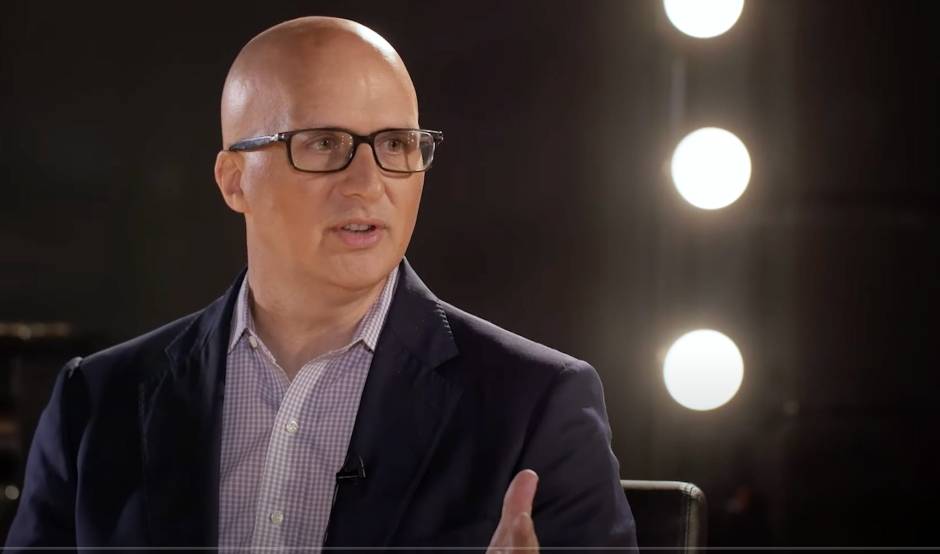
Trying to situate Aaron Renn on the landscape of twenty-first century American Protestantism is a tall order. The Indiana native, who consults on urban planning and opines about churches, describes himself as a writer who covers “the human, cultural, and institutional foundations of American flourishing during an era of transition.” (Full disclosure: as someone who considers himself an urbanist, I regularly read and benefit from Renn’s social media links and commentary on urban planning, politics, and economies.)

Renn came to the attention of many with his First Things article (Feb. 2022) on the three worlds of evangelicalism, a scheme that identified 2014 as the beginning of an era when being Christian in America was no longer an asset but a defect. This was around the same time that he helped to found “American Reformer” as an outlet for aggressively Protestant reflection about politics and society. Over time, “American Reformer” became a platform for pronouncements on Christian nationalism, though Renn never seemed to embrace the label. His outlook about the importance of Christians establishing culture-shaping institutions is clearly compatible with Christian nationalism but Renn himself has not waded into those turbulent and sometimes dirty waters.

One other part of Renn’s body of work so far to attract attention is his lament about the absence of evangelical elites. Again at First Things (where the editor, Rusty Reno, features an odd selection of Protestant writers), Renn wrote the provocative article, “The Problem with the Evangelical Elite” (December 2025). The problem comes at readers fast and hard in Renn’s opening paragraph:

The problem with the evangelical elite is that there isn’t one. All too few evangelical Christians hold senior positions in the ―culture-shap―ing domains of American ―society. Evangelicals don’t run movie studios or serve as editors in chief of major newspapers or as presidents of elite universities. There are no evangelicals on the Supreme Court. There are hardly any leading evangelical academics or artists. There are few evangelicals at commanding heights of finance. The prominent evangelicals in Silicon Valley can be counted on one hand. There are not even many evangelicals leading influential conservative think tanks and publications, despite the fact that evangelicals are one of the largest and most critical voting blocs in the Republican coalition.

Renn goes on to offer an explanation for the problem. Evangelicals stress soul-winning over vocation and lack institutions that incubate leaders in business, law, technology, and higher education. But his analysis comes with a reason to be concerned about the lack of evangelical elites. Renn views the United States as a society coded Protestant. Consequently, for the country to go forward in a healthy way, it needs people who come from America’s historic religious heritage. “America needs Protestants to take on the leadership burdens of society,” he writes, “and in view of the dramatic decline of mainline Protestantism, they must come from evangelical ranks.”

Renn does concede the presence of evangelicals in certain elite positions but deems this inadequate for providing real leadership. The one place where evangelicals produce “elites” is in Christian ministry. Renn writes, “evangelicals overwhelmingly fund and support people who focus on Christian ministry” and create “pathways to sponsorship for missionaries, church planters, and campus ministers.” They do not do the same for “people engaged in secular domains and activities.” Renn used Grok to supply the receipts. When asked about the top evangelical leaders, AI supplied the names of “fifteen evangelical elites” that was “100 percent pastors and other professional Christians.” A similar query for Roman Catholics produced a list where only 20 percent were clergy.

Renn’s nonchalance about evangelical pastors and theologians may explain why he pays so little attention to the communions that belong to NAPARC. He does not say this explicitly, but it comes through in the people he does interview on his podcast. He has hosted leaders of the Reconquista in mainline Protestantism, both Jake Dell (another contributor to First Things), a Congregationalist in Woodbury, Connecticut, and Richard Ackerman of Redeemed Zoomer fame, as an apologist for the PCUSA. In fact, when Rusty Reno interviewed Renn as a follow up to his article on evangelical elites for the First Things podcast, the Hoosier consultant praised the Social Gospel, political Progressives, and the mainline churches that spread those movements a century ago. This is not meant to score points by brushing Renn with the guilt of Progressivism and the Social Gospel. It is, though, an observation that suggests Renn has a soft spot for Protestants whose theology and practice did not measure up even as they transformed (for a time) American society.

NAPARC does register occasionally on Renn’s radar. At “American Reformer,” Renn wrote positively about two PCA pastors who have articulated a “positive vision for America.” One is C. R. Wiley’s First Presbyterian Church of Battle Ground, Washington. Renn observes that this church is “creating well-paying jobs and paying taxes, turning vacant downtown buildings into a farmers’ market and bakery, and building an architecturally significant new church that provides needed community and conference-center space.” More than a church, First Presbyterian is also building community.

The other NAPARC exception is the exceptional Tim Keller. Renn argues that Keller’s book Every Good Endeavor explains the doctrine of vocation in a way that “comprehends the exercise of power—that validates and valorizes people who reform public policy, invent new technologies, become presidents of elite universities, acquire major media properties or foundations, organize research teams, or serve as Supreme Court justices.”

Renn also credits Keller’s last white paper, “The Decline and Renewal of the American Church,” with calling for the “creation of a think tank, the endowment of chairs at top universities, the creation of grants for young Christian scholars, and the establishment of a Christian equivalent to the Federalist Society.” This is the sort of infrastructure necessary to cultivate evangelical elites. In his “American Reformer” article, Renn added “people today could learn from figures like Keller, who built an influential institution grounded in an expansive vision of the future.” The New York City PCA pastor was doing what Protestant leaders “have done throughout our national history,” namely, created “the institutions and norms that are absent today.”

What is especially odd about Renn’s reflections on Protestant churches and American society is that the institution-building conservative Protestants performed after liberalism and the Social Gospel captured the mainline denominations – creating seminaries, denominations, colleges, magazines, publishing companies – don’t register on Renn’s elite Protestant meter. Of course, they should not because these conservative Protestant institutions are not producing the leaders of Silicon Valley or qualifying for nominations to the U.S. Supreme Court. But for a man who pays attention to institutions, it is surprising that Renn pays so little to the institutions that comprise NAPARC — the very institutions that shaped Renn’s beloved Keller. Instead, he himself starts new institutions like “American Reformer.”

The other odd part of Renn’s institutional analysis is a failure to see where churches becoming leaders in the community leads. This is a lesson that ChristNats should also consider. The mainline churches a century ago abandoned the teaching of orthodox pastors and theologians who were not obvious leaders in their communities but leaders in the church, charged with trying to remain true to the teachings of Scripture and the practices of their communions. What led to the failure of Protestantism in the United States at elite levels was the loss of Protestant faith at elite levels. Mainline Protestants remained moral and culturally Protestant (especially in opposition to Roman Catholicism and in support of American exceptionalism). But in the words of H. L. Mencken, they tried “to get rid of all the logical difficulties of religion” and were left with “ a row of hollow platitudes, as empty as of psychological force. . . as so many nursery rhymes.”

Aaron Renn is a smart fellow and well worth reading about urban planning, economic development, rents, architecture, traffic rotaries, and mass transit, but he has apparently yet to consider the paradox that haunts Christianity. Christ taught in Matthew 16:25: “For whoever would save his life will lose it, but whoever loses his life for my sake will find it.” That verse need not relegate Christians to a perpetual underclass of underachievers. But Christ’s words suggest a paradoxical relationship between Christian devotion and cultural success that moved John Newton to write in his famous hymn, “Glorious Things of Thee Are Spoken”:

Fading is the worldling’s pleasures,
all his boasted pomp and show;
solid joys and lasting treasures
none but Zion’s children know.


Every honest student of church history has seen near term success turn into fool’s gold of apostasy. Surely, Renn could offer a few warnings about the dangers of elite Christianity.

Summer 2023 NTJ Available (pdf)

To repeat, this is not a typo. The Summer 2023 issue is now available at Oldlife.org. Huzzah? Maybe not.

In it, readers will find a case for shorter (8-10 years) pastorates as opposed to the increasingly common one of decades long tenures for pastors. Here is an excerpt:

In lengthy pastoral tenures a congregation becomes so comfortable with their minister (and vice versa) that the identity of the place has more to do with the people in this particular setting than with the denomination. Such a situation makes it harder to find a successor to the long-term pastor. A congregation might need to conduct a lengthy search to find that one person who has just the right gifts for this group of Christian. At that point, the congregation might well forget the nature of the ministry according to the common standards of the denomination. They might want “our guy” more than, for instance, a generic Presbyterian pastor who can do all the things that a man trained for the Reformed ministry is supposed to do. The congregation might forget what it means to belong to a certain communion because it functions largely within its own local context with its own pastor. A pastoral search could then depend more on personal qualities than on the demands of presbytery and the denomination’s corporate witness.

Conversely, expectations for relatively short pastorates, say from five to seven years, likely nurture a sense of belonging to a wider communion in which ideally all of the ministers should be able to serve in any congregation. Instead of building up a kind of co-dependency between minister and congregation thanks to a long tenure, a series of medium-term calls may encourage church members to deepen their membership in the broader communion beyond the congregation.

Summer 2023 NTJ (not a typo) Is Out

For those who have subscribed (simply by sending an email address), the Summer 2023 issue of the Nicotine Theological Journal is in their inbox. In that number readers will see the entire short piece that begins this way:

Idolatry in the Negative World

Aaron Renn says that American Christians now experience a culture that is hostile to the Christian faith in contrast to previous eras that either viewed Christianity positively or in which believing was neutral, neither offensive nor appealing. He argues the change came sometime around 2014.

Another change seems to have occurred that may say more about American Protestants than about the nation they inhabit. Somewhere in the mix of changing perceptions of American society and churches, conservative Protestants developed a different conception of sin. One sign of this change was a worship service recently broadcast from Moody Memorial Church in Chicago (Moody, of course, named after the urban evangelist, Dwight L. Moody). The broadcast included the prayer of confession. In it the pastor asked forgiveness on behalf of the congregation for desiring sex, money, and power.

That trilogy struck this listener as odd. . .

Maybe This is what b, sd Had in Mind (trigger warning for Keller aficionados)

)And for contributors to Sasse 2020.)

Rod Dreher re-posted parts of an Aaron Renn post about urban/hipster Protestantism.

First, Renn’s categories:

Ben Sasse is a conservative exemplar of what I term “neutral world” Christianity. In my framework, there are three worlds we’ve seen in my lifetime related to the status of Christianity and traditional Christian norms in society.

1 Positive World (Pre-1994). To be seen as a religious person and one who exemplifies traditional Christian norms is a social positive. Christianity is a status enhancer. In some cases failure to embrace those norms hurt you.
2 Neutral World (1994-2014). Christianity is seen as a socially neutral attribute. It no longer had dominant status in society, but to be seen as a religious person is not a knock either. It’s more like a personal affectation or hobby. Traditional norms of behavior retain residual force.
3 Negative World (2014-). In this world, being a Christian is a social negative, especially in high status positions. Christianity in many ways as seen as undermining the social good. Traditional norms are expressly repudiated.

To illustrate the differences, consider these three incidents:

1 Positive World: In 1987 the Miami Herald reported that Sen. Gary Hart had been having an affair, and cavorting with the woman in question on his yacht. He was forced to drop out of the presidential race as a result.
2 Neutral World: In 1998 the Drudge Report broke the story that Bill Clinton had been having an affair with intern Monica Lewinksy, including sex acts in the Oval Office. Bill Clinton was badly damaged by the scandal but survived it as the Democratic Party rallied around him and public decided his private behavior was not relevant to the job.
3 Negative World: In 2016 Donald Trump, a many whose entire persona (sexual antics, excess consumption, boastfulness, etc.) is antithetical to traditional Christianity, is elected president. The Access Hollywood tape, for example, had no effect on voter decisions about him.

Even for those who hate Christianity, the rise of Trump, something only possible in a post-Christian world, should give them pause to consider.

Tim Keller’s ministry is the consummate neutral world Christianity:

The neutral world church is very different in a number of ways. It has traditionally been much more apolitical (though many of its practitioners lean left). It’s also much more heavily urban and global city focused. It tries to avoid highlighting areas where Christianity is in conflict with the world. Instead of being antagonistic towards the culture, it is explicitly positive towards culture. In fact, you could sum up much of the model under the heading “cultural engagement.” They want to meet the culture on its own terms, and reach people as participants in a pluralistic public square. They want to be in the mainstream media, not just Christian media or their own platforms. Many of their ministries have been backed by big money donors. These are many of the people who denounced Trump to no effect during the election. In effect, they represent a version of Christianity taking its cues from the secular elite consensus.

Which means that some political topics are okay, some aren’t:

The average neutral world Christian leader – and that’s a lot of the high profile ones other than the remaining religious righters, ones who have a more dominant role than ever thanks to the internet – talks obsessively about two topics today: refugees (immigrants) and racism. They combine that with angry, militant anti-Trump politics. These are not just expounded as internal to the church (e.g., helping the actual refugee family on your block), but explicitly in a social reform register (changing legacy culture and government policy).

I’m not going to argue that they are wrong are those points. But it’s notable how selective these folks were in picking topics to talk about. They seem to have landed on causes where they are 100% in agreement with the elite secular consensus. . . .

I won’t speculate on their motives, but it’s very clear that neutral world leaders have a lot to lose. Unlike Jerry Falwell, who never had secular cachet and lived in the sticks, these guys enjoy artisanal cheese, microbrews, and pour over coffees in Brooklyn. They’ve had bylines in the New York Times and Washington Post. They get prime speaking gigs at the Q conference and elsewhere. A number of them have big donors to worry about. And if all of a sudden they lost the ability to engage with the culture they explicitly affirmed as valuable, it would a painful blow. For example, to accept Dreher’s Benedict Option argument they’d have to admit that the entire foundation of their current way of doing business no longer works. Not many people are interested in hearing that.

The neutral world Christians – and again that seems to be much of Evangelical leadership today – are in a tough spot when it comes to adjusting to the negative world. The move from positive to neutral world brought an increase in mainstream social status (think Tim Keller vs. Pat Robertson), but the move to a negative world will involve a loss of status. Let’s be honest, that’s not palatable to most. Hence we see a shift hard to the left and into very public synchronization with secular pieties. That’s not everybody in Evangelical leadership, but it’s a lot of them. Many of those who haven’t are older and long time political conservatives without a next generation of followers who think like them. (Political conservatism is also dying, incidentally).

And lo and behold, The Gospel Coalition is smack dab in Neutral World Christianity:

I was speaking with one pastor who is a national council member of the Gospel Coalition. He’s a classic neutral worlder who strongly disapproves of Trump. But he notes that the Millennials in his congregation are in effect Biblically illiterate and have a definition of God’s justice that is taken from secular leftist politics. They did not, for example, see anything at all problematic about Hillary Clinton and her views. A generation or so from now when these people are the leaders, they won’t be people keeping unpopular positions to themselves. They won’t have any unpopular positions to hide. They will be completely assimilated to the world. Only their ethics will no longer be Hillary’s, but the new fashion du jour.

Renn’s recommendation is not necessarily the Benedict Option but the Fighting-the-Good-Fight Option:

The template is Paul, who was one tough hombre. Paul was a Jewish blueblood on the fast track to high council membership who threw it all way to endure beatings, imprisonment, etc. (One of the underappreciated virtues of Paul is just how physically and mentally tough that guy was). He said he counted it all as loss for the surpassing worth of knowing Christ. He also someone who could say, “I have not shunned to declare unto you the whole counsel of God.”

Even the author of the Benedict Option, Dreher, sees merit in Paul as the model for ministry:

Paul did not focus his struggle on the world, but within the church itself. Aside from seeking converts, he doesn’t advise his followers to engage the culture, get politically active, or anything like that. Nor did he instruct his followers to run away from the world. Rather, he focused on building up the church in holiness, and exhorting believers in the new faith to overcome the world in themselves.

That seems a lot like the confessional Reformed Protestant model. It’s very personal, familial, congregational, and local, perhaps even too local for the advocates of localism.