Machen’s Unpardonable Sin

A tweet went out on Sunday that had quotations from a letter that J. Gresham Machen to his mother about the prospects of African-American students moving into the dormitory where he lived at Princeton Seminary. Since Machen was a Southern Democrat who believed in the separation of whites and blacks (what we call racism or white supremacy), he was not thrilled with the prospect. Here is the tweet:

Scott Clark has addressed Machen’s racism here and the way that we view the past, often times, anachronistically, here.

Without taking away from the gravity of this revelation, which I had discovered while researching Machen, which I had also known generally since racism has been so prevalent in U.S. history (why are people shocked by this when we hear constantly that most if not all white people still to this day in the United States, personally or institutionally, are racist, including orthodox believers?), it might be useful for those appalled by the news to take stock and look at the sin of racism in the light of salvation and the gospel.

Some, for instance, might say that David was a sinner whom we still regard highly as a saint. A man guilty of adultery and murder, and standing by the rape of his daughter by his son, David was no model of holiness. But he repented, so we may have reason to think he had a conscience and his spirit responded to a challenge from God (through Nathan).

Machen is different because he never repented. Had he lived until the 1970s, as some Presbyterians in the PCA have done, he might have seen the sinfulness of his ways. But in all likelihood, Machen died guilty of the sin of racism, and unrepentant to boot.

Will Machen not go to heaven for this? Does Christ’s death and resurrection not cover the penalty for sin, even heinous ones like racism? According to the Belgic Confession (Art. 24):

We believe that our salvation consists in the remission of our sins for Jesus Christ’s sake, and that therein our righteousness before God is implied: as David and Paul teach us, declaring this to be the happiness of man, that God imputes righteousness to him without works. And the same apostle says, that we are justified freely by his grace, through the redemption which is in Jesus Christ. And therefore we always hold fast this foundation, ascribing all the glory to God, humbling ourselves before him, and acknowledging ourselves to be such as we really are, without presuming to trust in any thing in ourselves, or in any merit of ours, relying and resting upon the obedience of Christ crucified alone, which becomes ours, when we believe in him. This is sufficient to cover all our iniquities, and to give us confidence in approving to God; freeing the conscience of fear, terror and dread, without following the example of our first father, Adam, who, trembling, attempted to cover himself with fig-leaves. And verily if we should appear before God, relying on ourselves, or on any other creature, though ever so little, we should, alas! be consumed. And therefore every one must pray with David: O Lord, enter not into judgment with thy servant: for in thy sight shall no man living be justified.

If the Reformation got justification right, Machen’s sin should still be covered by Christ’s righteousness imputed to him by faith. Indeed, Machen received the covering of Christ’s righteousness because of his faith (assuming he had it), not because he avoided the sin of racism (which he obviously did not avoid). And the active obedience of Christ, imputed to Machen by faith, was one of his great comforts as he lay dying — “no hope without it” was his telegram to John Murray.

Now, if Machen’s critics want to allege that he is not eligible for salvation thanks to his explicit racism, it is a free country. But that will throw a wrench into the works of salvation for most of us since in 100 years or so who among us can stand on that great day of popular perceptions of justice?

Have You Considered Working in a Qualification?

I haven’t listened to either Truth’s Table or Pass the Mic for a while because the impression I generally took away when I listened was that I am guilty of something on the border of racism if not the genuine article. I did not see myself in some of the specific complaints about white people or white Christians in the U.S. But then came the invocation of systemic racism that left me wondering (as with climate change and the wealthy 1%) what was I supposed to do. If I didn’t have to work, perform house and yard maintenance, and be a somewhat normal partner in a marriage, perhaps I could devote my time to reducing racism both in aspects of my personal affairs (by implication, I think) and in the wider society. But even if I did that, what possible difference would it make? If Dr. King did all that he did and racism is still as prevalent as it was in the 1960s, I find it hard to fathom that I could possibly make a difference.

Hint for justice warriors: the need to escalate rhetoric is understandable if you want to move people to see the dangers of which you complain; but if you portray the enormity in catastrophic categories, you may leave the awakened feeling powerless in the face of such overwhelming force.

Part of the problem, then, is rhetoric. Here are some recent examples available without having to download an mp3 file:

There are several reasons why white evangelicals are reluctant to denounce racism, but for the sake of brevity, I will name one: power. Racism is ultimately about power. The power to subjugate, influence legislation, oppress, exclude, marginalize, and lord said power over the powerless. White evangelicals are reluctant to denounce racism because of the benefits that accrue to them as a result of said power. The benefits of being at the head of the table, being the standard by which everything and everyone else is measured against, the benefits of having all of the course curriculum center white authors and viewpoints exclusively from elementary school through graduate school including seminary.

Here the assertion involves apparently all white evangelicals. Since I am a Presbyterian, I guess I’m off the hook. But I wonder if the person who said this would apply it to Ligon Duncan?

Here’s another broad claim:

we live in a patriarchal society that benefits men over against women. Nevertheless, men are definitely harmed by cultural expectations of biblical masculinity. It infantilizes men, by painting them as these warriors and outdoorsmen who are hunters who know nothing about domesticity: cooking food, cleaning the house, caring for their children. In this way, the message that is communicated is that a “biblical man doesn’t need to know those things because that’s the woman’s job.” He can’t even be trusted to stay home with the kids while his wife goes away for a weekend. Additionally, men are confined to these rigid categories that revolve around sports and machismo. Toxic masculinity must be dismantled in order to give men the liberty to express themselves in other ways, through the arts, the sciences, literature, and a host of other ways. We are embodied souls; not droids.

Since I do the shopping, cooking, cleaning (bathrooms and kitchen sink), in addition to the manly work of grass cutting, snow shoveling, and wood hauling, I don’t entirely agree about the patriarchal point, though the missus will chalk up my endeavors to wanting to control everything. But again I wonder if this applies to David Platt?

Here’s one more:

The gospel of male dominance, like that of white supremacy, is a poison dispensed through cultural diffusers. Today’s good Christian man is far too charming for misogyny. But since he is often ignorant to the narratives of oppressed people (including those in the Bible), he does not know he’s being discipled into the role of benevolent master. Like most categories of dehumanization, the misogynist interpretation of Scripture which gave us the “biblical manhood and womanhood” movement (correction: issa dead horse debate), places both subhuman and superhuman categories on women and men, and ignores non-binary identity altogether.

Yes, that is straightforward and the female interlocutors may have a point. But this is so fraught with binary categories as to make me suspect that even Brad Mason is guilty of white supremacy. Can that be?

My sense is that the hosts at Truth’s Table (and Pass the Mic) have a lot of allies in the church and secular society. That reality suggests that racism and misogyny are not as pronounced as they allege, especially since their views are readily available in the mainstream press, universities, and Hollywood. Indeed, another reason for giving up downloading and listening was that I hear these arguments in lots of other forums.

They all are, of course, right about misogyny and racism which are forms of hatred that Christians should fight in themselves and discourage in others. But I have a hard time thinking these assertions about the quantity or pervasiveness of such attitudes are correct. I deem the ladies’ and the men’s depictions of the United States and the “white church” rhetorically excessive.

Occupy National Football League

Where are those who protest the inequality of the 1% now that Aaron Rodgers landed this week?

Aaron Rodgers is the highest-paid player in the National Football League for a second time in his career, and if he plays at the same kind of level Tom Brady is pioneering at 41 years old, it won’t be the last time he gets a big payday.

Rodgers and the Packers agreed to a four-year, $134-million contract extension that can be worth up to $180 million if he hits all his incentives, per ESPN. Rodgers gets $67 million in guaranteed money by the end of this calendar year, and he’ll eventually make $80 million total by the start of the new league year on March 17, 2019.

That would seem to put him securely in the 1%. That should mean that a lot of Americans should be very resentful of Mr. Rodgers. (I am but on the grounds of rooting for the Eagles.)

When some Christians write about wealth and poverty, they think taxes and usury, not professional football:

When it comes to the details of how magistrates should succor the poor, of course, Calvin gives few details (he did not preach political sermons per say), but the details he does give are significant. He indicates at one point that magistrates should provide for the poor by building poor-houses, hospitals, and even schools (Comm. Is 49:23). He is harshly critical of forms of usury in which the poor are taken advantage of, and yet he insists that the alternative to usury is not refusing to lend to the poor, but ensuring that the needs of the poor are met (Serm. Deut 23:18-20). In his sermon on Deuteronomy 15:11-15 he defended a prohibition of begging for the sake of “common order and honesty” and on the basis of “nature”, but then insisted that such a prohibition is only just if the government ensures that the poor do not need to beg. Part of “keep[ing] order and policy,” he suggests, is establishing “hospitals … for such needs.”

But why no commentary on the way Americans spend on all the goods and services that pay for the broadcasts, advertising, and salaries of the people who wind up on television? Wealth of the kind that professional athletes have is akin to global warming. If I recycle will that possibly stop rising temperatures? If I don’t watch football on Sunday, will it possibly make a dent in Rodgers’ salary?

And why pick on the bankers if you object to wealth? (Why not protest President Obama also?) I am no fan of the financial sector in part because I lost a job in 2008 and mainly because I believe the story told in The Big Short. At the same time, as an athlete growing up and a big sports fan, I am loathe to criticize sports and the industries that get rich around it. Plus, if media companies are going to make lots of money from sports, so should the folks who perform on the field.

But still, the inequalities inherent in professional sports are staggering. The kids who play JuCo football for Jason Brown go to college mainly to play for the NFL and not to learn something that might help them with the life they are going to have because they won’t make a squad. Professional football is almost a winner-take-all (especailly for quarterbacks) where the folks who get in make huge sums and the folks who don’t and spent almost as much time trying to qualify, receive nothing.

It’s unequal.

And some folks object to “Jacob I loved, Esau I hated.”

A Recruit for the Theological Dark Web

I’m not sure Jared Longshore has it right to talk about courageous Calvinism. That sounds a little too much like the cage-phase variety. But his observations about Old Calvinism in contrast with New Calvinism suggests Longshore may want more room to dissent from the niceness that dominates the Gospel Industrial Complex:

A cowardly Calvinist is an illogical thing. I don’t say that it is a thing that does not exist. Sadly, regrettably, shockingly, it does exist. But it shouldn’t. Before we get in too deep, no offense to the courageous non-Calvinist. My point is not to say that those who disagree with God’s sovereign decrees lack courage. Not at all. My point is rather to remedy what is all too common and downright inconsistent: the Calvinistic wimp. He is an enigma.

There may be some explanation for the man. I recall sitting down some years back with a leading Calvinist in the SBC. The spot was Louisville and the ocasion was T4G. I was a student at Southern Seminary quite certain that the third great awakening had struck. As I expressed my amazement over breakfast to this gentleman, amazement that so many young men we’re full of zeal for the glory of the sovereign God, his reply was a bit of a let down. “I’m just not sure how deep this whole thing is,” came the reply.

The words from a man who was a Calvinist when it wasn’t cool. A Calvinist when it wasn’t easy. A Calvinist when you actually had to examine the arguments of the other side and come to a settled and biblical position. So, perhaps the present quivering (and there is present quivering, we’re shaking like a freshly baked flan) is a symptom of the thin theology. If so, then let us go further up and further in.

We must get down deep in our bones that this courage is needed. Courage has always been required for those who would make God’s ways known among men. But there are certain times when that courage is especially necessary. Think Latimer and Ridley.

Why is courage needed today? Because if you open God’s Word and preach it plainly you’re going to be kicking over idols in every direction. You’re going to need courage because there has been a way to massage God’s Word, appealing to the secular mind, but that way seems to be just about all the way shut. You’re going to need courage because the exaltation of man has reached such a pitch, that, if you preach the truth about man’s fallen condition, you’re going to a be an outright bigot. And the colored lights and relevant worship set isn’t going to smooth things over any longer.

Again, I’m not fan of the everything-is-an-idol approach, but Longshore’s outlook is refreshing compared to just about anything about ministry at Gospel Coalition (like this):

Ortlinghaus: I think the primary opportunity is for gospel-centered churches to show that Jesus and his followers are not “haters.” When the national media portray Bible-following Christians as hateful and bigoted, we have an opportunity and mandate to love in the same way we see Jesus loving the woman at the well in the John 4—full of grace and truth. People want to see that our love is genuine (Rom. 12:9).

Buzzard: What God is using here is robustly orthodox, warmly loving Christians who enjoy close relationships with people wrestling through issues of sexuality—boldly, kindly pointing them to the authority of Jesus and his Scriptures over a long period of time.

Don’t accentuate the positive. Be straightforward.

A Kinder Gentler Theocracy

Peter Leithart returns to the case for theocracy:

If theocracy means “the rule of priests” or involves the absorption of civil order into religious institutions, Christianity has been chary toward the idea. In fact, Christianity can be credited with introducing the distinction between religion and politics into a world where the two were fused in what Francis Oakley calls “sacral kingship.” Civil authority, Augustine insisted, belongs to the saeculum, the time between the kingdom’s coming and its consummation. The Church alone is the sacred and eternal society.

Still, there’s something disingenuous about the denials. The Church has often interfered with civil authority, sometimes calling brutal rulers to account and standing up for the weak, sometimes shamefully providing cover for the brutes. As Pierre Manent has noted, Christianity simultaneously frees “secular” society and demands that all human life conform to the will of God.

That might make sense if the Bible actually spoke to all of life or if Bible readers didn’t have to interpret it. But where exactly is the freedom that Paul commends in 1 Corinthians 8 (meat offered to idols) to be found in Manent’s view of divine rule?

And to spiritualize Christ’s kingdom? That’s dangerous.

Christians sometimes flinch from the political import of these claims. We nervously spiritualize, we frantically privatize. “Jesus is Lord” is translated into “Jesus is my personal Lord and Savior”—somewhat, as Ken Myers likes to put it, like a “personal trainer.” Jesus’s kingdom is said to be a “spiritual kingdom” that leaves Caesar’s realm pretty much intact.

That’s a dangerous misreading of the gospel. As Hauerwas says, “‘Jesus is Lord’ is not my personal opinion” but “a determinative political claim.” Psalm 2 ends with an exhortation to kings and judges to acknowledge the Lord’s anointed as King of Kings. For political rulers, repentance means bowing to Jesus as a superior authority.

Even so, Leithart thinks that theocracy doesn’t need to be scary:

Christian theocracy bends politics toward compassion, mercy, and impartial justice. I don’t share Hauerwas’s pacifism, but he’s right that Christianity introduces a new politics of patience: “Christ, through the Holy Spirit, bestows upon his disciples the long-suffering patience necessary to resist any politics whose impatience makes coercion and violence the only and inevitable response to conflict.” Christian theocracy is premised on the persuasion that there is love deep down things. It reminds rulers that King Jesus is also Judge. It’s frightening mainly to thugs.

Actually, Christ’s rule should be scary to anyone who isn’t Christ’s. At the same time, if Christ’s rule over his people isn’t spiritual this side of the new heavens and new earth, the Shorter Catechism doesn’t make any sense:

Q. 26. How doth Christ execute the office of a king?
A. Christ executeth the office of a king, in subduing us to himself, in ruling and defending us, and in restraining and conquering all his and our enemies.

There you have the spirituality of the church and two kingdoms in a nut shell. Christ rules everything; nothing falls outside his authority. But Christ’s rule over the church is different over his enemies. He rules both. But for these two spiritual races to coexist during this interadvental age, Christ institutes the church for saving his people and the state to keep in check his enemies.

That’s not theocracy. It’s two kingdoms.

If Peter Can Deny Our Lord Three Times (dot dot dot)

In the current climate of Roman Catholic discontent about sexually abusive and active priests, bishops, cardinals, and a church structure that made cover-up possible, it may not be the best time to raise questions about sexual infidelity among pastors. But a dinner with old friends and colleagues this summer at General Assembly and now reading about what to do about priests who have fallen has me thinking (always dangerous to do in public).

The thought is this: why is sexual infidelity worse than other sin? As the title of the post indicates, Peter did something that was pretty rotten. He denied his Lord three times. At certain times in church history (persecution in N. Africa in the third century and in Korea in the twentieth century), that kind of infidelity could get you booted from the ministry. But you could add lying and stealing as big deals. How do you trust a pastor who commits those sins? And perhaps not as obviously wicked, but what about idolatry or blasphemy (never mind keeping the Lord’s Day holy)? Why do we zoom in on the seventh commandment to adopt a one-strike and you’re out?

Here is how Robert George put it this week:

In short, what the Church (and by “the Church” I am referring to the lay faithful as well as to the Church’s hierarchical officials) should demand—that is, absolutely insist upon without exception—of its clergy is what the clergy should preach to the people, namely, fidelity. Fidelity, fidelity, fidelity. Priests must believe and preach what the Church holds as true about God and man—and must practice what they preach. Am I advocating a zero-tolerance policy toward grave sexual sins, such as fornication, adultery, and sodomy (even when committed by consenting adults)? Yes, I am. It is not because I think these sins are unforgivable, or even that they are the worst sins. (In fact, they are forgivable and, though grave, they are not the worst sins.) It is because the infidelity expressed by and embodied in these sins, and because the scandal—undermining of the faith (including the faith of the sinning priest and the faith of the person with whom he sins)—they occasion, is simply intolerable. These sins are toxic to the priestly ministry. Priests who cannot or will not avoid them cannot effectively carry out their mission.

So there is the logic from a conservative Roman Catholic:

Sexual infidelity undermines the faith corporately and personally.

Therefore, sexual infidelity is intolerable.

I understand it but the argument is not exactly airtight since you could insert idolatry, lying, and stealing into the premise and come to the same conclusion.

I am not trying to excuse sexual infidelity (or lying and stealing). I am curious though if our revulsion at sexual sin reveals more about those judging the sin than it does about the nature of the sin. I understand that according to our standards, some sins in themselves and by reason of several aggravations are more heinous in the sight of God than others. But that catechetical language gives room for what may only be “like your opinion, man.”

Whiplash

On the one hand, some Roman Catholics have had it with political liberalism and are calling for a return to integralism or the state’s subjection to the church. That would resonate well with Pius X (but not with the Second Vatican Council):

That the State must be separated from the Church is a thesis absolutely false, a most pernicious error. Based, as it is, on the principle that the State must not recognize any religious cult, it is in the first place guilty of a great injustice to God; for the Creator of man is also the Founder of human societies, and preserves their existence as He preserves our own. We owe Him, therefore, not only a private cult, but a public and social worship to honor Him. Besides, this thesis is an obvious negation of the supernatural order. It limits the action of the State to the pursuit of public prosperity during this life only, which is but the proximate object of political societies; and it occupies itself in no fashion (on the plea that this is foreign to it) with their ultimate object which is man’s eternal happiness after this short life shall have run its course. But as the present order of things is temporary and subordinated to the conquest of man’s supreme and absolute welfare, it follows that the civil power must not only place no obstacle in the way of this conquest, but must aid us in effecting it. The same thesis also upsets the order providentially established by God in the world, which demands a harmonious agreement between the two societies. Both of them, the civil and the religious society, although each exercises in its own sphere its authority over them. It follows necessarily that there are many things belonging to them in common in which both societies must have relations with one another. Remove the agreement between Church and State, and the result will be that from these common matters will spring the seeds of disputes which will become acute on both sides; it will become more difficult to see where the truth lies, and great confusion is certain to arise. Finally, this thesis inflicts great injury on society itself, for it cannot either prosper or last long when due place is not left for religion, which is the supreme rule and the sovereign mistress in all questions touching the rights and the duties of men. Hence the Roman Pontiffs have never ceased, as circumstances required, to refute and condemn the doctrine of the separation of Church and State.

But then, in some of the very same outlets where political liberalism has been taking it in the shorts, we see calls for the laity to stand up and be counted when the bishops appear to be so complicit and helpless in the current revelations of sex scandals and cover-ups. The problem here is that the older view of church and state also involved an idea about clergy-laity relations that was not exactly modern. Cue Piux X again:

…the Church is essentially an unequal society, that is, a society comprising two categories of per sons, the Pastors and the flock, those who occupy a rank in the different degrees of the hierarchy and the multitude of the faithful. So distinct are these categories that with the pastoral body only rests the necessary right and authority for promoting the end of the society and directing all its members towards that end; the one duty of the multitude is to allow themselves to be led, and, like a docile flock, to follow the Pastors.

Oops.

Monuments in Heaven

This story reminds me of a thought that occurred while singing a hymn on Sunday: will #woke Christians let David’s throne stand in the new heavens and new earth? (The story is about the toppling of a Confederate monument, Silent Sam, at the University of North Carolina, Chapel Hill.)

“Jerusalem the Golden”‘s third stanza in the old Trinity Hymnal goes like this:

There is the throne of David;
And there, from care released,
The song of them that triumph,
The shout of them that feast;
And they who with their Leader
Have conquered in the fight,
For ever and for ever
Are clad in robes of white.

So we may have a throne that commemorates an adulterer, a man who plotted the death of his lover’s husband, and a king who could not manage his own household. Not to mention that he purged the holy land of pagan dwellers. Yes, the Lord commanded it but in these times of social righteousness, such aggression is not just macro but cosmic.

Even so, Bernard of Cluny and John Mason Neale seemed to think Christians could draw comfort and inspiration from the thought of a throne in the new Jerusalem that commemorated the very flawed King David. Which makes you wonder if the pursuit of righteousness here (by some Christians) is going to be sufficient preparation for the righteousness to come.

Is This 2018 or 1517?

As Yogi Berra said, “this is déjà vu all over again.”

Christendom is dead. The Church is reeling from grave scandal, and Christians are crying out to heaven for reform and purification. It is time to end the Imperial Episcopate.

After the gospel triumphed in the Roman Empire, the Church gradually acquired forms of life borrowed from imperial organization. Many of those forms still serve us well. But over time some of those forms have ceased to make sense and have become impediments to the evangelical freedom of the Church. I believe this is evident in significant aspects of how bishops now live and exercise their Catholic ministry.

Exalted titles and elaborate uniforms, for example, tend to distance bishops from their priests and people, and also subtly nudge them toward self-important and self-referential ways of thinking and acting. As the recent catastrophic scandals demonstrate, too many bishops have proven unable to act as pastors and evangelists and have instead behaved as managers and bureaucrats. The current crisis in the Catholic Church reveals that the clerical culture in which bishops and priests live is in many ways diseased and deformed, requiring renewal through the fire of divine love and the revealed truth of the Word of God.

Grotesque unchastity is an obvious symptom, but perhaps even more dangerous to the priesthood is the habit of mendacity that hides unchastity and other sinful habits. Superficial flattery and fawning over the person of the bishop can deprive him—unless he has an uncommonly strong and healthy personality—of the evangelical simplicity and candor he needs to fulfill his duties. While deference to the bishop may begin with true reverence for his office, it too often leads to the growth of vanity, ambition, and clerical careerism. And so it is time to end the Imperial Episcopate.

But wait. The Imperial Episcopate is dead. Long live the Imperial Episcopate:

Deep reform will, of course, depend primarily on the bishops themselves. . .

Wait, there’s more:

We should encourage bishops to abandon colored sashes, buttons, piping, and capes and stick to simple black. . . . How does that pageantry serve the gospel now, if it ever did? For the purification of the priesthood and the authentic reform of the Church, everything that is of Imperium rather than Evangelium needs to go.

Every diocesan bishop is known by the title of his See city because it is the place of his cathedra, the apostolic chair from which he teaches the gospel. For this reason, every diocesan bishop should celebrate at least the principal Sunday Mass in his cathedral church every week. . . .if the bishop is actually in his cathedral on the Lord’s Day, then not only can he celebrate Mass there, he can also lead the singing of Vespers each Sunday evening and show his priests and people how and why to pray the Liturgy of the Hours for the salvation of the world.

Every diocesan bishop should look at each employee in his chancery and ask this question: If this person’s job disappeared, would anyone in our parishes ever know the difference? If not, then why does this job exist? Chancery bureaucracies generally do not serve the mission of our parishes in which most of the Church’s vital work takes place; . . .

Every diocesan bishop’s most important task is to be pastor of the pastors, and each bishop should know all of his priests personally and intimately. Why is each man a Christian? How and why did he become a priest? What are his joys and sorrows? What are the main obstacles in his life to greater holiness? Is he happy and effective in his ministry? The business of getting to know priests in this way cannot be delegated to vicars. . . .

As for the auxiliaries, who are by far by the most numerous of the titular bishops, these exist primarily for one reason: to administer the Sacrament of Confirmation in the parishes of large dioceses. I submit that this is a deformation of the episcopate. If a diocese is too large for its proper pastor to serve, perhaps that diocese should be broken into smaller local churches. And even if the bishop cannot personally celebrate Confirmation in each parish, he can teach his people that he is the original minister of that sacrament and is present to the people in the sacred Chrism he consecrates every Holy Week in his cathedral. Then the bishop can delegate to priests the duty of administering the Sacrament of Confirmation without in any way diminishing the essential role of the episcopate in the sacramental life of the Church.

You’d have thunk this fellow was reading Luther and Calvin. You’d be wrong. Roman Catholics don’t listen to Protestants.

When a State Agency Endorses Two Kingdoms

And they didn’t even address the situation in Ireland.

The state office in question was the Westminster Assembly, a gathering of ministers to write a new set of church standards for the English church. One of their most forceful arguments about the spirituality of the church came in the chapter on Christian liberty. First, their understanding of such freedom was completely removed from political, economic, or social considerations:

1. The liberty which Christ hath purchased for believers under the gospel consists in their freedom from the guilt of sin, the condemning wrath of God, the curse of the moral law; and, in their being delivered from this present evil world, bondage to Satan, and dominion of sin; from the evil of afflictions, the sting of death, the victory of the grave, and everlasting damnation; as also, in their free access to God, and their yielding obedience unto him, not out of slavish fear, but a childlike love and willing mind. All which were common also to believers under the law. But, under the new testament, the liberty of Christians is further enlarged, in their freedom from the yoke of the ceremonial law, to which the Jewish church was subjected; and in greater boldness of access to the throne of grace, and in fuller communications of the free Spirit of God, than believers under the law did ordinarily partake of.

A servant could enjoy such liberty as much as Charles I.

To make sure that everyone knew they were talking about spiritual matters, not politics, the divines added this:

4. And because the powers which God hath ordained, and the liberty which Christ hath purchased, are not intended by God to destroy, but mutually to uphold and preserve one another, they who, upon pretense of Christian liberty, shall oppose any lawful power, or the lawful exercise of it, whether it be civil or ecclesiastical, resist the ordinance of God. And, for their publishing of such opinions, or maintaining of such practices, as are contrary to the light of nature, or to the known principles of Christianity (whether concerning faith, worship, or conversation), or to the power of godliness; or, such erroneous opinions or practices, as either in their own nature, or in the manner of publishing or maintaining them, are destructive to the external peace and order which Christ hath established in the church, they may lawfully be called to account, and proceeded against, by the censures of the church.

The theological gospel was not a social gospel. The freedoms purchased by Christ were not leverage for social justice. Heck, the divines even say that you can’t use Christian liberty to disobey the legitimate rule of the visible church.

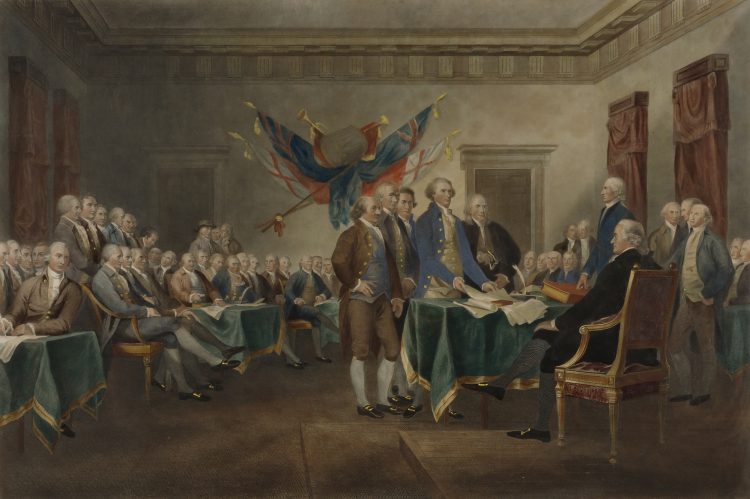
This is why it is so great to live in the greatest nation on God’s green earth. We don’t need to use the Confession of Faith to dismantle oppressive legislation or exploitative policies. We have the Constitution and the Declaration of Independence. Imagine that. Political documents regulating political affairs, and ecclesiastical ones shaping the church.

How novel!