PCA Trumped

Or, how politics matters more than communion:

But a few predicted that this election could permanently damage attempts to create unity among evangelicals. “I spend most of my time in ministry talking and teaching about racial reconciliation,” said Jemar Tisby, the president of the Reformed African American Network, a “theologically traditional” coalition of black Christians and churches, as he described it. “The vast majority of white evangelicals with whom I interact are on board and want to see a more racially diversified and unified church. However, when that same constituency overwhelmingly supports Donald Trump, I feel like they haven’t understood any of my concerns as a racial minority and an African American.”

All the racial reconciliation that last year’s General Assembly allegedly accomplished was thin compared to a PCA minister or member’s status in the world of evangelicalism. Does the PCA now need to repent for its members who voted for Trump? Or can its pastors, theologians, and elders help members understand that belonging to the visible church — the kingdom of Jesus Christ, mind you — is so much more significant than what federal politicians do (or votes for them)?

Now more than ever, the PCA needs a healthy dose of the spirituality of the church. It needs to understand that the politics of this world are trifling compared to the realities of the world to come, and that the freedom a Christian enjoys in Christ has nothing to do with politics (just ask the peasants who used Luther’s gospel to advocate an egalitarian social order). But that doctrine is now in the rear view mirror.

It’s Only Politics

Matt Tuininga echoes the idea that politics is evidence of sanctification (integration of faith and life and all of that):

Will Republican evangelicals who see their sisters and brothers – their political opponents – wounded and beaten on the other side of the road and cross over to take up their need as their own, in the spirit of the good Samaritan? Will they stand with them in solidarity, pleading their cause as if it were their own? Will Democratic evangelicals who feel beaten and betrayed accept such an effort at reconciliation and love in a spirit of gospel hope? Will they stand in solidarity with their evangelical opponents, pleading their cause as if it were their own? Do we have the humility to recognize that our own political judgments might not reflect the whole picture, that they might even be wrong?

Bill Smith in his curmudeonly way says, no thanks:

Blacks and other minorities have experienced abuse. Blacks in particular can identify with Israel, an enslaved and abused minority in Egypt. Unfortunately white evangelical Christians have themselves been the abusers of African Americans or failed to speak up against their abuse. White evangelicals have aligned themselves with the Republican Party which has not been sympathetic with the concerns of minorities but rather has become a home of racists and nationalists. Lately, however, there has been progress as black and white Christians have worked toward racial reconciliation. But this election has exposed the reality that white evangelicals have not come so far as black evangelicals hoped. The black minority feel they have been betrayed by white evangelicals who voted for Trump.

. . . The perspective of these brothers is the same as that of Falwell, Kennedy, Criswell, and the Moral Majority. They were on God’s side, and God was on their side. Their champion was Ronald Reagan. The election of Reagan moved forward the cause of Christ and his kingdom.

These brothers believe that God is on their side and they on God’s. Their cause(s) is the cause of the kingdom of God. To them Trump was not just someone they disagreed with but the enemy of the kingdom of God. The 80% of white evangelicals who voted for Trump voted against the interests of the kingdom of God, betrayed their black brothers and sisters (who ask, “How could you?”), and proved themselves unreliable allies in the righteous causes highest on the list of black priorities.

All this was hogwash in the days of Falwell, and it’s all hogwash today. This is not about Christian theology or practice. It’s politics. That’s all it is. Just politics. The joy that the Moral Majority felt when Reagan triumphed was not righteous joy but political joy. The grief felt by these black brothers is not righteous grief but political grief. The reason most white evangelicals voted for Trump is that most white evangelicals are conservatives and Republicans. The reason these black evangelical brothers feel betrayed is because they are liberals and Democrats.

If only we could treat politics like plumbing. But no. Politics has to be a high and holy calling. What we are seeing is the result of all that every-square inch argument. And it’s not helpful for the nation or — get this — for the church. But it does allow evangelical academics to feel pious.

The 2K Temptation

Ed Stetzer seems unable to resist:

Evangelical is not a synonym for Republican.

It’s a definition of people who believe in values like the cross, the gospel, and sharing that news (euangelion) with others. That’s often described by the Bebbington Quadrilateral, which includes biblicism, crucicentrism (focused on the cross), conversionism (the people need to be born again), and activism (works that flow from new life).

I get the temptation to want to narrow what the term means because we feel little connection with others who also use it. But facts are our friends, and labels mean something specific, even if the parameters are broad. We can hold Evangelical beliefs and see some things—like politics—in different ways.

Yes, the vast majority of White Evangelicals decided that Donald Trump was a better choice. Evangelicals of color mostly made a different choice. There are complex reasons for each. It does not help to dismiss them, and I won’t.

But I will remind everyone that being an Evangelical is about the gospel, not about a lever in a voting booth.

But if evangelicals contented themselves with the gospel (as if that’s so hard except for the obedience boy lurking inside all of us), that would mean saying no to the cultural transformation (read Christian nationalism) temptation. Because evangelicals (and most Western Christians for that matter) have refused to give in to 2K, they (along with Ed Stetzer) need to confront their American selves:

The influence of political tactics is not confined to campaign dynamics. It affects how we are formed as people. Instead of our values influencing our politics, our political circumstances are shaping our values. As partisan citizens, we explain away the flaws of the candidate we support, and buy nearly any outlandish theory about the candidate we oppose. We even change what we believe to fit the moment.

C. S. Lewis understood the temptation to seek personal meaning in politics. His essay “Membership” is most instructive in this regard. “A sick society,” Lewis writes, “must think much about politics, as a sick man must think much about his digestion.” However, “if either comes to regard it as the natural food of the mind—if either forgets that we think of such things only in order to be able to think of something else—then what was undertaken for the sake of health has become itself a new and deadly disease.”

Our culture, and many people in our churches, are sick with that new and deadly disease. Politics is causing great spiritual harm in Americans lives, and a big reason for that is Americans are going to politics to have their spiritual needs met. This is the meaning of rising polarization and the cause of our zero-sum mentality. Politics does a poor job of meeting spiritual needs. But if it will get your vote, politicians will attempt to fill the spiritual void nonetheless.

When you grow up in the greatest nation on God’s green earth, believe with President Obama that you are on the right side of history, and have the rest of the world looking to your government (either to help or leave), it is hard to turn away from the power that Paul said Jews sought and be content with the cross.

For since, in the wisdom of God, the world did not know God through wisdom, it pleased God through the folly of what we preach to save those who believe. For Jews demand signs and Greeks seek wisdom, but we preach Christ crucified, a stumbling block to Jews and folly to Gentiles, but to those who are called, both Jews and Greeks, Christ the power of God and the wisdom of God. For the foolishness of God is wiser than men, and the weakness of God is stronger than men.

For consider your calling, brothers: not many of you were wise according to worldly standards, not many were powerful, not many were of noble birth. But God chose what is foolish in the world to shame the wise; God chose what is weak in the world to shame the strong; God chose what is low and despised in the world, even things that are not, to bring to nothing things that are, so that no human being might boast in the presence of God. (1 Corinthians 1:21-29 ESV)


Total Lordship of Christ = Christ Tells Us Everything

Thanks to another of our southern correspondent comes Doug Wilson’s latest sovereignty-of-God brag. He faults Russell Moore for only wanting a Christian public square about race but not about sex:

The theological problem has to do with how we define righteousness for the public square. Russell Moore doesn’t want to build a Christian nation except on racial issues, which is like wanting a nation to be Christian every day between 9:45 am and 11:12 am. If Jesus is Lord of all, we must listen to Him on racial issues in the public square. If He isn’t, then we don’t have to. What we don’t get to do is pick and choose. Under the new covenant there is no unique chosen nation, of course. In the new covenant, every nation must be discipled, and there is no exceptionalism there. But whether you want righteousness in tiny slivers, or righteousness across the board, you still have to define it.

Sorry, Pastor Wilson, but you are picking and choosing all the time. Welcome to the novos ordo seclorum; find your inner 2k self. What is Christ’s will about the military? Read the Old Testament for “holy” war and invade Mexico? What does Christ reveal about idolatry and blasphemy? Send Jews and Muslims packing (the way King Ferdinand and Queen Isabella did)?

Theonomists are all bluff. They don’t virtue-signal. They obedience-signal. Worse, they know they’ll never have to live with their braggadocio.

The Trump Effect

Have journalists figured out that religious celebrities don’t speak for the religious?

The evangelical left is preaching to its enrollment:

“I’m ready to admit we’re a group of leaders without followers,” said Ron Sider, Distinguished Professor of Theology, Holistic Ministry and Public Policy at Palmer Theological Seminary in Philadelphia. “But we will always have our seminary and college courses to make it feel like we’re preaching to a congregation of believers.”

How many Americans today see themselves as peace, Earth and neighbor-loving, and Jesus-following Christians, and as evangelicals?

“Beyond us?” Sider asked, motioning around the focus group of the lefty evangelicals convened by The Literalist. “Pretty sure it’s just us.”

“We’ve written more books about the Evangelical Left than there are actual progressive voters who self-identified as evangelical,” added Clinton spiritual advisor Tony Campolo. “We thought if we got covered in Religion News Service enough, people would follow. Turns out that didn’t work.”

Rusell Moore speaks more for himself than his convention:

During this election season, Moore has sometimes appeared out of place in his own denomination—a Trump detractor leading a church largely peopled by Trump supporters. But he seemed comfortable in this uncomfortable position, perhaps because he has learned to accept the limits of his ability to change the world, or even to understand it. Moore thinks that the idea of a moral majority is wrong, and was probably wrong when it was created: he suspects that earnest, orthodox Christians have always been outnumbered.

So what will journalists do when the pollsters stop canvassing voters? Take a cab cross town and chat with Tim Keller?

How to Achieve Racial Solidarity — Apply Ben Franklin’s Racism

When Thabiti Anyabwile complains about white evangelicals voting for Donald Trump, he should remember that Ben Franklin defined racial solidarity differently than the Washington DC pastor does. According to Franklin:

The Number of purely white People in the World is proportionably very small. All Africa is black or tawny. Asia chiefly tawny. America (exclusive of the new Comers) wholly so. And in Europe, the Spaniards, Italians, French, Russians and Swedes, are generally of what we call a swarthy Complexion; as are the Germans also, the Saxons only excepted, who with the English, make the principal Body of White People on the Face of the Earth. I could wish their Numbers were increased.

By that reckoning, many people of color voted for Donald Trump on Tuesday. It might undermine Anyabwile’s point (already attempted). But it would be a way of achieving the “white” identification with African-Americans for which the pastor strives.

Obedience Boys All

Adam Gopnik explains how Shakespeare was a law-gospel guy:

Shakespeare also believed in forgiveness in a way that we don’t. Really rotten people get forgiven, in the comedies and romances, at least, in ways that still make us uneasy. In “The Tempest,” “As You Like It,” “Twelfth Night,” bad actors get easy outs. Even Shylock isn’t killed. Dr. Johnson thought the moment when Hamlet delays killing Claudius in order to deprive him of any chance of forgiveness was “too horrible to be read or to be uttered.” We are much more ostentatiously compassionate and much more effectively vindictive. Small incidents of plagiarism end careers—not a rule that Shakespeare himself would have escaped—and sexual sins can place their perpetrators forever beyond the bounds of redemption. In Shakespeare, rotten people do rotten things, but if they stick around and say they’re sorry they are forgiven. By contrast, we feel everyone’s pain, forgive no one’s trespasses.

Make America Sane

I won’t reveal how I voted. Nor can I claim to be happy about yesterday’s outcome (I married a woman who took it hard). But a piece of me thinks that a Donald Trump presidency may make it harder for certain sorts of outlooks or activities to be taken seriously.

The first is the grief counseling offered to students at U Mass Lowell:

Dear Students,

We at the Multicultural Affairs Office hope this email reaches you and you are doing ok. We know many of you stayed up waiting to hear of the election results. These are unprecedented times. The nation as well as our community is reacting in many different ways. We are reaching out to each of you because we know that this was an intense election and we are already hearing a number of reactions, feelings and emotions. This is a critical time to make sure that you, your friends, classmates, neighbors are doing ok and seeking the appropriate support especially if they need a place to process or work through what they’re feeling.

You may hear or notice reactions both immediate and in the coming weeks, some anticipated and many that may be difficult to articulate or be shared. While it may take some time to fully take in all the recent events, please also know that the OMA office is here for you. Our UMass Lowell community is here for you. Do not hesitate at all to come in or ask for support.

Today there is a Post-election self-care session from 12-4pm in Moloney. The event will include cookies, mandalas, stress reduction techniques and mindfulness activities. Counseling and Health Services will also be available. We have sent out messages through our Social Media sites as well as encouraging students to drop in all week. Above all, take good care and know that there is strength in our community that you can lean on.

Kind regards,
Office of Multicultural Affairs Staff

Do these people cower when reading accounts of the American founding for all of the self-actualized agency that colonists displayed in seeking self-determination and limited government? (Read: are they American?)

The second is Damon Linker’s description of the cosmopolitan w-w that has dominated the Obama years (thanks to Rod Dreher):

Underlying liberal denigration of the new nationalism — the tendency of progressives to describe it as nothing but ‘racism, Islamophobia, and xenophobia’ — is the desire to delegitimise any particularistic attachment or form of solidarity, be it national, linguistic, religious, territorial, or ethnic… cosmopolitan liberals presume that all particularistic forms of solidarity must be superseded by a love of humanity in general, and indeed that these particularistic attachments will be superseded by humanitarianism before long, as part of the inevitable unfolding of human progress.

For those of us 2k Protestants who have managed to hyphenate ourselves, and found ways to recognize our multiple loyalties, the notion that all attachments to what Edmund Burke called little platoons block national progress is — well — unwelcoming. It’s also dumb. Were the Students for a Democratic Society wrong to exclude Young Americans for Freedom?

I don’t think President Trump will issue executive orders for colleges students to human-up or for Orthodox Presbyterians to sponsor OPC Pride Parades. But I do sense that he will not lend the support of the White House to the touchier and more ethereal sides of American character.

Day After Perspective

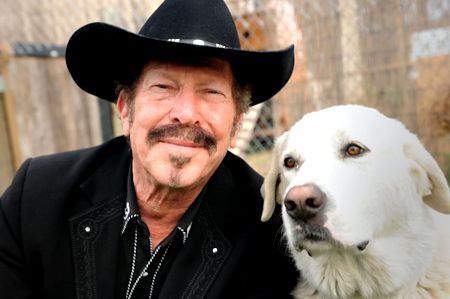
One of our many southern correspondents sent Kinky Friedman’s remarks about the election. Since the Bible tells us that all is vanity, Friedman is sounding 2k (there’s a syllogism in there somewhere):

Trump is not my hero. I prefer Mr. Anonymous. I like the guy who gives a million bucks to the children’s hospital and doesn’t insist that his name has to be up there. But that’s who Trump is, that’s who he’s been. It should be pointed out that we’re not in a position to know where greatness comes from. Not only did Jesus ride in on a jackass, but Gandhi was a yuppie lawyer living in London, with no interest in helping people.

If you look at the great ones, Mother Teresa, Winston Churchill, FDR, they were all aristocratic freaks with very little interest in others. They’re very much like Trump. I mean, particularly Churchill. He was a polo player in India and an adult butterfly collector. They liked to hang out at the country club, Rachel. They were very privileged people.

When they got into office, Churchill and FDR, they did something that Obama was never able to do: change. The agent of change, Obama, could not change himself. He remained a fixed point in a changing world. It’s just too bad; it’s who he is. He’s not the smartest guy in the room. He may be the glibbest. He may be the most facile. I believe, if he’s concerned about a legacy, I believe he can pretty well forget that.

All I’m saying is, we don’t know who the hero is until the ship sinks. Or when the plane is crashing. You don’t know who’s going to run back and save somebody, or who’s going to dress up like a woman so he can hide in a lifeboat.

I’m not moving to Canada yet, but if Michigan wants to secede and join the great North Country, I won’t fight.

Teflon Megachurch

Jake Meador blames the poor styles of Jen Hatmaker on the megachurch. Evangelicalism of the 1990s relied more on personal branding than on churchly boundaries. The result is Hatmaker’s inability to see what’s at stake in LBGT debates. She’s a product of her megachurch culture.

Meador is especially hard on Bill Hybels and Willow Creek:

At the heart of this evangelical movement was the megachurch, which we have already mentioned. But the suburban megachurch calls for closer attention because it is in the megachurch that we find the methodological keys to understanding both the evangelicalism of that era and the second-generation spin on this same model that is embodied by women like Hatmaker as well as her friend Shauna Niequist, herself the daughter of the founder of this movement, Bill Hybels.

The seeker-sensitive movement began with a simple idea: Charitably stated, it was that the Christian faith was increasingly nonsensical to modern Americans and it needed translators who could listen to the culture and then speak about the faith in ways that were sensible to them.

Unfortunately, the way that Hybels and others like him attempted to do this work of translation depended far too heavily on secular ideas about marketing, branding, target demographics, and so on. The faith became a product, churches became places of entertainment and commerce, and pastors became the heroic CEOs with the right vision to grow the business:

So churches like Willow Creek leaned on a method for doing evangelism and outreach that essentially amounted to selling the Gospel using marketing strategies targeted at specific demographic groups. They did market research, figured out what people wanted in a church, and began shaping church services accordingly.

The problem with this method is that it can only ever be reactive. Seeker-sensitive evangelism and churches can only react to what they learn in their market research and what they gather from observing mainstream culture. But they cannot create work that drifts from the basic grammar and vocabulary that they inherit from the culture they’re attempting to reach.

My question is why does Tim Keller and Redeemer NYC get a pass? Redeemer is a megachurch, uses strategies designed for its urban context, and it came along at the same time as Willow Creek.

Meador may object that Hybels is not Keller when it comes to communicating or defending the truth of Christianity. But Meador forgets that Lee Stroebel was a big part of Willow Creek’s brand back in the 1990s and no one could apologize better for the faith than an atheist-journalist who studied at Yale Law School turned Christian teacher.

Plus, if you consider where some of the junior pastors in Keller’s New York City outreach landed, Meador could conceivably add Redeemer to his lament about evangelicalism and millennials. Anyone remember this (two years before Jen’s hatmaking went haywire)?

This aligns with our existing core vision: the doors of this church are as wide as the arms of the Savior it proclaims. We remain passionate about having as many people hear the gospel as possible. City Church will continue to receive into membership all those with a credible profession of faith and expect the same commitments represented in their membership vows.

On the other hand, we want to be clear what this now means. We will no longer discriminate based on sexual orientation and demand lifelong celibacy as a precondition for joining. For all members, regardless of sexual orientation, we will continue to expect chastity in singleness until marriage. Please pray for our Board as we continue to discuss pastoral practices with our LGBT brothers and sisters in Christ. Pray for our denomination, the Reformed Church in America, as it does the same.

So I ask, what gives?