When the Election is not about the Nation but MmmmeeeeEEEEE

Why do Christians on both sides of the Tiber frame the current presidential contest in a secular republic no less in terms of what a believer’s vote says about his or her devotion or virtue? Here are a few samples.

First, how the character of a candidate may affect the character of the voter:

Christians can, morally, either support Trump over Hillary or not support either. Nearly all Christians who support Trump over Hillary do so without adopting strong-man messianism. Being clear that one is not endorsing specific moral flaws, and having one’s eyes wide open about the calculation, is not an internal threat to the Church. It’s not even a problem unique to this election cycle.

Whew. If I vote for Hillary I won’t stain my soul.

But morality won’t resolve my dilemma of for whom to vote (if I’m Roman Catholic):

. . . it’s plain to see that Catholic moral reasoning does not map on to the current American political grid. What then should Catholics do? What should be the final thought of the undecided American Catholic voter, behind the sacred veil of the voting booth?

Some Catholics react to their complicated political instincts by isolating one issue about which to make an electoral decision. At the national level, we find many “single-issue voters” on the topic of abortion. As a fundamental matter of life and death, one of the non-negotiables of Catholic moral teaching, it makes sense why many Catholics highlight abortion as a way to clear a path toward a conscience-protecting vote. But there are other non-negotiables in Faithful Citizenship too, such as torture and racism. And some Catholics also believe that recent uses of American military power, especially targeted killings through drone strikes or accidental bombings of allies, have crossed the line of non-negotiable moral teaching about the dignity of human life and the protection of noncombatants during war.

Uh oh.

For Protestants, voting winds up functioning as a part of self-disclosure:

A vote for Trump is a vote signifying that evangelicals are owned by the GOP. Part of the tragedy here is that evangelicals are still a big enough voting bloc that we could prevent either candidate from winning the election.

Let that sink in. If evangelicals just said, “No, I refuse to be coerced into supporting candidates who do not meet a very basic standard,” we could swing the election. You probably read that sentence and immediately dismissed it, thinking something like, “That is a fantasy. The reality is people are going to vote for one of the two major candidates.”

People won’t vote for a third party candidate because third party candidates don’t win because people won’t vote for a third party candidate—which is great for the two major parties because they don’t really have to even try to address the concerns of voters.

A vote for Trump also communicates to our neighbors that we believe he would be an acceptable leader for our country. Sure, you can qualify your Trump support by saying you have reservations but you believe he’s better than Clinton; however, by casting a ballot for him you are fundamentally claiming that it would be good for Trump to govern you and your neighbor.

How would anyone actually know how I vote? Isn’t the ballot supposed to be private? If so, then maybe ordinary Christians should not be so glib about how they are going to vote. Propriety, people!

But no. For some this election season is so wicked and Trump so depraved that the only response is revulsion (which it seems you should display so that people know you are not so morally compromised):

I believe that the proper response of the well-former mind and heart to the very idea of Donald Trump as President of the United States is, to put it bluntly, revulsion. . . .

What concerns me far more deeply is the ordinary, everyday Christian — the person who claims to be an evangelical Christian — who is not revolted by Trump, who lacks the requisite “wisdom of repugnance.” I think, for instance, of the people who have compared Trump to King David, presumably because both are guilty of sexual sin. But those who make this comparison have failed to recognize the difference between one who says “For I know my transgressions, / And my sin is ever before me” and one who says that he doesn’t “bring God into that picture” when he does something wrong and follows up by saying “I am good. I don’t do a lot of things that are bad.” And if you don’t understand that distinction — and equally if you understand it but for political reasons pretend not to — there is very little about the Christian message that you truly grasp.

By the way, I’m not talking about Hillary Clinton here because there is so little evangelical support for Hillary Clinton. She also offers much for us to be appalled by.

And I’m not even making the argument that an evangelical Christian should never in any circumstances vote for Trump. (Not today, anyway.) I am simply saying this: the fact that so many American Christians feel no revulsion at the thought of electing Donald Trump — this man so palpably “unsound, uninformed, unhinged and unfit” — as the leader of this or for that matter any other nation, but rather express great enthusiasm at the prospect, indicates not just a lack of knowledge but also, and more important, a lack of moral training. The immediate responses are missing or wrong.

Voting as fruit of the Spirit. Politics as sanctification.

It seems to this 2ker that investing voting with such moral and spiritual significance is to overestimate (way way so) the United States or a Christian’s place in the nation. Everyone has ideas about American government, what would be good for the nation, which candidate may offer a corrective to certain trends, which figure symbolizes a part of the nation’s worthwhile qualities. Of course, Americans could be more informed about policies and how government works, though if members of Congress can’t parse the Affordable Care Act which of us can stand in that pretty good day of national or state debate? Chances are that after this election, even if Congress impeaches the next president (which could happen to either major candidate), the republic will go on and the forces of consolidation and centralization will also remain thanks to the United States’ standing as a global hegemon.

Life will go on.

Sanctification for the saints will continue.

Christians will more or less throw themselves into policy, activism, party politics.

CNN and Fox will sensationalize.

Large sums of money — almost as much as professional athletes make — will go to politicians in hopes of access.

It’s all bigger than mmmmeeeeeeEEEE.

So it’s time to switch from the summer cocktail of choice — the gin and tonic — to the one for cooler temperatures — the whiskey sour. Somewhere in the world it’s 5:00.
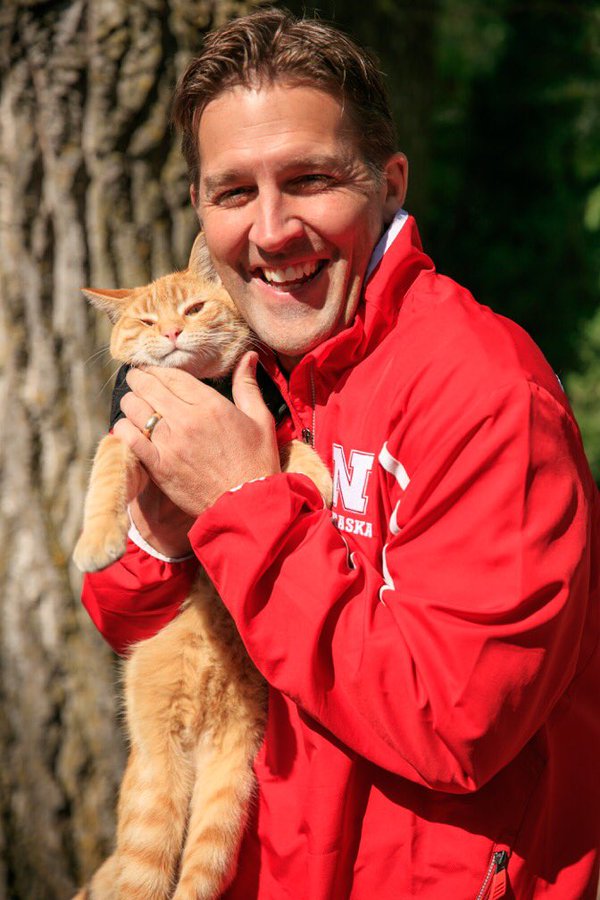

Sasse 2020

I am calling the bluff of those who throw around the label “R2K.”

Listen to the interview Scott Clark did with Senator Ben Sasse and tell me where he is wrong. Sasse has a smart understanding of the U.S. political system, the nature of civil society, and his own calling as a Christian and many other duties. Imagine that, he can speak American and Reformed.

And if Sasse doesn’t measure up because of 2k views, are the critics of 2k going to support the dominionist Ted Cruz, the Opus Dei Rick Santorum, or the liberal moderate Southern Baptist Mike Huckabee? (Are they so particular about their pastor?)

I don’t know what the Senator’s plans are or whether he can clear all the hurdles of a primary campaign. But if you want a Reformed Protestant who sounds more like Yuval Levin than Mark Levin, Sasse is your guy.

Why Christians Should Read Mencken

If only the Jerry Falwell’s had considered this:

Preachers, of course, have a right to their political views, but it does not follow that they have a right to become politicians. When they dedicate their lives to religion they give over many of the common rights of ordinary men, the while they take on rare and valuable privileges one of those forfeited rights, I believe, is that of playing politics. Politics is a dirty business. It is inevitably and eternally contaminating. No man can touch it and not carry away his smear. As a profession it ranks with saloon-keeping and bookmaking. As a diversion it ranks with poker and cornet playing.

Preachers had better keep out of it. Let them vote as they please. Let them even, as private citizens, solicit the votes of their friends. But let them beware of going into active politics, as preachers. The public does not want to hear their political views in that capacity. Their training does not give them any appreciable fitness for judging politicians. Their opinions about the tariff, public expenditures and the trusts are no weightier than the opinions of other men. All the more danger, then, when they seek to give those opinions the false force of their ecclesiastical authority. All the more peril when they try to capitalize their good repute.

I Just Wanna End Small Group Prayer

This should put a stop to it — just have believers think about what they say before they pray:

1. Avoid vain repetition. The one leading in prayer should be careful not to say, “O Father,” “Holy Father” or “Lord” over and over and over again.

2. Avoid hesitation and stumbling. The one leading in prayer should spend time on the prayer prior to the service so that he does not come across unprepared.

3. Avoid ungrammatical expressions. For example, the one leading in prayer should avoid such phrases as “Grant to give us…” “Grant to impart to us…” Grant and give are verbs expressing the same thing. This is a redundant and inaccurate use of language.

4. Avoid disorder. We need regularity and order in our prayer. The ACTS acronym is helpful: Include prayers of Adoration, Confession, Thanksgiving and Supplication (i.e. Petition and Intercession). By following an order, the one leading in prayer can help those he is leading pray along unhindered.

5. Avoid praying in minute detail for certain things. Balance out prayers in general. Especially for a Lord’s Day morning service. It is good to pray according to the same general nature for all the things for which the one leading prays. If there is a man or woman who has a terminal sickness, it is sufficient to plead with the Lord to heal that individual. There is no need to go into all the specifics of that with what he or she is dealing.

This is based on Samuel Miller’s thoughts on prayer which goes on for another 13 items. Not quite Rick Warren like, so not enough for forty days of driving your way to a life of purpose. But if Christians ever had to consider that praying in public does not come naturally to some believers, this post might get them started. And it really would throw a wrench into the praying patters of the seemingly intimate small group.

When the Gospel (Coalition) Needs Conservatism

At a time when out-of-wedlock births are skyrocketing (forty percent in 2013) and straining urban life in major ways, Bethany Jenkins, who writes with the blessing of the Gospel Coalition and who swims the the heady streams of New York City evangelicalism, considers being a single mom:

These days it almost seems passé to talk about needing marriage before having children. Today’s single woman doesn’t need marriage—or even a man.

Single mothers by choice (SMBC)—in contrast to by circumstance or chance—are single women who have chosen to have children through sperm donation (75 percent) or adoption (25 percent). The difference between these women and women like me who choose to remain childless, says Kate Bolick in Spinster: Making a Life of One’s Own, is desire:

Again and again, the [SMBC] I spoke with described how they’d wanted to be a mother for as long as they could remember and how the urge to get there became so overpowering, it felt less like a rational decision than a compulsion. This conviction—that no matter what, they would have a child—is, I’ve concluded, the most common denominator uniting all choice moms.

Such women are praised for their courage and confidence. One SMBC, who became a mother through sperm donation, says her friends called her “amazing” and “brave.” Yet she confesses she didn’t feel brave. “It’s not about being brave—it was about wanting to stop feeling like a childless mother, and take the next step before I ran out of time.”

My single friend, Christine, on the other hand, became a mother by adoption. Her journey was less a pursuit of self-actualization or self-fulfillment and more a response to a need—not a need she felt within herself, but a need she saw in someone else.

While working with high schoolers through the faith-based nonprofit Young Life, Christine met Ana, a 15-year-old expectant mother. When Ana’s water broke, her mother refused to take her to the hospital. That’s when Ana called Christine. Christine drove her to the hospital and stayed with her through the birth, holding her hand in the delivery room. Over the next few years, it became apparent that Ana and the birth father couldn’t care for their daughter, María.

It wasn’t easy, but Christine stepped up. At one point, she and María shared a 425-square-foot apartment and, since María’s biological familial ties weren’t completely severed, there were some relational challenges, too. But Christine says María is the greatest joy she has ever known—in spite of the obstacles. She also says she didn’t stumble into motherhood: “I longed to become a mom, so I diligently prayed for God to give me a child. When this opportunity arose, I had eyes to see it. If this hadn’t happened, I believe I’d have seen another opportunity. I was on the lookout for it.”

Hasn’t she heard about the importance of fathers in socializing children (especially boys)?

Meanwhile, Gracie Olmstead who writes regularly for American Conservative, puts motherhood in perspective, as in it’s not all about her but about the child:

Motherhood is not easy. It is often painful, frustrating, and difficult. It involves a host of unpleasantries. In our age, in which the self reigns supreme, motherhood runs counter to every society-endorsed impulse and mantra. Motherhood is all about sacrifice—from the moment our bodies begin to reconfigure themselves in order to grow a new human being.

Motherhood means sleepless nights, sore nipples, baby blues, weight gain, aching backs, temper tantrums, frightening doctor’s appointments, endless laundry, constant cleaning, incessant worry, near heart attacks, and lots and lots of money. Motherhood isn’t about self-filling. It’s about self-emptying.

That isn’t to say motherhood can’t be fun and joyous. It truly is and can be. But in order to embrace it, one must believe that all of the pain and hardship involved in motherhood is good, and that the child that results from all our work and hardship is inherently, intrinsically good as well. One must have a moral imagination, a “stable sentiment.” Mothers must have chests.

Olmstead adds that today’s decision to have a child could turn into tomorrow’s regret at giving birth:

As soon as we take away the idea of virtue—the idea that an act, despite the pains and sacrifice it might require, is objectively good and worth pursuing for its own sake—we permanently impede humankind’s ability to pursue selfless action. It does not matter if you tell a woman she should procreate “for the good of the species,” or tell her that she’s biologically predisposed to want children. If there is no overarching moral code related to the bearing and raising of children, then motherhood is subjugated to the wild and changeful whims of human emotion and desire. One second, you might want a baby; the next, you might spurn your child—and there is no law or code that can suggest you should do otherwise. “Instinct” becomes “impulse,” and so we waffle from whim to whim.

What accounts for the difference between an evangelical and conservative outlook on motherhood? Could it be that born-again Protestants really put the mmmmmeeeEEEE in all about mmmeeeeEEEE since personal experience and fulfillment is so important to being an evangelical? In contrast, conservatives (who may also be evangelicals) tend to think about the traditions and webs of social networks that go with marriage and rearing children. If the New York evangelical intelligentsia had given Bethany more instruction in conservatism than the gospel, maybe she’d see the problem with single parenthood.

If You Don’t Like Cats, You Have a Problem with the Lord

Keep in mind:

He set the earth on its foundations,
so that it should never be moved.
You covered it with the deep as with a garment;
the waters stood above the mountains.
At your rebuke they fled;
at the sound of your thunder they took to flight.
The mountains rose, the valleys sank down
to the place that you appointed for them.
You set a boundary that they may not pass,
so that they might not again cover the earth.

You make springs gush forth in the valleys;
they flow between the hills;
they give drink to every beast of the field;
the wild donkeys quench their thirst.
Beside them the birds of the heavens dwell;
they sing among the branches.
From your lofty abode you water the mountains;
the earth is satisfied with the fruit of your work.

You cause the grass to grow for the livestock
and plants for man to cultivate,
that he may bring forth food from the earth
and wine to gladden the heart of man,
oil to make his face shine
and bread to strengthen man’s heart.

The trees of the LORD are watered abundantly,
the cedars of Lebanon that he planted.
In them the birds build their nests;
the stork has her home in the fir trees.
The high mountains are for the wild goats;
the rocks are a refuge for the rock badgers.

He made the moon to mark the seasons;
the sun knows its time for setting.
You make darkness, and it is night,
when all the beasts of the forest creep about.
The young lions roar for their prey,
seeking their food from God.
When the sun rises, they steal away
and lie down in their dens.
Man goes out to his work
and to his labor until the evening.

O LORD, how manifold are your works!
In wisdom have you made them all;
the earth is full of your creatures. (Psalm 104:5-24 ESV)

This is not a cats versus dogs thing. Like Chortles says of himself, God loves all his critters, every square inch (and all) of fur.

Lordship of Christ Over Every Spiritual Inch

Joseph Moore has a new book out on the Covenanters that argues in part that these radical Scottish Presbyterians make the proponents of Christian America look like posers. Covenanters, for instance, refused to take oaths that included an acceptance of the Constitution because the United States’ legal provisions failed to acknowledge the Lordship of Christ:

Many hard-liners, imitating their Anti-Burgher ancestors, refused to swear an oath implying support of an ungodly government. . . . Founding the nation on the authority of “We the People” represented, the RP’s maintained, a flaw in Revolutionary logic: it removed Christ from his rightful place about the state. The US Constitution was a “manifest dethroning of the Lord and his Anointed from the government. As mediator between God and all humankind, Jesus gave legitimacy to civil governments. Governments, in turn, acted to bring people to knowledge of God’s Goodness and law. Law, then, should be based on God’s word even when that law seemed to harsh for liberal American sentiments. (Founding Sins, 62-63)

For a 2k Protestant, US government poses no such difficulty. Christ is king as both mediator and creator. His creational rule over secular government doesn’t now require the ruler to acknowledge Christ’s rule as mediator. But for comprehensive Christians, making the distinction between redemption and providence is a high wire act forbidden to anyone who wants a safe earthly existence.

For that reason, the comprehensive Christian, if the Covenanters are right, could never serve as an attorney in the United States. How, for instance, could a Christian take the oath required of attorneys in Michigan?

I will support the Constitution of the United States and the Constitution of the State of Michigan;

I will maintain the respect due to courts of justice and judicial officers;

I will not counsel or maintain any suit or proceeding which shall appear to me to be unjust, nor any defense except such as I believe to be honestly debatable under the law of the land;

I will employ for the purpose of maintaining the causes confided to me such means only as are consistent with truth and honor, and will never seek to mislead the judge or jury by any artifice or false statement of fact or law;

I will maintain the confidence and preserve inviolate the secrets of my client, and will accept no compensation in connection with my client’s business except with my client’s knowledge and approval;

I will abstain from all offensive personality, and advance no fact prejudicial to the honor or reputation of a party or witness, unless required by the justice of the cause with which I am charged;

I will never reject, from any consideration personal to myself, the cause of the defenseless or oppressed, or delay any cause for lucre or malice;

I will in all other respects conduct myself personally and professionally in conformity with the high standards of conduct imposed upon members of the bar as conditions for the privilege to practice law in this State.

No mention of God, no Lordship of Christ.

This means that Moore’s point about David Barton may be as relevant for those critics of 2k who jeer from the cheap seats of neo-Calvinism.

America’s original religious Right, the Covenanters’ . . . centuries-long struggle contradicts suggests that the Constitution hallowed Christianity or allowed for the church to influence the state. European nations before and after the founding claimed their nationhood in part from their religious identity. America did not. The implication was clear. Its failure to honor God in the Constitution made the United States the first government in Western history to disassociate itself from Christianity. The Covenanters created the most thorough, logical, and sustained critique of the Christian America thesis in history by assaulting the Constitution on its own terms. Taken as a whole, this logic challenges the religious Right from its own right flank.

The expensive seats are those occupied by the Covenanters. Every other Christian nation advocate is faking.

From Crisis to Crisis

If Ross Douthat thinks conservative Roman Catholics are having trouble with the current magisterium, he should remember how liberal Roman Catholics felt a little more than a decade ago in the last years of John Paul II’s papacy:

Thirty years after Vatican II, liberal Catholicism is once again passing through a cycle of official hostility and internal disarray. In a time of crisis-mongering, it is easy to exaggerate the situation. In many sectors of American Catholicism, liberal Catholicism is the dominant outlook—in the academy, in many seminaries and diocesan agencies, among religious educators and liturgists, and, on many questions, in the Catholic population generally. Are these liberal Catholic church workers, people in the trenches, as they like to say of themselves, much affected by some of the tensions and conflicts I am going to describe? Do their moods sink and their energies flag with every week’s alarms sounded in the National Catholic Reporter? Reliable observers tell me no. Mostly they get on about their work and hope for the best.

Nonetheless, liberal Catholics have good reason to feel on the defensive and threatened from both within the church and without. Rome considers us suspect, and has been pursuing a slow but steady policy of discrediting, marginalizing, and replacing us, and now and again, where the cost appears sustainable, rooting us out. The same goal is being similarly pursued by a number of influential, well-funded movements and publications that identify themselves as “orthodox” Catholics, presumably in distinction to the rest of us who are heretics. The most obvious and fundamental working difference between these groups and liberal Catholics turns on the possibility that the pope, despite the guidance of the Holy Spirit, might be subject to tragic error. Liberal Catholics believe that this possibility, which all Catholics recognize as historical fact, did not conveniently disappear at some point in the distant past, like 1950, but was probably the case in the 1968 issuance of Humanae vitae and cannot be ruled out in the refusal of ordination to women.

But if liberal Catholics increasingly feel that they are not wanted in the church, they are hardly more welcome in the ranks of secular liberalism. American political liberalism has shifted its passion from issues of economic deprivation and concentration of power to issues of gender, sexuality, and personal choice. This shift has opened a serious philosophical chasm between liberal Catholicism and a secular liberalism that would demand an illusory stance of state neutrality, maybe even social or cultural neutrality, on all fundamental questions of lifestyle and therefore a relegation of religious claims to private life and, as Stephen Carter has argued, ultimately to trivialization.

Liberal Roman Catholicism, by the way, was not necessarily about liberal theology but about adjusting ecclesiology to the modern world of liberal politics:

Liberal Catholicism began with a concern for freedom, not of the individual, not of the dissenting conscience, not of an aspiring class, but of the Catholic church. Its pioneers were not revolutionaries but restorationists, who dreamed of restoring the church’s cultural power. Initially they rebelled not against the church’s use of the throne but against the throne’s intervention in the affairs of the church. Then they rebelled against the alliance of throne and altar because they saw the possibility of reconquering society for Catholic Christianity doomed as long as the church remained chained to bankrupt regimes. Only at the end of this process did they conclude that the freedom necessary for the church to prevail implied the general freedom of all.

What I wonder is why a bright guy like Peter Steinfels only sees two options — Roman Catholicism or secular liberalism. Is he so parochial — he worked for the New York Times mind you — to identify Protestantism with secular liberalism? Sure a liberal Roman Catholic has gotten over the idea that liberal Roman Catholicism is the church that Jesus founded.

What Would Trump Be Like as POTUS?

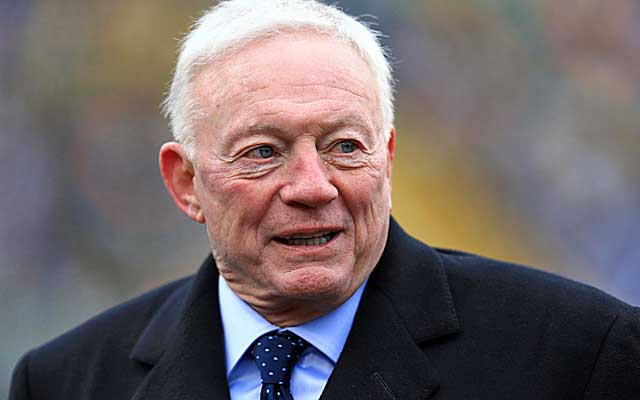
Think Jerry Jones as president of the Dallas Cowboys?

In charge but not and outspoken about it:

In the locker room after Sunday night’s 31-17 win over the Chicago Bears, Cowboys owner and general manager Jerry Jones said Dez Bryant had X-rays on his injured right knee. He said they revealed a sprain and the star receiver would have an MRI Monday.

However, during his Tuesday morning radio interview, Jones said Bryant still had not had an MRI.

“He hasn’t taken an MRI, to my knowledge,” Jones said on 105.3 The Fan’s Shan and RJ show [KRLD-FM]. “I’m assuming that he’s on go [for Sunday]. Will he get an MRI here probably later today? Maybe.

“But he certainly finished the game out. That in and of itself is a good indication. It doesn’t mean he’s going to be free of the symptoms of the injury, but again, we may look at an MRI before this day is over.”

He’s rich, he hangs out with celebrities, and he’s outspoken about it:

Jerry Jones seems to have a story about everyone he’s ever met.

This includes Grammy Award-winning couple Jay Z and Beyonce. The two attended Sunday night’s Cowboys game at AT&T Stadium.

During his Tuesday morning radio interview, Jones said he’s known Beyonce since her former group, Destiny’s Child, performed at halftime of the Cowboys’ 2004 Thanksgiving Day game at Texas Stadium.

“As a matter of fact, they were planning to perform and it was so cold you couldn’t stand it out there on Thanksgiving Day,” Jones recalled on 105.3 The Fan’s Shan and RJ show [KRLD-FM]. “And I got them all coats from Neiman Marcus. And to this day, one of the things that we kind of smile about are those jackets that we got them so that they could go out there and do a good job and give us Thanksgiving Day halftime. Boy, I’m telling you, she’s phenomenal.

What does Jones think about her husband?

“He, as an individual, is one of the neatest people that I’ve met,” Jones said. “Make no mistake about it, he’s the real deal. He’s as easy to be around, talk to, as sharp as anybody I’ve met. I see what she sees in him.”

Don’t forget that Jerry Jones is a patriot and want a great America:

“I got to give a big pat on the back to our entire team, our coaching staff, our entire organization,” Jones told the Cowboys’ flagship station. “We strongly, strongly support the flag in every way we support — and it’s almost ridiculous to be saying it — the people who for generations and generations have given it all up so that we can get out here and show off in front of millions of people on television.

“We respect that so much. That’s the real business. The forum of the NFL and the forum on television is a very significant thing. I’m for it being used in every way we can to support the great, great contributors in our society, and that’s people that have supported America, the flag, and there’s no reason not to go all out right there. And for anybody to use parts of that visibility to do otherwise is really disappointing.”

Is there room in the Constitution for Jerry Jones?

The Unsanctity!

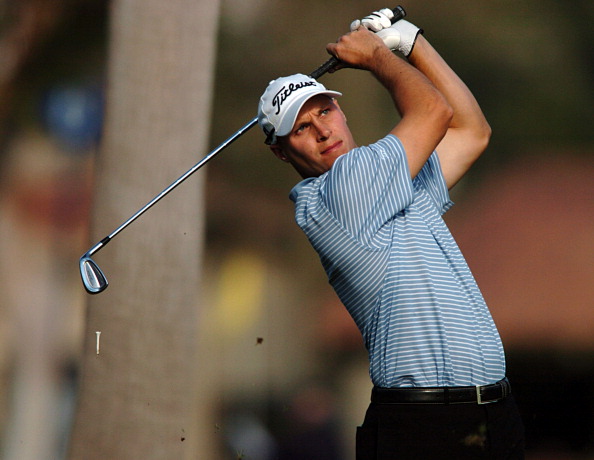
At this point, surprise and indignation are no longer in order since the disregard for the Lord’s Day among New Calvinists is so ho-hum. Yet, sometimes the ordinary is brazen in its ordinariness. Consider this paid advertisement for the Professional Golfers Association at the Allies website:

There’s a tight-knit Christian community on the PGA TOUR, including a Tuesday night fellowship that includes Bible study and worship. Tournaments run Thursday to Sunday, so it’s often hard for players to attend church on Sunday. This is their form of Christian community away from church.

No wrestling with the fourth of the Ten Commandments? Just a shrug? It’s hard. Ever heard of Eric Liddell? Sometimes, Christian athletes really do make sacrifices for their religious obligations.

Apparently, a golfer learns enough about grace on the links so he doesn’t need to comply with the demands of God’s law:

Ben Crane, one of the TOUR’s Christian players, summed this up perfectly a few years ago. He was having a tough year on the course. One of his friends asked how he was doing in the midst of his struggles. He replied:

I think he expected me to say I was really struggling because the golf wasn’t all that good. I just said, “You know, I’m doing great, because the rough season of golf has brought me closer to God. Golf was becoming too important to me. . . . These last few weeks I’ve just said, you know what, golf is not everything.”

Two years ago, Crane was injured and thought he may have to retire from the game, even though he was only 38 and keeps himself in good health. He surprisingly won a tournament a few months later.

“I had to finally become okay with golf not being in the picture,” he said, reflecting on how to find an identity apart from golf. But the gospel got him to the place where he could pray, “Lord, if it’s not golf, I will love you. But if it is, that would be really fun.” Golf was no longer his idol; he could enjoy it for what it is—a gift of grace.

I believe the person who conducted this interview attends a Presbyterian church where the Shorter and Larger Catechisms are supposed to be taught and followed. So is the lesson here that New Calvinists really are a different kind of Protestant?