When Fundamentalists Do It, It’s not Sexy

It in this case is separatism. Back in grad school days the historiographical truism about evangelical Protestantism was that they were not separatists. Fundamentalists were. And so, evangelicals were good (broad minded) and fundamentalists were bad (intolerant). The dividing line was particularly the question of whether conservative Protestants could cooperate with the mainline (read liberal) Protestant denominations. When Billy Graham did reach out to mainline Protestants during his 1957 New York City Crusade (hee hee), fundamentalists like Bob Jones (harumph) broke with Graham’s evangelism. Thus you have separatism and the difference between an evangelical and a fundamentalist. The latter is an evangelical who is angry. Or, an evangelical is someone who likes Billy Graham (thank you George Marsden).

You wouldn’t know it, but separatism is rearing its poorly groomed head again and its not fundamentalists’ fault. Consider the following forms of separatism. First, the Benedict Option (as stated by Ken Myers):

The recovery of the culture of the people of God will make us look profoundly different from our neighbors. In a post-Christian society, all faithful people begin to look a little Amish. But we must remember that we are always against the world for the world.

Bob Jones didn’t withdrawal either. He didn’t even look Amish.

Then consider the academy’s moralism in the case of Yale professor, Thomas Pogge, allegedly guilty of sexually harassing female students:

To some students, responding means boycotting Pogge’s classes. A closed Facebook group called Students Against Pogge asks supporters to stand in solidarity with Lopez Aguilar “and the other foreign women of color targeted by [Pogge] by, at a minimum, not taking any of his classes in the fall.” The page notes that it’s also “a place to brainstorm other means of pressuring the university into making student voices heard and removing Pogge from the classroom,” according to the popular philosophy blog Daily Nous.

Other academics have said they won’t participate in conferences where Pogge is present. Most controversially, some professors have said that responding means eliminating Pogge from their syllabi.

James Sterba, a professor of philosophy at the University of Notre Dame, for example, told The Huffington Post that he’s no longer including Pogge’s work in exams for graduate students. “You don’t need him,” Sterba said. “He carries too much baggage — he doesn’t have to be cited anymore. … He’s a negative image and we don’t need that. Maybe if he was Einstein we’d have to cite him, but he’s not.”

That sounds like shunning.

But fundamentalists still bear the burden of separatism:

Thus, by the mid to late 1950s, the heirs of anti-modernist “second phase” fundamentalism were divided. An organization such as the American Council of Churches and separatists such as Rice and Jones Sr. and Jr. understood themselves as continuing in the historic line of militant, anti-modernist fundamentalism with a new emphasis on ecclesiastical separation. On the other hand, more open-minded heirs of second-phase fundamentalists, who would lead the neo-evangelical surge, sought to return to the era associated with the nineteenth-century evangelical scholarship of The Fundamentals.

On the verge of the tumultuous sixties, the fundamentalist movement had become deeply divided. Those who affiliated with the positive agenda of the non-separatist faction took the name neo-evangelical (eventually simply evangelical) and the separatists militantly clung to the label fundamentalist. Neo-evangelicals often repudiated the term fundamentalist, and fundamentalists did the same with the neo-evangelical moniker.

What if separatism is basic to what all humans do? We identify with some things and reject others. None of us are tolerant all the way down. We are all fundamentalists.

As White and Christian As Ever

Some think the United States is becoming less white and less Christian:

These racial and ethnic changes are dramatic, but they only partially account for the sense of dislocation many whites feel. In order to understand the magnitude of the shift, it’s important to also assess white Christian America’s waning cultural influence. It’s impossible to grasp the depth of many white Americans’ anxieties and fears—or comprehend recent phenomena like the rise of the Tea Party or Donald Trump in American politics, the zealous tone of the final battles over gay rights, or the racial tensions that have spiked over the last few years—without understanding that, along with its population, America’s religious and cultural landscape is being fundamentally altered. . . .

It’s true that mainline numbers dropped earlier and more sharply—from 24 percent of the population in 1988 to 14 percent in 2012, at which time their numbers stabilized. But beginning in 2008, white evangelical Protestant numbers began to falter as well. White evangelical Protestants comprised 22 percent of the population in 1988 and still commanded 21 percent of the population in 2008, but their share of religious America has now slipped to 18 percent.

Meanwhile, some can’t help but notice that the Democrats and Republicans have nominated white Protestants:

Too little noted, Protestant America has managed to nominate two Protestant candidates for president. As Clausewitz famously observed, “war is simply a continuation of political intercourse, with the addition of other means.” My corollary, from which most Americans might prefer to avert their eyes: “Politics is simply a continuation of religious intercourse, with the addition of other means.”

While almost ignored it is a telling and, perhaps, a defining aspect of the 2016 election. In his imperfect but authentic way, Donald Trump is reflecting certain of the Calvinist values underlying his beautiful Presbyterian faith. Hillary Clinton is reflecting, in her own imperfect but authentic way, the values of her beautiful Methodist faith.

If you’re not convinced that America is still white and Christian, then you haven’t tried out the apologists’ argument that Roman Catholicism hasn’t changed.

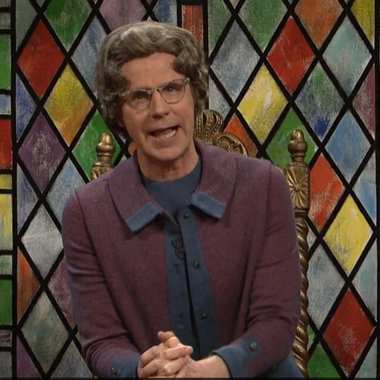
Tim Keller with Hair (and coiffed to boot)?

Let this be a lesson to the PCA where some want women to do the same things that men already do (sometimes poorly):

Since the 1990s women have found plentiful opportunities to fill positions in the upper echelons of the national security apparatus. Although we have not yet had a female commander-in-chief, three women have served as secretary of state and two as national security adviser. Several have filled Adlai Stevenson’s old post at the United Nations. Undersecretaries, deputy undersecretaries, and assistant secretaries of like gender abound, along with a passel of female admirals and generals.

So the question needs be asked: Has the quality of national security policy improved compared to the bad old days when men exclusively called the shots? Using as criteria the promotion of stability and the avoidance of armed conflict (along with the successful prosecution of wars deemed unavoidable), the answer would, of course, have to be no. Although Madeleine Albright, Condoleezza Rice, Susan Rice, Samantha Power, and Clinton herself might entertain a different view, actually existing conditions in Afghanistan, Iraq, Libya, Syria, Somalia, Sudan, Yemen, and other countries across the Greater Middle East and significant parts of Africa tell a different story.

The abysmal record of American statecraft in recent years is not remotely the fault of women; yet neither have women made a perceptibly positive difference.

Is It the Economy or Social Media?

I (all about me) like it when discussions of spiritual matters include material causes. Calvinism isn’t just an idea (or five of them), but it is a form of western Christian that emerged at a specific time and place and its social location is part of Reformed Protestantism’s DNA (ever heard someone complain that Calvinism is too white, male, and suburban?). George Whitefield was not merely an evangelist but a person who had theatrical training and could really punch “Mesopotamia” so that the women fainted (which made the children cry).

So when Carl Trueman complained about the economic factors that contribute to the creation of an elite group of pastors and theologians who have an outsized influence in Protestant circles thanks to finances, I liked the point. If you can show that someone’s authority has at least something to do with their material standing rather than divine unction, then you have reason to follow your gut and take them with less seriousness.

But here’s the thing: if you look at the finances, the influence is disproportionate. Here are some sample numbers (gleaned primarily from the Evangelical Council for Financial Accountability and Guidestar):

2015 Mission to the World (PCA): $65 million+ revenues; $54 million+ expenses

2014 Council on Biblical Manhood and Womanhood: $287k+ revenues; $187k+ expenses

2015 Gospel Coalition: $2.6 million+ revenues; $2.2 million+ expenses

2015 Good News Publishing (Crossway, parent company [?] of Gospel Coalition): $17 million+ revenues; $15 million+ expenses

2014 Committee on Foreign Missions (OPC) budget: $1.6 million+

Judging by the wealth, CBMW’s influence is breathtaking (if you follow that sort of thing).

Also, judging by the numbers, the PCA’s foreign missionaries should be the topic of every other blog post by the folks who spin mortification.

I agree with Carl when he says:

My earlier questions — ‘How did these men get to such positions of far-reaching influence? Who appointed them to speak for me? How do we get rid of them if they go astray?’ – are the pertinent ones.

But since social media is cheap and the way these days to create a brand and gain a following, perhaps the better question is why Mission to the World and the OPC’s Committee on Foreign Missions aren’t creating a blog with regular contributions from their personnel.

Confused but Not Dazed

Father Dwight has counsel for discouraged Roman Catholics:

4. Regarding Pope Francis – Many conservative Catholics are troubled by Pope Francis. They think he is a textbook 1970s liberal. He’s not. Take time to understand his context and background from Argentina. Read this post to put things into perspective. Get to know the man and pray for him. It is ok to disagree with him and question his judgement. He’s not infallible all the time you know, but you can do so with an open heart and a desire to understand and be with him and learn from him. What’s the alternative? You set yourself up as the judge of the Holy Father? Hmmm. There’s not much mileage in that now is there?

Once upon a time the western church had councils because Rome had three popes.

Also, it’s a free country, right? So separated siblinghood is an alternative. But being Roman Catholic means you have to accept whatever the bishops do? Fr. Dwight might make sense in a pay-pray-obey environment. But the world of immigrant parishes is long gone. Root-root-root for the Fightin’ Irish.

5. Regarding Cafeteria Catholics – Are you maddened by so called “devout Catholics” who openly endorse same sex marriage, women priests and are “pro choice”? Join the club. They annoy me too. Are you also annoyed by the bishops and priests who take the same view? I’m with you. However, remember that the Catholic Church is universal. We’re not a sect where everyone agrees. We’re inclusive and that’s why we’re Catholic. The Church has always had dissidents, rebels and downright bad Catholics. Have you ever read the Old Testament or taken a close look at the twelve apostles? The saints and sinners are all in together. The weeds and the wheat, the goat and the sheep are mixed. Jesus will sort it out one day, and stop for a moment and ask yourself, are you a perfect saint yet? I’m not. I’m still learning and growing and repenting. So I guess we must offer the mercy (and benefit of the doubt) to others that we would wish to receive.

Isn’t the church supposed to stand for the truth? And if observers of Pope Francis need context to understand him and his unwillingness to do something about dissent and error in the church, has not Fr. Dwight entered the cafeteria of choosing what he wants to believe? Why does he get to have perspective on the church’s problems that Pope Francis doesn’t because of his Argentinian background?

6. Regarding You and the Church – I’ve heard some Catholics grumble that the church has let them down. But what did you expect of the church in the first place? The church is divine, but she is also human. The church is a work in progress, an ark of wounded warriors, a tribe of troubled pilgrims, a family of lost children looking and longing for home. When you see the church like this, instead of hoping that the church will be the instant answer to all your problems you will be more content. Our role in the church is to be faithful, prayerful, hard working and stable in our love for Christ and his people.

But Roman Catholicism was supposed to be an upgrade, better than Protestantism. Isn’t that why Fr. Dwight left fundamentalism for Anglicanism and then left Anglicanism for Rome? So shouldn’t the standards for the bearer of the truth, the only true church, be higher? If converts knew that Rome was going to be as incoherent and liberal as the PCUSA or the Church of England, why leave Tim Keller? Or is it that this is godly mess and Protestants only have ungodly messes (and of course, having ONE mess is better than having many).

7. Regarding Priorities – The main thing is to stay close to Jesus and Mary. How do you do this? The Catechism says we experience Christ in five specific ways: 1) in the Sacred Scriptures 2) in the person of the priest 3) in the person of the poor 4) in the fellowship of believers 5) in the Eucharist. I can guarantee you, if you make these five things your priorities, then you will have a solid, sure and secure relationship with Jesus Christ. These five meeting places of Christ assume that your life is bathed in prayer and that you have as your main priority being with Jesus and Mary in these ways. If you get this right the other worries fall away.

Jesus is good and having his Spirit is really good. Mary is good but she is not exactly going to save. But is Fr. Dwight suggesting we can have Mary or Jesus apart from the Bishop of Rome?

Lots of sorting to do. Sure would be nice to have a hierarchy to do this for the faithful.

Imagine This Much Concern About Joel Osteen

When faith is so important to social order and national identity, political woes become spiritual crises:

Many of the evangelical leaders who have endorsed Trump have done so due to fears about what the American church’s future will be in a post-Obergefell America. Will religious liberty for Christian business owners be protected? Will state-level abortion restrictions be done away with? Will Christian universities and seminaries continue to exist? Will Christian parents have the freedom to give their children a Christian education?

All of these concerns are completely valid. Both Matt and myself have been abundantly clear on that point for some time now. We really are facing something of a doomsday scenario in American Christianity.

But freedom to worship or preach the Bible is chopped liver? Even freedom to stigmatize bad preachers?

I could turn out to be wrong and even more foolish than I already appear, but Christians really need to show their faith and take a breath about this election. I remember while studying at L’Abri during the 1976 presidential contest Francis Schaeffer talking about the choice between Jimmy Carter (bad) and Gerald Ford (good) in Manichean terms. I also remember not being convinced.

But the land of the free and home of the brave has a way of turning believers apocalyptic.

We’ll Surrender if You Let Us Keep Our Emperor

Noah Millman explains why Christians may need to work out a truce with the Democrats:

Suppose that you look out a couple of decades, and you see, as Dreher does, an America in which traditional Christians are a dwindling minority ever more clearly out of step with American culture, to the point of mutual incomprehension and even loathing. In that world, a polarized party system in which one party is resolutely determined to circumscribe the freedom of that dwindling minority while the other party pays lip service to its defense is a world in which that minority’s life gets progressively worse and worse year after year. One can dispute the probability of that world coming to pass, but I believe that’s what Dreher believes is coming.

If it is, my question is: what’s the political strategy for heading it off? Voting over and over again for a party that pays less and less attention to your concerns is clearly a losing strategy — for obvious reasons. So what’s the alternative?

It seems to me, clearly, that the alternative is making an overture to the enemy party. After all, as Yitzhak Rabin famously said, you don’t make peace with your friends — you make peace with your enemies. And you cannot make peace with your enemies if you decide, from the start, that your enemies will never make peace, on any terms. It seems to me that if Dreher really believes the Democratic Party is moving in the direction of outright persecution of traditional Christians, then it is a moral and practical imperative for traditional Christians to engage in outreach to the Democratic Party to try to change their course, and to keep trying if the first efforts bear no fruit.

But suppose the enemy really is as implacable as you imagine. If the correlation of forces is similarly dire, then what we’re talking about isn’t making peace but negotiating the terms of surrender. Even then, terms have to actually be offered. And it’s the people seeking an end to hostilities who have to offer them.

If that is the case, then — and I know this is a very ugly way of putting it, and I apologize in advance, but Dreher himself is the one who brought up “Japanese-soldier Religious Rightists hiding out on a desert island in the South Pacific” — my question is: what is the traditional Christian version of “we’ll surrender if you let us keep our Emperor?”

Calvinism as an Upgrade

Once baptized, always a Roman Catholic:

Pope Benedict affirmed that Catholicism comes without an escape clause: Once a person is baptized or received into the Church, there is no getting out.

Of course rejecting ecclesiastical communion or the Church’s doctrine has consequences, among them the penalty of excommunication. But excommunication is a punishment, not a shunning. Disobedient or dishonest Catholics might face damnation for their choices, but they will go their deathbeds as members of our Church. One can be a Catholic and be pro-choice, but having rejected the truth and the Church’s communion, he had better be prepared to face his judgment.

The fact is that among the People of God are those who have rejected the grace God has given them. That our Church includes the reprobate, and the dogmatically impure, and that we ourselves sometimes fill out those categories. The unpleasant truth is that one can be Catholic, and still be damned.

The grace of baptism is no assurance against going to hell.

But the elect don’t go to hell.

So election and baptism do not vary in this life. In the life to come, election and baptism’s consequences vary considerably.

The Limits of W-w

Like I say, transformationalism is good on inspiration but not so good on transformation. Jim Bratt gave a peak behind the curtain of neo-Calvinist culture in the U.S. in his last post before heading to China on a Fulbright (happy trails, Jim):

Boy, do we need that now. I’m thinking of the death this past week of Tim LaHaye. The span of tomfoolery he pumped out in the name of Christianity has created lasting disrepute for the faith. The creation “science.” The “end-times” irresponsibility, compounded of self-pity, blaming others, and a certain cultural idolatry. All of it redolent of the John Birch Society swamp from which he first slithered. Still, it’s the sort of religious fantasy you can expect to hit the American best-seller list. The death that really strikes home for me is the moral nadir of Mr. Family Values, “Dr.” James Dobson. His endorsement of Donald Trump puts paid to any pretense that the ethics and politics he pushed, lo, these many years have come to anything but authoritarian nationalism with a particular macho strut. For that is Trump. Dobson’s worse for covering it with smarmy God-talk.

I say this hits home for me because back when I was on a denominational committee studying the future of the CRC’s magazine, The Banner, we were given some research stats of readership habits and opinion. James Dobson turned out to be the CRC’s #1 rated authority on current events. Charles Colson was its #1 theologian. The Fraud and the Felon atop the Calvinist hit parade. Two minor sins in that revelation somehow stuck out for me. Dobson, a member of the Church of the Nazarene. Read rank Armininian. Colson, invoking the name of Kuyper as he bullied along.

All this, I mused, was the price of that “Americanization” to which the CRC, as an immigrant church, had been long pushed to accede. Well, nationalist mush compounded by militancy turns out to be the bitter fruit of that process. And so it is today.

I don’t pretend that Kuyper ever represented more than a small fraction of Dutch people claiming a Reformed commitment. Ditto, in Dutch-American Reformed circles, for The Forum, The Journal, or Perspectives. But these magazines have fought hard and punched way above their weight because of that magic formula that Kuyper caught, and taught. And it’s worth carrying on their mission, worth trying to maintain cultural, political, and theological integrity above the open sewer into which white-American Christianism has descended.

I bring this up not to delight in the sufferings of neo-Calvinists, nor to take a shot at Jim on his way out of the blogosphere. Bratt, it must be said, is honest about the state of neo-Calvinism and properly annoyed at its abuses.

I do refer to this to remind those would-be Kuyperians that the neo-Calvinist project is a lot harder than it sounds. Take every thought captive. Christ is Lord of every square inch. Television (and plumbing) redeemed. Integration of faith and learning. New York City as a tipping point for global revival. Bratt’s own account of the CRC is a ready warning that even with all the infrastructure of neo-Calvinist culture — church, school, catechesis, denominational magazine, world-and-life bleep, you are a poor match for mass culture in a liberal capitalist democracy.

Take every though captive? More like, kid yourself that you are large and in charge.

I truly admire the grit and determination of Dutch-American Calvinists. They are one of the true success stories of transplanting a distinct form of Old World Calvinism to the New World. They were BenOp Calvinists before the Benedict Option became hip.

But as all immigrant groups know, leaving the ghetto for the suburbs is part of the American dream. So for w-w to happen you may need to hunker down in the ghetto (or if Amish on the farm or if Benedictine in the monastery). But if you are going to live and move and have your being as a citizen of a modern nation state, chances are many of your square inches will be taken captive.

And if you want a theological rationale or explanation for that, for being part of the mainstream society but not, learn, live, and love 2k. The water’s warm.

The Obedience Boy W-w

Tim Challies leaves out a crucial piece of Reformed Protestantism when he describes The Utter Devastation of Sin:

But is even a tornado a significant enough picture of sin? A tornado is one big system that devastates and destroys, but quickly moves on. As much damage as that F4 tornado did to Ringgold, it lasted for just a few minutes and was gone. Sin is different in that a big sin seems to spawn a thousand little sins. So maybe we need to push the metaphor to near the breaking point to say that sin is like a big tornado that tears through town while spawning off hundreds of smaller tornados, each of which goes in its own direction, causes its own trauma, and leaves behind its own trail of destruction. One big sin is so awful, so evil, so sinful, that it generates a thousand little opportunities to compound the sin, setting off all those other whirlwinds. People can sin in their response—perhaps they try to cover it up or they try to downplay it. People can sin as they process it—perhaps they gossip about the people involved or they make prideful assertions. People can sin in their actions—perhaps they over-react or under-react, displaying either needless panic or thoughtless apathy. The possibilities are endless.

The fact is that sin is awful, unbearably awful. Sin is evil, horrifyingly evil. And sin begets sin. There are endless ways that sin invites sin, that sin promotes further sin, that sin invites the opportunity to sin more, to sin deeper, to spawn off into a massive all-consuming storm. Let this be just one more reason to put sin to death—to search it out, pray it out, and, through the power of the Holy Spirit, to root it out.

O, wretched man that he is, to borrow a phrase. Wasn’t this understanding of the pervasiveness of sin what drove Luther to the alien righteousness of Christ imputed by faith alone as his only hope? And wasn’t the pervasiveness of sin in his regenerate self what drove Paul to the freedom from the law that he found only in Christ? So why bring up the Holy Spirit and the quest for holiness apart from Christ?

So I find it to be a law that when I want to do right, evil lies close at hand. For I delight in the law of God, in my inner being, but I see in my members another law waging war against the law of my mind and making me captive to the law of sin that dwells in my members. Wretched man that I am! Who will deliver me from this body of death? Thanks be to God through Jesus Christ our Lord! So then, I myself serve the law of God with my mind, but with my flesh I serve the law of sin.

There is therefore now no condemnation for those who are in Christ Jesus. For the law of the Spirit of life has set you free in Christ Jesus from the law of sin and death. For God has done what the law, weakened by the flesh, could not do. By sending his own Son in the likeness of sinful flesh and for sin, he condemned sin in the flesh, in order that the righteous requirement of the law might be fulfilled in us, who walk not according to the flesh but according to the Spirit. (Romans 7:21-8:4 ESV)

Without Christ, doesn’t putting sin to death place you on the same treadmill as your average Roman Catholic (not really given the soteriological security we see at Old Life from the ex-Protestant Roman Catholics)?

Faith in Christ doesn’t give us a clean slate to be holy now that past sins are forgiven. The active obedience of Christ is also imputed to us in faith. It lets us looking indwelling sin in the eye before turning to look in trust at Christ. Shouldn’t someone who identifies with Calvinism (even of a recent sort) know better?