Sexual Hangups, Reformed or Roman Catholic

Where would you be without “Calvinism” to bail you out? Michael Sean Winters blames Reformed Protestantism for U.S. Roman Catholics’ obsession with sex:

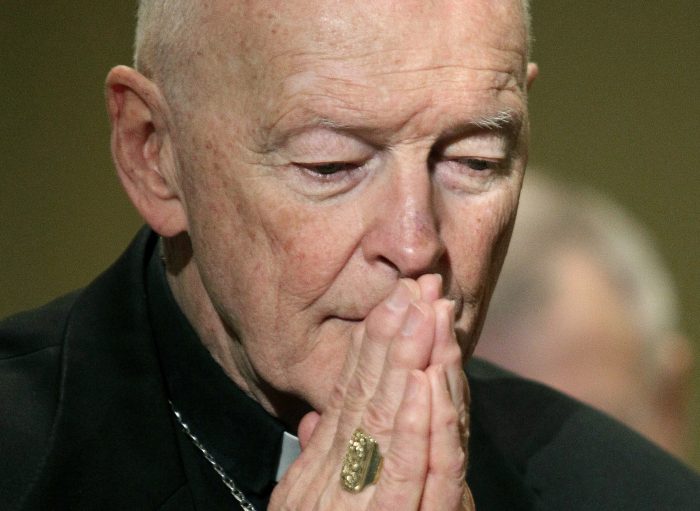
The focus on sexuality as the key indicator of Christian identity has always been one of the odd and remarkable hallmarks of Catholicism in America. Catholic cultures — Italy, Spain, France — are not known for any puritanical dispositions regarding human sexuality. But, in America, the ambient Calvinism of the religious culture combined with the Jansenistic impulses of Irish Catholicism to make a concern for sexual purity an obsession. The three Democrats discussing their faith are right to insist that any fair reading of the Gospels reveals that the Lord Jesus spent far more time urging his disciples to be generous to the poor, welcoming to the stranger, and treat people with dignity than he did discussing any sexual issues.

This is rich coming from a member of a communion which makes a common union (marriage) a sacrament, has authoritative teaching that minutely regulates legitimate sex, requires ordained officers to live celibate lives, and has bishops who need to cover up for priests who do not practice what the church preaches (actually only homilies).

The really rich aspect of Winter’s gripe with Calvinism’s mores is that Rome’s double-mindedness about sex goes way, way back, as Charlotte Allen explains:

In Peter Damian’s definition—a common one during the Middle Ages—the sin of “sodomy” encompassed “four classes of unnatural vice,” each described by him with startling explicitness and deemed more serious than the last, starting with masturbation and culminating with anal intercourse, the worst offense of all. All were forms of male homosexual activity (the other two consisted of the carnal touching of others’ private parts and intercourse between the thighs of someone of one’s own sex). Peter Damian was outraged, particularly because the superiors of clerics who committed such sins were, in effect, giving them a pass: exacting penances for monks and priests found to have committed the first three offenses but expelling from holy orders only those who had engaged in the fourth, anal intercourse.

Some of the offenders, Peter ­Damian said, had even chosen fellow homosexual offenders as their confessors so as to obtain slap-on-the-wrist treatment. “Listen, you do-nothing superiors of clerics and priests. Listen, and even though you feel sure of yourselves, tremble at the thought that you are partners in the guilt of others; those, I mean, who wink at the sins of their subjects that need correction and who by ill-considered silence allow them license to sin.” He reserved his harshest condemnation for bishops who abused their underlings by engaging in homosexual acts with them: “What a vile deed, deserving a flood of bitter tears! If they who approve of these evildoers deserve to die, what condign punishment can be imagined for those who commit these absolutely damnable acts with their spiritual sons?” Damian was not without pity for those sinners, however, begging them to throw themselves onto God’s mercy and reform their ways, but he asked Leo to expel from holy orders those who had committed any of the four categories of sodomy.

Scholars have debated whether homosexual activity among clerics was quite such a widespread “festering disease” during the eleventh century. It is indisputable, however, that the tenth and eleventh centuries were the most scandal-plagued that the Western Church had endured, and that the moral and sexual integrity of the clergy was at the heart of the issue. Hildebrand, the Tuscan Benedictine monk who became Pope Gregory VII in 1073, had to institute the “­Gregorian Reform” movement attacking simony (the buying and selling of holy offices), lay investiture (the control of bishoprics by powerful secular lords), and gross violations of the Western Church’s longtime requirement of priestly celibacy. That rule had been in place since at least the early fourth century, but by the eleventh, priests and even bishops all over Western Europe were living openly with wives and children, often passing down their churches by inheritance to their priest-sons. Some took concubines.

How does that saying go? Those in glass houses dot dot dot
Was Calvin’s Return to Geneva in 1541 a Miracle?

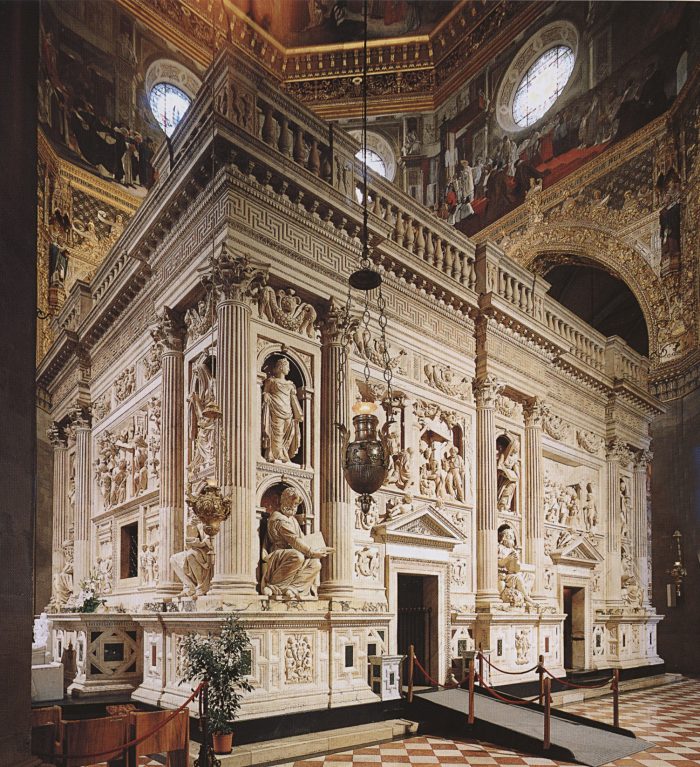
How much do Protestants associate the greatest hits of their churches’ history with anything like what Roman Catholics sometimes teach and believe about the House of Loreto. According to the Catholic Encyclopedia:

Since the fifteenth century, and possibly even earlier, the “Holy House” of Loreto has been numbered among the most famous shrines of Italy. Loreto is a small town a few miles south of Ancona and near the sea. … this building is honoured by Christians as the veritable cottage at Nazareth in which the Holy Family lived, and the Word became incarnate. … Angels conveyed this House from Palestine to the town Tersato in Illyria in the year of salvation 1291 in the pontificate of Nicholas IV. Three years later, in the beginning of the pontificate of Boniface VIII, it was carried again by the ministry of angels and placed in a wood near this hill, in the vicinity of Recanati, in the March of Ancona; where having changed its station thrice in the course of a year, at length, by the will of God, it took up its permanent position on this spot [six] hundred years ago. Ever since that time, both the extraordinary nature of the event having called forth the admiring wonder of the neighbouring people and the fame of the miracles wrought in this sanctuary having spread far and wide, this Holy House, whose walls do not rest on any foundation and yet remain solid and uninjured after so many centuries, has been held in reverence by all nations.”

Got that? The house where Mary and Joseph lived in Nazareth is now in Italy. No construction company performed the move. No, angels did. They moved the house not once but three — COUNT ‘EM THREE!! — times (or is it four?).

Are these miracles merely the outworking of local traditions and pious cults in southern Italy? No. Popes have approved these stories as true.

More than forty-seven popes have in various ways rendered honour to the shrine, and an immense number of Bulls and Briefs proclaim without qualification the identity of the Santa Casa di Loreto with the Holy House of Nazareth. As lately as 1894 Leo XIII, in a Brief conceding various spiritual favours for the sixth centenary of the translation of the Santa Casa to Loreto, summed up its history in these words: “The happy House of Nazareth is justly regarded and honoured as one of the most sacred monuments of the Christian Faith; and this is made clear by the many diplomas and acts, gifts and privileges accorded by Our predecessors. No sooner was it, as the annals of the Church bear witness, miraculously translated to Italy and exposed to the veneration of the faithful on the hills of Loreto than it drew to itself the fervent devotion and pious aspiration of all, and as the ages rolled on, it maintained this devotion ever ardent.”

Then the Catholic Encyclopedia’s authors go on to list the reasons for the authenticity of these miracles:

(1) The reiterated approval of the tradition by many different popes from Julius II in 1511 down to the present day. This approval was emphasized liturgically by an insertion in the Roman Martyrologium in 1669 and the concession of a proper Office and Mass in 1699, and it has been ratified by the deep veneration paid to the shrine by such holy men as St. Charles Borromeo, St. Francis de Sales, St. Ignatius Loyola, St. Alphonsus Liguori, and many other servants of God.

(2) Loreto has been for centuries the scene of numerous miraculous cures. Even the skeptical Montaigne in 1582 professed himself a believer in the reality of these (Waters, “Journal of Montaigne’s Travels”, II, 197-207).

(3) The stone on which the original walls of the Santa Casa are built and the mortar used in their construction are not such as are known in the neighbourhood of Loreto. But both stone and mortar are, it is alleged, chemically identical with the materials most commonly found in Nazareth.

(4) The Santa Casa does not rest and has never rested upon foundations sunk into the earth where it now stands. The point was formally investigated in 1751 under Benedict XIV. What was then found is therefore fully in accord with the tradition of a building transferred bodily from some more primitive site.

To their credit, the authors also acknowledge that this historical whopper of a story has not held up to scrutiny even from Roman Catholic historians:

It must be acknowledged, however, that recent historical criticism has shown that in other directions the Lauretan tradition is beset with difficulties of the gravest kind. These have been skilfully presented in the much-discussed work of Canon Chevalier, “Notre Dame de Lorette” (Paris, 1906). …The general contention of the work may be summarized under five heads: (1) From the accounts left by pilgrims and others it appears that before the time of the first translation (1291) there was no little cottage venerated at Nazareth which could correspond in any satisfactory way with the present Santa Casa at Loreto. … (2) Oriental chronicles and similar accounts of pilgrims are absolutely silent as to any change which took place in 1291. There is no word of the disappearance at Nazareth of a shrine formerly held in veneration there. … (3) There are charters and other contemporary documents which prove that a church dedicated to the Blessed Virgin already existed at Loreto in the twelfth and thirteenth centuries, that is to say, before the epoch of the supposed translation. (4) When we eliminate certain documents commonly appealed to as early testimonies to the tradition, but demonstrably spurious, we find that no writer can be shown to have heard of the miraculous translation of the Holy House before 1472, i.e., 180 years after the event is supposed to have taken place. … (5) If the papal confirmations of the Loreto tradition are more closely scrutinized it will be perceived that not only are they relatively late (the first Bull mentioning the translation is that of Julius II in 1507), but that they are at first very guarded in expression, for Julius introduces the clause “ut pie creditur et fama est”, while they are obviously dependent upon the extravagant leaflet compiled about 1472 by Teramano.

It is clearly impossible to review here at any length the discussions to which Canon Chevalier’s book has given rise….the balance of recent Catholic opinion, as represented by the more learned Catholic periodicals, is strongly in his favour.

And yet, over one hundred years later, popes still use the site of the house to inspire the faithful and stories from journalists include explanations like this:

The Basilica of the Holy House in Loreto contains the walls of what tradition holds to be the house in which the Virgin Mary lived when the Angel Gabriel announced that she was to give birth to Jesus.

Which of course raises several questions:

1) Isn’t belief in the virgin birth hard enough? Why add a unit of angels with “Wide Load” banners attached below their wings?

2) If Popes can lead the laity astray on historical details like this, are they all that trustworthy on wayward priests, at the low end, or on what Jesus said (by way of oral tradition), at the high end?

3) But let’s not blame the hierarchy entirely. Why are Roman Catholic laity so willing to go along with such myths, legends, and fabrications?

Instances like this make plausible lines like the following from Lyman Beecher, a (trigger warning) New School Presbyterian who was not sure how Roman Catholics would do in a republic:

If [Roman Catholics] could read the Bible, and might and did, their darkened intellect would brighten, and their bowed down mind would rise. If they dared to think for themselves, the contrast of protestant independence with their thralldom, would awaken the desire of equal privileges, and put an end to an arbitrary clerical dominion over trembling superstitious minds. If the pope and potentates of Europe held no dominion over ecclesiastics here, we might trust to time and circumstances to mitigate their ascendance and produce assimilation. But for conscience sake and patronage, the are dependent on the powers that be across the deep, by whom they are sustained and nurtured; and receive and organize all who come, and retain all who are born, while by argument, and a Catholic education, they beguile the children of credulous unsuspecting protestants into their own communion. (Lyman Beecher, Plea for the West, 1834)

Historians’ Lanes and When to Change Them

John Fea declares he is not going to believe William Barr’s evaluation of the Mueller report until he sees it for himself. Why? Because John is a historian:

Why? Because Barr’s letter is a secondary source. It is his own interpretation of the complete Mueller report. I have no idea if Barr’s summary is accurate until I read the entire Mueller’s entire report. This is how historians work. We go to the source. (Of course, future historians will also need to examine Mueller’s sources as well).

At this point, we know that Barr wrote the letter. One of the first things historians do when they read a document is “source” it. In other words, we take into consideration the author of the document.

We know, for example, that Barr is the Attorney General of the United States. This gives him some degree of authority. On the other hand, Barr is a Donald Trump appointee. This should also factor-in to how we interpret the document.

Barr quotes Mueller’s report in the document, but we do not know the larger context from which he pulled the quotes. (For example, some outlets are reporting that Barr did not quote an entire sentence from the Mueller report). This is just like when pseudo-historians like David Barton quote John Adams out of context and conclude that the United States was founded as a Christian nation.

Again, until I can read the document and do my best to interpret for myself (perhaps with the help of the writings of experts) I do not trust it. Check back with me later.

The problem here is that Fea’s identity does not go all the way down. He regularly links to journalists‘ and op-ed writers’ pieces without ever checking the sources that these other writers used. In which case, using the Barr summary to teach a lesson about the ways historians work seems like a way to avoid revealing political loyalty.

Other times, John has seemed to do history the way moralizers moralize. That was particularly the case in a recent post by Marie Griffith about the responsibilities of scholars at a university department dedicated to the study (not advocacy) of religion and politics:

At Religion & Politics, we have repeatedly pointed out that white supremacist and anti-Muslim ideologies are being energized by the speech and actions of Trump, along with the highest levels of his administration. It is not simply that Trump is hateful or seems worrisomely unwell, as many commentators have pointed out; it’s that the form of hatred he emboldens is deadly. . . .

Observers who deplore the violence will perhaps do small but important things, like donate money to fundraising efforts for the victims’ families or vow to help Muslims in their local communities feel safe. We’ve done it before; we’ll do it again. Having been through things like this so many times before, many despair that anything will change.

Pursuing big goals, however, is a marathon, not a sprint; and there will be no finish line in the race to end hate in the world. If the long history of clashes, collusions, and other interactions between religion and politics teaches us anything, it’s that. Once more, we grieve; once more, we resolve to do what we can—all that we can—to quell the fires of racism, anti-Semitism, and anti-Muslim bigotry that burn ferociously today.

Those are undoubtedly worthwhile goals but they sound more like the work of a humanitarian NGO than the task of the university.

Let the historical profession be historical.

Mainline Protestantism’s Elder Brother

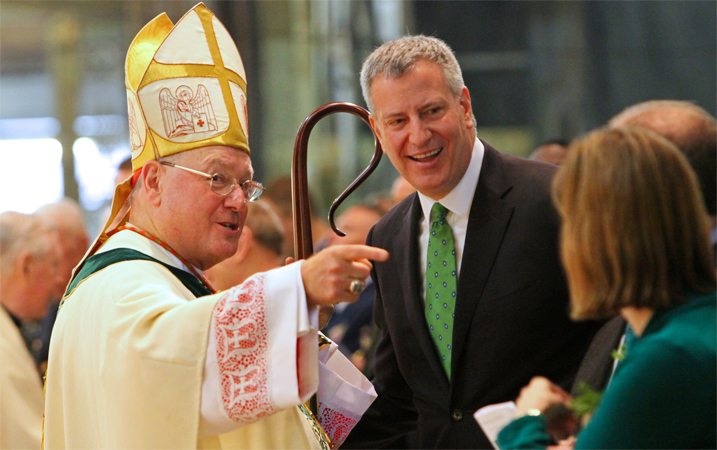
Boniface takes the temperature of Roman Catholicism in the light of Governor Cuomo and Archbishop Dolan:

the purpose of excommunication is not merely for the good of the sinner’s soul; it is also for the edification and protection of the community. “Do you not know that a little leaven leavens the whole lump? Cleanse out the old leaven that you may be a new lump.” St. Paul teaches that excommunication helps purge the body of “leaven”, and that without this purging such leaven will cause a rot throughout the body. When the offender is singled out and has judgment pronounced upon him, the faithful at least see that such behavior is proscripted. St. Paul is not only worried about the sinner, but about the boasting of the congregation, that is, their attitude about the sinner. By excommunicating him, St. Paul judges not only the sinner, but the broader attitude that allows sin to flourish unchecked.

To bring this back to Governor Cuomo: from the biblical perspective, whether Cuomo will repent or not, whether he respects the authority of the Church or not, whether the Church can claim any socio-political leverage in these matters, is not ultimately the main concern. The fact is, the good of the Catholic Church in America demands that this man be thrown out. At least make an attempt to purify the lump of its leaven. If we don’t, we are celebrating with the old leaven. It’s about the integrity of the community as much as it is about the sinner.

* * * * * *

There have often been times in Church history where discipline has been lost or seriously eroded. We can think of various monastic reforms throughout the centuries. Or the era of the Counter Reform and the Council of Trent when the Church had to fight an uphill battle to transform the episcopacy from a class of political courtiers into something more in line with what Christ intended. Countless regional synods from the first millennium and the era of the barbarian invasions attest to the Church’s commitment to maintaining or restoring discipline in an age of chaos when order seemed to be falling apart everywhere.

…And that’s the sad truth here. Cardinal Tobin, Dolan and the like don’t care what the optics are here. They don’t care whether the House of the Lord is an eye sore, an abomination to the people. “God’s name is blasphemed among the Gentiles because of you” (Rom. 2:24); but they don’t care. If discipline has been lost, then the common sense approach is to restore it. You restore it by making examples of people and actually asserting your will to enforce discipline. If you can’t do that or refuse to, it simply means you don’t even want discipline restored. You’re happy with the status quo. This is the inescapable conclusion: Cuomo will not face excommunication because the princes of the Church are content with the current situation.

So why convert? Protestants are supposed to think this is the church founded no matter how much it resembles mainline Protestantism? When the successors to the apostles are so far from following the apostles, we’re supposed to see nothing and come back to mother church?

Changes on the Left and the Right

Not even development of doctrine can keep up with the flips and flops, the yings and yangs, of English-speaking Roman Catholics. Massimo Faggioli provides a bird-watchers guide:

There is, for example, a new wave of ultramontanism that looks to an idealized conception of Rome for its points of reference. There is also a related resurgence of “integralism,” inspiring conferences at the University of Notre Dame and Harvard. The new integralism takes a step beyond the more tentative Catholic post-liberalism, or the simple proclamation of the crisis of liberal Catholicism. Integralism is the attempt to imagine for the Catholic Church—but also for the world in which the church lives—a future that rejects the “liberal” separation between temporal and spiritual power, and subordinates the former to the latter.

According to Sacramentum Mundi (first published between 1968 and 1970, and now available online—its general editor was Karl Rahner, SJ) integralism is

the tendency, more or less explicit, to apply standards and directives drawn from the faith to all the activity of the Church and its members in the world. It springs from the conviction that the basic and exclusive authority to direct the relationship between the world and the Church, between immanence and transcendence, is the doctrinal and pastoral authority of the Church.

Here one can detect a subtle difference between the classic definition of integralism and its twenty-first-century variety. This new strain is focused almost exclusively on the political realm. In fact, what it resembles most is another phenomenon of nineteenth-century Catholic culture: intransigentism—the belief that any concession to, or accommodation with, the modern world endangers the faith. Unlike mere conservatism, which values elements of the past and seeks to preserve them, intransigentism rejects the modern outright and preemptively. This has consequences for the theological thinking of Catholics who today call themselves integralists, traditionalists, and ultramontanists. For these Catholics, the past sixty years—and especially Vatican II—either do not matter at all or matter only if they can be interpreted as a confirmation of the church’s past teaching.

Roman Catholic liberals also are hardly steady:

It is interesting how different the liberal Catholicism of the nineteenth century is from the liberal Catholicism of today, and how similar the Catholic intransigentism of the nineteenth century is to the intransigentism of today. Liberal Catholicism today is much more accepting of individualistic, bourgeois society than it was in the nineteenth century, when it had a more prophetic edge. But intransigentism hasn’t really changed much in the past 150 years, especially when it comes to the question of the confessional state—a question on which the church’s official teaching has changed during this period. It would be interesting to ask the proponents of this kind of Catholicism what they make of the plight of Catholics who have to live as minorities under integralistic non-Christian confessional regimes, and why those Catholics do not seem to be so afraid of liberalism.

Faggioli may regard himself as closer to the mainstream of Roman Catholic thought thanks to his regard for Pope Francis and his Italian background. But when you ponder all the changes in Roman Catholic teaching about various aspects of modern society since Vatican II, you hardly see the sort of continuity to which the Villanova University professor aspires. Roman Catholics in the U.S. certainly have their moments. But it is not as if the bishops, the Vatican, or the papacy has stayed on track. Roman Catholics can pick their favorite pope after World War II — John XXIII, Paul VI, John Paul II, Benedict XVI, or Francis — according to their reading of the tradition, the modern world, and personal preference.

It’s almost as chaotic as Protestants reading the Bible.

Eschatology Matters

Neo-Calvinists share with theonomists a post-millennial outlook. David Koyzis illustrates:

Yet the call to holiness and to living for the kingdom is as extensive as creation itself. Farmers, manufacturers, labour union stewards, musicians, artists, journalists, electricians and sewage line workers are not obviously preaching the gospel or attempting social reform. Yet if they are in Christ, they are agents of his kingdom in every walk of life.

It is telling that the authors of the statement neglect the eschatological dimension of the faith. Eschatology, or the doctrine of the last things, is not a mere add-on to our Christian walk. Rather, it gives us direction for the future. At the end of the present age are we to be removed from this world to spend eternity in a blissful ethereal realm of floating spirits? Or will the whole creation be renewed when Christ returns? Perhaps the authors are not in agreement on this, which could account for their silence. Nevertheless, the Bible itself is not so reticent: “For we know that the whole creation has been groaning together in the pains of childbirth until now. And not only the creation, but we ourselves, who have the firstfruits of the Spirit, groan inwardly as we wait eagerly for adoption as sons, the redemption of our bodies” (Romans 8:22-24). “For in him [Jesus Christ] all the fullness of God was pleased to dwell, and through him to reconcile to himself all things, whether on earth or in heaven, making peace by the blood of his cross” (Colossians 1:19-20). “And he who sat upon the throne said, ‘Behold, I make all things new'” (Revelation 21:5, emphases mine).

We live in the hope of the resurrection of the dead in a renewed creation, which awaits its final fulfilment at Christ’s return. In the meantime we are heirs of this promise in everything we do in God’s world.

That quotation has the classic marks of neo-Calvinism, a view of the kingdom of God that blurs distinctions between holy and ordinary vocations, between church and secular matters, regards growth in holiness as something that applies to non-Christian affairs. Above all, the classic way of seeing continuity between this world and the world to come.

Neo-Calvinism is especially defective about the nature of the saeculum, which is the age between the advents of Christ. Greenbaggins invoked Vos to explain the peculiar character of the period when the ministry of word and sacrament defines the church, in the words of the Confession of Faith, as “the kingdom of the Lord Jesus Christ, the house and family of God” (which means the kingdom of Jesus is not Hollywood, New York City, Grand Rapids, or the Department of Health and Human Services:

Here is Vos (a Dutch Calvinist, mind you):

The significance of the unique organization of Israel can be rightly measured only by remembering that the theocracy typified nothing short of the perfected kingdom of god, the consummate state of Heaven. In this ideal state there will be no longer any place for the distinction between church and state. The former will have absorbed the latter.

Greenbaggins explains:

In other words, the present state of distinction between church and state is a parenthesis. One day in the future, a perfect theocracy (with no possibility of the people’s apostasy) will come into being in its fully ineradicable, eschatologically perfect state.

That parenthesis, the interadvental period, is the age of the secular. It is the time when church and state are distinct, when Christ’s reign as king is divided between ruling creation and reigning over the redeemed.

Those who deny that distinction, those who see a progression from Israel (good), to church (better), to glory (best) fail to acknowledge the difference that the interadvental period makes. It is a time when all efforts to immanentize the eschaton, either by bringing the past (Israel) into the present, or bringing the future (new heavens and new earth) into the now, are flawed because Jesus’ spiritual kingdom is not of this world.

Putting the Loco in Logocentric

Rod Dreher reflects on the ways that even while denominational brands among Protestants are in free fall (and have been, I might add, since the Second Not-So-Good Awakening), the differences between Roman Catholics and Eastern Orthodox abide:

And yet, some borders still matter — as Berger notes — at the popular level. When you’re a Protestant and you walk into a Catholic church, you know that something very different is going on there, and vice versa (though given the postconciliar Protestantization of Catholic church architecture and interior design, this is much less obvious in some places than in others). Visit an Orthodox church, and the contrast is even more vivid — perhaps surprisingly so for Catholics, who might reasonably have thought that given the strong Marian piety of Orthodox Christians, the Orthodox church was closer to their own faith than it actually is.

The vibe in a Protestant (especially confessional) church would be different in part because services feature, in contrast to the Roman and Eastern churches, the Bible read and preached.

So when you read Paul’s instruction to Timothy, Paul being an apostle and all and an author of an infallible set of books in Scripture, are you thinking of the atmosphere in a Roman Catholic, Eastern Orthodox, or Protestant service?

14 But as for you, continue in what you have learned and have firmly believed, knowing from whom you learned it 15 and how from childhood you have been acquainted with the sacred writings, which are able to make you wise for salvation through faith in Christ Jesus. 16 All Scripture is breathed out by God and profitable for teaching, for reproof, for correction, and for training in righteousness, 17 that the man of God may be complete, equipped for every good work.

4 I charge you in the presence of God and of Christ Jesus, who is to judge the living and the dead, and by his appearing and his kingdom: 2 preach the word; be ready in season and out of season; reprove, rebuke, and exhort, with complete patience and teaching. 3 For the time is coming when people will not endure sound teaching, but having itching ears they will accumulate for themselves teachers to suit their own passions, 4 and will turn away from listening to the truth and wander off into myths. 5 As for you, always be sober-minded, endure suffering, do the work of an evangelist, fulfill your ministry.

Don’t let them fool you. The model for Protestant ministry is as old as the church in Ephesus that Jesus founded by way of Paul.

Evangelicals Have Been At This Longer than Woke Millennials

Eric Weinstein, of Intellectual Dark Web fame (Bret’s brother), recently tweeted how novel the ideas and language of social justice warriors are:

But for evangelicals, “social concern” has been around for almost forty-five years:

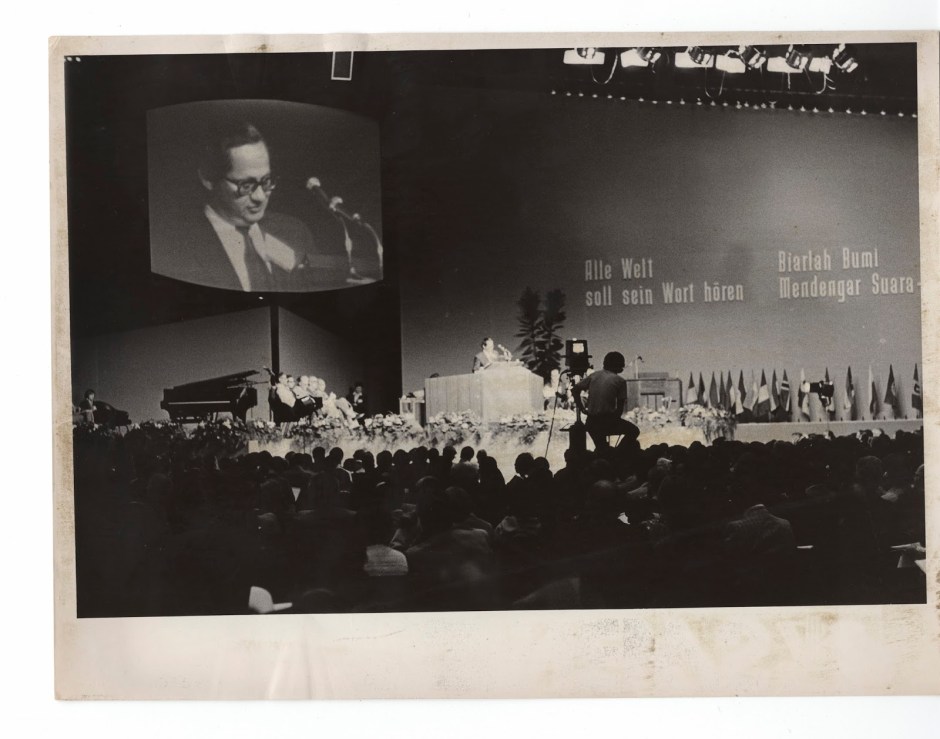
The Lausanne Congress, sponsored by the Billy Graham Evangelistic Association, drew 2,700 peopple from around the globe — at the time the largest-ever gathering of evangelical Christian leaders.  The Assembled believers — ministers and lay people, racially diverse, the vast majority of them men — would be part of a singular moment in postwar evangelicalism.

Like all of the major presenters, [Rene] Padilla had pre-circulated a paper, a rather scholarly treatise on the centrality of repentance to Christian ethics. The audience was not surprise, then, to hear Padilla lecture his fellow participants at Lausanne on the sins of the evangelical church, and on its failure — their own failure  — to take seriously Jesus’s call to social action. What was remarkable was the controlled fury emanating from the stage. Padilla challenged the room to remember that Jesus had demanded that his followers confront the “darkness of the world”  But evangelicals, he pronounced, had focused so long on individual sin that they had forgotten that darkness included materialism, racism, class division, political abuses, and, quoting Reinhold Niebuhr, “collective egoism.” (Melani McAlister, The Kingdom of God Has No Borders, 85)

Of course, one way of looking at this is that evangelicals have been ever consistent in their call for social justice or social concern.

Another is that this is something that regularly repeats itself among Christians who want to immanentize the eschaton because they believe the gospel is not really relevant if it prepares someone for not the present but eternity.

And yet, if this social concern regularly repeats itself, from Walter Rauschenbusch to Rachel Held Evans, why has it accomplished so little (especially now that it has support from mainstream journalists, elite universities, and at least one of the major political parties — not to mention Silicon Valley)?

Luxury Denominations

Paul Helm took time to review/respond to On Being Reformed, the public debate between some Baptists (and others who aspire to be Reformed) Reformed Protestants who still hold either to the Three Forms of Unity or the Westminster Standards (yes, with revisions about the magistrate ALREADY!). Along the way, Helm makes an observation that has something to do with differences between the US and the UK.

This debate has smothered a different approach, that of verstehen, of ‘smelling the coffee’. It is one thing to argue the (false) claim that our confessions of faith have remained unchanged since the Reformation, another wonderful thing to live by their gracious doctrines. With others, to rejoice in the privilege of being ‘in Christ’. As already stated, it is a singular, remarkable providence that three of our English confessions are word for word almost identical in Reformed soteriology, including the classic catholic trinitarian and incarnational positions. We could therefore unite here, and encourage each other thereby, even strengthening our grasp of our respective confessions, like ironing sharpening iron. Is that not a distinctive form of Reformed religion, whether or not we are credobaptist or paedobaptist, even if different in our ecclesiology and in the administration of baptism. At a time when the faith is increasingly under threat, and our family life as Christians is being undermined, and as there are various popular distortions as well as ancient heresies freely peddled, to have the strengthening of distinctive Christian fellowship is a traditional activity that should outweigh our marginal confessional differences. Perhaps fostering such fellowship requires a little more social ostracism, and perhaps that will come.

As I understand it, in the UK, Calvinistic Protestants don’t have the luxury of forming separate denominations the way American Protestants do. Whether it stems from laws having to do with the established church and dissenting groups, or the small number of serious minded Protestants who regard John Calvin, John Knox, and John Owen highly, British Protestantism has fewer possibilities and resources than Protestants in the land of the free and home of the brave. Here, despite the OPC’s tiny size (don’t snicker), the United States has made Christians (and other believers) wealthier and has provided structures (or lack of them) that makes easier the challenge of establishing new institutions (congregations, denominations, schools, colleges, seminaries).

That may not make America great, but it does indicate that the US is different from the UK and the old world.

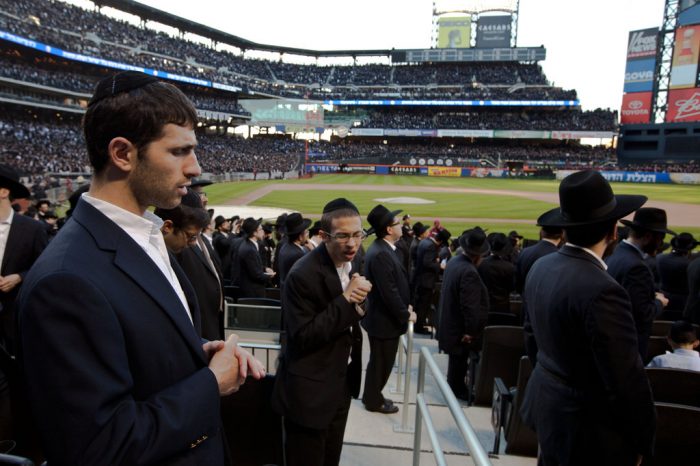
The difference that the United States makes for religion is even evident among American Jews. The Pew Research Forum conducted a survey of Jews in the US and Israel that indicates some of the differences that place and nation make for religion. Consider the following:

American Jews are a highly educated and, on the whole, warmly regarded religious minority in a very large, Christian-majority country. Jews represent about 2% of the U.S. adult population of roughly 300 million people. Only about one-third of American Jews say that either “all” (5%) or “most” (27%) of their close friends are Jewish. A substantial proportion (44%) of U.S. Jews who are married say their spouse is not Jewish – including a majority of those who have gotten married since 2000.

By contrast, Jews make up about 80% of Israel’s adult population of 8 million. The vast majority of Israeli Jews say that either all (67%) or most (31%) of their close friends are Jewish, and nearly all married Jews in Israel have Jewish spouses. There’s also very little conversion between major religious groups in Israel, while in the United States, religious switching is remarkably common, including many U.S. adults who have drifted away from organized religion altogether. In our 2013 survey, one out of every five Jewish Americans said they do not identify with any religion, even though they also said they had at least one Jewish parent or were raised Jewish, and they consider themselves Jewish in other ways aside from religion (such as culturally or ethnically). In Israel, by contrast, nearly all Jews say their religion is Judaism.

Or this:

Most American Jews are part of organized Jewish denominations or “streams,” which include the relatively large Reform and Conservative movements as well as Orthodox Judaism. In Israel, only about 5% of Jews identify as either Reform or Conservative. Instead, Jews in Israel generally place themselves into one of four informal categories of Jewish religious identity. These labels – Haredi (ultra-Orthodox), Dati (religious), Masorti (traditional) and Hiloni (secular) – are not connected to formal Jewish organizations or denominations, but instead are loose identity groups (similar, for example, to an American Christian calling herself an “evangelical” rather than a “Southern Baptist”).

Even better, watch part of the short interview with the Israeli woman who married an American Orthodox rabbi.

America is weird and that means we have the luxury of reading the confessions in ways that other Protestants do not or cannot.