How Can You Separate Church and State When the Pope Speaks (so much) about Both?

Did Vatican II pave the way for Pope Francis’ recent change development of the catechism’s teaching on capital punishment? Korey Maas thinks so even if the laity (so far the bishops aren’t giving much guidance) are divide:

Largely unremarked in the debate over capital punishment, however, are its striking parallels with the half-century-long, still unsettled, and also increasingly contentious intra-Catholic dispute concerning religious liberty. This is all the more curious because Pope Francis’s own remarks—now echoed in the language authorized for the Catechism—appear quite intentionally to echo important aspects of Dignitatis Humanae, the Second Vatican Council’s Declaration on Religious Freedom. According to that Declaration, for example, religious liberty is a right grounded in the “dignity of the human person.” As such, it is “inviolable.” This is precisely the language invoked by Pope Francis when he declared capital punishment impermissible because “it attacks the inviolability and the dignity of the person.”

Moreover, just as Dignitatis Humanae asserts that it “leaves untouched traditional Catholic doctrine,” while at the same time “developing” that doctrine, so too did Francis insist that his remarks in no way “signify a change of doctrine” or “any contradiction with past teaching”; they represent instead “the harmonious development of doctrine.” Both of these claims have proved controversial for the simple reason emphasized by Feser in the debate over capital punishment: “simply calling something a ‘development’ rather than a contradiction doesn’t make it so.” As he and Bessette argue, the Church’s earliest theologians acknowledged the legitimacy of capital punishment, in principle, and this conclusion was consistently affirmed by popes up through the twentieth century. The explicit rejection of that conclusion, they therefore reason, cannot logically be understood as a “development” of it.

But precisely the same logic applies, mutatis mutandis, to the apparent claims of Dignitatis Humanae, since it deems religious liberty an inviolable right while also claiming not to have changed “traditional Catholic doctrine on the moral duty of men and societies toward the true religion and toward the one Church of Christ.” That traditional Catholic doctrine—as taught by the Church’s fathers, doctors, popes, and councils for more than a millennium—proclaimed it legitimate in both principle and practice to enforce that duty by means of coercion. Because Dignitatis Humanae appeared plainly to proscribe such coercion, however, it was not at all clear even to the bishops gathered at Vatican II how contradiction was actually being avoided. Indeed, just before the final vote on the Declaration, its official relator frankly admitted that “this matter will have to be fully clarified in future theological and historical studies.”

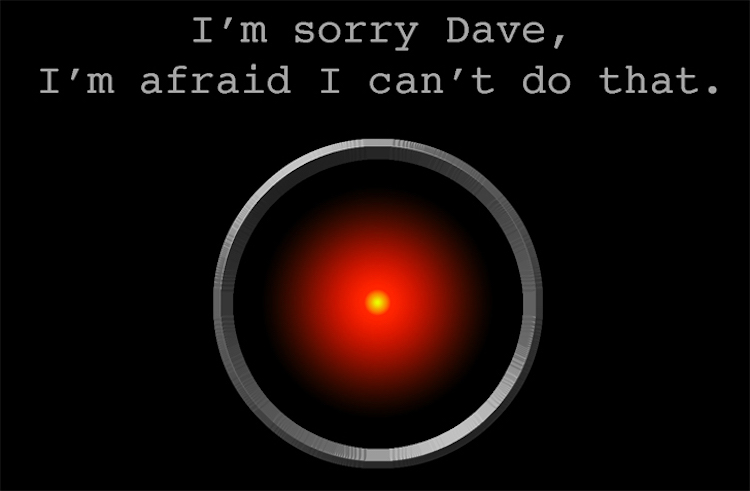
Once again the problem is that Roman pontiffs speak too much and all of Roman Catholicism’s history (and all those statements) make it hard to claim with a straight face that nothing has changed. History, in fact, is all about change (over time). So to present yourself as superior to Protestantism because you have 1500 years more history is also to open yourself up to the problem of trying to make coherent all of the church’s documents, laws, and doctrines. It is hard enough finding unity in the sixty-six books of the Bible. Now add to that endeavor 2000 years of papal pronouncements, council declarations, and revisions of canon law and you have work that could have made HAL, the computer in 2001: A Space Odyssey, break down in 1982.

Maas puts a fine point on the problem this way:

Quite obviously, given such disparate opinions, the controversy concerning the Church’s teaching on religious freedom is far from settled. But it differs from that concerning capital punishment because, as Feser himself notes, it is one that “most Catholics, including conservative Catholics, have avoided.” And he is surely correct in his understanding of the reason for this: “the older teaching is extremely unpopular in modern times, and thus whatever its current doctrinal status, most Catholics are happy to let it remain a dead letter and leave its precise relationship to Dignitatis Humanae unsettled.” And yet, he finally concludes, “a question unanswered and ignored is still a real question.”

Indeed, it is precisely the same question raised in the controversy over capital punishment: can a practice endorsed for more than a millennium by the Church’s fathers, doctors, popes, and councils now be condemned as an immoral and inadmissible violation of human dignity?

Protestants may have account for many denominations, but Rome has 2 millennia of cats to herd.
This Is How Bad Protestantism Is

When scandal hits the Roman Catholic church, Roman Catholics would never countenance becoming Protestant.

In fact, when scandal happens, you rinse and repeat that Jesus promised the gates of hell would not prevail against the church:

He knew we’d sometimes have really bad shepherds. The Church has gone through a lot of bad patches in her almost 2,000-year history. She tells us, yes, these popes and those bishops and that crowd of priests, awful people. And those laymen, just as bad, and maybe worse. But those popes upheld the Church’s teaching and unified the Church, and those bishops and priests celebrated the sacraments that brings Jesus to his people.

The fundamental things, the necessary things, they always work no matter how bad Catholics get. Jesus lives with us in the Tabernacle and gives himself to us in the Mass.

Our Father didn’t promise all of these men would be saints, or even just run-of-the-mill good guys. He promised that the gates of Hell would not prevail against his Church, no matter what. He promised to be with us to the end of the age. He promised to write straight with crooked lines. For God so loved the world, and so deeply knew his people, that he gave us the Church.

And most relevant here, perhaps, he gave us the sacrament of confession. We can’t do much directly to change the culture of the Church in America. We can do something to change ourselves, with God’s help. And therefore, together and over time, change the Church.

Two curious pieces of this standard apologetic. Why do you think that priests and bishops who are awful shepherds will get the doctrine right, will do the right thing in the confessional, and they will actually understand the sacraments correctly? This is contrary to every single way that humans view flawed officials: they are awful, wicked, despicable. But we still trust them because Christ gave them to us.

That’s not exactly how it worked for the churches in the apostles’ day:

12 “And to the angel of the church in Pergamum write: ‘The words of him who has ethe sharp two-edged sword.

13 “‘I know where you dwell, where Satan’s throne is. Yet you hold fast my name, and you did not deny my faith even in the days of Antipas my faithful witness, who was killed among you, where Satan dwells. 14 But I have a few things against you: you have some there who hold the teaching of Balaam, who taught Balak to put a stumbling block before the sons of Israel, so that they might eat food sacrificed to idols and practice sexual immorality. 15 So also you have some who hold the teaching of the Nicolaitans. 16 Therefore repent. If not, I will come to you soon and war against them with the sword of my mouth. 17 He who has an ear, let him hear what the Spirit says to the churches. (Rev 2)

Somehow we’re supposed to think the danger of apostasy doesn’t apply to Rome? Talk about exceptionalism.

The other curiosity in this defense of Rome is that it never seems to take into account what happened to Israel. God made all sorts of promises to Abraham, Moses, and David. But those promises did not mean the nation or the people would always be faithful or that they would escape God’s punishment. In fact, they were (Christians, Protestants and Roman Catholics believe) promises to the spiritual seed of Abraham and his descendants (see Galatians). But now all of a sudden institution in redemptive history, one institution trumps faithfulness.

Can it really be true that no Christianity exists outside Roman Catholicism? Vatican II even admitted that Protestants were brothers. So why is it so unthinkable, when the going gets tough for Roman Catholics, to think about following Christ in a Protestant communion?

He Really Went There?

Casey Chalk, formerly a regular contributor to Called to Communion, is increasingly at home writing for The American Conservative. His latest is a case for deporting John Oliver. Chalk tries to distinguish good from bad criticism of the U.S. by ferners internationals:

The reason Hitchens, Scruton, and others like them are effective is because they are indefatigably modest, restrained, and courteous. If they did nothing but scold, they would quickly become tiresome. And when they do criticize, they do so with charity and respect for a country not their own. I was under the impression these were traits that Brits prided themselves as possessing. Not so for Mr. Oliver. His program is filled with caustic insults directed at a panoply of American individuals and institutions. His coverage of the 2016 presidential election was particularly scornful of the American political process. The content is also typically boorish—of all the episodes seen, narry one misses an opportunity to make a joke about sex with animals. Are such things suddenly funny if offered with an English accent?

Since arguments that Roman Catholics did not make for the best citizens or residents of the U.S., I was surprised to see Chalk list Oliver’s anti-Catholicism as a reason for sending him home:

His vitriol against the Catholic Church—still the largest religious institution in the United States—is especially antagonistic: Oliver has suggested that Pope Francis’s opposition to gay marriage demonstrates that the pontiff has “lost touch with reality.” He’s labeled the Church a “vast criminal enterprise,” and sarcastically accused it of “victories for humanity” like the Crusades, forced adoptions, and an “international pedophile exchange program.”

Once the objects of discrimination, Roman Catholics might want to avoid returning the favor.

But the coup de grace was Chalk’s appeal to Patrick Deneen, whose book, Why Liberalism Failed, has become the equivalent to Francis Schaeffer’s How Should We Then Live? for traditionalist conservatives. Instead of conceding as Deneen does that thanks to liberalism, western societies have no core identity, Chalk rejects Oliver as someone who undermines American traditions (in ways similar to Protestant anti-Catholicism):

The America of Oliver and his audience is not one of interdependent communities and time-proven customs, but of “increasingly separate, autonomous, nonrelational selves replete with rights and defined by our liberty, but insecure, powerless, afraid, and alone.” This is perhaps no surprise, given that Oliver broadcasts from New York City, the epicenter of technocratic snobbery and what Charles Murray calls “superzips,” or zip codes with tremendous concentrations of people with high educational attainment and income.

As Deneen observes, “much of what today passes for culture—with or without the adjective ‘popular’—consists of mocking sarcasm and irony.” This is certainly the case with Oliver, who snidely labels many Americans bigoted and backward and pursues a policy of damnatio memoriae that condemns any American tradition that fails to correlate with his anemic, progressivist vision for our nation’s future. Yet as much as Oliver has shone his spotlight on many targets worthy of reproach (e.g. Infowars, unverified scientific studies, multi-level marketing), his larger, self-referential project undermines core elements of American identity, ones we should be most wary of losing in this time of socio-cultural distemper.

To recap:

Chalk thinks that outsiders should be careful in their criticisms of the U.S. unless they go too far and show disloyalty. Protestants accused Roman Catholics of disloyalty by virtue of their obedience to a foreign prince.

Chalk appeals to Deneen to defend American customs and identity. Deneen thinks such coherence and stability is a sham after Hobbes and Locke.

Maybe it’s time for Mr. Chalk to write for Bryan and the Jasons again.

Nothing Could Possibly Go Wrong

Not only is the magisterium’s teaching infallible, but a Roman Catholic’s salvation is never in doubt:

neither the Catholic or Orthodox speakers accepted the term ‘nominal Christian’. People from a Catholic or Orthodox background do not think about people in this category; it is a very Protestant way of thinking. Because of their sacramental theology, when you are baptized as a Catholic you are Christian from that point on, no matter what. You can be a naughty Catholic or a lapsed Catholic but you are still truly Catholic. Meanwhile, most Protestants believe that you are saved by faith alone and not through a sacramental process, so it is possible for Protestants to call themselves Christian and be baptized—but to have never trusted Jesus as their Lord and therefore be Christian in name alone.

Then why would Jesus explain the parable of the sower this way:

18 “Hear then the parable of the sower: 19 When anyone hears the word of the kingdom and does not understand it, the evil one comes and snatches away what has been sown in his heart. This is what was sown along the path. 20 As for what was sown on rocky ground, this is the one who hears the word and immediately receives it with joy, 21 yet he has no root in himself, but endures for a while, and when tribulation or persecution arises on account of the word, immediately he falls away. 22 As for what was sown among thorns, this is the one who hears the word, but the cares of the world and the deceitfulness of riches choke the word, and it proves unfruitful. 23 As for what was sown on good soil, this is the one who hears the word and understands it. He indeed bears fruit and yields, in one case va hundredfold, in another sixty, and in another thirty.” (Matt 13)

In other words, the seed’s effectiveness is not automatic. Mark Gilbert might claim that baptism is different from preaching and that sacraments always trump the word. If so, that’s odd because — well — Paul:

10 For with the heart one believes and is justified, and with the mouth one confesses and is saved. 11 For the Scripture says, “Everyone who believes in him will not be put to shame.” 12 For there is no distinction between Jew and Greek; for the same Lord is Lord of all, bestowing his riches on all who call on him. 13 For “everyone who calls on the name of the Lord will be saved.”

14 How then will they call on him in whom they have not believed? And how are they to believe in him of whom they have never heard?3 And how are they to hear without someone preaching? 15 And how are they to preach unless they are sent? As it is written, w“How beautiful are the feet of those who preach the good news!”

If Roman Catholics want to maintain the view of baptism that Gilbert maintains, it sure would help them if Paul wasn’t so logocentric.

Oh, What a Tangled Apologetic We Weave

When we convert to Roman Catholicism and wind up with Pope Francis.

Consider Fr. Dwight Longenecker’s recent explanation for the pope’s failure to answer those cardinals asking for clarification of Amoris Laetitia:

It is, if you like a religion based in an authoritative book, a creed, a catechism, a dogmatic systematic theology and, by extension a defined religious law. Those who favor a propositional faith like certainty and clarity.
Critics of propositional faith believe that, at best, the propositions are simply a framework or structure of belief, and that the real experience is far more complicated, but also far more exciting and real. They criticize those who like a propositional faith as being rigid, legalistic or Pharisaical. The critics of propositional faith like to emphasize the more subjective “encounter with Christ.” They advocate getting away from all the debates about doctrine or canon law, rolling up one’s sleeves and getting busy doing God’s work in the world.

Critics of propositional faith also believe that it is divisive. If “the encounter with Christ” is emphasized rather than propositional formulas of doctrine and morals, we will connect better with non Catholic Christians and people of faith and goodwill who are outside the boundaries of Christian belief. In other words, “doctrine is divisive” but if we focus on religious experience we are more likely to find common ground.

They also feel that a “propositional faith” is, by its nature, bound to the historical and philosophical constructs of the time and culture in which the propositions were asserted. So, the theology of Thomas Aquinas (they would argue) was fine for Europe of the thirteenth century, but it is rather clunky for the fast moving, fast changing global culture of the twenty first century. A faith that is not so propositional is more adaptable and fluid.

In reading the gospel it is difficult not to sympathize with those who criticize “propositional faith.” After all, Jesus’ main opponents were the religious people who were indeed legalistic, judgmental and bound to their laws and man made traditions. Jesus, on the other hand, waded in and “made a mess” to use Francis’ terminology. He defied the legalistic technicalities, met people where they were and brought healing, compassion and forgiveness.

Why does Pope Francis not answer his critics? I believe it is because he is not in favor of “propositional faith”. He wants Catholics to move beyond the technicalities, the details of doctrine and the constrictions of canon law to live out a Catholic life more like Jesus’–allowing for the complications and ambiguities of real life, meeting real people who face difficult decisions and are trying to be close to God while tiptoeing through the legalities and rules of being a Catholic Christian.

In other words, he does not answer his critics because he does not wish to play their game. He does not wish to be drawn into their legalistic arguments, but instead wants to continue to challenge them.

When you read Fr. Longenecker, though, on why he left Anglicanism for Roman Catholicism you start to wonder if he might have remained in the Church of England had he not been so propositional himself. Consider his lament about modernism which is non-propositional to the max:

Women’s ordination was a problem and the authority of Rome was the answer, but there was a deeper, underlying problem with the Anglican Church as I experienced it. The problem is modernism — a philosophical and theological position which is deeply opposed to historic Christianity.

The foundational problem with modernism is that it is anti-supernaturalist. The most foundational difficulty with the anti supernaturalism of the modernist is that he has an anti-Christian conception of God. For the modernist God is either totally immanent. That is He is ‘down here’ and not transcendent, or he is so totally transcendent as to be a sort of deist God who is ‘out there’ and does not intervene. What the modernist theologian cannot believe in is a God who is both immanent and transcendent–a God who is ‘out there’ but who touches this world and ultimately enters this world through the incarnation.. . .

If this is true–if Jesus’ death is no more than symbolic image, then the entire ecclesiological structure and sacramental system is no more than an archaic symbolical structure. It is a historic mythology that, at best, unlocks something within the human subconscious. It is a human construct that helps people to transition through their lives. . . .

So when they said they believed in the Incarnation they actually believed that “Jesus Christ was the most fulfilled human who ever lived. He was so self actualized that he achieved a kind of divine status. He, more than anyone else, was one with the god within.” When they ‘affirmed’ the Virgin Birth they really meant that Mary was an especially pure young woman before she had intercourse with Joseph or a Roman soldier. When they proclaimed from their pulpit on Easter Day, “Christ is Risen! He is risen indeed!” what they meant was, “In some sort of wonderful way I would want to say that Jesus Christ continued to inspire his followers after his tragic death.”

I used to think that his lie was simply being told in the halls of academia, that the rot was really only in the universities, but of course it was not only there. It had been disseminated throughout the Anglican Church through the education of the clergy for the last fifty or sixty years. Of course there were pockets of true belief and there are still. In making this critique of Anglicanism I am not damning all Anglicans.

Now that the pope doesn’t respond to his critics, Fr. Dwight gets non-propositional.

No wonder converts are always winning.

When the Fix is Broken

Papal infallibility looks good on paper, but not so much on the Interweb:

These criticisms of Pope Francis put progressive Catholics in an awkward position. Progressives are big fans of Francis, but it would be somewhat hypocritical of them to suddenly become papal absolutists when they clearly had disagreements with Pope John Paul II and Pope Benedict XVI. On the other hand, conservatives who are now critical of Francis accused progressives of being “cafeteria Catholics” when they disagreed with John Paul or Benedict.

All I can say is, “Welcome to the cafeteria.”

The truth is all Catholics are cafeteria Catholics. Conservative Catholics were quite willing to ignore John Paul’s and Benedict’s strong statements on justice and peace, and progressive Catholics are happy to ignore Francis’ opposition to women priests.

Disagreeing with the pope was not welcomed during the papacies of John Paul and Benedict. Bishops, priests, theologians, and Catholic publications were expected to unreservedly cheer any statement that came out of Rome. Priests were silenced, seminary professors were removed, and magazine editors were fired if they strayed from the party line. The open debate that occurred during the Second Vatican Council was closed down. Candidates for the episcopacy were chosen based on loyalty to Rome rather than on intelligence or pastoral abilities.

The atmosphere has changed under Francis. Bishops are being chosen because of their pastoral abilities and identification with the poor. Theologians are free to speak and write what they please. Catholic publications are not subject to censorship. And cardinals and theologians are publicly criticizing the pope, something that would never have been allowed in earlier papacies.

Francis can only blame himself for this. He asked for it. At the beginning of the 2016 synod on the family, he told the bishops to “Speak clearly. Let no one say, ‘This can’t be said, they will think this or that about me.’ Everything we feel must be said, with ‘parrhesia’ (boldness).”

Doesn’t mean that Protestantism is the fix, but for those thinking the other side of the Tiber has the fix, reconsider.

Now, That’s Audacious

Ross Douthat takes the temperature of Roman Catholicism in the era of Francis:

In fact the conflicting inquisitions, liberal and conservative, are the all-but-inevitable result of the pope’s decisions to stir the church’s tensions into civil war again, and then to fight for the liberal side using ambiguous statements and unofficial interventions rather than the explicit powers of his office. Indeed, when Professor Faggioli complains about a “Catholic social media that has completely bypassed” the way the “Catholic Church has worked for centuries,” he might just as easily be describing Pope Francis, whose personalized style has made the lines of authority within the church maddeningly unclear.

On issues large and small, Francis has decentralized authority informally while retaining all the formal powers of his office and encouraged theological envelope-pushing without changing the official boundaries of what counts as Catholic teaching and what does not. This has effectively created two different versions of that teaching — the one on the books versus the one that the pope offers in his winks and nods — to which different Catholics can appeal.

In this environment, anyone who wishes to know what the pope really thinks is better off ignoring official Vatican offices and instead listening to the coterie of papal advisers who take to Twitter to snipe against his critics.

But even that kind of Kremlinology doesn’t completely clarify the pope’s intentions, which is why Francis’s liberalizing allies are frequently impatient with him and sometimes get out ahead of his intentions and find themselves reined in.

As a result the only Catholic certainty now is uncertainty.

What does that kind of uncertainty do to the narrative of so many converts that you go to Rome for the authority and certainty of timeless truth? Part of what it does is expose that unity and certainty are good in theory, and then comes a specific pope with all the authority and charism of the theory (they did not go away when Francis became pope — they inhere in the office). Protestants at least are honest about our disagreements. Roman Catholics cannot be:

This is a situation calculated to make everyone feel self-righteous and self-justified, to complain about toxic rhetoric while flinging insults frequently themselves.

It also places Catholic institutions — schools and parishes and universities and diocesan shops — in a very difficult position. The temptation, already evident, will be to shy away from conflict, to self-segregate theologically (liberal speakers to liberal campuses and parishes, vice versa for conservatives) and avoid even acknowledging the conflict.

But this approach is foolish. When the Supreme Pontiff is allowing argument to flourish and public division to increase, it does no good for institutions to pretend that none of this is happening — as though the average Catholic will somehow not notice that the leaders of the church are increasingly opposed to one another. (The poison of online debate is itself partially a reaction to this public pretense of tranquillity.)

All the more reason for my contention that Roman Catholicism would be better off without the papacy.

Diversity

I do wonder what it is like to be in fellowship with the Bishop of Rome. It cannot be easy.

First you have the challenge of interpreting Vatican II (and lots of different interpretations):

Sammons and Mosebach see three standard interpretations of Vatican II:

The “liberal” or “progressive” interpretation sees the Council as a decisive break with Catholic tradition, and welcomes it. Citing the “spirit of Vatican II,” proponents of this interpretation have implemented radical changes in the Church, and push for more.

The “official” interpretation sees Vatican II as a great success, and denies that any serious problems arose in the Council’s aftermath. There was some understandable friction as changes were implemented, the partisans of this theory will concede. But ultimately the changes are proving successful and all is well.

The “conservative” or “orthodox” interpretation cherishes the documents of Vatican II, but believes the implementation of the Council was generally hijacked by the “progressive” party within the Church. If only we would adhere to the true teachings of the Council, this party says, the Church would thrive once again.

According to this “conservative” or “orthodox” interpretation, the hijacking of the Council created the incorrect impression that the Church had repudiated past teachings. My favorite quick exposition of this view was made by Philip Trower in his excellent book, Turmoil and Truth, in which he formed a vivid image to explain what happened:

Six men are pushing a heavily loaded car which has run out of fuel. Three of them, who have been riding in the car, want to push it 20 yards to get it into a lay-by. The other three, who have offered to help, mean to push the car 50 yards and shove it over a cliff followed by the car owner and his two friends. Once the pushing begins and the car starts moving it is probable the car is going to come to rest more than 20 yards from the starting point even if it does not end up at the cliff’s foot.

Now let us imagine what a group of people watching from a nearby hilltop will make of the incident. They will start by assuming that all six men have the same intentions. The car is moving steadily forward. Then they see three of the men detach themselves from the back of the car, run around to the front and try to stop it. Which are the troublemakers? Those surely who are now opposing the process that has been started.

Once you get your mind around the magisterium since 1960, try calculating your afterlife:

But “temporary” can mean a long, long time. Based on reports from visions of saints (see the quotation from St. Francis of Rome in this more recent vision), it has been widely taught that each sin must be punished by seven years of purgatorial fire. This is what Tetzel refers to, below, but I recall hearing it from Mother Angelica of EWTN and other conservative Catholics today. The Church has never officially specified a set time, as far as I know. I have heard contemporary Catholics say that since we will be outside of time after death, the experience of Purgatory will seem as if it is over in an instant. But the theology of Purgatory requires a temporal punishment. Some conservative Catholics say it might be more like an hour for each sin, but they agree that this will amount to many years, even centuries in the fire. (See this and this.)

So if Tetzel and St. Francis of Rome are right–as many if not most Christians believed in the medieval church–let’s do the math. Assume that seven years in purgatory are required for each sin. Say you are a very good person and only commit one sin per day. That comes to 2,555 years in purgatory for one year of sinning. If you live to be 70, you would be facing 178,850 years of suffering.

This would be for sins that are forgiven!

Protestantism has its problems. It also has its advantages.

This Is Embarrassing

The Protestants who I enjoy criticizing are clear at the same time that Roman Catholics are not. And the editors at First Things are caught.

First, a recommendation of the evangelicals who produced the Nashville Statement:

[Several] critiques have merit, and are especially significant since they come from within the evangelical movement. But in our era of theological mushiness and cultural transformation, even the most imperfect attempt at clarity and doctrinal solidarity is better than soft-spoken obfuscation. Christians committed to historic, biblical doctrine on sexuality should be disposed to approve of efforts to make orthodoxy clear, unequivocal, and pastoral.

Perhaps, as many have said, the timing of the Nashville Statement was insensitive. Waiting a couple weeks after the initial images from Houston had appeared might have muted this criticism. But can we foresee a season when such a clear statement of traditional doctrine would not offend, alienate, or divide?

I suspect that what has turned off many people to the Nashville Statement is its clarity. The document’s fourteen affirmations and denials are short, unequivocal, and to the point.

But Roman Catholics, not so much. Aside from the ongoing dilemma of marriage and divorce that Pope Francis and his synods introduced into the magisterium, individual priests, like James Martin, are signaling virtue but in a very sensitive way:

Fr. Martin notably seeks peace. He speaks reassuring phrases in soothing tones. He prefers the familiarity of a sweater vest and dad jeans to the strangeness of the soutane. In ways superficial and profound, he seeks to render Christianity inoffensive. At a certain level, I understand this desire. The Church may be a sign of contradiction, but it is also a source of consolation. Sometimes we need a Church built on sharp, gothic lines, and at other moments we seek the calm harmony of the classical.

But Fr. Martin’s proposed renovation goes beyond mere ornament, to require the restructuring of the whole Christian edifice. Fr. Martin never says this outright, but the logic of what he does say demands it. Approval of homosexuality is now considered the bare minimum of politeness in the world’s respectable precincts (where one hundred years ago, it would have been thought intolerably rude). If Christianity is to have the manners Fr. Martin values—if is to exhibit perfect “respect, compassion, and sensitivity” in the eyes of world—it must not only change its phrasing but reverse its teaching on sex.

Fr. Martin is no idle vandal of the Church, even if his critics often take him for one. Though I disagree with his conclusions, I believe that Catholics have something to learn from his argument that the Church treats homosexuality unfairly.

Catholic teaching has not changed, but at the practical level the Church today has made peace with heterosexual desire. Praise of virginity and warnings against lust in the marriage bed have given way to anxious reassurances that Catholics do not hate and fear sex. The Church has largely ceased to speak of sex as dangerous and requiring restraint, even where it is licit. We hear of the dangers of pre-marital sex, of extramarital sex, sometimes even of homosexual sex—but very rarely of sex simply.

Of course, doctrine hasn’t changed. You hear that a lot from those who have to live with modernists — those who won’t live by, defend, or recommend the doctrine that hasn’t changed. But something has.

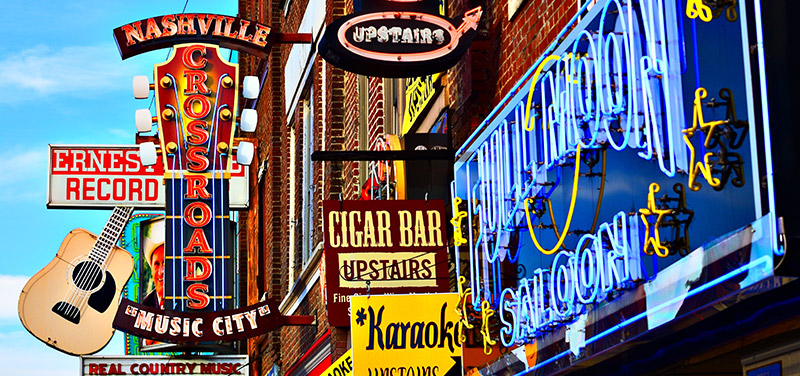
And I suspect some converts to Rome are having trouble arguing for Rome’s superiority to Nashville.

(more of) Show Me Jesus

To hear some of the recent commentary about Rome’s relationship to modern society, you might wonder about the significance of Jesus. The young journalist, Elizabeth Bruenig, whom Presbyterians baptized, Methodists discipled, and Jews educated (at Brandeis), explained her conversion as finding a refuge from modernity:

Yet the church remains firm, unmoved by this current in modernity. And while it is impossible to speak for all Protestants—and important to note there exists a vast array of opinions on property ownership within the Protestant tradition, some hewing close to the Catholic view—the Catholic Church, at least, bases its position on property in a moral universe far more stable than that which has been constructed since the Reformation. And by the time I neared the end of my time in college, I had become convinced it was the only firm ground from which a Christian could fight back against the domination of the poor by the rich, against poverty, against the destruction of families and communities at the hands of businesses and their political lackeys, against a world stripped of meaning.

I don’t know. To say that the church remains unmoved while failing to mention the about-face involved in the 1864 Syllabus of Errors when Piux IX sneered at the church making any adjustment to modernity (does she really want that?) and the 1962 Second Vatican Council where John XXIII called the church to update its relationship to modern society is quite the claim. You might think a journalist would look a little more carefully at her sources.

Then there is praise from Anthony Annett at Commonweal for the Jesuit article that condemned U.S. evangelicals and Roman Catholics together for an “ecumenism of hate”:

the basic thesis is certainly correct—that a small but vocal and influential segment of American Catholicism is now far more comfortable with the world of right-wing political evangelicalism than with global Catholicism. (Commonweal’s editors commented on it here, and contributing editor Massimo Faggioli wrote on it here.) This world is a Calvinist world, manifesting politically in the twin ideas that the United States is God’s chosen country with a unique destiny in the world’s history, which gives rise to a dualistic outlook, and that God bestows material rewards on his favored, which leads to a full-throttled embrace of capitalism. This latter pathology comes in different levels, of course, the nadir being the appalling “prosperity gospel.”

Annett too fails to mention how a church that so resolutely opposes modernity (according to Bruenig) is so susceptible to its members doing back flips to join Calvinists in the public square. If you have all that history, authority, and tradition, what happened?

For example, at the church frequented by my in-laws in New Jersey, I’ve heard homilies glorifying the military, calling for higher military spending, criticizing Muslim immigrants, and comparing the hill of Calvary with the hill of Iwo Jima. Seriously. This is horrific, but the overwhelmingly white middle-class Mass-goers seem to lap it up. It’s no wonder that they find no contradiction between Catholicism and Trumpism. It’s no wonder that Donald Trump enjoys their support while the rest of the Catholic world views with him with askance and horror.

Clearly, episcopacy has some bugs that not even papal infallibility (determined just on the heels of the Syllabus of Errors) cannot fix.

In fact, as much as Annett and Bruenig believe that real Roman Catholicism is on the side of left-of-center politics, Matthew Schmitz agrees but also notices how out of step Rome’s liberalism is with Rome’s history. The ultramontanism that sustained Pius IX’s quest for papal infallibility also supported integralism, a form of church-state relations that conservatives and liberals in the United States might find a tad overwrought:

Integralism was the system in which church and state collaborated to secure man’s peace on this world and salvation in the next. Joseph de Maistre defended it with a formula binding pope to king: “No public morals nor national character without religion, no European religion without Christianity, no true Christianity without Catholicism, no Catholicism without the Pope, no Pope without the supremacy that belongs to him.” Essential to this arrangement was the idea that the state must be subordinate to the Church.

With Francis has come a different kind of integralism:

Today a new kind of integralism operates, in which the Church is subordinated to the state as the two conspire to uphold liberal values. If one were to update de Maistre’s syllogism, it would go something like: No cheap consumer goods or avoidance of genocide without liberalism, no liberalism without true Christianity, no true Christianity without an undogmatic Church, no undogmatic Church without a liberalising Pope, no liberalising Pope without accountability to the age and freedom from tradition.

It is in this context that one must understand the Vatican’s recent sally against America in the unofficial papal organ La Civiltà Cattolica. Written by Fr Spadaro and Marcelo Figueroa, another papal confidant, the article is not merely an expression of anti-American spite or an attack on ecclesial enemies. It is an attempt to defend the liberal order against what is perceived, rightly or wrongly, as an existential threat.

Sorry, but I’m just not seeing the unity or the authority that wow converts. Plus, did you notice that all of these opinions come from the laity. What would make Roman Catholicism from Protestantism is if lay members kept quiet and deferred to their ecclesiastical superiors. I wonder what that kind of pre-modern ecclesiastical order would do to those converts who find in Rome a horse that rides even higher than the Bible or the Holy Spirit.

Meanwhile, do Roman Catholics actually worry about personal sins, God’s judgment, and whether they are going to purgatory?