Red Ribbon

Just removing the cake from the Bundt pan was victory enough for we theologians of the cross. But when the cake entered at the The Most Popular Fair on Earth won second place in the Bundt cake division, the red ribbon was icing on the cake.

Here is the recipe for Mississippi Mud Cake:

Into a bowl sift together 2 cups flour, 1 teaspoon baking soda, and a pinch of salt.

In the top of a double boiler set over simmering water heat 1-3/4 cups coffee and 1/4 cup bourbon for 5 minutes. Add 5 ounces unsweetened chocolate and 2 sticks (1 cup) butter, all cut into pieces, and heat the mixture, stirring, until the chocolate and butter are melted and the mixture is smooth.

Remove the pan from the heat and stir in 2 cups sugar. Let the mixture cool for 3 minutes and transfer it to the bowl of an.electric mixer.

Add the flour mixture to the chocolate mixture, 1/2 cup at a time, beating at medium speed, and continue to beat the mixture for 1 minute.

Add 2 eggs, lightly beaten, and 1 teaspoon vanilla and beat the batter until it is smooth.

Butter a 9-inch tube pan, 3-1/2 inches deep, and dust it with cocoa. Pour in the batter and bake the cake in a pre- heated very slow oven (275° F.) for 1 hour and 30 minutes, or until a cake tester inserted in the cake comes out clean.

Let the cake cool completely in the pan on a rack and turn it out onto a serving plate. Dust the top with powdered sugar or serve with whipped cream.

The recipe comes from a celebrated blue ribbon winner at Wisconsin county fairs who lives in Chicago and has edited and published a couple of my books.

Fine print: the one time I used butter and cocoa on the pan, the results were not great. The better strategy is to use what works best for your Bundt pan.

How History Makes the World a Better Place

Sometimes even boomers know the score. Take Camille Paglia (via Rod Dreher):

Paglia believes there is a causal connection between young Americans’ ignorance of history and their dim view of present conditions. At a conference in Oxford, Paglia stated again, in response to a student who criticized her and others for telling youths not to be so sensitive and snowflaky, “There is much too much focus on the present.”

Or try Rod Dreher:

Imagine that the US was involved in a major overseas war in which over 11,000 American soldiers died in one year alone (1967). For a point of comparison, fewer than 7,000 US troops have been killed in Iraq and Afghanistan over the past 14 years of combat there.

Imagine that 17,000 US soldiers would die in 1968, and 12,000 in 1969 fighting that war

Imagine that you might be drafted to go fight there.

Imagine what it would be like if you were convinced the war was profoundly immoral, and you had to choose between deserting the country and bearing arms in that war.

Imagine that many college campuses had become hotbeds not of snowflakey sit-ins, but of serious violence.

Imagine that domestic bombings by left-wing radicals had become a routine part of American life (e.g., five per day in an 18-month period in the early 1970s).

Imagine that two of the nation’s most prominent political leaders (MLK and RFK) Bobby were gunned down three months apart.

Imagine that your government and military were lying to Congress and to the American people about the war, and had been for years (as was revealed with the 1972 publication of the Pentagon Papers).

Imagine that major American cities were burning in race riots.

Imagine that cops in a major American city staged what was later called “a police riot” outside a political party’s national convention, and beat the hell out of protesters.

Could it be that Rod Dreher had it rougher than Ta-Nehisi Coates?

The mind reels.

Conversations Fifty Years Ago

You think having them today is rough, consider Wendell Berry’s experience:

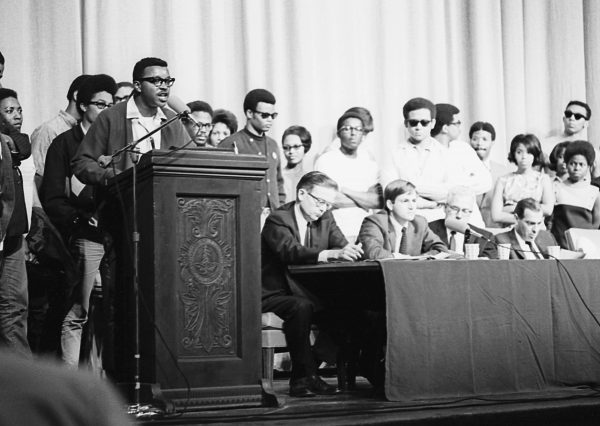
While at Stanford, Berry witnessed several outdoor meetings called by black students for the purpose of establishing a Black Studies program on campus. In Berry’s recollection, the meetings were what historian Elisabeth Lasch-Quinn has called a “harangue-flagellation” ritual in which the black students condemned the white students and faculty for their racism and the whites in attendance nodded in agreement mixed with occasional applause.[30] In another situation on campus, Berry found himself in the middle of a civil rights protest. When a student in the protest heard Berry ask his companion a question in his Kentucky drawl what was going on, his accent prompted the response, “You damned well better find out!”

Berry thought there was no way for him to speak meaningfully in that context, and so The Hidden Wound is what he would have said had the moment allowed it. He wrote it during the winter break in the Bender Room at Stanford University’s Green Library. The essay was motivated by the feeling that the civil rights milieu at the time was at a stalemate and would stay there if the focus on power eclipsed other possible ends. Though Berry agreed that racism was a moral evil and political problem, he thought the most visible sentiments guiding these events were dangerous. Just as in his writing about agriculture, nature, and land—and in his, “A Statement Against the War in Vietnam,” delivered at the University of Kentucky the winter before—he fought abstractions and the separations that oversimplify: of means and ends, of thought and emotion, intentions and actions.

He wrote that the “speakers and hearers seemed to be in perfect agreement that the whites were absolutely guilty of racism, and that the blacks where absolutely innocent of it. They were thus absolutely divided by their agreement.” In his interview with hooks he said more simply: “I thought guilt and anger were the wrong motives for a conversation about race.” People can be more “dependably motivated by a sense of what would be desirable than by a sense of what has been deplorable.” By arguing that power is a necessary part of the discussion, but no more necessary than love, Berry refused the false dichotomy between structure and personal responsibility. During the demonstrations, in contrast, “one felt the possibility of an agreement of sorts, but nowhere the possibility of the mutual recognition of a common humanity, or the possibility of forgiveness and reconciliation, or the possibility of love.”

So why is it that adding Jesus to discussions of racism only heightens a sense of what is deplorable?

Yet, even some activists are willing to listen to Berry:

The Hidden Wound, an extended essay in which Berry traced the grim legacy of slavery and racism in Kentucky, and his family’s role in the perpetuation of these evils, was the result. The book was not widely read on publication in 1970, but it has been granted a second life through republication and the sustained admiration of poet, essayist, and activist bell hooks, another Kentuckian who went to Stanford a decade after Berry and later, partly due to Berry’s influence, returned to Kentucky. Since she returned to Kentucky to teach at Berea College in 2004, hooks has been teaching from The Hidden Wound and wrote a sustained reflection on it in Belonging: A Culture of Place. An interview with Berry follows the reflection.

The Connection between Baptists and Revivals

Charles Hodge explained that Christianity rooted in the covenant favors Presbyterianism and rejects credo-Baptism as well as revival:

. . . what we think is plainly taught in Scripture, what is reasonable in itself, and confirmed by the experience of the church, is, that early, assiduous, and faithful religious culture of the young, especially by believing parents, is the great means of their salvation. A child is born in a Christian family, its parents recognize it as belonging to God and included in his covenant. In full faith that the promise extends to their children as well as to themselves, they dedicate their child to him in baptism. From its earliest infancy it is the object of tender solicitude, and the subject of many believing prayers. The spirit which reigns around it is the spirit, not of the world, but of true religion. The truth concerning God and Christ, the way of salvation and of duty, is inculcated from the beginning, and as fast as it can be comprehended. . . . He is constantly taught that he stands in a peculiar relation to God, as being included in his covenant and baptized in his name; that he has in virtue of that relation a right to claim God as hi Father, Christ as his saviour, and the Holy Ghost as his sanctifier; and assured that God will recognize that claim and receive him as his child, if he is faithful to his baptismal vows. The child thus trained grows up in the fear of God; his earliest experiences are more or less religious; he keeps aloof from open sins; strives to keep his conscience clear in the sight of God, and to make the divine will the guide of his conduct. . . . This is no fancy sketch. Such an experience is not uncommon in actual life.

That kind of covenant religion makes revivals not only superfluous, but a threat to Christian nurture. Revival, in other words, is antithetical to rearing children in the faith:

Does not a theory of religion extensively prevail which leads believing parents to expect their children to grow up very much like other children, unconverted, out of the church, out of covenant with God, and to rely far less on the peculiar promise of God to them and to his blessings on their religious culture, than on other means for their salvation. . . . They look upon conversion as something that can only be effected in a sudden and sensible manner; a work necessarily distinct to the consciousness of its subject and apparent to those around him. This conviction modifies their expectations, their conduct, their language, and their prayers. It affect to a very serious degree both parents and children, and it arises from false, or at least imperfect views of the nature of religion, it of course tends to produce and perpetuate them. We see evidence of this mistake all around us, in every part of the country, and in every denomination of Christians. We see it in the disproportionate reliance placed on the proclamation of the gospel from the pulpit, as almost the only means of conversion; and in the disposition to look upon revivals as the only hope of the church. (Hodge, Bushnell on Christian Nurture)

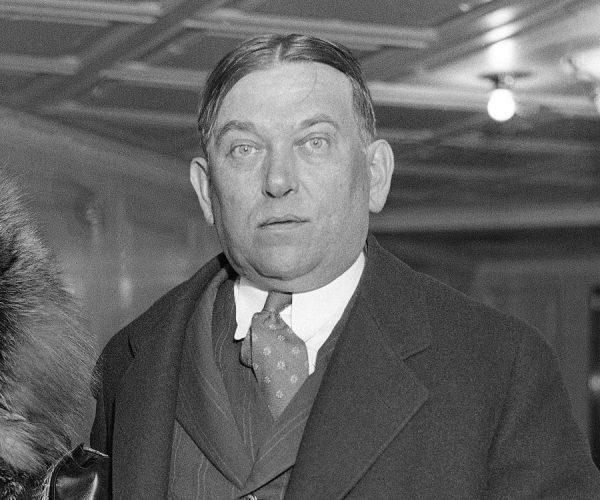
Mencken Day 2017

Where else do you read arguments against intelligent design that include taking a swipe at government?

The argument from design, once the bulwark of Christian apologetics, has been shot so full of holes that it is no wonder it has had to be abandoned. The more, indeed, the theologian seeks to prove the wisdom and omnipotence of God by His works, the more he is dashed by the evidence of divine incompetence and stupidity that the advance of science is constantly turning up. The world is not actually well run; it is very badly run, and no Huxley was needed to labor the obvious fact. The human body, very cunningly designed in some details, is cruelly and senselessly bungled in other details, and every reflective first-year medical student must notice a hundred ways to improve it. How are we to reconcile this mixture of finesse and blundering with the concept of a single omnipotent Designer, to whom all problems are equally easy? If He could contrive so efficient and durable a machine as the human hand, then how did He come to make such botches as the tonsils, the gall bladder, the ovaries and the prostate gland? If He could perfect the elbow and the ear, then why did He boggle the teeth?

Having never encountered a satisfactory – or even a remotely plausible – answer to such questions, I have had to go to the trouble of devising one myself. It is, at all events, quite simple, and in strict accord with all the known facts. In brief, it is this: that the theory that the universe is run by a single God must be abandoned, and that in place of it we must set up the theory that it is actually run by a board of gods, all of equal puissance and authority. Once this concept is grasped the difficulties that have vexed theologians vanish, and human experience instantly lights up the whole dark scene. We observe in everyday life what happens when authority is divided, and great decisions are reached by consultation and compromise. We know that the effects at times, particularly when one of the consultants runs away with the others, are very good, but we also know that they are usually extremely bad. Such a mixture, precisely, is on display in the cosmos. It presents a series of brilliant successes in the midst of an infinity of failures. (“The Cosmic Secretariat,” 1924)

I Thought John Fea Is Evangelical

John linked to a report from Baylor on the outlook of Trump voters. Among those voters are these characteristics:

• are members of white Evangelical Protestant churches

• consider themselves “very religious”

• think of the United States as a Christian nation

• believe that God is actively engaged in world affairs

• fear Muslims and refugees from the Middle East

• believe that women are not suited for politics

• oppose LGBTQ rights

Here’s what’s odd about this finding. I’m betting John and I are on the same side of these bullet points.

He and I consider ourselves very religious.

He and I think the United States is not a Christian nation.

He and I believe likely that God is actively engaged in world affairs since we tend not to be deists.

He and I do not fear necessarily Muslims or refugees from the Middle East, though I bet if those Muslims or refugees had fought for ISIS John might be a little afraid as I would be.

He and I do not think that women are unsuited for politics, though John was far more congenial to Hillary Clinton than I was.

He and I likely overlap on rights for LBGTQ folks, though I also suspect that the extent of those rights might be qualified.

In which case, neither John nor I fit the profile of evangelicals who voted for Trump. And yet, John still self-identifies as evangelical. I do not and have not for at least 25 years.

In which another case, why does John object to Trump as strongly as he does? Is it because he identifies as evangelical even while the majority of evangelicals voted for Trump? That disconnect could make you wonder about the group to which you belong. I imagine if Bruce Springsteen came out in favor of Trump, John would have as much psychic discomfort as I would if Ethan Coen trashed J. Gresham Machen.

In which a third case, isn’t what matters here not someone’s religious w-w but his or her politics? I can belong to a communion that includes (or used to) Kevin Swanson and that’s okay because the OPC does not require fidelity on political or cultural matters. But if you are part of a religious group that includes a wide swath of Protestants and think that faith should inform a lot of what you do — not to mention that the group has been identified with a certain political trajectory for FORTY years, evangelical support for Trump might give you pause. In other words, if you think religion and politics need to be consistent, then you might assume that a self-identified Calvinist is also a political conservative (which Donald Trump is not). But doesn’t that also mean that if you are an evangelical, your politics should align in some way with the rest of the evangelical world? Being evangelical surely doesn’t make you a liberal (though evangelical professors seem to think otherwise). And oh by the way, some of the biggest opponents of Donald Trump like Russell Moore also oppose policies like gay marriage. In other words, you don’t need to oppose Trump and go over to the editorial page of The New Republic.

Even so, nothing on that list of Trump voters’ attributes is inherently Christian.

Regarding those qualities now as sub-Christian is going to take a little more work than simply finding Trump repugnant. Ever since Ronald Reagan, most Christians in either the Democrat and Republican parties would have agreed with those convictions.

In which a fourth case, Donald Trump justifies rewriting the rules governing yucky evangelicalism.

Bodie and Jimmy Are Back

Here’s some of the dialogue I plan to include in my talk on Saturday for Mencken Day. Its title is “When America Was Great and Baltimore Knew Better.”

Scene 1:

Bodie: The radio in Philly is different?

Shamrock: N-word, please, you gotta be f-word with me. You ain’t never heard a radio station outside of Baltimore?

Bodie: Man, I ain’t never left Baltimore except that Boys Village s-word, one day, and there wasn’t no radio up in that b-word.

[Shamrock starts to hit the pre-set buttons.]

Bodie: Come on, man, you’re killin’ me.

[Shamrock tunes into Prairie Home Companion and viewers hear Garrison Keillor say, “It’s been a quiet week in Lake Wobegone, my home town. It’s been
perfect tomato weather out there. . .]

Bodie: This a Philly station?

Shamrock: How the heck should I know?

Bodie: Why would anyone ever want to leave Baltimore? That’s what I’m askin’.

Scene 2:

McNulty: I feel like I don’t even belong to any world that even bleeping matters.

Greggs: ‘Cause you’re a cop?

McNulty: Nah, it’s not just that. It’s like, I went to meet her once; she was in a hotel room on the top floor. I punched the button on the elevator and it doesn’t even go there. You gotta have some kind of special key to even get to that special f-word floor. So I go to the front desk, some sneering f-word calls upstairs, gives me permission to go and get laid. I listen to the s-word she talks about and it’s the first time in my life I feel like a f-word doormat. Like anyone else with any smarts would do something else with his life, you know? Earn money, or … get elected. Like I’m just a breathing [sex] machine. I’m serious; I’m the smartest a-hole in three districts and she looks at me like I’m some stupid f-word playing some stupid game for stupid penny-ante stakes.

Jimmy and Bodie seem to have the same outlook that led Mencken to write this:

Human relations, in such a place, tend to assume a solid permanence. A man’s circle of friends becomes a sort of extension of his family circle. His contacts are with men and women who are rooted as he is. They are not moving all the time, and so they are not changing their friends all the time. . . . In human relationships that are so casual there is seldom any satisfaction. It is our fellows who make life endurable to us, and give it a purpose and a meaning; . . . What I contend is that in Baltimore, under a slow-moving and cautious social organization, touched by the Southern sun, such contacts are more enduring than elsewhere, and that life in consequence is more agreeable.

By the way, Machen is also part of the talk. Can you believe it?

Providential Wisdom

I don’t believe (or much like) the phrase, common grace, but sometimes the insights of the heterodox and even the unbeliever make you wonder about the effects of special grace. Consider Noah Millman’s invocation of Abraham Lincoln for the current pissing match over Confederate Monuments (and oh by the way not all Christians are not using the Port-a-Potties). First Millman credits Lincoln with recommending “charity for all”:

North and South were compacted together within the Union, and both prospered by that union. So both North and South bore the moral stain of slavery, notwithstanding that the slaves themselves were overwhelmingly concentrated in the Southern states, and the social and economic structure of the South changed most by emancipation.

This perspective was what made it possible for Lincoln, in the midst of war, to speak of achieving a just and lasting peace “with malice toward none, with charity for all.” It is easy to argue that such a lasting peace would require honoring the honest—if, in Lincoln’s view, badly mistaken—conviction of men like Robert E. Lee that their actions were not rebellion but a defense of their country. Indeed, it is hard to see what “charity for all” could mean if it did not extend to a man of Lee’s widely-touted honor and integrity, or those who cherish his memory. Reconciliation could be achieved between North and South on the basis that while the political matter of secession was settled on the battlefield, there was honor on all sides. Those were precisely the terms that prevailed from the end of Reconstruction through the era of the Civil Rights movement.

Of course, reconciliation is not easy (and doesn’t come by way of statements and letters):

Reconciliation in the present means reconciliation of conflicting narratives of the past, finding a place for all of our varied common ancestors. But the axes of conflict between those ancestors may, themselves, be irreconcilable.

We may fool ourselves to think that matters are simpler elsewhere. Attila may be honored in Hungary without upsetting the descendants of the cities he sacked; Bohdan Khmelnytsky may be honored as the father of the Ukrainian nation notwithstanding that his men perpetrated the most horrific massacres of Jews between the Crusades and the Holocaust. But the illusion of integral simplicity is as deliberate as it is false, as the currently bloodletting in Ukraine and the escalating authoritarianism in Hungary should demonstrate.

Regardless, no such illusion is possible in America, which is torn not on one seam but on many. Wounds still bleeding must be triaged for present succor, but our national memory must be capacious enough to acknowledge the whole truth, and not only the truth of victory, for there to be any lasting reconciliation. Lincoln’s insight is still relevant. We should properly judge slavery to be an unequivocal evil, and the Confederate cause to have been unsalvageable because it was fundamentally and overwhelmingly that evil cause—not only of defending but of extending slavery. But we should not delude ourselves that, had we sat in our ancestors seats, we would have judged our own cause any more rightly than they did.

Millman is not thinking President Trump will help but is looking to ordinary people for help (can Christian social justice warriors find their inner average?):

Today, we are led by a President as far from Lincoln’s spirit of charity as it is possible to imagine. And so it rests on the shoulders of ordinary Americans to eschew malice. It falls to the descendants of slaves to see men like Lee through the eyes of the descendants of planters, as the exemplar of their country’s virtues, and dispute their place in national memory in a spirit that appreciates that fact. And it falls to the descendants of planters to see him through the eyes of the descendants of slaves, as the American version of Erwin Rommel, Hitler’s favorite general, and let that understanding give them pause when they consider rising to defend his honor.

Imagine that. Being holy means giving up contempt and hatred for other people and trying to identify with them, you know like, grieving with those who grieve.

Labor Day South of the Equator

I used to think (I avoid assuming because of the consequences) that the rest of the world followed the general contour of the seasons in the United States.  Is that a consequence of American greatness and status as leader of the free world?  Perhaps.

But now I am woke.

While still flying solo last night I viewed a documentary about beach resorts in Argentina, Balnearios.  It was pretty good.  It was more orchestrated than some documentaries, but provided a glimpse of Argentinian life that fascinates. I give it three stars.  The cats are still voting.

One aspect that struck me was that summer there is our winter.  Of course, since I spent time in Brazil a couple decades ago during the month of February, I knew that their summer matched our winter.  But since I was teaching at a seminary and classes were in session (which they also seemed to be at the affiliated university), I had assumed that the school year below the equator lined up with ours in North America.

I saw vividly last night what this website confirms (by the way, I checked to see about South Africa and discovered they have four terms that run almost the entire year):

The school year in Argentina runs from March to December and lasts about 200 days. Schools are closed for national holidays, such as Good Friday and Easter, and two weeks in July for vacation. Normally, public elementary schools are in session four and a half hours each weekday. Saturdays are generally reserved for extracurricular school activities. Often, a school will have a morning and afternoon session, allowing pupils and teachers to choose their sessions. Some elementary schools offer evening classes for adults.

Imagine that. Stocking up on notebooks and pencils about the same time you are throwing out Christmas gift wrapping and determining this time really really to lose a few pounds.

What may even be harder to conceive is not having a Christmas recess from classes because the school year just ended.

Talk about American myopia.

Postscript: Ellen Marie Jones and Jay Glenn Hart were married on this day seventy-five years ago at Metropolitan Baptist Church (now Capitol Hill Baptist). Need to mention this here since in heaven, where they are, there’s no marriage and so likely no wedding anniversary celebrations.

House of Cards vs. Game of Thrones

Lots of discussion lately about watching sin in movies and television series.  The reason appears to be the new season of Game of Thrones.  That genre interests me not at all so I haven’t seen any of it, and I’ve only watched one episode of House of Cards (more of the original).  Too many episodes of West Wing and Friday Night Lights still to see. (And now there’s Hinterland.)

After watching last night with colleagues and students in the German literature department Run Lola Run, I started wondering again about viewing sin on the screen.  Kevin DeYoung and Nick Batzig argue for caution when watching movies with nudity and sex.  Even Katelyn Beaty finds her inner Nashville Statement when it comes to watching programs that include rape scenes.

But what about Lola and Manni from Run Lola Run? Here we have a guy entangled with drug dealers (likely) needing to pay them their money after having lost it on a subway.  And we have his girlfriend who robs a bank to help her man.  And we have a viewer (me) rooting them on.  Should I have worried about breaking the ninth commandment?

And is it more heinous to watch a movie that portrays violations of the seventh commandment compared to one that depicts breaking the ninth commandment?

Is the Larger Catechism of any help?

Q. 150. Are all transgressions of the law of God equally heinous in themselves, and in the sight of God?
A. All transgressions of the law are not equally heinous; but some sins in themselves, and by reason of several aggravations, are more heinous in the sight of God than others.

Q. 151. What are those aggravations that make some sins more heinous than others?
A. Sins receive their aggravations,
1. From the persons offending; if they be of riper age, greater experience or grace, eminent for profession, gifts, place, office, guides to others, and whose example is likely to be followed by others.
2. From the parties offended: if immediately against God, his attributes, and worship; against Christ, and his grace; the Holy Spirit, his witness, and workings; against superiors, men of eminency, and such as we stand especially related and engaged unto; against any of the saints, particularly weak brethren, the souls of them, or any other, and the common good of all or many.
3. From the nature and quality of the offence: if it be against the express letter of the law, break many commandments, contain in it many sins: if not only conceived in the heart, but breaks forth in words and actions, scandalize others, and admit of no reparation: if against means, mercies, judgments, light of nature, conviction of conscience, public or private admonition, censures of the church, civil punishments; and our prayers, purposes, promises, vows, covenants, and engagements to God or men: if done deliberately, willfully, presumptuously, impudently, boastingly, maliciously, frequently, obstinately, with delight, continuance, or relapsing after repentance.
4. From circumstances of time, and place: if on the Lord’s day, or other times of divine worship; or immediately before or after these, or other helps to prevent or remedy such miscarriages: if in public, or in the presence of others, who are thereby likely to be provoked or defiled.

It looks like what qualifies as more aggravating than something else has a lot to do with the person offended and the time of the offense. Watching a show of a disreputable nature on the Lord’s Day might be worse than seeing it on Wednesday night (as long as your not skipping prayer meeting, of course). And if you watch something the king thinks you shouldn’t see, that carries more weight than — sorry Kevin — your PCA pastor.

But what about point three — the nature of the offense? There it sure looks like stealing from a bank to pay your re-election campaign staff is more heinous than simply stealing from a bank. But maybe I’m wrong. I also see nothing from the catechism to suggest that sexual sins are more heinous than fiscal or false words.

If that’s true, it looks like a lot of people obsess about what is simply looking at entertainment serious art. Whatever might these people make of Michelangelo’s David? A fig leaf, please!!