Who’s Afraid of NSA?

What with the news and controversy surrounding Edward Snowden and Wikileaks an average American might think his privacy no longer exists. Everything we do on-line or by phone is closely monitored by people who work deed deep in the federal government’s deep state.

Have I got good news for libertarians. On the way to the airport this morning I learned thanks to the Federalist Radio Hour that the reason the Affordable Care Act rolled out so poorly was that feds could not verify personal incomes of people signing up for the new health care plan. Enrollees entered their digits and the government had to go through too many layers of records, and even then could not tell how much someone made.

Imagine that. NSA and Homeland Security and the Defense Intelligence Agency may know your caloric intake thanks to the Fitbit you are wearing, but they can’t even tell how much you make.

Is this a great country, or what?

Female Lives Mattered

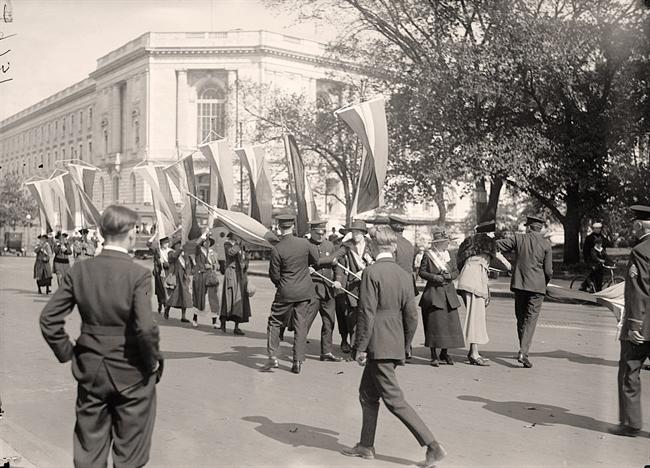
Looks like the Suffragettes were the opening act for Black Lives Matter:

The Maryland Suffrage News on the bogus sufferings of the suffragettes in Washington:

The Marylanders, rudely pushed and jostled, thought of the way the Baltimore police had protected them from a conventoin crowd, said to be quite as rough as an inauguration crowd, and longed for a squad of Marshal Farnan’s finest to clear the way for them.

Can it be that these are the same “finest” who have been so often accused, by suffragists and their vice-crusading allies, of conspiring to nullify the laws, of making corrupt bargains with law-breakers, of sharing in the profits of prostitution? Can it be that a cop is an archangel when he is with them, as he is an abominable rogue and hell-hound when he is against them?

…Cease, dear girls! Hold your crocodile tears! Stay your whoops for gore! The more you yell, the more you will convince the country that your parade was a clown show, that you yourself are silly cry-babies, that you are not fit for the crash and slambang of politics! Don’t you hear the antis laughing? Don’t you see the motive behind their sympathy? Have you no humor, no courage, no sportsmanship, no sense?

More than about Mmmmmm(eeeeeEEEE)e

It’s about the cats.

Spring break is in session. Chicago is not doing a very good impersonation of Spring. But after having coffee with one of our favorite writers we took even more public transit out to Wilmette to see this:

Hard to beat a combination of a glorious city, the greatest of God’s furry creatures, and the Turks who care for Istanbul’s felines.

Rescue Mission vs. Lent

Something about this logic seems fishy:

Creighton University’s Online Ministries program, “Praying Lent 2017,” says the purpose of fasting is to “experience the effects of not eating. It also serves to be a penance or a sacrifice for the purpose of strengthening us.”

“When we get hungry, we have a heightened sense of awareness,” it adds, noting that the practice helps people to clarify their thoughts. “It is purifying and prepares us to pray more deeply,” the resource from Jesuit-run Creighton University in Omaha, Nebraska, points out.

By that logic, those Christians who go to rescue missions to conduct a worship service for and serve a meal to the homeless should put worship before food. But the way I experienced it, when our youth group helped out with rescue missions in Philadelphia, we served the meal first because the idea was that someone who is hungry could not concentrate on the message of the gospel. But if Creighton’s counsel is right, that kind of hunger heightens spiritual awareness and a sense of the need for the gospel.

Am I right?

Those Also Were the Days

Damon Linker remembers those crazies times under President Obama:

As Delmore Schwartz once joked, sometimes paranoids have real enemies, and the paranoid-in-chief occupying the Oval Office has some very real and very powerful enemies.

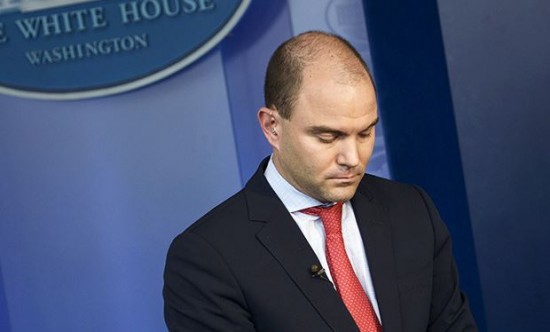
Anyone who denies this needs to go back and reread the most important (and unfairly maligned) magazine feature written last year: David Samuels’ 9,500-word New York Times Magazine profile of Obama administration senior staffer Ben Rhodes. Journalists hated the piece, but for reasons so self-serving that it’s hard to believe anyone took the objections seriously. (My colleague Noah Millman noted as much shortly after the essay appeared.)

Samuels portrays (and quotes) Rhodes as someone who views both reporters (“they literally know nothing”) and Washington’s foreign policy establishment (Rhodes calls it “The Blob”) with utter contempt. It’s that contempt that Rhodes uses to justify the propaganda shop he ran out of the Obama White House, subtly but significantly manipulating the story that the mainstream media told about the Iran nuclear deal by selectively and repeatedly leaking tiny bits of information to dozens of journalists who wove those bits of micro-spin into countless tweets and stories over the course of many months. The end result was a pro-Iran deal conventional wisdom — a pointillistic picture of reality composed entirely of colorful dots painted by Rhodes and his staff with the knowledge and support of the president.

While trying to get the Iran deal approved, Rhodes was in the position of needing to use journalists to defeat The Blob, which viewed with extreme skepticism (if not outright hostility) the Obama administration’s efforts to reach a nuclear accord with Tehran. But once Donald Trump won the presidency, old opponents found themselves firmly on the same side. Rhodes and his former boss, the bipartisan foreign policy establishment, and the nameless and faceless bureaucrats who staff the executive branch agencies and departments that make up the “intelligence community.” All of them were now united in standing against a president who had vowed to break far more radically from the established Washington consensus than Obama ever dreamed of doing.

What makes America great? Remembering sometime.

When Law Robbed the Phillies

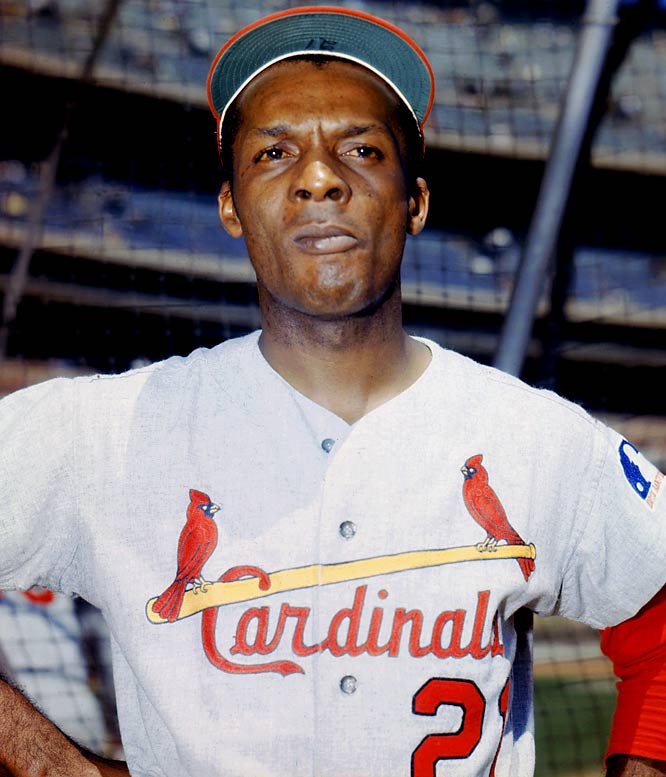
To provoke students to think about whether the Emancipation Proclamation ended slavery and similar inequalities related to property, I brought to class today a little piece of Major League Baseball and constitutional history. Anyone remember Curt Flood, the man for whom the Phillies in 1969 traded Richie Allen (my childhood hero)? Funny, he never played for the Phils:

So when the Cardinals traded him to Philadelphia that October, Flood, 31 at the time, was not much inclined to go, even though he had no choice if he wanted to stay in the game. That’s how the reserve clause worked. The owners insisted it preserved balance between the teams; of course, it also let them buy and keep talent on the extremely cheap. Such collusive, anticompetitive conduct would normally have violated the Sherman Antitrust Act. But in 1922, the United States Supreme Court had held that the business of baseball was somehow not interstate commerce covered by that law, and in 1953 it ruled, equally ludicrously, that Congress had wanted it that way.

Over the years, the court refused to extend that tortured logic to theatrical productions, basketball, boxing and football. But something about baseball — here, all those clichés about its hold on the American psyche apparently held true — blinded even the most revered jurists, including Oliver Wendell Holmes Jr., Earl Warren, Hugo Black, William O. Douglas and Felix Frankfurter. (Only the historically disparaged justices Stanley Reed and Harold Burton, who dissented from the 1953 ruling, got it right.) That the Supreme Court would reverse two of its own precedents seemed highly unlikely.

And that was what Marvin Miller, the firebrand executive director of the Major League Baseball Players Association, told Flood. His lawsuit, Miller warned, was “a million-to-one shot.” Bringing free agency to the game was on Miller’s agenda, but not for a while; at a time when baseball’s minimum salary was $10,000 and players got $15 daily meal money, his union was just too weak. And with his $90,000 annual salary — big bucks at the time — Flood was not the most sympathetic plaintiff. But backed by representatives from the various teams, Miller agreed to bankroll Flood’s case, retaining Arthur Goldberg, late of the Supreme Court, to handle it.

Flood himself was undeterred by the inevitable blacklisting to come. He liked living on the edge — he was the type to throw baseballs with his phone number written on them to pretty women in the stands — and was a contrarian, always itching for a fight. Then there was his race, and his rage. Other black stars, like Mays, Aaron and Ernie Banks, rocked no boats. But Flood always had, attacking segregated training camps in Florida, appearing at an N.A.A.C.P. rally in Mississippi and, with the help of a court order and police protection, moving into a white neighborhood in the Bay Area. To him, protests were nothing new.

And coincidentally (or providentially), I also read today why Curt Flood may not have wanted to play in Philadelphia (for reasons similar to Richie Allen’s:

Winter was a leader of the very powerful Philadelphia Klan, which at its height claimed some fifty thousand members in the metropolitan area. He was one of the movement’s most effective publicists and evangelists, but he was also deeply involved in factional struggles. In a striking portent of his later political allegiance, Winter earned notoriety by forming a personal elite bodyguard and enforcement squad known as the Super-Secret Society, the “S. S. S.” (at this early date, the similarity of name to the German S. S. is coincidental. And no jokes, please, about Double Secret Probation). The “Night Riders” of this “Black-Robed Gang” beat and intimidated opponents who questioned Winter’s shady financial dealings. Winter’s tactics included exposing the Klan membership of his opponents, seeking thereby to attract boycotts and demonstrations against them by Catholics and other hostile groups. His critics accused him of “building up a far more autocratic organization than Rome ever dared to build.” In 1925-26, the Philadelphia Klan’s klaverns (lodges) were riven by violence, lawsuits, and spectacular mutual expulsions.

In 1928, the Klan nationwide was galvanized anew by the threat of a Catholic Presidential candidate in the form of Al Smith. In that year, Winter published in his What Price Tolerance? (Hewlett, N.Y.: All-American Book, Lecture and Research Bureau, 1928) a comprehensive statement of anti-Catholic ideology. The book gives an excellent idea of the kind of rhetoric used by Klan leaders in their speeches intended to recruit new members, and to fire up supporters.

For Winter, Catholic “aggression” was expressed in the Catholic marriage laws, which denied the validity of Protestant marriage and family life, and in the sectarian schools, which created and sustained a whole alternative society and cultural life. Surging Catholic power threatened to overwhelm American society and values. In the previous century, the Church in the United States had grown from fifty thousand adherents and 35 priests to twenty million faithful with a vast network of clergy, schools, and seminaries. By the 1920s, there was a “general staff” – perhaps a provisional government? – in the form of the elaborate bureaucracy of the National Catholic Welfare Council. The nightmare was that all Americans would someday be subjected to this tyranny, and that a Catholic would someday attain the presidency. Catholic strength was founded on “Alienism”, “the unassimilated hordes of Europe”, which threatened American racial purity.

The shadow of racism was large in Philadelphia.

Mencken, the Prophet

On the eve of that “Great” War, H. L. Mencken saw where vice crusaders were headed:

In the midst of all our torquernadan crusading, how is it that no moralist has dedicated himself to the extinction of the cigarette, that coffin nail, that debauchery, that father of crime? Elsewhere in this fair land it has been dealt staggering licks by the chemically pure. In Kansas, Iowa and Missouri the children in the public schools are taught to fear and abominate it; in Nebraska, Michigan and Alabama there are hot campaigns against it; in Indiana its sale is forbidden by law. But here in Baltimore not a single voice in raised against it. Our moralists are the most virulent in Christendom–their ardor, indeed, is often far more Mohammedan than Christian–and yet I have not heard a word from them about the licentious and diabolical cigarette.

Certainly this cannot be due to ignorance of its deadliness. It is a matter of common knowledge, indeed, that the cigarette is one of the most insidious of all agents of sin. The boy who inhales its noxious fumes today will be a drunkard tomorrow and a murderer next week. The woman who smokes cigarettes is sinister and unspeakable–a dangerous companion for the young. The man who pursues the corrupting vice is a shifty, blear-eyed rascal, with the complexion of a bilious jonquil and a liver that plots treasons. All criminals smoke cigarettes. So do all paranoics. It is the unanimous pet and comfort of felons condemned to be hanged.

On the medical side the evidence against it is irrefutable and overwhelming. In Dr. Osler’s great work on “The Principles and Practices of Medicine” (lib. XIV, fol. 324) there is the direct statement that the cigarette is one of the most potent causative agents in influenza, cancer, diphtheria, ophthalmia, beri-beri and senile dementia. Dr. Osler there describes an experiment with guinea pigs made by Prof. Dr. Hugo Bierfisch, of Leipzig. Two sets of guinea pigs, one of which had been trained to smoke cigarettes and the other of which had been kept pure, were exposed to virulent cultures of the bacillus typhosus. The virtuous guineas at once leaped out of the window, but the cigarette smokers, besotted by nicotine, snouted the fatal germs and at once fell into convulsions. By next morning all of them save one were dead of arterio-sclerosis, and that one was a babbling maniac. . . .

And all this medical evidence is amply supported by the statistics of our prisons and almshouses. Of the 226 murderers confined in Sing Sing prison between January 1, 1900, and December 31, 1910, no less than 207 ascribed their downfall to cigarettes. Of the 1,987 forgers imprisoned at the same place during the same time 1,562 blamed cigarettes. From Charleston Prison, near Boston, come reports that are even more impressive. Every one of the yeggmen now serving time there is a cigarette fiend. The late Dr. Clarence Richeson was another. Dr. Harvey H. Crippen, hanged in London for the murder of his wife, smoked 15 packages a day. Johann Hoch, the celebrated Chicago murderer, went to the gallows with a cigarette in his mouth and a glass of fake Plisener in his hand.

What’s the Difference between a Pro-Refugee Evangelical (Tim Keller) and a Democrat (Dianne Feinstein)?

Short answer: neither quotes the Bible.

Notice for instance the parallels among the National Association of Evangelicals, Ed Stetzer, Evangelical leaders (among them Tim Keller), and the Democrats.

The NAE:

“Christians and churches have been welcoming refugees for 2,000 years, and evangelicals are committed to continue this biblical mission. Thousands of U.S. evangelicals and their churches have welcomed hundreds of thousands of refugees over the past 40 years through World Relief and other federally approved resettlement agencies. We don’t want to stop now,” NAE President Leith Anderson said.

The Trump administration’s plans to make severe cuts to the admission of refugees are alarming. We call on President Trump to declare his support for the continuation of the U.S. refugee resettlement program, which is critical at a time when the world faces a significant refugee crisis.

Ed Stetzer:

Scott Arbeiter, president of World Relief, says it this way: “The decision to restrict all entry of refugees and other immigrants … contradicts the American tradition of welcoming families who come to the United States to start their lives again in safety and dignity. The American people — most of whom can trace their own families’ stories through a similar immigrant journey in search of freedom — are a hospitable people.”

He’s right. But, it’s not just because we are Americans. It’s because we are Christians.

God’s people should be the first ones to open their arms to refugees. We should welcome them and do what Christians, in your church and mine, have been doing a long time — showing and sharing the love of Jesus with them.

Tim Keller et al:

As Christians, we have a historic call expressed over two thousand years, to serve the suffering. We cannot abandon this call now. We live in a dangerous world and affirm the crucial role of government in protecting us from harm and in setting the terms on refugee admissions. However, compassion and security can coexist, as they have for decades. For the persecuted and suffering, every day matters; every delay is a crushing blow to hope.

Since the inception of the refugee resettlement program, thousands of local churches throughout the country have played a role in welcoming refugees of all religious backgrounds. Ministries to newly arrived refugees are ready, and desire to receive many thousands more people than would be allowed under the new executive order.

The Democratic Party (according to Damon Linker):

Many liberals argue that refugees are among the most vulnerable people on Earth and so must be welcomed with open arms. That forcing undocumented immigrants to leave the country is gratuitously cruel, violates their rights, and so justifies municipalities flouting federal law by turning themselves into “sanctuary cities.” That banning entry to refugees or immigrants not yet within the United States can violate their due process rights under the U.S. Constitution. And that the desire to restrict immigration is invariably an expression of xenophobia, racism, and other forms of irrational animus and so morally (and perhaps constitutionally) indefensible.

All of these claims are, at bottom, expressions of a fundamentally anti-political humanitarian ideology that is unlikely to fare well in the next presidential election. Democrats desperately need to confront the vulnerabilities of this position and stake out a more defensible and pragmatic one if they hope to push back against Trump’s populist-nationalist message in upcoming years.

Of course, evangelicals don’t need to worry about running for election (though the likes of Russell Moore does need to worry about ministry dollars going somewhere other than the Southern Baptist cooperative program). But evangelicals who live in the United States may want to think (with help from Linker) about how to love their actual neighbors who live within U.S. borders (Walter didn’t see his buddies die face down in ‘Nam for open borders):

Many Americans believe that their constitution presumes or appeals to certain timeless, universal moral truths that apply to all human beings. But the U.S. Constitution itself — like the constitutions, fundamental laws, and commonly affirmed norms and rules of all political communities — is nonetheless instantiated in a particular place, rooted in a particular tradition. It also pertains and applies only to people who are members of the political community known as the United States of America.

Those who are members of this community are known as American citizens. They get a say in what laws get passed and how they get enforced. Those who are not members of this community — who are not citizens — don’t get such a say. The community is perfectly within its rights to decide which and how many of these outsiders will be allowed to visit the country, how long they will be allowed to stay, when they will need to go, and how many, if any, will be permitted to join the community permanently by becoming citizens.

This is one of the most elemental acts of politics: the community deciding who to admit and on what terms. To treat this act as somehow morally illegitimate is to treat politics as such as morally illegitimate.

In other words, evangelicals think like 1kers, as if the U.S. is a Christian community. Imagine welcoming non-Christians into fellowship in a Christian congregation. What sense does that make? So why should citizens of the United States act as if they are the United Nations of the World. As Linker says, it’s a complicated question how Americans decide what to do with outsiders:

Note that nothing I’ve said tells us anything about how many immigrants or refugees the political community of the United States should welcome at any given moment of history, or what criteria should be used to make this determination. I generally favor liberal immigration policies; many Trump voters take a very different view. The point, as Josh Barro recently argued in an important column, is that the policy debate needs to be made in terms of the good of the political community as a whole and in its parts, not in terms of abstract, extra-political moral duties owed to prospective newcomers. A political community exists in large part to benefit itself — to advance the common good of its citizens. There’s nothing shameful in that. It’s to a considerable extent what politics is.

And don’t forget, if godless Democrats and progressive evangelicals agree that Jesus is on the side of refugees, w-w has failed.


You Don’t Need to Believe in God to thank God for the ACLU

Do civil liberties in the United States really depend on non-Quakers having access to self-uniting marriages (amazing what you find when you go to Philadelphia’s municipal offices‘ webpages):

What is a self-uniting marriage, you ask? No, it doesn’t mean you fulfill your self-love:

For couples who want to skip a formal marriage ceremony, usually their first thought is to just get a marriage license, go to city hall and get married by a judge, magistrate or mayor. But in Pennsylvania, getting married doesn’t even have to be that formal.

Pennsylvania is one of the few states that offers couples the option of a self-uniting marriage license.

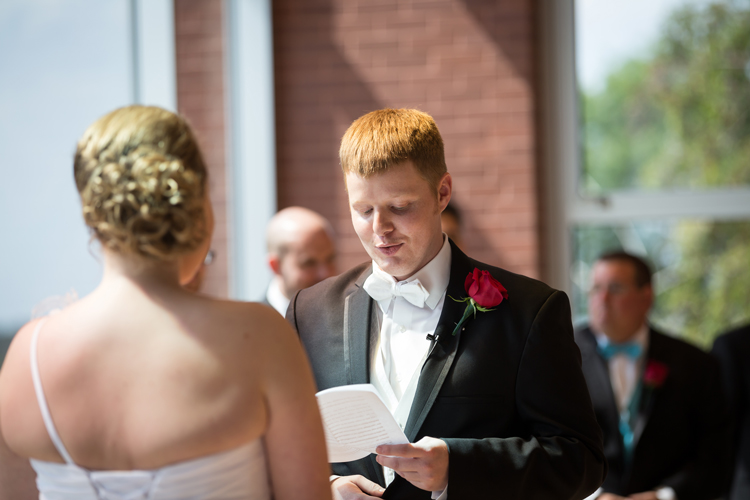
The custom is rooted in the Quaker faith and is actually part of a formal wedding ceremony. According to the book Quakerism: A Religion Meaningful for Today’s World, the couple walks into the ceremony together and later rises and states their vows to each other. At the conclusion of the event, all of the witnesses sign the marriage certificate.

But the ACLU became alarmed when some residents of Pennsylvania did not have access to a self-uniting marriage (civil libertarians don’t seem to care that residents of Ohio don’t have access to this kind of union):

Because Pennsylvania has a large Quaker population, the license is available in most counties. But you don’t have to be a Quaker to take advantage of the service; the state American Civil Liberties Union took care of that in 2007.

An Allegheny County couple had been denied the self-uniting license because they told the Register of Wills that they weren’t part of the Quaker faith. With the help of the ACLU, the couple sued, and the court ruled that the license cannot be denied to anyone.

That’s a relief.

But it wasn’t enough to keep Donald Trump from becoming POTUS. Never forget, never Trump.

Called to Drink

Bryan and the Jasons don’t seem to update their blog much. Jason Stellman’s conversion narrative is still there. But no one at Called to Communion seems to notice where their call led Jason (thanks to our Michigan correspondent):

JASON STELLMAN, cohost of the podcast Drunk Ex-Pastors, is a Southern California native and transplant to Seattle who wishes he still lived in Europe. He served as a missionary with Calvary Chapel of Costa Mesa in Uganda (’91-’92) and in Hungary (’94-2000). Ordained In the Presbyterian Church in America, he was called to plant Exile Presbyterian Church in the Seattle area where he served from 2004-2012. In September 2012, he was received into the Catholic Church. He drinks and questions his faith regularly.

Don’t get me wrong. I like a drink as much as the next man. But I haven’t made drinking a fruit of the Spirit or a reason to be Presbyterian (hey, wait a minute).