What History is Supposed To Do (which is different from blogging)

More thoughts today on the outlook that historical knowledge cultivates.

First comes the pietist version — the past as pointer to what’s true and right:

In the introduction the authors offer five reasons to study church history: 1) It continues to record the history of God’s faithful dealings with his people and it records Christ’s ongoing work in the world. 2) We are told by God to remember what he has done and to make it known to those who follow us. 3) Church history “helps to illuminate and clarify what we believe” and in that way allows us to evaluate our beliefs and practices against historic teaching. 4) It safeguards against error by showing us how Christians have already responded to false teaching. 5) And finally it gives us heroes and mentors to imitate as we live the Christian life. In this way it promotes spiritual growth and maturation.

History as a means of grace? I’m not sure.

Second, history as perplexity:

… we developed an approach we call the “five C’s of historical thinking.” The concepts of change over time, causality, context, complexity, and contingency, we believe, together describe the shared foundations of our discipline. They stand at the heart of the questions historians seek to answer, the arguments we make, and the debates in which we engage. . . .

One of the most successful exercises we have developed for conveying complexity in all of these dimensions is a mock debate on Cherokee Removal. Two features of the exercise account for the richness and depth of understanding that it imparts on students. First, the debate involves multiple parties; the Treaty and Anti-Treaty Parties, Cherokee women, John Marshall, Andrew Jackson, northern missionaries, the State of Georgia, and white settlers each offer a different perspective on the issue. Second, students develop their understanding of their respective positions using the primary sources collected in Cherokee Removal: A Brief History with Documents by Theda Perdue and Michael Green.7 While it can be difficult to assess what students learn from such exercises, we have noted anecdotally that, following the exercise, students seem much less comfortable referring to “American” or “Indian” positions as monolithic identities.

Third, history as empathy:

I hope that the young adults who study history with me find themselves cultivating five interrelated values: comfort with complexity, humility, curiosity, hospitality, and empathy. I don’t think Donald Trump is unusual among Oval Office aspirants in his utter lack of humility (here’s a conservative critique of him on that point), his disinterest in learning (see his recent comments on his reading habits), or his impatience with complication and nuance. But if I’m going to tell my students that historical study exists to a significant extent to help them be more hospitable and empathetic to those of a different culture, ethnicity, religion, ideology, etc., I can hardly stay silent about a candidate who has demonized immigrants and Muslims.

So I think the open letter’s authors are right to characterize the Trump candidacy as an attack not only on the “constructive, evidence-based argumentation” we try to practice in our profession, but on “our values, and the communities we serve.”

What is striking is how even professional historians can make history be what they want it to be.

But why is it that professional historians don’t recognize that the way they frame the historical enterprise winds up making not a scholarly but a political point. If the aim of history is to empathize with others (among other things), where have historians been about developments in Turkey or the real complexity of issues that inform the current discussion of police and crime in the United States? (For some academics, there’s not much complexity about cops shooting people.) I’m sorry, but to be so outspoken about a guy like Trump just doesn’t take all that much insight or courage. Most people who work outside history departments know he is egotistical, bombastic, clownish, and a jumble of assertions and passions. Even supporters see that. Are students so desperate?

Or is it that historians want to present as being on the “right” side?

The thing is, the responsibilities necessary to be president are not the same as the virtues that historical study cultivates. In the case of empathy, a president does need to be empathetic. But that’s not all. Just think back to episode 2, season 4 of West Wing where President Bartlet approves the assassination of a Qumar state official suspected of terrorism. Sometimes prudence trumps empathy. And that’s something that history actually teaches. Or it should. (Why should Aaron Sorkin get all the good lessons?)

To John Fea’s credit, he excerpts Jonathan Zimmerman’s reasons for not signing the letter:

I won’t join Historians Against Trump, which indulges in some of the same polarized, overheated rhetoric used by Trump himself. In a statement released on July 11, the new group warned that Trump’s candidacy represents “an attack on our profession, our values, and the communities we serve.” But that claim is itself a repudiation of our professional values, which enjoin us to understand diverse communities instead of dismissing them as warped or deluded.

I speak, of course, of the millions of people who have cast ballots for Donald Trump. According to the signatories of the statement, there’s only one historically grounded opinion on Trump: their own. By that definition, then, Trump supporters are uninformed. When he accepts the Republican nomination this week, the historians’ statement concludes, the party will have succumbed to “snake oil.”

Of course, there are plenty of ignoramuses and bigots in the Trump camp. But surely there are reasoned, knowledgeable people who back him.

The “lessons of history” — to quote the historians’ manifesto — can be read in different way, by equally informed people. And it strains credulity to imagine that all Trump supporters have had the wool pulled over their eyes.

One consolation in all this: it’s not only Reformed Protestants or social conservatives who traffic in outrage.

Move Over David Barton, Make Room for Eric Mataxas

Donald Trump has struck a nerve. Why even I had a hard time not thinking of the presumptive GOP presidential nominee when last week reviewing a book about nineteenth-century Protestantism in the U.S.

Trump is the nearest reason I can fathom for the pronounced attention Eric Mataxas has received from two prominent evangelical historians. Because Metaxas endorsed Trump, because evangelicals seem to be moving their support increasingly to Trump, and because evangelical historians identify with evangelicalism but evangelicals not as much, some professors may feel the need to create distance between their public persona and the larger evangelical feng shui.

Now it turns out that one of those historians has joined other historians in signing a letter opposing Trump’s candidacy. That same historian, John Fea (don’t mean to pick on you today, big fella), wonders about the intellectual chops of Metaxas when he writes that Metaxas’ book is “an intellectual mess” that demonstrates the ongoing validity of Mark Noll’s lament about the scandal of the evangelical mind.

What about the intellectual coherence of the historians who oppose Trump? They start this way:

Today, we are faced with a moral test. As historians, we recognize both the ominous precedents for Donald J. Trump’s candidacy and the exceptional challenge it poses to civil society. Historians of different specialties, eras and regions understand the enduring appeal of demagogues, the promise and peril of populism, and the political uses of bigotry and scapegoating. Historians understand the impact these phenomena have upon society’s most vulnerable and upon a nation’s conscience. The lessons of history compel us to speak out against a movement rooted in fear and authoritarianism. The lessons of history compel us to speak out against Trump.

Do these historians really want to invoke morality when it is evangelicals and the social conservatives who regularly complain about America’s moral decline? Invoke morality selectively? Like when it’s about professional duties but not about what happens sex happens. And is the work of historical understanding really a moral enterprise? Did we somehow go back to the days of the academic Protestant establishment when Jews and people of color were scarce on university and college campuses? Those were times when professors sometimes talked about morality.

But let morality go. What about the intellectual prowess that historians bring to assess Trump? What part of the past do these historians draw upon to show the dangers of populism (or even fascism)? I read the letter and I don’t see any — ANY!!! — historical references. Believe it or not, it’s all about Trump:

Donald Trump’s record of speeches, policies and social media is an archive of know-nothingism and blinding self-regard. Donald Trump’s presidential campaign is a campaign of violence: violence against individuals and groups; against memory and accountability; against historical analysis and fact.

The Trump candidacy is an attack on our profession, our values, and the communities we serve. No less than his sham “Trump University,” Donald Trump’s contempt for constructive, evidence-based argumentation mocks the ideals of the academy, whether in the sciences or the liberal arts. Academia is far from the only profession endangered by Trumpism. Donald Trump bullies and suppresses the press, and seeks to weaken First Amendment protections as President. Trump singles out journalists for attack and mocks physical disabilities. Both the judiciary and individualjudges face public threats from Trump. Non-white, non-male professionals and civil servants are irredeemably compromised in Donald Trump’s eyes.Judges are disqualified from service because of their ethnicity; women Presidential candidates succeed only because of their gender; the President of the United States is under suspicion as illegitimate and alien because of his skin color and heritage.

Those are all fair points. But it doesn’t take a Ph.D. or tenured job in history to notice those defects in Trump’s candidacy. So what gives? Why is Trump so much inside so many’s heads?

To John Fea’s credit, he tries to explain why he signed:

I signed this document because I believe that historians, as historical thinkers, have a LOT to offer when it comes to critiquing political candidates. The emphasis in the letter on evidence-based arguments, the respect for the dignity of all humanity, the importance of context, the uses of the past in political discourse, the commitment to a civil society (rooted, presumably, in the kind of empathy that historical thinking brings), and the very fact that making America great AGAIN is ultimately a statement about the past. Trump runs roughshod over all these things.

But all the letter says about context and evidence is to say that historians affirm that stuff and they do so in a not so self-deprecating way:

We interrogate and take responsibility for our sources and ground our arguments in context and evidence.

And if historians are so good at context, where have they been on the context for relations between blacks and police? It’s not like cop shootings and cops being shot has not been in the news.

Like I say, Trump changes everything (and I’m still not voting for him).

Cop In the Hood

Glenn Loury had Peter Moskos on this week to talk about police shootings. Moskos is an unlikely person in the United States — a Harvard grad who worked on the Baltimore police force and now teaches sociology at the John Jay College of Criminal Justice.

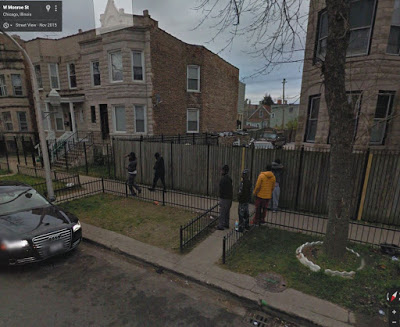
What is particularly valuable about Moskos’ perspective is that he knows the beats that cops work. That doesn’t excuse bad policing. It does mean he knows more about the context of police work than the ACLU or Black Lives Matter. Consider, for instance, his defense of enforcing the law against Chicago youth in a rough part of town:

But the ACLU is wrong. Dead wrong. Look, if you want to argue that these young men shouldn’t be stopped at all, fine. You agree with the ACLU (and don’t live on that block or hear the gunshots). And the ACLU is right in criticizing police who stop people for the sake of making a stop.

As a cop you don’t (or shouldn’t) harass everybody walking down the block. You harass these guys on this block. And by “harass” I mean, within the law and constitution, make it little less fun for them to hang out in public and sell drugs. Yes, you as a cop give these guys a hard time. Is that fair? Yes. Because there have been six shootings on this block this year. Is it racist? No. Because these guys are the problem.

If you’re a cop, you need to ask a bunch of questions 1) how do you do knowing these guy are slinging and shooting? 2) Should you stop these guys? 3) Are they committing a crime? 4) Are they a Broken Window? 5) What legal basis do you have to stop and frisk those guys?

[The answers are 1) get out of your damn car and talk to them, or at watch them disperse at your presence, 2) yes, 3) no, and 4) yes. 5) very little at first, but you can build it, ask for a consent search, or conduct a Terry Frisk.]

You pull up to them. See what they do. You can crack down on this group by enforcing Broken Windows quality-of-life crimes. You get to know who they are. You can use your discretion and ticket them for something — drinking, smoking joints, jaywalking, littering, truancy, spitting — whatever it takes. You can arrest them when they can’t provide ID (they can’t, trust me). You can harass these criminals legally and within the bounds of the constitution. This is what police are supposed to do. It’s how homicides are prevented. It’s how some kids stay out of gangs. But if cops do their job, then we, society, need to support police officers against inevitable accusations of harassment, racism, and even discourteous behavior in their confrontations with these criminals.

As a cop you will not win the war drugs, but as long as drugs are illegal you need to fight the fight against pubic drug dealing. But we’re telling cops not to do this. In Chicago cops are listening. And so are the criminals.

So maybe America isn’t so great (for reasons other than Michelle Higgins gives).

America IS Great Again

Don’t worry about the news cycle or the outrage porn associated with it. David Harsanyi looks beyond the headlines:

Homicide rates, for example, have been falling to the point where in 2014 — the last year of FBI data offered — it was at 4.5 per 100,000 people, which is the lowest rate recorded since 1963, when it was at 4.6 per 100,000 people. We know there was a slight uptick in violent crime in 2015, probably making it the second lowest year for homicides in the past 50. . . .

Put it this way: In 1990, in New York City there were 2,245 homicides. In 2015, there were 355. In 1992, Los Angeles County had a record high of 2,589 homicides. There were 655 over the last 12 months. In 1992, Chicago saw 943 murders, or a rate of 34 murders per 100,000 citizens. Although it still owns a far higher murder rate than most major cities, in 2014 there were 432 murders and in 2015 488. Last year, Dallas saw a spike in murders, yet the 10.7 homicides per 100,000 residents was the city’s fourth-lowest total since police started keeping track in 1930. In Denver 95 people were murdered in 1992, 34 in 2014, and 50 (a nine-year high) in 2015.

As Harsanyi says, it’s not 1968. That year was scary. This year seems like the last two years. The Ferguson Effect seems to be trumping the Francis Effect.

I Would Like to Know What It’s Like to Write for the New York Times

We hear a lot these days about how poorly certain Americans understand their neighbors, especially when it comes to racial differences.

But if I can’t understand the experience of a person of color, am I any better equipped to understand a great grandchild of Irish immigrants who worked as domestic help in Boston?

And why not reverse the direction? Can people of color understand mmmmeeeEEEEE? Do they know what it felt like to put on a wool uniform with the junior high marching band to perform in the July 4th parade, to receive a B+ on a paper for Reformation history at Temple, to be rejected for a Luce post-doctoral fellowship, to experience the retirement of Mike Schmidt? Some might say that these experiences are insignificant compared to those of other people? That is a fair point. But it also raises a question about whether we only care about the experiences of others when they die. Which is another fair point. Death does put a point on experience. But how often do memorial services capture the entire experience of a deceased’s life. We remember the person as a great guy or gal and stay quiet about the blemishes.

When it comes to black men who get pulled over by police and die, should Michael Eric Dyson, a professor at Georgetown and op-ed writer for the Times, be able to say that his experience is akin to that of Alton Sterling or Philando Castile? I have a hard time understanding how a man with Dyson’s experience can think that his is similar to men who live in very different circumstances. According to Dyson:

At birth, you are given a pair of binoculars that see black life from a distance, never with the texture of intimacy. Those binoculars are privilege; they are status, regardless of your class. In fact the greatest privilege that exists is for white folk to get stopped by a cop and not end up dead when the encounter is over.

Perhaps Mr. Dyson did not receive his privilege (elite university professor and writer for the nation’s premier newspaper) at birth, but that status surely puts him at several removes from Castile and Sterling and many other African-American men who live in our nation’s cities. It is also several removes from white Americans, even those with advanced degrees and who teach for a living.

The problem with framing race relations along the lines of what each of us experience, and that some can never know the experience of another, is that it leaves no hope or way out. Mr. Dyson will never know my experience and I will never know his.

But if you want to talk about law enforcement policies that lead to the mass incarceration of blacks, municipal governments’ failure to recruit and train people who will be good cops, or the lack of independent oversight of law enforcement officials (like even Jim Comey), that’s a conversation we can have. But one that always informs me how I cannot know what you’ve experienced is going to be a conversation stopper.

Does the Tie that Binds Extend to Old Life?

I wondered after reading this:

Jevon is a Pastoral Resident and Church Planting Intern at Independent Presbyterian Church in Memphis, Tennessee. What that means is that Jevon is a Bible-believing Christian who has devoted his life to serving Jesus Christ vocationally within the same denomination that we’re a part of. Jevon and I have a whole lot in common. Though we’ve never met personally, I can say with a great deal of confidence that our fellowship would be sweet.

But there is one observable difference: Jevon is black, and I am white. Because of the color of his skin, Jevon faces fears that I don’t face. That fact alone is profoundly disturbing to me, and it should be disturbing to all Christians. For at the foundation of Christianity is the belief that ALL men and women (no qualifications) are made in the image of God and deserve the dignity and treatment consistent with that reality.

I too like to think (all about mmmmeeeeEEEE) that I am a Bible-believing Christian who serves Christ and who has fellowship with Pastor Shurden through ecumenical ties between the OPC and PCA. And yet I wonder if the sweet, sweet fellowship that he assumes he has with Jevon Washington also includes confessional, spirituality-of-the-church Presbyterians like moi.

Or in this post-Ferguson era does Pastor Shurden feel more affinity with Michelle Higgins than with Chortles Weekly? If the basis for fellowship among Presbyterians is biblical teaching summarized in the Confession of Faith, then creed matters more than blood. After all, it takes more than being human to belong to a Presbyterian communion (though being human is pretty good).

Another Problem with W-w

At a time when Europeans and their former colonial outposts are reflecting on the nation state, political union, and the shelf-life of post-World War II peace-keeping institutions, the celebration of U.S. independence was another chance to ponder the merits of political autonomy and state sovereignty. But notice the way that some Christians decided to frame the matter:

Those of us who identify as Christians should never fear admitting the truth, even when it means letting go of the myth of a “Christian America.” And those of us who identify as both Christian and social conservative should not fear that admitting this particular truth means abandoning what we believe the “We hold these truths” line to mean. Unlike with the Constitution, the “original intent” of the authors shouldn’t necessarily be our guide. If it really is a truth—and a “self-evident” one—it is only because it was revealed to us by Jesus Christ.

In an age when even many Christians are hostile to religiously informed public philosophy, it’s understandable that social conservatives would turn to the past for examples and look to the founding documents for affirmation. But such an effort is likely to be as unproductive as it is unpersuasive.

If Christians wish to build a polis informed by Christian convictions, if we want the truths we hold to be seen once again as “literally true,” we must look to the future, thick with possibility, rather than to the thin material left over from the religious sentiments of our Founding Fathers.

Really? The best Christians can do is ask once again what kind of believers the founders were or whether the Declaration’s self-evident truths are compatible with special revelation?

Compare this to Noah Millman’s thought experiment. Imagine if the Declaration left out self-evident truths:

When in the Course of human events it becomes necessary for one people to dissolve the political bands which have connected them with another, and to assume among the powers of the earth, the separate and equal station to which the Laws of Nature and of Nature’s God entitle them, a decent respect to the opinions of mankind requires that they should declare the causes which impel them to the separation. . . .

Prudence, indeed, will dictate that Governments long established should not be changed for light and transient causes; and accordingly all experience hath shewn, that mankind are more disposed to suffer, while evils are sufferable, than to right themselves by abolishing the forms to which they are accustomed. But when a long train of abuses and usurpations, pursuing invariably the same Object evinces a design to reduce them under absolute Despotism, it is their right, it is their duty, to throw off such Government, and to provide new Guards for their future security.–Such has been the patient sufferance of these Colonies; and such is now the necessity which constrains them to alter their former Systems of Government. The history of the present King of Great Britain is a history of repeated injuries and usurpations, all having in direct object the establishment of an absolute Tyranny over these States. To prove this, let Facts be submitted to a candid world.

Which leads Millman to make this point:

One people is oppressed by another, suffering a long chain of abuses. Eventually, the abuses can no longer be tolerated. They constitute a tyranny, and they oblige the oppressed people to throw off the tyrant’s yoke.

That’s not a new story – nor is it a story that requires a new political theory to justify rebellion. The Dutch Revolt required no such theory. Neither did Tyrone’s Rebellion. Why, then, did America’s founders find it necessary to introduce such a theory into the document justifying our own rebellion against the crown?

It’s hard to believe that this philosophical language was introduced to win the support of the France’s absolute monarchy. The philosophes might have applauded, but Louis XVI would surely have preferred to back a rebellion that cast no particular doubt on the legitimacy of hereditary monarchy to one that did. It is even harder to believe that the language was intended to justify a revolution in the domestic arrangements of the colonies. The Declaration was a document intended to be something that the colonies – from slaveholding South Carolina to loyally-inclined Pennsylvania – could assent to unanimously. An alarmingly revolutionary doctrine would surely be the last thing the Congress would have wished to include.

Was it revolutionary, though, to American ears? Quite likely not. In fact, the most stirring portion of the Declaration, the words that have had profound implications for American and world history, may have been so much boilerplate. Americans from Virginia to Vermont, with long experience with self-government, casually assumed Lockean premises about where government legitimately derived and what was its legitimate purpose. Including these words in the document justifying American independence may not have established an American creed so much as they reiterated the largely unexamined premises that many Americans already assumed.

Whether you agree with Millman or not (and the whole piece is a plausible case for American exceptionalism), you have to admit that his take is much more interesting than Joe Carter’s. The latter feels compelled to squeeze a political statement into a theological mold. Millman simply imagines the political stakes. No religious references. And in so doing, the Declaration takes on even more significance than when Christians try to find America’s eternal meaning (or not).

If U.S. Christians thought about politics politically rather than religiously, they might not look so odd to their neighbors.

Every Square Inch of MmmmeeeeEEEEEEE

The politics of identity continue to haunt. Are you gay? Straight? Muslim? Man? Man trapped in a female body? Evangelical? Reformed Protestant? How’s a nation supposed to handle so many personal identities yearning to breathe free?

Ra’fat Aldajani offers this advice for Muslims:

The first objective is embracing being American. Too often we confuse being American with an erosion or rejection of our native culture and mores. It is quite the contrary. America is the land of immigrants, a melting pot of many diverse cultures and peoples, all contributing to what makes this country unique and strong.

Assimilation means developing a hybrid of what is good from our mother countries (family values, importance of education, respect for elders) and our adopted home (democracy, justice, rule of law) and engaging in every aspect of American life as Muslim Americans, rather than retreating defensively into our own culturally fenced-off communities.

Of course, the problem with assimilation is that it leads to liberal Protestantism where the nation’s social crises matter more than biblical teaching (also think PCA). If the nation tips toward equal rights for women, who are we mainline Presbyterians to deny the office of elder to women?

So the question for reconciling personal and national identity is where you put the qualifier.

If you are an American Christian, then national identity trumps religious loyalty.

If you are a Christian American, then your religious identity trumps patriotism.

And if you are simply present as Christian (or LBGT), and leave out any reference to the government whose laws you follow at least when you check out at the grocery store or drive a car, then you are a different order of person.

The difficulty we now face is that personal identity absorbs nationality. The nation must be or reflect my identity — it must be Christian, gay, or black. What we need in the era of transgenderism is to recognize that we (citizens of the U.S.) are all personal identities trapped in an American body.

How Far Will Racial Reconciliation Go?

Michelle Higgins and her father want it to go far:

Perhaps we evangelicals are silent – some refusal to acknowledge the whole identities of LGBTQ+ people – because we are bigoted terrorists too.
Our propaganda: circulating a petition to boycott Target. Our victims: image-bearers whose souls conditions are neither revealed to or controlled by us. We live as if faith gives us the right to direct people’s bodies. This is not faith-filled living. It is oppression.
And much like the realization breaking upon us in the current political climate: this is not evangelicalism. At all.

Evangelicals are a diverse group, thankfully some of our circles include the LGBTQ+ family. Many of us are showing up in solidarity with queer communities around the world, grateful for the invitation to grieve together. But many others in our evangelical family walk a dangerous path of passing judgment before showing compassion. If we readily proclaim that LGBTQ+ people are sacred image-bearers, we must also confess and dismantle our participation in the long history of hatred that has them scared. It is easy to express sympathy for our fellow humans. But we are called to a greater task: to confess that the lives of our gay, lesbian, queer, and trans friends are sacred. We must be willing to say that the lives of queer people of color matter to God.

What if Muslims are people of color?

If You Want to Engage the Culture, Don’t Publish with Crossway

Isn’t this the flip side of Tim Challies’ advice about reading the “right” books?

If you are an academic and you publish with a famous university press, that is wonderful for your career. If you go with a vanity press, that can sink your career. That division of presses also matters in defining whether a particular issue is part of mainstream debate, or way off on the disreputable fringe.

The problem in all this, though, is that some presses are very strong and reputable within particular fields, but that fact need not be known to university authorities. I can imagine a junior professor trying to argue to a department head or dean that a title with such a firm should be counted as equal in prestige to a leading university press, and struggling to make the case. Please understand, that would not be a fair situation, but I could see it happening.

Let me take a specific example. I am currently using a book that came out from Inter-Varsity Press some fifteen years ago. It is a really excellent piece of work, scholarly and well written, and IVP is a very strong and well known publisher from the evangelical point of view. Hence my surprise, recently, when I tried unsuccessfully to find a copy in the very large and wide-ranging library at Penn State University. They had other works by this author, but not that particular title. Like many major university libraries, Penn State has standing orders with certain mainstream publishers, and acquires pretty much everything they put out. That principle does not extend to well known evangelical presses like IVP, Eerdmans, Baker, Thomas Nelson, and so on. The more library budgets shrink, the harder they cut back on any presses they don’t see as absolutely core and necessary.

In itself, that decision is not disastrous for me, because if I want a copy of the book in question I can get it through inter-library loan. But the underlying attitude demands attention. These libraries are assuming that the presses in question are not fully respectable houses for academic work, they are partisan or denominational, and therefore they do not demand the same credibility as even minor university presses.

Maybe that explains why TKNY doesn’t publish with the company that subsidized the gospel allies.

UPDATE: a multi-author 16-page tract is not a book, and I’m guessing Ross Douthat hasn’t read it.