Why Not Address President Obama?

I’m with Chris Bodenner that Brandon Victor Dixon’s remarks to Vice President-elect Mike Pence after a performance of Hamilton was not all that disrespectful or edgy. Here’s part of the speech:

We have a message for you, sir. We hope that you will hear us out. And I encourage everybody to pull out your phones and tweet and post because this message needs to be spread far and wide, OK?

Vice President-elect Pence, we welcome you and we truly thank you for joining us here at Hamilton: An American Musical, we really do. We, sir, we are the diverse America who are alarmed and anxious that your new administration will not protect us — our planet, our children, our parents — or defend us and uphold our inalienable rights, sir. But we truly hope that this show has inspired you to uphold our American values and to work on behalf of all of us. All of us.

What does President Obama not need to hear in this advice? Should he have been governing in a way to keep BLM protests from happening, opponents of gay marriage from feeling marginalized, and Americans with pre-Affordable Care Act health insurance from having to lose benefits in their existing their plans? Of course, a president has to make choices and not all of the electorate will be happy. But why do the elites in the U.S. — Democrats in D.C., Hollywood, university faculty, and mainstream journalists — think that partisanship in politics only happens when Republicans get elected?

And I wonder what Dixon makes of President Obama acting in a statesmanlike manner in meeting and greeting President-elect Trump? Was the President properly empathizing with those Americans who not only refused to vote for Trump but view his supporters as deplorable?

With Friends Like These

Matt Tuininga qualifies and then insinuates:

we cannot simply take Calvin’s thought and apply it to our own time without substantial reflection. Calvin assumed the existence of Christendom. We inhabit a pluralistic society increasingly devoted to secular liberalism. There are self-proclaimed two kingdoms advocates today who would claim the two kingdoms distinction calls us to keep religion and politics entirely separate, as if they are hermetically sealed realms that have nothing to do with each other. Yet such is clearly a distortion of Calvin’s thought, which is decisively rooted in the New Testament’s rich distinction between the present age and the age to come.

Does he have Machen in mind?

In the second place, you cannot expect from a true Christian church any official pronouncements upon the political or social questions of the day, and you cannot expect cooperation with the state in anything involving the use of force. Important are the functions of the police, and members of the church, either individually or in such special associations as they may choose to form, should aid the police in every lawful way in the exercise of those functions. But the function of the church in its corporate capacity is of an entirely different kind. Its weapons against evil are spiritual, not carnal; and by becoming a political lobby, through the advocacy of political measures whether good or bad, the church is turning aside from its proper mission. . . .

To advance the conversation, why not comment on whether the deaconate should do medicine as Calvin recommended:

The fourth order of ecclesiastical government, namely, the deacons

There have always been two kinds of these in the early Church. One has to receive, distribute and care for the goods of the poor (i.e. daily alms as well as possessions, rents and pensions); the other has to tend and look after the sick and administer the allowances to the poor as is customary. [In order to avoid confusion], since we have officials and hospital staff, [one of the four officials of the said hospital should be responsible for the whole of its property and revenues and he should have an adequate salary in order to do his work properly.]

Concerning the hospital

Care should be taken to see that the general hospital is properly maintained. This applies to the sick, to old people no longer able to work, to widows, orphans, children and other poor people. These are to be kept apart and separate from others and to form their own community.

Care for the poor who are scattered throughout the city shall be the responsibility of the officials. In addition to the hospital for those visiting the city, which is to be kept up, separate arrangements are to be made for those who need special treatment. To this end a room must be set apart to act as a reception room for those that are sent there by the officials..

Further, both for the poor people in the hospital and for those in the city who have no means, there must be a good physician and surgeon provided at the city’s expense…

As for the plague hospital, it must be kept entirely separate.

Instead of looking at the theory (theology), why not look at the circumstances and sciences that have differentiated a host of life’s affairs so that the church and religion is one among many spheres of life? But Lordship of Christ folks think, like Gregory VII during the Investiture Controversy, that the direct pipeline of Christianity to God trumps most spheres so that Christians have authority in medicine, biology, history, and dog-catching by virtue of — what? — faith.

2kers want answers. Simply repeating inspiring calls to engage the world doesn’t give them.

Localism is Great (beats pretty good) as Long as Charles Taylor is Your Neighbor

Joshua Rothman has a thoughtful piece on Charles Taylor and ends on a surprisingly hopeful note considering the recent election and how fly-over country voted:

[Taylor] is in favor of localism and “subsidiarity”—the principle, cited by Alexis de Tocqueville and originating in Catholicism, that problems should be solved by people who are nearby. Perhaps, instead of questing for political meaning on Facebook and YouTube, we could begin finding it in projects located near to us. By that means, we could get a grip on our political selves, and be less inclined toward nihilism on the national scale. (It would help if there were less gerrymandering and money in politics, too.)

One imagines what this sort of rooted, meaningful democracy might look like. A political life centered on local schools, town governments, voluntary associations, and churches; a house in the woods with the television turned off. Inside, family members aren’t glued to their phones. They talk, over dinner, about politics, history, and faith, about national movements and local ones; they feel, all the time, that they’re doing something. It’s a pastoral vision, miles away from the media-driven election we’ve just concluded. But it’s not a fantasy.

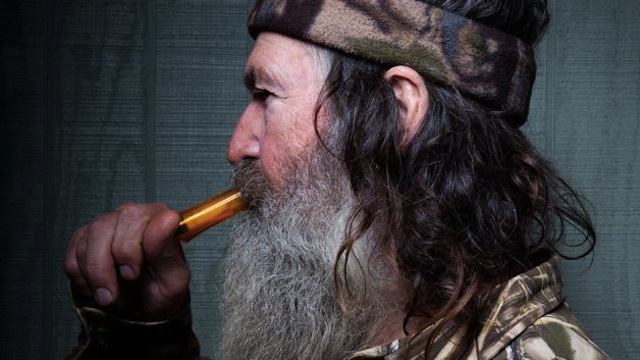
But what about Phil Robertson’s community? Not even the Gospel Allies are willing to countenance those parts of America:

That “cultural curtain” prevents Robertson from seeing the reality of the Jim Crow era, allowing him to look back in wistful fondness. Yet I think there is also a personal element that keeps the former “white trash” farmhand from seeing the segregation of his youth as it truly was.

Robertson makes it clear that he didn’t come to Christ until the late 1970s. During the 1960s he was abusing drugs and alcohol, cheating on his wife, and hiding out in the woods to prevent being arrested by the authorities. His former fellow farmworkers might look on the 1960s as an era when African Americans were gaining access to long-overdue civil rights. But for Robertson, that decade was a time of self-destruction and familial strife. Since then Robertson has turned his life over to God and become, to use his catchphrase, “Happy, happy, happy.” In his mind, godliness is equated with happiness.

That is why I believe that when Robertson looks back on his youth, what he sees is not African Americans suffering under the evil of segregation, but men and women who were godly, and thus obviously had what he has now: a happiness that transcends mortal woes. He seems to think that because they were godly, the exterior signs of happiness (singing, smiling, etc.) can be construed as a sign of their having inner peace, if not peace with the world. It’s a noble, if naïve, idealization of his neighbors.

Does that noble intent excuse his insensitive remarks about the segregated South? Not at all. Robertson is a public figure and when he gives interviews in the media, he must take responsibility for how his words are perceived. While I believe he was attempting to pay tribute to the African-American Christians who preceded him in the faith, he has inadvertently offended many of his African American brothers and sisters.

And so it looks like the Gospel Industrial Complex is a much on the side of President Obama and Hillary Clinton’s one-world order as they are part of an organizational enterprise that disdains denominational attachments (is Tim Keller Presbyterian?). Can anyone imagine an evangelical academic or preaching/teaching celebrity writing what Damon Linker did about universalistic cosmopolitanism and humanitarian liberalism?

any outlook that resists or rejects humanitarianism is an atavistic throwback to less morally pristine times, with the present always superior to the past and the imagined even-more-purely humanitarian future always better still.

Concerned about immigrants disregarding the nation’s borders, defying its laws, and changing its ethnic and linguistic character? Racist!

Worried that the historically Christian and (more recently) secular character of European civilization will be altered for the worse, not to mention that its citizens will be forced to endure increasing numbers of theologically motivated acts of terrorism, if millions of refugees from Muslim regions of the world are permitted to settle in the European Union? Islamophobe!

Fed up with the way EU bureaucracies disregard and override British sovereignty on a range of issues, including migration within the Eurozone? Xenophobe!

As far as humanitarian liberals are concerned, all immigrants should be welcomed (and perhaps given access to government benefits), whether or not they entered the country illegally, no matter what language they speak or ethnicity they belong to, and without regard for their religious or political commitments. All that matters — or should matter — is that they are human. To raise any other consideration is pure bigotry and simply unacceptable.

Earlier forms of liberalism were politically wiser than this — though the wisdom came less from a clearly delineated argument than from observation of human behavior and reading of human history. “Love of one’s own” had been recognized as a potent and permanent motive force in politics all the way back to the beginning of Western civilization, when Homer and Sophocles depicted it and Plato analyzed it. It simply never occurred to liberals prior to the mid-20th century that human beings might one day overcome particularistic forms of solidarity and attachment. They took it entirely for granted that individual rights and civic duties needed to be instantiated in particulars — by this people, in this place, with this distinctive history and these specific norms, habits, and traditions.

But now liberals have undergone a complete reversal, treating something once considered a given as something that must be extricated root and branch.

If people gave up their particular attachments easily, conceding their moral illegitimacy, that might be a sign that the humanitarian ideal is justified — that human history is indeed oriented toward a universalistic goal beyond nations and other forms of local solidarity. But experience tells us something else entirely. The more that forms of political, moral, economic, and legal universalism spread around the globe, the more they inspire a reaction in the name of the opposite ideals. The Western world is living through just such a reaction right now.

That means, of course, that Phil Robertson’s family, neighborhood, and church might harbor expressions that other people find objectionable. But since when did we think that people will always be easy to like and say things that make us feel happy? I guess the answer is — as long as we have been rearing children who go to college and expect to find nothing more challenging to their well being than cookies and milk (aside from the frat parties). Still, I wonder if those kids were accepted at every elite university to which they applied. If they received a rejection letter, did they burn the U.S. flag?

But We Don’t Want to Live in Lena Dunham’s World

We only want to watch it (sometimes).

That’s one thought that came to me when reading this (thanks to another of our southern correspondents):

During the eight years of the Obama administration, white evangelical Christians, who make up one-quarter of the U.S. population, felt that culture moving away from them. They watched gay marriage become the law of the land and Christians come under fire for saying they didn’t want to provide pizzas or cakes or photographs for those weddings. They heard college students demand “safe spaces” and “trigger warnings”; they heard “Black Lives Matter” and didn’t understand when they were demonized for responding “All Lives Matter.” Their president disparaged people like them who “cling to guns or religion,” and then said that religious employers should subsidize their workers’ birth control and anyone should use any bathroom they like.

But if evangelical Christians are like me, they watch a lot of television and should know that the rest of America doesn’t live as evangelical Christians do.

Even so, television is one thing, society is another.

And let’s think about what drove that whitelash. This kind of thing often happens when groups and identities feel under threat. We know this from history. And it mirrors developments in Europe, especially in the face of globalization and an influx of culturally-distinct immigrants.

Evangelicals and other Americans may have sensed that television shows were becoming the reality. When the President approves of rainbow lights on the White House after SCOTUS legalizes gay marriage, and then he sends letters that micromanage states’ bathroom policies, you begin to worry that you have entered Girls — get this — without your consent.

PCA Trumped

Or, how politics matters more than communion:

But a few predicted that this election could permanently damage attempts to create unity among evangelicals. “I spend most of my time in ministry talking and teaching about racial reconciliation,” said Jemar Tisby, the president of the Reformed African American Network, a “theologically traditional” coalition of black Christians and churches, as he described it. “The vast majority of white evangelicals with whom I interact are on board and want to see a more racially diversified and unified church. However, when that same constituency overwhelmingly supports Donald Trump, I feel like they haven’t understood any of my concerns as a racial minority and an African American.”

All the racial reconciliation that last year’s General Assembly allegedly accomplished was thin compared to a PCA minister or member’s status in the world of evangelicalism. Does the PCA now need to repent for its members who voted for Trump? Or can its pastors, theologians, and elders help members understand that belonging to the visible church — the kingdom of Jesus Christ, mind you — is so much more significant than what federal politicians do (or votes for them)?

Now more than ever, the PCA needs a healthy dose of the spirituality of the church. It needs to understand that the politics of this world are trifling compared to the realities of the world to come, and that the freedom a Christian enjoys in Christ has nothing to do with politics (just ask the peasants who used Luther’s gospel to advocate an egalitarian social order). But that doctrine is now in the rear view mirror.

It’s Only Politics

Matt Tuininga echoes the idea that politics is evidence of sanctification (integration of faith and life and all of that):

Will Republican evangelicals who see their sisters and brothers – their political opponents – wounded and beaten on the other side of the road and cross over to take up their need as their own, in the spirit of the good Samaritan? Will they stand with them in solidarity, pleading their cause as if it were their own? Will Democratic evangelicals who feel beaten and betrayed accept such an effort at reconciliation and love in a spirit of gospel hope? Will they stand in solidarity with their evangelical opponents, pleading their cause as if it were their own? Do we have the humility to recognize that our own political judgments might not reflect the whole picture, that they might even be wrong?

Bill Smith in his curmudeonly way says, no thanks:

Blacks and other minorities have experienced abuse. Blacks in particular can identify with Israel, an enslaved and abused minority in Egypt. Unfortunately white evangelical Christians have themselves been the abusers of African Americans or failed to speak up against their abuse. White evangelicals have aligned themselves with the Republican Party which has not been sympathetic with the concerns of minorities but rather has become a home of racists and nationalists. Lately, however, there has been progress as black and white Christians have worked toward racial reconciliation. But this election has exposed the reality that white evangelicals have not come so far as black evangelicals hoped. The black minority feel they have been betrayed by white evangelicals who voted for Trump.

. . . The perspective of these brothers is the same as that of Falwell, Kennedy, Criswell, and the Moral Majority. They were on God’s side, and God was on their side. Their champion was Ronald Reagan. The election of Reagan moved forward the cause of Christ and his kingdom.

These brothers believe that God is on their side and they on God’s. Their cause(s) is the cause of the kingdom of God. To them Trump was not just someone they disagreed with but the enemy of the kingdom of God. The 80% of white evangelicals who voted for Trump voted against the interests of the kingdom of God, betrayed their black brothers and sisters (who ask, “How could you?”), and proved themselves unreliable allies in the righteous causes highest on the list of black priorities.

All this was hogwash in the days of Falwell, and it’s all hogwash today. This is not about Christian theology or practice. It’s politics. That’s all it is. Just politics. The joy that the Moral Majority felt when Reagan triumphed was not righteous joy but political joy. The grief felt by these black brothers is not righteous grief but political grief. The reason most white evangelicals voted for Trump is that most white evangelicals are conservatives and Republicans. The reason these black evangelical brothers feel betrayed is because they are liberals and Democrats.

If only we could treat politics like plumbing. But no. Politics has to be a high and holy calling. What we are seeing is the result of all that every-square inch argument. And it’s not helpful for the nation or — get this — for the church. But it does allow evangelical academics to feel pious.

Total Lordship of Christ = Christ Tells Us Everything

Thanks to another of our southern correspondent comes Doug Wilson’s latest sovereignty-of-God brag. He faults Russell Moore for only wanting a Christian public square about race but not about sex:

The theological problem has to do with how we define righteousness for the public square. Russell Moore doesn’t want to build a Christian nation except on racial issues, which is like wanting a nation to be Christian every day between 9:45 am and 11:12 am. If Jesus is Lord of all, we must listen to Him on racial issues in the public square. If He isn’t, then we don’t have to. What we don’t get to do is pick and choose. Under the new covenant there is no unique chosen nation, of course. In the new covenant, every nation must be discipled, and there is no exceptionalism there. But whether you want righteousness in tiny slivers, or righteousness across the board, you still have to define it.

Sorry, Pastor Wilson, but you are picking and choosing all the time. Welcome to the novos ordo seclorum; find your inner 2k self. What is Christ’s will about the military? Read the Old Testament for “holy” war and invade Mexico? What does Christ reveal about idolatry and blasphemy? Send Jews and Muslims packing (the way King Ferdinand and Queen Isabella did)?

Theonomists are all bluff. They don’t virtue-signal. They obedience-signal. Worse, they know they’ll never have to live with their braggadocio.

How to Achieve Racial Solidarity — Apply Ben Franklin’s Racism

When Thabiti Anyabwile complains about white evangelicals voting for Donald Trump, he should remember that Ben Franklin defined racial solidarity differently than the Washington DC pastor does. According to Franklin:

The Number of purely white People in the World is proportionably very small. All Africa is black or tawny. Asia chiefly tawny. America (exclusive of the new Comers) wholly so. And in Europe, the Spaniards, Italians, French, Russians and Swedes, are generally of what we call a swarthy Complexion; as are the Germans also, the Saxons only excepted, who with the English, make the principal Body of White People on the Face of the Earth. I could wish their Numbers were increased.

By that reckoning, many people of color voted for Donald Trump on Tuesday. It might undermine Anyabwile’s point (already attempted). But it would be a way of achieving the “white” identification with African-Americans for which the pastor strives.

Make America Sane

I won’t reveal how I voted. Nor can I claim to be happy about yesterday’s outcome (I married a woman who took it hard). But a piece of me thinks that a Donald Trump presidency may make it harder for certain sorts of outlooks or activities to be taken seriously.

The first is the grief counseling offered to students at U Mass Lowell:

Dear Students,

We at the Multicultural Affairs Office hope this email reaches you and you are doing ok. We know many of you stayed up waiting to hear of the election results. These are unprecedented times. The nation as well as our community is reacting in many different ways. We are reaching out to each of you because we know that this was an intense election and we are already hearing a number of reactions, feelings and emotions. This is a critical time to make sure that you, your friends, classmates, neighbors are doing ok and seeking the appropriate support especially if they need a place to process or work through what they’re feeling.

You may hear or notice reactions both immediate and in the coming weeks, some anticipated and many that may be difficult to articulate or be shared. While it may take some time to fully take in all the recent events, please also know that the OMA office is here for you. Our UMass Lowell community is here for you. Do not hesitate at all to come in or ask for support.

Today there is a Post-election self-care session from 12-4pm in Moloney. The event will include cookies, mandalas, stress reduction techniques and mindfulness activities. Counseling and Health Services will also be available. We have sent out messages through our Social Media sites as well as encouraging students to drop in all week. Above all, take good care and know that there is strength in our community that you can lean on.

Kind regards,
Office of Multicultural Affairs Staff

Do these people cower when reading accounts of the American founding for all of the self-actualized agency that colonists displayed in seeking self-determination and limited government? (Read: are they American?)

The second is Damon Linker’s description of the cosmopolitan w-w that has dominated the Obama years (thanks to Rod Dreher):

Underlying liberal denigration of the new nationalism — the tendency of progressives to describe it as nothing but ‘racism, Islamophobia, and xenophobia’ — is the desire to delegitimise any particularistic attachment or form of solidarity, be it national, linguistic, religious, territorial, or ethnic… cosmopolitan liberals presume that all particularistic forms of solidarity must be superseded by a love of humanity in general, and indeed that these particularistic attachments will be superseded by humanitarianism before long, as part of the inevitable unfolding of human progress.

For those of us 2k Protestants who have managed to hyphenate ourselves, and found ways to recognize our multiple loyalties, the notion that all attachments to what Edmund Burke called little platoons block national progress is — well — unwelcoming. It’s also dumb. Were the Students for a Democratic Society wrong to exclude Young Americans for Freedom?

I don’t think President Trump will issue executive orders for colleges students to human-up or for Orthodox Presbyterians to sponsor OPC Pride Parades. But I do sense that he will not lend the support of the White House to the touchier and more ethereal sides of American character.

Day After Perspective

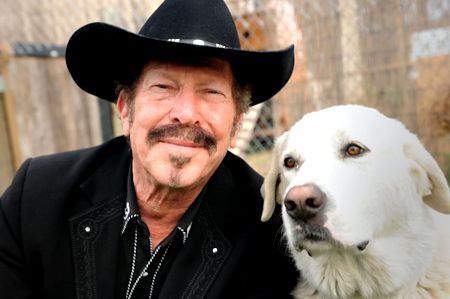
One of our many southern correspondents sent Kinky Friedman’s remarks about the election. Since the Bible tells us that all is vanity, Friedman is sounding 2k (there’s a syllogism in there somewhere):

Trump is not my hero. I prefer Mr. Anonymous. I like the guy who gives a million bucks to the children’s hospital and doesn’t insist that his name has to be up there. But that’s who Trump is, that’s who he’s been. It should be pointed out that we’re not in a position to know where greatness comes from. Not only did Jesus ride in on a jackass, but Gandhi was a yuppie lawyer living in London, with no interest in helping people.

If you look at the great ones, Mother Teresa, Winston Churchill, FDR, they were all aristocratic freaks with very little interest in others. They’re very much like Trump. I mean, particularly Churchill. He was a polo player in India and an adult butterfly collector. They liked to hang out at the country club, Rachel. They were very privileged people.

When they got into office, Churchill and FDR, they did something that Obama was never able to do: change. The agent of change, Obama, could not change himself. He remained a fixed point in a changing world. It’s just too bad; it’s who he is. He’s not the smartest guy in the room. He may be the glibbest. He may be the most facile. I believe, if he’s concerned about a legacy, I believe he can pretty well forget that.

All I’m saying is, we don’t know who the hero is until the ship sinks. Or when the plane is crashing. You don’t know who’s going to run back and save somebody, or who’s going to dress up like a woman so he can hide in a lifeboat.

I’m not moving to Canada yet, but if Michigan wants to secede and join the great North Country, I won’t fight.