Sasse 2020

I am calling the bluff of those who throw around the label “R2K.”

Listen to the interview Scott Clark did with Senator Ben Sasse and tell me where he is wrong. Sasse has a smart understanding of the U.S. political system, the nature of civil society, and his own calling as a Christian and many other duties. Imagine that, he can speak American and Reformed.

And if Sasse doesn’t measure up because of 2k views, are the critics of 2k going to support the dominionist Ted Cruz, the Opus Dei Rick Santorum, or the liberal moderate Southern Baptist Mike Huckabee? (Are they so particular about their pastor?)

I don’t know what the Senator’s plans are or whether he can clear all the hurdles of a primary campaign. But if you want a Reformed Protestant who sounds more like Yuval Levin than Mark Levin, Sasse is your guy.

Why Christians Should Read Mencken

If only the Jerry Falwell’s had considered this:

Preachers, of course, have a right to their political views, but it does not follow that they have a right to become politicians. When they dedicate their lives to religion they give over many of the common rights of ordinary men, the while they take on rare and valuable privileges one of those forfeited rights, I believe, is that of playing politics. Politics is a dirty business. It is inevitably and eternally contaminating. No man can touch it and not carry away his smear. As a profession it ranks with saloon-keeping and bookmaking. As a diversion it ranks with poker and cornet playing.

Preachers had better keep out of it. Let them vote as they please. Let them even, as private citizens, solicit the votes of their friends. But let them beware of going into active politics, as preachers. The public does not want to hear their political views in that capacity. Their training does not give them any appreciable fitness for judging politicians. Their opinions about the tariff, public expenditures and the trusts are no weightier than the opinions of other men. All the more danger, then, when they seek to give those opinions the false force of their ecclesiastical authority. All the more peril when they try to capitalize their good repute.

Lordship of Christ Over Every Spiritual Inch

Joseph Moore has a new book out on the Covenanters that argues in part that these radical Scottish Presbyterians make the proponents of Christian America look like posers. Covenanters, for instance, refused to take oaths that included an acceptance of the Constitution because the United States’ legal provisions failed to acknowledge the Lordship of Christ:

Many hard-liners, imitating their Anti-Burgher ancestors, refused to swear an oath implying support of an ungodly government. . . . Founding the nation on the authority of “We the People” represented, the RP’s maintained, a flaw in Revolutionary logic: it removed Christ from his rightful place about the state. The US Constitution was a “manifest dethroning of the Lord and his Anointed from the government. As mediator between God and all humankind, Jesus gave legitimacy to civil governments. Governments, in turn, acted to bring people to knowledge of God’s Goodness and law. Law, then, should be based on God’s word even when that law seemed to harsh for liberal American sentiments. (Founding Sins, 62-63)

For a 2k Protestant, US government poses no such difficulty. Christ is king as both mediator and creator. His creational rule over secular government doesn’t now require the ruler to acknowledge Christ’s rule as mediator. But for comprehensive Christians, making the distinction between redemption and providence is a high wire act forbidden to anyone who wants a safe earthly existence.

For that reason, the comprehensive Christian, if the Covenanters are right, could never serve as an attorney in the United States. How, for instance, could a Christian take the oath required of attorneys in Michigan?

I will support the Constitution of the United States and the Constitution of the State of Michigan;

I will maintain the respect due to courts of justice and judicial officers;

I will not counsel or maintain any suit or proceeding which shall appear to me to be unjust, nor any defense except such as I believe to be honestly debatable under the law of the land;

I will employ for the purpose of maintaining the causes confided to me such means only as are consistent with truth and honor, and will never seek to mislead the judge or jury by any artifice or false statement of fact or law;

I will maintain the confidence and preserve inviolate the secrets of my client, and will accept no compensation in connection with my client’s business except with my client’s knowledge and approval;

I will abstain from all offensive personality, and advance no fact prejudicial to the honor or reputation of a party or witness, unless required by the justice of the cause with which I am charged;

I will never reject, from any consideration personal to myself, the cause of the defenseless or oppressed, or delay any cause for lucre or malice;

I will in all other respects conduct myself personally and professionally in conformity with the high standards of conduct imposed upon members of the bar as conditions for the privilege to practice law in this State.

No mention of God, no Lordship of Christ.

This means that Moore’s point about David Barton may be as relevant for those critics of 2k who jeer from the cheap seats of neo-Calvinism.

America’s original religious Right, the Covenanters’ . . . centuries-long struggle contradicts suggests that the Constitution hallowed Christianity or allowed for the church to influence the state. European nations before and after the founding claimed their nationhood in part from their religious identity. America did not. The implication was clear. Its failure to honor God in the Constitution made the United States the first government in Western history to disassociate itself from Christianity. The Covenanters created the most thorough, logical, and sustained critique of the Christian America thesis in history by assaulting the Constitution on its own terms. Taken as a whole, this logic challenges the religious Right from its own right flank.

The expensive seats are those occupied by the Covenanters. Every other Christian nation advocate is faking.

From Crisis to Crisis

If Ross Douthat thinks conservative Roman Catholics are having trouble with the current magisterium, he should remember how liberal Roman Catholics felt a little more than a decade ago in the last years of John Paul II’s papacy:

Thirty years after Vatican II, liberal Catholicism is once again passing through a cycle of official hostility and internal disarray. In a time of crisis-mongering, it is easy to exaggerate the situation. In many sectors of American Catholicism, liberal Catholicism is the dominant outlook—in the academy, in many seminaries and diocesan agencies, among religious educators and liturgists, and, on many questions, in the Catholic population generally. Are these liberal Catholic church workers, people in the trenches, as they like to say of themselves, much affected by some of the tensions and conflicts I am going to describe? Do their moods sink and their energies flag with every week’s alarms sounded in the National Catholic Reporter? Reliable observers tell me no. Mostly they get on about their work and hope for the best.

Nonetheless, liberal Catholics have good reason to feel on the defensive and threatened from both within the church and without. Rome considers us suspect, and has been pursuing a slow but steady policy of discrediting, marginalizing, and replacing us, and now and again, where the cost appears sustainable, rooting us out. The same goal is being similarly pursued by a number of influential, well-funded movements and publications that identify themselves as “orthodox” Catholics, presumably in distinction to the rest of us who are heretics. The most obvious and fundamental working difference between these groups and liberal Catholics turns on the possibility that the pope, despite the guidance of the Holy Spirit, might be subject to tragic error. Liberal Catholics believe that this possibility, which all Catholics recognize as historical fact, did not conveniently disappear at some point in the distant past, like 1950, but was probably the case in the 1968 issuance of Humanae vitae and cannot be ruled out in the refusal of ordination to women.

But if liberal Catholics increasingly feel that they are not wanted in the church, they are hardly more welcome in the ranks of secular liberalism. American political liberalism has shifted its passion from issues of economic deprivation and concentration of power to issues of gender, sexuality, and personal choice. This shift has opened a serious philosophical chasm between liberal Catholicism and a secular liberalism that would demand an illusory stance of state neutrality, maybe even social or cultural neutrality, on all fundamental questions of lifestyle and therefore a relegation of religious claims to private life and, as Stephen Carter has argued, ultimately to trivialization.

Liberal Roman Catholicism, by the way, was not necessarily about liberal theology but about adjusting ecclesiology to the modern world of liberal politics:

Liberal Catholicism began with a concern for freedom, not of the individual, not of the dissenting conscience, not of an aspiring class, but of the Catholic church. Its pioneers were not revolutionaries but restorationists, who dreamed of restoring the church’s cultural power. Initially they rebelled not against the church’s use of the throne but against the throne’s intervention in the affairs of the church. Then they rebelled against the alliance of throne and altar because they saw the possibility of reconquering society for Catholic Christianity doomed as long as the church remained chained to bankrupt regimes. Only at the end of this process did they conclude that the freedom necessary for the church to prevail implied the general freedom of all.

What I wonder is why a bright guy like Peter Steinfels only sees two options — Roman Catholicism or secular liberalism. Is he so parochial — he worked for the New York Times mind you — to identify Protestantism with secular liberalism? Sure a liberal Roman Catholic has gotten over the idea that liberal Roman Catholicism is the church that Jesus founded.

Would Ron Sider Trust Richard Nixon?

Ron Sider comes out for Hillary over Trump and appeals to statesmanship:

Do we evangelical Christians trust Donald Trump to be a wise statesman leading the world to avoid conflict and war? The US president is the leader of the democratic world and the commander of the world’s largest military. A wise, thoughtful president who listens carefully to the best-informed advisers is essential if the United States and China are to avoid catastrophic conflict in the next decade or two.

Trump has absolutely no experience in foreign affairs or global diplomacy. He has repeatedly demonstrated arrogant, impulsive decision making. I can’t trust him to control the nuclear trigger. In August, 50 of the nation’s most senior Republican national security officials issued a public letter saying Trump “lacks the character, values, and experience” to be president, and added that Trump “would be the most reckless president in American history” and would “put at risk our country’s national security.”

I don’t understand why Richard Nixon doesn’t haunt anyone who thinks of backing Clinton. It’s not like paranoia and secrecy worked out that well for the Republican president. And now baby boomers have come to terms with Watergate?

Notice these parallels:

Not even Clinton’s harshest critics could claim that Servergate (or Chappaquadata, or whatever it may come to be called) constitutes a high crime or misdemeanor. But it does connote a reflexive wariness about her enemies – a wariness that sometimes seems to border on paranoia – that has long dogged Clinton, and that struck at least a few old Nixon hands as familiar.

“This is like the Nixon tapes, in a sense,” said Ken Khachigian, who was a young speechwriter on Nixon’s White House staff and is now a grizzled veteran of California’s Republican political wars. “Everybody wanted access. We resisted, and then they were eked out in death by a thousand cuts. Finally they were expropriated and now belong to the archives.”

And that doesn’t even capture the hi-jinks that went into Hillary’s recent physical collapse.

Which also is reminiscent of Nixon:

It was 1960, and Nixon was preparing for the nation’s first televised presidential debate. The debate became a case study in political image-making, with Kennedy looking healthy and vital while Nixon was waxen, sweaty and haggard.

“He was sick during the debate,” Scalettar said.

Only the doctor and Nixon’s advisers knew that Nixon was suffering from a serious infection — the result of a knee injury on a campaign trip to Greensboro, N.C. …

Nixon had a staph infection, which brought on septic (poisonous) arthritis. And he refused to take time off from the trail because he had promised to campaign in every state.

Scalettar wrote that the illness, Nixon’s failure to rest and recuperate normally, his loss of time due to illness and his appearance “seriously impaired his effectiveness as a campaigner.”

He’s convinced that Nixon’s medical secret contributed to his narrow loss to Kennedy — by slightly more than 100,000 votes — that November 56 years ago. Coming clean about how sick he was right before that debate may have severely altered the course of American history.

It doesn’t add up to support for Trump. But are Americans ready for another constitutional crisis?

Wouldn’t Cops Support Gun Laws?

Peter Moskos explains gun legislation is meaningless for cops:

So then we just delve into the gun control debate with all the usual and predictable sides and lack of progress. Cops see danger coming from a small subset of criminals with guns, and not guns in general. Remember: police officers and all their friends are (for the most part) legal responsible gun owners. Cops want laws to focus on criminals and crimes, rather than guns. Collectively, most cops are incredibly pro-gun and equate the 2nd Amendment with freedom (just as you and I might do with the 1st Amendment). Inasmuch as gun laws are seen to infringe their rights while doing nothing to prevent criminals from shooting each other and shooting cops, cops aren’t going to support it.

Consider this: there are (almost) no shootings in Chicago or New York or Baltimore that involves a legally possessed handgun. We’ve already “controlled” these guns and made them illegal. So what would passing *more* restrictive gun laws do to stop this violence? Are we going to double-dog-dare make them illegal? They’re already illegal. We don’t prioritize the laws we do have.

How can we take guns out of the hands of criminals? (Or get criminals to use them less?) That’s the $64,000 question. Most gun-control laws are close to irrelevant here. Perhaps the only way to get guns out of the hands of criminals is to confiscate guns with strong gun control, Australian style. Many people, myself included, like this idea. But the majority of Americans and the current Supreme Court would not agree.

The basic ideological divide is that liberals see guns as the problem and conservatives see criminals as the problem. And nobody on either side has a good plan to keep guns out of the hands of criminals.

There are three-hundred million guns in America; ten-million guns are manufactured every year! And yet only about 10,000 of these gun are used to murder somebody (plus suicides, of course). How many millions of guns would we have to confiscate before we prevented a single gun homicide? And how would we go about doing this?

Most proposed gun-control is pretty useless in actually preventing crime (as opposed to preventing a small number of gun sales.) And gun people see this as an ideological battle on gun-owners, so they won’t give in (even on so-called “common-sense” issues). The political reality is that there’s no way right now we could enact gun control so restrictive it would actually do any substantial good.

Roman Catholic 2k

David Schindler and Peter Leithart would likely disapprove:

If a Catholic makes a speech or writes an article attacking the principles and the methods of say, the Lutherans, that act would not necessarily stir up religious strife dangerous to the public peace. But if a Catholic seeks to penalize a Lutheran because of his Lutheranism through political or legal discriminations; still more, if he seeks the support of others in an organized manner to accomplish those ends, then he is attacking religious liberty in the social, or political sphere, which is the common meeting place of all Americans as citizens. . . .

I know that the dictionary definitions of bigotry are to the general effect that it is “an obstinate and intolerant attachment to a cause or creed.” But unless obstinate and intolerant attachment to a cause or creed becomes active opposition to some other cause or creed it is non-existent so far as the general peace of society is concerned. I may be obstinate and intolerant in my private and personal attachment to the Catholic Church (of which I am a member), yet if I invariably treat with my agnostic, and Protestant, and Jewish, and atheist neighbors, in all that concerns our common relations in society — in business, politic, and all cooperative matters — without reference or relation to their beliefs or behavior in religious matters, while I may be potentially a bigot, certainly I do not, so to speak, commit bigotry. If all of us so behave, there can be no bigotry in action. But notoriously, all of us do not so behave, although such behavior is the practical ideal of the nation of the United States of America. (Michael Williams, The Shadow of the Pope, 1932)

So when Roman Catholics or Neo-Calvinists call for “all of me” comprehensive Christianity, do they destroy any possibility of a common realm shared by all sorts of believers and non-believers? And do these “all of me” Christians believe that if I am getting along with people who do have the same “all” in “all of their identity” I am guilty of bad faith?

At the Other End of the Spectrum — Evangelicals and Liberals Cooperative

Tracey McKenzie links to sensible comments from Amy Black about a Christian citizen’s duty in the context of partisan politics:

When we do choose to respond, we can critique issue positions, individual candidates, and even the system itself with a proper sense of humility. When debates are framed in terms of personal gains or losses, we can reorient the discussion toward broader questions of political justice, asking what biblical values are at stake and what paths are most likely to serve the common good.

We can offer a quieter, less emotionally-charged counterpoint, presenting our arguments with respect and care. We can also take time to learn about political controversies before commenting on them, checking details with multiple sources and considering a range of viewpoints. Most importantly, we should commit the election, our political system, and all those participating in it to prayer.

Voter dissatisfaction has been growing for decades, and the underlying problems that have led to such anger will not be easily solved. But we can chart a different path in how we respond, modeling humbler and more informed political communication.

I’m all for learning about matters before commenting. Common good? That’s good too. And prayer is always what Jesus would do.

But I don’t know what the Bible has to do with it. Yes, on some moral matters that government oversees, biblical teaching comes into view. But Scripture never saysthat what the policy should be or what the law should say.

As much as I appreciate Black’s effort to calm Christians down, she still sounds like she thinks Christianity is a norm for public life. And if that is so, how does she avoid going whole hog with Leithart or Schindler?

High Octane CCT (Calvinists and Catholics Together)

Peter Leithart has discovered David L. Schindler and it makes sense since both men don’t like liberal modernity and do like comprehensive explanations of all things. One could call that integralism (or w-wism). It is the meeting of every square inch Calvinism with papal claims to universality. All audacity all the time.

The object of CCT’s scorn is any claim of neutrality:

The liberal state claims to be a referee, but has to decide the limits of the playing field, and in practice has to determine what does and doesn’t count as an acceptable religious contribution to the public realm.

As a result, the liberal state institutionalizes and establishes its own theology. Even the decision to remain publicly neutral about an issue like transubstantiation reflects theological opinion, the theological (or anti-theological) opinion that the real presence is irrelevant to public life. Many Christians would beg to differ.

As is the case with many comprehensivalists, the rhetorical engine always runs in overdrive. Hundreds of court cases show that “liberal” courts that have no metaphysical grounding, from the Massachusetts Supreme Court that ruled against the merger of Andover Seminary and Harvard Divinity School on the grounds that one was Trinitarian and the other Unitarian, to the Supreme Court’s ruling in Hosanna-Tabor in favor of an LCMS school’s definition of a minister, the “neutral” state can sometimes make rulings based on the writings of churches. To act like state officials are stupid because they try to be umpires to contested religious claims is not fair or accurate.

And to allege that the real presence of Christ is relevant to public life because — wink, wink — some beg to differ is to avoid a chance for instruction in comprehensive metaphysics. For shame.

That doesn’t stop Leithart:

The liberal state tilts the playing field in favor of certain kinds of churches; “sacramental” churches have to betray themselves when they enter the public arena and act as if they are no more than voluntary societies. Self-denial is the ticket price for playing on the field of public opinion.

This might seem like sour grapes: The ref is biased against us, and he should be biased in our favor. It might even be taken as good news to voluntarist churches, who might conclude, The ref is on our side. As has become evident in recent years, though, orthodox believers of all sorts are being and will continue to be pressured to conform to the dictates of liberal order. All churches, not only the sacramental ones, are being squeezed into shape. That is not an aberration. Liberalism has a totalizing impulse that erodes religious liberty.

The easiest way to demonstrate that point is this: By definition, liberal order cannot be accountable to any metaphysical or theological framework beyond itself. To do so, it would cease to be a liberal state. That means that the liberal order itself is the all-embracing framework for political and social life. All other conceptions of common good, all other metaphysical or theological positions, are “private,” and only liberalism is allowed to function as public theology. All other metaphysical or theological opinions will be judged by whether or not they conform to and promote, or inhibit, the aims of liberal order. Churches that adjust to the public theology of liberalism are tolerable. Churches that do not are penalized in various ways.

So if liberalism is totalizing, won’t Christianity be as well? Where will Mormons, Jews, and unbelievers go? And will Calvinists and Roman Catholics rule together? Or will they have to carve up North America the way Germany and Japan did in The Man in the High Castle? One of the troubles that comprehensivalists have is explaining details.

Another defender of Schindler says that we will have our cake (liberal arrangements) and eat it too (metaphysical foundation):

The American Jesuit John Courtney Murray famously argued that this arrangement constitutes America’s signal contribution to the world. The First Amendment of the Constitution, in offering not “articles of faith” but rather “articles of peace,” secured religious freedom for Christians (and for others) while also respecting the rightful integrity of the secular. The American liberal order of limited government and the separation of church and state provides neutral public space while also providing freedom in the form of basic rights that provide “immunity from coercion.” Christianity and liberalism, in this narrative, are not only compatible but utterly harmonious.

Now, the first thing to note is that Schindler believes that limited government, the separation of church and state, human rights, and religious freedom are legitimate achievements that ought to be preserved. But he simply does not believe (1) that liberalism, or any other conception of order, can successfully prescind from metaphysics (he quotes philosopher Etienne Gilson: “metaphysics always buries its undertakers”), or (2) that these achievements can be preserved if they are grounded in the unwitting metaphysics of liberalism rather than in the metaphysics of love. …

The question therefore becomes which truth best secures the ends of civil society, including the noble achievements that have been realized (at least in certain senses) in liberal modernity—religious freedom, human rights, separation of church and state, and so on. Based on his metaphysics of love, Schindler suggests that the first truth that government ought to appropriate is “the truth of freedom as an essential inner feature of love.”

Maybe.

But what metaphysical construction did Paul need to say this?

Let every person be subject to the governing authorities. For there is no authority except from God, and those that exist have been instituted by God. Therefore whoever resists the authorities resists what God has appointed, and those who resist will incur judgment. For rulers are not a terror to good conduct, but to bad. Would you have no fear of the one who is in authority? Then do what is good, and you will receive his approval, for he is God’s servant for your good. But if you do wrong, be afraid, for he does not bear the sword in vain. For he is the servant of God, an avenger who carries out God’s wrath on the wrongdoer. Therefore one must be in subjection, not only to avoid God’s wrath but also for the sake of conscience. For because of this you also pay taxes, for the authorities are ministers of God, attending to this very thing. Pay to all what is owed to them: taxes to whom taxes are owed, revenue to whom revenue is owed, respect to whom respect is owed, honor to whom honor is owed. (Romans 13:1-7 ESV)

I get it. Paul appealed to God (not to the inner dynamics of the Trinity, though). But his application applies as much to liberal states like the U.S.A. as it does to Nero’s Rome.

Cop in the Hood Smoh-Kin

Peter Moskos was on a roll yesterday.

First, he brought up the problem that police fired by one city sometimes acquire jobs in another city. The Department of Justice used to have a database to track cops who lost their jobs, but that’s too expensive:

The Justice Department, which gave the association about $200,000 to start the database in 2009, no longer funds it. The department declined to explain why it had dropped its support, but a spokesman said the goal was “ensuring that our nation’s law enforcement agencies have the necessary resources to identify the best qualified candidates to protect and serve communities.”

If Washington can put a transgender in a bathroom dot dot dot

Second, Moskos linked to a story about the growing rates of heroine additionaddiction and overdoses. He added the insight that the criminal justice system will not fix this (nor should it try):

There’s still the basic and false belief among too many people that somehow, somewhere, there are “programs” to help people. Or that the criminal justice system is a system with so single goal in mind. Like police arrest you, you do time, and you come out better for it. It’s not true. And it never has been true. Sure, sometimes there’s a program here or a grant-funded thing there, but basically, no. There’s nothing. It doesn’t matter what the problem is — crime, drugs, mental illness, poverty (or all of the above) — when somebody calls 911, police will show up. But then what? A lot of people need help. But it’s not the kind of help police officers can give. Especially when police departments themselves need help.

Last, he recognized the growing interest in American hillbillies and pondered why murder rates among poor whites in Columbiana County, Ohio don’t reach the level of urban blacks in places like Baltimore. It’s not the economy, stupid, but the culture (and we’re not talking Shakespeare or Beethoven):

Baltimore City has more unemployment (7.4 percent vs. 5.3 percent). Yeah, sure. And there’s more poverty and extreme poverty in Baltimore. I’m not saying that doesn’t matter. But deep down, no. Poverty is a red herring. Culture matters. Columbiana County’s unemployment could be 20 percent and the murder rate would still be lower that Baltimore City.

There’s something else going on. The nexus of violence is not poverty and racism but public drug dealing and drug prohibition. I suspect addicts in Columbiana County buy their heroin from friends and family and coworkers. Not from Yo-Boys on the corner. Push drug dealers inside and violence plummets. But when police try and do that in Baltimore, the DOJ complains about systemic racism.

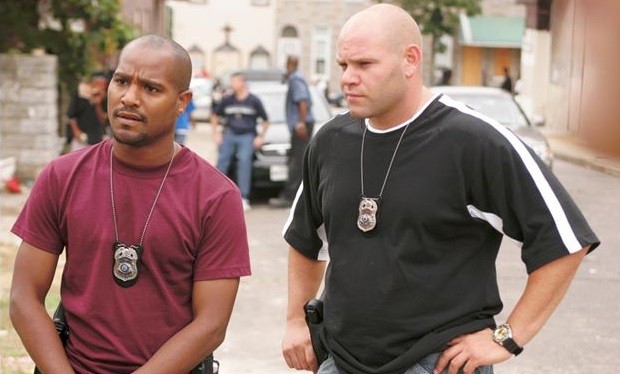
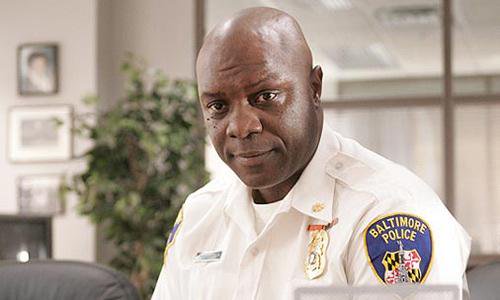
Turns out Bunny‘s problem wasn’t creating Hamsterdam but not moving drug dealers inside to the vacant houses.