Punching Above His Weight

Another example of draping yourself in Calvin’s mantle on women but not on heretics:

This misquote actually drives directly at the heart — directly at the heart — of the current discussion of sexuality. When the dust settles on the Trinitarian debates, even if that time is years away, the church will still have to work out her theology of sexuality. In the Reformed world, Calvin’s own view will be one that carries weight.

And, Calvin thought sex meant something in civil society.

Serious Reformed men who differ from this view should be honest that their views are innovations explicitly rejected by our fathers in the faith.

What if our fathers in the faith put us at odds with the Founding Fathers? This weekend is a good time to consider.

A related consideration is recognizing it may be time to walk on our own in civil society and not rely on those Protestants who still held out for Constantinianism. Medieval Europe is not the standard for Christian reflection about civil society. The Bible is. And it’s hard to find Peter or Paul invoking Moses to correct Nero.

(And don’t even go to Calvin’s views on the Trinity. Nothing to see there.)

Support for 2K is Growing (and it’s hardly rrrradical)

From the moderate regions of mid-western evangelicalism:

This conflation of the church and the nation characterizes the rest of the book. In defining (and I would say, exaggerating) the cultural influence of evangelist George Whitefield, Metaxas says that Whitefield’s preaching had the effect of turning colonists into Americans. To be an American (not a Christian, but an American), was to accept certain religious truths about one’s status in God’s eyes. As Metaxas concludes in summing up Whitefield’s significance, “the Gospel of Christ . . . created an American people.” Strange, I somehow thought that Jesus promised to build his Church on that foundation, but I guess he meant the United States.

Although Metaxas focuses on the colonial and Revolutionary eras, he does allow Abraham Lincoln to join the conversation as well, and as it turns out, Lincoln agreed John Winthrop that the United States has a “holy calling” to be an example to the world. Minimally encumbered by evidence, Metaxas notes that Lincoln understood that “America had been called by God,” and that “to be chosen by God—as the Jews had been chosen by God, . . . and as the messiah had been chosen by God,” was a “profound and sacred and even terrifying obligation.” I’m not sure which is scarier: the analogy of the United States to Israel—God’s new chosen people—or the analogy of the United States to Christ.

The latter reminds me of a trenchant observation in Hugh Heclo’s fine book Christianity and American Democracy: “If America is the redeemer of nations and time, then America is the Christ of history,” Heclo writes. “This notion may be inadvertent, but it is blasphemy all the same.”

And from the topsy-turvy world of unraveling Europe:

It seems as though many church leaders think that we have the right, the knowledge and the ability to use our position to advance particular political positions, which we equate with the Kingdom of God. This is across the spectrum, from liberal to evangelical, from low church to Catholic – it has been disturbing to see just how many church leaders seem to think that speaking a prophetic word means speaking a political word, even use the same political codes that the secular world use. And even more astonishing is how the Internet makes constitutional, financial and political experts of us all. ‘It’s only advisory’, ‘the Scottish Parliament has the power to block’, ‘£100 billion will be wiped of the markets’, ‘thousands will be killed in Northern Ireland’….and these are some of milder prophecies. I don’t have any problem with church leaders advocating political positions in public as private citizens (I often do it myself), but we have no right to commit our churches to those positions, nor to equate them as being part of the Christian message.

And 2k doesn’t even force you to identify one kingdom with God the Father and the other with God the Son.

Genius!

Every Square Inch of MmmmeeeeEEEEEEE

The politics of identity continue to haunt. Are you gay? Straight? Muslim? Man? Man trapped in a female body? Evangelical? Reformed Protestant? How’s a nation supposed to handle so many personal identities yearning to breathe free?

Ra’fat Aldajani offers this advice for Muslims:

The first objective is embracing being American. Too often we confuse being American with an erosion or rejection of our native culture and mores. It is quite the contrary. America is the land of immigrants, a melting pot of many diverse cultures and peoples, all contributing to what makes this country unique and strong.

Assimilation means developing a hybrid of what is good from our mother countries (family values, importance of education, respect for elders) and our adopted home (democracy, justice, rule of law) and engaging in every aspect of American life as Muslim Americans, rather than retreating defensively into our own culturally fenced-off communities.

Of course, the problem with assimilation is that it leads to liberal Protestantism where the nation’s social crises matter more than biblical teaching (also think PCA). If the nation tips toward equal rights for women, who are we mainline Presbyterians to deny the office of elder to women?

So the question for reconciling personal and national identity is where you put the qualifier.

If you are an American Christian, then national identity trumps religious loyalty.

If you are a Christian American, then your religious identity trumps patriotism.

And if you are simply present as Christian (or LBGT), and leave out any reference to the government whose laws you follow at least when you check out at the grocery store or drive a car, then you are a different order of person.

The difficulty we now face is that personal identity absorbs nationality. The nation must be or reflect my identity — it must be Christian, gay, or black. What we need in the era of transgenderism is to recognize that we (citizens of the U.S.) are all personal identities trapped in an American body.

When Did Christianity Become Imperial?

Pierre Manent begs more than he explains:

What to do about our diminished collective capacity is the great political question of Europe. Whether in relation to European unification or to Islam, it is clear that we have nothing pertinent to say if we refrain from making claims about European identity. One way to outline essential characteristics of European political and spiritual life is to contrast them with certain fundamental features of Muslim life.

Running the risk of a somewhat rough stylization, we might say something like the following: Islam throughout its history has largely preserved the form, the impulse, and the consciousness of empire (traits that are found with renewed vigor today), while Western Christianity, though born in an imperial form, and very much subject to great missionary and conquering movements, found its relative stability in a very different arrangement. Islam was never able to abandon the imperial form that ­Christianity could never assume in a lasting way. Christianity instead found its form in the nation, or in the plurality of nations once called “Christendom,” then “Europe.”

Anyone who reads the first pope Peter, finds little sense of Christian empire:

But you are a chosen race, a royal priesthood, a holy nation, a people for his own possession, that you may proclaim the excellencies of him who called you out of darkness into his marvelous light. Once you were not a people, but now you are God’s people; once you had not received mercy, but now you have received mercy.

Beloved, I urge you as sojourners and exiles to abstain from the passions of the flesh, which wage war against your soul. (1 Peter 2:9-11 ESV)

The early church thought of itself more in exile than as part of the establishment. Then came Constantine. Then came empire. Then came establishment. Only with the novos ordo seclorum did Europeans begin to question the fit between Christianity and empire.

Thanks for Nothing, Confederates

If you guys had merely held a referendum on secession instead of shooting guns, we might find Christian support for a U Sexit strategy comparable to British believers’ support for Brexit (via Chris Gerhz):

Practising Christians are the most likely among faith communities in England to support the Eurosceptic ‘Brexit’ position.

Muslims, meanwile, are the most Europhile of all the religious groups, a new survey has found.

The findings came in the new Populus Hope Not Hate survey which throws light for the first time on what different religious groups feel about the EU referendum in June.

“All the questions suggest that professing Christians are currently more likely than average to take up Eurosceptic positions, with Muslims the most Europhile,” reports religious researcher Clive Field.

Terry Teachout explains why U Sexit may be necessary (thanks to Rod):

In a totally polarized political environment, persuasion is no longer possible: we believe what we believe, and nothing matters but class and power. We are well on the way to becoming a land of jerking knees.

Never before have I felt so strongly that Americans are talking past instead of to one another. It is, I fear, our future and our fate—which is why I have come to believe that I will live to see Red and Blue America negotiate a “soft disunion.” No, there won’t be a second civil war. I can’t imagine the citizens of Blue America waging a shooting war over much of anything, least of all continued union with people whom they disdain. (Red America is a different story.) But the gap that separates the two Americas has grown so deep and wide that I find it increasingly difficult to imagine their caring to function as a single nation for very much longer. If I’m right, then I expect that they will ultimately find a more or less polite way to stop doing so.

Isn’t polarization what happens when we place personal over national identity? But just try issuing yourself a passport that will get you past customs. Not even calling the church an embassy will work:

Leeman descends from global height in his Preface to mountain-top height in his Introduction. And here, one gets a sense of his concerns. “A fundamental assumption of…many democratic Westerners, is that local churches are one more voluntary organization.” (21) In contrast, claims Leeman, “The church is a kind of embassy, only it represents a kingdom of even greater political consequence to the nations and their governors. And this embassy represents a kingdom not from across geographic space but from across eschatological time.” (22)

Isn’t that treasonous?

#NeverNebuchadnezzar

Have those who oppose Trump ever considered Jeremiah’s instructions to the people of God, namely, to submit to the rule of a pagan king?

“‘“But if any nation or kingdom will not serve this Nebuchadnezzar king of Babylon, and put its neck under the yoke of the king of Babylon, I will punish that nation with the sword, with famine, and with pestilence, declares the LORD, until I have consumed it by his hand. So do not listen to your prophets, your diviners, your dreamers, your fortune-tellers, or your sorcerers, who are saying to you, ‘You shall not serve the king of Babylon.’ For it is a lie that they are prophesying to you, with the result that you will be removed far from your land, and I will drive you out, and you will perish. But any nation that will bring its neck under the yoke of the king of Babylon and serve him, I will leave on its own land, to work it and dwell there, declares the LORD.”’” (Jeremiah 27:8-11 ESV)

Wouldn’t that sort of Word of God prompt you to consider revising this?

Note that I didn’t say that Trump definitely is an existential threat. I don’t know that; nobody does. Hitler only rose to power because enough people believed that he wasn’t such a threat. There is no way of predicting in advance just how bad a President Trump would be. But if you’re an evangelical leader, this sets up a version of Pascal’s wager for you. If Trump turns out to be embarrassing but not all that bad, then your pride will suffer a bit, and you’ll have to say you were wrong to support Hillary. You’ll try to be wiser in the next election.

But if Trump turns out to be the “extinction-level event” that Sullivan predicts, and you fail to do everything in your power to stop him, then you will join a long line of evangelical leaders who have been on the wrong side of history – and judged harshly for it – at critical moments ranging from slavery to Jim Crow to abortion (in the early days of that debate). Your witness for Christ – our witness – will be diluted because we didn’t do everything we could to prevent this catastrophe. And there won’t be a next election to get it right.

Isn’t it possible that a politician could be God’s judgment on a nation’s churches (not that any of us has that kind of word from God)? And isn’t it possible that God’s plans go on even when his people and prophets go into exile as part of divine judgment?

That’s not a reason to support Trump the way Jeremiah endorsed Nebuchadnezzar. But it is a reason to be cautious as a minister of God’s word when talking about magistrates.

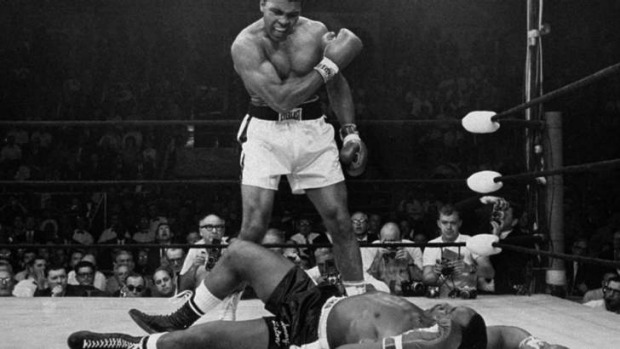
What If Muhammad Ali Ran for President?

As I listen to journalists and sports-talk radio hosts talk about the greatest fighter of all time, I keep thinking I understand the appeal of Donald Trump.

Just look at some of these juicy quotes:

Clay was 18: bounding, fearless, leading with his mouth.

“I’m not only a fighter. I’m a poet; I’m a prophet; I’m the resurrector; I’m the savior of the boxing world. If it wasn’t for me, the game would be dead,” he said.

Young Clay made boxing an art form. He was an original, a heavyweight who didn’t move around the ring — he danced. He’d thrill the crowd with his quick scissor-step shuffle. On defense, he’d slip and slide, Dundee said, and then flick that jab.

“He had a jab that was like a snake,” he said.

Float like a butterfly, sting like a bee; rumble, young man, rumble. Boxing reporters never had so much fun.

So Ali, though seemingly a good guy on numerous fronts, was a tad egotistical. Did that cost him with the media?

And then he could be pretty divisive:

After the Liston fight, Ali revealed he was a member of the black separatist movement Nation of Islam. He wanted to be called Muhammad Ali, a name he said was given to him by the group’s leader, Elijah Muhammad.

“That’s my original name; that’s a black man name,” Ali said. “Cassius Clay was my slave name. I’m no longer a slave.”

Muhammad, the Nation of Islam leader, preached that integration and intermarriage were wrong and that white people were devils. It was an idea Ali defended in a 1971 TV interview.

“I’m gonna look at two or three white people who’re trying to do right and don’t see the other million trying to kill me? I’m not that big of a fool, and I’m not going to deny it,” he said. “I believe everything he [Muhammad] teach, and if the white people of a country are not the devil, then they should prove they’re not the devil.”

Ali became a polarizing figure in America.

Again, did that cost Ali his reputation?

So I wander as I wonder.

Did Memorial Day Give Us the Confederate Flag?

What’s the difference between Memorial Day and Veterans Day? The straight answer is that the former commemorates soldiers who died in battle, the latter honors all soldiers (even Bowe Bergdahl?). The funny answer is we get Memorial Day off as part of a three-day weekend to kick-off summer. On Veterans day we work in preparation for Thanksgiving and the big holiday season (some call Advent).

The difficult answer is that Memorial Day started to remember soldiers who died in the Civil War, Veterans Day for troops in The Great (Pretty Good?) War. Now, just like with three-day weekends for Presidents, Labor, and Columbus, we lump all soldiers into holidays that originally referred to specific wars.

You have to wonder if this is the best way to remember veterans or deceased soldiers when you get one day for all of those soldiers. David Rieff has a new book out arguing that remembering the past can actually be harmful:

What I’m saying is, there are examples—not a few, but quite a number of examples—where remembering, far from leading to truth, justice, and reconciliation, has led to more war. Three obvious examples of that are the Balkans in the 1990s, where I was a correspondent; Northern Ireland, for 30 years and, some people would say, for 800 years; and the Middle East. And in all three of those cases it seems to me that invoking history, invoking the wounds of the past, the crimes of the past, the conflict of the past, has led to more bloodshed.

In the case of the United States, our memories of the past don’t necessarily lead to bloodshed, but they do make us uncomfortable. Memories of slavery and segregation put whites and blacks in awkward relations that leave persons with no experience of owning slaves or Jim Crow feeling the legacy of racism should all inform interactions between whites and black, from chance encounters on the subway to public school hiring practices.

But how much is our own government to blame for the way some southerners keep the memory of the Confederacy alive? Memorial Day originally was all about remembering the Civil War, with blacks, Yankees, and Southerners all vying to honor their side:

COLUMBUS, Ga. — Right on either side of Alabama, there are two places with the same name.

Like the one over in Mississippi, this Columbus was founded in the 1820s and sits just a few minutes from countryside in almost any way you drive.

Residents say it was here, in the years after the Civil War, that Memorial Day was born.

They say that in the other Columbus, too.

It does not take much for the historically curious in either town — like Richard Gardiner, a professor of teacher education at Columbus State University here — to explain why theirs is the true originator of a revered American holiday and why the other is well-meaning but simply misguided. . . .

Waterloo, N.Y., was designated the official birthplace of Memorial Day by presidential proclamation in 1966, and indeed, beginning in May 1866, Waterloo held an annual townwide commemoration.

But women in Boalsburg, Pa., which has a claim as the holiday’s birthplace, began decorating graves each year as early as October 1864. In and around Carbondale, Ill., according to the Jackson County Historical Society, there are two markers making such an assertion in two different cemeteries. James H. Ryan, a retired Army colonel, has descended into the Logan archives and come out with a strong case for the town where he lives, Petersburg, Va.

This — readers, please take note — is just a partial and by no means definitive list.

But the claims of the two Columbuses, eyeing each other across Alabama, are among the more nuanced and possibly the most intertwined.

Maybe the solution is Rieff’s distinction between memory and history:

History is really about the past. There’s the great English novelist L.P. Hartley, who wrote a book called The Go-Between. And the first line of that book is “The past is another country. They do things differently there.” History is about the difference between the past and the present. Memory is about using the past for the purposes of the present, or for some group in the present. History is critical history … Memory serves the present. History is the material out of which this collective memory is made. But collective memory, commemoration, is not history. If it is history, it’s so simplified and reduced to be, as I say, to be closer to myth than to history in any usable sense.

That distinction may explain why this Old Life historian gets the last Monday of May 2016 off from research to do yard work.

Roman Catholics and Calvinists Together

It may not be ecumenical, but Michael Sean Winters understands what some of us have been sayin‘:

What is it about bathrooms? Throughout the Jim Crow South, there were separate restrooms for blacks and whites. When I bring my dad, my uncle and my niece to Puerto Rico every winter, my niece claims the one bedroom with the private bathroom and the guys share the other one. Three hundred years ago, it was a mark of honor to be able to accompany the monarch as he took his toilette. Now, privacy seems most significant, and therefore the most easily endangered, when we discuss bathrooms.

Still, even I have been taken aback by the current “bathroom wars,” fought over the issue of whether or not transgender persons should use the bathroom that corresponds to their gender at the time of their birth or to the gender by which they now identify themselves.

I am surprised, first, that this issue has seemingly become the next frontier in the civilizational struggle for equality. I understand that the issue is of great concern to the sliver of the population that is transgender. A family I know has a child that just changed his gender, and the process, and the result of the process, has certainly not been without anxiety and stress. The fact that the legal struggle seems focused on schools, when all kids are going through puberty, seems especially designed to throw gasoline on the fire. My sense is that this issue has less to do with the people it ostensibly concerns and more with those who are professional culture warriors on both the left and the right.

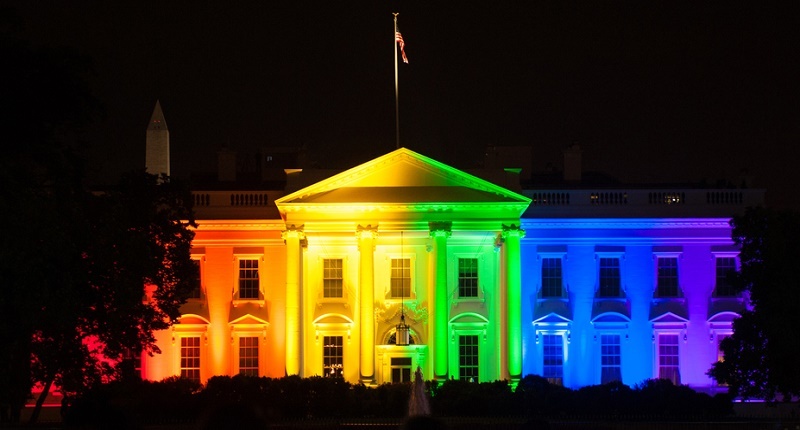
It baffles me that the Obama White House has latched on to this issue as a key part of its legacy. The fact that his administration has done so does not evidence the breadth of concern for other human beings and their travails. No, it evidences the degree to which some on the left, especially those with power, glom on to whatever issue seems trendy and cool at the moment. As Thomas Frank points out in his new book Listen Liberals, the “creative classes” that dominate the liberal establishment are far more animated by the need to get someone an abortion than they are to get people a job. Furthermore, how is this a federal issue?

It also baffles me that conservative critics of any accommodations being made for transgender people use such false and inflammatory language to describe the situation, warning darkly that the Obama Administration rules would allow men to prey on your daughters in the bathroom. (What is to prevent predators from doing that now?) A transgender person who now identifies as female and desires to use the women’s bathroom is probably going to cause less of a stir in the ladies’ room than in the men’s room. Think of Caitlyn Jenner. The way she looks now, I can’t imagine feeling comfortable if she walked into the men’s room.

Jimmy and Freamon Never Had It This Good

Back then they needed a search warrant. Not now:

Shemar Taylor was charged with robbing a pizza delivery driver at gunpoint. The police got a warrant to search his home and arrested him after learning that the cell phone used to order the pizza was located in his house. How the police tracked down the location of that cell phone is what Taylor’s attorney wanted to know.

The Baltimore police detective called to the stand in Taylor’s trial was evasive. “There’s equipment we would use that I’m not going to discuss,” he said. When Judge Barry Williams ordered him to discuss it, he still refused, insisting that his department had signed a nondisclosure agreement with the FBI.

“You don’t have a nondisclosure agreement with the court,” replied the judge, threatening to hold the detective in contempt if he did not answer. And yet he refused again. In the end, rather than reveal the technology that had located Taylor’s cell phone to the court, prosecutors decided to withdraw the evidence, jeopardizing their case.

And don’t imagine that this courtroom scene was unique or even out of the ordinary these days. In fact, it was just one sign of a striking nationwide attempt to keep an invasive, constitutionally questionable technology from being scrutinized, whether by courts or communities.

The technology at issue is known as a “Stingray,” a brand name for what’s generically called a cell site simulator or IMSI catcher. By mimicking a cell phone tower, this device, developed for overseas battlefields, gets nearby cell phones to connect to it. It operates a bit like the children’s game Marco Polo. “Marco,” the cell-site simulator shouts out and every cell phone on that network in the vicinity replies, “Polo, and here’s my ID!”

Thanks to this call-and-response process, the Stingray knows both what cell phones are in the area and where they are. In other words, it gathers information not only about a specific suspect, but any bystanders in the area as well.

And they wouldn’t even need Pryzbylewski to break the code.

No peace, no justice.