Blame Trump on the Mainline

So argues Mark Tooley:

Neither Sanders nor Trump would have been possible or even conceivable as serious presidential candidates during the decades of Mainline Protestant hegemony in American public life.

Excluding JFK, all presidents (including Unitarians) have had ties to Mainline Protestants, who shaped America’s political ethos for most of four centuries. Mainline Protestantism helped create American civil religion, a broad vaguely Protestant view of God that permitted all religious groups, including Catholics and Jews, to fully participate in public life without having to minimize their own religious convictions.

American democracy consequently remained very religious but also non-theocratic, tolerant and diverse, with all sects invested in America’s affirmation of religious liberty.

Through the mid-20th century, Mainline Protestantism provided the political language and ethical tools for governance and accommodation, especially for the great reform movements that expanded human equality. The Civil Rights Movement was perhaps Mainline Protestantism’s last great moral crusade, redeeming its earlier failures to address slavery and segregation.

But the great Mainline Protestant membership and wider cultural collapse began in the early 1960s. Then, one of six Americans belonged to the seven largest Mainline denominations. Today, fewer than one of 16 do.

Tooley fails to ask whether that political hegemony came with the price of theological modernism? After all, to maintain your place in the establishment, you can’t be vigorous about the particulars of your religious communion.

Tooley goes on to observe a certain tackiness among evangelicals:

Evangelicalism, lacking that magisterial heritage, is less self-confident, often uncomfortable with political power, is prone to extremes and often highly individualistic, impatient with human institutions.

These same handicaps plague even more the world of the religiously unaffiliated, who often lack the traditions, formal human communities, ethical tools and moral vocabulary for governance. They are especially vulnerable to the impulse of the moment.

So, if the the downfall of the mainline paved the way for Trump, how much more the corruption of the Roman Catholic Church which paved the way for magisterial reformers?

When Pastors Talk about Politics without Righteousness

Sometimes pastors make sense.

This makes me think about the issues that are most important to me. Here is a list that is neither exhaustive nor in any particular order:

1) respect for the Constitution while not treating it as divinely inspired, inerrant, and infallible.
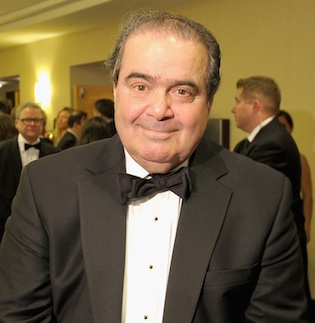
2) appointment of judges who can say with Scalia, “I’m a textualist; I’m an originalist; but I’m not a nut;” judges who will do the “legal” not the “right” thing,
3) repeal and replacement of the ACA but not in a way that says the only way to deal with the distribution of healthcare is to let the market decide who gets what, with the results mitigated only by private charity,
4) reform of immigration in a realistic, rational, and compassionate way that does not attempt the impossible, the deportation of 11 million+ people, but does slow to a trickle the influx of illegals,
5) ending partial birth abortion and reducing all abortions through through persuasion and legislation,
6) reduction of the size and intrusiveness of the federal government, pushing more decisions and control down to the states and individuals,
7) increase of American military strength and flexibility with the ability of the US to project power internationally when necessary.
8) dealing with the deficit and balancing the budget, which will require difficult and painful decisions and actions, in a rational, practical, gradual manner,
9) preservation and reform of Medicare and Social Security by putting them on a sound fiscal footing so that they are viable for the future,
10) reduction of restrictions on individuals and businesses that keep them from thriving, but not on the assumption that free market results are a revelation of the divine will,
11) protection of the freedoms of the churches to preach, teach, and practice Christian truth and morality without review or interference by government, while protecting the rights of all persons to act in accord with their consciences so long as their actions do not actively interfere with the rights of other citizens under the law,
12) assurance of the civil rights of all persons and protection of their freedom to achieve all that they can within the limits of their ability, allowing neither discrimination nor preferential treatment to prevent or guarantee outcomes.

When I look at my list I find it is based on my political philosophy and principles, on prudence and common sense, and on preferences. I do not believe they are derived from the Bible or are an expression of my Christian faith.

Are David Robertson and Rick Phillips paying attention?

If Kuyper Could, Why Can’t Swanson?

Rebecca Hamilton adds U.S. political parties to the list of spheres to be evangelized (now that the Vatican has removed Jewish persons):

We must, if we are survive as a nation and a people, re-take control of these run-away political parties. We must also, if we ever hope to build a culture of life, convert both of them.

That means, my dear pro-life brothers and sisters, that we must stop thinking of the other political party as the devil incarnate and begin to look on it as a mission field, ripe for the harvest. In short, we need to stop following political hucksters who want to use our votes to gain power for themselves to be used for themselves, and follow Christ the Lord.

It was Jesus who told us to go out and convert the world. It is Satan who tells us to look at those folks over there and condemn them and damn them to hell with all the smug self-righteousness we can muster. Even if the thought that converting people is what Christ specifically told us to do doesn’t move you, then consider once again the sheer political cliff that we are standing on due to Justice Scalia’s death.

We’ve been trying to pack this court for almost 50 years now, and what we’ve gotten for our efforts is corporatism that is breaking the backs of the people of this nation and gay marriage.

We need to convert the Democratic Party to a party of life. We need to convert the Republican party to a party of conservatism rather than abject corporatism. We need to convert both of them into entities that are focused on how to help America and Americans rather than just raid the national treasury for those who pay for their political campaigns.

Here’s the problem: maybe the existing parties aren’t ripe for taking over. So why not start a new political party? Abraham Kuyper did and it became the vehicle for his tenure of prime minister:

Moving from the pastorate to the Dutch parliament by age 35, Kuyper also became the editor of a daily newspaper, De Standaard. From this post, he rallied and educated a movement that would have a transformative impact in the 1870s. Besides ushering in a new denomination, that movement would launch the Anti-Revolutionary Party (ARP), which endured for several decades thereafter. (About 30 years ago, it merged with two other parties that were important to Kuyper’s governing coalition.) By 1901, as leader of the ARP, Kuyper would become prime minister, an office he held for four tumultuous years.

His political vision was worked out over decades, and aimed to impede the centralizing tendencies that capitalism appeared to require. The vision rested upon the notion of “sphere sovereignty”: The belief that God created the distinct realms of life—church, education, family, state—to function independently, each ruled by the “ordinances” God had set in place. “It was identifying, celebrating, guarding, and translating those ordinances into action,” Bratt notes, “that defined his ultimate purpose in politics.” Under Kuyper, the ARP sought to convince the nation of these ordinances and align its policy and law according to them. It was a narrow pathway indeed, yet for a time, the ARP was able to follow it with success, thanks in part to an alliance with Roman Catholics seeking to “restore a Christian Netherlands.”

To be sure, I have reservations about parts of the neo-Calvinist project. But Kuyper’s political savvy sure looks much more important and effectual than Christians kvetching about the state of their nation from the relatively comfortable locations of podcasts, blogs, radio shows, or conference addresses. At least Kuyper did more than theorize, cheerlead for w-w, and write op-eds. He built institutions and forged political alliances. Even more, he governed.

If Christians want to “change” their nation, they need to do more than aim at changing the minds of their political representatives (as if that happens).

The Next President?

What he or she should do:

It’s not enough that we elect someone who will defend the religious liberties of Christians. The next president needs to be sensitive to the interests and concerns of many groups who find themselves increasingly in tension with one another and the State: Muslims, atheists, Christians, the LGBTQ community, immigrants, black people, poor white people, and law enforcement. There will be laws, court rulings, and policies established in the next presidency that will help define how these groups live together in the near future. We can expect decisions concerning anti-discrimination laws, illegal immigration and refugees, gender and sexuality in public education, religion and gender in the military, and criminal justice reform. One of the most prized qualities in presidential candidates should be a desire to pursue principled pluralism, not merely protecting the interest of one group.

Sounds like the Bishop of Springfield should be the one:

Still there are others who have distanced themselves because they feel unwelcomed. The reasons here can vary, but key among them are race and cultural differences, a sense of gender inequality as well as sexual orientation.

Others have been treated unkindly, impatiently, or rudely by clergy, religious, ministers, and staff of parishes — all which is unacceptable. I ask your forgiveness. I make my own the words of Pope Francis, and say to you, “Believe me, in spite of its slowness, the infidelity, the mistakes, and the sins that may have and may still be committed by those who compose the Church, it has no other sense and aim if not to live and witness to Jesus: He has been sent by (the Father) ‘to bring good news to the poor … to proclaim release to the captives and recovery of sight to the blind, to let the oppressed go free, to proclaim the year of the Lord’s favor.’” (“An open dialogue with non-believers” La Repubblica, 9/11/13).

This Jubilee Year of Mercy allows us an opportunity to acknowledge our need as a diocese for forgiveness and healing from past sins and hurts, as well as to look forward to the future in hope.

That is what evangelization is all about, looking forward to the future with hope, sharing our hope which is the Good News of Jesus Christ with others, regardless the path of life they walk.

“Evangelizing,” as Blessed Pope Paul VI once said, “means bringing the Good News into all the strata of humanity … both the personal and collective consciences of people, the activities in which they engage, and the lives and concrete milieu which are theirs” (Evangelii Nuntiandi, 18).

The Holy Father went on to explain, that “evangelization loses much of its force and effectiveness if it does not take into consideration the actual people to whom it addresses, if it does not use their language, their signs and symbols, if it does not answer the questions they ask, and if it does not have an impact on their concrete life”(EN, 63).

This fact came across clearly in our diocesan survey. As one person commented, “I believe there is a huge gap between what the priests are doing and what the people need.” Others noted the need for “priests of the diocese to get out among the people … where they are at” because “people are not just going to walk into the churches and rectories.”

There is much truth to these honest reflections; our communities must be inviting and energetic environments, founded both in our traditions but also the reality of everyday life. Such efforts are not just the responsibility of some of us but rather all of us: clergy, women and men religious, lay faithful … we are all in this together; evangelization is, for each and every one of us, our call and responsibility as the baptized. We need to evangelize those who are with us each week for Mass, that they, in turn, may be empowered to become evangelizers themselves.

We need to evangelize those who were once, but are no longer with us: We need you, we need your presence, your gifts and your talents. We need you to complete our community, to enrich it, to
make it better and more effective. I would ask you to join with us as a diocese in rediscovering your spiritual roots. While acknowledging disagreements or negative experiences, perhaps we can also reflect on what it was about the Catholic faith you may have loved, what may have brought you comfort and peace, and what you are missing through your absence.

Grammatico-Historical Interpretation of the Constitution

Lots of posts out there about Antonin Scalia as the faithful Roman Catholic. But the man sure sounded like he learned how to read the Constitution from Protestants:

Nonetheless, there is no escaping a verdict on his influence on American jurisprudence, and that verdict is not affected by the fact that he was a good buddy to prominent liberals. He was an advocate of two judicial ideologies, neither of which is intellectually tenable and which conflict with each other. Originalism was Scalia’s core ideological commitment, the idea that the Constitution should be interpreted as it was understood at the time of its ratification. He employed Originalism to question the idea that the Constitution is a “living document,” as liberal jurists held.

To be sure, there was a need for a conservative corrective after the high court starting snooping around the “penumbras” of the Constitution. As Justice Elena Kagan said in mourning Scalia’s death, “His views on interpreting texts have changed the way all of us think and talk about the law.” But, whether the Constitution is alive or not, the people whose government it intends to frame are most certainly alive and their circumstances change. Laws that cannot change with the lived circumstances of a people soon become disconnected from reality, and that disconnect will lead to the law being held in derision or ignored. . . .

Scalia’s other ideological commitment was to Textualism, the idea that the actual words must be interpreted in a kind of fundamentalist manner. This could conflict with Originalism. For example, an originalist would, like an historian, search for explanations as to what was intended by the drafters of a given text, to confirm that original intent and guarantee against latter day misinterpretations. But, Scalia famously loathed citations to legislative history. Textualism rests on the supposition that the Constitution is a self-interpreting text and if that were true, why would we need a Supreme Court? In practice, Textualism resulted in the conclusion that any given text meant exactly what Antonin Scalia thought it meant.

Of course, it’s not clear that Scalia’s hermeneutic was all positive. But it hardly sounds like it’s a product of deferring to the magisterium or to the development of dogma.

Two Cities or One?

Michael Sean Winters thinks Bishop Robert McElroy’s article on the religious duties of voters has merits, but I wonder after reading this paragraph:

Most important, a spiritual political conversion requires the orientation of soul that flows from the principle of solidarity that St. John Paul II powerfully outlined as a fundamental element of Catholic social teaching. This orientation reminds us that in society we must always understand ourselves to be bound together in God’s grace and committed, in the words of “On Social Concerns,” “to the good of one’s neighbor, with the readiness, in the Gospel sense, to lose oneself for the sake of the other rather than exploiting him.”

The implications of such a spiritual stance for discipleship in voting are clearly reflected in the Compendium of the Social Doctrine of the Church: “The principle of solidarity requires that men and women of our day cultivate a greater awareness that they are debtors of the society of which they have become a part.”

I get having a sense of belonging to the rest of the people in the society of which I am a member. I don’t get what grace has to do with this.

Is it really true that Christians understand themselves to be bound together with non-Christians in God’s grace? Or if we apply the antithesis that Augustine affirmed in his formulation of 2 cities, then are we only bound together in society with other Christians? That was the construction that led European Christians to wonder about where Jews and Muslims fit in Christendom, and John Calvin to wonder about where Michel Servetus fit in Geneva.

So once again, perhaps the Bishop needs to make clear the difference between the two kingdoms, one that affirms a spiritual antithesis and a social commonness. Blurring the two will get us to King Ferdinand and Queen Isabella.

Trump is What Conservatives Do (or have done since 1950)

Maybe Trump’s 45 minutes of fame (he certainly has more than the rest of us) are coming to an end. But I continue to be surprised by the woe-is-me-conservatism that accompanies his candidacy and appeal (and I am not going to vote for him — there). He is an insurgent, he is a populist, he is undignified, he’s a threat to the GOP establishment.

So was William F. Buckley, Jr. (and he was a traditionalist Roman Catholic).

First Rod Dreher’s hand-wringing:

What Trump has shown, and is showing every day, is how out of touch Conservatism, Inc., is with the people for whom it purports to speak. They haven’t had a chance to vote for someone like him in a long, long time because, as I’ve said, the GOP and Conservatism, Inc., gatekeepers kept them down. The conservative Christians who have gone to Washington and gotten invited to be in the inner Republican power circles? You think those professional Christians really speak for the people back home anymore?

Me, I’m in a weird and extremely unrepresentative place, politically and ideologically. I am mostly a cosmopolitan in my tastes, but I live by choice in deep Red America, and am a traditionalist by conviction. What Sean Trende says about the Republican and conservative elites living inside a cosmopolitan bubble is true — and the people who give money to the GOP and to the think-tank archipelago are Business Conservatives who, as we now know post-Indiana RFRA, regard we traditionalists are the problem.

Second, Michael Brendan Dougherty on the problem with the editors of National Review repudiating Donald Trump:

You could call it a freak out on the right.

National Review, the flagship journal of the conservative movement, published a surprisingly defensive symposium, asserting the continued relevance of conservative ideas against an election-year populist challenger, who promised to fight for American jobs and sovereignty. “The old guard threw everything they had at him, and their diminished power is now exposed,” wrote David Brooks. This crude challenger to the party’s status quo had to be stopped.

That was eight years ago. And it was Mike Huckabee, whose advisor Ed Rollins declared the Reagan coalition dead. The challenge was sufficiently contained, then. But it was the first time that I noticed that the anti-establishment kick reflex that the conservative movement had installed in its Frankenstein-coalition of voters had turned around and began kicking them.

Donald Trump and his coalition of voters kick a lot harder than Mike Huckabee. And so we have another symposium, now exclusively anti-Trump. But this time around, even movement-bred stalwarts are wondering if Ed Rollins had a point. Maybe the coalition is dead.

There’s something faintly comical about everyone in the Republican party shouting, “I’m not the establishment. That guy is.” The conservative movement long ago defeated the East Coast establishment of the party. It was a total rout; the last semi-moderate New England Republicans were defeated a decade ago. And yet, conservatives still insist that they are fighting some powerful establishment within the Republican Party.

The irony is that National Review’s founding editor, Buckley, had a lot to do with defeating the East Coast Establishment GOP. Garry Wills knows the score:

Joe Scarborough, in a recent book, The Right Path: From Ike to Reagan, How Republicans Once Mastered Politics—and Can Again, claims that moderate conservatism is the real Republican orthodoxy, interrupted at times by “extremists” like Goldwater or the Tea Party.3 He suggests Dwight Eisenhower as the best model for Republicans to imitate. Yet Scarborough is also an admirer of Buckley, and his thesis does not explain—as Dionne’s thesis does—why Buckley despised Eisenhower. Eisenhower, as the first Republican elected president after the New Deal era of Roosevelt and Truman, was obliged in Buckley’s eyes to dismantle the New Deal programs, or at least to begin the dismantling. Buckley resembled the people today who think the first task of a Republican president succeeding Obama will be to repeal or take apart the Affordable Care Act.

Eisenhower, instead, adhered to the “Modern Republicanism” expounded by the law professor Arthur Larson, which accepted the New Deal as a part of American life. Eisenhower said, “Should any political party attempt to abolish social security, unemployment insurance, and eliminate labor laws and farm programs, you would not hear of that party again in our political history.” It was to oppose that form of Republicanism that Buckley founded National Review in 1955, with a program statement that declared: “Middle-of-the-Road, qua Middle-of-the-Road is politically, intellectually, and morally repugnant.”

Buckley hated Eisenhower’s foreign policy as much as his domestic one. He said, “Eisenhower was above all a man unguided and hence unhampered by principle. Eisenhower undermines the Western resolution to stand up and defend what is ours.” When Russia put down the 1956 uprising in Hungary and Eisenhower did not intervene, National Review called for people to sign the Hungary Pledge—to have no dealings with iron curtain products or exchanges (Buckley’s wife had to give up Russian caviar).

Admittedly, Buckley did not, like Robert Welch (founder of the John Birch Society), think Eisenhower was a secret Communist (as many Republicans now think Obama is a secret Muslim). Buckley thought that Eisenhower had no greater purpose than his own success: “It has been the dominating ambition of Eisenhower’s Modern Republicanism to govern in such a fashion as to more or less please more or less everybody.”

The sense of betrayal by one’s own is a continuing theme in the Republican Party (a Fox News poll in September 2015 found that 62 percent of Republicans feel “betrayed” by their own party’s officeholders). The charges against Eisenhower were repeated against Nixon, who brought Kissingerian “détente” into his dealing with Russia and renewed diplomatic ties to China. On the domestic front, he imposed wage and price controls and sponsored the welfare schemes of Daniel Patrick Moynihan. Buckley joined the effort to “primary” Nixon in 1972 by running John Ashbrook against him. Buckley campaigned for Ashbrook in New Hampshire, but he succumbed to pleas from Spiro Agnew (before his disgrace) and Henry Kissinger (a new friend of his) that he endorse Nixon for the general election.

Any American with conservative instincts should in the presence of Donald Trump act like we’ve been here before.


Do We Need Transcendence to Plow Streets?

Neo-Calvinist praise from David Koyzis for Bruce Ashford’s contention that political liberals and political conservatives both lack transcendence:

Politics in the United States has, for some time, assumed a binary structure. On one side stand the Republicans, who represent conservatism. On the other side stand the Democrats, who represent progressivism. But what most Americans fail to see is that conservatism and progressivism are similar in one significant respect. Both ideologies are “moving targets” that lack transcendent norms, which leads to a nearly endless variety of social ills. It may, at times, be appropriate to be conservative, and at others progressive. But when these designations become normative, they become idolatrous.

This sort of observation seems to be tone deaf to the religious inflection of contemporary politics. Just remember all the national exceptionalism that appeals to the United States’ special (read divine) role in world affairs.

But this way of looking at politics also seems to be oblivious to the actual stuff of civic life, namely, ordinary affairs as opposed to supernatural aspirations. Would transcendence, for instance, really resolve the snow-removal crisis in Baltimore (thanks to our Pennsylvania correspondent)?

In Harford County, residents complained that their online snow tracker went dark overnight. Baltimore County officials fielded complaints from constituents who remained snowbound Monday. And some residents in Anne Arundel and Carroll counties griped about the pace of the cleanup.

But many residents also said they gained a greater appreciation for how their tax dollars are spent to carry out one of government’s most essential functions: keeping the roads functioning.

Facebook pages for nearly all of the area’s jurisdictions lit up with complaints and compliments for how snow removal crews were progressing.

For their part, elected officials don’t shy from public appearances during major storms, promising a diligent response and hoping to win political currency. And in Maryland, voters are typically more forgiving of any failures, said Matthew Crenson, a Johns Hopkins University political scientist.

Not so where major snow events are more common. Crenson pointed to Michael Bilandic, mayor of Chicago in the late 1970s when a blizzard crippled that city for months.

“His snow removal efforts were so feeble he lost the next election,” Crenson said. Maryland voters “are likely to give their elected officials a pass.”

I understand the appeal of thinking the Lordship of Christ will fix what ails fallen life. After all, Christ is the great fixer. But sometimes, when Protestants or conservatives invoke divine or philosophical categories as the cure for political woes, I can’t help but think they have missed the point of politics.

We're Closer to Turkey than You Think?

This may be the most important context for considering the controversy over Islam at Wheaton College, namely, that Americans themselves are not all that comfortable with secularity and Islam reveals where the lumps in the mattress are. Rod Dreher quoted a poignant part of Ross Douthat’s column on how the West views Islam, as either as conservatives believe “radically incompatible with Western liberal democracy, and can never be reconciled to it; or, as many liberals believe, it is capable of assimilating to become as tame and non-threatening as most forms of Christianity and Judaism in the West.” In the Protestant world, either Larycia Hawkins or Tim Bayly. According to Douthat:

The good news is that there is space between these two ideas. The bad news is that we in the West can’t seem to agree on what that space should be, or how Christianity and Judaism, let alone Islam, should fit into it.

Devout Muslims watching current Western debates, for instance, might notice that some of the same cosmopolitan liberals who think of themselves as Benevolent Foes of Islamophobia are also convinced that many conservative Christians are dangerous crypto-theocrats whose institutions and liberties must give way whenever they conflict with liberalism’s vision of enlightenment.

They also might notice that many of the same conservative Christians who fear that Islam is incompatible with democracy are wrestling with whether their own faith is compatible with the direction of modern liberalism, or whether Christianity needs to enter a kind of internal exile in the West.

It almost sounds like Turkey’s war between Islamic friendly politicians and secularists, from a piece quoted sometime back from Mustafa Akyol:

As you probably well know, Turkey has long been stressed by political tension between religious conservatives and secular nationalists, the latter also known as the Kemalists. However, that main fault line is somewhat passé these days given the emergence of a new kind of tension between the religious conservatives who had triumphed together in (OR: previous) tension from years gone by. This time, it is the AKP (Justice and Development Party) government and the powerful Fethullah Gülen Movement that are at odds with each other. . . .

The term I translated here as “referee” (“hakem”) is a powerful word in Islam, referring to a neutral and fair judge who can settle disputes. And it is interesting that Ms. Eraslan, a pious, headscarf-wearing Muslim, thinks that this “referee” may be none other than secularism. Of course, this would not be the type of secularism that Turkey’s Kemalists have imposed for decades. That peculiar ideology, called “laiklik” (from the French laïcité), was based on the assumption that there was something wrong with religion and therefore it needed to be suppressed by the state.

What Ms. Eraslan probably implied, and what Turkey indeed needs, is a more American-like secularism. In other words, it should be based on the recognition that there is a problem not with religion, but with the concentration of political power.

Unlike Turkey, though, and the conflict between religion and laicite, could the struggle in the U.S. be the one that animated fundamentalists and modernists during the 1920s? The political left in the United States, like modernists, does not advocate the removal of religion from public life. They like religion (think Martin Luther King, Jr.). Jim Wallis is not a threat to them.

So too, the right also likes religion of the right sort (see what I did there?). It used to be Jerry Falwell and James Dobson. Now it’s Rick Santorum and Kim Davis.

The problem is that both left and right embrace a form of American exceptionalism that needs religion to endow the United States with a righteous or holy purpose.

In that case, if we are still living with the dynamics of the fundamentalist controversy, has the United States learned lessons it can pass on to the Muslim world?

Why This Won't End Well For Wheaton

If Bill Smith thinks Michelle Higgins’ endorsement of Black Lives Matter at Urbana won’t end well for the PCA, imagine what will happen when the BLM folks figure out that a black professor may be about to lose her job at a white-dominated college. An African-American tenured professor!!!! HELLO! And students at Princeton think they need to be worried about “safe” spaces.

And if that happens, it is really too bad. I was almost persuaded by Dr. Hawkins’ theological explanation of her remarks. I am convinced that she is trying in thoughtful ways to maintain the College’s standards. When she said, “I understand that Islam (and Judaism) denies the deity of Christ and the Holy Spirit, and leaves no room for the Cross and the Resurrection,” I was encouraged. She seemed to be ready to recognize the particularity of Christianity and the uniqueness of Christ.

But then she added, “my statement is not a statement on soteriology or trinitarian theology, but one of embodied piety. When I say that ‘we worship the same God,’ I am saying what Stackhouse points out, namely that ‘when pious Muslims pray, they are addressing the One True God, and that God is, simply, God.'”

Well, what about a piety that embodies soteriology or the Trinity? How can you have a Christian devotion that only embodies the first article of the Nicene Creed?

Hawkins continued by trying to justify her remarks on the basis of the doctrine of creation: “it is on the basis of our very statement of faith that ‘We believe that God directly created Adam and Eve, the historical parents of the entire human race; and that they were created in His own image, distinct from all other living creatures, and in a state of original righteousness,’ that I am compelled to address all human beings as my ‘brothers and sisters.'”

For nine years I have signed a statement of faith which avers that all human beings originate from the same parents and bear the unalterable imago Dei – though no specific reference is made in the statement as to the process of that historic, original creation. Yes, when we Christians speak of our unity in and as the body of Christ, of course our unity stems from our identification with Christ. But my statement is not a statement of ecclesiology or baptismal regeneration or identification with Christ. It is simply and clearly a statement on the imago Dei, and a reflection of my African-American cultural heritage. It should not be misconstrued as anything different.

So, yes, when I call “fellow humans who happen to be Muslims [or Jews or atheists] my brothers and sisters” I am standing in full agreement with the Wheaton College statement of faith, identifying each person as an image-bearer of God.

Why can’t the distinction between creation and redemption (think 2k) supply the way out here? Why can’t Hawkins recognize the unity of the human race in the ex nihilo creation of the world by the only living and true God? Why isn’t that enough to affirm the worth of Muslims? Why not even appeal to the status of Muslims as citizens of the United States?

But as is so often the case with those who don’t distinguish between the temporal and eternal, the affirmations of unity based on creational norms lose momentum for accomplishing something truly noteworthy. Hawkins wants to seem to say this unity with Muslims goes somewhere special, so the sphere of redemption comes to the rescue. But that is precisely the area — in Christ — where Christian unity excludes Muslims. The former worship on Sunday in a church. The latter on Friday in a mosque.

Why can’t they simply get along on all the other days? Hawkins is right to resist letting redemption separate Muslims and Christians in creation. What she doesn’t seem to recognize is that the unity of creation can’t make up for the antithesis that Christ introduced:

34“Do not think that I have come to bring peace to the earth. I have not come to bring peace, but a sword. 35For I have come to set a man against his father, and a daughter against her mother, and a daughter-in-law against her mother-in-law. 36And a person’s enemies will be those of his own household. 37Whoever loves father or mother more than me is not worthy of me, and whoever loves son or daughter more than me is not worthy of me. 38And whoever does not take his cross and follow me is not worthy of me. (Matt 10)

No matter what Black Lives Matter finds out about Hawkins, Christ’s words don’t encourage me to think this will end well.