Why Crawford Gribben is Holier than I

He has read much more John Owen than I and in the introduction to his recent book, John Owen and English Puritanism, he explains that one of the ways to mortify sin is to read Owen:

My own sense in preparing this book is that biography is an especially demanding medium that continually refuses to permit intellectual shortcuts: at times, when I was overwhelmed by the demands of reading Owen’s millions of words in their very different contexts, I felt that he could not die soon enough. (20)

Sometimes when I read Owen, I think I can’t die soon enough.

So Owen’s affect on Gribben and me is opposite, either to wish the Puritan or the reader dead.

Wait, doesn’t that make me holier?

Tim Keller Plants, New York City Gives the Growth

In the ballpark of always affirming, always sunny religious journalism comes Sarah Eekhoff Zylstra’s puff piece on Tim Keller’s retirement at Redeemer NYC. I am not sure that this is the kind of analysis of context that Joe Carter had in mind for the Gospel Coalition’s journalistic forays:

The three main forms of journalism we use at TGC (opinion and advocacy journalism; reporting and narrative journalism; explanatory journalism) are all used to help the church think more clearly about the gospel and how it leads us to interact with the world.

Although, since Carter thinks journalism at TGC should promote revivals, Zylstra’s piece certainly does that. Her account shows, whether she intended or not, how much Keller’s position in New York City made him stand out in ways that no one else among the Allies could. If you do a word count on Zylstra’s story, she mentions the PCA twice, Presbyterian six times, and New York 37 times. As for the work of the Holy Spirit — nada.

If religious journalism at TGC is supposed to promote revivals, that would place Zylstra’s rendering of Keller more on the Finney than the Whitefield side of pretty good awakenings since Finney wasn’t big on the Holy Spirit either.

What I don’t understand is why Mark Dever doesn’t get more attention in the TGC world. There he is ministering in the nation’s capitol, the center of American power, the place from which the United States leads the free world. And yet, to get traction as an urban church planter you need the mojo of the nation’s biggest city, the place that nurtured and shaped Donald J. Trump.

What’s up with that?

Black Lives Matter and Evangelicals Together

H. L. Mencken explains the wonder-working power of morality:

Moralists, I respectfully submit, are not shrinking violets. They do not go “quietly about their business.” They are not avoiders of controversy. On the contrary, their eager seeking of controversy is one of their salient characters, and their gross abuse of opponents is another. The Lord’s Day Alliance and the Anti-Saloon League devote themselves almost exclusively to excoriation. Their one permanent theme is the villainy of their antagonists. And the vice crusade, for all its pious pretenses, puts nine-tenths of its faith in the policeman’s club. Its patron saints are Anthony Comstock and Tomas de Torquemada. Its central doctrine is that all men who question the efficacy of its moral bile means—for example, Brand Whitlock and Havelock Ellis–are heretics, atheists, voluptuaries and scoundrels.

Curmudgeonly Evangelicals?

Old Life is not the only place where the dissatisfied express their dissatisfaction. Evangelical scholars are weighing in on Francis Fitzgerald’s new book, The Evangelicals: The Struggle to Shape America. If Barry Hankins thinks Fitzgerald neglects evangelicalism’s religious character, Randy Balmer faults her for not noticing evangelicals’ progressive politics:

FitzGerald recounts the drafting of the Chicago Declaration of Evangelical Social Con­cern in November 1973, but then progressive evangelicals drop almost entirely from the narrative until the waning years of the George W. Bush administration. Jimmy Carter, a Southern Baptist deacon and Sunday school teacher, the nation’s first avowed born-again president and a progressive evangelical, receives only scattered mention—far less, for example, than Phyllis Schlafly or even Herb Titus, a truly fringe figure. The chapter on George W. Bush, the nation’s second born-again president, by contrast, consumes more than a hundred pages.

FitzGerald renders the inner workings of the religious right in granular detail. We hear, for example, about James Dob­son’s tantrums and Richard Land’s partisan harangues, but only brief and belated reference to Sojourners magazine’s Call to Renewal or the effort of Red Letter Christians to emphasize the social teachings of Jesus. The author commendably plunges into the works of Rousas John Rushdoony and Francis Schaeffer, but the writings of Jim Wallis receive no comparable midrash. Shane Claiborne, a “rock star” among younger evangelicals and a radical (not progressive) evangelical, merits only a single reference.

The problem that Balmer fails to notice is that Christian progressives (evangelical or not) are in decline:

If the religious right has a single lesson to offer the left, it’s that churches make excellent incubators for political movements. With the decline of unions, progressive organizing has been left with a vacuum to fill. Left-leaning congregations could provide much-needed organizational apparatus that would be particularly important in local and off-year elections — the type of contests Democrats have struggled with in recent years.

Yet the the religious left has never faced more serious challenges. Religious progressives are fighting for relevance at a time when secular voters are becoming an increasingly crucial part of the Democratic coalition, and their political clout is only going to grow. Recent work suggests that secular voters are often uncomfortable with religiously infused political appeals, which could hurt the prospects of creating a secular-religious coalition. Progressives have always celebrated the big-tent nature of their movement, but religious liberals who once operated in the center ring may now have to come to terms with working outside the spotlight.

Since we live in a democracy, numbers matter? If we want an aristocracy of the few, the virtuous, the woke, fine. But that means giving up all that idealism about the equality of all people.

Don’t forget to notice also that the problem for Balmer with evangelicals is not Hankin’s complaint — that they are too political. Instead, the evangelical error is having the wrong politics. That would be an amusing exegetical show to find the Democratic (or Republican) platform in the pages of Holy Writ.

Machen’s Warrior Mother

Another difference between New Calvinists and Reformed Protestants — sentimentality. Tim Challies does his best to present J. Gresham Machen as — we used to call them mama’s boys — the godly Christian son:

Because Gresham was a lifelong bachelor, his mother would remain the closest woman in his life until her death in 1931. This was the most grievous event he had experienced, for no one had held him in greater esteem than his mother. No one had been so unswervingly loyal to him. Perhaps no one had been so impacted by him. She once wrote to him: “I cannot half express to you my pride and profound joy in your work. You have handled in a very able manner the most important problem of the age, and you have given voice to my own sentiments far better than I could myself.” On the day the family laid her to rest, Gresham wrote, “My mother seems—to me at least—to have been the wisest and best human being I ever knew.”

God used Minnie’s powerful intellect and warm kindness to raise up a man who would benefit generations of Christians by his stalwart defense of the faith. And he continues to use such mothers to this day. Mothers, as you struggle to instruct your children in the Word and in sound doctrine, learn from Minnie that your labor is setting a strong foundation for years to come. As you strive to show steadfast love to your faltering children, learn from Minnie that God often uses such compassion to draw his children back to himself. Through your training and your tenderness, you are displaying the love of the Father.

Minnie had been her son’s first teacher and, with her husband, the one who led him to Christ. “Without what I got from you and Mother,” he would tell his father, “I should long since have given up all thoughts of religion or of a moral life. . . . The only thing that enables me to get any benefit out of my opportunities here is the continual presence with me in spirit of you and Mother and the Christian teaching which you have given me.” At his time of deepest need, she had comforted him with love and counseled him with the Word of God. She had remained loyal to him in that crisis and through every other controversy he endured. In his greatest and most enduring work, Christianity and Liberalism, it is fitting that its opening page bears this simple dedication: “To my mother.”

Tender. Warm. Kind. Compassion. Love. Loyalty. Those are all appealing words and they no doubt capture some of the relationship that Machen had with his mother, Mary Gresham.

But that portrait of the close relationship of mother and son (which those skeptical of Machen’s virtues have used to raise questions about his sexuality) doesn’t prepare New Calvinist admirers for the Warrior Children side of Machen. And to keep the spread sheets properly balanced, the New Calvinists (at least) need to remember how John Frame described the less than appealing side of Machen’s controversial proclivities:

The Machen movement was born in the controversy over liberal theology. I have no doubt that Machen and his colleagues were right to reject this theology and to fight it. But it is arguable that once the Machenites found themselves in a “true Presbyterian church” they were unable to moderate their martial impulses. Being in a church without liberals to fight, they turned on one another.

One slogan of the Machen movement was “truth before friendship.” We should laud their intention to act according to principle without compromise. But the biblical balance is “speaking the truth in love” (Eph. 4:15). We must not speak the truth without thinking of the effect of our formulations on our fellow Christians, even our opponents. That balance was not characteristic of the Machen movement.

Fighting for the sake of contention is one thing. Fighting for a Reformed church according to the word is another. Many of Machen’s warrior children think they fight for the sake of God’s word. New Calvinists tend to be skeptical, as Frame is, about the extent of battle fronts. They even call Old Calvinists mean and ornery.

As long as New Calvinists also know that Machen had critics who called him mean and ornery, they might avoid sentimentalizing Machen. If they want to sanitize him, they need to explain how Minnie Machen ever let her son become such a controversialist.

This IS White Normativity

Maybe not, but who can imagine that regeneration washes away the perspective that comes with being a white man? Joe Carter, for instance, wrote a series on Christian journalism for the gospel allies that contains this nugget:

Almost all news stories we encounter are devoid of context. They assume we understand the broader background and that we have followed the details from previous iterations of the story. But most of us tend to “catch up” on a news item only when we have to, when we realize that a particular current event item is not going away that we should probably develop a basic awareness and understanding of why it’s important.

My role as an explanatory journalist is to “make complicated things clear, quickly” by reinserting some of the missing context. Again, this doesn’t take any unique skill. I’m able to do this not because of my own specialized knowledge but merely because I have the time, willingness, and patience to dig through a backlog of material to put together a few key details that might be useful to a casual consumer of news.

What does race do to Carter’s perspective? If, as Thabiti Anyabwile and other African-American pastors tell us, that white Americans can never escape the blinkers that filter their perceptions of the news of a black young man shot by police, how are the non-white readers of Carter going to trust the context he supplies? Won’t his perspective reflect white-middle-class America with a helping of Christianity on the side?

Or maybe regeneration is supposed to supply a better perspective. But since Carter and Anyabwile are both regenerate, then why do they see some news matters differently? So much for Christian w-w. More like ethnic/racial-Christian w-w.

When Carter further explains the work of the Christian journalist, he summons help from Tim Keller:

“When the third, ‘eschatological’ element is left out,” Keller says, “Christians get the impression that nothing much about this world matters. Theoretically, grasping the full outline should make Christians interested in both evangelistic conversions as well as service to our neighbor and working for peace and justice in the world.”

This eschatological element motivates and frames the calling of the gospel-oriented journalist. The Christian journalist must constantly ask how, in the light of the gospel, we are to do God’s work of enlightening our neighbors with truth. Sometimes this means the work will have a definite and obvious gospel outcome (i.e., the article is explicitly biblical in the “Christian” genre). Other times it may mean that while the final product is indistinguishable from “secular” work (in the “common grace” sense), the journalistic process (the choosing of sources, the purpose for the writing, and so on) was guided by a commitment to the gospel.

This is where neo-Calvinist-like endeavors to claim every square inch break down. Journalism is properly a matter of providence, not redemption. Secular journalists, thanks to their creaturely capacities, have the ability to see and understand the real world in ways that escape Christians. Some of it may be IQ. Some of it may be more experience as a journalist and being skeptical about the claims that humans make. Regeneration doesn’t make someone a better journalist. One’s location in the created order — family, schooling, native ability, personal instincts — makes someone a better journalist.

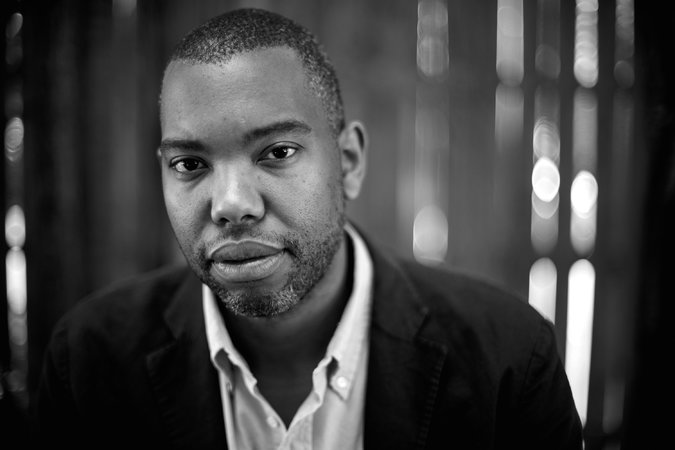
Just the same, if Carter and Keller want to claim that the gospel makes Christians more interested in peace and justice in the world, they need to use that argument the next time that an African-American pastor or activist claims that white Christians “don’t get it.” If getting the gospel is what really matters for seeing things whole, Joe Carter is just as good a source on race relations at Ta-Nehisi Coates.

You Can’t Claim the Reformation and the First Gross (think German) Awakening

While the Gospel Allies put on the mantle of Luther — LUTHER!!! (that antinomian, beer drinking, potty mouth) — they should really be reading Garry Wills on the problem with evangelicalism. As I’ve been trying to say for some time, revivalism is antithetical to reformation. The church (as in reform the church) matters to Luther and Calvin. The parachurch is at the heart of revivals and the Gospel Coalition. To that end, consider the following:

Evangelicalism tends to break out of any single denomination—think of the preachers from various bodies at Cane Ridge. It is fissiparous even in its most favorable environments—think of Methodism branching into the Disciples of Christ, the Holiness Movement, the African Methodist Episcopal Church. (Whitefield, it should be remembered, was an ordained Anglican.) Evangelicalism is a style—Mark Noll calls it a “value system.” It can affect even some “high church” bodies or members. There are Pentecostalists among Roman Catholics. (Phyllis Schlafly, it should be remembered, was a Catholic, as Kellyanne Conway and Steve Bannon are. Bannon showed his allegiance in his 2014 Skype address to the Institute for Human Dignity at the Vatican.)

Given this description of evangelical style, two things should be noticed. America is, or likes to think of itself as, a “do-it-yourself democracy.” Many of the traits I have been listing are ones Americans will fancy themselves as embodying (or wanting to). People who hit the sawdust trail are working a kind of do-it-yourself salvation. The credentialing by the people is what all presidents claim. No wonder Noll thinks of evangelical religion (despite its roots in Wesley’s England) as native to America, as giving America its most recognizable God. Calvin said God “elects” his chosen ones. In America we choose to elect our leaders. The crowd credentials the preacher. Historians rightly observe that our national political conventions have borrowed elements from revivals.

The Allies should be especially mindful, as the crowds gather this week that “crowds credential preachers.”

Why I Wouldn’t Sign (if I were evangelical)

Would you sign this expression of empathy with people who are not citizens of the United States? Here is how it begins:

The United States has experienced a contentious election and post-election season marked by fear, polarization, and violence. The current political climate reveals longstanding national sins of racism, misogyny, nativism, and great economic disparity. As faculty members of Christian institutions of higher education who represent varying degrees of privilege and power (but who are not representing those institutions in this document), we, the undersigned, join our voices with those who are most vulnerable.

We affirm the dignity of every human being as created in God’s image (Gen. 1:27). We submit to the sovereignty of Christ who humbled himself unto death. As members of his body, we strive to consider others above ourselves (Phil. 2:2–8); to speak the truth in love (Eph. 4:15); to serve one another in humility (Matt. 20:26–28); and to honor and steward God’s good creation (Gen. 1:28). As one body, if one member suffers, all suffer (1 Cor. 12:26); if one weeps, the body laments with them (Rom. 12:15); even creation groans in bondage to decay (Rom. 8:19-23).

I wonder if these Christian faculty would be inclined to sign a man-made creed, say like the Westminster Confession or the Book of Concord? I thought evangelicals were supposed to be anti-creedal.

Oh well.

Here‘s why Chris Gehrz signed (even though he admits he hesitated):

Indeed, I think most Christians would affirm them, whatever their theological, political, or other differences. While hardly an exhaustive list of Christian beliefs, these convictions are nevertheless foundational to Christian faith, community, and mission. And, as the statement goes on to explain, such commitments need to be restated and acted upon in a time when there is “falsehood that seeks to undermine truth and any propaganda intended to obscure it,” when a “large portion of our communities is weeping” and there is genuine anxiety and fear among many of our neighbors.

A concern for truth is obviously important for academics, whatever their religious beliefs and doubts. Why our role as Christian educators would compel us to acknowledge “pain and woundedness” and then “entreat Christian communities to seek healing, reconciliation, and justice” may be less evident.

Here‘s why his colleague, Ray VanArragon (what a Dutch-American name), wouldn’t sign:

First, the petition is unduly expansive, covering a range of topics that include racism, economic disparity, the environment, and our lack of neighborliness. At the same time it does not offer any recommendations for concrete responsive action.

Second, it employs language that tends to put off people who live outside of academic circles. It speaks vaguely about “structural injustice” and “degrees of privilege and power,” without explaining what those terms mean. It slyly suggests that Christians ought to share the priorities of the political left – a suggestion reinforced by the fact that, expansive as it is, it makes no mention of abortion. Right-of-center Christians, even well-meaning ones, may be inclined to dismiss the petition as pompous, disingenuous, and one-sided.

Here’s why I’m not.

This statement:

The current political climate reveals longstanding national sins of racism, misogyny, nativism, and great economic disparity.

Does not go with this statement:

we affirm our deep resolve to pursue truth, to reason carefully, and to rely on sound evidence.

Outrage is easy. So is moral posturing. Thinking carefully so that you don’t exhibit moral overreach is a challenge. I’d have thought educators would know this.

Where Reformed Protestants and New Calvinists Part Ways

New Calvinists believe:

Behind every great man there’s a great woman. Like most maxims, it is generally true, even if not universally true.

Reformed Protestants know (thanks to Stan Evans):

Behind every great man is a surprised mother-in-law.

Postscript: Conscience, a mother-in-law who never leaves. (H. L. Mencken)

Perspective on Tim’s Toxic Teaching

W-w will not help you sort this out. Carol Howard Merritt cannot tell the difference between Tim Keller and Tim Bayly:

I know that people are angry that Tim Keller doesn’t believe in women in the pastorate. But, my friends, this goes much, much deeper than women not being able to be ordained as Pastors, Elders, and Deacons. Complementarianism means married women have no choice over their lives at all.

So as Princeton Theological Seminary celebrates Tim Keller’s theology, I will be mourning. As he presents his lecture and receives his $10,000 award, I will lament for my sisters who have been maligned and abused. So much of my ministry has been dedicated to aiding the victims of these poisonous beliefs. In these difficult days, when our president says that women’s genetalia is up for grabs by any man with power and influence, I hoped that my denomination would stand up for women, loud and clear. Instead we are honoring and celebrating a man who has championed toxic theology for decades.

God, help us.

Meanwhile, Justin Taylor can’t tell the difference between Old Life and Carol Howard Merritt.

What help would confessional Presbyterianism give? It could provide a standard for teaching that cuts through male headship, or women’s liberation, or macho heterosexuality as the bright lines of Christian identity.

And notice this. Tim Keller was riding the wave of progressivism that swept through America post-Bush II. The world was getting better, conversations about race were ongoing, the economy was sluggish but improving, tolerance was increasing, cities were becoming more the sites of church life, and Christian apologists were gaining a hearing in the outlets of the mainstream media. Christians really could make a difference. A moderate, New School Presbyterianism with ties to Baptistic Calvinists could recover the cooperative endeavors that fueled Carl Henry, Harold John Ockenga, and Billy Graham. These sensible and extremes-avoiding Protestants could fill the vacuum created by the mainline.

Except that mainstream world, as Merritt indicates, has its own orthodoxy. You can be sensible, moderate, hip — heck, you can even like The Wire and channel Machen — and not measure up.

Maybe it turns out that Keller reached more Christians to think that the skeptics were really friendly rather than reaching the skeptics. Maybe it turns out that New School Presbyterians have more in common with Old School Presbyterians. What if they acted like it?