Some Matters Should Really Stay in the Closet

Full and unequivocal equality for Petra fans? I don’t think so:

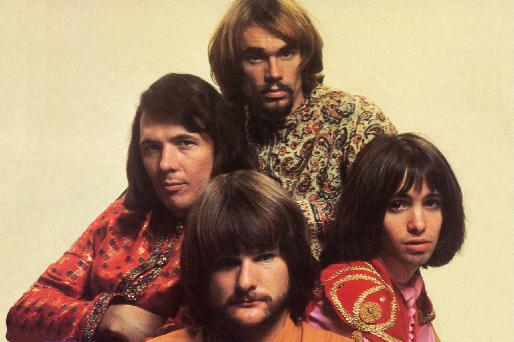
My best friend became a loser right around age 14. I had hopped a Greyhound from Hamilton to the far side of Toronto to spend a weekend with Paul. We sat down to do what boys that age do—probably something destructive—and he popped a new tape into his stereo. “These guys are Christians.” I scoffed. “They’re called Petra. The album is Beyond Belief.” I laughed. What a weakling. It really was beyond belief. He and I used to listen to Duran Duran together. Bon Jovi. Guns N’ Roses. And now we were going to listen to this tripe? Come on. Plus they can’t actually be Christians. Not good Christians, anyway. They play electric guitar! They’ve got long hair, for pity’s sake!

I endured it for the weekend, though I’m sure I griped and complained all the while. Or maybe I played along—I don’t exactly remember. But I do remember that moments before I left for home I scrounged up a blank tape and copied just one song—just one song to take home to my friends so we could laugh together. I ended up with the first song on the second side: “Underground.” Then I went home.

Sure enough, I played it for my friends and we laughed. After all, we were Reformed and baptized and catechized—we didn’t need Christian rock. Christian rock was for Arminians or Pentecostals or Baptists—weaklings all of them. It certainly wasn’t for the likes of us.

I played it for some more friends. I played it for my family. I kept playing it until I realized I was playing it for me. This song was saying something to me. At some point I had started to hear the lyrics—to really hear them. I realized “Underground” was a song about professing Christ instead of denying him, of being bold instead of intimidated. That was strong, not weak. Was I willing to stand for Christ? Or was I a weakling? Uh oh.

“Mom! Can you take me to the Christian bookstore?”

I bought the album and listened to the rest of the songs. It started with “Armed and Dangerous,” a song about relying upon God, then went to “I Am on the Rock,” a proclamation of confidence in God. “Creed” was simply The Apostle’s Creed set to music, “Beyond Belief” was about current and future hope, while “Love” was an adaptation of 1 Corinthians 13. And that was just side 1. I listened to it until I wore it out. I listened to it on my ghetto blaster, in my parent’s minivan, on my awesome walkman—whenever and wherever I could. I listened until I knew every one of John’s words, every one of Louie’s beats, every one of Bob’s solos.

I listened until I became a Christian.* Late one night I caught a glimpse of the ugly depravity of my heart side by side with the heart-stopping holiness of God. (A night, as it happens, when I was also reading a Frank Peretti book, but that’s a story for another day.) I was undone. I was redone. I was reborn. All of that parenting and Bible-reading and sermonizing and catechizing had done its work in me, but somehow it was just waiting for one more thing—for news of the warm and personal relationship with God that Petra kept singing about.

I could respond with my own encounter with Iron Butterfly and In A Gadda Da Vida (BABY!!), but as I (mmmmeeeeeeEEEEEE) say, some thing are best left in our private selves, divorced from our public identities.

Publishing Is Not Good for the Soul

Just ask Jonathan Edwards (via Jonathan Yeager):

Edwards vocalized his disgust with the way that his book Religious Affections was published in 1746, probably because it was concisely printed, with tightly cropped margins and line spacing. Despite his complaints, the printer for this book feared that he had not printed enough copies to meet public demand. In an advertisement at the end of the book, the Boston printer Samuel Kneeland remarked that some 1,300 subscriptions had been taken for Religious Affections, at a time when a colonial author would have rejoiced if 500 copies of a book sold.

Edwards was also not happy with the editorial work that the ministers Benjamin Colman, John Guyse, and Isaac Watts did when publishing his revival account A Faithful Narrative in London. After its publication in 1737, none of the first editions of Edwards’s book would be published again from London. Partially because of Edwards’s desire to exercise more control in how his future books would be edited and published, he preferred to have them printed from Boston, where his trustworthy friend Thomas Foxcroft could oversee the presswork. Here again is more irony. A Faithful Narrative was one of Edwards’s best-selling books, and led to his international recognition as a revivalist. Yet if this book had been published in Boston, he might not have achieved international fame within his lifetime.

Personally, I don’t think Edwards was wrong to be particular about the way his books looked, nor do I think he should have thought his own book sense better than someone in the business. But is this the kind of reaction you’d expect from a man so earnest for holiness? Sure, he was a regenerate sinner like the rest of us. But the New Calvinists (and their Obedience Boys siblings) keep marveling at former New Calvinists’ sanctity. Can’t we de-escalate the piousity syndrome and relate like real human beings?

For Those Without Ears to Hear

Justin Taylor revives Billy Sunday’s career by collecting comments on what the evangelist sounded like and even a few clips of the preacher himself. Taylor leaves out arguably the most insightful observer of Sunday, H. L. Mencken, whose critique extends as much to evangelicalism as to the baseball-player-turned-evangelist himself:

As for his extraordinary success in drawing crowds and in performing the hollow magic commonly called conversion, it should be easily explicable to anyone who has seen him in action. His impressiveness, to the vegetal mind, lies in two things, the first being the sheer clatter and ferocity of his style and the second being his utter lack of those transparent pretensions to intellectual superiority and other worldliness which mark the average evangelical divine. In other words, he does not preach down at his flock from the heights of an assumed moral superiority — i.e. inexperience of the common sorrows and temptations of the world — but discharges his message as man to man, reaching easily for buttonholes, jogging in the ribs, slapping on the back. The difference here noted is abysmal. Whatever the average man’s respect for the cloth, he cannot rid himself of the feeling that the holy man in the pulpit is, in many important respects, a man unlike himself . . . .; his aura is a sort of psychic monastery; his advice is not that of a practical man, with the scars of combat on him, but that of a dreamer wrapped in aseptic cotton.

Even setting aside [Sunday’s] painstaking avoidance of anything suggesting clerical garb and his indulgence in obviously unclerical gyration on his sacred stump, he comes down so palpably to the level of his audience, both in the matter and the manner of his discourse, that he quickly disarms the old suspicion of the holy clerk and gets the discussion going on the familiar and easy terms of a debate in a barroom. The raciness of his slang is not the whole story by any means; his attitude of mind lies behind it, and is more important. . . . It is marked, above all, by a contemptuous disregard of the theoretical and mystifying; an angry casting aside of what may be called the ecclesiastical mask, an eagerness to reduce all the abstrusities of Christian theology to a few and simple and (to the ingenuous) self-evident propositions, a violent determination to make of religion a practical, an imminent, an everyday concern.

Will A Revival Save Us?

In hopes of understanding my own blindness about race relations in America and what I (me me I I me me) might do to make the nation and me less racist, I listened to Thabiti Anyabwile’s discussion with Carmen Fowler LaBerge. Here’s what I learned. First, I need to acknowledge that whites have treated blacks badly:

We need to acknowledge the ways in which the church has intentionally, historically refused to be the Body of God along the lines of race. Whether it from Virginia’s enactment of laws that if a slave became a Christian did not mean they would be freed from slavery, to the segregation of congregations in the 1800s and into the 1900s, to the Evangelical church just missing the ball in the Civil Rights Movement and other areas. We have to tell the truth- the bone deep truth- about our complicity if we will ever be free from it.

When I taught colonial America last fall, I ended with the point that race is one of the lasting and darkest legacies of colonial slavery. I may need to do more in class. But I think I’ve got this part of it. I understand in part if not in full.

Second, I need to do something:

Pastor T says one tangible step is to pray for revival. Pray that God pours out his Spirit on His church, and that His spirit would graciously bring conviction of sin. That He would quicken His church in repentance and holiness. Pray that God would subdue the hearts of those hearts in rebellion against God and turn to Him.

Pastor T hopes the Lord would use the grief and mourning that has gripped the nation to break our hearts in repentance and so we would draw near to Him in revival.

Here I’m scratching my head. Does Pastor Anyabwile (and Carmen) not know that revivals were incredibly divisive throughout U.S. history? Revivals don’t unify. They divide churches between pro- and anti-revivalists.

If Pastor Anyabwile means that revival might bring sanctification, I appreciate the point. But in the case of cop shootings, does that mean city governments should only hire applicants who have made a profession of faith? If revival saves America, aren’t we still thinking about politics the way Constantinians, neo-Calvinists, Covenanters, and theonomists do? Can we only trust officials who are saved?

So what do we do if we are to live with non-Christians? Any policies? Interestingly enough, Pastor Anyabwile faulted Ta-Nehisi Coates in the latter’s piece on mass incarcerations for not recommending any policies:

Coates repeats the significant failure he recognizes in an earlier Moynihan. Coates tells us that the fatal flaw in Moynihan’s infamous report was Moynihan’s decision to omit specific policy solutions. Having seen that so clearly, it’s odd that Coates should repeat that failure so often in the important writing he now undertakes. A mind as formidable as Coates’s ought not stop with descriptive analysis, however compelling its portrayal of the problem. It should push itself to hazard a prescription, to call for some specific redress.

Pastor Anyabwile is of course right. He should also know that revival is not policy.

So what policy is out there? Maybe Peter Moskos is on to something about what California and Chicago police can learn from New York City’s patrol people and their supervisors:

Last year in California, police shot and killed 188 people. That’s a rate of 4.8 per million. New York, Michigan, and Pennsylvania collectively have 3.4 million more people than California (and 3.85 million more African Americans). In these three states, police shot and killed (just?) 53 people. That’s a rate of 1.2 per million. That’s a big difference.

Were police in California able to lower their rate of lethal force to the level of New York, Michigan, and Pennsylvania — and that doesn’t seem too much to ask for — 139 fewer people would be killed by police. And this is just in California! (And California isn’t even the worst state; I’m picking on California because it’s large and very much on the high end.)

Now keep in mind most police-involved shootings are not only legally justifiable, they are necessary and good at the moment the cop pulls the trigger. But that doesn’t mean that the entire situation was inevitable. Cops don’t want to shoot people. They want to stay alive. You give cops a safe way to reduce the chance they have to pull the trigger, and they’ll certainly take it.

I really don’t know what some departments and states are doing right and others wrong. But it’s hard for me to believe that the residents of California are so much more violent and threatening to cops than the good people of New York or Pennsylvania. I suspect lower rates of lethal force has a lot to do with recruitment, training, verbal skills, deescalation techniques, not policing alone, and more restrictive gun laws. (I do not include Tasers on this list.)

If we could bring the national rate of people shot and killed by police (3 per million) down to the level found in, say, New York City (The big bad NYPD shoots and kills just 0.7 per million) we’d reduce the total number of people killed by police 77 percent, from 990 to 231!

The thing is, we don’t need the Holy Spirit’s miraculous powers for this. Providential control is always appreciated.

How Far Will Racial Reconciliation Go?

Michelle Higgins and her father want it to go far:

Perhaps we evangelicals are silent – some refusal to acknowledge the whole identities of LGBTQ+ people – because we are bigoted terrorists too.
Our propaganda: circulating a petition to boycott Target. Our victims: image-bearers whose souls conditions are neither revealed to or controlled by us. We live as if faith gives us the right to direct people’s bodies. This is not faith-filled living. It is oppression.
And much like the realization breaking upon us in the current political climate: this is not evangelicalism. At all.

Evangelicals are a diverse group, thankfully some of our circles include the LGBTQ+ family. Many of us are showing up in solidarity with queer communities around the world, grateful for the invitation to grieve together. But many others in our evangelical family walk a dangerous path of passing judgment before showing compassion. If we readily proclaim that LGBTQ+ people are sacred image-bearers, we must also confess and dismantle our participation in the long history of hatred that has them scared. It is easy to express sympathy for our fellow humans. But we are called to a greater task: to confess that the lives of our gay, lesbian, queer, and trans friends are sacred. We must be willing to say that the lives of queer people of color matter to God.

What if Muslims are people of color?

Another Difference between New and Paleo Calvinists

New Calvinists are mean but don’t know it.

Jonathan Merritt was an unlikely person to confirm a point made here before, namely, that when you define orthodoxy you also draw lines that to outsiders will look unloving and mean. (Think undergraduates at Oberlin seeking protection from disquieting perceptions.) For a while New Calvinists and their allies at the Gospel Coalition have portrayed Paleo Calvinists as mean. Now with Merritt what goes around comes around.

He observes that New Calvinists are full of criticism (and instructions on how to do it):

The website’s archives read like a how-to handbook for criticizing. TGC managing editor Matt Smethhurst tackles how to criticize fellow Christians. Blogger Jared Wilson lays out when you should criticize your pastor. Popular blogger Justin Taylor explains how to criticize your non-Christian friends and how to criticize another person’s theology and how to criticize the evangelical movement at-large.

Their rebukes are not always theoretical. TGC bloggers regularly express sharp disapproval of theologians, pastors, authors, and politicians using strong language. When writer Thabiti Anyabwile wanted to criticize homosexuality, for example, he encouraged readers to recover their “gag reflex” and focus on the “yuck factor.” Setting aside the many–and I mean many–problems with this way of thinking, Anyabwile’s approach is not exactly a silver-plated conversation starter in a non-Christian culture. You can’t transform a culture while you’re browbeating, rebuking, name-calling and gagging. That’s not a recipe for cultural engagement, but rather cultural enragement.

Then there is New Calvinists’ refusal to entertain criticisms themselves:

Most people who have been blocked by TGC say they were punished for questioning the coalition’s disastrous defense of Sovereign Grace Ministries, a prominent Calvinist ministry that was embroiled in a sexual abuse scandal. TGC personalities connected to SGM continued to express support and friendship for those involved with the scandal even as it became clear that Sovereign Grace leaders were complicit. Many who questioned TGC’s stance were blocked. Some who merely used Twitter handles such as #istandwithsurvivors were similarly punished by TGC.

TGC’s blocking spree has swept in countless pastors, seminary professors, bloggers, and others. One person told me they were blocked for challenging their comments about transgender people, while another said they were punished for questioning their stance on “biblical masculinity.” Several told me they were blocked for retweeting someone else’s critique, while others — like Northern Seminary professor Geoff Holsclaw — said they had no idea why TGC blocked them. . . .

A pattern of offering criticism while not being able to receive it, according to Dr. Leon Seltzer of Psychology Today, is a characteristic trait of narcissism. As Seltzer writes, “Deep down, clinging desperately not simply to a positive but grandiose sense of self, [narcissists are] compelled at all costs to block out any negative feedback about themselves.”

Finally, Merritt points out the problem of belonging to a club instead of a church:

TGC has established a system where in order to be a part of the network, one has to believe a set of doctrines that are more specific than some denominations. Basically, you have to be a conservative Calvinist protestant who holds particular views about gender roles, reads the Bible in a certain way, understands human sexuality like they do, etc. If you don’t agree to these positions, you’re out. And those who add their church to the directory of TGC-approved congregations are encouraged to police others. The site asks members to “report a church that doesn’t align with TGC’s Foundation Documents.”

The word “coalition” is defined as “a combination or alliance, especially a temporary one between persons, factions, states, etc.” But the structure of TGC allows for almost no diversity among its members–certainly none that would be noticeable to anyone who is not a Christian insider. So, technically-speaking, The Gospel Coalition is not a coalition at all; they are a club.

If the New Calvinists were more ecclesial and less parachurchian, they might not lose their critical side. And contrary to Merritt who thinks engaging culture is a positive, if New Calvinists were churchly they wouldn’t worry about the culture so much. Belonging to a church and working within its structures would not make them less critical, though Robert’s Rules supplies a structure for critique that takes away some of criticism’s sting. The best thing that might happen to New Calvinists if they looked to the church instead of the club, they would not be so doctrinaire about so many peripheral matters. The visible church has a way of focusing your outlook (not sure what happened to Pope Francis).

The New Calvinist Safe Space

I let it go and then Aquila Report picked up Tim Challies’ recommendations for how to find good books. In the context of debates about safe spaces on university campuses and some students’ desire to avoid the dark and less encouraging parts of human existence, Challies’ advice sounds familiar:

Who wrote you? Familiarize yourself with trustworthy authors. As a reader you should have your list of favorites, the short list of people you regard as especially influential and trustworthy. I believe there is a lot of value in tracking a few authors through the course of their career and reading—or at least considering—every one of their books. This is difficult with an R.C. Sproul since if you begin today you are 100 books behind, but much easier with younger authors who have a shorter list of works. Don’t know where to begin? Then ask a friend or pastor. Or ask me. I’d try people like H.B. Charles Jr., Kevin DeYoung, Gloria Furman, Russell Moore, Andy Naselli, Barnabas Piper, or Jen Wilkin—people like that. They have each written a few books but not so many that you’ll need to spend two years catching up, and they are all likely to write quite a few more. Find “your” authors and read what they write. But then also track who endorses their books, who speaks at conferences with them, and so on. Start to look for connections.

Who published you? You should familiarize yourself with Christian publishers and learn which of them are especially trustworthy. There are quite a lot of excellent publishers whose books may vary by quality and secondary theological issues but which will never fall outside the conservative Evangelical stream. Learn to trust these ones. Among them are Banner of Truth, Christian Focus, Crossway, Evangelical Press, Matthias Media, P&R, Reformation Heritage, Reformation Trust, The Good Book Company, (and, I hope, Cruciform Press since I was involved in founding it). If they publish it, you can be quite confident in it. Other publishers publish a much wider range of titles and, depending on the company, the imprint, or the department, their titles may range from very good to quite concerning or from very good to outright heretical. For these you will need to exercise a bit more caution. Here I refer to IVP, Eerdmans, Multnomah, Thomas Nelson, Zondervan, as well as the faith or Christian imprints of large mainstream publishers (Harper Collins, Penguin, and so on).

Two troubling aspects of this counsel stand out. One, it assumes that Christians are readers who only look for books that agree with their own outlook. This is a big difference between New Calvinists and Neo-Calvinists. The latter read widely, try to learn from the best scholars in a variety of fields, and have confidence that challenging reading material will not destroy a reader’s faith. In other words, Neo-Calvinists understand the merits of the Pulitzer Prize. New Calvinists cultivate a safe space shelf of books.

The other problem is this: Challies’ advice explains how the Gospel Coalition and celebrity pastors happen, or Jen Hatmaker for that matter. Readers who want trustworthy authors and publishers, and learn to associate certain names with edifying material, are not going to be critical or discerning of the books on the safe-space shelf. Instead of iron sharpening iron it’s pillow softening pillow. And it does become an echo chamber that is so far removed from the mainstream that I’m surprised Tim Keller is part of the enterprise. He seems to aspire to Big Apple relevance but has a following in a pietistic ghetto, or TKNY’s urbanism should scare off those who seek reassuring authors and publishers.

I give New Calvinists credit for not portraying themselves as the smartest Christians in the room, though their attachment to Jonathan Edwards shows a bit of intellectual ambition. But how in the world are Christians going to operate in a world where the most respected newspapers, magazines, and publishers are places where believers will not tread for fear of being challenged? And people think the Left is responsible for the polarization of our society. Challies provides just one more way for Christians to isolate themselves.

Don’t We Pay Pastors to Answer These Questions?

Joseph Franks lists questions that have hounded him throughout eighteen years of ministry:

Does God care about theater seats, stackable chairs, or pews?

What is God’s preference in regards to instrumentation? Are the the organ or piano more excellent and preferable than the guitar and drum?

What about the songs people sing? Are uninspired older songs that we call hymns more holy than uninspired new songs that someday might be called hymns? Some would have us only sing psalms.

Are women and men who sing from the choir loft more preferable to God than men and women who sing from the stage? In God’s eyes, is a choir more sacred than a praise team?

What sort of bowing, kneeling, hand-raising, clapping, and bouncing is allowable in the presence of God? Exactly when does responding with tears or dance become too emotional?

How ought water be applied to worshiping folk? This is an especially problematic question when sprinkling, pouring, and dunking can be found throughout the pages of sacred scripture.

Should believers be concerned over the amount of fermentation found in the fruit of the vine or leaven found in the bread?
Where would one go in Scripture to find the discussion of how the communion elements must be properly covered?

Are all good sermons delivered in the same manner? Does God prefer robed men, suited men, or less formal men? Does God love the wooden pulpit? Does plexiglass really prove the compromising minister? Should the faithful church disapprove of the man delivering his sermon from a seated position?

What would we say to Jesus who often sat while those who listened stood?

Why can some appreciate air-conditioning technology, lighting technology, audio technology, but then look at visual technology as a step down the slippery slope of sin?

Before the worship of God, ought men and women come together in quiet, meditative, somber silence, or should the worship service of God be preceded by festive communion between worshiping friends?

Ought generous New-Covenant worshipers to make a big deal of the percentage and the plate in financial giving?

Who was it in the Presbyterian tradition that declared a young man could be licensed to preach, deliver his sermon, but then not be able to declare the benediction from Jesus to those who just received his message?

Must the pulpit be centrally located in order for the Word of God to be rightly honored?

Such a list might imply that those who ask such questions are trivializing worship. But Franks insists that’s not his purpose:

I am not saying that anything goes; my Bible is full of stories of good-hearted individuals who are judged or disciplined due to their failure to take God’s commands seriously. I would just merely ask them to not confuse the “Traditions of Man” with the “Doctrines of God.” I am not even asking them to let go of their traditions. Some love the worship style passed down from Jerusalem, to Rome, to Geneva, to Scotland, to Westminster Abby, and to our Scots-Irish fathers in the South. But again, allow them to prefer and pass along their traditions without pretending they come from the sacred text.

The missing category here it seems is wisdom. Lots of the answers to these questions are “it depends.” If you are a church plant meeting in a theater, deciding whether to use theater seats is a no-brainer. And if you are an established congregation with a pulpit centered at the front, why would you even countenance a church renovation that moved the pulpit to the side?

After eighteen years, doesn’t a pastor have answers to these questions? Even more pressing, after eighteen years haven’t you had a chance to instruct church members so they can see the difference between the elements, circumstances, and forms of worship? Or is it wise to pile up questions without answers so that believers think most aspects of worship are mere preferences. Franks writes,

Let us not throw away our ancient roots, but at the same time, let us not be bound by the extra-biblical regulations of our fathers that some well-intentioned friends present as the “Doctrine of God.”

Does that apply to heating, plumbing, and speaking in known tongues? Or might some of the aspects of church life that modern people living in the West take for granted be valuable even if not holy? I mean, Franks asks questions the way that John Frame used to about worship. That’s ironic because that defense of contemporary worship included the notion that all of life is worship (which is not from from all of life is sacred) and so the regulative principle should apply to all of life. If that’s the case, then each of the questions Franks asks have holiness and eternity written over every square inch of them. And since he is a minister of God’s word and the Bible speaks to all of life, he’s got the answers.

Another Solution to Celebrity Pastors — Modesty

I’m betting (if I were a gambling man) that celebrity pastors are a bigger problem for God’s people than transgender bathrooms. At least, Denny Burk Jared Wilson concedes that famous ministers are a problem, though he writes at the website that would not have a following if not for — wait for it — celebrity pastors. Here’s how celebrity happens:

. . . we participate in the highest elevation of a pastor’s platform as we can manage and then load him up with all the expectation we can muster. The result, naturally, is that he is top-heavy and prone to toppling.

BurkWilson adds that “pastoral smallness and obscurity” have their own problems, but “the most prominent dangerous temptations in pastoral bigness are these idolatries — worship of the celebrity pastor by his fans and himself.”

The possible fix for the celebrity pastor include:

1. Transition your “video venue” satellite campuses to church plants or at the very least install live preaching.

2. No more book deals for gifted preachers who are not gifted writers.

3. Discerning the credibility of our experts.

4. Actual parity among elders.

What about recognizing that celebrity pastor is an oxymoron?

1. Celebrity pastors are not really celebrities. Bruce Springsteen and Scarlett Johansson are celebrities. D. A. Carson and John Piper are not. And if Protestants long for pastors with celebrity appeal, they may show a greater degree of worldliness than they should. What it says about an organization — Gospel Coalition — that thrives on celebrity is something that the celebrity pastors and professors may want to consider the next time their schedules permit them to meet.

2. Pastors are not celebrities. First, they are undershepherds. They serve their lord and master, and are mere stewards of the mysteries of God (1 Cor. 4:1) — sort of like butlers. Unlike celebrities who avoid rubbing shoulders with the people and who hire servants to do work beneath them, pastors need to live and move and have their livelihood among smelly sheep (at least they’re not goats).

Second, real pastors serve a local congregation. That means real pastors have much more the fame footprint of a local television news show anchor than they do a Hollywood, NBA, or network star. Who outside eastern Michigan knows the NBC anchor for the 5:00 news show? I don’t. In other words, the genuine audience for a pastor is the local congregation, the one who called him. Fame outside the congregation is an indication that something is wrong.

What if the pastor writes books? Depends on whether the books are good, pretty good, or great. Great books won’t be so until they stand the test of time. Will Tim Keller’s books still be in print in fifty years? That’s one test of greatness. Simply having someone with fame write a book is no indication of merit. The bookshelves are full of promotional materials designed to feed off and enhance celebrity.

3. Celebrities can’t pastor. This may go without saying since celebrity is something that increases fame but decreases access. A pastor has to be available to his people almost 24/7. But imagine a celebrity pastor like Tim Keller paying a family visit. If he does, great. Chances are, with celebrity come handlers, schedules, and limitations to access. A celebrity is remote, a pastor is accessible.

What about recognizing that celebrity is unbecoming sanctification (where are the obedience boys now that we need them?)?

This is where the New Calvinists may want to take a little instruction from the original Calvinist (and notice the connections between 2k and piety that is modest in its affects and aspirations). Here is John Calvin’s commentary on the sons of Zebedee’s exchange with Christ about greatness (celebrity?) in the savior’s kingdom:

Their ignorance was worthy of blame on two accounts; first, because their ambition led them to desire more than was proper; and, secondly, because, instead of the heavenly kingdom of Christ, they had formed the idea of a phantom in the air. As to the first of those reasons, whoever is not satisfied with the free adoption of God, and desires to raise himself, such a person wanders beyond his limits, and, by unseasonably pressing himself forward beyond what was proper for him to do, is ungrateful to God. Now to estimate the spiritual kingdom of Christ according to the feeling of our flesh is highly perverse. And, indeed, the greater the delight which the mind of man takes in idle speculations, the more carefully ought we to guard against them; as we see that the books of the sophists are stuffed with useless notions of this sort.

Can you drink the cup which I shall drink? To correct their ambition, and to withdraw them from this wicked desire, he holds out to them the cross, and all the annoyances which the children of God must endure. As if he had said, “Does your present warfare allow you so much leisure, that you are now making arrangements for a triumphal procession?” For if they had been earnestly employed in the duties of their calling, they would never have given way to this wicked imagination. In these words, therefore, those who are desirous to obtain the prize before the proper time are enjoined by Christ to employ themselves in attending to the duties of piety. And certainly this is an excellent bridle for restraining ambition; for, so long as we are pilgrims in this world, our condition is such as ought to banish vain luxuries. We are surrounded by a thousand dangers. Sometimes the enemy assails us by ambush, and that in a variety of ways; and sometimes he attacks us by open violence. Is he not worse than stupid who, amidst so many deaths, entertains himself at his ease by drawing pictures of a triumph?

Our Lord enjoins his followers, indeed, to feel assured of victory, and to sing a triumphal song in the midst of death; for otherwise they would not have courage to fight valiantly. But it is one thing to advance manfully to the battle, in reliance on the reward which God has promised to them, and to labor with their whole might for this object; and it is another thing to forget the contest, to turn aside from the enemy, to lose sight of dangers, and to rush forward to triumph, for which they ought to wait till the proper time.

The advance of the kingdom of grace does not come from great awakenings or grand gestures or bestsellers or big conferences. It comes through Gideon’s small band, an obscure Palestinian kingdom, a suffering savior, and apostles who died as martyrs. It is time more than ever for New Calvinists to get over George Whitefield.

New Calvinist Exceptionalism

After the recent controversies surrounding Darrin Patrick, C. J. Mahaney, and James MacDonald, I was surprised to see Jeff Jue be so positive about the New Calvinism. He even appeals to the spirit of J. Gresham Machen and Westminster Seminary:

It is committed to the Reformed tradition.

The theme of this year’s T4G was “We Are Protestant: The Reformation at 500,” and the theme of TGC’s 2017 National Conference will be “No Other Gospel: Reformation 500 and Beyond” (April 3 to 5 in Indianapolis; browse list of speakers and talks, and register here). Reformed theology is at the heart of WTS, and it’s what we’ve been teaching since J. Gresham Machen founded the seminary in 1929. So it’s a great encouragement to partner with others who share our commitment to the Reformed tradition.

In 2014 John Piper gave a series of lectures at WTS on the New Calvinism. At one point he stated, “There would be no New Calvinism without Westminster Seminary.” He was referring to the numerous influential books written by WTS faculty members. Perhaps it was an overstatement, but Piper’s comment reminded me of the historical connection between WTS and the New Calvinism.

To Serve the Local Church

Just as WTS is an independant organization with a confessional identity wanting to serve the church, the same is true of sister ministries like T4G and TGC.

And while we have some differences among us, the New Calvinist movement—as represented this week by T4G—is an opportunity to share the rich truths of the Reformation with yet another generation of pastors and churches.

I would have thought that Carl Trueman’s jab on the Gospel Coalition’s “Machismozing” was more typical of that Old Westminster spirit.

But what do I know? It is the season of spin.