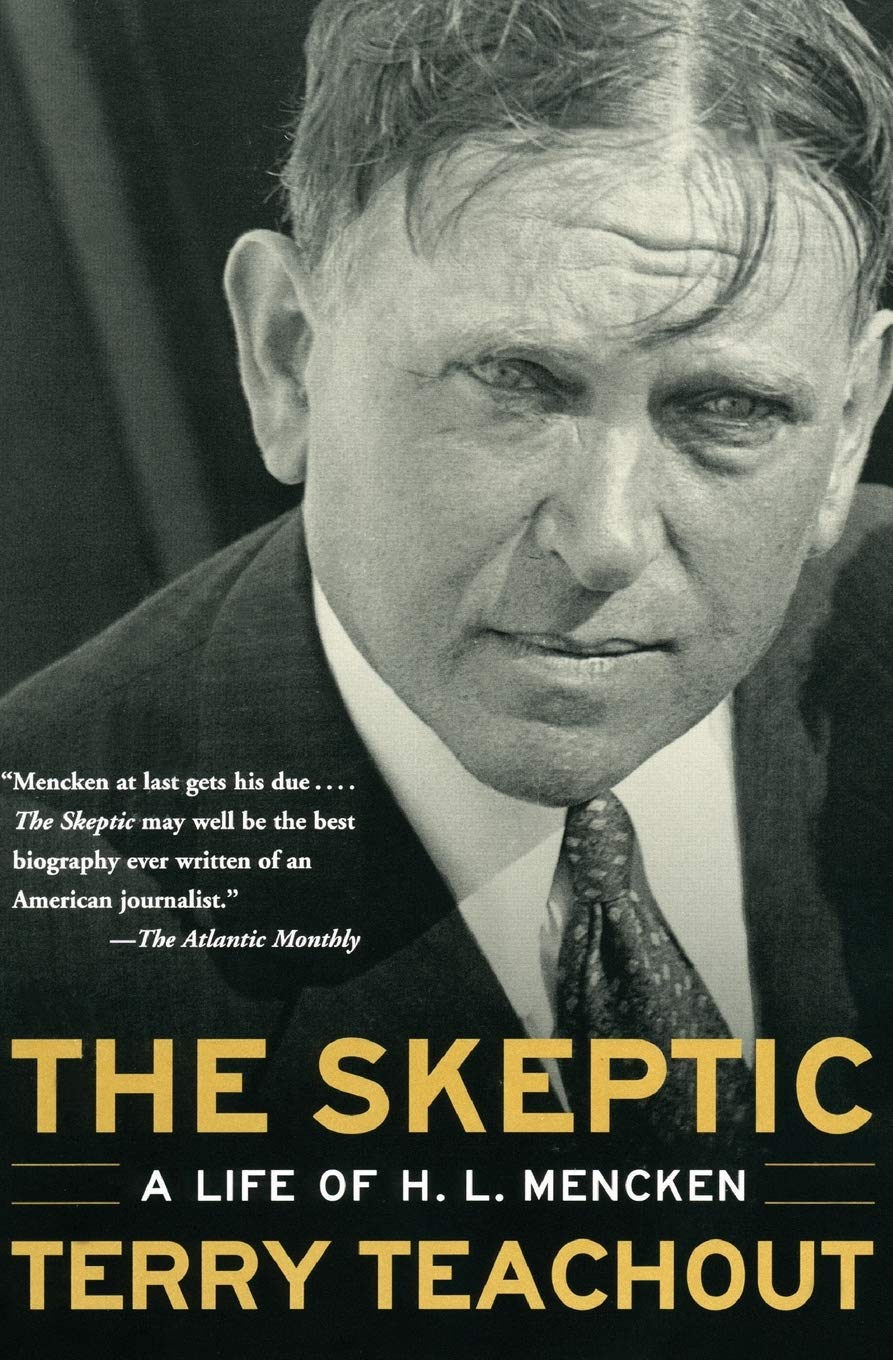
Mencken Day 2025: Holy Orders, Mixed Motives

Holy Clerks

Around no class of men do more false assumptions cluster than around the rev. clergy, our lawful commissioners at the Throne of Grace. I proceed at once to a crass example: the assumption that clergymen are necessarily religious. Obviously, it is widely cherished, even by clergymen themselves. The most ribald of us, in the presence of a holy clerk, is a bit self-conscious, reticent and awed. I am myself given to criticizing Divine Providence somewhat freely, but in the company of the rector of my parish, even at the Biertisch, I tone down my animadversions to a level of feeble and polite remonstrance. I know the fellow too well, of course, to have any actual belief in his piety. He is, in fact, rather less pious than the average right-thinking Americano, and I doubt gravely that the sorceries he engages in professionally every day awaken in him any emotion more lofty than boredom. I have heard him pray for Coolidge, for the heathen and for rain, but I have never heard him pray for himself. Nevertheless, the public assumption that he is highly devout, though I dispute it, colors all my intercourse with him, and deprives him of hearing some of my most searching and intelligent observations.

All that is needed to expose the hollowness of this ancient delusion is to consider the chain of causes which brings a young man to taking holy orders. Is it, in point of fact, an irresistible religious impulse that sets him to studying exegetics, homiletics and the dog-Greek of the New Testament, and on irresistible religious impulse only, or is it something quite different? I believe that it is something quite different, and that that something may be described briefly as a desire to shine in the world without too much effort. The young theologue, in brief, is commonly an ambitious but somewhat lazy and incompetent fellow, and he studies theology instead of medicine or law because it offers a quicker and easier route to an assured job and public respect. The sacred sciences may be nonsensical bores, but they at least have the vast virtue of short-circuiting, so to speak, the climb up the ladder of security. The young doctor, for a number of years after he graduates, either has to work for nothing or to content himself with the dregs of practise, and the young lawyer, unless he has unusual influence or complete atrophy of the conscience, often teeters on the edge of actual starvation. But the young divine is a safe and distinguished man the moment he is ordained; indeed, his popularity, especially among the faithful who are fair, is often greater at that moment than it ever is afterward. His livelihood is assured instantly. At one stroke, he becomes a person of dignity and importance, eminent in his community, deferred to even by those who question his magic, and vaguely and pleasantly feared by those who credit it.

These facts, you may be sure, are not concealed from ambitious young men of the sort I have mentioned. Such young men have eyes, and even a certain capacity for ratiocination. They observe the nine sons of the police sergeant: one a priest at twenty-five, with a fine house to live in, invitations to all christenings and birthday parties for miles around, and plenty of time to go to the ball-game on Summer afternoons; the others struggling desperately to make their livings as piano-movers, tin-roofers, motormen or bootleggers. They observe the young Methodist dominie in his Ford sedan, flitting about among the women while their husbands labor down in the yards district, a clean collar around his neck, a solid meal of fried chicken in his gizzard, and his name in the local paper every day. They observe the Baptist dervish in his white necktie, raiding saloons, touring the bawdy-houses and raising hell generally, his tabernacle packed every Sunday night, a noble clink of silver in his collection-plates, and a fat purse for him now and then from the Ladies’ Aid or the Ku Klux Klan. Only crazy women ever fall in love with young doctors or lawyers, but every young clergyman, if he is so inclined, may have a whole harem, and with infinitely less danger than a struggling lawyer, a bootlegger or a bank clerk runs every day. Even if he is celibate, the gals bathe him in their smiles; in truth, the more celibate he is, the more attention he gets from them. No wonder his high privileges and immunities propagate the sin of envy! No wonder there are still candidates for the holy shroud, despite the vast growth of atheism among us!

It seems to me that the majority of the young men who are thus sucked into holy orders are not actually pious at all, but rather somewhat excessively realistic—that genuine piety is far more apt to keep a youth out of the pulpit than to take him into it. The true devotee, frequenting the sacred edifice constantly, becomes too familiar with the daily duties of a clergyman to see any religious satisfaction in them. In the main, they have nothing to do with religion at all, but are basically social or commercial. In so far as a clergyman works at all, he works as the general manager of a corporation, and only too often it is in financial difficulties and rent by factions among the stockholders. His specifically religious duties are of a routine and monotonous nature, and must needs depress him mightily, as a surgeon is depressed by the endless snaring of tonsils and excision of appendices. He debases spiritual exaltation by reducing it to a hollow and meaningless formality, as a politician debases patriotism and a lady of joy debases love. He becomes, in the end, quite anæsthetic to religion, and even hostile to it. The fact is made distressingly visible by the right rev. the bench of bishops. For a bishop to fall on his knees spontaneously and begin to pray to God would make almost as great a scandal as if he mounted his throne in a bathing-suit. The piety of the ecclesiastic, on such high levels, becomes wholly formal and theoretical. The servant of God has been lifted so near to the saints and become so familiar with the inner workings of the divine machinery that the sense of awe and wonder has oozed out of him. He can no more undergo a genuine religious experience than a veteran scene-shifter can laugh at the wheezes of the First Gravedigger. It is, perhaps, well that this is so. If the higher clergy were actually religious some of their own sermons and pastoral epistles would scare them to death. (Prejudices: Fourth Series 1924)
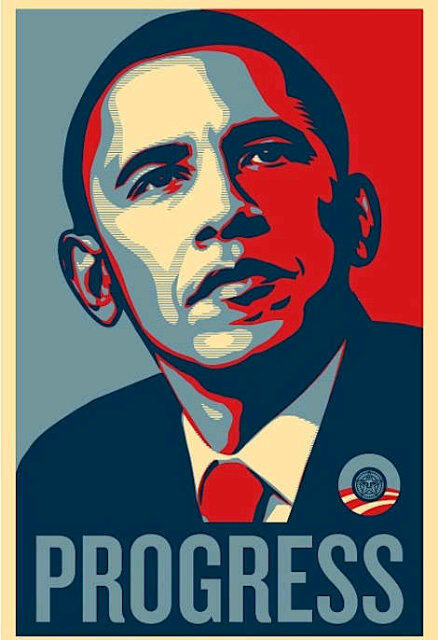
History Doesn’t Have Sides (take it from a professional)

Citizens of the U.S. have become used to presidents talking about “the right side of history”:

Most recently, during his December 6 Oval Office address on terrorism, Obama said: “My fellow Americans, I am confident we will succeed in this mission because we are on the right side of history.” It’s a phrase Obama loves: He’s used it 15 times, in debates; at synagogues; in weekly radio addresses; at fundraisers. Obama is almost as fond of its converse, “the wrong side of history,” which he has used 13 times; staffers and press secretaries have invoked it a further 16. (These figures are all based on the archives of the American Presidency Project at the University of California Santa Barbara.)

But the expressions are hardly original to Obama. Bill Clinton referred to “the right side of history” 21 times over his time in office, while his staffers added another 15. Clinton also mentioned the “wrong side of history” several times. Ronald Reagan, for his part, wryly resurrected Leon Trotsky’s relegation of the Mensheviks to the “dustbin” or “ash heap of history.” Speaking to the British Parliament in 1982, the Gipper said, “The march of freedom and democracy which will leave Marxism-Leninism on the ash-heap of history as it has left other tyrannies which stifle the freedom and muzzle the self-expression of the people.”

That kind of naivete from the smartest people in the country (minus Reagan, of course) makes you (okay mmmmeeeeEEEEE) wonder what it feels like to lose and be on the wrong side of history (now Democrats know how Jerry Falwell felt in 1993).

But this is not simply an American problem. Paul Helm (not licensed as a historian) points out that history is not so readily categorized as right or wrong. But it is the legacy of the Enlightenment and a departure from Augustinianism:

This idea of history having a ‘side’, which is liberal, enlightened and so on, harks back to the enlightenment of the 18th century, to the emergence of what David Hume called ‘these enlightened ages’, in sharp contrast to the side of the ‘dark ages’ of medievalism. The idea is that such a surge as the Enlightenment, having begun, is inevitable, tending unstoppably in one direction. This side of history is on the move to better times, and so if we wish these times for ourselves and others, we had better get on the right side. And that direction becomes ‘obvious’ to those with enlightened minds.

The forces of darkness, of barbarism and superstition, are history’s other side, its faltering side, the side of those intent on ‘turning the clock back’, impeding or interrupting and so delaying its progress. Sooner or later history’s other side is to be decisively supplanted by the enlightened. So that dark side is destined to fail. The light side of history will succeed. Who wants to be left behind? So do not get left behind, for the Light and its forces will ultimately triumph over Darkness, reason against unreason, liberty against slavery, and so on. This is somehow connected with what Herbert Butterfield and others referred to as the Whig interpretation of history. Though this seems to have been, insofar as it existed, a gentler version of the current ‘sides of history’ view, at least insofar as it is view of history that is the outcome of ongoing parliamentary debate. In fact it may be said that so long as freedom of speech and the working of government and opposition in Parliament continues, the enlightened ages continue.

One implication is a lesson for those who think progressively about Christianity making the world a better place (read transformationalism). Don’t mimic Enlightenment progressivism:

Also linked with the winning side of history view is the idea of Western leadership and hegemony, which causes the rising sun to shine on the Sunny Side until the entire world basks in it. These are the engines of light. Currently these are the forces of globalism, international corporatism, and the waging of the war against global warming. Its personal ‘values’ include unlimited tolerance, and the freedom from offendedness of various kinds, along with the renouncing of the vestiges of nationalism and popularism, two currently-favoured examples.. Though it is said that we are living in a post-Enlightenment period, the confidence of the Enlightenment persists. Whatever ‘post-modernism’ is, it is not pessimistic.

The solution? Thinking like aliens and strangers, not conquerors and transformers:

It is a feature of living ‘between the times’ that God’s activity in history, his macro activity we might call it – cannot be correlated with the ebb and flow of history. Why is this? Because there is now no fixity between the events in history and the saving purposes of God. The only possible exception is the history of the church. But that is also rather uncertain. During the eras if special revelation – in the call of Abraham, and the history of Israel, and of course in the coming into flesh of the eternal Son, there is redemptive history in something like the usual sense of history. There were times in which the purposes of God with those with eyes to see, could be discerned. Through the ebbing and flowing, a trajectory of the divine redemptive purpose is discernible. But no longer. There is no ‘open vision’. Attempts to make a connection between historical states as the centuries roll, and the redemptive purposes of God are doomed. . . .

Such an understanding of history and the place of the Christian church in it throws into sharp relief the New Testament teaching on Christians as pilgrims and strangers, whose citizenship lies exclusively in a future city whose maker and builder is God. Any ‘Christian’ activity which seeks to impact dimensions of this present age and its cities –through social policies, political agendas, or arts and crafts – as so many expressions of Christian faith, inevitably compromises the root importance of a pilgrimage of men and women who otherwise may agree on little else, but whose eyes and hopes are in the New Jerusalsem. Besides these, the questions of history, its various sides and significances, matter not.

Helm should add, this outlook is not inspiring. No conferences on “Embrace the Suck” or “Endure the Uncertainty.”

Could Christ Have Preached Christ and Him Crucified?

Rick Phillips introduces a tension — though that was not his intention — between Jesus’ preaching and Paul’s. We have the old was-Paul-the-second-founder-of-Christianity problem.

Here‘s is what Christ preached according to Phillips:

I noted 4 main types of ministry emphases highlighted by Jesus in Mark:

1. Jesus declaring his deity as Messiah, together with his teaching about God and salvation (i.e. theology and redemptive history).

2. Jesus preaching the gospel: pointing out his hearers’ need to be forgiven and God’s wonderful remedy through his saving work. Included here would be calls to prospective disciples to believe and follow Jesus.

3. Jesus training and reproving his disciples, including ethical and spiritual instruction and his call to evangelistic labor.

4. Jesus exposing false teachers and religious opposition. This includes the confronting and correcting of false doctrine.

And here is how Paul described his preaching:

And I, when I came to you, brothers, did not come proclaiming to you the testimony of God with lofty speech or wisdom. For I decided to know nothing among you except Jesus Christ and him crucified. (1 Cor 2:1-2)

Again, I don’t think Phillips is trying to drive a wedge between Jesus and Paul, but the way he frames the question does lead in that direction — one that contrasts the way Jesus preached with the way his disciples did (think of Peter in Acts 2). Why isn’t it the case that Jesus is NOT a model for post-ascension preaching — nor is John the Baptist. Until the main event of the death, resurrection, and ascension of Christ, the preaching of biblical prophets is going to be types and shadows. Think Geerhardus Vos.

And also think Marilyn Robinson. This is what can happen if you use Jesus as your model for preaching and leave out Paul:

Since these folk claim to be defenders of embattled Christianity (under siege by liberalism, as they would have it), they might be struck by the passage in Matthew 25 in which Jesus says, identifying himself with the poorest, “I was hungry, and ye fed me not.” This is the parable in hallowed be your name which Jesus portrays himself as eschatological judge and in which he separates “the nations.” It should surely be noted that he does not apply any standard of creed – of purity or of orthodoxy – in deciding whom to save and whom to damn. This seems to me a valuable insight into what Jesus himself might consider fundamental. To those who have not recognized him in the hungry and the naked, he says, “Depart from me, ye cursed, into the eternal fire which is prepared for the devil and his angels.” Neofundamentalists seem to crave this sort of language – more than they might if they were to consider its context here. It is the teaching of the Bible passim that God has confided us very largely to one another’s care, but that in doing so he has in no degree detached himself from us. Indeed, in this parable Jesus would seem to push beyond the image of God as final judge to describe an immanence of God in humankind that makes judgment present and continuous, and that in effect makes our victim our judge. Neither here nor anywhere else in the Bible is there the slightest suggestion that our judge/victim would find a plea of economic rationalism extenuating. This supposed new Awakening is to the first two Awakenings, and this neofundamentalism is to the first fundamentalism, as the New Right is to the New Deal, or as matter is to antimatter’.

If You Can Deceive Planned Parenthood, Why Not a Gay Couple?

Just trying to figure out the tender parts of the Christian social conservative conscience.

If it’s okay for David Daleiden to lie to Planned Parenthood, then is it okay for a Christian baker to lie to a gay couple that wants the baker to make a wedding cake for the couple’s wedding? If lying is okay in the former case, do we need to change laws in states like Indiana to protect the religious freedom of Christian bakers to tell the truth?

Isn’t there something off about defending lying in one instance and in the name of constitutional protections demanding truth telling in the other?

Or put it this way: would the Christian baker who refuses to bake a cake for a gay wedding ceremony as a matter of conscience be willing to lie to make a video that exposes the wickedness of Planned Parenthood? Wouldn’t such a demanding conscience prevent the baker, as “journalist,” from doing anything at odds with her religious integrity?

This is what got me thinking (thanks to our California correspondent):

Sin is sin, no matter what, and there is a judgment for those who sin and are not part of the church. But that judgment is up to God. That doesn’t mean we shouldn’t advocate for righteous laws everywhere necessary, and that doesn’t mean Christians cannot make moral pronouncements in the public square. It does mean that if our extra-ecclesial institutions have moral failures, it is not our necessary individual duties to correct those failures. Non-Christian people intent on sinning, at some point, may be allowed to fail.

Christians have the moral right to refuse to provide services for gay weddings and other events, in part because it is necessary to preserve freedom of speech. This case should be taken to the highest court in the land because no one, of any faith, should have to choose between violating conscience and closing his business for the right to choose what moral visions he publicly expresses.

But, critically, those religious liberty and free speech realities do not mean that Christians necessarily sin when they bake gay wedding cakes or sign marriage certificates for gay couples. One can act in Christian righteousness and either deliver the wedding cake or sign the marriage certificate. We need to be very careful about what God requires and very specific about what political decisions must trigger Christian rebellion. It is getting bad and will likely get worse, but we are not at that breaking point yet.

Can you re-write those last two paragraphs to read:

Christians have the moral right to refuse to provide services for gay weddings and other events tell the truth to abortionists, in part because it is necessary to preserve freedom of speech the sanctity of human life. This case should not be taken to the highest court in the land because no one, of any faith, should have to choose between violating consciencetelling the truth and closing his business for the right to choose what moral visions he publicly expresses preserving human life.

But, critically, those religious liberty and free speech realities do not mean that Christians necessarily sin when they bake gay wedding cakes or sign marriage certificates for gay couples lie. One can act in Christian righteousness and either deliver the wedding cake or sign the marriage certificate lie. We need to be very careful about what God requires and very specific about what political decisions must trigger Christian rebellion. It is getting bad and will likely get worse, but we are not at that breaking point yet.

Where does the analogy break down? Where does it clarify?

Your move.

Looking both Ways

What would happen to race relations in the U.S. (at least) if Americans of African descent sometimes tried to identify with the experience of a white person? It may happen more than blog posts after racially charged incidents suggest, but the theme of many an African-American pastor after the Michael Brown shooting was that white people need to empathize with the experience of African-American men.

Well, sometimes, an African-American does see the world through the eyes of a white man (or boy). How could that happen? Well, in the case of mixed-race couples who reproduce children who look white, an African-American parent will need, as Trillia Newbell reminds her readers, to consider the experience of white folk in the U.S.:

Because he is white-looking, I fear my son will grow up in an environment that is hostile towards white males. I do live in the south where racial tension and strife have plagued our history. So what if we end up doing just the thing we’ve fought so hard to stop? What if we, black Americans, begin judging other brothers and sisters solely based on the color of their skin? Could my son be thought of as an ignorant, uncaring, privileged white male? There is a good and needed call to repentance, action, and – at the very least – acknowledgement that there remains a problem in America regarding racial reconciliation. We haven’t arrived—far from it. And yet I wonder how it feels to be a white male in America today. There are some who have indeed acknowledged that racism continues to rot the hearts of men and women—even those within the Church. There are many who feel a weight of responsibility that could prove to be useful, but there are others who I believe feel a weight of responsibility, guilt, and fear. I want my son to know about our country’s history, to realize the sin of man, and to not retreat when faced with difficult and heart wrenching situations like that of Ferguson. But I don’t want him to walk around feeling guilt, shame, and fear.

If a mother can empathize with a son in this way, what about an African-American pastor who ministers to white and black people? Does a minister of the word, no matter what his background, need somehow to lay aside his own experience based on race or class or nationality and minister to the people in his congregation whose experience may be very different from his? It makes sense that a mother looks out for a son. It also makes sense that an undershepherd looks out for his sheep whether they are white or black.