No Fooling: Only Two Weeks Left To Apply

OPC Summer Institute 2011

The Shiloh Retreat in Jefferson, New Hampshire, will be the site of the 2011 Orthodox Presbyterian Summer Institute, May 24-26, 2011. The Summer Institute offers a glimpse of ministry in the OPC through an intensive time of study, reflection, and conversation. These seminars are part of a broader strategy to reconnect the church with the ministerial training of its ministers. The Subcommittee on Christian Education of the Committee on Christian Education seeks to inculcate ministerial candidates with the culture of the Orthodox Presbyterian Church through a variety of initiatives, such as the Ministerial Training Institute of the OPC and denominationally-subsidized internships.

This May eight to ten ministerial candidates will gather in a quiet and charming New Hampshire retreat center in the heart of the White Mountains that is conducive to thoughtful discussion. Readings will be distributed before the conference to assist participants in preparation for the seminar. Lectures and informal conversation will give time for presentation and reflection on the material presented. The institute will discuss such topics as:

The OPC’s continuity with Reformed tradition and distinguishing characteristics

The centrality, nature, and benefits of being a confessional church

The importance of the means of grace in the church’s mission

The meaning of a culturally-aware pilgrim church

The work of a minister of the Word in an organized church and a mission work

The instructors for the program include Dr. Darryl Hart and Mr. John Muether, ruling elders in the OPC, the Rev. Stephen J. Tracey, minister of Lakeview OPC in Rockport, Maine, and the Rev. Gregory Reynolds, editor of Ordained Servant, minister of Amoskeag OPC in Manchester, New Hampshire, and director of the Institute.

Room and board expenses will be provided for students attending, as well as a stipend to subsidize travel expenses. Young men in their senior year of college or in the first two years of seminary are eligible to attend. Applications (including an essay explaining one’s ministerial aspirations) must be submitted by April 15, 2011.

Application forms can be obtained by writing John Muether at muether.1@opc.org.

Desiring God or Faith in Christ?

I am falling behind on responses to the last post — the hazards of moving and orchestrating a relocation. TMI alert! But — dare I say — I am still leading family worship, pious Reformed Protestant that I try to be (TMI warning!), and this morning encountered the following from Martin Luther. It strikes me that this understanding of faith, and its different measures among the saints, is way more reassuring than the ecstasy that may accompany desiring God. Not to be missed is that Luther rightly favors the object of faith over the act of faith. The same, I would argue, could be said about charity or any of the other fruits of the Spirit.

In this Christian brotherhood no man possesses more than another. St. Peter and St. Paul have no more than Mary Magdalene or you or I. To sum up: Taking them all together, they are brothers, and there is no difference between the persons. Mary, the Mother of the Lord, and John the Baptist, and the thief on the cross, they all possess the selfsame good which you and I possess, and all who are baptised and do the Father’s Will. And what have all the saints? They have comfort and help promised them through Christ in every kind of need, against sin, death, and the devil. And I have the same, and you, and all believers have.

But this also is true, that you and I do not believe it so firmly as John the Baptist and St. Paul; and yet it is the one and only treasure. It is the same as when two men hold a glass of wine, one with a trembling, the other with a steady hand. Or when two men hold a bag of money, one in a weak, the other in a strong hand. Whether the hand be strong, or weak, as God wills, it neither adds to the contents of the bag, nor takes away. In the same way there is no other difference here between the Apostles and me, than that they hold the treasure firmer. Nevertheless, I should and must know that I possess the same treasure as all holy Prophets, Apostles, and all saints have possessed.

The Spirituality of the Church at the Westminster California Conference on Machen

I had the wonderful opportunity to speak last night at the WSC conference, Christianity & Liberalism Revisted. My topic was “The Perennial Machen,” which I changed to “The Perennial Problem with Machen.” Since evangelicals, neo-Calvinists, and even secular do-gooders malign the doctrine of the spirituality of the church, I attempted in one point to explain the doctrine and to show that it was an important if not necessary piece of Machen’s widely lauded critique of Protestant modernism in Christianity & Liberalism.

Here is an excerpt of my talk and a lengthy quotation from the conclusion of Machen’s book:

The other part of THE BOOK’s last chapter on the church that deserves attention is the doctrine of the spirituality of the church. This conviction continues to be misunderstood, and is often denounced as a cover for Christians and churches who want to forsake their obligations to contribute to social well-being. To be sure, this doctrine became prominent among Old School Presbyterians at a time when American Christians debated slavery and the U.S. Constitution. But it was a teaching that extended back before the nineteenth century and tapped Augustine’s remarkable insights into the differences between the city of God and the city of man. What the spirituality of the church taught Machen especially was that the church was a spiritual institution with spiritual means for spiritual ends. Because of salvation’s fundamentally spiritual character, believers could not identify the fortunes of the kingdom of God with the empire of Rome or the industrializing republic of the United States.

This was the insight that prompted Machen’s conclusion to THE BOOK. The solution to the crisis over liberalism, as he argued, was for the churches to “face the facts, and regain their integrity while yet there is time.” This needed to happen immediately because so many of the denominational bureaucracies were under control by official either modernist themselves or indifferent to it. Another solution was to form new churches because the existing works could not satisfy “the fundamental needs of the soul.” Whatever the solution, he wrote:

There must be somewhere groups of redeemed men and women who can gather together humbly in the name of Christ, to give thanks to Him for His unspeakable gift and to worship the Father through Him. Such groups alone can satisfy the needs of the soul. At the present time, there is one longing of the human heart which is often forgotten – it is the deep, pathetic longing of the Christian for fellowship with his brethren. . . . There are congregations, eve in the present age of conflict, that are really gathered around the table of the crucified Lord; there are pastors that are pastors indeed. But such congregations, in many cities, are difficult to find. Weary with the conflicts of the world, one goes to Church to seek refreshment for the soul. And what does one find? Alas, too often, one find only the turmoil of the world. The preacher comes forward, not out of a secret place of mediation and power, not with the authority of God’s Word permeating his message, not with human wisdom pushed far into the background by the glory of the Cross, but with human opinions about the social problems of the hour or easy solutions of the vast problems of sin. Such is the sermon. And then perhaps the service is closed by one of those hymns breathing out the angry passions of 1861 . . . Thus the warfare of the world has entered even into the house of God. And sad indeed is the heart of the man who has come seeking peace. Is there no refuge from strife? . . . . Is there no place where two or three can gather in Jesus’ name, . . . to forget human pride, to forget the passions of war, to forget the puzzling problems of industrial strife, and to unite in overflowing gratitude at the foot of the Cross? If there be such a place, then that is the house of God and that the gate of heaven. And from under the threshold of that house will go forth a river that will revive the weary world.

The church as the house of God, the gate of heaven, a place for weary souls seeking refuge from the conflicts of this world through the cross of Christ – that is actually what the spirituality of the church begins with and it is precisely how Machen concluded his important book.

If this is why God gave us the church, why would anyone want it to meddle in civil law, social policy, or economic development? Don’t we have other institutions to do that? And aren’t the affairs of law, policy, and economics trivial compared to the fellowship of the redeemed person with the infinite God through the work of Jesus Christ?

Back by Popular Demand

Okay, one person requested a return to this golden oldie, “What We Owe Presbyterians (or, Presbyterian Justice)” (Dec. 9, 2010):

Tim Keller’s new book, Generous Justice, has him giving answers to reporters and bloggers’ questions about his argument and reasons for writing. One of those interviews came out recently at Christianity Today, under the title, “What We Owe the Poor.” Part of his strategy, as he explains, is to move people who are not convinced by the Ron Siders and Tony Campola’s of the evangelical world about the institutional church’s call to engage in social and political affairs. As such, Keller hopes to show than experience of God’s grace will inevitably lead to actions on behalf of the poor.

What those actions should be in each person’s case could differ widely. Most Americans when hearing about the poor immediately think of soup kitchens, donations, what to do when greeting a homeless person, and possible charitable organizations that provide needed services. In other words, justice for the poor should involve selflessness, taking from what you have and giving to someone in need. For Keller, caring for the poor seems to be a matter of delegating to others. As he explained in his interview with Kevin DeYoung to a question about his own personal pursuit of generous justice:

we have an excellent diaconate that works with those in need within our community. In addition, years ago I helped a group of people establish “Hope For New York,” a separate but closely aligned organization, that helps our church members give of their time and money to the needs of the whole city. As I say in the book, many churches who work among the poor establish a 501(c)3 often a “community development corporation” to do much of the direct ministry to people in need.

I wish Keller had said what his answer implies, namely, that he does not do much beyond work with and encourage others who get their hands dirty. There is no reason for a pastor to be engaged with the poor directly since he is called to other work, holy work, and since God gives different gifts and callings to members of the body of Christ. But that kind of explanation might have given an out to every other Christian who reads Keller’s book, has a full-time job, but lacks a session or diaconate to whom he can delegate his compassion. Such a person might compare his pay stub with the budget of the federal government’s Health and Human Services and conclude that he is doing as much as his pastor for the poor.

Despite this anomaly, Keller does expound a useful definition of justice. Typically we think in terms of law and order, righteousness and wickedness, as in let’s rid Washington of injustice and institute a holy and godly society. But Keller hearkens back to a classical idea where justice is “giving people their due.” “On the one hand that means restraining and punishing wrongdoers. On the other hand it means giving people what we owe them as beings in the image of God.” In which case, justice involves everything from “law enforcement” to “giving to the poor.”

Law enforcement and giving to the poor seem fairly unimaginative ways of rendering justice in this fuller sense. Other examples might include how to treat a young boy with exceptional intellectual gifts who is deciding on schools, an older woman with years of experience in child rearing or professional service who is contemplating what to do with spare time, a Senator in his home-state office who has no time to meet with constituents on a given day, a professional baseball player during the off season in an encounter at the airport who appears to want anonymity over recognition, or an auto-mechanic (see I didn’t go with plumbing) on a hot afternoon who is flummoxed by GM’s engine computers and has yet to work on your car.

In other words, a fuller account of justice might actually lead Christians to think in terms of the Shorter Catechism’s explanation of the fifth commandment: justice is “preserving the honor and performing the duties belonging to everyone in the several places and relations as superiors, inferiors, and equals.” One reason Americans likely shy away from this part of the catechism as a guide to justice is that we don’t care for those bits about superiors and inferiors. Be that as it may, preserving the honor and performing the duties would seem to cover Keller’s fuller definition of justice and while allowing for specifics instances of civil law and care for poor persons.

But why does justice for Keller only seem to extend to matters of politics or society? What about an expansive view of justice for the church, as in Presbyterian justice? What would it mean for a Presbyterian pastor to preserve the honor and perform the duties belonging to him in relation to session, presbytery, elders, General Assembly, and deacons? What would it mean also for a Presbyterian church member to do justice to the laws of his communion regarding the teachings of the confession on worship, the Lord’s Day, and Christian liberty? Furthermore, what would it mean for a Presbyterian church planter to do justice to rich people who give for the sake of establishing churches that will adhere to Presbyterian teachings and practices? What would it mean for a Presbyterian elder to do justice to those communions with whom he is in fellowship by virtue of ecumenical relations? And what would it mean for a Presbyterian denominational executive to do justice to the work of Presbyterian ministers who labored in years past to create a certain pattern of church life and teaching ministry that followed biblical teaching?

Obviously, I have my own answers to those questions. But the bigger point is why a larger conception of justice, even a generous one, does not seem to extend across the board, all the way to the claims that bind officers and members of Reformed churches by the vows they have taken to be received into fellowship and to render certain services.

Now He's Channeling DG

And I don’t mean Desiring God Ministries.

Carl Trueman offers some preliminary thoughts on the Christianity Today feature story on Al Mohler. Trueman recognizes a potential trap in offering a response. If Mohler represents evangelicalism, then the born-again identity is really much smaller than the evangelical guardians at Christianity Today and the National Association of Evangelicals would have it. But if the Southern Baptist Seminary president is only one small piece of the evangelical puzzle, then the movement has lost all chance of coherence. So Trueman’s solution is to punt, or at least conduct the thought experiment of a world in which evangelicalism does not exist.

I would like to suggest an alternative take, one intended neither in a mean nor chauvinist spirit: maybe evangelicalism, as some kind of abstract ideal in which all us `evangelicals’ participate, does not really exist. Maybe it is now (even if it has not always been) simply a construct which lacks any real doctrinal identity (and claims to be `gospel people’ simply will not do here, given that the Catholics and liberal friends I have also claim the same title). Maybe it is to be defined institutionally, not theologically. And maybe, therefore, it is not worth fighting or fretting over.

As in the debates between realists and nominalists in the Middle Ages, it seems to me that evangelicalism only exists in particulars, in highly qualified forms such `Confessing Evangelical’, `Open Evangelical’ etc. The essence of evangelicalism is elusive, and, I believe, illusory. After all, it is surely an odd term that implies a Reformed Calvinist has more in common with an open theist than a traditional Dominican. That, by the way, is a merely descriptive remark.

If this is so, and we can come to acknowledge such and act upon it, many of the current battles might well be defused. We will not be fighting, after all, over ownership of something that does not really exist. We could all be free to be ourselves (Reformed, Baptist, Presbyterian, Anabaptist and so on).

This sounds oddly familiar. In fact, in Deconstructing Evangelicalism the pre-DG DG wrote something very similar:

Instead of trying to fix evangelicalism, born-again Protestants would be better off if they abandoned the category altogether. The reason is not that evangelicalism is wrong in its theology, ineffective in reaching the lost, or undiscerning in its reflections on society and culture. It may be but these matters are beside the point. Evangelicalism needs to be relinquished as a religious identity because it does not exist. In fact, is it the wax nose of twentieth-century American Protestantism. Behind this proboscis that has been nipped and tucked by savvy religious leaders, academics and pollsters is a face void of any discernible features. The non-existence of an evangelical identity may prove to be, to borrow a phrase from Mark A. Noll, the real scandal of modern evangelicalism. For despite the vast amounts of energy and resources expended on the topic, and notwithstanding the ever growing literature on the movement, evangelicalism is little more than a construction. This book is a work of deconstruction.

. . . . the central claim of Deconstructing Evangelicalism is precisely to question the statistics and scholarship on evangelicalism. The reason is not simply to be perverse or provocative. Good reasons exist for raising questions about whether something like evangelicalism actually exists. In the case of religious observance, evangelical faith and practice have become increasingly porous, so much so that some born-again Christians have left the fold for more historic expressions of the Christian faith, such as Roman Catholicism, Eastern Orthodoxy, and Anglicanism. At the same time, in the sphere of religious scholarship, evangelicalism has become such a popular category of explanation that it has ceased to be useful. Better reasons, however, may also be offered for looking behind the evangelical facade to see what is really there. As the following chapters attempt to show, evangelicalism has been a religious construction of particular salience during the late twentieth century. The general contractors in building this edifice were the leaders of the 1940s neo-evangelical movement who sought to breathe new life into American Christianity by toning down the cussedness of fundamentalism while also tapping conservative Protestantism’s devotion and faith. Yet, without the subcontractors in this construction effort, the neo-evangelical movement would have frayed and so failed much quicker than it did. The carpenters, plumbers, and painters in the manufacturing of evangelicalism have been the historians, sociologists and pollsters of American religion who applied the religious categories developed by neo-evangelicals to answer the questions their academic peers were asking about Protestantism in the United States. The emergence of evangelicalism as a significant factor in American electoral politics did not hurt these efforts and, in fact, may have functioned as the funding necessary for completing the evangelical edifice. Especially after the election of Ronald Reagan as President in 1980 and the formation of the so-called Religious Right, religious leaders and religion scholars had a much easier time than before convincing skeptical academics, policy wonks, publishers and pundits that evangelicalism was a given of American life, a thriving movement, and therefore important.

Makes you wonder if Trueman is an undercover Old Life agent at the Alliance of Confessing EVANGELICALS?

It's All About Bob

Godfrey that is. But actually, it’s also about Aimee and Updike. It in this case is Always Reformed: Essays in Honor of W. Robert Godfrey, the festschrift to honor Westminster California’s lovely and talented president (just released and available at the WSC bookstore). As readers may wonder after perusing the table of contents, when was the last time that a festschrift included chapters not only on Aimee Semple McPherson and pneumatology, but also on Reformed dogmatics and the Lord’s Supper? This is a book sure to appeal to Wesleyans and Reformed.

See what’s inside:

Preface: Our Man Godfrey—R. Scott Clark

I. Historical

1. Christology and Pneumatology: John Calvin, the Theologian of the Holy Spirit—Sinclair B. Ferguson

2. Make War No More? The Rise, Fall, and Resurrection of J. Gresham Machen’s Warrior Children—D. G. Hart

3. God as Absolute and Relative, Necessary, Free, and Contingent: the d Intra-Ad Extra Movement of Seventeenth-Century Reformed Language About God—Richard A. Muller

4. “Magic and Noise:” Reformed Christianity in Sister’s America—R. Scott Clark

5. Karl Barth and Modern Protestantism: The Radical Impulse—Ryan Glomsrud

II. Theological

6. Reformed and Always Reforming—Michael S. Horton

7. Calvin, Kuyper, and “Christian Culture”—David VanDrunen

8. History and Exegesis: The Interpretation of Romans 7:14–25 from Erasmus to Arminius—Joel E. Kim

9. John Updike’s Christian America—John R. Muether

III. Ecclesiastical

10. The Reformation, Luther, and the Modern Struggle for the Gospel—R. C. Sproul

11. The Reformation of the Supper—Kim Riddlebarger

12. Preaching the Doctrine of Regeneration in a Christian Congregation— Hywel R. Jones

13. Integration, Disintegration, and Reintegration: A Preliminary History of the United Reformed Churches in North America—Cornelis P. Venema

14. Epilogue: The Whole Counsel of God: Courageous Calvinism for a New Century—W. Robert Godfrey

My Brush With Greatness

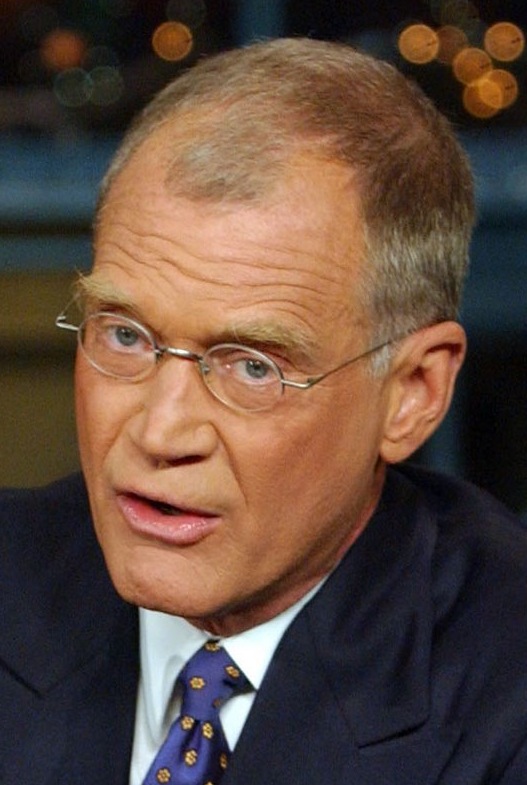
Maybe it is just me, but back in the day when I could stay up late enough to watch the talk shows I wondered what I would say if I were ever in Letterman’s audience and his staff chose me to talk about my encounter with a celebrity.

One instance, and I mentioned this to the college newspaper reporter who was interviewing new faculty, came in 1993 when the Bulls were playing the Lakers in the NBA Finals. We were living in Wheaton and I was flying to LA for a meeting the same day that both teams were traveling from Chicago to Los Angeles for the third game. On my flight were the television announcers, Marv Albert and Mike Fratello. Of course, they want to the front to sit in first class and I took my place among the plebes. But first-class and business-class passengers have the same needs and when we arrived at LAX I saw that Marv Albert was heading in the same direction as I was — to the men’s room. And there, low and behold, we occupied adjacent urinal stalls. Thankfully, LAX has stall dividers. So at one point I might have told Dave that I relieved myself next to Marv Albert.

But I could also mention that back when I was waiting tables to support myself through seminary, I waited on the pitchers Steve Carlton and Larry Christiansen, who were coming back to Philadelphia ahead of the Phillies to rest for their respective starts. I’m less inclined to bring this one up, even though I was privileged to be working at one of the best restaurants in the city — Frog — and even though this was the year the Phils won their first championship. Truth be told, I was serving them on a Sunday night. My sabbath convictions not being what they should have been, it’s not a moment of which I am proud.

One last instance is my running into and exchanging pleasantries with Wendy Grantham. She is the actress who played the night club dancer that wound up with Lester Freeman in The Wire. I happened to see her while in line at a Trader Joe’s in Wilmington and tried not to look too carefully at her lest her very big boyfriend think I was checking her out. But I finally summoned up the courage to ask if she had acted in The Wire, she said yes, we shook hands, and talked a little about the show and her career (mainly a singer). I left walking on the clouds since I believe The Wire is the best moving image production ever made.

But all of these encounters pale in comparison to my new found greatness — the Baylys have publicized one of my speaking events. Last night I lectured for the Great Lakes Presbytery of the PCA. Once again the theme was two-kingdom theology. And once again I encountered some criticism — some were even willing to speak of 1k — but also much good will and fraternity.

I can’t say that the Baylys post gave me the same feelings as meeting Wendy Grantham, and I am a little perturbed that they used up two of my fifteen minutes of fame. But, what an honor.

Where is Justin Taylor When You Need Him?

MeSome bloggers use their page as a clearance house for what others are saying – sort of like Matt Drudge does the news. So if you want to know what John MacArthur thinks about the Manhattan Declaration, you could go here. Such places allow you to keep tabs on the doings and whereabouts of certain evangelicals with star power.

Others use the blog to promote their own appearances, merchandise, and ideas published elsewhere. Of course, Oldlife promotes the views of its editors and sometimes reprints material first published in the Nicotine Theological Journal (a subscription would make a nice stocking stuffer, by the way). But we have resisted using this e-space to publicize current activities and duties. This is supposed to be a place to discuss what it means to be Reformed – not a vehicle to learn about the Muether or Hart family vacation plans.

All of this is a way of explaining the awkwardness of what follows: I have posted a piece over at Front Porch Republic on the Manhattan Declaration. Because some of the comments in recent weeks have asked for my impressions of the statement, this notice is a tad more understandable. And because the specter of J. Gresham Machen hovers over the keyboards of the NTJ’s editors, and because my study of Machen has clearly informed my take on the Declaration, mentioning that post here also makes sense. But self-promotion still feels odd.

And so to complete the circle, readers may also be interested to know that I will be dining today (dv) at lunch on hot pork sandwiches purchased at Reading Terminal Market while watching – I haven’t yet decided – either Barton Fink or Blood Simple. This is less a Thank-God-It’s-Friday moment than it is a reaction to the end of the semester at Temple University. Later today, my wife and I will be watching films from Temple’s city archives at the program of Secret Cinema, a wonderful cultural resource in Philadelphia. On Sunday, we will be worshiping with the saints a Calvary OPC, Glenside.

Question: Who cares? Answer: I do and my wife does sometimes. It’s hard to tell if our cats, Isabelle and Cordelia, even think.

Did Someone Say "Cocktails"?

calvin in the capitalThe good folks at Christ Reformed Church (URC) in Washington, D.C. are sponsoring a lecture series on — you guessed it — John Calvin. “Calvin in the Capital” is a free speaker series exploring the life and work of John Calvin. Events will be held on Thursday evenings at 7:00 pm, running each week from October 8 – November 12.

Each presentation will be preceded by musical entertainment, and will be followed by a time of cocktails and conversation. The goal is to provide an ample opportunity for guests to interact with speakers and each other in an informal setting.

Speakers include, Rob Norris, Ken Jones, Brian Lee, Glen Hoburg, Darryl Hart, and Robert Godfrey.

Peculiar, Idiosyncratic, Vinegary, Nonsensical

These are just some of the words used to describe this pilgrim’s efforts to explain, defend, and promote a Reformed understanding of two-kingdom theology and the spirituality of the church. Thanks to David Strain, I get another chance and readers have an opportunity to expand my vocabulary.

I first met Pastor Strain at a Reformation Day conference in Douglasville, Georgia. He was then a Free Church minister to a congregation in London. Now he is a PCA pastor in a setting even more southern. His background, outlook, and location are reasons for keeping up with his posts at Letters from Mississippi.