The Old Testament Church and Plague(s)

During the blizzard-like conditions of COVID-19’s spread, Christian writers have been thinking about ways to minister during a plague. Some appeal to Luther. Some about the ongoing urgency of preaching the gospel. Some discuss the tension among commitments to love neighbors, serve God, and obey civil magistrates. Some compare COVID-19 to an atomic bomb (seriously). And some describe at great length and with much unction how the church needs to respond redemptively.

Ed Stetzer may be the best example of evangelicals’ historical imagination during a major, worldwide illness. His is exclusively post-canonical:

Sociologist Rodney Stark explored one such one example where during a plague AD 251 swept through the Roman Empire decimating the population. In his Easter letter around AD 260, Dionysius wrote a tribute to the believers whose heroic efforts cost many of them their lives during the plague.

Pagans tended to flee the cities during plagues, but Christians were more likely to stay and minister to the suffering. According to Dionysius: “Most of our brother Christians showed unbonded love and loyalty, never sparing themselves and thinking only of one another. Needless of danger, they took charge of the sick, attending to their every need and ministering to them in Christ, and with them departed this life serenely happy.”

Dionysius added: “The best of our brothers lost their lives in this manner, a number of presbyters, deacons, and laymen winning high commendation so that death in this form, the result of great piety and strong faith, seems in every way the equal of martyrdom.”

In Christians in the Age of Outrage I offered a more recent example of sacrificially living out the gospel in the midst of suffering. During the Fall of 1793, yellow fever gripped the city of Philadelphia. Historian Richard Newman writes that, “from the moment it began, the yellow fever epidemic was a public-health crisis. Thousands of citizens fled, hospitals became overwhelmed, and dead bodies rotted in homes.”

Within this crisis, it was the emerging black church under the leadership of Richard Allen which entered into the suffering. Some assumed that persons of African descent were immune to Yellow Fever, and the free black community was approached to provide help. Spurned by the church they had served and slandered by others, Allen and his church served the sick when others isolated themselves for fear of catching the disease.

…Through both examples, we are reminded that the gospel calls us to live sacrificially in the face of crisis.

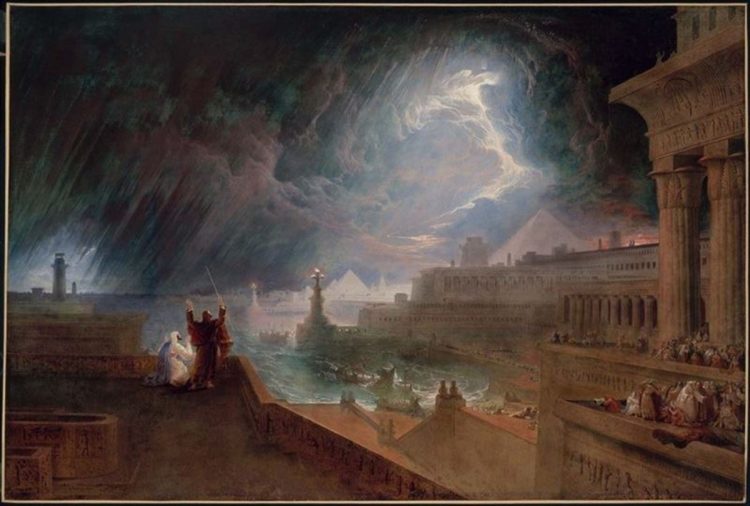
If these Christian authors had the Old Testament background to the New Testament more in mind, what might they say about the mother of all plagues, the one that forms the background for the Lord’s Supper, the Eucharist, even the Mass. That plague, as Psalm 78 has it, was also at the center of the Exodus, the Old Testament redemptive historical event that inspired many of the modern world’s social justice activists:

42 They did not remember his power
or the day when he redeemed them from the foe,
43 when he performed his signs in Egypt
and his marvels in the fields of Zoan.
44 He turned their rivers to blood,
so that they could not drink of their streams.
45 He sent among them swarms of flies, which devoured them,
and frogs, which destroyed them.
46 He gave their crops to the destroying locust
and the fruit of their labor to the locust.
47 He destroyed their vines with hail
and their sycamores with frost.
48 He gave over their cattle to the hail
and their flocks to thunderbolts.
49 He let loose on them his burning anger,
wrath, indignation, and distress,
a company of destroying angels.
50 He made a path for his anger;
he did not spare them from death,
but gave their lives over to the plague.
51 He struck down every firstborn in Egypt,
the firstfruits of their strength in the tents of Ham.
52 Then he led out his people like sheep
and guided them in the wilderness like a flock.
53 He led them in safety, so that they were not afraid,
but the sea overwhelmed their enemies.
54 And he brought them to his holy land,
to the mountain which his right hand had won.

If Christians identified more with Old Testament saints than with modern humanitarians, then, would they be more inclined to view COVID-19 as God’s judgment on a neo-liberal, morally indifferent, systemically unjust society and a hypocritical evangelical church? You could even turn in this into God’s judgment on a nation’s president who is entirely without a moral compass.

Then again, invoking God’s righteous judgment on a wicked society is so Pat Robertson (though anti-Trump prophets are hardly Mr. Rogers).

Two Kingdom Theology and Same Sex Attraction

Remember when two-kingdom theology was the easy and quick explanation for Reformed churches friendly to homosexuality? Steven Wedgeworth clarifies what everyone knew when anti-two kingdom folks were using Meredith Kline as the whipping boy for moral relativism. The folks at Memorial Presbyterian Church in St. Louis who sort of oversaw the production, “Transluminate: A Celebration of Transgender, Agender, Non-Binary, Genderqueer and Genderfluid Artists,” are not two-kingdom proponents:

To understand how the Transluminate event could happen within the PCA, readers should see it as an extreme but perhaps predictable ramification of a certain philosophy of ministry, common in our day. Evangelical and particularly “missional” churches routinely advocate for various kinds of parachurch ministry in the world of arts and culture. Some call for an aggressive or confrontational approach, while others say that mere “faithful presence” is a more effective strategy. This term, “faithful presence,” was originally coined by James D. Hunter in his book To Change the World, but has become a shorthand way, not unlike the term “common good,” to express the concept of Christians interacting with the secular public realm, not in overtly distinctive ways, but simply according to basic morals and friendly manners. This posture is frequently described as winsome or hospitable. It argues against direct criticism or evangelism, at least in any public way, in favor of building more long-term relationships. After these relationships of trust are sufficiently built, opportunities for evangelism may make themselves apparent. Some proponents of this philosophy even deny that specifically evangelistic activity, arguing that the relationship itself or the image and reputation such faithful presence creates will itself be a sufficient Christian testimony. Memorial Pres. certainly seems to promote this view of evangelism and outreach.

Jake Meador partly agrees:

Our outreach to the world cannot simply be a gesture of welcome, but must also include a call to repentance and to adopt the practices of Christian piety in grateful response to God’s offer of grace in the Gospel. What conservatives fear is that this inherently confrontational aspect of Gospel proclamation is lost or watered down by some on the church’s progressive side. And this is not a wholly groundless concern.

Parachurch ministry in the realm of arts and culture, welcoming congregations, “faithful presence” — these are all features (not bugs) of Redeemer New York City and its spin offs. And yet, the Gospel Coalition has not clarified the missional approach to ministry. In fact, they have benefited from Tim Keller’s presence and stature.

Do Senior Christian Market Church Leaders Talk?

With the appeal of Donald Trump in 2016 and Bernie Sanders in 2020 (which may turn out to be the political equivalent of Dave and Busters), some political commentators have observed that Democratic and Republican leaders have not served the American voters well. Party elites continued to play by old rules of analysis and missed the effects of economic and cultural changes on the electorate. The same point could well be made about leaders of the PCA — leaders, that is, who emerged as such through the platforms created by big evangelicalism.

Tim Keller and Bryan Chapell have emerged as pastors whose assessment of the church and its relationship to the world matters. Like E. F. Hutton, when they speak, people listen.

But why? When it comes to assessments of the culture and what Christians should do in response, consider the following. Remember in 2015 when during what was approaching peak intersectionality awareness, Chapell identified pluralism as the major challenge facing the PCA:

If we do not see pluralism for the enemy it is, then we will not make appropriate alliances, link arms for necessary purposes, or allocate resources and align priorities for the greater ends required. If we do not recognize how seductive pluralism will be for all of us (and all we love) with its promises of societal approval and acceptance, then we will not embrace the means, manner, and message that will communicate the true beauty of grace that is the power of the Gospel.

Without clear identification of the external enemy’s magnitude, the dynamics of a largely homogenous social and doctrinal association will only make us less patient with our differences. We will also become increasingly insensitive to how much we need one another to maintain a voice for Christ in an increasingly pluralistic culture.

Right now our eyes are not focused on pluralism as our greatest enemy. We are more focused on what others in our ranks are doing or not doing. Debates about charismatic gifts are unlikely to divide us. Discussions about the role of women will continue to marginalize us but probably will not break us. Dealing with changing sexual mores may drive our youth away but will probably not divide us. All these issues are secondary to the challenges of pluralism.

Two years later, in the wake of Donald Trump’s victory, Keller corrected course. Uniting in response to a perceived enemy — looking for denominational cooperation — is part of what produced evangelical support for Trump:

In a book published earlier this year, “In Search of Ancient Roots: The Christian Past and the Evangelical Identity Crisis,” the historian Kenneth J. Stewart makes the case that the evangelical impulse in Christianity has been with us for centuries, taking on many different forms and bearing many different names, while maintaining substantially similar core beliefs. Many have analyzed the weaknesses of the current iteration of this movement. The desire by mid-twentieth-century leaders to foster more widespread coöperation between evangelicals and downplay denominational differences cut believers off from the past, some religion scholars have found. The result was an emphasis on personal experience rather than life in a church with historical memory. This has made present-day evangelicals more vulnerable to political movements that appeal to their self-interest, even in contradiction to Biblical teachings, for example, about welcoming the immigrant and lifting up the poor.

The lesson appears to be that a broad interdenominational cooperation by post-World War II evangelicals made born-again Protestants more political and less ecclesiastical.

It is at the very least, advice with a mixed message and could raise questions about the capacities of pastors to assess culture and society.

It is also a tad ironic for Keller to critique downplaying denominational differences when City-to-City is hardly a program of the PCA’s Mission to North America or Mission to the World.

Have Senior Christian Market Pastors Served the PCA Well?

If Tim Keller is someone to read for political philosophy, what about urban design and planning? It turns out that much Christian reflection on the city is similar to Christian thought about government and society — it is pietistically utilitarian. The city or politics are ways to evangelize or carry out God’s will for me and others, not a common arena of human life that relies on the sorts of human inquiry that may involve both sides of the antithesis.

Here is one of Tim Keller’s typical briefs for the city:

social scientists tell us that across the whole planet there are at least 5 million people moving into cities from the countryside every month. The number of churches per capita in the country and towns dwarfs the number of churches in cities. People are moving to cities with fewer places of gospel witness for the population, and that situation is worsening by the day. For example, New York City will be gaining a net of 1 million people over the next 25 years. That’s bigger than Charlotte, North Carolina. Yet will we be planting as many new churches here as there are churches in Charlotte? Probably not.

So put the balance like this: we need churches everywhere there are people—but the people of the world are moving into cities much faster than the church is. Jesus told us to go into the world to make disciples (Matt 28:18–20). If we fail to go where the world is going, then we aren’t heeding our Lord’s command. Certainly we must never insist that everyone should do city ministry, nor that gospel ministry in one place is intrinsically better than in another, but we shouldn’t shrink from emphasizing city ministry as never before.

Don’t romanticize or demonize or shrug at the city. Love the city, as Christ loved you.

Treat cities like a mission field.

But if you are going to transform a city with a gospel ecosystem, you may need to read urban designers and planners. And if you read the history of the cities, you may encounter a less than onward-and-upward understanding of the city. Cue James Howard Kunstler:

The city is perhaps the greatest cultural artifact of the long-running human project, which now faces an array of predicaments at a larger scale than at any previous inflection point in our history. These include population overshoot, the fossil-fuel quandary, competition over dwindling resources, an unsound banking system, climate uncertainty, and much more. These dynamics are expressing themselves currently in political disorders and cultural hysterias, and the anxiety over what happens next appears to be driving us crazy. . . .

The urban metroplexes of the U.S. have assumed a scale and complexity of operation that cannot be sustained in the coming disposition of things. They will contract substantially. Some of them in especially unfavorable locales—Tucson, Miami, Houston—may disappear altogether, but the rest will have to become a lot smaller and the process is liable to be messy as various groups fight over who gets to inhabit the districts that retain value: for example, riverfronts and original urban cores. This will occur against the backdrop of more generalized political disorder and the failures of national government, especially where fiscal management is concerned. State governments, too, may be broke and impotent. (That implies a devolution of political power from the grand scale to the local level, where decisions and action will matter.)

Cities that are overburdened with skyscrapers and megastructures face an added degree of failure. These buildings will never be renovated in the coming era of resource and capital scarcity. Professional observers like Krieger’s colleague, Edward Glaeser of Harvard’s Kennedy School of Government (author of Triumph of the City, 2011), is exactly one of those who expects only more-bigger-higher-denser cities in the years ahead. That will be another disappointment for the wishful-thinking techno-narcissists of this land. More likely we will see skyscrapers and megastructures convert from being assets to liabilities in very short order. We may not even have the financial mojo to pay for their disassembly and the salvage of their modular materials.

The places in our country that stand a chance to carry on are the very places that have gone through the most catastrophic failure and disinvestment the past 50 years: the small towns and small cities that are scaled to the capital and resource realities of the future—especially the ones that have a meaningful relationship to food production. Many of these places lie along America’s inland waterway system (the Ohio, Mississippi, Missouri, Great Lakes, including the Hudson River estuary and the Erie and Champlain Canals). As the trucking system collapses, we will have to move more things by boat. The conventional futurists don’t even see this coming.

But you don’t read about this side of the city when you see descriptions of gospel ecosystems:

When a gospel movement is underway, it may be that the Body of Christ develops to the point that a whole city tipping point is reached. By that I mean the moment when the number of gospel-shaped Christians in a city reaches critical mass. The Christian influence on the civic and social life of the city—on the very culture—is recognizable and acknowledged. That means between 10 and 20 percent of the population.

. . . In New York City, some groups have a palpable effect on the way life is lived when their numbers reach at least 5 to 15 percent and when the members are active in public life. . . . In other words, something is going on in New York that goes beyond one church, one network, or any one denomination. It goes beyond any particular race or ethnic group. It’s a movement.

We’re a long way from getting to the place we need to be, a city tipping point, when 10 to 20 percent of the population goes to those churches, and you begin to realize that the whole city, the whole culture is going to change because of the impact of Christians in a place like New York.

That’s what we’re after. It takes a movement to reach a city, and that’s more than just planting a church, or even seeing your denomination growing.

Someone needs to ask, what will remain of the city when the movement arrives?

What the Coronavirus Reveals about Protestant Piety

For Lutherans, the question is what do you do?

What precautions should my church take?

  1. Buy large supplies of hand sanitizer and disinfectant wipes. Masks too if you feel like it, but masks are not as essential as disinfectant materials.

  2. Establish a single, controlled point of entry to your church which you can use to force congregants to wash their hands and check for disease symptoms.

  3. Strongly discourage people with any sickness in their household from coming to church; the pastor or deacons can make a house call later.

  4. Eliminate non-essential activities at your church like social groups. Consider suspending church schools or peripheral activities.

  5. Communion is your highest-infection-risk element of the service. Avoid passing a communion plate, intinction, or a common cup. The safest way to take communion is in individual cups and pieces of bread, in small groups, at the altar.

  6. Other personal-touch service elements like peace-passing, offering, or attendance books should also be restructured or suspended.

  7. Put more space between chairs or encourage bigger seating gaps in pews.

  8. However, informal interpersonal contact at church and church fellowship time does not need to be cancelled, provided a few basic precautions are taken, like limiting food to individually-packaged snacks.

  9. It is especially important for church workers to wash their hands fanatically, wear masks, and maintain good personal hygiene.

For New Calvinists, the question is what this disease means for your walk with God:

Why should Christians be concerned about the coronavirus?

There are several reasons Christians should be concerned about the coronavirus, and for those who are suffering from the disease. But the primary reason, as the apostle Paul tells us, is that we should “weep with those who weep” (Rom. 12:15) and that we “comfort those who are in any affliction, with the comfort with which we ourselves are comforted by God” (2 Cor. 1:4).

As a pastor of a church in Wuhan recently said in an open letter to fellow believers, “If you do not feel a responsibility to pray, ask the Lord for a loving soul, an earnestly prayerful heart; if you are not crying, ask the Lord for tears. Because we surely know that only through the hope of the Lord’s mercy will Wuhan be saved.”

Neither set of advice is wrong. But if you want an index to the way that confessional Protestants and pietists think about life in this world — especially about economics and politics — this is a good measure. Notice too the importance of the church and public worship to the Lutheran outlook. Just saying.

The PCA’s Strategic Plan Was So “Sleep”

It can be a cliche to say that the church’s task remains the same, yesterday, today, and tomorrow. But more Presbyterians may be tempted to adopt that somewhat stodgy outlook if you look at what has become of the PCA’s Strategic Plan from a decade ago. Finding it on-line is a challenge, but a video of Bryan Chapell introducing the Plan gives a fairly good indication of the concerns that animated its authors:

About six minutes in, you will see a list that includes:

Strangled secularism

Loss of Piety

Loss of the Young

Loss of Mature Members

Longing for Biblical Responses

Those concerns contrast with those that motivate Presbyterians in pursuit of social justice (from Covenant Seminary’s website):

While some branches of liberal theology have erred gravely by equating issues of social justice with the gospel and downplaying or eliminating the call to repentance and personal faith in Jesus, we must ensure not to make the opposite mistake of removing the biblical call for social righteousness and justice from our understanding of the gospel.

What situations do our neighbors find themselves in as they hear this proclamation that require tangible acts of Christ’s love that flow out of that gospel? Today, we face a wide range of issues that are matters of neighbor love expressed in biblical social justice. These include but are not limited to abortion, human trafficking, racial discrimination, gender discrimination, abuse of women and children, misuse of power, criminal justice, and lack of educational and economic opportunity for the marginalized in our society. The Bible starts with creation and ends with new creation, and the impact of the fall affects everything, including the creation itself and the structures of society. The gospel of God’s saving and restoring grace is set into this framework. Love for God and love for neighbor are always to be held together by the people of God.

Covenant Seminary is the denominational seminary of the Presbyterian Church in America (PCA), with our main campus located in St. Louis, Missouri. As the denominational seminary, we exist to serve the denomination and its churches as we prepare leaders to engage the pressing issues of our time. A key current issue in the PCA is racial reconciliation and justice . . .

That way of looking at the church’s current ministry is distinctly different from Chapell’s remarks a decade ago.  If some thought the Strategic Plan sounded New School Presbyterian — somewhat uncomfortable with confessional narrowness, the old Strategic Plan looks downright Old School compared to the advocates of social justice.  What a difference a decade makes.

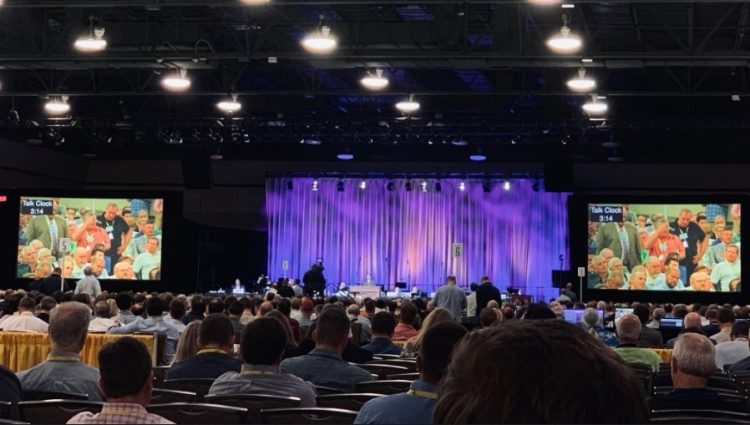
But now, Bryan Chapell is back with a statement about the PCA’s current predicament as he explains how he will serve as Stated Clerk if chosen by the upcoming General Assembly:

I believe our beloved PCA is at a crossroads with regard to her influence in both the wider church and surrounding culture. We carry a unique calling as a Reformed church with a missional zeal. Our historic strength has been maintaining a Bible-centered mission that does not yield to the singular pressures of Reformed fundamentalism, distinction-less Evangelicalism, mere social progressivism, or strident political conservatism. Each of these emphases have sought ascendency in our ranks, yet we have continued to evaluate ideas and establish priorities based on Scripture. Most in our movement remain committed to respect those among us who differ in perspective but prioritize God’s Word. Still, as our culture polarizes and our denomination becomes more distant from her roots, it becomes increasingly difficult for the strands of our biblically Reformed rope to stay woven together for the purposes of our original vision and our future calling.

All things considered, Chapell looks like a moderate and the advocates of the 2010 Strategic Plan look conservative compared to progressives in the PCA.  That is actually encouraging to other churches in NAPARC.

But it does cast doubt about the wisdom of calculating the church’s mission in relation to changes in the culture.

What Historians Do

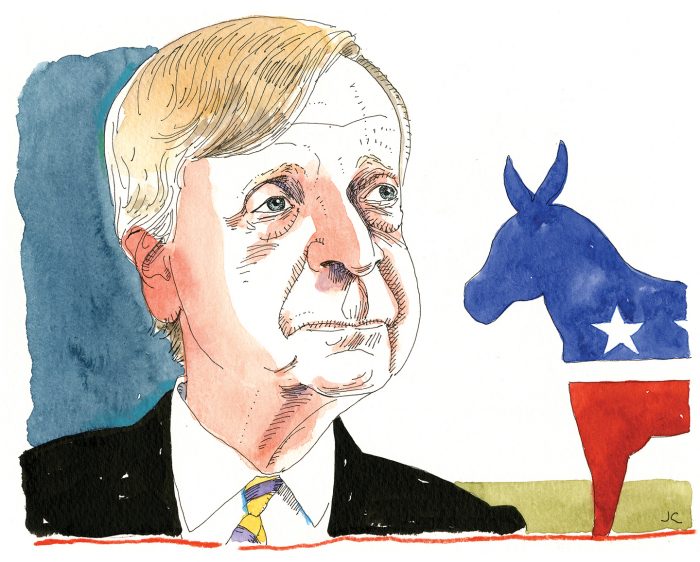
Sean Wilentz, the George Henry Davis 1886 Professor of American History at Princeton University, is not a conservative. His ethic background is both Jewish and Irish, so chances are he is not a Reformed Protestant and so does not have a Christian w-w. He’s a Democrat, an egalitarian, and generally progressive. Plus, he’s a darned good historian and will not let partisan politics shape our understanding of the past.

For instance, he has been outspoken about the inaccuracies of the Sixteen Nineteen Project:

On December 20, the Times Magazine published a letter that I signed with four other historians—Victoria Bynum, James McPherson, James Oakes, and Gordon Wood. Our letter applauded the project’s stated aim to raise public awareness and understanding of slavery’s central importance in our history. Although the project is not a conventional work of history and cannot be judged as such, the letter intended to help ensure that its efforts did not come at the expense of basic accuracy. Offering practical support to that end, it pointed out specific statements that, if allowed to stand, would misinform the public and give ammunition to those who might be opposed to the mission of grappling with the legacy of slavery. The letter requested that the Times print corrections of the errors that had already appeared, and that it keep those errors from appearing in any future materials published with the Times’ imprimatur, including the school curricula the newspaper announced it was developing in conjunction with the project.

The letter has provoked considerable reaction, some of it from historians affirming our concerns about the 1619 Project’s inaccuracies, some from historians questioning our motives in pointing out those inaccuracies, and some from the Times itself. In the newspaper’s lengthy formal response, the New York Times Magazine editor in chief, Jake Silverstein, flatly denied that the project “contains significant factual errors” and said that our request for corrections was not “warranted.” Silverstein then offered new evidence to support claims that our letter had described as groundless. In the interest of historical accuracy, it is worth examining his denials and new claims in detail.

No effort to educate the public in order to advance social justice can afford to dispense with a respect for basic facts. In the long and continuing battle against oppression of every kind, an insistence on plain and accurate facts has been a powerful tool against propaganda that is widely accepted as truth.

The article goes on, almost in the manner of a legal brief, to do the historical equivalent of math assignments — show your work.

Wilentz was also pretty good about the differences between liberalism and socialism. In defense of Hillary Clinton, in 2018 he pointed out the conceit of Sanders claiming to be merely a liberal on the order of the New Deal:

Franklin Delano Roosevelt called himself a Christian, a Democrat, and a liberal. He did not call himself a democratic socialist, or any other kind of socialist. He was, in fact, no socialist at all. Nor was he a conservative or a reactionary, although many on the socialist and communist left charged that he was—including the Communist Party USA, which attacked his New Deal for a time (until Moscow’s political line changed) as American “masked fascization.”

The only Americans who considered Franklin Roosevelt a socialist were right-wing Republicans. “The New Deal is now undisguised state socialism,” Senator Simeon D. Fess of Ohio declared in 1934. “Roosevelt is a socialist, not a Democrat,” Congressman Robert Rich of Pennsylvania announced on the House floor a year later. Roosevelt scoffed at such talk, but in 1939 he paused to present a very concise political dictionary of his own. “A radical,” he told the New York Herald Tribune, “is a man with both feet firmly planted—in the air.” A conservative, he continued, “never learned to walk forward”; a reactionary walked backward in his sleep. A liberal, though, used legs and hands “at the behest—at the command—of his head.” The metaphor was poignant coming from him, but it also emphasized his point: In the face of all adversity, he was every inch a liberal.

In the 1936 election, FDR masterfully ran as an unabashed liberal and at the same time completely outmaneuvered the left and would-be populists like Louisiana Governor Huey Long, who, before his assassination, planned to challenge Roosevelt in the campaign on a “Share Our Wealth” platform. As Seymour Martin Lipset and Gary Marks related in It Didn’t Happen Here: Why Socialism Failed in the United States, the Great Depression “presented American radicals with their greatest opportunity to build a third party since World War I.” But Roosevelt’s New Deal, in its improvisational way, offered a triumphant liberal alternative.

The election of 2016 showed how confused these old labels and distinctions have become. The socialist senator Bernie Sanders, for example, rallying his supporters with a speech at Georgetown University in November 2015, offered a surprising definition of socialism, which consisted of a paean to FDR and the social protections ushered in by the New Deal. “Almost everything he proposed, almost every program, every idea, was called socialist,” Sanders said—as if the right-wing name-calling was the rightful definition.

Somewhere the ghost of FDR burst out laughing, while the ghost of one of Sanders’s other heroes, Eugene V. Debs, scratched his head.

What distinguishes liberals like Wilentz from Leftists like Sanders or writers at the New York Times is an attachment to the United States. He may not think it’s the greatest nation ever. But he seems like you could have a conversation about it. Wilentz would also likely be suspicious of newspapers and magazines that claim to be exceptional in ways formerly reserved for nations.

When Freemasonry is a False Religion and Critical Race Theory is “A Problem”

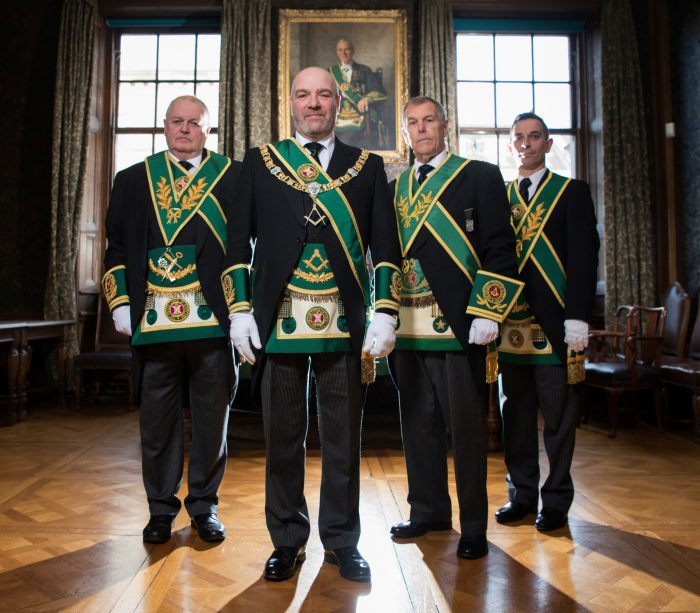
I was surprised to see the Gospel Coalition come out so forcefully against Free Masons, not that I’m a fan, just that the Allies are not known for being mean the way Orthodox Presbyterians are. But Joe Carter did write the following:

Christians involved in Freemasonry may justify their involvement by claiming that it’s a matter of conscience. While they may be correct, a naked appeal to conscience is insufficient to resolve the question. As we’ve repeatedly seen over the past decade, appealing to one’s conscience has become the primary way Christians in America justify their engagement in unbiblical behavior and alignment with anti-Christian associations. A better test would be for Christians who are Masons to ask themselves, Is my participation in Freemasonry bringing glory to God?

To answer that question in the affirmative would require, at a minimum, addressing the multitude of concerns that Christians have raised for centuries about Freemasonry.

Christians involved in Freemasonry should also ask why their rituals and practices are considered sacrosanct. Protestants have long maintained a position of Ecclesia semper reformanda est (Latin for “the church must always be reformed”)—that in order to maintain its purity, the church must always be willing to reconsider its belief and practice. Yet it’s rare to find a Christians in Masonic Lodges who forcefully advocate the jettisoning of any teachings and rituals of Freemasonry that are antithetical to the teachings of Jesus. They may claim, for example, that the “bloody oaths” they take are non-binding and shouldn’t be taken literally—and yet they will reject recommendations that such oaths be done away with.

This is a baffling inconsistency that hints at idolatry. If the pagan and occultic elements are not essential to Freemasonry, then Freemasons who follow Jesus should be advocating for their removal as a condition of their continued participation. But if those elements are essential—even if only as venerated tradition—then Christians should explain how they can, in good conscience, participate in such a system of religious practices and beliefs (1 Cor. 10:7).

When it comes to Critical Race Theory or Cultural Marxism or intersectionality, Carter is not so direct although even non-Christians argue intersectionality and CRT have religion-like qualities. Could Carter’s reluctance have to do with a prominent Gospel Allie being outspoken about systemic racism and social justice in ways Cultural Marxism Adjacent? If so, then this way of raising questions about critical theory makes sense:

The problem with intersectionality arises when it ceases to be an insight and becomes an ideology. As with many useful concepts, intersectionality can be used to promote the flourishing of the human community or can be used to create new forms of systematic sin. And over the past decade, the concept has frequently, as Sullivan noted, been used as a tool for building division not only between the “oppressors” (i.e., white males) and the oppressed (i.e., almost everyone else), but separation between groups deemed to be victims. . . .

As an analytic framework for identifying the effects of systemic sin, intersection theory may be of some use to Christians. But when it is used to justify the creation of ever more narrow and increasingly divisive identity groups, it becomes another secular worldview that Christians must reject.

While characteristics such as race and gender are not erased when a person becomes a member of God’s kingdom, our identity as Christians is rebuilt around Jesus. As the apostle Peter says, “you are a chosen race, a royal priesthood, a holy nation, a people for his own possession, that you may proclaim the excellencies of him who called you out of darkness into his marvelous light” (1 Pet. 2:9).

The lesson appears to be that political ideology is not as bad as false religion. Good to know that w-w doesn’t include ideology.

Why Presbyterians Are Ambivalent about Evangelicals

Chris Gerhz is a good historian and generally thoughtful about a number of matters (even when you disagree), but his piece about the virtues of mainline Protestantism is an indication of how thin the ties are within the bond of evangelical Protestantism. In the post, he is frank about the mainline’s numerical decline and mentions a few reasons for it. But Gehrz also mentions several features of the mainline that he appreciates and would hate to go away. First up, women’s ordination:

In an inscription on the balcony in our sanctuary, the Apostle Paul reminds us that it is by “the power of the Holy Spirit” that we “may abound in hope” (Rom 15:13). Truly, I have hope for the renewal of the ELCA, the mainline, and all the church, because I trust that God’s Spirit continues to move in our midst: comforting, counseling, and gifting us to accomplish more than we can imagine.

Whenever I need to be reminded of that truth, I turn my head to the right of the choir loft, where I see the two women who serve as our senior and associate pastors preaching the Word and administering the sacraments. Then I think of the women on our staff who direct the church’s excellent children and youth ministries. And while I don’t put a lot of credence in church hierarchies, I may even recall that women currently serve as the bishop of our local synod and as the denomination’s presiding bishop.

In a time when most (non-Pentecostal) evangelical denominations deny such roles to women or fail to back up egalitarian words with regular calls to pastoral ministry and leadership, it’s the mainline that best embodies the Pentecost message that God has poured out his spirit on all humanity, such that daughters and sons alike will speak for him.

Say what you will about the significance of women’s ordination — some could conceivably liken it to Sabbath-Day desecration, which is hardly an offense worthy of ecclesiastical discipline in the Presbyterian world — but what sort of support might a fellow like Gehrz render to fellow Presbyterians if he were in a common endeavor with them? Chances are if a vote came up about recognizing a female pastor or an organization’s ties to a communion that ordained women, Gehrz would vote with mainline Protestants against those Presbyterian communions that refuse office to women. That’s not inherently bad. But it makes difficult the thought that an Orthodox Presbyterian and an evangelical Pietist-turned-mainline-Lutheran could meaningfully cooperate in so-called Christian organizations.

Gehrz also appreciates the mainline’s ecumenical posture:

Here I don’t so much mean the institutional ecumenism of the National and World Councils of Churches as the lived faith of congregations like ours, where we’re regularly reminded both of our Lutheran distinctiveness and our participation in the unity of the church catholic….

“Go in peace,” we’re told at the end of worship, “and serve the Lord.” That’s a charge we can only fulfill together, with Christians who might belong and believe differently than us. During Sunday’s education hour, we learned about our church’s partnership with Dorothy Day Place, which continues that Catholic writer’s commitment to living in solidarity with the poor. The week before, children of all ages had assembled materials for Bridging, a local nonprofit that helps Minnesotans transition out of homelessness; its Catholic founder had died the day before.

There goes the spirituality of the church (or the idea that the church provides services — chiefly spiritual and eternal — that non-government agencies or government welfare can). When the idea of Christian unity comes from race, class, and gender, what’s a Presbyterian to do about the Shorter Catechism or the regulative principle of worship?

Finally, Gehrz thinks the mainline has contributed well to congregational singing and liturgical music (it is hard to disagree, especially if evangelicalism is known primarily for Praise & Worship worship music):

In Paul’s much-debated passage on the mutual submission that marks a united church, he also describes being “filled with the Spirit” in these terms: “you sing psalms and hymns and spiritual songs among yourselves, singing and making melody to the Lord in your hearts, giving thanks to God the Father at all times and for everything in the name of our Lord Jesus Christ” (Eph 5:19).

Of course, there are many ways of living this out in practice. We all have our own preferences. You won’t be surprised that an evangelical who laments the removal of hymnals is no fan of worship that takes its cue from megachurches, where the congregation is too often reduced to a passive audience standing silent as professional performers sing words that are too shallow to the accompaniment of tunes that are too monotonous. …

Of course, “traditional” worship has its own problems. … But at its vibrant, creative best, such worship embodies Pelikan’s definition of tradition (“the living faith of the dead”). For example, my heart swells as the centuries-old words of Nicolai’s Epiphany chorale again “teach us / God’s own love through you has reached us.” And it’s worth pointing out that five of the eight texts our congregation or choir sang in that single hour of worship were written by authors born in the 20th century. This, too, is living tradition: Christian composers and writers continuing to adapt old musical forms to accompany still older words (mostly from Scripture itself)… and Christian laypeople continuing to sing them, actively participating in worship. (Many of them even singing in four-part harmony, another way we may learn Christian unity.)

That this happens is not the result of mere inertia. It has taken the conscious, ongoing investment of mainline churches in publishing houses that encourage musical creativity and in colleges that provide musical training for professionals and amateurs alike.

At this point, Gerhz might appreciate the OPC and URC’s cooperation in producing a Psalter-Hymnal, an expression of Reformed Protestantism’s tradition of congregational song. What is unclear is how interest in the past when it comes to worship fits with the relative recentness of ideas about ordaining women and the social gospel. It actually looks like the mainline tradition, as it appeals to some evangelicals, is a relatively arbitrary collection of ideals and convictions — good taste when it comes to music, overturning hierarchies when it comes to gender and class.

To his credit, Gehrz concedes that mainline Protestantism can go wrong:

Beautiful music can become the end of worship, rather than one of its means. Practiced for its own sake, ecumenism easily turns bureaucratic or latitudinarian. And the conviction that the Spirit is bringing renewal can tempt us to exchange dead orthodoxy for living heterodoxy.

But I don’t suspect he will want any help from confessional Presbyterians in spotting if and when the mainline veers from orthodox norms.

Which makes me wonder again why conservative Presbyterians ever thought they would get much in return for joining forces with so-called evangelicals. Heck, it looks like evangelicals — think Charles Erdman — resonate more with liberal Protestantism than with confessional Protestantism. It is another variety of third-way Christianity — neither modernist nor historic. But always with a nod to the Holy Spirit. Just not too much like those crazy Pentecostals.

Anti-Trump Fundamentalists and Trump-Friendly Modernists

I never thought I’d agree with Harry Emerson Fosdick, but when he complained that fundamentalists were ignoring political problems for doctrinal purity he might have been describing evangelicals opposed to Trump:

Two weeks ago Great Britain, shocked and stirred by what is going on in Armenia, did as the Government of the United States to join her in investigating the atrocities and trying to help. Our government said that it was not any of our business at all. The present world situation smells to heaven! And now, in the presence of colossal problems, which must be solved in Christ’s name and for Christ’s sake, the Fundamentalists propose to drive out from the Christian churches all the consecrated souls who do not agree with their theory of inspiration. What immeasurable folly!

You could observe a few defects in contemporary American society. What has been happening in this nation for the last thirty years, at least, has not been good. Daniel McCarthy put it well in a recent Spectator piece about the significance of Trump’s presidency:

America has a problem, and it’s not Donald Trump. Suicides and deaths by overdose are up; life expectancy is down. The country that led its allies to definitive victory against both Nazi Germany and imperial Japan in just four years has now been fighting in Afghanistan for nearly 20, with no end to the Taliban in sight. Wall Street prospers but young Americans are deep in debt, manufacturing employment is in decline, and the Great Recession of a decade ago revealed how fragile and irrational the whole financial system is.

For all the talk we hear about ‘polarization’, the policies that led to these grim results were born of bipartisan consensus. Democrats and Republicans might bicker about abortion or guns, but for a quarter-century they were of one mind about free trade and foreign policy: Nato to Nafta and everything thereafter. They each made generous provision for financial and pharmaceutical interests. Enlightened opinion on university campuses and in the major media not only helped shape and amplify the consensus but marginalized practically all dissent from it.

Even today, the architects and propagandists of two and a half decades of policies that led to insecurity, despair and death are unrepentant. Worse, they demand more of the same: an end to Trump’s ‘trade war’ and more shooting wars in the Islamic world and beyond. Drugs and high finance are the future of the US economy, they insist, and manufacturing is better sent abroad.

You have to be a very idealistic democrat not to realize that elites drive society. The question is whether they drive it well or poorly — and with America’s elite, the answer is clear. But what force on earth can reform a corrupt or incompetent elite, one that serves itself and its dreams rather the citizens of the country? Or, perhaps more difficult still, what can compel it to reform itself?

In the midst of these developments, what do evangelical critics of Trump notice? They note incessantly the flaws in the president’s character and the hypocrisy of those who voted for him. According to Peter Wehner, there is no Christian case for Trump, which is true if you also can say there is no Christian case against Trump. The reason is that the president does not have to conform to Christian morality to hold office. Nor does the United States need to follow God’s law to be a legitimate government. But that is not Wehner’s point. His is the fundamentalist one that President Trump is morally suspect and that is the national problem:

The president put enormous pressure on a foreign power to intervene in an American election by harming his political adversary—and Grudem is completely untroubled by that. Can you imagine the outrage of Grudem and other Trump supporters if, in 2012, Barack Obama had coerced, say, China into announcing an investigation into and digging up dirt on Mitt Romney, and then justified it by saying that a president has the power to ask any nation to undertake any investigation?…

Again, the argument made in the editorial is not that Trump’s morally problematic actions in business and in his relationships with women are grounds for impeachment; it is that Trump’s moral transgressions are borderless and, therefore, his actions toward Ukraine are not surprising. And Grudem is simply wrong when he says Trump has not admitted to any immoral actions in business. Last year, a state judge ordered Trump to pay $2 million in damages after Trump admitted to misusing funds raised by the Donald J. Trump Foundation to (among other things) pay off business debts and purchase a portrait of himself for one of his hotels.

Even if you bend over backwards to give Trump the benefit of the doubt, you can’t watch videos or read lists of his lies and come away anything but troubled by how much violence Trump does to truth and reality. To dismiss Trump’s lies as simply manufactured by “fake news” is to perpetrate, even unknowingly, an untruth.

Another never-Trumper, John Fea, is fixated on Trump as a person (and seemingly indifferent to the conditions that made his electoral victory possible):

Here is where we differ Tony. You presuppose some kind of equivalency between Trump and all other politicians. This is why you are constantly saying “Well, what about Obama?” (And this is why I consistently reject this whataboutism). You believe that Trump and Obama (or any other recent president) are playing on the same moral field and thus must be evaluated in the same way. I do not. Trump has sacrificed the moral integrity necessary to deliver a speech like he did today. I agree with Jeff from Maryland when he says: ‘Trump could recite the Gettysburg Address’ and I would not believe him.

So Tony–at what point does a person lose all credibility in your mind? At what point does a person’s actions damage his or her attempts to deliver moral rhetoric to a public audience? I admit that different people will come to different conclusions about when a public figure has reached this level, but I find it hard to believe that it would not happen at some point. I have reached my point of no return with Trump. You, apparently, have not.

The point seems to be that Trump is beneath me. It calls to mind the Pharisee’s prayer, “God, I thank you that I am not like other men, extortioners, unjust, adulterers, or even like this tax collector. I fast twice a week; I give tithes of all that I get.” (Luke 18:11-12)

But this is all personal — both about the president and the critic. Beyond calculations of personal sanctity, many evangelical critics of Trump have no political or historical imagination to look beyond holiness to social conditions that need attention more than a president’s character.

Wehner and Fea are smart enough. But they are guilty of the narrow outlook that Fosdick saw in fundamentalists. As such, they could never conceive of Trump as Genghis Kahn the way McCarthy does:

Whatever else Trump has done, even his worst enemies will concede that he has injected back into the national conversation fundamental questions about economics, national cohesion and grand strategy that had been treated as closed for a generation. Voters who dissented from the grand consensus had no party and no voice in the media until Trump provided both. But since 2016 only a handful of others, such as Tucker Carlson, have reinforced him. The wealthy and well- educated have been forced to talk about Trump’s issues, yet they do so without admitting any culpability for the country’s plight. This state of denial might see them through the end of this administration but it won’t help them restore the public confidence they forfeited long before the barbarian reached their gates.

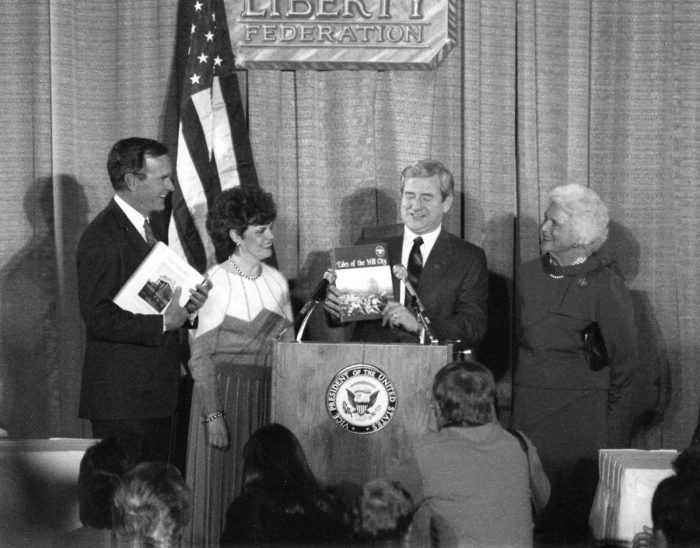
You may gain access to the Atlantic or Washington Post by banging on Trump and Jerry Falwell, Jr. But if your political theory is still based on calculations of personal and national holiness, then you have not advanced the ball very far beyond Jerry Falwell (the elder) or Pat Robertson.

Yes, that kind of evangelical.