Forensic Friday: More Machen

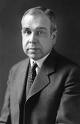
Very different is the conception of faith which prevails in the liberal Church. According to modern liberalism, faith is essentially the same as “making Christ Master” in one’s life; at least it is by making Christ Master in the life that the welfare of men is sought. But that simply means that salvation is thought to be obtained by our own obedience to the commands of Christ. Such teaching is just a sublimated form of legalism. Not the sacrifice of Christ, on this view, but our own obedience to God’s law, is the ground of hope.

In this way the whole achievement of the Reformation has been given up, and there has been a return to the religion of the Middle Ages. At the beginning of the sixteenth century, God raised up a man who began to read the Epistle to the Galatians with his own eyes. The result was the rediscovery of the doctrine of justification by faith. Upon that rediscovery has been based the whole of our evangelical freedom. As expounded by Luther and Calvin the Epistle to the Galatians became the “magna Charta of Christian liberty.” But modern liberalism has returned the old interpretation of Galations which was urged against the Reformers. . . . it has returned to an anti-Reformation exegesis, by which Paul is thought to be attacking in the Epistle only the piecemeal morality of the Pharisees. In reality, of course, the object of Paul’s attack is the thought that in any way man can earn his acceptance with God. What Paul is primarily interested in is not spiritual religion over against ceremonialism, but the free grace of God over against human merit.

The grace of God is rejected by modern liberalism. And the result is slavery – the slavery of the law, the wretched bondage by which man undertakes the impossible task of establishing his own righteousness as a ground of acceptance with God. It may seem strange at first sight that “liberalism, of which the very name means freedom, should in reality be wretched slavery. But the phenomenon is not really so strange. Emancipation from the blessed will of God always involves bondage to some worse taskmaster. (Christianity and Liberalism, pp. 143-44)

Good point here on why the forensic is prior to moral renovation, not to mention the ricochet against the legalism inherent in the “Lordship of Christ” over all things without first establishing the saviorship of Christ.

Where's Waldo Wednesday

This is a true apostolic saying: What he elsewhere referred to as: “Baptised into Christ’s death and buried with Him in baptism,” he here describes as “planted together into the likeness of His death.” Thus he binds and knits together Christ’s death and resurrection and our baptism, in order that baptism should not be thought of as a mere sign, but that the power of both Christ’s death and resurrection are contained in it. And this is so in order that there should also follow in us both death and resurrection. For our sin is slain through His death, that is, taken away, in order that it may no longer live in us but die and be dead for ever.

Thus, that in baptism we are sunk under the water indicates that we too die in Christ, but that we emerge again means and imparts to us new life in Him, just as He did not remain in death but rose again. But such a life should not and cannot be a life in sin because sin has already been slain in us and we have died unto sin; but it must be a new life of righteousness and holiness. Thus we are no called “planted into Christ” and “made one with Him,” and, as it were, baked into one loaf, and we receive into ourselves both the power of His death and His resurrection, and also, the fruit or consequence of it is found in us, since we have been baptised in Him. (Martin Luther, 1535 sermon on Romans 6)

Hug Me, I'm Protestant

A word to the wise Old Lifer who may be out celebrating St. Patrick’s Day. Don’t! It’s an Irish festivity for a Roman Catholic Saint. You’re Protestant. Just stick to Sundays, Mother’s and Father’s Days, and July 4th.

But if you do go out to make up for the Roman Catholics who gave up whiskey for Lent, keep in mind that Bushmill’s is the Protestant Irish whiskey, produced as it is in Northern Ireland, which may be the oldest active distillery in the world.

Jameson, by contrast, is the Roman Catholic whiskey, made in County Cork.

A recent piece in the Washington Post made the arresting point that the religious identities of Irish whiskey is nonsense:

There is a dicey — and misguided — aspect of Irish whiskey loyalty that splits along partisan lines. I’ve known a lot of older Irish Americans who will drink only Jameson because it is considered the “Catholic” whiskey, as opposed to Bushmills, which is perceived as the “Protestant” whiskey. During grad school in Boston, I drank once or twice in a hard-core Irish pub where you might come to physical harm if you ordered a Bushmills. (That bar also passed around a hat once a night, and you were strongly “encouraged” to donate to “the cause”).

This idea of Catholic vs. Protestant whiskey is bunk. For one thing, from 1972 to 2005, coinciding with some the worst of The Troubles, both distilleries were owned by the same company, Irish Distillers, before Bushmills was sold to Diageo. Jameson is now owned by Pernod Ricard, a French conglomerate. Also, John Jameson was a Scotsman, and therefore in all likelihood a Protestant.

Still, the perception persists. As we were tasting, one of my friends, Kevin Meeker, who owns an Irish pub in Philadelphia called the Plough and the Stars, gave a thumbs up to Bushmills Black Bush blended whiskey. He texted his Irish managing partner, Patrick Nester, at the bar and asked whether they sold a lot of Bushmills. Nester’s reply: “Not much because u idiots think it’s a Protestant whiskey.” Perhaps it’s best, as usual, to avoid discussing religion and politics while drinking.

Maybe the confessional difference between Irish whiskies no longer holds. But in the age of Evangelicals and Catholics Together, maintaining the legitimate antagonisms between Rome and its Christian protestors is imperative. For Old Lifers it’s a treat if you can do so with spirits.

Be careful out there.

Scott Clark Has a Point

(Or, show me your confessionalism!)

In Recovering the Reformed Confession, Scott Clark argues for and understanding of the Christian ministry and piety that informed the confessions of the Reformed churches pretty much all the way down to when Boy George (Whitefield) set foot in the North American British colonies. Among the points Clark makes is that the teachings affirmed and practices prescribed in the Reformed confessions are a better gauge of Reformed identity than the sort of zeal and experience that the likes of Whitefield encouraged and sought.

One way to test Clark’s argument is to ask by what measure do we evaluate a college that claims to be Protestant. Some who are sharply critical of Clark have recently faulted one of the leading evangelical institutions on two grounds: first, a majority of the faculty voted for Barack Obama; second, its teachers education program encourages students to embrace notions of tolerance and diversity that various secular state teachers’ agencies affirm, thus forcing Christian college education majors into a secular mold of “social justice.” (The same critics of Clark have faulted Covenant College for its faculty’s support for Obama in the 2008 presidential contest.)

What does not seem to matter in such evaluations is whether the college’s faculty are members or attend churches where the Reformed creeds are the confessional standard. In fact, one could well imagine a college qualifying as a flagship institution because it was consistently pro-Republican (as long as the pro-life plank of the platform was in place) and minimally doctrinal. If memory serves, this was exactly the kind of place that Wheaton College was before 1990. Culturally activist while doctrinally tolerant on dogmatic minutia is likely the ideal for Clark’s critics, meaning that creeds and confessions do not matter significantly when evaluating Christian higher education.

So why do such critics object if the confessionalist shoe does not fit? It isn’t an accusation of infidelity (though it has implications for this.) It is simply a question of definition: do the creeds inform the way you assess Christianity or do you have a different list of allegiances and personalities that in effect constitute your confession? If you are confessional you are going to evaluate Christian institutions and expressions on the basis of the creeds, as well as the health of the communions with which an institution affiliates. But if you are more inclined, in this case, to Whitefield and Edwards, you end up criticizing a school for its politics. In other words, pietism generates activism; while confessionalism nurtures perseverance.

Put another way, a confessional “world view” (as much as I hate the phrase) esteems the cult and the culture in inversely proportional relations. The higher one’s view of the creeds, the less one cares about politics. And the more one cares about culture, the less the creeds matter.

Makes sense to this confessionalist.

Unhuggable Lutherans

Garrison Keillor’s Life Among the Lutherans has arrived. It is already rewarding with merriment. Here are a few stanzas from “Lutheran Song.”

I was raised in Iowa, went to Concordia,
Swedish, I’m proud to say.
Got a job at Lutheran Brotherhood.
And I never was sick one day.
Bought a house in south Minneapolis
Over by Cedar Lake.
If you ask me, this latest merger
Was nothing but a big mistake.
Now I have nothing against Episcopalians;
I believe in an open door.
I’m sure it’s good to get new ideas,
But we never did that before. . . .

Espiscopalians are proud of their faith;
You ought to hear ’em talk.
Who they got? They got Henry VIII
And we got J. S. Bach.
Henry VIII he had six wives
Trying to make one son.
J. S. Bach had twenty-three children,
And wives, he had just one.
Henry VIII would marry a woman
And then her head would drop.
J. S. Bach had all those kids
‘Cause his organ had no stop. . . .

Once in a while we go to shows,
But a Lutheran is not a fan.
We don’t whistle and we don’t laugh;
We smile as loud as we can.
If you come to church, don’t expect to be hugged;
Don’t expect your hand to be shook.
If we need to know who you are,
We can look in the visitors’ book.
I was raised to keep a lid on it,
Guard what you say or do.
A mighty fortress is our God,
So he must be Lutheran too. . . .

Forensic Friday: Pauline Indignation

Have you noticed lately what tends to make conservative Protestants mad? In public life we see a lot of consternation about abortion, gay marriage, the thievery of the federal government, and outrage over secularists. And let’s not forget a whole lot of anger doled out upon two-kingdom theology and the spirituality of the church. (If you wonder how the critics feel, just look for the word, “radical.”)

But have you ever considered what made the apostle Paul mad? Well, his dealings with the church in Corinth were not pretty. There he found sectarianism, sexual immorality, insubordination, blasphemy, with a theology of glory worked in for good measure. But how does Paul open his letters to these Christians whom today many of the proponents of public righteousness would deem antinomian? In his first epistle he addresses them as “those sanctified in Christ Jesus, called to be saints. . .” And he follows that with the apostolic salutation, “Grace to you and peace from God our Father and the Lord Jesus Christ.” In the second epistle, even though many problems still exist at Corinth, Paul again calls them “saints” and adds the same salutation as the first letter.

But what about those Galatians, the church that may have been excelling in its zeal for the law? He refers to them as part of the church but not as saints. And while he does also extend an apostolic salutation he does not dally with affirmations of the Galatians piety or the encouragement he takes from them. Instead he cuts to the chase and says he is astonished that they have turned away from the gospel. And within 8 verses of his opening, Paul anathematizes any one who would turn from the gospel he preached. One could well imagine in our times that if a minister were insisting that believers picket at abortion clinics to show the authenticity of their faith, many would fail to object. What damage could be done by such a worthy cause? Granted, you don’t want the picketers to think they are earning merits with God because of their righteous deeds. But that is certainly not a danger in our day and besides, the wickedness of abortion is truly a blight on our nation. So why would it hurt?

But if a pastor was guilty of tolerating incest among his flock, well, the opposition would not be pretty and the minister would likely be out on his ear. But Paul’s reaction was just the reverse. He condemned those who added any works of the law to salvation through Christ. Meanwhile, he was willing to work with the church that had turned a blind eye to all sorts of immorality — even the sexual kind.

J. Gresham Machen detected a similar difference in the way Paul dealt with preachers in Galatia and those in Rome (who were preaching out of envy and strife). Machen observed that Paul was tolerant of bad motives among Roman preachers but intolerant of the Judaizers in Galatia because of the content of the respective evangelists’ messages. And this was a distinction that Machen believed his contemporaries in the Presbyterian Church were incapable of making. The differences between Paul and the preachers in Galatia, Machen wrote:

would seem to modern ‘practical” Christians to be a highly subtle and intangible matter, hardly worthy of consideration at all in view of the large measure of agreement in the practical realm. What a splendid cleaning up of the Gentile cities it would have been if the Judaizers had succeeded in extending to those cities the observance of the Mosaic law, even including the unfortunate ceremonial observances! Surely Paul ought to have made common cause with teachers who were so nearly in agreement with him; surely he ought to have applied to them the great principle of Christian unity.

As a matter of fact, however, Paul did nothing of the kind. . . . Paul saw very clearly that the difference between the Judaizers and himself was the difference between two entirely distinct types of religion; it was the difference between a religion of merit and a religion of grace.

I am no believer in historical laws, but I do see the pattern repeated throughout the history of the church that when Christians begin to make the faith practical by insisting that Christianity’s vitality can only be proved by its effectiveness in changing everyday life, the Christian religion becomes moralistic. At that point, Christians become indignant about urban crime, wayward elites, and national hypocrisy. But when the church is more concerned about the gospel and the forgiveness of sins that only comes through the shed blood of Christ, they may like Paul get indignant about moralism and neo-nomianism. The reason could be that like Paul and Machen, these forensic-centric Christians know that by emphasizing good works in public life the moralizers and neo-nomians implicitly embrace the idea that being good is what makes someone or a society Christian, not faith in Christ.

So here’s a proposal: if you want truly religious affections, start by letting Pauline indignation be the norm for your anger.

Where's Waldo Wednesday

Article 22: The Righteousness of Faith

We believe that for us to acquire the true knowledge of this great mystery the Holy Spirit kindles in our hearts a true faith that embraces Jesus Christ, with all his merits, and makes him its own, and no longer looks for anything apart from him.

For it must necessarily follow that either all that is required for our salvation is not in Christ or, if all is in him, then he who has Christ by faith has his salvation entirely.

Therefore, to say that Christ is not enough but that something else is needed as well is a most enormous blasphemy against God– for it then would follow that Jesus Christ is only half a Savior. And therefore we justly say with Paul that we are justified “by faith alone” or by faith “apart from works.” (Rom. 3:28)

However, we do not mean, properly speaking, that it is faith itself that justifies us– for faith is only the instrument by which we embrace Christ, our righteousness.

But Jesus Christ is our righteousness in making available to us all his merits and all the holy works he has done for us and in our place. And faith is the instrument that keeps us in communion with him and with all his benefits.

When those benefits are made ours they are more than enough to absolve us of our sins.

How Evangelicals Can Prove their Environmentalist Convictions

This past Sunday my wife and I visited a Baptist church in a seaside town that fifty years ago would have been the worship option for our both sets of parents when vacationing. The half-hour of singing during the first half of the service, punctuated by insights from the pianist-minister-of-music, was not surprising. This liturgical practice of unceasing song is now standard almost everywhere that Protestants do not use a prayer book even though Pentecostals were the first to introduce the period of praise songs as the way to enter into God’s presence (the invocation used to take care of that).

What was surprising, though, was that this form of service – a half-hour of song, followed by a half-hour sermon – could transpire without an order of service in the bulletin. The songs appeared on the screen above the baptistry, the singers and musicians in the front found the right music, and when the singing was finished the pastor assumed his place behind the pulpit. It seemed to transpire in an orderly way. But what happened to a prayer of praise, one of confession, one of thanksgiving? Or what about different readings from parts of Scripture? What about the dialogue between God and his people? This seemed to be one monologue (song) followed by another (sermon). The only part of the service that remained unchanged from our youth was the Lord’s Supper that concluded the service. It was a memorial of Christ’s death.

As I struggled to think about the words on the screen during the first half of the service – I could not sing because the tunes are difficult, unfamiliar and only the musicians up front had music (so much for the priesthood of all believers) – I began to wonder how this congregation would do if the power went out. Well, they would not be able to sing because the projector would not work, the microphones would also be off, and some of the instruments would no longer function. Plus, the pastor would have to do without that nifty microphone headset that made it look like he was wearing braces. Still, the sun was bright enough to let us use the hymnals, especially if the sexton would have opened the shades that darkened the room sufficiently for the projector to do its work.

This led me to think that if evangelicals really are becoming green and owning their environmental responsibilities, then perhaps such statements as “An Evangelical Declaration on the Care of Creation” should include as one of its policy proposals the banning of all Praise & Worship worship. This would mean saving all the electricity that is used to support the praise bands, the singers, and the projectors and computers. The proposal should also call for worship music that uses only hymnals and pianos.

Of course, trees need to be felled to produce hymn books and to make parts of pianos. In which case, evangelicals might consider that the form of worship with the smallest carbon footprint is exclusive psalm-singing unaccompanied by musical instruments. Yes, the psalter still requires the demolition of trees. But unlike most hymnals that weigh in with close to 700 hymns, the psalter only has 150 songs, and so requires less paper. And without the need of a piano, organ, electric guitar, or synthesizer, psalm-singing further reduces the consumption of fossil fuels.

So if evangelicals are truly serious about the environment, one way to look for it is with a return to the worship of Geneva. Who knew Calvin was such a sensitive and trendy guy?

Family and Sabbath

Darryl G. Hart and Camden Bucey converse about family and Sabbath through the writings of Wendell Berry.

Download the audio

Books by Wendell Berry

Praying in Public

Since I grew up in a home where the mother passed out tracts with tips and even with fares for turnpike tolls, I will be forever scarred by an evangelical piety that was always in the “car sales” mode, always looking to make the deal. (For a particularly empathetic treatment of this piety – as well as way too many ehff bombs for those with sensitive consciences, see The Big Kahuna.) Part of my mother and father’s piety included prayer before every meal, not only at home but also in the restaurant or diner. Oh, the embarrassment for a pubescent boy when the waitress brought the house salad to the table while dad was prayerfully thanking God for his provision. For that reason it became a source of comfort to learn while doing dissertation research that Machen was no fan of praying in public, say in a restaurant before a meal with commissioners to General Assembly. During my time in the Christian Reformed Church I also welcomed the practice among Dutch-American Calvinists that you did not need to say grace if a meal lacked potatoes or used no utensils. This meant a meal of just burgers at McDonald’s could be consumed without an audible prayer. Add fries to the order and you had to pray out loud.

The point of these memories is to introduce a question for readers of Oldlife: what do you do when you are invited to dinner at the home of non-Christians? Do you bow your head and pray silently before eating? Do you pray with your spouse and/or family by the curb before entering the house or apartment? Or do you simply go with the flow and not pray? My own sense is that good manners involve respecting the rules of the house in which I am a guest. Better then to pray before entering the non-believing home than to make the hosts feel uncomfortable or embarrassed when I bow my head, say a prayer, and invariably miss the mashed potatoes while they are being passed. Doh!

What is impermissible, it seems to me, is for me to turn to the head of the non-Christian household and say, “let me lead us in prayer,” stand, and ask God’s blessing in the name of Christ. If I use the words “we” and “our” in my prayer, I am rightfully including my wife. But I am also including people who have not professed Christ and perhaps given them the impression that they are Christians by the use of “we.” If they are generic God-fearing Americans, that won’t alarm them. If they are some of my secular academic friends, they will think I’m nuts and likely lose respect. And if I pray in the first-person singular – “I just want to thank you Lord” – then why am I praying out loud? Am I not guilty at that point of doing exactly what Jesus told his disciples not to do when he said, “When you pray, you must not be like the hypocrites; for they love to stand and pray in the synagogues and at the street corners, that they may be seen by men” (Matt 6:5)?

But so far these questions and considerations are only the sub-point for this post’s point, which is how Christians act in public life in the greatest nation on God’s green earth. For a long time in our country’s history — 1789-1965 — Protestants acted like the public square was their dining room. They could go out and pray in Jesus’ name and not have to worry about anyone else taking exception because those from other faiths were not “real” Americans. The genuiness attributed to being American could sometimes reach back to New England’s Puritan federal theology, or sometimes to the nation-shaping energy of the Second Great Awakening’s Benevolent Empire, or sometimes it was simply a civil religion that put “in God we trust” on coins and “under God” in the Pledge of Allegiance to show those atheistic Russkies just who was God-fearing. But no matter what version of Christian America, Protestants believed that this land was their land and they did not have to be bashful about praying in public. The public and private were indistinguishable. For proof, just look at the way that Protestants defended prayer and Bible reading in public schools.

The problem with this conception of “real” America was that lots of non-Protestants were also citizens of the nation. The U.S. public square was also the home of Jews, Roman Catholics, Mormons, and various strains of unbelief. In which case, to enter into the public square and speak in Christian categories was akin to going over to a non-Christian friend’s home for dinner and insisting that a prayer be said before the meal. It is one thing to do that in your own home when non-Christian friends come over for a meal – though even then what pronouns do we use for such a prayer to show respect for the guests but not pray falsely to our Lord? But to go over to a non-believers house and be pushy about including non-Christians in forms of Christian devotion is rude.

It seems to me that this is what happens when Christians insist that faith and religious discourse be part of American politics. They don’t seem to recognize that non-Christians also live in the United States. This nation belongs to non-believers as much as it belongs to Christians. In which case, the insertion of religion in American public life is a modern version of Nativism – that nineteenth-century phenomenon that sought to keep Roman Catholics from becoming citizens of the United States (and sometimes burned Roman Catholic buildings). Driving unbelief from the land was wise domestic policy for Israel in the centuries before Christ – not just wise but holy. It is folly for any nation after Christ. For Christ’s followers, it is down right inhospitable.