When Does The Multi-Site Pastor Get to Confess His Sins?

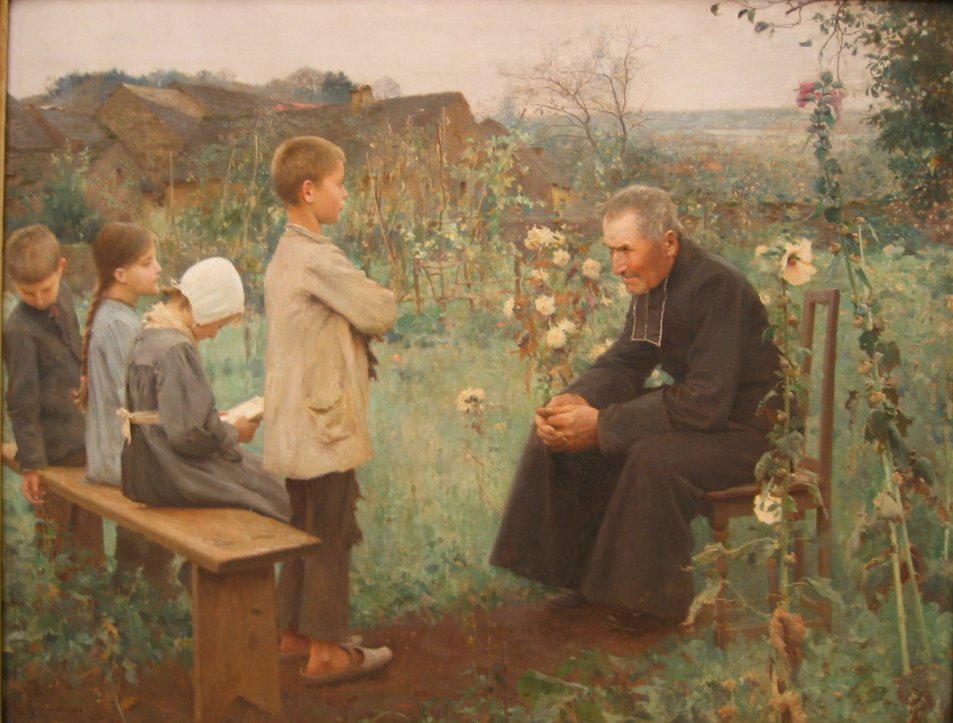
Rockwell worshipOne of the advantages of being a Country Parson that Tim Keller and I both failed to mention is the ability of rural ministers to worship with their congregations while leading in worship. This thought came to mind when reading the recent USA Today piece on the Rev. Keller and multi-site churches.

According to the story, the reporter, one church member

heard [Keller] preach at 10:30 a.m. on the Upper East Side. Now she has brought friends to hear him at the West Side 5 p.m. service. He briefly greets her, then slips into the service just before his sermon.

In 45 minutes, before the final hymn, Keller’s gone — off to deliver the same sermon, “The Gospel Changes Everything,” on the East Side.

Then, again, Keller, founder and senior pastor of Manhattan’s Redeemer Presbyterian Church, will dash back to West 79th Street for his fourth service of the day at three leased locations.

It’s not the traditional American mom-and-pop church, where the same pastor counsels parishioners, visits when they’re ill or marries or buries them.

Keller’s service-hopping — he usually preaches to three-fourths of the 5,500 people who attend Redeemer services — reflects a new model for worship spreading rapidly across the U.S. church landscape: multisite churches.

I know what follows may sound like criticism, and I know Keller has recently written on how to respond to criticism in a way that has attracted praise, but this story does raise a number of troubling questions.

The first, what does this multi-site performance say about worship and the sermon? I know one pastor in the Redeemer network who regularly complains about Presbyterian worship being logocentric. But what could be more logocentric than a pastor showing up to give his sermon, not having participated in the rest of the service? And isn’t a tad logocentric for those attending these multi-site services to go mainly to hear the Big Kahuna preacher? Reformed worship regards the service as an organic whole, with prayer (in various forms), the word (in various forms), the offering (in one form), and the sacraments constituting the means why which God communes with his people. The sermon may be the main course in the meal of worship, but it is not the only one.

The second question goes to the point of this post’s title: isn’t a pastor worshiping with the congregation during a service? I know he is leading, and I also know – having led worship, reluctantly (as a four office Presbyterian elder) – that a person is thinking about leading worship in ways that are different from thinking about honoring and glorifying God. Still, doesn’t a pastor need to confess sins, sing praise, hear the word as he reads it, and maybe even tithe (usually his wife has that covered)? But if the pastor only shows up for the “main event,” doesn’t this communicate that he is not part of the congregation, not part of the worshiping assembly, not in need of the same means by which the rest of the believers are receiving God’s grace and blessing? Or does urban ministry require a different kind of church?

Which means that the advantage of a mom-and-pop church, whether in the city, suburbs, or country, is that a pastor can worship God too along with the rest of the congregation.

Machen on Public Schools

Rockwell public schoolThanks to S. M. Hutchens at Touchstone for this reminder of what Christian school advocates selectively leave out when quoting Machen:

A public-school system, in itself, is indeed of enormous benefit to the race. But it is of benefit only if it is kept healthy at every moment by the absolutely free possibility of competition of private schools. A public-school system, if it means the providing of free education for those who desire it, is a noteworthy and beneficent achievement of modern times; but when once it becomes monopolistic it is the most perfect instrument of tyranny which has yet been devised.

Freedom of thought in the middle ages was combated by the Inquisition, but the modern method is far more effective. Place the lives of children in their formative years, despite convictions of their parents, under the intimate control of experts appointed by the state, force them to attend schools where the higher aspirations of humanity are crushed out, and where the mind is filled with the materialism of the day, and it is difficult to see how even the remnants of liberty can subsist. Such a tyrrany, supported as it is by a perverse technique used as the instrument in destroying human souls, is certainly far more dangerous than the crude tyrannies of the past . . . .

From Christianity and Liberalism, p. 14.

Before the posts begin, let me say I get it that Machen is not saying great things about public schools. He is saying that a better education comes elsewhere. But he does say public education is beneficial. Could Dr. K. ever say that?

Even more important is that Machen thinks Christian schooling is a way to resist the tyranny of the state — not a way to promote and maintain a Christian culture. That is a very different argument from the one made by Dr. K. and his assistants.

Which leads to the question, do Christian school advocates believe that Christian schools should teach that quoting selectively is bad scholarship? Or do Christian school advocates require a proof text for Christian schools to teach that lesson?

When Did Reformed Christians Become Adventists?

Frosted FlakesI remember a time when Advent was foreign to most Protestants except for Episcopalians and a few Lutherans. Now one hears regularly of the Advent season in conservative Reformed and Presbyterian churches. Some even bring out the wreaths, the candles, and orchestrate Hallmark moments where an entire family will be involved in a reading and lighting that Sunday’s candle. The observance of Advent among the low-church Christians are usually ham fisted, of course, because technically Christmas carols should not be sung until December 25th – and that’s because Jesus isn’t born until then. Before Christmas, expectations of Christ’s advent are supposed to be properly advental, which makes “Come Thou Long Expected Jesus” an Advent hymn, and “Joy To the World” a Christmas hymn. How the liturgical calendar comes back to bite.

The objections to Advent – not to mention Christmas – are legion in the Reformed tradition. The regulative principle is one of those reasons.

But beyond the obvious confessional concerns are some more trivial and some more substantial. Among the trivial is the idea that Advent has become the commercial bridge between the U.S. Thanksgiving holiday and Christmas, thus baptizing a time of much consuming, both by the mouth and the wallet, with the religious patina of “Come, Lord Jesus, Come Quickly” (but not so fast that merchants fail to generate the seasonal profits on which their enterprises depend). Leigh Eric Schmidt’s book, Consumer Rites, is among the best on the commodification of holidays in American history and he notes the following:

In a market philosophy organized on the guiding priniciple of growth, every year Christmas advertizing was said to get “bigger and better,” and seemingly the only question that remained was how early in November to begin the blitz. The Dry Good Economist candidly noted in 1902 that many retailers consider 15 November or even 1 November “none too early” to open the “Holiday Campaign.”

One of the merchants that Schmidt includes was the New School Presbyterian and financial sponsor of Dwight L. Moody, John Wanamaker, of the famous Philadelphia department store that bore his name. According to Schmidt, “As one of the most influential and powerful merchants of his day, Wanamaker was rarely outdone, and at Christmas he kept up a formidable flow of store souvenirs, gift catalogues, newspaper advertisements, trade cards, window decorations, musical concerts, Santa Claus stunts, and other holiday entertainments.” Wanamaker even had Christmas hymnals printed for use in the store, and also wrote messages appropriate to the season such as the following: “To get right with Christmas would make men right with one another, nation with nation, and . . . put right this old world, almost falling to pieces.” Didn’t the baby Jesus as a grown man turn out merchants from the Temple for making profits off religion?

A more substantive concern about creeping Adventism among Presbyterians is that because Christmas follows Advent, hard pressed are many believers not to think that the coming of the Lord upon which they are meditating in December is the Advent that took place two millennia ago — thus causing eschatological rubber-necking. Of course, we can sing Advent hymns (if we are going to sing hymns) with Christ’s return in view, and believers should be encouraged to live expectantly, hoping for their Lord’s second coming. Mind you, this is a remarkable disincentive for commerce since living in the light of Christ’s imminent return leads to prayers like Calvin’s – “let us not become too deeply attached to earthly and perishable things.” But if we were going to sing Advent hymns it would make more sense to sing them as far away from Christmas as possible, so that folks don’t lose track of where they are in redemptive history.

We live in the inter-advental period – period. Christ has come. He is coming again. We are not awaiting his birth. Been there, done that. In which case, why don’t we sing all those Advent hymns at General Assembly and Synod, a time when Christmas is a distant memory and when commissioners would do well to consider their work in the light of “the fullness of time”?

Laud's Last Laugh

Arbp LaudOr how Purbyteritans (because it’s silly to distinguish between Presbyterians and Puritans) learned to love the Prayer Book

Archbishiop Laud was of course the Church of England official who opposed Puritanism and sought to enforce high church ways on Protestants in England and Scotland. He was sufficiently scary to prompt Puritans to head for Massachusetts Bay and to lose his head when the Puritans who remained in England achieved victory over the Stuart Monarchy and initiated their topsy-turvy experiment with republicanism.

Laud, thus, stands for the state-church policy of ramming liturgical practices down the throats of low and medium-church pastors. Because he leaned toward Roman Catholicism, he gets no sympathy from oldlife.

But few seem to notice the irony that contemporary low-church Calvinist worship is indelibly stamped with the Prayer Book that Purbyteritans opposed as a breach of liberty of conscience. In view here is the practice of putting the long pastoral prayer in the first half of the worship service, with the sermon taking up the second half, plus a short prayer, hymn, and the benediction (or prayer of blessing for the really low church Calvinists). Hughes Oliphant Old has long contended that this arrangement simply follows the Prayer Book’s order for morning prayers with a sermon tacked on.

It has no inherent defect except that putting the long prayer in the first half of the service, instead of placing it as the pastoral prayer after the sermon, has several disadvantages. One, it departs from the liturgies (dare I use the term?) of most Reformed churches if Peter Wallace’s work is accurate. In other words, most of the Reformers placed the long prayer after the sermon and used it as a vehicle to pray for the congregation in the light of the text just preached.

Another disadvantage is that it lets the congregation speak its longest words to God before he gets to give his lengthiest words to the congregation in the sermon. I don’t know why Christians would need to speak longer before God does, but the logic of the dialogical principle would suggest that God’s longest words should go first.

The final disadvantage is that if the long prayer went after the sermon, then the preacher could apply the points of the sermon to the congregation and larger church in the form of prayer instead of having to end the sermon not with indicatives but imperatives.

This is yet another irony of Purbyteritan fear of liturgy.

Dual Citizens

Dual Citizensby Jason Stellman

Endorsements
For too long I struggled to recommend reading on the subject of living the Christian life as “resident aliens.” Often I was reduced to directing readers to liberal Methodists (such as Hauerwas and Willimon) as the best embodiment of Christian convictions. At last I can point to practice that is firmly grounded in Reformed theology. Dual Citizens is written by someone who loves the world: its movies, its music, and its authors. But this is a rightly ordered love because it is a penultimate love. Here is a robust pilgrim theology that marches on to Zion while avoiding the pitfalls of asceticism and legalism. By putting earthly kingdoms in their proper place, Pastor Stellman demonstrates how rightly to use the present world even as one eagerly awaits the next. John R. Muether

The subject of Christ and culture have never been as popular among conservative Protestants in the United States as it is today, and the topic has never needed as much attention from the perspective of the church. It gets that attention in this important book by Jason Stellman. Dual Citizens will certainly upset those used to thinking of Christ as mainly the transformer of culture. But for genuine wisdom not only on the culture wars, but on the culture, ways, and habits of the church, Stellman’s discussion is the place to go. D. G. Hart

Update: Lunch with Cordelia

HexTurns out I went with my carbohydrate friendly and folk heritage – Pennsylvania Dutch – for lunch. (You may breath now.) The turkey salad on Amish sandwich roll was enjoyable as I watched Blood Simple next to the kitten with teeth and claws from hell.

BTW, has anyone noticed how great Carter Burwell’s scores are for the Coens, and that barely no one else in the movie business seems to use him. What’s up with that?

Then I decided to be productive. I purchased a shopping cart for post-automobile urban life en route to purchasing a case of Yards IPA.

In case you thought that was a full day, I am now posting at oldlife.org before Secret Cinema, mind you.

How could Twitter ever do justice to such a day?

Where is Justin Taylor When You Need Him?

MeSome bloggers use their page as a clearance house for what others are saying – sort of like Matt Drudge does the news. So if you want to know what John MacArthur thinks about the Manhattan Declaration, you could go here. Such places allow you to keep tabs on the doings and whereabouts of certain evangelicals with star power.

Others use the blog to promote their own appearances, merchandise, and ideas published elsewhere. Of course, Oldlife promotes the views of its editors and sometimes reprints material first published in the Nicotine Theological Journal (a subscription would make a nice stocking stuffer, by the way). But we have resisted using this e-space to publicize current activities and duties. This is supposed to be a place to discuss what it means to be Reformed – not a vehicle to learn about the Muether or Hart family vacation plans.

All of this is a way of explaining the awkwardness of what follows: I have posted a piece over at Front Porch Republic on the Manhattan Declaration. Because some of the comments in recent weeks have asked for my impressions of the statement, this notice is a tad more understandable. And because the specter of J. Gresham Machen hovers over the keyboards of the NTJ’s editors, and because my study of Machen has clearly informed my take on the Declaration, mentioning that post here also makes sense. But self-promotion still feels odd.

And so to complete the circle, readers may also be interested to know that I will be dining today (dv) at lunch on hot pork sandwiches purchased at Reading Terminal Market while watching – I haven’t yet decided – either Barton Fink or Blood Simple. This is less a Thank-God-It’s-Friday moment than it is a reaction to the end of the semester at Temple University. Later today, my wife and I will be watching films from Temple’s city archives at the program of Secret Cinema, a wonderful cultural resource in Philadelphia. On Sunday, we will be worshiping with the saints a Calvary OPC, Glenside.

Question: Who cares? Answer: I do and my wife does sometimes. It’s hard to tell if our cats, Isabelle and Cordelia, even think.

Should a Reformed Christian Receive Treatment at a Roman Catholic Hospital?

heart-monitorAfter a visit to my father at his local hospital, I had a worldview moment. What should have alerted me from the outset was the name of the place – St. Mary’s. But then I noticed that the spiritual services wing of the hospital had dropped off for him a brochure about their activities which was included with information about television channels and daily menus – talk about trivializing the eschaton. But the kicker was the crucifix in my dad’s ICU room. Shazzam!!! That’s a whole lot of idolatry for a man who is on a heart monitor.

But is Roman Catholic medicine really any different from Reformed medicine or even – dare I say – secular medicine. If worldviews go all the way down to the very tips of our toes, and if we can’t escape the claims of Christ in any parts of our lives, can I really look the other way in good conscience when entering a hospital room that displays an image of Christ on a cross?

And then there is the concern for quality of health care. If Abraham Kuyper was right that Roman Catholicism “represents and older and lower stage of development in the history of mankind” and if Protestantism occupies a “higher standpoint,” shouldn’t my dad try to find treatment at a Protestant hospital? Kuyper, by the way, wasn’t real complimentary of Roman Catholicism on science either.

It could be that I have once again misunderstood the claims of neo-Calvinism and that some algorithm exists for taking the gold of scientific advances from the dross of defective worldviews. But it could also be that the language of worldviews and the difference they make for every aspect of human existence is overdone, simply a rallying cry for inspiring the faithful, but not anything that would prevent my father from receiving treatment from unbelieving nurses employed by Roman Catholic administrators. Then again, the power of modernity is stunning, making all of those religious claims about connections between spiritual and physical reality look fairly foolish – as if a creed actually produces better medicine.

I mean no disrespect to the neo-Calvinists and their epistemological purity. But if they could help me out on this one, I’d be grateful. Does a Reformed worldview really make a difference for modern medicine and the ordinary decisions a sick believer must make in seeking a physician or hospital – under the oversight, of course, not of the elders but the insurance company.

Postscript: yes, I am preoccupied with neo-Calvinism. Shouldn’t Keller’s fans be happy? Oh, wait a minute.

Do Kuyperians Ever Listen to Kuyper?

Hearing Kuyper TodayThe reviewer of Westminster California’s Evangelium has repeatedly in different online exchanges accused the two-kingdoms proponents of denying Article 36 of the Belgic Confession where it teaches that the magistrate has the God-ordained duty to promote the true religion and punish idolaters and blasphemers. It says: “And the government’s task is not limited to caring for and watching over the public domain but extends also to upholding the sacred ministry, with a view to removing and destroying all idolatry and false worship of the Antichrist; to promoting the kingdom of Jesus Christ; and to furthering the preaching of the gospel everywhere; to the end that God may be honored and served by everyone, as he requires in his Word.” (Often not mentioned by such appeals to Article 36 are the revisions that Dutch Reformed communions in the United States made to this part of the Confession. See postscript below.)

What is striking for all good Kuyperians is that Abraham Kuyper himself rejected the original language of Article 36 and refused to let anyone claim he was less of a Reformed Protestant for doing so. In the early 1880s Kuyper wrote a pamphlet on the reformation of the church that the editors of the Standard Bearer, the denominational magazine of the Protestant Reformed Church, translated and published over many issues during the 1980s. (Thanks to John Halsey Wood for reminding me of this resource.) Under the heading of “Concerning Reformation and the Magistrate,” Kuyper wrote the following:

We oppose this Confession out of complete conviction, prepared to bear the consequences of our convictions, even when we will be denounced and mocked on that account as unReformed.

We would rather be considered not Reformed and insist that men ought not to kill heretics, than that we are left with the Reformed name as the prize for assisting in the shedding of the blood of heretics.

It is our conviction: 1) that the examples which are found in the Old Testament are of no force for us because the infallible indication of what was or was not heretical which was present at that time is now lacking.

2) That the Lord and the Apostles never called upon the help of the magistrate to kill with the sword the one who deviated from the truth. Even in connection with such horrible heretics as defiled the congregation in Corinth, Paul mentions nothing of this idea. And it cannot be concluded from any particular word in the New Testament, that in the days when particular revelation should cease, that the rooting out of heretics with the sword is the obligation of magistrates.

3) That our fathers have not developed this monstrous proposition out of principle, but have taken it over from Romish practice.

4) That the acceptance and carrying out of this principle almost always has returned upon the heads of non-heretics and not the truth but heresy has been honored by the magistrate.

5) That this proposition opposes the Spirit and the Christian faith.

6) That this proposition supposed that the magistrate is in a position to judge the difference between truth and heresy, an office of grace which, as appears from the history of eighteen centuries, is not granted by the Holy Spirit, but is withheld.

We do not at all hide the fact that we disagree with Calvin, our Confessions, and our Reformed theologians.

Granted, the appeal to Kuyper here may look a tad inconsistent because of regular objections to the idea of transformationalism that Kuyper himself apparently launched. At the same time, this quotation does show that even in the efforts to claim Christ’s lordship over every square inch, Kuyper recognized limits to the logic of that sovereignty, limits that many modern-day Kuyperians seem incapable of making in order to avoid the shoals of theonomy.

Postscript: Latter day Kuyperians also recognized the limits of Christ’s lordship when they attached notations to the Belgic Confession like this one found in both the Christian Reformed Church and the United Reformed Churches of North America (it follows the assertion that the magistrate is not only responsible for the “welfare of the civil state, but also to protect the sacred ministry”:

The Christian Reformed Church Synod of 1910, recognizing the unbiblical teaching, contained in this sentence, concerning the freedom of religion and concerning the duty of the state to suppress false religion, saw fit to add an explanatory footnote. The Christian Reformed Church Synod of 1938, agreeing with the Christian Reformed Church Synod of 1910 as to the unbiblical character of the teaching referred to, but recognizing a conflict between the objectionable clauses in the Article and its footnote, decided to eliminate the footnote and to make the change in the text of the Article which appears above, corresponding to the change adopted in 1905 by the General Synod of the “Gereformeerde Kerken in Nederland.” (See Christian Reformed Church Acts of Synod, 1910, pp.9,104-105; also Christian Reformed Church Acts of Synod, 1938, p. 17.). The Christian Reformed Church Synod of 1958 approved the following substitute statement which has been referred to other Reformed Churches accepting the Belgic Confession as their creed for evaluation and reaction: “And being called in this manner to contribute to the advancement of a society that is pleasing to God, the civil rulers have the task, in subjection to the law of God, while completely refraining from every tendency toward exercising absolute authority, and while functioning in the sphere entrusted to them and with the means belonging to them, to remove every obstacle to the preaching of the gospel and to every aspect of divine worship, in order that the Word of God may have free course, the kingdom of Jesus Christ may make progress, and every anti-christian power may be resisted.”

Hart Endorses Keller

Berry's WhatOr, how Tim Keller wants to save your aggie soul.

We were delighted to see a recent post by Keller at his blog in which he recommended rural congregations to aspiring pastors. It helps us get over some of the angst we experienced when reading about church planting in New York City. In this post, “The Country Parson,” Keller writes:

Young pastors or seminarians often ask me for advice on what kind of early ministry experience to seek in order to best grow in skill and wisdom as a pastor. They often are surprised when I tell them to consider being a “country parson” — namely, the solo pastor of a small church, many or most of which are in non-urban settings. Let me quickly emphasize the word “consider.” I would never insist that everyone must follow this path. Nevertheless, it is worth thinking about. It was great for me. . . .

Some will be surprised to hear me say this, since they know my emphasis on ministry in the city. Yes, I believe firmly that the evangelical church has neglected the city. It still is difficult to get Christians and Christian leaders to make the sacrifices necessary to live their lives out in cities. However, the disdain many people have for urban areas is no worse than the condescending attitudes many have toward small towns and small churches.

Young pastors should not turn up their noses at such places, where they may learn the full spectrum of ministry tasks and skills as they will not in a large church. Nor should they go to small communities looking at them merely as stepping stones in a career. Why not? Your early ministry experience will only prepare you for “bigger things,” if you don’t aspire for anything bigger than investment in the lives of the people around you. Wherever you serve, put your roots down, become a member of the community and do your ministry with all your heart and might. If God opens the door to go somewhere else, fine and good. But don’t go to such places looking at them only as training grounds for “real ministry.”

Could Wendell Berry have said it any better? Well, with all due respect to Keller’s powers of communication, probably. So let me round out my endorsement with some of the edge that makes Berry such an important person to consult about rural communities, farmers, the economy, and the work of the church agrarian settings. In “God and Country,” he writes:

The denominational hierarchies, then, evidently, regard country places in exactly the same was as “the economy” does: as sources of economic power to be exploited for the advantage of “better”places. The country people will be used to educate ministers for the benefit of city people (in wealthier churches) who, obviously, are thought more deserving of educated ministers. This, I am well aware, is mainly the fault fo the church organizations; it is not a charge that can be made to stick to any young minister in particular: not all ministers should be country ministers, just as not all people should be country people. And yet it is a fact that in the more than fifty years that I have known my own rural community, many student ministers have been “called” to serve in its churches, but not one has ever been “called” to stay. The message that country people get from their churches, then, is that the same message that they get from “the economy”: that, as country people, they do not matter much and do not deserve much consideration. And this inescapably imposes an economic valuation on spiritual things. According to the modern church, as one of my Christian friends said to me, “the soul of the plowboy ain’t worth as much as the soul of the delivery boy.” [from What Are People For, p. 97]