
Pomo’s and Fropo’s are at it again.
Conservatism and Civil Religion
Pomo’s and Fropo’s are at it again.
Pomo’s and Fropo’s are at it again.
Is it egotistical to think so, bro?
I keep hearing that justification is only a part of salvation and so falls short of yielding the “whole Christ.†I understand the desire to do justice to all the benefits that believers receive in this life from Christ – including adoption and sanctification.. But I wonder if this concern for all of Christ recognizes just how total his work is in the benefit known as justification and received by faith alone. Here is what the Belgic Confession says in Article 22, “The Righteousness of Faithâ€:
We believe that for us to acquire the true knowledge of this great mystery the Holy Spirit kindles in our hearts a true faith that embraces Jesus Christ, with all his merits, and makes him its own, and no longer looks for anything apart from him.
For it must necessarily follow that either all that is required for our salvation is not in Christ or, if all is in him, then he who has Christ by faith has his salvation entirely.
Therefore, to say that Christ is not enough but that something else is needed as well is a most enormous blasphemy against God– for it then would follow that Jesus Christ is only half a Savior. And therefore we justly say with Paul that we are justified “by faith alone” or by faith “apart from works.â€
However, we do not mean, properly speaking, that it is faith itself that justifies us– for faith is only the instrument by which we embrace Christ, our righteousness.
But Jesus Christ is our righteousness in making available to us all his merits and all the holy works he has done for us and in our place. And faith is the instrument that keeps us in communion with him and with all his benefits.
When those benefits are made ours they are more than enough to absolve us of our sins.
I don’t know about others, but that sounds like a whole lot of Christ being affirmed in justification and our righteous standing before God. It also sounds like the Reformation’s insistence on justification as the material principle of our protest with Rome was precisely to do justice to the “whole Christ.â€
“I don’t read books, I write them.†The first time I said that I knew it didn’t sound good. And that was the point because it was actually more a joke on me than on those who haven’t written books. Historians do not write because they are necessarily wise. And the way historians write means that they have less time to read books they would prefer to ponder. Too often I’ve spent an evening with an Edwards, Buswell, Bushnell, or Beecher and had to pass on Epstein, Berry, Machen or Meilaender. Even worse, sometimes I’ve had to read what I’ve written.
Current duties – a volume on the history of the OPC to commemorate the denomination’s 75th anniversary – forced me to take a look at a piece written about a decade ago on Orthodox Presbyterians and secularization. It was entitled, “Reconciling Two Kingdoms and One Lord: Twentieth-Century Conservative Presbyterians and Political Liberalism in the United States,†and presented at a conference at the Vrijgemaakt seminary in Kampen sponsored by the Archives of the Free University.
The conclusion is reprinted below may complicate perceptions that the editors of the NTJ are not sufficiently on board with Vos and Van Til. What is even more interesting than the views of the editors is that Vos and Van Til can be read against each other, at least when it comes to understanding the saeculum.
<p
>. . . the OPC relied upon three separate doctrinal strands to maintain the integrity of the church and her witness in the face of political liberalism and its secularizing effects. First, J. Gresham Machen bequeathed to the OPC the Southern Presbyterian tradition of the spirituality of the church which put limits on church power while also preventing it from intervention in spheres beyond its domain, such as politics. Second, John Murray outlined the implications of divine sovereignty for public life when he affirmed the church’s duty to speak on civic affairs because God had ordained both the church and the magistrate and so ruled over each. Finally, Cornelius Van Til worked out the inferences of the sufficiency of Scripture when he asserted that Christ’s lordship over all things made the Bible relevant for all walks of life. These three doctrines have greatly shaped the way that American Calvinists have reacted to the de-Christianization of American society, as the example of the OPC demonstrates. Furthermore, the way Orthodox Presbyterians applied these doctrines appeared to vary according to whose interests or territory were at stake. When they needed to defend the prerogatives of the church or the independence of Christian schools, Orthodox Presbyterians have relied upon the sort of logic that undergirded Machen’s defense of the church’s spiritual mission. But when American society appeared to be growing more tolerant of immorality, usually defined on pietist terms that sees godlessness in certain forms of immoral behavior, then Orthodox Presbyterians turned to notions about God’s sovereignty or the Bible’s relevance to all walks of life for the work of the church and also for the regulation of public life.
This explanation of the theology at work in Orthodox Presbyterian responses to the secularization of American politics reveals that Reformed teaching on politics as it played out among conservative Presbyterians has not been sorted through systematically. Although political liberalism represents a tradition of state craft quite compatible with the separation of religious and public spheres implied by sphere sovereignty — a notion very similar to the spirituality of the church — American Calvinists have generally regarded the reduction of religious references in public life and the prevalence of certain kinds of worldliness in society as a betrayal of both divine sovereignty and biblical authority. Although God was still sovereign and the Bible was still true when Christ suffered the unjust penalty of dying on the cross, for the Orthodox Presbyterian sampled here the proof of God’s rule and biblical authority is only substantially compelling when righteousness and divine truth prevail in civic life. In other words, despite knowing cognitively that different standards apply for the city of God, i.e., the church, and the city of man, i.e., the state, the doctrines of divine sovereignty and biblical sufficiency have tended to take precedence over sphere sovereignty and the spirituality of the church. As such, conservative North American Calvinists like those in the OPC have often demanded from the state the same kind of obedience and truthfulness that Christ requires of his bride. . . .
. . . perhaps the most significant doctrine in the OPC’s theological arsenal for coping with secularization and political liberalism may be the Vossian one that teaches about the gradual and varied unfolding of redemptive history. If, as biblical theologians have argued, the church in the period between Christ’s first and second advents is a pilgrim people, wandering in the wilderness until Christ leads them upon his return into the promised land of the new heavens and the new earth, then Orthodox Presbyterians like pastor Davison could legitimately have thought about his life in places like New Jersey more like Midge Decter thought of hers in St. Paul. In his comments on the epistle to the Hebrews, Orthodox Presbyterian theologian, Richard B. Gaffin, Jr., builds upon the insights of Geerhardus Vos to argue that the eschatology of the New Testament implies that “there is no ‘golden’ age coming that is going to replace or even ameliorate these desert conditions of testing and suffering.†Gaffin adds that “no success of the Gospel, however great, will bring the church into a position of earthly prosperity and dominion such that the wilderness with its persecutions and temptations will be eliminated or marginalized.†This eschatological reality means that as long as Christ is absent from the church, her “final rest†cannot be located in temporal or earthly conditions. For this reason, the situation of Protestants in the United States is actually more similar to that of Jewish Americans than that of the founding fathers or the Puritans who set out to make America a “city on a hill.†In which case, if Orthodox Presbyterians had reflected on and followed the insights of Vos for public life, they might have come to evaluate political liberalism and secular society less like nativist Americans and more like immigrants to the United States.
In an ongoing attempt to explain why some Reformed Protestants – okay, this one – are concerned about any formulation of doctrine that would de-center justification by faith, the following quotation from Benjamin Warfield is especially apt. It expresses the problem of human sin and the need for perfect righteousness with the sort of clarity that not only made Warfield legendary but also more importantly clarifies the significance of the righteousness that believers receive through faith alone.
Sometimes we are told that Justification by Faith is “out of date.” That would be a pity, if it were true. What it would mean would be that the way of salvation was closed and “no thoroughfare” nailed up over the barriers. There is no justification for sinful men except by faith. The works of a sinful man will, of course, be as sinful as he is, and nothing but condemnation can be built upon them. Where can he get works upon which he can found his hope of justification, except from Another? His hope of Justification, remember – that is, of being pronounced righteous by God. Can God pronounce him righteous except on the ground of works that are righteous? Where can a sinful man get works that are righteous? Surely, not from himself; for, he is a sinner, and all his works as sinful as he is. He must go out of himself, then, to find works which he can offer to God as righteous. And where will he find such works except in Christ? Or how will he make them his own except by faith in Christ?
Justification by Faith, we see, is not to be set in contradiction to justification by Works. It is set in contradiction only to justification by our Own Works. It is justification by Christ’s Works. The whole question, accordingly, is whether we can hope to be received into God’s favor on the ground of what we do ourselves, or only on the ground of what Christ does for us. . . . Justification by Faith means, that is to say, that we look to Christ and him alone for salvation, and come to God pleading Christ’s death and righteousness as the ground of our hope to be received into his favor. If Justification by Faith is out of date, that means, then, that salvation by Christ is out of date. . . .
Justification by Faith does not mean, then, salvation by believing instead of by doing right. It means pleading the merits of Christ before the throne of grace instead of our own merits. . . . Justification by Faith is nothing other than obtaining everlasting life by believing in Christ. . . .
(Warfield, Selected Shorter Writings, vol. 1, 283-84)
(From the April 2001 NTJ)
The basic problem for any evangelical historian approaching Martin Luther is, of course, the centuries of mythology, literary, visual, anecdotal, that have come to surround the man and the Reformation in the evangelical tradition. How many third rate Protestant artists have painted their pictures of an angry Luther nailing the theses to the castle wall and thus symbolically putting a nail in the coffin of medieval catholicism? And how often have the sentiments of such artworks been echoed and reinforced in evangelical sermons and tracts over the years? Yet Luther himself in 1545 tells us that “when I took up this matter against indulgences, I was so full and drunken, yea, so besotted in papal doctrine that, out of my great zeal, I would have been ready to do murder — at least, I would have been glad to see and help that murder should be done — on all who would not be obedient and subject to the pope, even to his smallest word.” Clearly Luther’s own professed understanding of himself at this point in time has largely fallen on deaf ears in the tradition. Far from nailing up the coffin of the medieval church, he saw himself as operating within its framework for the furtherance of its mission.
A further complication in assessing the relationship between the Reformation period and that of the later revivals has been an argument from silence. In asking why the great Reformers and Puritans did not reflect upon mass movements of God’s Spirit in the manner in which Jonathan Edwards was later to do, the popular answer has often been that they were in fact living at times of awesome revival and were unaware of the extraordinary nature of the times in which they lived. This would appear, for example, to be the position of the influential evangelical leader, Martyn Lloyd-Jones who, perhaps more than anyone else, shaped the popular understanding within English and Welsh Calvinistic circles of the nature and importance of revival in the twentieth century. Hence, as the goldfish cannot analyze the water in which it swims, the Reformers and Puritans could scarcely be expected to produce a treatise on revival akin to The Religious Affections.
There is a sense in which, of course, the scholar should not be influenced by such images and arguments. Few who have ever read Luther will fail to see the irony of a man who rejected Ulrich Zwingli as a Christian brother because of his eucharistic beliefs being used as an icon by the most hardline Protestant conspiracy theorists in their crusades against the influence of the Papacy. Yet it is also very difficult for the evangelical scholar, with the theological commitments that implies, to approach the Reformation without trying to read the Reformation in terms of how it anticipates or legitimates movements of the eighteenth century and beyond.
While there is at least one comment of Luther which might lead us to believe that the success of the Reformation depended on little more, humanly speaking, than his ability to drink beer (a point which, incidentally, certainly marks him off from much later revivalism), a more fruitful avenue for looking at Reformation priorities is almost certainly the literary output of the central year of 1520. It was at this point that Luther laid out in its fullest form his manifesto for Reformation in the three great treatises: The Babylonian Captivity of the Church; The Freedom of the Christian; and An Address to the German Nobility. These three works, produced at the point in Luther’s career when it was becoming clear that the Church of Rome was not going to institute a theological reformation from within, laid out for all to see the implications of his understanding of justification by faith for the realms of the sacraments, the Christian life, and the secular authorities.
To place sacramental theology at the heart of Luther’s Reformation should require no justification: the fact that he was willing to anathematize Zwingli precisely on sacramental grounds should indicate to us the importance of this to Luther’s program; and the fact that one of the three major treatises of 1520 is devoted to this topic is scarcely coincidental to Luther’s overall vision of Reformation. Furthermore, this point should immediately alert us to the fact that Luther’s understanding of what the Reformation is all about has a sacramental dimension which is not something which stands out in the later evangelical tradition.
The sacramental revisions which Luther proposes in The Babylonian Captivity present in pointed form ideas that had been developing in his mind throughout the previous five years and which had become increasingly focused in late 1518 and 1519. In brief, he reduces the number of sacraments from seven to three (penance still being considered a sacrament at this stage) and redefines them in terms of his understanding of the centrality of promise and faith. Thus, the sacraments come to function as outward symbols whose inner reality (and usefulness) is only available to the eyes of faith.
Most striking for the evangelical approaching Luther on the sacraments is his view of baptism, for it is at this point that Luther’s theology sits most uncomfortably with any reading of his spiritual life in terms of later conversionism. At the start of the baptism section in The Babylonian Captivity, Luther makes the following point:
But Satan, though unable to do away with the virtue of baptizing little children, has shown his power by putting an end to it among adults. Today there is scarcely any one who calls to mind his own baptism, still less takes pride in it; because so many other ways have been found of getting sins forgiven and entering heaven.
What Luther is alluding to here is the medieval stress upon baptism as a “first plank” for salvation which, once the recipient has again fallen into sin, is more or less abandoned in favour of the “second plank” of the church’s penitential system. Such an approach effectively reduces the significance of baptism to a point in the past and focuses the mind far more upon the various means which the church provides in the present for dealing with sin. As a result, baptism becomes less important than the present penitential system with which believers have to do.
Martin Kenunu
Which is another way of saying that back issues of the NTJ have been carefully pdf’ed and are beginning to be posted at the Back Issues page of this blog. Many thanks to James H. Grant for this work, with an assist or two from Camden Bucey.
Here are a couple hypotheticals. Both have to do with the ways people may take offense selectively.
First, say I am a political theorist who greatly admires the Federalist Papers (which I am not) and the arguments found there about the need for a Constitution that specifies the branches of a new federal government and their powers. If someone came along and said that federalism was the most wicked political notion ever known to man because it violated the divinely ordained rule of monarchs, would I not object because of my federalist convictions? In other words, would it matter to my federalist convictions that the attacker of federalism did not name John Jay, Alexander Hamilton, or James Madison explicitly? Wouldn’t I understand an attack on federalism to include those figures most identified with developing federalist thought (at least in the United States)?
Second, say I am a huge fan of the Coen Brothers’ movies (which I am) and someone comes along and tells me that the Coen brother’s are some of the least gifted and most adolescent of indie American directors who dabble merely in fashionable postmodernism, would I not feel my aesthetic toes trod upon even if this critic of the Coens did not mention their two best movies by name, “Miller’s Crossing” and “Hudsucker Proxy”? I mean, is a general put-down of the Coen brothers easier to take simply because it is general and lacks specifics? Or is the general rejection more sweeping because it lacks specifics that might provide wiggle room for hurt feelings? Continue reading “Ad Hominem or, How to Read Criticism”
Â
Â
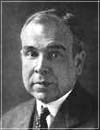
The man who was born on this day in 1881 is worth remembering if only because he could write as clearly as and as courageously as the following:
Â
Â
If what we have said so far be correct, there is now living a Saviour who is worthy of our trust, even Christ Jesus the Lord, and a deadly need of our souls for which we come to Him, namely, the curse of God’s law, the terrible guilt of sin. But these things are not all that is needed in order that we may have faith. It is also necessary that there should be contact between the Saviour and our need. Christ is a sufficient Saviour; but what has He done, and what will He do, not merely for the men who were with Him in the days of His flesh, but for us? How is it that Christ touches our lives?
The answer which the Word of God gives to that question is perfectly specific and perfectly plain. Christ touches our lives, according to the New Testament, through the Cross. We deserved eternal death, in accordance with the curse of God’s law; but the Lord Jesus, because He loved us, took upon Himself the guilt of our sins and died instead of us on Calvary. And faith consists simply in our acceptance of that wondrous gift. When we accept the gift, we are clothed, entirely without merit of our own, by the righteousness of Christ; when God looks upon us, He sees not our impurity but the spotless purity of Christ, and accepts us “as righteous in His sight, only for the righteousness of Christ imputed to us, and received by faith alone.†That view of the Cross, it cannot be denied, runs counter to the mind of the natural man. It is not, indeed, complicated or obscure; on the contrary it is so simple that a child can understand, and what is really obscure is the manifold modern effort to explain the Cross away in such fashion as to make it more agreeable to human pride. But certainly it is mysterious, and certainly it demands for its acceptance a tremendous sense of sin and guilt. That sense of sin and guilt, that moral awakening of a soul dead in sin, is the work of the Spirit of God; without the Spirit of God no human persuasion will ever bring men to faith. But that does not mean that we should be careless about the way in which we proclaim the gospel: because the proclamation of the message is insufficient to induce faith, it does not follow that it is unnecessary; on the contrary it is the means which the Spirit Himself graciously uses in bringing men to Christ. Every effort, therefore, should be made, with the help of God, to remove objections to this “word of the Cross†and to present it in all its gracious power.
From the NTJ, October 2000 (concluded)
Whatever the merits of Bouwsma’s historical scholarship, his point about Calvin’s conversion or, better, evolution should not come as a shock to those who claim to follow in the French Reformer’s spiritual footsteps. That it does amaze is testimony to the way that pietistic influences have eaten away Presbyterian and Reformed brain cells. Once upon a time the Calvinistic branch of Protestantism was not so gullible when it came to the gushes of emotion that are supposed to count for the work of the Spirit among revivalistically inclined Protestants. For most Presbyterians, affirmative answers to questions commonly asked at a public affirmation of faith were a sufficient gauge to a man or woman’s standing before God. But these more formal and objective measures of Christian zeal began to look bland once the converts of the revivals of the First Great Awakening began to tell about the ways in which they had been slain by the Holy Ghost (as if they had, to borrow Luther’s phrase, swallowed him, “feathers and allâ€). At that point, the great and ongoing struggle between dying to sin and living to righteousness was reduced to a moment, a crisis, a specific time when the convert experienced Gawdah. And ever since the eighteenth century when Presbyterians began to look for signs of grace where no one had looked before, they not only started to insist on the kind of conversion narratives that make Calvin look like a non-evangelical, but they also introduced an element into their religious sensibility that would prove to be destructive of Reformed piety and worship. They began to insist upon experiences and encounters and restrictions and insights that their theology could not deliver. (This explains, by the way, the great disparity between the biblical and theological disciplines in Reformed theological education and the area of study misnamed as practical theology. Prospective pastors learn for two-thirds of their classes that it is God who saves his people and then are told that to be successful in the ministry they need to be enthusiastic, warm and caring. Go figure.) Continue reading “The Unconverted Calvin, Part Two”

