Psalm 23 for Social Justice Warriors

Perhaps inspired by an earlier rephrasing of Jesus. Or not:

The LORD is my standard, I shall not relent.

He makes me lie down outside court houses.

He leads me to trending hashtags.

He agitates my soul.

He leads me in paths of righteousness for humanity’s sake.

Because I live in systemic injustice, I will fear, for you may be with me;

but your rod and your staff, must punish oppressors.

You prepare a table before me in the presence of my enemies;

what’s up with that?

Surely righteous indignation shall follow me all the days of my life,

and I shall remain on social media forever.

How Did the Laity React to the Council of Nicea?

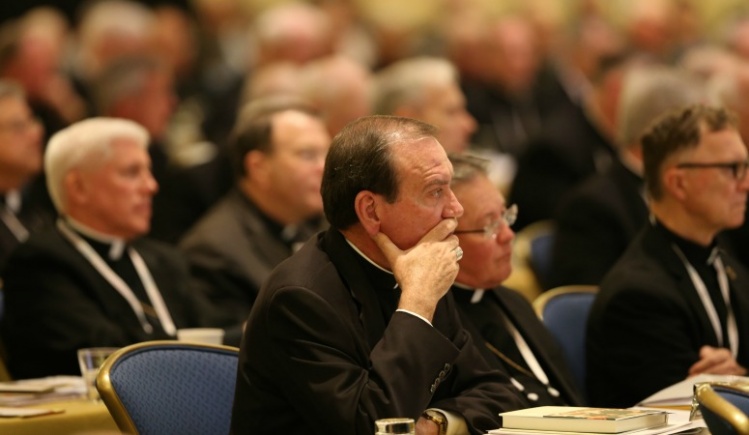
Surrounding the news and criticism of Roman Catholic bishops in their responses to instances of sexual abuse by priests (and other officials) are calls for the bishops to be as holy as they should be and for the laity to be included in some mechanisms of accountability. What is strange about these arguments — especially by Roman Catholic laity — is what questioning of the bishops does to the entire justification for Roman Catholicism. Critics of the bishops seem to assume that in the case of the current scandal, the bishops have behaved badly and acted unwisely. But if bishops can show such deficiency now, couldn’t they also have been unwise, acted out of self-preservation, or outright erred when deliberating about liturgy, the creed, or the beatification of exceptional believers? I mean, once you start to question the bishops’ judgment on this one matter, you can question almost any part of Roman Catholic history going all the way back to the church that Jesus founded (not in Rome but in Jerusalem).

Michael Sean Winters does not seem to be aware of how his reaction to the recent meeting of the U.S. bishops in Baltimore could also be applied to the gathering of bishops at Nicea almost 1800 years ago:

On Nov. 12, Cardinal Daniel DiNardo, the president of the conference, expressed his disappointment when he announced the Vatican’s decision to delay any votes on concrete proposals to confront the clergy sex abuse crisis. At the coffee break, bishops were fuming, complaining that Rome had pulled the rug out from under them. Even those bishops who are most enthusiastic about Pope Francis were distressed, worried that he did not understand the media spotlight under which the bishops were laboring.

But, when the bishops began discussing the proposals on Nov. 13, it quickly became obvious that the proposals were ill-conceived and would have fallen apart on their own, without any help from Rome. Erecting a national oversight commission, at considerable expense and with additional bureaucracy, to monitor 200 bishops, very few of them likely to have broken their vows of celibacy, didn’t seem very practical once they began discussing it. The proposed commission would report allegations to the nuncio but that happens now and no one had bothered to ask the nuncio if he wanted a commission to help him in his work. The Standards of Conduct seemed poorly framed and vague. The whole thing seemed amateurish.

Were the proposals at Nicea ill-conceived? Was the use of Greek philosophical terminology to explain the relations of Father, Son, and Holy Spirit amateurish?

By the way, who is a Michael Sean Winters to judge his bishops? After all, even when Vatican II affirmed the laity as the “people of God” in Lumen Gentium, the bishops were quick to remind readers who remained in charge of the church (Jesus founded):

27. Bishops, as vicars and ambassadors of Christ, govern the particular churches entrusted to them by their counsel, exhortations, example, and even by their authority and sacred power, which indeed they use only for the edification of their flock in truth and holiness, remembering that he who is greater should become as the lesser and he who is the chief become as the servant. This power, which they personally exercise in Christ’s name, is proper, ordinary and immediate, although its exercise is ultimately regulated by the supreme authority of the Church, and can be circumscribed by certain limits, for the advantage of the Church or of the faithful. In virtue of this power, bishops have the sacred right and the duty before the Lord to make laws for their subjects, to pass judgment on them and to moderate everything pertaining to the ordering of worship and the apostolate.

The pastoral office or the habitual and daily care of their sheep is entrusted to them completely; nor are they to be regarded as vicars of the Roman Pontiffs, for they exercise an authority that is proper to them, and are quite correctly called “prelates,” heads of the people whom they govern. Their power, therefore, is not destroyed by the supreme and universal power, but on the contrary it is affirmed, strengthened and vindicated by it, since the Holy Spirit unfailingly preserves the form of government established by Christ the Lord in His Church.

If Winters is within his rights as a church member to take swings at the bishops or if he is right about the lack of discernment by the bishops themselves, the Roman Catholic Church is in a crisis of jaw dropping proportions.

Birthright Sport

With all the recent talk about birthright citizenship, one that has bearings on infant baptism, I am at a loss about basketball. Is it Canadian, Presbyterian, or American? It depends on how we categorize the game’s creator.

But do you know that the inventor of basketball was a Presbyterian?

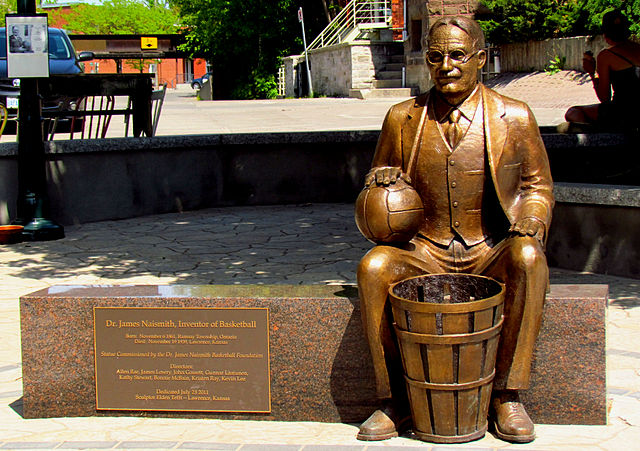
His name was James Naismith. Born in Canada on November 6, 1861 in a town no longer in existence, James and his four brothers and sisters grew up in difficult circumstances. His Scotch parents had emigrated from Scotland to Canada, but died after a few years in their new country, leaving James and his brothers and sisters to be reared by a strict uncle. They moved a few times, with James always being involved in sports, like rugby, soccer, football, lacrosse and gymnastics. He would graduate from McGill University in Montreal as well as earning a diploma from the Presbyterian seminary in Montreal in 1890. While never did he become ordained, he did minister in the pulpits of Canadian Presbyterian Churches.

It was while he was working at the YMCA International Training School in Springfield, Massachusetts that James Naismith was given the task by his employer to “come up with” an indoor game which would help the youths of the district to mature into young adults. The assignment, which was given a fourteen day limit, resulted in what we know as basketball.

Granted the ten rules which he wrote down were changed as the new sport developed. For example, the first basket at either end was a peach basket! When the soccer ball, which was first used, would be shot into it, it stayed there until someone climber a ladder at either end of the court to remove it. Time was lost in that exercise until a net and a “basketball” was used.

James and his wife moved to the United States and became citizens. Eventually, he was hired by the University of Kansas to be its basketball coach. Interestingly, he had more losses than wins in the university at Lawrence, Kansas. But others, including some he had trained, became more proficient in the sport, and today . . . it is found the world over.

Here’s the problem. Naismith invented the game when he was 30 years old. He did not become a citizen of the U.S. until he was 55.

That means basketball started on U.S. soil — good news for the birthright folks. But the man inventing the game was still Canadian.

If citizenship matters, basketball is Canadian.

If You Add to Scripture, How Do you Stop?

Here’s what Jesus said:

Woe to you, scribes and Pharisees, hypocrites! For you build the tombs of the prophets and decorate the monuments of the righteous, saying, ‘If we had lived in the days of our fathers, we would not have taken part with them in shedding the blood of the prophets.’ Thus you witness against yourselves that you are sons of those who murdered the prophets. Fill up, then, the measure of your fathers. You serpents, you brood of vipers, how are you to escape being sentenced to hell? Therefore I send you prophets and wise men and scribes, some of whom you will kill and crucify, and some you will flog in your synagogues and persecute from town to town, so that on you may come all the righteous blood shed on earth, from the blood of righteous Abel to the blood of Zechariah the son of Barachiah, whom you murdered between the sanctuary and the altar. Truly, I say to you, all these things will come upon this generation.

Here’s how you update Jesus for contemporary America:

Woe to you, racists and racial moderates, hypocrites! For you hold events to commemorate Civil Rights activists and read books about the martyrs of anti-racism, saying “if we had lived during the Civil Rights movement we would not have taken part with the racists in shedding the blood of the protesters.” Thus you witness against yourselves that you are sons and daughters of those who murdered Martin Luther King, Jr. Fill up then the measure of your slave holding and segregationist fathers and mothers. You racists and racial moderates, how are you to escape being sentenced to hell? Therefore I send you social justice warriors and community organizers and activists, some of whom you will put in jail and some you will call Marxist in your churches and troll on social media so that on you may come all the righteous blood shed on earth from the blood of the righteous Medgar Evers to the blood of Emmett Till who you lynched in Mississippi. Truly, I say to you, all these things will come upon Millennial and GenZ generations.

What if non-Christians wanted (trigger warning) to appropriate Jesus?

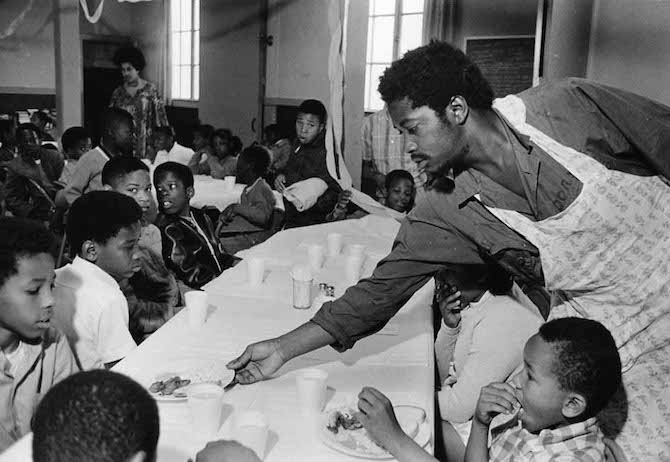
Woe to you, black and white Christians and Americans, hypocrites! For you don’t even hold events to commemorate Black Muslims or Black Panthers, and you refuse to read books about black nationalism, saying “if we had lived during the 1960s Rights movement we would not have taken part with the criminal justice system that sent Huey Newton and Angela Davis to jail.” Thus you witness against yourselves that you are sons and daughters of those who murdered Malcolm X. Fill up then the measure of your nationalist and Christian fathers and mothers. You black and white Christians and Americans, how are you to escape being sentenced to hell? Therefore I send you Ta-Nehisi Coates and Michael Eric Dyson, some of whom you will mock and some you will call anti-American in your churches and troll on social media so that on you may come all the righteous blood shed on earth from the righteous Fred Hampton to John Africa whom you burned in Philadelphia. I say to you, all these things will come upon Baby Boomer and Millennial generations.

Or is the idea that only Christians get to add to Scripture?

Confessional Lutherans Don’t Try So Hard

This story caught my eye because of a recent speaking engagement — a Reformation Day observance — at an LCMS church in Fort Wayne.  For this ELCA church plant in Orlando, the church is both brewery and church:

The high-pitched sounds of children playing kazoos echoed off the walls of the indoor beer garden at Castle Church Brewing as Pastor Jared Witt began the blessing ceremony for the new 20,000-square-foot establishment in Orlando.

“And that is how you scare the demons out of a brand new brewery church,” Witt told a crowd of about 175 on Sunday including visitors from the Florida-Bahamas Synod of the Evangelical Lutheran Church in America.

Plans for the nontraditional church have been fermenting for five years. What began with Witt and a few others bonding over a love of home brewing and fellowship in Aaron Schmalzle’s Kissimmee garage has evolved into a church community whose members gather every Sunday at 11:11 a.m. for worship services.

Early on, members of the fledgling church met in small groups in homes, then graduated to outdoor services at the site of the future church-brewery when it was picked about a year ago. Now, with construction complete on the church’s home, members have a roof over their heads while they celebrate Jesus with a frosty cold beverage.

But at the Reformation Day event in Fort Wayne, we heard (and I gave one of the) lectures on the Christian in the public square from both sides of the Tiber, sang hymns from the marvelous Lutheran Service Book (2006), punctuated by Scripture readings, and then adjourned to the fellowship hall where we drank beer (or cider) while eating snacks.

You tell me which is more organic — church as brewery or beer as beverage.

Baseball for Sabbatarians

With the completion of the 2018 season, an old article from the Nicotine Theological Journal (October 2007) on fans, pennant races, and keeping the Lord’s Day holy (and an excuse for an image of Mr. Utley):

NTJ Diarist: Day of Stress and Worry

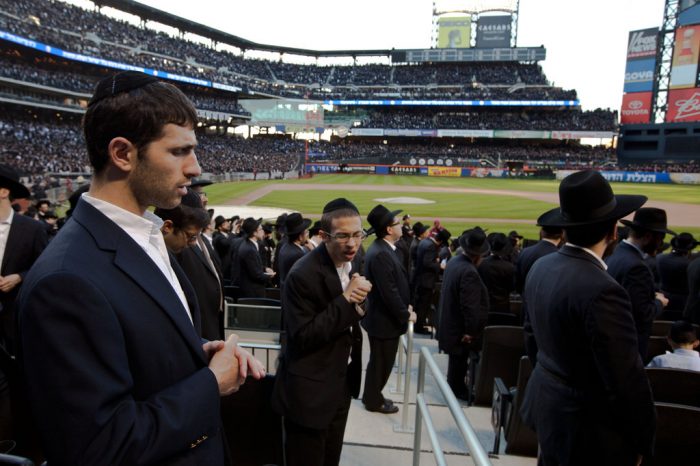
It seems a distant memory now. But the last Lord’s Day of the 2007 Major League Baseball season created great conflict for the NTJ’s editors. Each of us grew up rooting for either the Mets or the Phillies. We are also committed to sanctifying the Sabbath. Consequently, the prospects of the Eastern Division’s title being settled on a day reserved for rest and worship generated considerable soul searching and much distraction by earthly and perishable things.

What follows is a confession of the editors’ unsuccessful efforts to keep September 30th holy. (The Phillies’ fan’s account is in bold for the victor’s emphasis.)

September 29, 4:35 pm: I was prepared to give up on the Metropolitans the night before. As their home losing streak extended to five games, they surrendered first place at last to the Phillies. Still I followed this afternoon’s game on the Internet, and, remarkably, John Maine came within a few outs of the first no-hitter in Mets history. The 13-0 shellacking of the hapless Marlins, combined with the Phillies loss, virtually wiped clean weeks of futility. We were tied again, and the Mets had their mojo back.

6:45 pm: I have a bad feeling of foreboding as I go out for the annual progressive supper on our block in Philadelphia. Could it be that the Phillies’ rise to first place yesterday is only setting us up for an even more depressing defeat tomorrow, the perfect way to cap a season in which they achieved 10,000 losses? The team looked bad today in their 4-2 loss to Washington. Thankfully, the neighbors bring lots of wine and don’t talk much about sports. Avoidance mixed with a buzz is bliss.

September 30, 8:30 am: Does God hear the prayers of the not-so-righteous? I am hoping and praying for discipline to concentrate on today’s services and sermons. But I can’t help think how great it will be if the Phillies actually surpass the Mets and win the division. I am also hoping that the season ends today. A playoff game tomorrow will be agonizing.

10:30 am: A sermon on Christ the resurrected King prompts my mind to drift. Is it impious to employ the resurrection as a metaphor for this horrible month? Will the Mets’ September humiliation yield to their October exaltation? That’s an inviting way to frame the narrative, and it pleases me to imagine how it will silence the obnoxious swagger of Phillies fans.

11:40 am: The pastor is preaching from the Beatitudes and I am doing my best not to think about the game this afternoon. But the notion that those who mourn are blessed gives me a perfect retort to gloating Mets fans should they win. The mourning Phillies fans would seem to qualify as those deserving of the Lord’s blessing. Even so, such a benediction doesn’t bring needed consolation.

2:30 pm: Before an afternoon nap I need to return an email about an ecclesiastical matter, surely a work of necessity. The problem is that I must get to my webmail via my homepage, which is the web page of Sports Illustrated. I am careful to pass over it quickly with barely a glance. All I remember seeing is a reference to the “Miracle Mets.” Oh yeah. 1969 . . . 1986 . . . and now, 2007.

3:05 pm: It suddenly dawns on me: si.com did not refer to the “Miracle Mets.” It said something like, “Mets need a Miracle at Shea.” Hmm. That’s a strange way to overstate the challenge. All we need today is the ordinary providence of Beltran’s bat, Glavine’s arm, and Reyes’ speed. So why the miracle talk?

3:20 pm: Overcome with confusion, I go back to si.com, which now features a photo of a forlorn Tom Glavine. I read where the Marlins scored seven runs off the future Hall-of-Famer in the first inning. SEVEN: the number of fullness and completeness and, well, Sabbath. It’s over. There will be no miracle today. I sense no impulse to check the Phillies score.

4:20 pm: My wife and I are out on our Sabbath stroll through the neighborhood and I am searching for signs of the outcome of the game at Citizens Bank Park. I am worried. I see no little pennants mounted on cars to show allegiance to the victors. I also hear no shouts or honking of horns. The town is way too quiet. I am preparing to find another team for which to root – too bad the Eagles only play on the Lord’s Day.

5:25 pm: I am tempted to check the score at one of the baseball websites so that I can concentrate better during the evening service. I resist temptation.

6:40 pm: Godliness, the seminary intern instructs the flock in the evening sermon, is manifested in obedience to God’s command. I suppose that includes the fourth commandment. I fall under conviction and take at least a measure of comfort in considering that I will not face a trial like this next week. Not with the way the Jets are playing.

7:10 pm: I stand with the pastor at the back door to greet exiting worshipers. While talking to the pastor I learn that one of the families in the church was celebrating the Phillies’ win in such a lively manner that the pastor and his wife heard the revelry from a few doors down the street. I am stunned. The Phillies have at least tied for the division.

8:15 pm: I begin to pack for a trip, oddly enough, to Philadelphia. I cringe at the satisfaction my friends will enact. I flee, where I have in the past, to the Psalms: “You have made us the taunt of our neighbors, the derision and scorn of those around us – a laughing stock among the peoples. All day long my disgrace is before me, and shame has covered my face at the sight of the enemy and the avenger.”

8:45 pm: I finally give in to temptation and check the Internet for scores. I justify this by observing that the sun is officially and Pharisaically down. There I read the staggering news that the Mets also lost. I can barely believe the results. The Phillies were 7 games out with two weeks to go. They did not merely make the playoffs as the wild card team, but won the division outright. Praise God from whom all blessings flow.

Goooooooooooooooooalllll!!!!!

When John Fea gets it right, he gets it (mainly). He recently reflected on life in a small town:

Messiah is located in Mechanicsburg, Pennsylvania. Mechanicsburg is not a very cosmopolitan place. Many of my neighbors have lived in the town for multiple generations. Some young people get out of town after graduation and never come back, but many never leave. We have all the usual problems associated with small towns. Race-relations could be better. Drug deals go down in the convenience store parking lots. The wealthy members of our town cloister in their gated communities. But this is where we decided to raise our family.

When we arrived in Mechanicsburg our daughters–Allyson and Caroline– were ages four and one. They attended kindergarten through high school in Mechanicsburg Area School District. We chose to live in the Mechanicsburg School District as opposed to the larger regional Cumberland Valley School District (with more opportunities) because we wanted a smaller, more intimate community for our kids. Both of them have thrived in this district and we have never regretted our choice.

Some folks in town who know me may think it is odd that I am writing about the sense of community I feel in Mechanicsburg. As an introvert, I tend to keep to myself. I would rather watch my kids play sports seated alone than join a crowd of cheering fans. I am not very good at small talk. I coached my girls in basketball when they were in elementary school, but I got disgusted with the politics, the ambitious parents, and the way many of those parents treated the selfless staff of our town’s recreation department, so I stopped. I have not participated as much in the local life of my community largely because of the time I spend investing in the life of Messiah College. But I have tried to serve when asked. I could do better.

Then he mixes in Friday Night Lights for fathers without sons (with apologies to Texans):

I thought about my relationship with this community again as I sat in the cold last night and watched the Mechanicsburg Girls Soccer team play their final home game of the season. It was the second round of the Pennsylvania Interscholastic Athletic Association’s District 3 playoffs. The girls won 4-0 over a team from Berks County and advanced to the District semifinals on Monday night at Hershey Park Stadium. They are now 20-0 and ranked 21st in the nation. A great story is developing here in small-town Mechanicsburg. My daughter Caroline plays a minimum number of minutes each game, but she has been an intricate part of a team that is making local history. She has been playing soccer with many of the seniors on this team since she was eight-years-old. Some of these girls are her best friends. Mechanicsburg is Caroline’s community. This place has shaped her life in so many good ways.

Caroline had mixed emotions last night. Her team will play again next week and, if things go well, will try to make a run in the state tournament. Yet the sadness of playing her last game on her home field with her friends was palpable as she walked across the field to meet us. Her tears were a mixture of joy for the blessing of an undefeated season (so far) and sadness that it was all nearing an end. I fought them back as well.

From Hillsdale, Mechanicsburg looks like it’s on the grid. It’s a suburb of Harrisburg (the state capital for the geographically challenged) and only 40 minutes from Lancaster, and 90 from Baltimore. In Hillsdale you are 90 minutes from Ann Arbor, 2 hours from Birmingham (there is one in Michigan and it is spectacular!), and 4 hours from Chicago.

The irony is that I started my college career at Messiah. The college was about half the size that it is now. And the name of our dorm floor, for inter-mural athletics, was The American House. That sounded patriotic but was actually the name of a bar in Mechanicsburg where some of the lads went to drink PBR (on tap!!). At the time, 18-year olds could drink (Kavanaugh-like), though that was not exactly how Messiah’s dean of students understood it. But apparently no one in the administration knew the reference or they simply thought our joke was silly and ignored it. Over time I found the college so far removed from urban life that I transferred to Temple in my sophomore year (after doing one semester at Messiah’s center city campus). Now I teach at a college 2/3 the size of Messiah and am even farther from the East Coast than I was in the remote setting of south central Pennsylvania.

The Lord works in mysterious ways.

I have no regrets about Hillsdale. It is the best job of my career and a wonderful school. But sometimes I wonder what it would be like to teach somewhere like Messiah, where access to the Northeast corridor is much easier.

All of which may explain why Fea and I have different reactions to Americans and evangelicals who voted for Trump. John concedes that he was somewhat sympathetic to anti-elitism in America after hearing graduate students at a recent conference:

There was a sense of confidence in their speech as they talked about their prestigious advisers and the quality of the graduate programs where they earned their Ph.Ds. They did not seem overly worried about landing a job. Rather, their complaints focused more on the fact that so many jobs were located in rural communities in so-called “Red States” where they did not want to live. Their conversation was infused with the kind of cosmopolitan snobbishness that I often hear in academic circles. As I listened to them talk, I thought that maybe all those Trump voters and Fox News watchers are correct about the “coastal elites.”

Yet, that disdain for coastal snobbishness has not stopped Fea from sounding like the Never Trumpers who live and work on the coasts (with the exception of Austin or St. Louis thrown in). If he lived in rural Michigan would he see through Michael Gerson’s coastal elitism?

When Covenant, Reformed, and Westminster Don’t Measure Up

The folks at Redeemer do not seem to see the need to cooperate in church planting with existing denominational structures or even with the existing seminaries. Apparently, a special kind of minister is necessary for urban churches.

Philanthropy: You mentioned earlier that another very serious bottleneck is not having enough trained leaders. Could you also envision some kind of philanthropic effort to expand and improve seminary training?

Keller: Seminary scholarships ought to be very appealing to donors, because it’s a relatively small investment with the potential to have very powerful results for decades after. Our big problem today is that ministry in a complex society takes graduate training, yet, unlike law and medicine and business, the prospects of higher salaries to pay off student debt are not there. So, candidates who would love to enroll can’t bear the expense. And the seminaries don’t have wealthy alumni to turn to for support, like other graduate schools.

I have to tell you, churches don’t partner very well with seminaries. Some say to seminaries, “Minister training is your job, not ours,” and wash their hands of any responsibility. Others say, “Today’s seminaries are stupid, they’re terrible, we’ll do it ourselves,” which isn’t a full solution. I could see a donor investing in partnerships where one or two large churches, or a group of smaller churches, partner with a seminary to create excellent, affordable instruction. The seminary would be responsible for the many academic pieces that go into training a minister. And the churches could oversee formulation of better, more practical, more hands-on training.

I was on a call recently with leaders of Gordon-Conwell Theological Seminary, and they are talking with their donors about more partnerships with churches. Their idea is that the seminary would send faculty right out to local church organizations to teach classes, maybe instruct over video, teach at night, reach more students. The traditional model is that you have 20 professors on campus and all the students have to live there. That’s great for faculty—no night courses, no weekends, no travel. But it is extraordinarily expensive now to do it that way. And it eliminates candidates who have a day job or a family to support. Distributed instruction would also benefit lay leaders, Sunday School teachers, unconventional ministry candidates, and others.

The irony is that this was the same sort of mindset that fed the formation of Bible schools and colleges.

Church Planting the Keller (not the PCA) Way

This sounds like a separate denomination. Actually, it sounds a lot like the kind of start-up featured in Gimlet Media’s series on church planting (as the spiritual equivalent of tech start ups). Would you ever hear something about the PCA, the denomination that gave Redeemer its support at the beginning? And which presbyters or bishops are overseeing this work of planting churches?

Philanthropy: How has Redeemer Presbyterian Church raised the funds necessary for its operations?

Keller: For our first three years of establishing the church from scratch, it was outside gifts that kept us afloat. I could name at least 100 people over the last 30 years who gave large gifts ranging from $20,000 to $2 million and above at crucial turning points in the life of our church.

Once the church was established, we primarily raised funds from inside the congregation through regular giving. We’ve always encouraged the tithe as a good rule of thumb for where to start in Christian generosity. I encourage giving in a planned and incremental way, stretching to give a bit more and then a bit more, not in an impulsive way.

Redeemer is almost two thirds single people, and most are young and don’t have deep pockets. So disciplined, sacrificial, small gifts have been our lifeblood. On the basis of that giving, we’ve made ends meet.

The problem is that as a church gets bigger there is a higher percentage of people who don’t give. In smaller churches people give all the way down. In bigger churches there’s a tendency to think, “This is their church, not my church, I just come.”

Two or three years ago we had a campaign to divide Redeemer into three churches. The plan was for me to step down as senior pastor and each of the three churches would get their own senior pastor. That has happened.

Over the next ten years we want each of the three churches to plant three daughter churches, making nine churches total. Redeemer City to City, the nonprofit where I am stationed now, has partnered with Redeemer Presbyterian on a strategy called the New York Project to come alongside many denominations to help plant churches all over the city. The goal is a total of 250 churches planted here in the next ten years.

We had a campaign inside Redeemer to raise money for this new strategy. And since we are also going to support churches of other denominations we felt we could make a call to the wider world. So, we went outside the congregation and asked for money.

The ten-year project is broken down into three phases, and right now we are raising funds for the first phase. So far we’ve raised about $70 million in pledges. About $33 million of that came from the three Redeemer congregations. About $37 million has come from outside. Our goal is to raise a total of $80 million for this first phase (2016 to 2019).

Philanthropy: How is the church planting going so far?

Keller: Since 2001, Redeemer City to City has helped plant nearly 400 churches in over 50 cities around the globe. For the New York Project, we’re two years into phase one and hoping that it accumulates like an investment. In the first phase we’re hoping to help plant more than 80 new churches of various denominations. We’re trying to create enough leadership that the number of churches explodes. We are trying to get a lot of young people out of grinding professional jobs and into ministry training and then starting churches, with our encouragement and aid.

We have partnerships with 16 outside networks that are focused on church planting. We go to those networks, and other potential allies, and ask, “What do you need? Do you need money? What’s your plan for the next three years?” A leader might say, “I’m aiming to do a church a year.” And we might answer, “Is there any way you could make that two churches if we help?”

It’s not easy. Sometimes we hear, “You’re Presbyterian, and I’m charismatic—you’ll probably squash my charismatic side.” We’re working to overcome that. Because we’ve learned a lot over the last couple decades, and a leader’s chances of failure are much higher if he or she doesn’t take advantage of the training and assistance we offer through Redeemer City to City.

But if you are a successful pastor in North American, you are a free agent and can set up a separate communion network.

If Tim Keller is A Great Apologist, Why Does He Sound Like A Sociologist?

Tim Keller explained to people who write about charities and philanthropy the contribution that churches make to “human flourishing”:

Philanthropy: How does a healthy church benefit the community at large beyond its own members? On the flip side, when a neighborhood doesn’t have a flourishing church, what is it missing out on?

Keller: Churches promote cooperation between individuals and the kind of associational life that is necessary for human happiness and social success. Without informal shared trust, things are more litigious and combative. Life is much better when neighbors pull for each other, help each other, collaborate together. But this kind of “social capital” is very difficult to generate through public policy. Governments cannot duplicate the effect of religion as a source of shared values.

Family ties and religious ties are the two biggest sources of social capital. And religion can be fed and bolstered as a source of valuable shared experience. I, as an older white American man, can connect quite sincerely to a single poor African woman in Soweto because we are both evangelical Christians. There’s a powerful bond because we’ve had the same experience of spiritual rebirth. There’s a trust I have that would not exist if I was a non-Christian white man.

Anywhere you’ve got a church, social capital is being created. Especially when the church is attended by people from the surrounding neighborhood. And it’s a big benefit to the community.

Also, church buildings in big cities are a kind of public utility. We bought a parking garage in upper Manhattan and converted it into a church and all the homeowners on the block who were not believers said, “Thank you, you’re improving the whole block.” The city council asked if various local groups could use the building, saying, “We’re starved for space.” Our building became a community center. Organizations can meet there, people can have weddings and other celebrations there. On a Sunday, urban churches create the foot traffic all the restaurant owners and shop owners want. So in all kinds of ways an urban church has huge benefits, as long as it doesn’t have a fortress mentality.

For a fellow with the reputation of presenting the gospel to secular Americans in ways that make it accessible and also clear, Keller comes up short and resorts to language that would actually wind up supporting Roman Catholic parishes, synagogues, and mosques as religious places that increase social capital.