Why Did Jesus Even Need to Die?

The incarnation accomplished what can only a cosmic Mack Truck could do:

“The Word became flesh.” By his Incarnation Jesus restored in himself God’s creation of man and woman at the beginning of human history in his own image. Jesus is the perfect image of the Father and thus becomes the source of restoring all of humanity as the image of God. Jesus renews the original dignity of the human being, indeed now raising it to a still higher status. Recall what the priest prays during the Preparation of the Gifts at Mass when he pours a little water into the chalice of wine: “By the mystery of this water and wine may we come to share in the divinity of Christ who humbled himself to share in our humanity.” Humanity is called now to deeper share in the life of God and this intensifies the regard that men and women have for one another. Because of the Incarnation all human beings are connected to Christ and destined to find eternal fulfillment in him. In his Encyclical Letter Redemptoris Missio St. John Paul II wrote: “Jesus came to bring integral salvation, one which embraces the whole person and all mankind, and opens up the wondrous prospect of divine filiation.”

The Church’s defense and protection of all human beings and human rights flows not simply from a philosophical principle, or from the natural law, but even more profoundly from its belief in the connection of all human beings to Christ and their destiny in him because of the Incarnation. This connectedness and destiny of all humanity to and in Christ is also the foundation of the Church’s solidarity with all peoples. Respect for the dignity and rights of others entails more than just the observance of the Ten Commandments. In the Sermon on the Mount Jesus commands the cultivation of virtues which ennoble not only one’s own self but, even more, enhance the well-being of others. Thus, for example, we are commanded not only not to kill another, but also not to be angry at someone or call a person a “fool” (cf. Mt. 5:21-22).

You’d never know that Jesus condemned the Pharisees, wasn’t particularly concerned to see Judas restored, or prophesied doom on Jerusalem. That’s okay. We can find a text in the Bible to support whatever virtue we like.

By the way, those Reformed Protestants inclined to the cosmic significance of the gospel should pay attention and make better arguments.

Red Ribbon

Just removing the cake from the Bundt pan was victory enough for we theologians of the cross. But when the cake entered at the The Most Popular Fair on Earth won second place in the Bundt cake division, the red ribbon was icing on the cake.

Here is the recipe for Mississippi Mud Cake:

Into a bowl sift together 2 cups flour, 1 teaspoon baking soda, and a pinch of salt.

In the top of a double boiler set over simmering water heat 1-3/4 cups coffee and 1/4 cup bourbon for 5 minutes. Add 5 ounces unsweetened chocolate and 2 sticks (1 cup) butter, all cut into pieces, and heat the mixture, stirring, until the chocolate and butter are melted and the mixture is smooth.

Remove the pan from the heat and stir in 2 cups sugar. Let the mixture cool for 3 minutes and transfer it to the bowl of an.electric mixer.

Add the flour mixture to the chocolate mixture, 1/2 cup at a time, beating at medium speed, and continue to beat the mixture for 1 minute.

Add 2 eggs, lightly beaten, and 1 teaspoon vanilla and beat the batter until it is smooth.

Butter a 9-inch tube pan, 3-1/2 inches deep, and dust it with cocoa. Pour in the batter and bake the cake in a pre- heated very slow oven (275° F.) for 1 hour and 30 minutes, or until a cake tester inserted in the cake comes out clean.

Let the cake cool completely in the pan on a rack and turn it out onto a serving plate. Dust the top with powdered sugar or serve with whipped cream.

The recipe comes from a celebrated blue ribbon winner at Wisconsin county fairs who lives in Chicago and has edited and published a couple of my books.

Fine print: the one time I used butter and cocoa on the pan, the results were not great. The better strategy is to use what works best for your Bundt pan.

We Got This Not

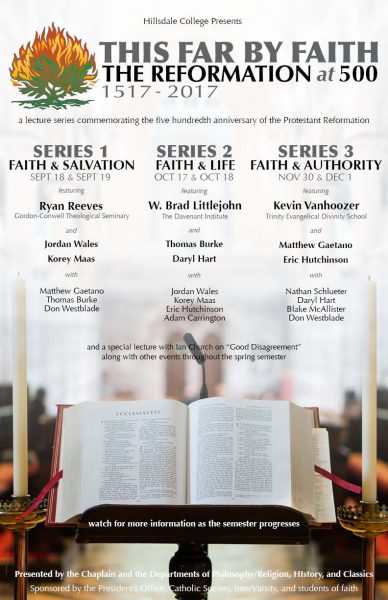
An academic institution where Protestants and Roman Catholics teach together sponsoring a conference about the Reformation is one thing, but a Presbyterian seminary holding a series of lectures on the Reformation that includes Roman Catholics and Protestants? That’s what’s happening at Covenant Theological Seminary this fall. The explanations do not add up:

“Though significant differences still divide Protestants and Catholics, there are real reasons to listen to each other, even learn from each other, so that we might give better testimony to Christ by loving one another across our differences,” said Ryan, professor of religion and culture at CTS and director of the seminary’s Francis A. Schaeffer Institute. “Our goal is to somehow get past lingering caricatures of each other’s positions to find the common ground we share as we seek to bear a more credible witness for the Lord before the watching world.”

Jerram Barrs, CTS professor of Christian studies and contemporary culture and one of the speakers at the lecture series, agrees. “It is important that we do not merely endlessly rehearse the reasons as to why the Reformation took place as if neither we nor the Roman Catholic Church have learned any more or changed in any manner since the 1500s.”

The lecture series will feature five speakers — two of them Catholic — discussing topics ranging from why the Reformation still matters today, to the pastoral legacy of the Reformation, to an evangelical and Catholic and Reformed view of faith and culture.

The part that stuck out to mmmeeeeEEEE was about “endlessly rehearsing the reasons as to why the Reformation took place.” Last time iiiiiIII checked, Protestants and Roman Catholics in the United States are seriously in need of learning the reasons for Luther’s original complaints and Rome’s rejection of Protestant proposals. Consider the following:

nearly half of U.S. Protestants today (46%) say faith alone is needed to attain salvation (a belief held by Protestant reformers in the 16th century, known in Latin as sola fide). But about half (52%) say both good deeds and faith are needed to get into heaven, a historically Catholic belief.

U.S. Protestants also are split on another issue that played a key role in the Reformation: 46% say the Bible is the sole source of religious authority for Christians – a traditionally Protestant belief known as sola scriptura. Meanwhile, 52% say Christians should look both to the Bible and to the church’s official teachings and tradition for guidance, the position held by the Catholic Church during the time of the Reformation and today.

When these two questions are combined, the survey shows that just three-in-ten U.S. Protestants believe in both sola fide and sola scriptura. One third of Protestants (35%) affirm one but not the other, and 36% do not believe in either sola fide or sola scriptura.

Pew’s findings corroborate Ligonier’s survey. (And Redeemer NYC’s outreach to skeptics isn’t doing much to put the sola in the Reformation.)

The thing is, works righteousness comes naturally to human beings. That’s why whenever you have the chance to bang the gong for the sufficiency of Christ and the insufficiency of human virtue (not to mention the sin of pride that virtue sometimes encourages), you take it.

Now, That’s Audacious

Ross Douthat takes the temperature of Roman Catholicism in the era of Francis:

In fact the conflicting inquisitions, liberal and conservative, are the all-but-inevitable result of the pope’s decisions to stir the church’s tensions into civil war again, and then to fight for the liberal side using ambiguous statements and unofficial interventions rather than the explicit powers of his office. Indeed, when Professor Faggioli complains about a “Catholic social media that has completely bypassed” the way the “Catholic Church has worked for centuries,” he might just as easily be describing Pope Francis, whose personalized style has made the lines of authority within the church maddeningly unclear.

On issues large and small, Francis has decentralized authority informally while retaining all the formal powers of his office and encouraged theological envelope-pushing without changing the official boundaries of what counts as Catholic teaching and what does not. This has effectively created two different versions of that teaching — the one on the books versus the one that the pope offers in his winks and nods — to which different Catholics can appeal.

In this environment, anyone who wishes to know what the pope really thinks is better off ignoring official Vatican offices and instead listening to the coterie of papal advisers who take to Twitter to snipe against his critics.

But even that kind of Kremlinology doesn’t completely clarify the pope’s intentions, which is why Francis’s liberalizing allies are frequently impatient with him and sometimes get out ahead of his intentions and find themselves reined in.

As a result the only Catholic certainty now is uncertainty.

What does that kind of uncertainty do to the narrative of so many converts that you go to Rome for the authority and certainty of timeless truth? Part of what it does is expose that unity and certainty are good in theory, and then comes a specific pope with all the authority and charism of the theory (they did not go away when Francis became pope — they inhere in the office). Protestants at least are honest about our disagreements. Roman Catholics cannot be:

This is a situation calculated to make everyone feel self-righteous and self-justified, to complain about toxic rhetoric while flinging insults frequently themselves.

It also places Catholic institutions — schools and parishes and universities and diocesan shops — in a very difficult position. The temptation, already evident, will be to shy away from conflict, to self-segregate theologically (liberal speakers to liberal campuses and parishes, vice versa for conservatives) and avoid even acknowledging the conflict.

But this approach is foolish. When the Supreme Pontiff is allowing argument to flourish and public division to increase, it does no good for institutions to pretend that none of this is happening — as though the average Catholic will somehow not notice that the leaders of the church are increasingly opposed to one another. (The poison of online debate is itself partially a reaction to this public pretense of tranquillity.)

All the more reason for my contention that Roman Catholicism would be better off without the papacy.

How History Makes the World a Better Place

Sometimes even boomers know the score. Take Camille Paglia (via Rod Dreher):

Paglia believes there is a causal connection between young Americans’ ignorance of history and their dim view of present conditions. At a conference in Oxford, Paglia stated again, in response to a student who criticized her and others for telling youths not to be so sensitive and snowflaky, “There is much too much focus on the present.”

Or try Rod Dreher:

Imagine that the US was involved in a major overseas war in which over 11,000 American soldiers died in one year alone (1967). For a point of comparison, fewer than 7,000 US troops have been killed in Iraq and Afghanistan over the past 14 years of combat there.

Imagine that 17,000 US soldiers would die in 1968, and 12,000 in 1969 fighting that war

Imagine that you might be drafted to go fight there.

Imagine what it would be like if you were convinced the war was profoundly immoral, and you had to choose between deserting the country and bearing arms in that war.

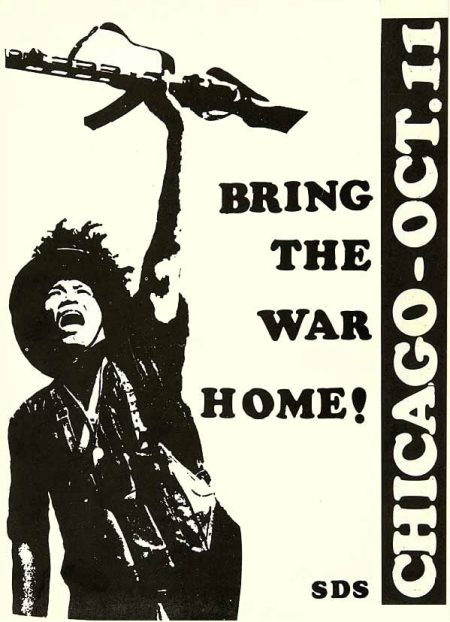
Imagine that many college campuses had become hotbeds not of snowflakey sit-ins, but of serious violence.

Imagine that domestic bombings by left-wing radicals had become a routine part of American life (e.g., five per day in an 18-month period in the early 1970s).

Imagine that two of the nation’s most prominent political leaders (MLK and RFK) Bobby were gunned down three months apart.

Imagine that your government and military were lying to Congress and to the American people about the war, and had been for years (as was revealed with the 1972 publication of the Pentagon Papers).

Imagine that major American cities were burning in race riots.

Imagine that cops in a major American city staged what was later called “a police riot” outside a political party’s national convention, and beat the hell out of protesters.

Could it be that Rod Dreher had it rougher than Ta-Nehisi Coates?

The mind reels.

Conversations Fifty Years Ago

You think having them today is rough, consider Wendell Berry’s experience:

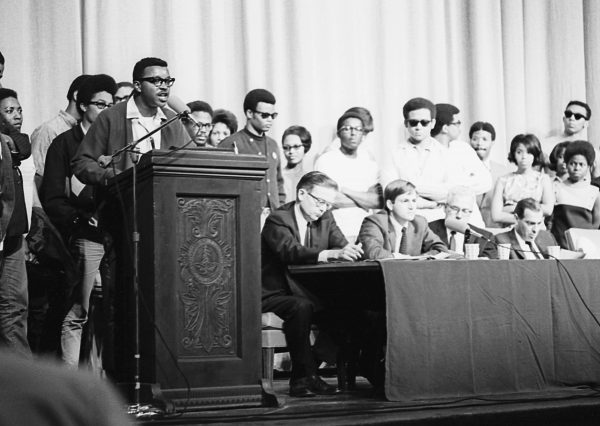
While at Stanford, Berry witnessed several outdoor meetings called by black students for the purpose of establishing a Black Studies program on campus. In Berry’s recollection, the meetings were what historian Elisabeth Lasch-Quinn has called a “harangue-flagellation” ritual in which the black students condemned the white students and faculty for their racism and the whites in attendance nodded in agreement mixed with occasional applause.[30] In another situation on campus, Berry found himself in the middle of a civil rights protest. When a student in the protest heard Berry ask his companion a question in his Kentucky drawl what was going on, his accent prompted the response, “You damned well better find out!”

Berry thought there was no way for him to speak meaningfully in that context, and so The Hidden Wound is what he would have said had the moment allowed it. He wrote it during the winter break in the Bender Room at Stanford University’s Green Library. The essay was motivated by the feeling that the civil rights milieu at the time was at a stalemate and would stay there if the focus on power eclipsed other possible ends. Though Berry agreed that racism was a moral evil and political problem, he thought the most visible sentiments guiding these events were dangerous. Just as in his writing about agriculture, nature, and land—and in his, “A Statement Against the War in Vietnam,” delivered at the University of Kentucky the winter before—he fought abstractions and the separations that oversimplify: of means and ends, of thought and emotion, intentions and actions.

He wrote that the “speakers and hearers seemed to be in perfect agreement that the whites were absolutely guilty of racism, and that the blacks where absolutely innocent of it. They were thus absolutely divided by their agreement.” In his interview with hooks he said more simply: “I thought guilt and anger were the wrong motives for a conversation about race.” People can be more “dependably motivated by a sense of what would be desirable than by a sense of what has been deplorable.” By arguing that power is a necessary part of the discussion, but no more necessary than love, Berry refused the false dichotomy between structure and personal responsibility. During the demonstrations, in contrast, “one felt the possibility of an agreement of sorts, but nowhere the possibility of the mutual recognition of a common humanity, or the possibility of forgiveness and reconciliation, or the possibility of love.”

So why is it that adding Jesus to discussions of racism only heightens a sense of what is deplorable?

Yet, even some activists are willing to listen to Berry:

The Hidden Wound, an extended essay in which Berry traced the grim legacy of slavery and racism in Kentucky, and his family’s role in the perpetuation of these evils, was the result. The book was not widely read on publication in 1970, but it has been granted a second life through republication and the sustained admiration of poet, essayist, and activist bell hooks, another Kentuckian who went to Stanford a decade after Berry and later, partly due to Berry’s influence, returned to Kentucky. Since she returned to Kentucky to teach at Berea College in 2004, hooks has been teaching from The Hidden Wound and wrote a sustained reflection on it in Belonging: A Culture of Place. An interview with Berry follows the reflection.

The Connection between Baptists and Revivals

Charles Hodge explained that Christianity rooted in the covenant favors Presbyterianism and rejects credo-Baptism as well as revival:

. . . what we think is plainly taught in Scripture, what is reasonable in itself, and confirmed by the experience of the church, is, that early, assiduous, and faithful religious culture of the young, especially by believing parents, is the great means of their salvation. A child is born in a Christian family, its parents recognize it as belonging to God and included in his covenant. In full faith that the promise extends to their children as well as to themselves, they dedicate their child to him in baptism. From its earliest infancy it is the object of tender solicitude, and the subject of many believing prayers. The spirit which reigns around it is the spirit, not of the world, but of true religion. The truth concerning God and Christ, the way of salvation and of duty, is inculcated from the beginning, and as fast as it can be comprehended. . . . He is constantly taught that he stands in a peculiar relation to God, as being included in his covenant and baptized in his name; that he has in virtue of that relation a right to claim God as hi Father, Christ as his saviour, and the Holy Ghost as his sanctifier; and assured that God will recognize that claim and receive him as his child, if he is faithful to his baptismal vows. The child thus trained grows up in the fear of God; his earliest experiences are more or less religious; he keeps aloof from open sins; strives to keep his conscience clear in the sight of God, and to make the divine will the guide of his conduct. . . . This is no fancy sketch. Such an experience is not uncommon in actual life.

That kind of covenant religion makes revivals not only superfluous, but a threat to Christian nurture. Revival, in other words, is antithetical to rearing children in the faith:

Does not a theory of religion extensively prevail which leads believing parents to expect their children to grow up very much like other children, unconverted, out of the church, out of covenant with God, and to rely far less on the peculiar promise of God to them and to his blessings on their religious culture, than on other means for their salvation. . . . They look upon conversion as something that can only be effected in a sudden and sensible manner; a work necessarily distinct to the consciousness of its subject and apparent to those around him. This conviction modifies their expectations, their conduct, their language, and their prayers. It affect to a very serious degree both parents and children, and it arises from false, or at least imperfect views of the nature of religion, it of course tends to produce and perpetuate them. We see evidence of this mistake all around us, in every part of the country, and in every denomination of Christians. We see it in the disproportionate reliance placed on the proclamation of the gospel from the pulpit, as almost the only means of conversion; and in the disposition to look upon revivals as the only hope of the church. (Hodge, Bushnell on Christian Nurture)

Diversity

I do wonder what it is like to be in fellowship with the Bishop of Rome. It cannot be easy.

First you have the challenge of interpreting Vatican II (and lots of different interpretations):

Sammons and Mosebach see three standard interpretations of Vatican II:

The “liberal” or “progressive” interpretation sees the Council as a decisive break with Catholic tradition, and welcomes it. Citing the “spirit of Vatican II,” proponents of this interpretation have implemented radical changes in the Church, and push for more.

The “official” interpretation sees Vatican II as a great success, and denies that any serious problems arose in the Council’s aftermath. There was some understandable friction as changes were implemented, the partisans of this theory will concede. But ultimately the changes are proving successful and all is well.

The “conservative” or “orthodox” interpretation cherishes the documents of Vatican II, but believes the implementation of the Council was generally hijacked by the “progressive” party within the Church. If only we would adhere to the true teachings of the Council, this party says, the Church would thrive once again.

According to this “conservative” or “orthodox” interpretation, the hijacking of the Council created the incorrect impression that the Church had repudiated past teachings. My favorite quick exposition of this view was made by Philip Trower in his excellent book, Turmoil and Truth, in which he formed a vivid image to explain what happened:

Six men are pushing a heavily loaded car which has run out of fuel. Three of them, who have been riding in the car, want to push it 20 yards to get it into a lay-by. The other three, who have offered to help, mean to push the car 50 yards and shove it over a cliff followed by the car owner and his two friends. Once the pushing begins and the car starts moving it is probable the car is going to come to rest more than 20 yards from the starting point even if it does not end up at the cliff’s foot.

Now let us imagine what a group of people watching from a nearby hilltop will make of the incident. They will start by assuming that all six men have the same intentions. The car is moving steadily forward. Then they see three of the men detach themselves from the back of the car, run around to the front and try to stop it. Which are the troublemakers? Those surely who are now opposing the process that has been started.

Once you get your mind around the magisterium since 1960, try calculating your afterlife:

But “temporary” can mean a long, long time. Based on reports from visions of saints (see the quotation from St. Francis of Rome in this more recent vision), it has been widely taught that each sin must be punished by seven years of purgatorial fire. This is what Tetzel refers to, below, but I recall hearing it from Mother Angelica of EWTN and other conservative Catholics today. The Church has never officially specified a set time, as far as I know. I have heard contemporary Catholics say that since we will be outside of time after death, the experience of Purgatory will seem as if it is over in an instant. But the theology of Purgatory requires a temporal punishment. Some conservative Catholics say it might be more like an hour for each sin, but they agree that this will amount to many years, even centuries in the fire. (See this and this.)

So if Tetzel and St. Francis of Rome are right–as many if not most Christians believed in the medieval church–let’s do the math. Assume that seven years in purgatory are required for each sin. Say you are a very good person and only commit one sin per day. That comes to 2,555 years in purgatory for one year of sinning. If you live to be 70, you would be facing 178,850 years of suffering.

This would be for sins that are forgiven!

Protestantism has its problems. It also has its advantages.

See What Keller Did Now?

Tim Keller has made the history of Presbyterianism obsolete. Look at the way Jake Meador describes the challenges facing young pastors in the PCA:

… young Presbyterian pastors, many of whom are on university campuses with RUF or working in gentrifying urban neighborhoods, face enormous class-based pressure to conform to certain progressive cultural norms. These pressures make themselves felt in a variety of ways.

First, there is a strong and classic American pull toward being dismissive of the past, toward what is established, and to embrace what is new. This temptation exerts an even stronger pull than normal on many young PCA pastors because many younger pastors and RUF guys have strong entrepreneurial tendencies. While this is often a very good thing—indeed, it’s what makes it possible for them to succeed as church planters and RUF pastors—this same trait can make them naturally inclined to be dismissive toward established norms, policies, and beliefs, especially when they are surrounded by other young people with the same entrepreneurial sensibilities. It is probably not a coincidence, in other words, that the most famous “Kellerite” to go progressive is pastoring in San Francisco, the capital of Silicon Valley.

In addition to the disregard for things that are older, established, etc. there is also strong cultural pressure to embrace a kind of bourgeois bohemian lifestyle—buy a cute house in the gentrifying neighborhood, embrace the careerism, food and exercise regimen, lifestyle trends, and broadly progressive ethos of your neighbors. You can even say you’re just being outreach-focused as you do it. While none of these things are bad in isolation, taken together they’re all steps that involve embracing the norms of a younger bobo sub-culture. And if you’re embracing those norms out of a desire to be liked rather than a pure desire to make the Gospel sensible, it will be disastrous.

But, of course, it is all very complicated: Essentially, these are young pastors being handed different cultural scripts and asked to choose which ones to follow. But these clashing scripts cannot be simplistically labeled “good” and “bad” such that we can tell young pastors to follow the “good” script and avoid the “bad.” It is more complicated than that.

This is similar to the point that Ron Belgau made in his response to Rod Dreher earlier this week: It’s not that we have a legacy PCA script that is unambiguously good that we need to cling to. That script has problems—it’s awful on race issues, for starters. So figuring out the cultural scripts question in the PCA is challenging: The young white bobo script you’re pushed toward culturally and according to class is bad, but then you don’t necessarily have a good alternative script, particularly if you’re trying to plant a church or RUF in a more hostile environment. There simply aren’t good evangelical templates for how to do that because we have for the most part been really bad at it.

In such a situation, the draw toward Keller and the ham-handed attempts to mimic him are quite understandable. What other models do these pastors have? Driscollism? Straight-up progressive Episcopalianism?

Certainly, you can argue that there actually are other models out there—Calvin basically turned Geneva into a booming intellectual hub. Someone like Richard Sibbes was a very successful preacher in Cambridge at the university in the 17th century. Richard Baxter could be helpful in that we know more about his routines as a pastor than any other minister of his era. Bucer and his colleagues in Strasbourg did good and faithful work in a major intellectual, cultural, and scholastic hub. But these examples are all either from radically different cultural contexts, much more obscure, or both.

It isn’t unreasonable that these pastors would look to Keller and, being young and failing to understand their context, fail to mimic him well. But that isn’t Keller’s fault and it isn’t entirely the young pastor’s fault either. It’s a predictable outcome given all the factors I have mentioned already.

Whatever happened to vanilla Presbyterianism? A pastor ministers the word, administers the sacraments, catechizes the youth, shepherds the flock, and goes to presbytery. What does all this worry about culture have to do with it? Meador doesn’t think Keller is responsible for leading the PCA down a misguided path of Kellerism. That is mostly true. What happened it seems to meeeeEEEE, is that Keller fulfilled the aspirations of some PCA leaders who wanted to “engage” the culture — marriage is still up for grabs.

What is happening in the PCA is what always happens to denominations that Americanize and try to adapt to the culture. The Presbyterian version of this is not whether to be Baptist or Episcopalian — though why don’t the boho’s seem to notice that Keller’s urban ways draw him to Baptists at TGC and other urban pastors like John Piper and Mark Dever? The Presbyterian version of assimilation is New School and New Life. In the 19th century, those who wanted to Christianize the culture were the New Schoolers (Lyman Beecher and Charles Finney), and their opponents were Old School Presbyterians who tried to maintain creedal theology and presbyterian governance. In the twentieth century (let’s leave aside the modernists for now), the assimilationists were New Lifers (in the OPC mind you) who wanted Orthodox Presbyterians to join with the wider evangelical world and also reach the young people with long hair. In case no one noticed, Tim Keller’s origins are in the New Life wing of the OPC, with Harvie Conn supplying a theology of the city, and Jack Miller providing a relaxed Presbyterianism that could adjust to the culture (Miller’s tastes ran less to ballet and more to Jesus people. Keller went to New Life Glenside while he taught at WTS, if I am not mistaken.) Not to mention that the Reformed Presbyterian Church, Evangelical Synod (which goes back to the Bible Presbyterians) side of the PCA that gave it Covenant College and Covenant Seminary, is not the same slice southern Presbyterianism that produced Reformed Seminary and the original PCA.

In other words, the history is thick behind Keller and simply looking at the PCA from the perspective of Baptists and Episcopalians doesn’t take you very far into the weeds.

Yet, when you apply the categories of Baptist and Episcopalian, you wind up rendering Old School (or vanilla) Presbyterianism as a couple clicks away from strange:

During times when progressivism is ascendant, as it certainly is in our day, there is a natural temptation amongst conservatives to want to double down on their most strident rhetoric, add purity tests to protect their institutions, and to begin attacking people not only for holding wrong ideas, but for holding ideas which they suspect could lead to wrong ideas (even if they won’t inevitably lead to them).

Is this a plea for Erdmanesque tranquility so that the boat won’t rock? Ministry unites, doctrine divides?

Whether Keller is responsible or no, he has not helped to prepare the PCA for the predicament that Meador thinks the denomination faces:

You’re in this weird denomination that aspires to being the church that can reach secular bobo-types in upwardly mobile neighborhoods but that also aspires to be faithful to theological orthodoxy and even to be theologically evangelical, all the way down to not ordaining women. That is an awkward position to be in from the beginning.

If Keller had left the impression that working through presbyterian channels was not weird but normal, and had achieved his fame not as a pastor with one foot in presbyterianism and another in networked Protestantism but as a regular Presbyterian minister, he might have communicated an important lesson to young pastors, namely, that it’s okay to be simply a pastor. But that is not what he did. And his fellow Presbyterian Church in Americans are sorting out what the Age of Keller means.

Dissecting Signers (cont.)

I wonder why John Fea and other signers of the “Open Letter” about racism and Confederate Monuments did not feel the pinch of Matthew Lee Anderson’s criticism of the Nashville Statement. Anderson wrote again:

While forming God’s people is a thoroughly laudable aim, I wonder: why then the website, the press release, and the signatories? The means of communication are not neutral, after all. They deliberately invite attention not just from evangelicals, but the world. If the form of such statements is part of catechesis, then why were Bible verses left off? And why were reasons for each of the affirmations and denials not given, or definitions of terms not supplied? Such additions would dramatically expand the statement’s length. But what does that matter, if the purpose is catechism and not the culture war?

And why is there not more attention to the pastoral dynamics of how these affirmations and denials are to be worked out in the context of local communities? For a statement signed by a heavy concentration of Baptists, its form and substance have little to do with congregational life. It is a “statement” by an evangelicalism that has left ecclesial communities behind in favor of trans-denominational, parachurch partnerships.

That could equally be said of the Christian scholars who signed the letter opposing Neo-Nazis. What about the means of communication? Where are the biblical citations? Why isn’t the “Open Letter” taking a side in the culture wars? One answer could be that the sins are so obvious. So why isn’t it possible to see the self-evident character of the sins enumerated in the Nashville Statement? Only some evangelical scholars are allowed to pontificate, only the smart ones?

When Fea writes that Anderson is observing what evangelical historians are seeing — “Anderson and Gerhz seem to be in agreement that the Nashville Statement reflects what we (and now many others) have been calling ‘The Age of Trump'” — that avoids partisanship?

You could even argue that Anderson’s diagnosis of the subtext and optics of the Nashville Statement apply across the board, even to celebrity Christian intellectuals, like Rod Dreher who is excited about the release of the French translation of Benedict Option. If the means of communication and the publicity machines are not neutral, if they capitulate to the economic structures, inequalities of late modernity, and the desires of consumers, then why not apply that to individuals as much as statements?

But when it comes to Tim Keller, nothing to see (not even the publicity machine, fundraising, digital networks, and fame trafficking that has attended the New York City star):

it isn’t fair to assign blame to a teacher when students do not live up to his standard, particularly in a case like this one where the “teacher” had virtually no personal contact with most of the students and has instead simply attracted a crowd of admirers via publications.

Indeed, if anything I think we should commend Keller for his stewarding of his position at Redeemer. They were very selective in what sermons they made freely available online, he waited a long time to start writing books, and he has put a far greater emphasis on church planting in NYC rather than simply growing his brand as a celebrity pastor. Given what has happened to Mark Driscoll and now Darrin Patrick, we should be profoundly grateful for men like Keller (and John Piper) who manage to be in the spotlight for so long and to do so with relatively little scandal.

I thought Anderson said that publications, lack of personal contact, and crowds of followers were not “neutral.”

The lesson is that the means of production behind the Nashville Statement are flawed. But the means of production behind Keller — well, he arrived ex nihilo.