I Finally Understand Objections to Lutheranism

Lutherans are pink:

Religious and cultural Lutheran values have shaped Nordic societies for centuries. But instead of encouraging capitalism as in Calvinist Europe, Lutheranism promoted a social-democratic welfare state in the Nordic world.

As this year marks the 500th anniversary of the Reformation, this issue is highly topical.

Robert H. Nelson, professor of economics at the University of Maryland, develops these arguments in Lutheranism and the Nordic Spirit of Social Democracy: A Different Protestant Ethic. He probes the large role a Lutheran ethic played in the development of the Nordic welfare state and the Nordic social-democratic political and economic system during its golden years from the 1930s to the 1980s.

Nelson sees this Lutheran ethic as parallel to the Calvinist ethic famously examined by the German sociologist Max Weber In his book the Protestant Ethic and the Spirit of Capitalism. Nelson also compares the American and Nordic ideas of the welfare state in a novel way, discussing the greater influence of Calvinism in the United States as compared with Lutheranism in the Nordic countries.

According to Nelson, fundamental Nordic values, such as a strong work ethic, complete equality between men and women, and others manifested in social democracy are all derived from Lutheran teachings as embodied in the Lutheran ethic.

The Lutheran ethic emphasized The Golden Rule, “Do unto others as you would have them do unto you,” in the pursuit of an individual calling. This has been the foundation of the concept of 20th century Nordic social solidarity, in particular, states Nelson.

The upside? U.S. is not simply Christian but a Calvinist nation.

Woot!

Except, the Puritans were not exactly capitalists. If you read John Winthrop’s Model of Christian Charity, you would think he’s a socialist.

Does Cultural Christianity Advance the Gospel?

Missionaries tell us no. Convincing indigenous peoples that they don’t need to become western or American in order to trust Christ has been a chief insight of modern missions at least since 1900. But for some of the younger Calvinistically inclined folks, the push back against liberalism also now includes a defense of cultural Christianity.

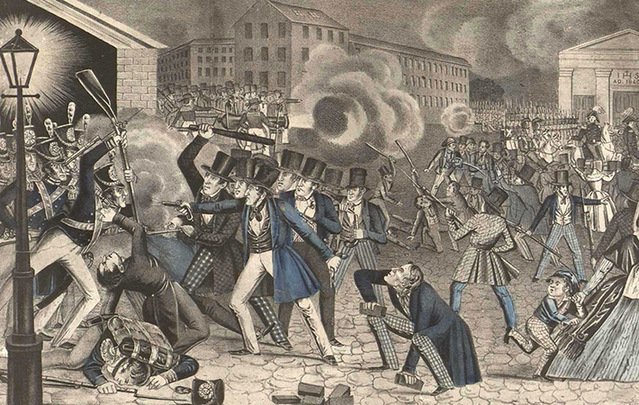
Picking your spots for such a faith surely requires discretion since the riots in Philadelphia between nativist Protestants and Irish Roman Catholics had all the earmarks of cultural Christianity. Protestants expected the public schools to use the Bible to reinforce republican norms but Roman Catholics objected that the Protestant Bible was not neutral — it was not even the right one — the Douay version. Those riots were far more about politics and culture, but defenses of cultural Christianity tread gingerly around such episodes.

What is especially perplexing about Stephen Wolfe’s defense of cultural Christianity is not simply how he might make sense of its darker moments in the past, but even how it measures up to the New Testament. For instance, he starts with this assumption:

We should first acknowledge that the civil recognition, establishment, and privileging of Christianity was the received and standard view for most of Christian history, amongst most major Christian traditions, including many Protestants, and only recently has it been rejected by a majority of western Christians.

That may be true after 350 AD, but imagine Peter and Paul thinking the privileging of Christianity was the air they breathed when they were receiving inspired and infallible revelations from the Holy Spirit.

Wolfe later asserts in a way that would have left Paul scratching his head:

Put differently, the civil and ecclesiastical are the twin species of the same genus, Christian communion. The people of God submit to these mutually supporting, separate and independent administrations because Christ is both the Creator and Ruler of creation and the Mediator of eternal life. The Christian communion is not coterminous with ecclesiastical membership, but is rather the same people submitted to both the civil and ecclesiastical.

Again, that might describe Christendom at some point, but how does it make sense of the apostle’s warning to Corinthians against going to court:

If any of you has a dispute with another, do you dare to take it before the ungodly for judgment instead of before the Lord’s people? 2 Or do you not know that the Lord’s people will judge the world? And if you are to judge the world, are you not competent to judge trivial cases? 3 Do you not know that we will judge angels? How much more the things of this life! 4 Therefore, if you have disputes about such matters, do you ask for a ruling from those whose way of life is scorned in the church? 5 I say this to shame you. Is it possible that there is nobody among you wise enough to judge a dispute between believers? 6 But instead, one brother takes another to court—and this in front of unbelievers! 7 The very fact that you have lawsuits among you means you have been completely defeated already. (1 Cor. 6)

If the civil and ecclesiastical are mutually supporting, why is Paul so incensed with the Corinthians for going to court? Might it be that Paul and the early church had no idea about the state reinforcing Christian norms? That’s what persecution means, I believe.

Calvin’s commentary on this epistle also suggests that he, even though living at a time before 1789 when expectations for Christendom were still in place for all Christians except the Anabaptists, was not as convinced of the easy harmony between church and state. The reason is that the magistrate is an avenger and the church is an instrument of God’s love and mercy:

Those who aim at greater clearness in their statements tell us that we must distinguish between public and private revenge; for while the magistrate’s vengeance is appointed by God, those who have recourse to it do not rashly take vengeance at their own hand, but have recourse to God as an Avenger. This, it is true, is said judiciously and appropriately; but we must go a step farther; for if it be not allowable even to desire vengeance from God, then, on the same principle, it were not allowable to have recourse to the magistrate for vengeance.

I acknowledge, then, that a Christian man is altogether prohibited from revenge, so that he must not exercise it, either by himself, or by means of the magistrate, nor even desire it. If, therefore, a Christian man wishes to prosecute his rights at law, so as not to offend God, he must, above all things, take heed that he does not bring into court any desire of revenge, any corrupt affection of the mind, or anger, or, in fine, any other poison. In this matter love will be the best regulator.

Of course, Calvin is no Anabaptist. He knows the legitimacy of the magistrate and even the competency of unbelieving civil authorities. But he also senses in ways that critics of modern secular liberalism do not seem to that the purposes of church and state are distinct. One implication is that they are not necessarily harmonious. Especially if upholding the Christian ideal of love.

Perhaps cultural Christianity aspires to such an ideal. But chances are what Christian societies produce when the church is established is more on the order of manners or politeness than the spiritual fruit that comes with sanctification.

Malcolm X with a Joni Eareckson Tada Finish

The incident in Charlottesville gave Jemar Tisby another chance in the op-ed section of the Washington Post. No one could disagree with Mr. Tisby’s estimate that this protest was an instance of white supremacy or that it is ugly and a threat to public order and the rule of law.

But I do wonder if Mr. Tisby lost his nerve when speaking to a national audience. For instance, in an earlier post last spring about another incident in Charlottesville, he wrote this at his own blog:

As much as city leaders sought to gain support for removing Confederate monuments and symbols, they never had complete consensus. Officials in New Orleans kept the date and time of the monument removals secret for fear of reprisals from their opponents. The Confederate flag came down in South Carolina in the middle of vocal defiance of the decision. Yet come down they did.

In the church as in the world, the time is always right to do right. Racism is sin. Leaders should not take a gradual approach to killing racism just like they should not take a gradual approach to killing any other sin. Nor should they think it necessary to build a consensus to combat this sin. True leadership initiates righteous changes even when they are unpopular with those being led.

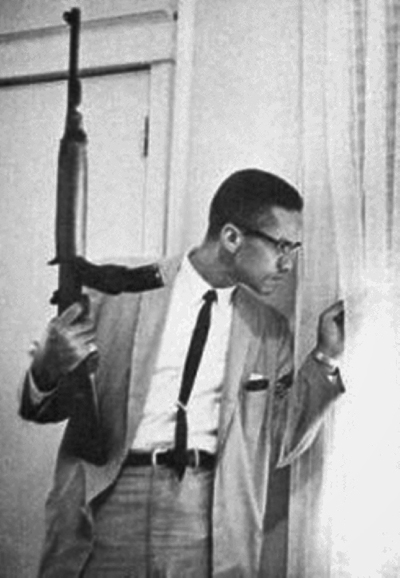
That is the kind of radicalism that Charles Finney took to Oberlin College. If it’s sin, you break with it immediately. Any delay is even more sin. It is even in the ballpark of the sort of radicalism that Malcolm X promoted. If you have a system that is so brutally and obviously bad, you need to blow it up or leave it. That was part of X’s appeal — he advocated black nationalism and black separatism, and given the nature of Jim Crow and police brutality, you could understand why.

But at the Post, Mr. Tisby backed away from that sort of radicalism and admitted that we will always have racists with us:

Let’s also be clear that we can’t really end white supremacy. In the Christian view, racism is a sin, and sin cannot be completely eradicated on this side of eternity. But we are called to fight against sin in all its forms, so we should expect positive change in our churches and society at large as we fight against it.

So how do we fight white supremacy without taking Malcolm X’s path? Cue Joni Eareckson Tada:

1. Admit the American church was built on white supremacy.
From the Colonial era to the present day, white churches have helped build a society that privileges whiteness and denigrates blackness. In light of the white church’s involvement in creating and maintaining white supremacy, white pastors can presume that their churches are already part of the problem, intentionally or not.

2. Confess and repent of past sins.
Many congregations were formed in a fit of “white flight” from cities. Many Christian schools, particularly in the South, were explicitly created to preserve racial segregation in an era of court-ordered desegregation. Christians and church leaders must ask themselves how much they have acknowledged their own history. Have they gone through their church records and rulings to tell the full story of how their church, community, or denomination has cooperated with white supremacy? A failure to face white supremacy in the past will lead to a failure to confront it in the present.

3. Commit to responding to white supremacy with the vigor that the problem requires.
When we examine the history of race and the American church, the story is often worse than we expect. The church hasn’t simply gone along with white supremacy — it has assembled and established it. If white Christians have historically been so intentional about building up barriers between the races, then they will have to be just as intentional to bring them down.

4.Listen to black people.
We’ve been saying all along that a Charlottesville could easily happen. For years, the alt-right and white nationalists have employed the Bible to justify their racism, in public online. But many white Christians have never heard of the alt-right, much less been equipped to filter their messages biblically. We kept trying to tell them that this obsession with the Confederacy and its cultural artifacts sabotaged efforts at racial unity.

In addition to the fourth point, which is an implicit pitch for Mr. Tisby’s podcast, this is advice right out of a w-w play book — take every thought captive. It’s all about thinking and making personal resolutions.

But imagine telling that to Germans living in the 1930s under the tyranny of National Socialism. When evil is so institutionalized and so oppressive, as Mr. Tisby has long argued, do you simply commit to do things differently? Or do you actually think that Malcolm X had a point? You overturn the system or get out and form a separate nation? Mr. Tisby’s recommendations strike me as the equivalent of what I hear about climate change. What do I do? I feel badly and commit to do better, even when the entire food distribution system and development of town life in the U.S. is predicated on the use of fossil fuel.

In other words, Mr. Tisby’s recommendations are sort of like saying don’t trust the system but don’t forget to work with the system. Glenn Greenwald spotted the flaw in this logic when he went after those who complained about the ACLU’s defense of Charlottesville’s white supremacists’ rights to assembly and free speech:

. . . the contradiction embedded in this anti-free-speech advocacy is so glaring. For many of those attacking the ACLU here, it is a staple of their worldview that the U.S. is a racist and fascist country and that those who control the government are right-wing authoritarians. There is substantial validity to that view.

Why, then, would people who believe that simultaneously want to vest in these same fascism-supporting authorities the power to ban and outlaw ideas they dislike? Why would you possibly think that the List of Prohibited Ideas will end up including the views you hate rather than the views you support? Most levers of state power are now controlled by the Republican Party, while many Democrats have also advocated the criminalization of left-wing views. Why would you trust those officials to suppress free speech in ways that you find just and noble, rather than oppressive?

Greenwald’s question is one I’d like to hear Mr. Tisby answer. If the United States was founded by racists, prolonged its racism through slavery and Jim Crow, and now continues that racism in policies of mass incarceration executed by Republicans — and there is validity to this understanding of U.S. history, I’m not saying it’s wrong — then why continue the United States? Why obey the laws of the U.S.? Why submit to police? Why not instead rebel and bring down such an oppressive regime?

Is it because the next regime will also be a sinful one that has its own oppressive bugs (not features)? In which case, is the argument that sin is structural really self-defeating? It certainly gets attention and inspires outrage. It also gives you a platform that will never go away because you’ll always have a system to oppose. But at a certain point, the protest looks like only pious advice unless it counters the unjust structure not with a commitment to do better but an alternative structure.

Wow!

Rod Dreher quotes Mark Lilla’s new book on liberalism’s crack-up and goes after Jeffrey Lebowski (aka The Dude) and fellow authors of the Port Huron Statement:

Conservatives complain loudest about today’s campus follies, but it is really liberals who should be angry. The big story is not that leftist professors successfully turn millions of young people into dangerous political radicals every year. It is that they have gotten students so obsessed with their personal identities that, by the time they graduate, they have much less interest in, and even less engagement with, the wider political world outside their heads.

There is a great irony in this. The supposedly bland, conventional universities of the 1950s and early ’60s incubated the most radical generation of American citizens perhaps since our founding. Young people were incensed by the denial of voting rights out there, the Vietnam War out there, nuclear proliferation out there, capitalism out there, colonialism out there. Yet once that generation took power in the universities, it proceeded to depoliticize the liberal elite, rendering its members unprepared to think about the common good and what must be done practically to secure it—especially the hard and unglamorous task of persuading people very different from themselves to join a common effort.

Every advance of liberal identity consciousness has marked a retreat of liberal political consciousness. There can be no liberal politics without a sense of We—of what we are as citizens and what we owe each other. If liberals hope ever to recapture America’s imagination and become a dominant force across the country, it will not be enough to beat the Republicans at flattering the vanity of the mythical Joe Sixpack. They must offer a vision of our common destiny based on one thing that all Americans, of every background, share.

Now, someone needs to notice how evangelicals jumped on the politics of identity bandwagon — w-w and faith goes all the way down to my toenails — and further weakened a national identity. And, get this, they did it in the name of national identity.

Doh!

Mencken Could Fix Google

Conor Friedersdorf rightly faults the press for lacking perspective on the memo that resulted in a Google veep’s firing:

To shorthand his position as “anti-diversity” before the fact is still misleading.

Journalists grasp this nuance on lots of other issues.

Donald Trump campaigned on the promise of more jobs for working-class Americans. In service of that end, he has proposed canceling free-trade agreements, building a wall to keep out immigrants, and eliminating lots of environmental regulations. Critics who avow that they favor more jobs for the working class, but oppose achieving more jobs through those specific means, are not described as “anti-job,” especially when they suggest specific alternatives for job-creation. Even if their alternatives would result in fewer jobs than the Trump administration’s plans, that still wouldn’t make a writeup of their proposal “an anti-job memo.”

To object to a means of achieving x is not to be anti-x.

The failure to apply that same logic to the author of the memo is straightforwardly frustrating for those who agree with many of the views that the memo expressed. And it should also frustrate those who disagree with the author but care about social justice.

Every prominent instance of journalism that proceeds with less than normal rigor when the subject touches on social justice feeds a growing national impulse to dismiss everything published about these subjects—even important, rigorous, accurate articles. Large swathes of the public now believe the mainstream media is more concerned with stigmatizing wrong-think and being politically correct than being accurate. The political fallout from this shift has been ruinous to lots of social-justice causes—causes that would thrive in an environment in which the public accepted the facts.

The thing is, if you accept that injustice is basic to human existence in a fallen state, the pursuit of social justice is not a barrier to accurate perceptions of the world. Instead of being surprised or that Rick’s cabaret sponsors gambling in the back room,

we simply put the thought of it out of our minds, just as a wise man puts away the thought that alcohol is probably bad for his liver, or that his wife is a shade too fat. Instead of mulling over it and suffering from it, we seek contentment by pursuing the delights that are so strangely mixed with the horrors – by seeking out the soft spots and endeavoring to avoid the hard spots. Such is the intelligent habit of practical and sinful men. . . .

After all, the world is not our handiwork, and we are not responsible for what goes on in it, save within very narrow limits. Going outside them with our protests and advice tends to become contumacy to the celestial hierarchy. Do the poor suffer in the midst of plenty? Then let us thank God politely that we are not that poor. Are rogues in offices? Well, go call a policeman, thus setting rogue upon rogue. Are taxes onerous, wasteful, unjust? Then let us dodge as large a part of them as we can. Are whole regiments and army corps of our fellow creatures doomed to hell? Then let them complain to the archangels, and, if the archangels are too busy to hear them, to the nearest archbishop.

Unluckily for the man of tender mind, he is quite incapable of any such easy dismissal of the great plagues and conundrums of existence. . . . whenever he observes anything in the world that might conceivably be improved, he is commanded by God to make every effort to improve it. In brief, he is a public-spirited man, and the ideal citizen of democratic states. But Nature, it must be obvious, is opposed to democracy – and whoso goes counter to nature must expect to pay the penalty. (The Forward-Looker, ch 11 of Prejudices, Third Series, 1922)

Matthew Walther beat Antonio Spadaro and Marcelo Figueroa To It

Walther took over Michael B. Dougherty’s space at The Week. Both are trad Roman Catholics but Michael tended to be less sectarian than Walther, who almost two months before Spadaro and Figueroa, authors of the article that condemned U.S. evangelicals and Roman Catholics together for an “ecumenism of hate,” wrote an article about VPOTUS Mike Pence. Walther gave his own reasons — pre-Vatican II inspired — for Roman Catholics not looking to Protestants for help:

Pence has renounced Catholicism. Why on Earth are Catholics asking him to stand for us?

My coreligionists who protest that it doesn’t matter because he is faithful to the right causes are missing the point. To the devout, the only cause that matters is that of Catholic truth, ancient and undefiled. Schism is a mortal sin, one that endangers his immortal soul. Pointing this out is not bigotry or crotchetiness on my part, much less zealotry, in which I am shamefully lacking. I have friends and relations who have left the Church, people I love dearly. I do not subject them to daily harangues about their persistence in schism. But I would also never dream of asking them to hold forth in a public forum on religious questions. Sorry, not sorry.

Pence grew up one of four brothers who served Mass at St. Columba in Columbus, Indiana. The Pence boys were so experienced at the altar that even as college students they would receive phone calls from the rectory inviting them to vest up during their summer vacations. It was while he was an undergraduate at Hanover College that he found himself seeking “a personal relationship with Jesus Christ” (which is admirable, though it should be noted that as far as personal relationships go, literally eating someone is a pretty high bar to clear). According to Father Clement T. Davis, Pence’s mother, Nancy, was despondent when her son left the Catholic Church and became an evangelical Christian.

Pence came of age during a period of crisis in the Church, the years of confusion and experimentation and indifferentism following the Second Vatican Council and the promulgation of the Novus Ordo Mass. Its fruits are everywhere in evidence: empty pews, a decline in vocations to the priesthood, the near-collapse of women’s religious life, people taking Communion every week who have not been to confession in decades, ostensibly catechized adult Catholics who do not realize that the Mass is a sacrifice at which the priest asks the archangel Michael to carry his offering to Christ’s altar in heaven rather than a tawdry historical re-enactment of the Last Supper with breaks for hand-holding and quaint little songs.

These trends are only now beginning to reverse themselves now at the hands of Catholics a generation or two younger than Pence. His story is one that could be told by any number of lapsed conservative Catholics in his age bracket (John Kasich, for example). That is why it was so strange hearing him at the prayer breakfast. He described himself with evident affection as “the son of two devout American Catholics” and noted how proud his mother would have been to see him on that stage. He joked about being “from a mid-sized Catholic family: only six children.” And he spoke almost wistfully of the role that “the hymns and liturgies of the Catholic faith” played in his youth. “I stand before you today as Michael Richard Christopher Pence,” he said, referring to his confirmation under the patronage of St. Christopher. Here my hair stood on end. Intentional or not, this sounded like a tacit acknowledgment of the fact that, despite his willful attempt at separation, he is still one of us.

Though we disagree about many things, I like Pence. He is my kind of politician, a charming, down-to-earth Midwesterner and a fundamentally decent man. Which is why I am praying that the vice president will repent and submit to the pope. I am worried about our vice president’s immortal soul.

Walther is a breath of fresh air among Roman Catholic apologists who rarely have the gumption to say that Protestants are in danger of eternal death. And he’s also refreshing for standing up for a view of Throne and Altar politics that puts the church squarely above the state. I suspect he would even like to bring back the Papal States.

But how you self-identify as such a traditionalist while also noticing that the magisterium steered the church at Vatican II in a different direction, one that makes evangelicals and Roman Catholics together possible, and one that allows Roman Catholics to look to Pence as “orthodox,” is mystifying.

At least Walther is clear that the stakes of pre-Vatican II Roman Catholicism closely aligned salvation and politics.

If You’re Wrong about War, then Maybe Sex Also

Alan Jacobs picks up slack for Jamie Smith’s argument that modern Christians should not reduce orthodoxy to heterosexual sex (about which I tend to agree). But he loses me when he seems to agree with the analogy between sex and pacifism:

the grammar of credal orthodoxy is a generative one, from which the whole of Christian ethics emerges. But it does not inevitably do this in obvious ways, ways that Christians are generally agreed about. Smith’s example of pacifism is a telling one. For the Christian pacifist, the very heart of the credal grammar is that in Christ God is at work reconciling the world to himself, and that therefore the whole life of the Church is to participate in that reconciliation, which enjoins a steadfast refusal of armed conflict. For the Christian pacifist, the Christian who believes that wars can be just has simply failed to grasp that credal grammar. And yet most Christian pacifists do not say that just-war Christians fall outside the scope of orthodoxy. And I think they don’t say this because they recognize the difference between grammatical rules that are explicitly stated and the consequences that implicitly follow from those rules.

What Bible (or Christian tradition — think popes reigning over Papal States and emperors executing justice in Caesaro-Papist manner) are these guys reading?

Since when does the religion of the Bible oppose armed conflict? Redemption in the OT sure seemed to rely on a fair amount not merely of just war but jihad. Jesus redeemed his people by shedding his blood to the emperor’s sword. Jesus will return in judgment and from reading Revelation it does not look like Quakers will be in charge. And then there is Paul’s instruction that God ordains the emperor’s use of the sword.

With friends of pacifism like this, I’m not confident orthodoxy — even limited to Nicea — has a chance.

What Hath Socrates to do with Melchizedek?

James Schall is a smart man but reading him makes me wonder if an important difference between Protestants and Roman Catholics is the lens through which each side views Jesus. Is Jesus part of the narrative of the West that begins with the Greeks? Or is Jesus the culmination of the law and the prophets?

Schall seems to adopt the former:

The trial of Socrates is replicated in the trial of Christ. In both cases, we have noble and good men before the courts of the best cities of their time. The governor/judge at Christ’s trial even wanted to know what “truth” was, or at least he asked about it. In the reflections of Plato on the trial of Socrates, we have the human mind at its best knowing the issues that must be confronted by a mind. In the case of Christ, the history and explanation of who He was, who He claimed to be, lies in what we now call “revelation.” This revelation stretched through long periods of Hebrew history.

This history even had an account of “the beginning.” The heavens and the earth were said to have been created by God “in the beginning.” It is strange, but when the Gospel of John began its explanation of who Christ was, it also used these words “in the beginning.” But this beginning is one step back from the beginning in Genesis. The world begins in the Godhead, in the activity of the Father who sends the Word, His Son, into the world.

The account of revelation itself contains intelligibility. It can be understood in its outlines. The curious thing about this revelation is how it addresses reason. Indeed, Christian revelation first presented itself not to other religions but to the Greeks, to Athens, to philosophy. It could not properly begin unless it met human reasoning at its best. Revelation is mind addressed to mind as mind—insofar as it knows what it can know, and what it cannot.

Thus, when revelation read Plato, it encountered something familiar. It knew of the death of Christ, the just man rejected and killed by the state. The experience of Christ followed that of Socrates and, as I argue, completed it. Plato was right. Ultimate justice is not found complete in any actual city. But it exists nonetheless. When the young Plato asked if the world was created in injustice, he sought to save justice. Here, political philosophy and revelation meet on their own terms, but terms intelligible to each other. The logic of reason and the logic of revelation meet and supplement each other. In the end, the world is not created in injustice.

The completion of Plato lies in the resurrection, in the reality that sees not just the immortality of the soul but the acting person as the source of all reason. Revelation completes the logic of reason because it answers a question that reason by itself is unable to answer.

That is not how the New Testament writers conceived of Jesus’ relation to what went before. Consider Hebrews:

Now if perfection had been attainable through the Levitical priesthood (for under it the people received the law), what further need would there have been for another priest to arise after the order of Melchizedek, rather than one named after the order of Aaron? For when there is a change in the priesthood, there is necessarily a change in the law as well. For the one of whom these things are spoken belonged to another tribe, from which no one has ever served at the altar. For it is evident that our Lord was descended from Judah, and in connection with that tribe Moses said nothing about priests.

This becomes even more evident when another priest arises in the likeness of Melchizedek, who has become a priest, not on the basis of a legal requirement concerning bodily descent, but by the power of an indestructible life. For it is witnessed of him,

“You are a priest forever,
after the order of Melchizedek.”

For on the one hand, a former commandment is set aside because of its weakness and uselessness (for the law made nothing perfect); but on the other hand, fa better hope is introduced, through which we draw near to God.

And it was not without an oath. For those who formerly became priests were made such without an oath, 21 but this one was made a priest with an oath by the one who said to him:

“The Lord has sworn
and will not change his mind,
‘You are a priest forever.’”

This makes Jesus the guarantor of a better covenant. (Hebrews 7:11-22)

Seeing Jesus in relation to Socrates or Melchizedek could explain why Roman Catholics stress philosophy more than Protestants emphasize the Bible, or why Roman Catholics regard virtue and human nature more like Plato and Aristotle than Protestants who follow the prophets and Paul on sin and sanctification.

But why Roman Catholics don’t take the Old Testament more seriously, since their observance of communion stresses sacrifice and long OT lines, is a mystery.

Shooting Fish in a Barrel

John Fea is back (it’s been a while) with an explanation of why he energetically criticizes the David Bartons and Robert Jeffresses of the evangelical world:

My approach to critiquing Jeffress, the Christian Right, and the court evangelicals is structural in nature. It is fitting with my vocation as a historian. Theologians and pastors are probably better equipped to make a direct biblical case for why Jeffress’s Christian nationalism is idolatry and harmful to the witness of the Gospel. Greg Boyd, Richard, Hughes, John Wilsey, and others have already made such a case. I encourage you to read their books. But early American historians are best equipped at taking a sledgehammer to the foundation of Christian nationalist politics.

So yes, I do get “bent out of shape.” Maybe I am obsessed. Somebody has to be. We need good American history more than ever. Christian historians have a public role to play in such a time as this.

My problem with this at one level is that John does not seem to acknowledge the optics or signaling. If he criticizes these evangelicals, then his readers will know that he is not that kind of evangelical — though I think his readers are way smarter than that and that no one confuses Messiah College with David Barton U. (or even Liberty U.).

But the bigger objection is that John only goes after evangelicals when they do this and not the entire enchilada of American Protestantism. To read John’s blog, you might receive the impression that only the Religious Right has engaged in a crass Christian nationalism (as if a refined Christian nationalism exists). But what about when mainline Protestants engage in the kind of civil religion that evangelicals advance?

Consider President Obama’s remarks while welcoming Pope Francis:

You call on all of us, Catholic and non-Catholic alike, to put the “least of these” at the center of our concern. You remind us that in the eyes of God our measure as individuals, and as societies, is not determined by wealth or power or station or celebrity, but by how well we hew to Scripture’s call to lift up the poor and the marginalized, to stand up for justice and against inequality, and to ensure that every human being is able to live in dignity – because we are all made in the image of God.

You remind us that “the Lord’s most powerful message” is mercy. That means welcoming the stranger with empathy and a truly open heart – from the refugee who flees war torn lands, to the immigrant who leaves home in search of a better life. It means showing compassion and love for the marginalized and the outcast, those who have suffered, and those who seek redemption. . . .

Your Holiness, in your words and deeds, you set a profound moral example. And in these gentle but firm reminders of our obligations to God and to one another, you are shaking us out of complacency. All of us may, at times, experience discomfort when we contemplate the distance between how we lead our daily lives and what we know to be true and right. But I believe such discomfort is a blessing, for it points to something better. You shake our conscience from slumber; you call on us to rejoice in Good News, and give us confidence that we can come together, in humility and service, and pursue a world that is more loving, more just, and more free. Here at home and around the world, may our generation heed your call to “never remain on the sidelines of this march of living hope!”

Maybe you agree with President Obama’s policies and Pope Francis’ teaching. But what is this “we” and “our” of which POTUS speaks? How is that anything but a mixing of Rome’s religion with America’s political norms?

And what about FDR’s “speech” that informed citizens of America’s involvement in the D-Day operations (June 6, 1944) — get this — in the form of a prayer?

My fellow Americans: Last night, when I spoke with you about the fall of Rome, I knew at that moment that troops of the United States and our allies were crossing the Channel in another and greater operation. It has come to pass with success thus far.

And so, in this poignant hour, I ask you to join with me in prayer:

Almighty God: Our sons, pride of our Nation, this day have set upon a mighty endeavor, a struggle to preserve our Republic, our religion, and our civilization, and to set free a suffering humanity.

Lead them straight and true; give strength to their arms, stoutness to their hearts, steadfastness in their faith.

They will need Thy blessings. Their road will be long and hard. For the enemy is strong. He may hurl back our forces. Success may not come with rushing speed, but we shall return again and again; and we know that by Thy grace, and by the righteousness of our cause, our sons will triumph.

They will be sore tried, by night and by day, without rest-until the victory is won. The darkness will be rent by noise and flame. Men’s souls will be shaken with the violences of war.

For these men are lately drawn from the ways of peace. They fight not for the lust of conquest. They fight to end conquest. They fight to liberate. They fight to let justice arise, and tolerance and good will among all Thy people. They yearn but for the end of battle, for their return to the haven of home.

Some will never return. Embrace these, Father, and receive them, Thy heroic servants, into Thy kingdom. . . .

Wow!

No matter how big Jeffress’ congregation is and no matter how many Americans Barton may reach with his materials, neither can hold a candle to the kind of resources POTUS brings to bear on the nation and the world. Can Barton or Jeffress make war? I don’t think so.

So why not go after the nationalism that informs American officials who actually use force legitimately and send American soldiers to battle?

Why not also cease treating President Trump as if he is unworthy of presiding over a righteous nation? If Trump’s critics actually had a different moral standard rather than an expectation that POTUS should conform to Christian morality, they might become less indignant. Plenty of reasons to oppose Trump without Christian ones.


Pope Angelo

First, he condemned Joe Paterno to hell.

Now, Angelo Cataldi opens the pearly gates for Darren Daulton, the Phillies catcher who succumbed to brain cancer yesterday. On this morning’s show, Angelo told one caller whose mom, now deceased, had a crush on the sexiest MLB player of the 1990s, that she now had the chance to meet Dutch since both the mom and the catcher were in heaven.

I initially thought that Angelo was going beyond the creed of Therapeutic Moralistic Deism. Maybe this was a holdover from his pre-Vatican II upbringing in the archdiocese of Providence, Rhodes Island. Surely the idea of heaven and hell — eternal rewards and punishments — was harshing out his listener’s buzz of learning about car insurance discounts and dancers at “gentlemen”‘s clubs. But sure enough, heaven is part of Therapeutic Moralistic Deism’s creed:

God is a cosmic therapist and divine butler, ready to help out when needed. He exists but really isn’t a part of our lives. We are supposed to be “good people,” but each person must find what’s right for him or her. Good people will go to heaven, and we shouldn’t be stifled by organized religion where somebody tells us what we should do or what we should believe.

Mind you, Angelo should not speculate on Daulton’s eternal fate. It’s not what sports-talk-radio-hosts should do. But if Angelo is going to create a moral spread sheet on every sports figure in Philadelphia, can he himself really stand in that great day?