But What About Those Tough Stains?

Maybe purgatory makes sense if sin is like routine dirt that comes with perspiration, dust, food, like going through the motions in worship:

Let’s imagine you’re dead…. But you were busy….

So we, sinful creatures all, step out of this life into eternity—and we know, more clearly than we have never known anything, that we are not worthy to be in the presence of the Almighty God. In life, we may have casually popped the Eucharist onto our tongue, drunk of the Precious Blood, then gone back to our pews to idly watch the others return to their seats, ogling the cute boys or checking out the fashion faux pax, hardly pausing to ponder the great impossibility, the unimaginable truth, that God has given Himself to us, in the flimsy gift wrap of bread and wine. Wholly. Fully.

We have ignored Him, too, when we have not bothered to pray; when we have gossiped about our neighbors; when we have shirked our responsibilities in the workplace, when we have allowed anger to govern our relationships or our driving, when we have cheated on our diets or (yikes!) cheated on our spouses.

We are earthen vessels, all of us. And we know instinctively that we cannot face the great and mighty God in our current condition. True, we have been redeemed by the Blood of Christ, and His sacrifice has made it possible for us to be with Him for all eternity. First, though, we need to wash up—get ready for the party, for the great receiving line.

That’s what Purgatory is. It’s the washroom, the hot shower, where we become like Him.

Just imagine being in a hot shower for a millennium.

But if sin is like murder or deceit, something that takes you from innocent to guilty, maybe even gets you kicked out of the Garden of Eden and forces God to position angels with fiery swords to prevent you from going back, maybe you need something stronger to remove the stain of guilt.

Something like the active obedience of Christ? No clean without it.
Empathy Matters (but maybe not the way you think)

While recent discussions of police brutality have brought attention to the so-called racial empathy gap, other research suggests that empathy can create as much harm as good. First, racial empathy gap:

For many people, race does matter, even if they don’t know it. They feel more empathy when they see white skin pierced than black. This is known as the racial empathy gap. To study it, researchers at the University of Milano-Bicocca showed participants (all of whom were white) video clips of a needle or an eraser touching someone’s skin. They measured participants’ reactions through skin conductance tests—basically whether their hands got sweaty—which reflect activity in the pain matrix of the brain. If we see someone in pain, it triggers the same network in our brains that’s activated when we are hurt. But people do not respond to the pain of others equally. In this experiment, when viewers saw white people receiving a painful stimulus, they responded more dramatically than they did for black people.

The racial empathy gap helps explain disparities in everything from pain management to the criminal justice system. But the problem isn’t just that people disregard the pain of black people. It’s somehow even worse. The problem is that the pain isn’t even felt.

On the other hand:

Paul Bloom, professor of psychology and cognitive sciences at Yale, has written a thoughtful criticism of the widespread assumption that we can improve the world by increasing our empathy. In his farewell address, for example, President Barack Obama said that empathy for those who are different is an essential pillar of democracy. Political polarization could be reduced if Republicans and Democrats had more empathy for one another. Teachers, psychologists, and politicians suggest that lack of empathy lies behind complacency toward Native Americans, judgmentalism toward opioid addicts, and hostility toward immigrants. If we felt the pain of the afflicted, it is often assumed, we would want to take proactive steps to help them.

Bloom doubts it. He rejects the assumption that empathy is either a strong motivator of moral goodness or a proper guide to moral decision making. One can identify emotionally with the suffering of others but not do anything about it; conversely, one can offer effective assistance to another person without echoing his or her internal states.

Bloom goes even further in arguing that empathy is actually responsible for more harm than good. A wide array of studies in social psychology and neuroscience show that empathy is highly context sensitive, shortsighted, mood dependent, narrowly focused, biased, and parochial.

Turns out that moral reflection (not moral outrage) may be better than empathy:

The good Samaritan was moved by the victim’s sorry state, but there is no reason to think he felt anything like what the victim would have felt lying on the side of the road. What was important was the Samaritan’s good will and good judgment about how to help the poor man. More generally, the point is that we do not have to feel any particular way in order to do what is right in any given situation. What is essential, as Thomas Aquinas put it, is a “constant and firm will to give each his or her due.”

Once again, the value of emotions, experience, and authenticity may be way less important than pietists (among others) think.

Remember when Global Christianity was Shaming the Church in the West?

Fifteen years ago, bookies were betting on the Global South:

Today the Christian total stands at 360 million out of 784 million, or 46 percent. And that percentage is likely to continue rising, because Christian African countries have some of the world’s most dramatic rates of population growth. Meanwhile, the advanced industrial countries are experiencing a dramatic birth dearth. Within the next twenty-five years the population of the world’s Christians is expected to grow to 2.6 billion (making Christianity by far the world’s largest faith). By 2025, 50 percent of the Christian population will be in Africa and Latin America, and another 17 percent will be in Asia. Those proportions will grow steadily. By about 2050 the United States will still have the largest single contingent of Christians, but all the other leading nations will be Southern: Mexico, Brazil, Nigeria, the Democratic Republic of the Congo, Ethiopia, and the Philippines. By then the proportion of non-Latino whites among the world’s Christians will have fallen to perhaps one in five.

What could go wrong? All indexes were pointing up.

But human sinfulness even among the saints has a way of defying prognosticators:

Christians in Nigeria are dancing on the brink of moral and ethical collapse. Many Christians who hold public office have become corrupt or immoral, betraying their public Christian testimony. They lack integrity and cannot present a strong moral and ethical witness. They lack the virtue of honesty in public life.

Nigeria is considered a very religious country. Christianity is not limited to churches and prayer meetings. Prayer and Bible readings are found in boardrooms and government offices. Billboards announce upcoming crusades, and exclamations like “to God be the glory” and “praise the Lord” easily fall from the lips of Nigerian Christians, even in public.

But as the well-known and respected Catholic priest George Ehusani has noted,

Alongside religiosity, corruption in its many shapes and sizes is booming in Nigeria—from the petty bribery taken by the clerk in the office or the policeman at the checkpoint, to the grand corruption by which huge project contracts are hurriedly awarded, not for the sake of the common good, but because of the greed of the awarding official, who requires some money via contract “kickbacks.”
He also notes that activities like embezzling and cheating—ranging from school children to high-profile public figures—often go hand in hand with outward expressions of piety. Many Nigerians obtain fraudulent medical certificates, as well as fake birth and citizenship certificates, to be admitted to good schools or to get choice jobs. They evade taxes, over- and under-invoice customers, perform fake audits, and on and on. He concludes, “All these practices are so commonplace and so widespread that many young Nigerians are unable to distinguish between good and evil or between right and wrong.”

Father Ehusani is merely describing what is common knowledge to all Nigerians. These matters are more lethal to the Christian faith than any Islamization agenda.

In the 20th century, indigenously founded churches sprang up across Africa, particularly in Nigeria. After the Nigerian civil war (1967–70), Christians who saw the conflict as a sign of the end times embarked on a massive campaign to spread the Good News of Christ across Nigeria. Student associations and missionary movements sprang up. Nigerian Christians were determined to re-enact what happened in the Book of Acts: turning “the world upside down” (17:6 ESV).

Sadly, today the story has changed. Both mainline and Pentecostal Christianity in Nigeria are still committed to reaching out to the unreached, but the undue emphasis on health and wealth has permanently changed the face of Christianity in Africa and the world at large. Pastors and church members are now more interested in building beautiful and massive edifices than in reaching out to the unreached people groups of the world. Many pastors are obsessed with material possessions, sometimes owning one or more private jets! The corruption of Christian moral values has now given way to the worship of materialism and pleasure. Our real god is now mammon (Matt. 6:24). We have become devoted to what American theologian and social critic Reinhold Niebuhr called self-love, self-interest, and the will to power.

Some of us wondered way back when about the way historians and journalists were evaluating the success of the church in the Global South with Christianity in the West:

The differences between the old and new Protestantism are not simply in the realm of perception, one being invisible or hard to discern, the other being very visible because of its numbers, intensity, and dramatic displays of divine power. Perhaps a more fundamental difference is the one between the eternal and the temporal. As the Brazilian pastor quoted in Jenkins’ book put it, “Most Presbyterians have a God that’s so great, so big, that they cannot even talk with him openly, because he is far away. The Pentecostal groups have the kind of God that will solve my problems today and tomorrow. People today are looking for solutions, not for eternity.” This assertion may not be representative of most pastors ministering in the context of southern Christianity. But its bold contrast between the temporal and the eternal, between the South and the West, does help to illustrate the outlook that has dominated the analysis of global Christianity. Southern Christianity is alive and booming because it daily proves its efficacy in providing real, tangible relief for those enduring great suffering. Western Christianity, by contrast, offers theological complexity or liturgical precision but hardly has the goods to make a difference upon those people most in need.

Without wanting to diminish the difficulties that southern Christians face in their economic, political and physical conditions, is it possible to suggest that concentrating on these realities is short-sighted? What happens if another political or economic system takes better care or if another religion provides more control over the spiritual forces seemingly causing so much affliction for Latin Americans, Africans, and Asians? But this is more or less a pragmatic question. The ultimate question is the eternal one of death. Will those Christians miraculously healed or even the ones benefiting from modern medicine still face death? Or how about those believers for whom Christianity has instilled a work ethic that yields physical comfort, whether it be clothing for children or a brand new Ipod? Will these benefits make much difference when men and women, as the prophet says, fade like the grass? And what of the significant manifestations of the Spirit in the worship of Christians, whether in Lagos or Minneapolis? What will be the advantages or benefits of these spiritual gifts on judgment day? To be sure, such questions may sound sanctimonious or wrongheadely obtuse. But if Christianity is at least in part a religion that promises eternal life, that no matter how difficult the sufferings of this life may be, believers have hope for relief in the world to come, then questions of eternal significance have genuine merit in evaluating contemporary Christianity, whether in the global South or West.

No delight here in what’s happening in Nigeria. And the troubles of Christians in Africa in no way proves the health of churches in North America and Europe. It is only a way to raise questions once again about the way scholars analyze and journalists cover religion. Generally speaking, the spirituality of the church is not sexy and enthusiasm (especially among the marginal) is.

And where did academics and reporters receive their training in Christianity?

Selective Skepticism

Glenn Loury inspired this post.

Have you noticed that skepticism about climate change is unacceptable?

Skepticism of man-made global warming is high among pastors, especially younger ones, according to a 2013 poll from LifeWay Research. Just 19 percent of pastors ages 18 to 44 agree with the statement, “I believe global warming is real and man made.”

The Christian right has been actively promoting climate change skepticism, especially on Christian radio and television, said Robin Globus Veldman, a religious studies professor at Iowa State University who is working on a book on evangelicals and climate change.

“Environmentalists were caught in the crossfire because they were positioned on the other side of the aisle and tend to be less religious,” Veldman said. “They started to be described as allied with the people who were trying to push Christianity out of the public square.”

But skepticism about the U.S. criminal justice system is acceptable:

Long after the facts of the case have been parsed and forgotten, long after Mike Brown t-shirts are faded and Darren Wilson rides off into a sunset that still hides George Zimmerman, there will be a record.

And if written correctly, it will tell the story of a people who refused to let America run from her promise of justice and equal protection under the law; citizens who used every awful tragedy, every imperfect victim, every messy media firestorm, every conflicting account, every questionable death, every chance it got to scream a truth that it knows deep in its bones: the police state is dangerous and unequal.

So, dear lions. Those of you black, brown, female, gay, poor, and oppressed; those feared and hunted by a system that won’t recognize its flaws, commit now to being historians. Tell and claim the parts of the Ferguson story that didn’t make it into the President’s remarks or McCulloch’s recap or the 24 hour news coverage.

If we do this, history will undoubtedly show what the state never has: that black lives – and all lives – matter.

Is the difference the result of Americans’ greater esteem for scientists compared to their regard for the professionals who comprise the criminal justice system (attorneys, police officials, judges, legislators, governors, POTUS)? Do Americans distrust people involved with law more than those who do science? Like so many answers, this one is complicated. Americans and scientists often do not see eye-to-eye on a number of matters of public debate:

A majority of the general public (57%) says that genetically modified (GM) foods are generally unsafe to eat, while 37% says such foods are safe; by contrast, 88% of AAAS scientists say GM foods are generally safe. The gap between citizens and scientists in seeing GM foods as safe is 51 percentage points. This is the largest opinion difference between the public and scientists.

Citizens are closely divided over animal research: 47% favor and 50% oppose the use of animals in scientific research.1 By contrast, an overwhelming majority of scientists (89%) favor animal research. The difference in the share favoring such research is 42 percentage points.

In some areas, like energy, the differences between the groups do not follow a single direction — they can vary depending on the specific issue. For example, 52% of citizens favor allowing more offshore drilling, while fewer AAAS scientists (32%), by comparison, favor increased drilling. The gap in support of offshore drilling is 20 percentage points. But when it comes to nuclear power, the gap runs in the opposite direction. Forty-five percent of citizens favor building more nuclear power plants, while 65% of AAAS scientists favor this idea.

The only one of 13 issues compared where the differences between the two groups are especially modest is the space station. Fully 64% of the public and 68% of AAAS scientists say that the space station has been a good investment for the country; a difference of four percentage points.

So if Americans and scientists are divided on lots of questions, why feature evangelicals’ skepticism about climate change? I wouldn’t have anything to do with the mantra that 81% voted for Donald Trump.

Seeing In Islam What You Want to See

First, secularists used Islam to expose the illiberality of Christians in the West:

“If we do not bind together as partners with others in other countries then this conflict is only going to metastasize,” said Steve Bannon in 2014. He was referring to a conflict he perceived between “Judeo-Christian values” and “Islamic fascism.” Speaking to a conference held at the Vatican, he seemed to call for Christian traditionalists of all stripes to join together in a coalition for the sake of waging a holy war against Islam.

The rhetoric of a looming civilizational war has proved persistent. Recent years have seen religious leaders from both the American Christian community and the Russian Orthodox community coming together to bemoan the decline of traditional values. One example is the 2015 Moscow meeting between Patriarch Kirill, the head of the Russian Orthodox Church, and Franklin Graham, son of the evangelist Billy Graham. The Patriarch lamented to Graham how, after decades of inspiring underground believers in the Soviet Union with its defense of religious freedom, the West has abandoned the shared “common Christian moral values” that are the bedrock of a universal “Christian civilization.”

Now, Neo-Calvinists use Islam to expose secular liberalism’s intolerance:

I submit that the Muslim schoolgirl who walks into her classroom with a simple scarf atop her head is performing a critical democratic function—one we should all be thankful for. Whether she knows it or not, she is offering a distinct contribution and precious gift to Western democracy.

Her hijab is doing the critical work of exposing several viruses growing at the heart of Western democratic culture: racism, colonialism, anti‐religious bigotry, cultural insecurity, and fear. Each of these viruses is potential deadly to the democratic experiment, and she is exposing all of them.

What is missing here is that secular liberals and Neo-Calvinists share far more in common than either group does with Muslims. Both liberalism and Neo-Calvinism emerged out of a Christian West that had no place for Islam and regarded the Ottomans, for instance, as an alien civilization. Secular liberals and Neo-Calvinists came down on different sides of the French Revolution, liberals for and Neo-Calvinists against. But both were not favorable to Islam. Secularists wanted to remove religious influences from public life (hence banning hijabs). Neo-Calvinists wanted/want to restore religion to public life and recognize God (the Triune one) as the foundation for civilizational advance (hence opposition to secular liberalism and false religion). In both cases, Islam is not an ally of secular liberalism or of Neo-Calvinism.

So why do those historically at odds with Oriental religion and society and currently distinct from Islamic culture think they have a friend in Islam? Is it really as simple as any enemy of President Trump is a friend of mine?

Why Crawford Gribben is Holier than I

He has read much more John Owen than I and in the introduction to his recent book, John Owen and English Puritanism, he explains that one of the ways to mortify sin is to read Owen:

My own sense in preparing this book is that biography is an especially demanding medium that continually refuses to permit intellectual shortcuts: at times, when I was overwhelmed by the demands of reading Owen’s millions of words in their very different contexts, I felt that he could not die soon enough. (20)

Sometimes when I read Owen, I think I can’t die soon enough.

So Owen’s affect on Gribben and me is opposite, either to wish the Puritan or the reader dead.

Wait, doesn’t that make me holier?

That Was the Day

I think I listened to this game on a transistor (not transformationalist) radio:

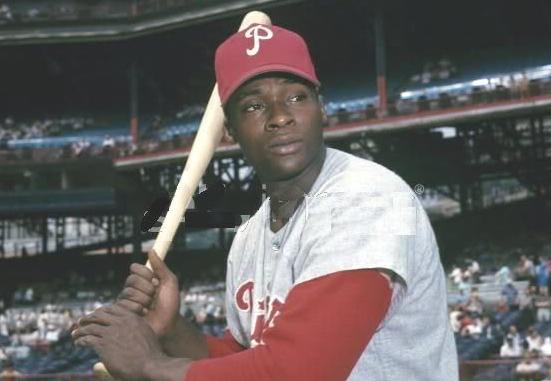
After Bunning set the Giants down 1-2-3 in the seventh, Philadelphia took the lead in the eighth on an unearned run. Gonzalez led off with a single. Richie Allen walked with one out. Marichal induced a ground ball from Johnny Callison that might have ended the inning. However, reserve infielder Bob Schroder failed to handle it, and a run scored.

Bunning failed to hold the lead in the bottom of eighth. He retired Alou to begin the inning, but Haller homered for the second time to tie the game.

With the two Willies, Mays and McCovey, up next, a modern manager would likely have pulled Bunning. The Phillies had a strong bullpen, anchored by the two Dicks, Hall and Farrell. But manager Gene Mauch stayed with his ace.

Bunning got Mays on a pop-up, walked McCovey (pitching very carefully, I assume), and then retired Jim Davenport.

Marichal had allowed four runs, eight hits, and two walks through eight innings. Giants manager Herman Franks had good relievers available — Ron Herbal, Bill Henry, and Frank Linzy (ERA 0.60). Yet, like Mauch, Franks stayed with his ace.

Marichal retired Tony Taylor, who led off the inning. Bunning was the next scheduled batter. Surely, Mauch would send up a pinch hitter to bat for his tiring pitcher.

But Bunning stayed in. He wasn’t a bad hitting pitcher. Early in his career, he was a .200 hitter. But by 1967, he had fallen off at the plate. Coming into this game, he was batting .125.

Bunning did have one home run, though. It came at the expense of Atlanta’s Ken Johnson, and was the fifth of his long career.

On this day, he hit his sixth. How embarrassed must the prideful Marichal must have been!

Bunning had given the Phils a 5-4 lead. Now he had to be his own closer.

No problem. In the bottom of the ninth, he set down the Giants in order — Brown on a fly ball, Schroder on a ground ball, and pinch hitter Norm Siebern, an old American League adversary, on another grounder.

For the Umpteenth Time, Grace is Not Nature

Once again the lame argument that nominalism (and its Protestant progeny) severed the chain of being and gave us Walmart:

One can now readily see the theological pitfalls of this position. It means that in Genesis, when God called creation ‘good’—it was only because He said so, not because it was really good. It also contravenes the testimony of the Old Testament, where creation as seen as reflecting the beauty and goodness of God—Dreher quotes Psalm 19:2, “The heavens declare the glory of God.” Finally, Ockham’s position is at odds with the reality of the Incarnation itself, along with the reality of the visible Church and the sacramental system. (Certainly it is now apparent how nominalism helped pave the way for the Protestant Reformation.)

In the context of the Christian faith, the errors and perils of nominalism may seem manifest, but what about its broader cultural implications? As Dreher explains, once the world had been emptied of inherent meaning and bore only that meaning imposed on it by God, the next big step was to replace God with man.

How and why did this happen?

The real answer, of course, is beyond our scope, but we can briefly point to it here. (See Dreher’s second chapter, “The Roots of the Crisis” for the full summary.) Once the sacred chain connecting all being to God was severed, creation shrunk back from its Creator: the world became a smaller place.

Hello! The heavens declaring the glory of God doesn’t make the heavens a sacrament.

Hello! Affirming the profound chasm between Creator and creature (can you say transcendence?) does not destroy the light of nature that shows “that there is a God, who hath lordship and sovereignty over all, is good, and doth good unto all, and is therefore to be feared, loved, praised, called upon, trusted in, and served, with all the heart, and with all the soul, and with all the might” (Confession of Faith 21.1).

Hello! Saying that God’s ways are not our ways is not to deny that God superintends all things.

In fact, if you believe in providence:

God the great Creator of all things doth uphold, direct, dispose, and govern all creatures, actions, and things, from the greatest even to the least, by his most wise and holy providence, according to his infallible foreknowledge, and the free and immutable counsel of his own will, to the praise of the glory of his wisdom, power, justice, goodness, and mercy. (Confession of Faith 5.1)

you can also believe in sacraments:

A sacrament is an holy ordinance instituted by Christ; wherein, by sensible signs, Christ, and the benefits of the new covenant, are represented, sealed, and applied to believers. (Shorter Catechism 91)

But if you so closely identify God with his creation, you may have trouble distinguishing the church from Europe. Hillaire Belloc anyone?

Europe is the faith, and the faith is Europe.

Surely, somewhere in all those Aristotelian categories appropriated by Aquinas, Roman Catholics have a way of distinguishing the world from God who is a “spirit, infinite, eternal, and unchangeable in his being, wisdom, power, holiness, justice, goodness, and truth.” You have to preserve those incommunicable attributes of God somehow.

Rating Professors is Arbitrary

So warns Jacques Berlinerblau:

Professorial prestige, I contend, is an awfully arbitrary thing.

Among professors, where one works is a marker of status. Thus, the assistant professor employed by an Ivy League college accrues greater glory than her counterpart at a midsize regional university. The latter, in turn, is more esteemed than an assistant professor laboring at some far-flung small liberal-arts college. The same hierarchies prevail, I guess, among high-school seniors comparing their college-acceptance letters as they hotbox their parents’ Toyota Priuses.

The juveniles and, distressingly, the professors are just following the logic of popular college-ranking systems. They are assuming that the greater the renown of an institution as measured by U.S. News & World Report, the greater will be the quantity and quality of research produced by scholars in its employ. Is this assumption accurate?

If it were, it would follow that an assistant professor in anthropology at Princeton University (U.S. News 2016 rank No. 1) publishes more and better work than her exact counterpart at the University of Southern California (U.S. News 2016 rank No. 23). The USC savant, in turn, outperforms the identically ranked anthropologist at Clark University (U.S. News 2016 rank No. 75). The Clark ethnographer has a heftier CV than a comparable scholar employed at Oklahoma State University (U.S. News 2016 rank No. 149). The better the institution, the better the research its tenure-line professors produce. Right?

Well, practice has a habit of trolling theory. Let’s imagine an experiment. All four of our hypothetical tenure-track anthropologists are asked to submit an updated CV and all of their relevant publications. Upon their arrival, these materials are scrubbed of any identifying markers. The anonymous files are then forwarded to a panel of experienced academicians, no-nonsense types who understand how the game is played. Their task: Figure out which CV corresponds to which sage employed at colleges ranked 1, 23, 75, and 149.

Our arbiters, I’m convinced, would fail this blind test. They would fail even if we asked them not to look at mere quantity of publications but quality as well. That’s because the contestants would all look puzzlingly similar. The judges might assume that the assistant professor at Clark worked at Southern California. And, yes, it is not unthinkable that they would place the Oklahoma State ethnographer in New Jersey. The problem is not that the Princeton person is a slouch. The problem is that all four are publishing a lot and all are very impressive on paper. Ergo, it would be impossible for the judges to distinguish between scholarly Coke and Pepsi.

Does this apply to New York City pastors?

What about U.S. Senators?

What about platforms makes an author more of an authority than another author?

Were FDR, JFK, and LBJ Dispensationalists?

Maybe if being dispensationalist means going by three initials.

But I worry that Donny Friederichsen is barking up the wrong tree when he blames those Scopes Reference Bible-thumping end-of-time worriers for American exceptionalism — the idea that the United States is better and more blessed than other nations:

The belief in American exceptionalism was wedded to the growing theological movement known as Dispensationalism in the late 19th and early 20th century. Dispensationalism, a novel theological movement that was popularized by J.N. Darby and C.I. Schofield, convinced Christians that they could most certainly find American exceptionalism in the Scriptures. Through the vehicle of Dispensationalism, America became the pinnacle of Christendom, the “City on a Hill,” but not in the manner it was originally used by John Winthrop when he quoted Matthew 5:14 in 1630. Winthrop argued that the eyes of the world would be upon their colony and if they dealt falsely with God, then God would make them a byword. Winthrop saw no special virtue or exceptionalism in his colony, rather he used it as a call to actually live out their Christian faith in spite of their inherent sinfulness. Instead, American evangelicals began to see the United States as THE beacon of God’s divine light and the highpoint of humanity. For example, the fiction series, Left Behind, by Tim LaHaye and Jerry Jenkins presents a Dispensational view of the end times, which makes clear that the US and the modern nation-state of Israel are the principal players in God’s great redemptive plan of history. Any attitude that suggests that the US has a divine right to global supremacy, is pervasive.

The thing is, American exceptionalism was (and is) mainstream. Dispensationalism was and is not. Listen to FDR:

We are fighting today for security, for progress, and for peace, not only for ourselves but for all men, not only for one generation but for all generations. We are fighting to cleanse the world of ancient evils, ancient ills.

Our enemies are guided by brutal cynicism, by unholy contempt for the human race. We are inspired by a faith that goes back through all the years to the first chapter of the Book of Genesis: “God created man in His own image.”

We on our side are striving to be true to that divine heritage. We are fighting, as our fathers have fought, to uphold the doctrine that all men are equal in the sight of God. Those on the other side are striving to destroy this deep belief and to create a world in their own image—a world of tyranny and cruelty and serfdom.

That is the conflict that day and night now pervades our lives.

No compromise can end that conflict.

Or what about JFK?

Finally, whether you are citizens of America or citizens of the world, ask of us here the same high standards of strength and sacrifice which we ask of you. With a good conscience our only sure reward, with history the final judge of our deeds, let us go forth to lead the land we love, asking His blessing and His help, but knowing that here on earth God’s work must truly be our own.

And don’t discount LBJ.

We are also there because there are great stakes in the balance. Let no one think for a moment that retreat from Viet-Nam would bring an end to conflict. The battle would be renewed in one country and then another. The central lesson of our time is that the appetite of aggression is never satisfied. To withdraw from one battlefield means only to prepare for the next. We must say in southeast Asia–as we did in Europe–in the words of the Bible: “Hitherto shalt thou come, but no further.” . . .

We may well be living in the time foretold many years ago when it was said: “I call heaven and earth to record this day against you, that I have set before you life and death, blessing and cursing: therefore choose life, that both thou and thy seed may live.”

This generation of the world must choose: destroy or build, kill or aid, hate or understand.

We can do all these things on a scale never dreamed of before.

Well, we will choose life. In so doing we will prevail over the enemies within man, and over the natural enemies of all mankind.

Of course, Bible-believing Protestants have a lot for which to answer. But a POTUS who uses the Bible and doesn’t believe the passage he invokes, may have more answers to give. And if he believes those passages, said POTUS may be a bigger fool than President Trump.