To Paraphrase Freud, Sometimes a Vote is Only a Vote

Are evangelicals this concerned about family farms when they buy their food or about the U.S. military when the pay their taxes?

So why so much attention to conscience when it comes to voting for the next POTUS?

For some reason, this vote says more about evangelicalism than the gospel that pastors preach (maybe that’s an indication that you’ve lost perspective?):

Evangelicals, deeply divided over Donald Trump, are wrestling with what the tumultuous 2016 election will mean for their future.

His candidacy has put a harsh spotlight on the fractures among Christian conservatives, most prominently the rift between old guard religious right leaders who backed the GOP nominee as an ally on abortion, and a comparatively younger generation who considered his personal conduct and rhetoric morally abhorrent.

“This has been a kind of smack in the face, forcing us to ask ourselves, ‘What have we become?'” said Carolyn Custis James, an evangelical activist and author who writes about gender roles in the church.

Then we have the argument that Christianity is a helicopter faith (it hovers over everything):

To undertake this particular activity—voting—the Christian must be convinced that the ballot is cast as an obedient response to the command of God in discipleship. The Christian seeks to discern the word God has for them and to act upon it faithfully. One participates willingly in democratic elections as a disciple or not at all. This might mean that the Christian abstains from voting or votes for an alternate candidate who they believe (again, in good conscience) will best carry out the office. Yes, God works through material affairs themselves to inform the Christian of whom a candidate is and what is at stake in voting for them, but his revelatory providence is by no means restricted to the empirical and obvious.

Whatever happened to the idea of Christian liberty?

God alone is Lord of the conscience, and hath left it free from the doctrines and commandments of men, which are, in anything, contrary to his Word; or beside it, if matters of faith, or worship. So that, to believe such doctrines, or to obey such commands, out of conscience, is to betray true liberty of conscience: and the requiring of an implicit faith, and an absolute and blind obedience, is to destroy liberty of conscience, and reason also. (Confession of Faith, 20.2)

So unless we have a proper warrant from Scripture for not voting for either Donald Trump or Hillary Clinton, like not supporting a self-centered windbag (think Nero) or not voting for a sinner (think Nebuchadnezzar), what’s the big deal here? Aren’t Christians free? Can’t we disagree about politics, just the way we disagree about novels, cars, food, and banking?

But if you are a w-w Christian and every single millimeter of life is shot through with spiritual significance . . .

Well, then why not more hair pulling about the World Series and trying to discern God’s commandment for which team to root?


Protestantism as Trump

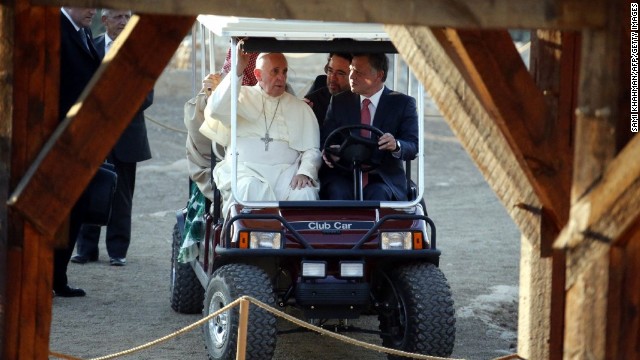
While Pope Francis is commemorating Martin Luther in Sweden, Karl Keating is doing what apologists do — deriding Protestantism:

We commemorate December 7, the “day that will live in infamy,” because it was the prelude to a long and costly war. Again, there was heroism, but we wish that heroism had never needed to be called up.

We commemorate Bastille Day and the October Revolution not because what came from them, the French Revolution and the Russian Revolution, were good but precisely because they were evil, and we want to remember that evil so that it won’t return in another guise. . . .

I see nothing to celebrate in the Protestant Reformation. It was the greatest disaster the West suffered over the last millennium. It brought theological confusion, political turmoil, and decades of war. The religious wars of the sixteenth and seventeenth centuries killed about three percent of the world’s population, the same proportion that died in World War II. The religious wars would not have occurred had the Reformation not occurred.

But unlike the critics of Trump, Keating acknowledges that the other candidate has problems:

Much was wrong in the Catholic Church of the late fifteenth and early sixteenth centuries. Personal morality was lax (though not matching today’s laxity), and corruption was widespread among the clergy and was particularly scandalous the higher one’s gaze went up the hierarchical ladder. One should keep in mind, though, that, however bad things were in the decades before Luther took out his hammer, they had been worse in the tenth century. If there were a few “bad popes” in Luther’s era, there were worse popes, and more of them, five or six centuries earlier.

The Church of the tenth century desperately needed reform, not revolution, though it might have fallen into the latter if reform hadn’t come about. But reform did come about, and the Church not only soldiered on but prospered. The result was the High Middle Ages, the era in which Catholic principles most effectively (but still inadequately) undergirded Western society.

By the turn of the 1500s a once-again-complacent Christendom was in trouble. It again needed reform, but what it got was the Reformation.

What Keating doesn’t answer is whether his communion ever experienced reform, or if his very different interpretation of the Reformation compared to Pope Francis is another indication that calls for reform, like the poor, are always with us.

My Namesake

Get this. They would have called her Adoniram if Ann Judson Henderson were born a boy:

Historian David S. Schaff, son of the famous historian Phillip Schaff, was surely right when he noted that the name of Ann Hasseltine Judson (1789–1826) “is one of the immortal names in missionary biography.” Francis Wayland (1796–1865), the major nineteenth-century biographer of Ann’s husband, said after he spent time with her in 1822: “I do not remember ever to have met a more remarkable woman.”

With her husband Adoniram Judson (1788–1850) she was the first of a long line of American evangelical missionaries. In fact, her embrace, and that of her husband, in 1812 of Baptist principles is one of the key turning points in the history of the American Baptists: it marked this community’s entry into the modern missionary movement, an event sealed two years later by the formation of the Triennial Convention, so called because it met every three years. Moreover, Ann’s life story was repeated innumerable times in the nineteenth and twentieth centuries—almost every year between 1830 and 1856 there was a new edition of her biography, which prompted one author, Lydia Maria Child, to describe it as “a book . . . universally known.”

Thus, she became, along with her husband and others such as William Carey (1761–1834) and Hudson Taylor (1832–1905), a key source of inspiration for the modern missionary movement.

Subsidiarity Matters

What happens when you locate the vitality of your religious tradition in the officers who are far removed from the socializing and rearing of human beings?

American Protestants are keeping their children in the faith at a higher rate than Catholics or the unaffiliated, according to the latest study from the Pew Research Center.

Four out of five children raised by two Protestant parents remained Protestant into adulthood. For those raised in Protestant homes where religion was very important or often discussed, the retention rate jumps even higher (85% and 89%, respectively).

For those raised by a single parent who was Protestant, the retention rate doesn’t dip much. Three-quarters of American adults who had a Protestant single parent still identify as Protestant.
Those raised by two Catholic or unaffiliated parents, on the other hand, were equally less likely (62%) to remain in their parents’ religion—or lack thereof.

A theology of the body for the trenches?

“One pattern regarding the passing on of religious identity from one generation to the next is clear,” Pew stated. “Among those who were raised in a single religious background (especially within Protestantism), the family’s religious commitment is closely linked with retaining one’s religion into adulthood.”

Papal Golf

The president of Catholic University of America seems to have taken too many meals at Outback — no rules, just right (no hell, just purgatory?):

What I really love about Pope Francis and the message that he’s trying to get across is that we’re Catholics, we belong to the Church, and we believe what the Church teaches because Jesus came to redeem us and show us His mercy.

The message to others isn’t, “Gosh, you ought to be Catholic because you should follow this or that set of rules.” The message is, “Good news: you’re redeemed. Here’s what a life lived in response to that truth looks like.”

Imagine you’re speaking to someone from Finland who has grown up north of the Arctic Circle, and had never seen a golf course and had no idea what golf was. You’re trying to explain to this person why you love golf and how important it is.

One way of doing it is saying while you’re in the tee box, you don’t want to hit it outside the white stakes because that’s out of bounds and the penalty is a stroke and distance, and you don’t want to go past the red stakes because those are lateral hazards and there’s a stroke penalty. And you don’t want to get in the sand trap because, while that doesn’t cost you a stroke, it’s hard to get out of.

You’d rather say, “Here’s the deal: you see that hole down there-we’re going down this short grass here and we’re putting it in the hole in the least number of strokes, and we’re going to have a nice visit while we do it.”

It’s not that there aren’t rules for golf-no out of bounds, no lateral hazards, no sand traps-it’s that focusing on avoiding sin is not the message that brings people to love Jesus.
Pope Francis is exactly right-the bull’s-eye of the Catholic message of the gospel is, “Jesus loves you.” Your life is messed up? We’ve got some good news for you. That’s what I love about Francis. There is nothing in any of that that doesn’t appeal to all of us. . . .

That’s not to say there aren’t out of bounds or rules or anything, which he’s stipulated, but because he’s so inviting, people are willing to take a first listen. Some in the media on the left would like to take from that the lesson that the Catholic Church has abandoned all the rules about lateral hazards and sand traps, and some on the right take the same mistaken view. And of course Pope Francis makes clear that’s not what he’s saying.

But when it comes to discerning a difference between the church and the world, no problem. The U.S. bishops are doing nothing different from the ACLU (I kid not):

When we invite someone to be a commencement speaker, the university is saying something. That’s why the American Catholic bishops say that Catholic universities shouldn’t give honors, platforms, and awards to people whose view is at odds with the views of the Catholic Church.

What they are saying literally is that universities like us shouldn’t endorse people like that. We should not say “Yay, Barack Obama, you support enshrining the ‘right’ to kill the unborn.” We shouldn’t give him honorary degrees or hold him up to our students as our example.

On the other hand, I would be perfectly happy to invite President Obama to Catholic University, even to talk about abortion if he wanted to. What better place than to have a conversation with the President about an issue that is important to Catholics and others? We’re just not going to give him a prize for taking a position that we condemn.

So, this notion isn’t at all inconsistent with notions of academic freedom on campus. It follows the standard kind of distinction that other universities follow.

Here’s a parallel example. Every year we see the ACLU bashing, say Montana State, for inviting some preacher to say an invocation before the commencement. The First Amendment rule about that is that public universities should not endorse religious positions, therefore, the preacher is welcome to come on campus to talk or to say prayers but they can’t make him the commencement speaker.

The ACLU doesn’t come in behind the bishops on their position, but they are saying the same thing.

Speechless.

He Dehumanized First

With all the talk of human dignity these days, and all the recognition that Donald Trump doesn’t recognize it in Mexicans and Muslims, what happened to the capacity to recognize Trump himself as human? In other words, why don’t Christian historians model the charity and perspective in discussing Trump that they expect the Republican to display? John Fea (sorry to write so much about you big guy but you know, iron-sharpening-iron and all) once again sees what so many already see:

As Christian students of the past they strive to tell the stories of all human beings. The goal of such teaching and writing is not political correctness, but a fundamental belief in the dignity of individuals. Everyone’s story counts.

When Trump disparages women and people of different races and religions he dehumanizes them. He sends the message that some human beings are not as important as others. In the process he fails to recognize the Imago Dei in all of God’s human creation.

Historians know a few things about this kind of dehumanizing rhetoric. We have studied its manifestation in the past and are trained to recognize it in the present.

I have already commented on evangelical historians who seem to pride themselves on the value they add to discussion of the present.

But I don’t for the life of me understand why the historians who are so quick to condemn Trump don’t admit that the really challenging part of studying the past is to humanize characters like the Republican nominee. How a scholar does that is not obvious and that is why they pay historians the big bucks. To look beyond the surface and see the wider set of circumstances that contribute to a human being’s assets and liabilities is what makes history valuable (and for me fun).

Regarding a person in merely moral categories doesn’t measure up to the standards of good historical knowledge. It does what everyone else already does. And when done in the name of evangelical history it actually shows that born-again historians have a moral imagination but little removed from Jerry Falwell (Sr.) or James Dobson. What they did to President Clinton, evangelical historians are ready and willing to do to Donald Trump.

The Trump Will Set You Free

Free to criticize that is.

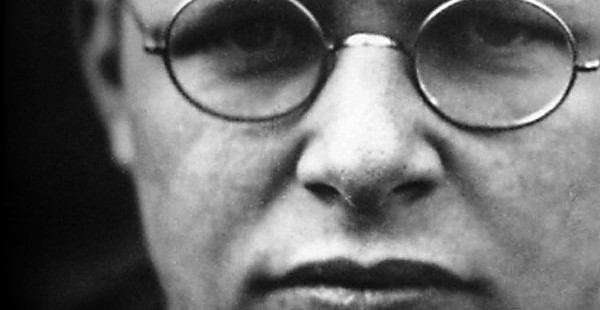
In 2014 when Charles Marsh’s highly acclaimed biography of Dietrich Bonhoeffer came out, the author avoided taking on Eric Metaxas. In an interview with John Fea, this is the worst he could do:

I’m pleased that Eric Metaxas has inspired such a spirited and intense conversation on Bonhoeffer’s life and legacy. Nevertheless, I wanted to tell the story anew by relying primarily on a treasure of recent archival and scholarly discoveries, on letters, journals, and other documents, as well as my own interviews. I spent a lovely afternoon in the home of Eberhard Bethge, shortly before his death, talking candidly about aspects of Bonhoeffer’s character that had been largely ignored. Metaxas’s book also offered me a cautionary tale on the political misuses of biographical writing; had I not been able to see what havoc his own heavy-handed political agenda wreaked on the telling of Bonhoeffer’s life I might have been inclined to tweak it in the direction of my partisan biases.

In his review of Marsh’s book for the Wall Street Journal, Christian Wiman even faults Marsh for failing to correct Eric Metaxas’ popular biography of Bonhoeffer:

Mr. Marsh does not even mention the Metaxas book or the enormous attention it brought to Bonhoeffer. He is a scholar, and Mr. Metaxas is a popular biographer, and it’s possible that Mr. Marsh found no new information in the Metaxas book that he needed for “Strange Glory.” Still, though Mr. Marsh deals quite well with the intractable contradictions of Bonhoeffer’s beliefs and actions, he misses the chance to situate the theologian and his ideas more clearly within the contemporary context. A simple preface would have helped.

That is why Marsh’s recent post about Metaxas was a surprise:

WRITTEN WITH BUT the slightest familiarity with German theology and history, Metaxas’s best-selling Dietrich Bonhoeffer: Pastor, Martyr, Prophet, Spy was published by Thomas Nelson in the spring of 2010 and launched at the Young Republicans Club of New York City. Christians in the United States needed to learn some very important lessons from Bonhoeffer’s story, and Eric Metaxas, who some followers call “the American Bonhoeffer,” had been called by God to deliver these lessons in our own hour of decision: It is not the role of the state to take care of people. America is the greatest nation in the world. People can take care of themselves; small government is the best government. Germans turned to Hitler to do the things that other people ought to be doing, and we in America are in danger of the same mistake. People who like big government don’t believe in God; they’re secularists and can be compared to the Nazis. We need Bonhoeffer’s voice today—Metaxas told an interviewer—“especially in view of the big government ethos of the Obama administration.”

With a literary background that includes a popular biography of the abolitionist William Wilberforce and the VeggieTales children’s series, Metaxas said that his purpose in writing the book was to save Bonhoeffer from the liberals, from the globalists, the humanists, and the pacifists. His Bonhoeffer was a born-again Christian who espoused traditional family values.

This is complete nonsense.

What explains the change? Metaxas has endorsed Trump and Marsh disapproves. The Trump will set you free.

But the editors at Religion & Politics and Dr. Fea should remember that just because Marsh is agreeable about Trump, it doesn’t make him right about Bonhoeffer. In fact, both Marsh and Metaxas may reflect their own “American” perspective. Ferdinand Schlingensiepen, a German biographer of Bonhoeffer, sure thought so:

Marsh and Metaxas have dragged Bonhoeffer into cultural and political disputes that belong in a U.S. context. The issues did not present themselves in the same way in Germany in Bonhoeffer’s time, and the way they are debated in Germany today differs greatly from that in the States. Metaxas has focused on the fight between right and left in the United States and has made Bonhoeffer into a likeable arch-conservative without theological insights and convictions of his own; Marsh concentrates on the conflict between the Conservatives and the gay rights’ movement. Both approaches are equally misguided and are used to make Bonhoeffer interesting and relevant to American society. Bonhoeffer does not need this and it certainly distorts the facts.

Years ago Charles Marsh described his Bonhoeffer biography project. This reviewer remembers a passage about him wanting to approach the topic in a more ‘writerly’ way than Bethge, using a talent for storytelling for which the Southern States are famous. It is true that his book surpasses that of Bethge in terms of writerly skill, but is has become ‘A Life of Bonhoeffer’ that never existed in this form. A number of mistakes found in Marsh’s book have been referred to above. There are more, but I have deliberately concentrated on those that do most to distort the picture of Bonhoeffer.

I have no doubt that Schlingensiepen would disapprove of Trump. I do doubt he would let his view of Trump inform his understanding of the past.

Machen Helps Keep Law and Gospel Straight

If he were living, he’d also straighten out the obedience boys:

But what ought to be clearly observed is that that Covenant of Works or Covenant of Life did not offer “salvation.” The word “salvation” implies something from which one is saved. Adam was not lost when that Covenant of Life was given him. On the contrary he had knowledge, righteousness and holiness. The Covenant of Works was not given as a way by which a sinner might get rid of his sin and merit eternal life.

Neither was the Mosaic Law given for any such purpose. It was not given to present, even hypothetically, a way by which a sinner, already eternally under the condemnation of sin, could by future perfect obedience merit the favor of God. And Dr. Charles Hodge surely does not regard it as given for any such purpose.

The root error, or one of the many root errors of the Dispensationalism of the Scofield Bible seems to me to be the utter failure to recognize and make central the fact of the Fall of man. I know that there are salutary inconsistencies in the Scofield Bible. I know that in the notes on the fifth chapter of Romans there is taught, not indeed the orthodox doctrine of imputation, but still some recognition of the universal corruption that has come from Adam’s sin. But by what a back-door even that much of the central Biblical teaching is brought in! As one reads Dr. Scofield’s notes one does not for the most part get the slightest inkling of the fact that anything irrevocable took place when Adam fell. After his Fall man continued to be tested in successive dispensations. See for example the definition of a dispensation which Dr. Scofield gives at the beginning. That is one of the things that seems to me to be so profoundly heretical in this commentary.

It is contrary to the very heart of the Augustinian and Calvinistic view of sin. According to that view — and surely according to the Bible — the guilt of Adam’s first sin was imputed to his posterity. Adam being by divine appointment the representative or federal head of the race. Thus all descended from Adam by ordinary generation are guilty. They are guilty before they individually have done anything either good or bad. They are under the penalty of sin when they are born. Part of that penalty of sin is hopeless corruption, from which, if there is growth to years of discretion, individual transgressions spring. How utterly absurd would it have been therefore for God to offer the Mosaic Law, to such an already condemned and fallen race, as something which, if only obeyed by that already condemned and fallen race, would bring salvation and eternal life!

Hard to love the law when it doesn’t do all that faith in Christ does.

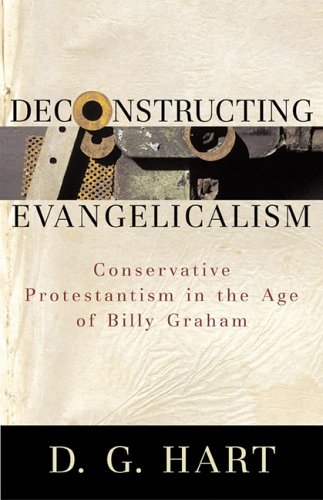
Deconstructing Evangelicalism

I told you so:

There’s another problem here. Many of the best pollsters lack a deep understanding of the subtle outlines of the thing they’re trying to measure. It’s hard enough to quantify evangelicalism when you basically, if vaguely, grasp what it is, but it’s almost impossible to do so if you’re otherwise unable to tell a Pentecostal from a Presbyterian. So it would seem like the pollsters best-qualified to tackle this tricky business would be those with a first-hand, native-born understanding of what American evangelical Christianity is really like — knowledge that comes from living it on the inside.

But there’s a little problem with that, and a big problem with that. The little problem, as we’ve already mentioned, is that evangelical Christians themselves aren’t usually any better able to limn the outlines of their category than anyone else — hence the NAE turning to a British scholar of religious history to describe for them who they are. As the old joke says, if you want to know what water is like, don’t ask a fish.

The big problem, though, is a doozy. Part of the character of evangelical Christianity is that it is contentious and disputed. Bebbington didn’t include this in his quadrilateral, but it has been true ever since at least the Reformation, and it greatly intensified throughout the 20th century. Evangelicalism is, among other things, a category of people who are perpetually arguing over which among them does and does not legitimately belong in that category. The definition of “evangelical” provided by any given evangelical, therefore, tends to be fraught. Evangelicals have a hard time measuring their group without taking the opportunity to declare that others aren’t measuring up and don’t legitimately belong with the rest.
So even though we have some very skilled evangelical pollsters and data-crunchers, and even though they’ve done some laudable work trying to refine their measurements and metrics, these folks also tend to be bound up and beholden to the very same evangelical institutions involved in the tradition’s never-ending disputes over legitimacy. When those institutions seek a head-count of evangelicals or a measure of evangelical opinions, they’re almost always also seeking to count others out.

Back then W. was in the White House, evangelicals had access to power, and White Christian America was only in critical condition. Deconstructing evangelicalism then was a lot harder to do than it is in the age of Trump.

Supersessionist Shrug

An apologist’s post caught my eye and led to an exchange that produced this assertion:

I did admit Rome’s problems, but I didn’t bother laying them out in detail because that wasn’t the point of the post. And as I pointed out in the post and have said over and over again in our exchange, they don’t really affect my conclusion one way or another. If my main argument were that Protestants don’t act like Christians and Catholics do, you would have a point. But I never said that and never would. Sure, Rome has a lot of ‘skeletons:’ the Catholic Church is the oldest and largest of the communions; it makes sense that there would be more crimes, sins, and failures in her past than in that of the others. What of it? A one-by-one comparison of the crimes of the different Christian churches, even if we agreed on what constituted a crime, would tell us nothing about which one among them had the best claim to being the church founded by Christ. Again, the evil done by the Church is accounted for by hypothesis: that of being a Divine commission entrusted to fallen humanity.

Imagine if Jeremiah had said that to the Israelites. Don’t worry about your sins, you go all the way back to Abraham:

“Thus says the LORD of hosts, the God of Israel: You have seen all the disaster that I brought upon Jerusalem and upon all the cities of Judah. Behold, this day they are a desolation, and no one dwells in them, because of the evil that they committed, provoking me to anger, in that they went to make offerings and serve other gods that they knew not, neither they, nor you, nor your fathers. Yet I persistently sent to you all my servants the prophets, saying, ‘Oh, do not do this abomination that I hate!’ But they did not listen or incline their ear, to turn from their evil and make no offerings to other gods. Therefore my wrath and my anger were poured out and kindled in the cities of Judah and in the streets of Jerusalem, and they became a waste and a desolation, as at this day. (Jeremiah 44:2-6 ESV)

Too old to fail? Where would anyone reading the whole Bible come up with that?

But if the church is so different from Israel in a supersessionist way, then the lessons of Israel don’t apply to the church. And by the way, don’t bother reading the epistle to the Hebrews.