If You Think Universities are Too Western, You’re Right

Students at Seattle University, a Jesuit institution, have successfully forced a controversial dean to resign. Jodi Kelly, dean of the university’s Matteo Ricci College, drew fire from students when she used the n-word in an email to a student. That the word was also the title of a book by an African-American author didn’t matter to students:

in a discussion with a student who wanted to better understand the experiences of members of minority groups, Kelly suggested Nigger, the autobiography of Dick Gregory, the civil rights activist. Among those who defended Kelly on her recommending the book by name was Gregory himself, who wrote an essay for Inside Higher Ed about the debate at Seattle.

Even as attention on the N-word receded, the debate about Kelly and the college she led only grew. Kelly’s critics and supporters agree that she is a proponent of a rigorous humanities curriculum — such as that offered by the college — built around the Western classics. To the protesting students, that was a big part of the problem.

But universities are supposed to be Western. It’s what they do:

Universities are one of the few institutions that are a direct contribution of medieval Latin Christendom to contemporary Western civilization. Being an export wherever else they are found, they are also unique to Western culture. To be sure, all cultures have had their intellectuals: those men and women whose task it has been to learn, to know, and to teach. But only in Latin Christendom were scholars — the company of masters and students — gathered together into the universitas whose entire purpose was to develop and disseminate knowledge in a continuous and systematic fashion with little regard for the consequences of their activities. When professors and students today study and write about universities, they are therefore engaged in more than group therapy in the midst of troubled times for what is now ambiguously called “higher education.” They are analyzing an essential element in the culture that has come to dominate the entire globe. (James M. Kittelson, “The Durability of the Universities of Old Europe”)

In other words, if you want to speak truth to power, don’t go to university. If you do, you join the system of oppression.

Will A Revival Save Us?

In hopes of understanding my own blindness about race relations in America and what I (me me I I me me) might do to make the nation and me less racist, I listened to Thabiti Anyabwile’s discussion with Carmen Fowler LaBerge. Here’s what I learned. First, I need to acknowledge that whites have treated blacks badly:

We need to acknowledge the ways in which the church has intentionally, historically refused to be the Body of God along the lines of race. Whether it from Virginia’s enactment of laws that if a slave became a Christian did not mean they would be freed from slavery, to the segregation of congregations in the 1800s and into the 1900s, to the Evangelical church just missing the ball in the Civil Rights Movement and other areas. We have to tell the truth- the bone deep truth- about our complicity if we will ever be free from it.

When I taught colonial America last fall, I ended with the point that race is one of the lasting and darkest legacies of colonial slavery. I may need to do more in class. But I think I’ve got this part of it. I understand in part if not in full.

Second, I need to do something:

Pastor T says one tangible step is to pray for revival. Pray that God pours out his Spirit on His church, and that His spirit would graciously bring conviction of sin. That He would quicken His church in repentance and holiness. Pray that God would subdue the hearts of those hearts in rebellion against God and turn to Him.

Pastor T hopes the Lord would use the grief and mourning that has gripped the nation to break our hearts in repentance and so we would draw near to Him in revival.

Here I’m scratching my head. Does Pastor Anyabwile (and Carmen) not know that revivals were incredibly divisive throughout U.S. history? Revivals don’t unify. They divide churches between pro- and anti-revivalists.

If Pastor Anyabwile means that revival might bring sanctification, I appreciate the point. But in the case of cop shootings, does that mean city governments should only hire applicants who have made a profession of faith? If revival saves America, aren’t we still thinking about politics the way Constantinians, neo-Calvinists, Covenanters, and theonomists do? Can we only trust officials who are saved?

So what do we do if we are to live with non-Christians? Any policies? Interestingly enough, Pastor Anyabwile faulted Ta-Nehisi Coates in the latter’s piece on mass incarcerations for not recommending any policies:

Coates repeats the significant failure he recognizes in an earlier Moynihan. Coates tells us that the fatal flaw in Moynihan’s infamous report was Moynihan’s decision to omit specific policy solutions. Having seen that so clearly, it’s odd that Coates should repeat that failure so often in the important writing he now undertakes. A mind as formidable as Coates’s ought not stop with descriptive analysis, however compelling its portrayal of the problem. It should push itself to hazard a prescription, to call for some specific redress.

Pastor Anyabwile is of course right. He should also know that revival is not policy.

So what policy is out there? Maybe Peter Moskos is on to something about what California and Chicago police can learn from New York City’s patrol people and their supervisors:

Last year in California, police shot and killed 188 people. That’s a rate of 4.8 per million. New York, Michigan, and Pennsylvania collectively have 3.4 million more people than California (and 3.85 million more African Americans). In these three states, police shot and killed (just?) 53 people. That’s a rate of 1.2 per million. That’s a big difference.

Were police in California able to lower their rate of lethal force to the level of New York, Michigan, and Pennsylvania — and that doesn’t seem too much to ask for — 139 fewer people would be killed by police. And this is just in California! (And California isn’t even the worst state; I’m picking on California because it’s large and very much on the high end.)

Now keep in mind most police-involved shootings are not only legally justifiable, they are necessary and good at the moment the cop pulls the trigger. But that doesn’t mean that the entire situation was inevitable. Cops don’t want to shoot people. They want to stay alive. You give cops a safe way to reduce the chance they have to pull the trigger, and they’ll certainly take it.

I really don’t know what some departments and states are doing right and others wrong. But it’s hard for me to believe that the residents of California are so much more violent and threatening to cops than the good people of New York or Pennsylvania. I suspect lower rates of lethal force has a lot to do with recruitment, training, verbal skills, deescalation techniques, not policing alone, and more restrictive gun laws. (I do not include Tasers on this list.)

If we could bring the national rate of people shot and killed by police (3 per million) down to the level found in, say, New York City (The big bad NYPD shoots and kills just 0.7 per million) we’d reduce the total number of people killed by police 77 percent, from 990 to 231!

The thing is, we don’t need the Holy Spirit’s miraculous powers for this. Providential control is always appreciated.

Make It Stop

Yet another press release on evangelicals who have found a home that is sweet and located in Rome. And once again, the great appeal is authority (papal, infallible, audacious?):

What I came to realize is that little progress will be made on the major issues (or many secondary issues) of theology until one settles the issue of religious authority. That single concern is related to numerous key facets of the Christian faith, the most impactful of which were the canon of Scripture and its orthodox interpretation.

The canon of Scripture (the books included in the Bible) is a huge issue for anyone who considers the Bible to be the Word of God and the authority for one’s faith. If one thinks the early Church went astray somehow, it becomes a very difficult problem because the biblical collection itself was not settled until centuries after the apostles died. If the Church was in error by then, how can the “Bible-Only Christian” be sure he really has the inspired Word of God? And if the Church was kept from error while it determined the canon, why was it not likewise kept from error during the councils and creeds it produced at the same time? As I looked at the major alternate theories of canonization, I discovered the historical truth that the Church is ultimately the standard.

This was also the case with doctrine. It is well known that there is rampant disagreement among the various sects, denominations, and cults of Christianity—but where is the line drawn? Christians often speak of “orthodoxy,” “heresy,” “essentials,” and “fundamentals”—but by what authority are these words defined, and doctrines labelled? For the Christian who denies that the Church is the standard, there seemed to be no non-circular means of doing so.

I’ve asked before and no one answered. So I’ll ask again. With all that authority, how do you explain the bad stuff? What about Marquette University? What are the bishops doing? Pope Francis? The converts?

Working in my Marquette office one afternoon in the spring of 2010, I heard unusual sounds coming from the normally quiet lawns outside my window. I was surprised to see a modest assembly of students and professors preparing to march in protest. Against what? Minutes later, an email arrived informing me that the university’s then-president, Robert Wild, S.J., had voided a contract extended to Jodi O’Brien to join us as Dean of the College of Arts and Sciences. Though the contract had already been signed, Fr. Wild—perhaps under external pressure—decided that O’Brien, a partnered lesbian whose research included queer studies, was not an appropriate choice to represent our mission and identity.

Although an ordinary person with a passing knowledge of the moral teachings of the Catholic Church would think such a decision obvious, the department chairs in the college soon gathered and voted almost unanimously to censure Wild’s decision. The press, meanwhile, demanded an explanation. On the ­defensive, the university allegedly paid a considerable sum in order to break the contract. Officials were soon exercising themselves to demonstrate their concern for equitable treatment of gays and lesbians. The university would initiate projects, courses, conferences, and the like to explore issues of sex and gender! The clear implication was that change would come, though slowly. Marquette would get with the sexual-liberation program so that something like the O’Brien affair would never happen again.

Since 2010, the campaign for sexual diversity at Marquette has advanced rapidly. Last year, the university announced the expansion of the former Gender and Sexuality Resource Center (established in the wake of the O’Brien dustup) into two new initiatives: a Center for Gender and Sexualities Studies and an LGBTQ Resource Center. How much funding has been increased has not been disclosed. We also now have an Office of Institutional Diversity and Inclusion, which offers faculty and staff awards for excellence in, yes, “diversity and inclusion.” Again, how much this will cost hasn’t been revealed. We do know, however, that funds have been promised to support the development of new courses that advance the cause. A faculty fellows program in diversity is also in the works.

The whole article is worth reading, but this paragraph is particularly telling:

For the last two generations, American Catholic ­theology departments have been at the forefront of a campaign of dissent against Catholic sexual morality. This campaign has often been led by Jesuits and Jesuit universities. Unlike attempts to attract more minority students, or programs to empower students from disadvantaged backgrounds—efforts in full accord with Catholic social teaching—this campaign of dissent has sometimes been underhanded, even dishonest. It has also been ruthless, working hard to suppress and punish any who speak up for the Church’s teaching. The way Marquette has adopted and promoted the mishmash of LGBTQ ideology over the last few years is consistent with that tradition of dissent.

So why don’t the converts ever include these developments in their touting of Rome’s authority and certainty? Are they unaware?

Whatever the reason, the Marquette situation may explain Rachel Lu’s counsel (which doesn’t say much about the hierarchy that is supposed to keep everything neat and orthodox):

In that spirit, try not to pay too much attention to Church politics. Catholic politics is, well, politics. Unless your profession requires it, you probably don’t need to obsess about it, and there are much more edifying ways to immerse yourself in the faith. But whatever you do, don’t trust journalists to educate you about Catholicism.

Who’s Afraid of Orthodox Presbyterians?

I may have asked this before, but do Hasidic Jews or Amish engage in the wailing and gnashing of teeth that afflicts white Protestants in America? Where are the Hasidic Jews coming out in support of Trump because we need a president to appoint the right Supreme Court justices? And Amish on Twitter? Oxymoron doesn’t cover it. But the Amish do have a record of carving out their own existence in the United States without any ambition to take over “English” society.

Samual Goldman’s review of Mary Eberstadt’s new book, It’s Dangerous to Believe, prompts a repeat of the question: do Jews and Amish engage in the same sort of outrage about America’s decadence as Christians (and relatedly, why don’t Christians, if they really are strangers and aliens, act more like Hasidic Jews and Amish?)? Here’s one part of Goldman’s review:

Why do Jews escape the opprobrium to which traditionalist Catholics or Baptists are subjected? Partly because they have never been more than a tiny minority, but also because they make few claims on political and cultural authority. Apart from a few neighborhoods in and around New York City, no one fears that religious Jews will attempt to dictate how they live their own lives. As a result, they are able to avoid most forms of interference with their communities.

There is a lesson here for the Christian traditionalists for whom Eberstadt speaks. They are more likely to win space to live according to their
consciences to the extent that they are able to convince a majority that includes more liberal Christians and non-Christian believers, as well as
outright secularists, that they are not simply biding their time until they are able to storm the public square. In addition, they will have to develop institutions of community life that are relatively low-visibility and that can survive without many forms of official support. The price of inclusion in an increasingly pluralistic society may be some degree of voluntary exclusion from the dominant culture.

Keep that in mind when thinking about Camden Bucey’s post about the differences between the OPC and PCA. Two quotations stand out in that piece. The first goes to the transformationalism to which the PCA aspired from the get-go well before the elixir of TKNY. According to Sean Lucas:

The PCA has sought to be evangelical Presbyterians and Presbyterian evangelicals, which has given the church a voice to the broader culture. Holding the church together has not been easy. For some, frustrations have arisen from the church’s tendency to opt for an identity that is more comprehensive than pure. Others are disappointed that the church often spends a great deal of time on relatively fine points of Reformed doctrine instead of focusing on mission, cultural engagement, or evangelism.

But the OPC has functioned on the margins of American society and whether intentionally or not, its lack of size and financial resources has nurtured a communion with the outlook of a pilgrim people. According to Charlie Dennison:

While everyone in the OPC understands our opposition to liberalism, some have had trouble understanding the aversion that others have to evangelicalism. They have been unable to accept the conclusion of Cornelius Van Til and others that evangelicalism, as a system, is Arminian. They have been unable to accept the criticism that modern evangelicalism’s view of regeneration is subjective, incapable of rising above a personal experience of sin and grace to the level of the covenant and the federal headship of Adam and Christ. Further, they have been unable to accept the growing historical and social evidence that contemporary evangelicalism is worldly, individualistic, and adolescent, craving acceptance and desperately wanting to make an impact.

I (mmmmeeeEEEE) discussed these differences with CW and Wresby at Presbycast this week (feel the love).

What I have trouble grasping is the appeal of transformationalism and changing the culture. On the one hand, that is so Moral Majoritarian. Haven’t we seen the colossal failure of such efforts, not to mention how self-defeating they are if you want a hip, urban profile in the cultural mainstream? On the other hand, if you want to pass on the faith, which is lower-case-t transformationalism, do you really think you can do it in the public square? Didn’t Mary lose her son in the marketplace?

As Goldman writes, it won’t be easy giving up on Francis Schaeffer’s Christian nationalism. But at some point you need to adjust to the hand you’ve been dealt:

There is no doubt that this will be a hard bargain for adherents of traditions that enjoyed such immense authority until recently. As Eberstadt points out, however, it will also be difficult for progressives who resemble Falwell in their moral majoritarianism. The basis for coexistence must be a shared understanding that the Christian America for which some long and that others fear isn’t coming back—not only because it was Christian but also because it involved a level of consensus that is no longer available to us. There are opportunities for believers and nonbelievers alike in this absence.

If transformationalists finally recognize that Schaeffer and TKNY are in the same Christian nationalist orbit as Falwell, will they finally say “ewww”?

UPDATE

Postscript: In other words, you don’t pray in the public square (even if it’s in the hallowed city):

Mainline Presbyterians and later, evangelicals, may once have been the Republican party at prayer. There may once have been an easy alliance, an assumption of shared religious values between those entities but Ms Dhillon’s prayer last night illustrates how that alliance is coming to an end. This is not a lament. The alliance should never have been. Christians as individuals and private societies (groups) may affiliate as they will but Christians as a group and certainly the visible, institutional church should never become utterly identified with any political party. If evangelicals and other Protestants (e.g., confessionalists) were uneasy with Ms Dhillon’s prayer, I can easily imagine how awkward it must have been for Ms Dhillon to witness the closing prayer and imprecation. Watching it on YouTube last night made me uncomfortable and he professes to be a minister of (some version) of the faith I confess.

Both the opening and closing of last night’s events are a good argument for doing away with public, shared prayers in such, common, secular events. It’s not that delegates to political conventions should not pray. They should. It’s not that candidates should not pray. They should. It’s not that voters should not pray. They should. The question is not whether but when? It is dubious whether it is appropriate to open a common, secular, assembly with prayer. To whom are we praying? In whose name? What are we praying? As a Christian minister of the United Reformed Churches in North America I am not free to offer prayers to God that he has not authorized. I am not free to pray to any other deity than the Triune God of Scripture, to the God and Father of the Lord Jesus Christ. I am not authorized to approach God in any other name than the name of Jesus. It is not a matter of bigotry. It is a matter of truth, eternal life, and salvation. Jesus was raised from the dead. He is the truth (John 14:6). There are not multiple ways to God. Religion is not multifaceted expression of a common religious experience. It is revealed by God to us.

Republicans – The Party of Christian Charity

I don’t know why evangelical historians are so opposed to Trump. Have they not seen how forgiving Republicans are when it (thanks to one of our southern correspondents) comes to failed campaigns and the managers who run them?

The Republican Party has no natural defense mechanism against charlatans and saboteurs because politics is not what Republicans think about every second. Democrats love government. They spend their lives trying to maneuver themselves into a position to run other people’s lives. Republicans don’t want careers in government and give little thought to how to get there. Often they run for president only because they hope it will lead to more speaking gigs and TV appearances. […]

Anyone who hurts the Democrats’ electoral prospects is dead. Not so, the Republicans. If John Edwards, Ned Lamont, and Bill Bradley were Republicans, they’d have radio shows, TV gigs, and bestselling books.

What ever happened to Wesley Clark? Where’s Mike Gravel? Mike Huckabee has a TV show. If you want to know what the other former Republican presidential candidates are doing these days, just turn on the radio or TV. […]

No one gets rich by sabotaging the Democratic Party. But a lot of people get rich off losing races for the Republican Party. […]

There are no prizes in politics for caring the most, only for scoring the most. Devotion to the cause isn’t better than having a modicum of political savvy. If we’re serious about improving the country, we need candidates to be brutally honest about their own appeal. That’s if they really care about the team.

That sounds like conservatives are the truly loving and caring Americans.

Update:

Even when you fail, you win:

Fox News confirmed to The Daily Beast editor-at-large Lloyd Grove on Tuesday that beleagured chairman and CEO Roger Ailes will depart the cable news network following sexual harassment claims by former anchor Gretchen Carlson. According to a document obtained by the Drudge Report, Ailes will receive at least a $40 million buyout from the network. The news comes hours after New York Magazine reporter Gabe Sherman wrote that Fox News star Megyn Kelly told investigators hired by 21st Century Fox that Ailes had sexually harassed her ten years ago.

See how conservatives love one another?

What Must I Do To Be Married?

It used to be that Hebrews were the forerunners of the church. Just look at what Jesus says to his disciples on the road to Emmaus. Turns out Bible readers were wrong. It was the Stoics who prepared the way for Christianity:

The Stoics actually lived lives full of joy, peace, and meaning. Though bereft of God’s divine revelation in the Old and New Covenants, they stretched their God-given powers of reason to the limit, reaching many of the same conclusions that Christians came to regarding life, liberty, and love. . . .

How close were they to divine truth? Musonius Rufus is considered one of the first pro-life philosophers. He praised large families, extolled fidelity in marriage, argued against abortion and contraception, and connected the purpose of marriage to procreation and the unitive value between husband and wife. Quite astounding for someone who was born a few decades before Jesus Christ.

The Stoic philosophers were not interested in pie-in-the-sky theorizing. Rather, they focused on eminently practical topics like: should a child obey his parents? How should we dress ourselves? What is the meaning of pain and hardship? Must we learn what is good and follow it?

Nor were they interested in sin, damnation, sacrifice or expiation.

Kevin Devin Rose left Protestantism for this?

What History is Supposed To Do (which is different from blogging)

More thoughts today on the outlook that historical knowledge cultivates.

First comes the pietist version — the past as pointer to what’s true and right:

In the introduction the authors offer five reasons to study church history: 1) It continues to record the history of God’s faithful dealings with his people and it records Christ’s ongoing work in the world. 2) We are told by God to remember what he has done and to make it known to those who follow us. 3) Church history “helps to illuminate and clarify what we believe” and in that way allows us to evaluate our beliefs and practices against historic teaching. 4) It safeguards against error by showing us how Christians have already responded to false teaching. 5) And finally it gives us heroes and mentors to imitate as we live the Christian life. In this way it promotes spiritual growth and maturation.

History as a means of grace? I’m not sure.

Second, history as perplexity:

… we developed an approach we call the “five C’s of historical thinking.” The concepts of change over time, causality, context, complexity, and contingency, we believe, together describe the shared foundations of our discipline. They stand at the heart of the questions historians seek to answer, the arguments we make, and the debates in which we engage. . . .

One of the most successful exercises we have developed for conveying complexity in all of these dimensions is a mock debate on Cherokee Removal. Two features of the exercise account for the richness and depth of understanding that it imparts on students. First, the debate involves multiple parties; the Treaty and Anti-Treaty Parties, Cherokee women, John Marshall, Andrew Jackson, northern missionaries, the State of Georgia, and white settlers each offer a different perspective on the issue. Second, students develop their understanding of their respective positions using the primary sources collected in Cherokee Removal: A Brief History with Documents by Theda Perdue and Michael Green.7 While it can be difficult to assess what students learn from such exercises, we have noted anecdotally that, following the exercise, students seem much less comfortable referring to “American” or “Indian” positions as monolithic identities.

Third, history as empathy:

I hope that the young adults who study history with me find themselves cultivating five interrelated values: comfort with complexity, humility, curiosity, hospitality, and empathy. I don’t think Donald Trump is unusual among Oval Office aspirants in his utter lack of humility (here’s a conservative critique of him on that point), his disinterest in learning (see his recent comments on his reading habits), or his impatience with complication and nuance. But if I’m going to tell my students that historical study exists to a significant extent to help them be more hospitable and empathetic to those of a different culture, ethnicity, religion, ideology, etc., I can hardly stay silent about a candidate who has demonized immigrants and Muslims.

So I think the open letter’s authors are right to characterize the Trump candidacy as an attack not only on the “constructive, evidence-based argumentation” we try to practice in our profession, but on “our values, and the communities we serve.”

What is striking is how even professional historians can make history be what they want it to be.

But why is it that professional historians don’t recognize that the way they frame the historical enterprise winds up making not a scholarly but a political point. If the aim of history is to empathize with others (among other things), where have historians been about developments in Turkey or the real complexity of issues that inform the current discussion of police and crime in the United States? (For some academics, there’s not much complexity about cops shooting people.) I’m sorry, but to be so outspoken about a guy like Trump just doesn’t take all that much insight or courage. Most people who work outside history departments know he is egotistical, bombastic, clownish, and a jumble of assertions and passions. Even supporters see that. Are students so desperate?

Or is it that historians want to present as being on the “right” side?

The thing is, the responsibilities necessary to be president are not the same as the virtues that historical study cultivates. In the case of empathy, a president does need to be empathetic. But that’s not all. Just think back to episode 2, season 4 of West Wing where President Bartlet approves the assassination of a Qumar state official suspected of terrorism. Sometimes prudence trumps empathy. And that’s something that history actually teaches. Or it should. (Why should Aaron Sorkin get all the good lessons?)

To John Fea’s credit, he excerpts Jonathan Zimmerman’s reasons for not signing the letter:

I won’t join Historians Against Trump, which indulges in some of the same polarized, overheated rhetoric used by Trump himself. In a statement released on July 11, the new group warned that Trump’s candidacy represents “an attack on our profession, our values, and the communities we serve.” But that claim is itself a repudiation of our professional values, which enjoin us to understand diverse communities instead of dismissing them as warped or deluded.

I speak, of course, of the millions of people who have cast ballots for Donald Trump. According to the signatories of the statement, there’s only one historically grounded opinion on Trump: their own. By that definition, then, Trump supporters are uninformed. When he accepts the Republican nomination this week, the historians’ statement concludes, the party will have succumbed to “snake oil.”

Of course, there are plenty of ignoramuses and bigots in the Trump camp. But surely there are reasoned, knowledgeable people who back him.

The “lessons of history” — to quote the historians’ manifesto — can be read in different way, by equally informed people. And it strains credulity to imagine that all Trump supporters have had the wool pulled over their eyes.

One consolation in all this: it’s not only Reformed Protestants or social conservatives who traffic in outrage.

Move Over David Barton, Make Room for Eric Mataxas

Donald Trump has struck a nerve. Why even I had a hard time not thinking of the presumptive GOP presidential nominee when last week reviewing a book about nineteenth-century Protestantism in the U.S.

Trump is the nearest reason I can fathom for the pronounced attention Eric Mataxas has received from two prominent evangelical historians. Because Metaxas endorsed Trump, because evangelicals seem to be moving their support increasingly to Trump, and because evangelical historians identify with evangelicalism but evangelicals not as much, some professors may feel the need to create distance between their public persona and the larger evangelical feng shui.

Now it turns out that one of those historians has joined other historians in signing a letter opposing Trump’s candidacy. That same historian, John Fea (don’t mean to pick on you today, big fella), wonders about the intellectual chops of Metaxas when he writes that Metaxas’ book is “an intellectual mess” that demonstrates the ongoing validity of Mark Noll’s lament about the scandal of the evangelical mind.

What about the intellectual coherence of the historians who oppose Trump? They start this way:

Today, we are faced with a moral test. As historians, we recognize both the ominous precedents for Donald J. Trump’s candidacy and the exceptional challenge it poses to civil society. Historians of different specialties, eras and regions understand the enduring appeal of demagogues, the promise and peril of populism, and the political uses of bigotry and scapegoating. Historians understand the impact these phenomena have upon society’s most vulnerable and upon a nation’s conscience. The lessons of history compel us to speak out against a movement rooted in fear and authoritarianism. The lessons of history compel us to speak out against Trump.

Do these historians really want to invoke morality when it is evangelicals and the social conservatives who regularly complain about America’s moral decline? Invoke morality selectively? Like when it’s about professional duties but not about what happens sex happens. And is the work of historical understanding really a moral enterprise? Did we somehow go back to the days of the academic Protestant establishment when Jews and people of color were scarce on university and college campuses? Those were times when professors sometimes talked about morality.

But let morality go. What about the intellectual prowess that historians bring to assess Trump? What part of the past do these historians draw upon to show the dangers of populism (or even fascism)? I read the letter and I don’t see any — ANY!!! — historical references. Believe it or not, it’s all about Trump:

Donald Trump’s record of speeches, policies and social media is an archive of know-nothingism and blinding self-regard. Donald Trump’s presidential campaign is a campaign of violence: violence against individuals and groups; against memory and accountability; against historical analysis and fact.

The Trump candidacy is an attack on our profession, our values, and the communities we serve. No less than his sham “Trump University,” Donald Trump’s contempt for constructive, evidence-based argumentation mocks the ideals of the academy, whether in the sciences or the liberal arts. Academia is far from the only profession endangered by Trumpism. Donald Trump bullies and suppresses the press, and seeks to weaken First Amendment protections as President. Trump singles out journalists for attack and mocks physical disabilities. Both the judiciary and individualjudges face public threats from Trump. Non-white, non-male professionals and civil servants are irredeemably compromised in Donald Trump’s eyes.Judges are disqualified from service because of their ethnicity; women Presidential candidates succeed only because of their gender; the President of the United States is under suspicion as illegitimate and alien because of his skin color and heritage.

Those are all fair points. But it doesn’t take a Ph.D. or tenured job in history to notice those defects in Trump’s candidacy. So what gives? Why is Trump so much inside so many’s heads?

To John Fea’s credit, he tries to explain why he signed:

I signed this document because I believe that historians, as historical thinkers, have a LOT to offer when it comes to critiquing political candidates. The emphasis in the letter on evidence-based arguments, the respect for the dignity of all humanity, the importance of context, the uses of the past in political discourse, the commitment to a civil society (rooted, presumably, in the kind of empathy that historical thinking brings), and the very fact that making America great AGAIN is ultimately a statement about the past. Trump runs roughshod over all these things.

But all the letter says about context and evidence is to say that historians affirm that stuff and they do so in a not so self-deprecating way:

We interrogate and take responsibility for our sources and ground our arguments in context and evidence.

And if historians are so good at context, where have they been on the context for relations between blacks and police? It’s not like cop shootings and cops being shot has not been in the news.

Like I say, Trump changes everything (and I’m still not voting for him).

The Original Evangelicals aren’t Evangelical?!?

Just noticed this in John Fea’s odds making for the evangelical vote this November:

Some evangelicals continue to oppose Trump and have not made it clear what they will do in November. I am thinking here of Nebraska Senator Ben Sasse (if you can call a Missouri-Synod Lutheran an “evangelical”) and Southern Baptist leader Russell Moore. Perhaps some of these folks are praying that something might happen in Cleveland next week that leads the GOP to pick another candidate. Others might be praying that an independent candidate will arise at this late date. These are long shots, but let’s remember that evangelicals believe in miracles.

Now, regulars at Old Life know that Ben Sasse, despite having grown up in the Missouri Synod, is actually a Reformed Protestant — even an elder in the United Reformed Churches I believe. That may be too much insider 2k baseball for John Fea. But there it is.

The main point pertains to John’s parenthetical remark about whether we can call Lutherans “evangelical.” For starters, the original Protestants, the followers of Martin Luther, were and still are known as evangelical. So don’t Lutherans have the copyright on being evangelical?

A related concern is if a good historian has enough sense to wonder about classifying a Lutheran as evangelical, why are the same historians so ready to put put Presbyterians in the same round hole as Pentecostals and Wesleyans? I mean, if you have the slightest hesitation about Lutherans, shouldn’t you also wonder about Protestants who didn’t like Billy Graham (for his pro-choice theology)?

Cop In the Hood

Glenn Loury had Peter Moskos on this week to talk about police shootings. Moskos is an unlikely person in the United States — a Harvard grad who worked on the Baltimore police force and now teaches sociology at the John Jay College of Criminal Justice.

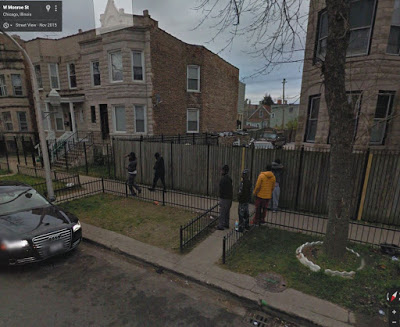
What is particularly valuable about Moskos’ perspective is that he knows the beats that cops work. That doesn’t excuse bad policing. It does mean he knows more about the context of police work than the ACLU or Black Lives Matter. Consider, for instance, his defense of enforcing the law against Chicago youth in a rough part of town:

But the ACLU is wrong. Dead wrong. Look, if you want to argue that these young men shouldn’t be stopped at all, fine. You agree with the ACLU (and don’t live on that block or hear the gunshots). And the ACLU is right in criticizing police who stop people for the sake of making a stop.

As a cop you don’t (or shouldn’t) harass everybody walking down the block. You harass these guys on this block. And by “harass” I mean, within the law and constitution, make it little less fun for them to hang out in public and sell drugs. Yes, you as a cop give these guys a hard time. Is that fair? Yes. Because there have been six shootings on this block this year. Is it racist? No. Because these guys are the problem.

If you’re a cop, you need to ask a bunch of questions 1) how do you do knowing these guy are slinging and shooting? 2) Should you stop these guys? 3) Are they committing a crime? 4) Are they a Broken Window? 5) What legal basis do you have to stop and frisk those guys?

[The answers are 1) get out of your damn car and talk to them, or at watch them disperse at your presence, 2) yes, 3) no, and 4) yes. 5) very little at first, but you can build it, ask for a consent search, or conduct a Terry Frisk.]

You pull up to them. See what they do. You can crack down on this group by enforcing Broken Windows quality-of-life crimes. You get to know who they are. You can use your discretion and ticket them for something — drinking, smoking joints, jaywalking, littering, truancy, spitting — whatever it takes. You can arrest them when they can’t provide ID (they can’t, trust me). You can harass these criminals legally and within the bounds of the constitution. This is what police are supposed to do. It’s how homicides are prevented. It’s how some kids stay out of gangs. But if cops do their job, then we, society, need to support police officers against inevitable accusations of harassment, racism, and even discourteous behavior in their confrontations with these criminals.

As a cop you will not win the war drugs, but as long as drugs are illegal you need to fight the fight against pubic drug dealing. But we’re telling cops not to do this. In Chicago cops are listening. And so are the criminals.

So maybe America isn’t so great (for reasons other than Michelle Higgins gives).