Predictable?

From our southern correspondent comes confirmation of an earlier prediction:

That –

The Assembly form a study committee on the issue of women serving in the ministry of the church (RAO 9-1; 9-3). The Assembly authorizes the Moderator to appoint the study committee. The study committee should be made up of competent men and women representing the diversity of opinions within the PCA (RAO 9-1; Robert’s Rules of Order [11th edition], §13, pp. 174-175, §50, pp.495- 496, §50, pp. 497-498 §56, p. 579]).

The committee should give particular attention to the issues of:

The biblical basis, theology, history, nature, and authority of ordination;

The biblical nature and function of the office of deacon;

Clarification on the ordination or commissioning of deacons/deaconesses;

Should the findings of the study committee warrant BCO changes, the study committee will propose such changes for the General Assembly to consider.

The committee will have a budget of $15,000 that is funded by designated donations to the AC from churches and individuals (RAO 9-2).

A Pastoral Letter to be proposed by the ad interim study committee and approved by the General Assembly be sent to all churches, encouraging them to (1) promote the practice of women in ministry, (2) appoint women to serve alongside elders and deacons in the pastoral work of the church, and (3) hire women on church staff in appropriate ministries.

Grounds: The Cooperative Ministries Committee may not make recommendations directly to the General Assembly but must do so through an appropriate committee or agency (RAO 7-3 c; 7-6). The CMC has had a subcommittee on the role of women and has sent several recommendations to the AC (including a proposal for a study committee on the issue women serving in the church) and CDM to bring to the Assembly.

The former moderator of the PCA GA, Michael Ross, likely approves of this proposal:

The third reason is close to Ross’ heart, since it relates to the theme for this General Assembly, “Generations in Community.” A champion of church revitalization, he recognizes understandable tension and unrest within the PCA – as with most denominations – between older and younger generations.

“In biblical terms 40 years is a generation, and it’s normal to hear younger people saying, ‘This isn’t 1972 anymore,’” he explained. “As moderator, it’s important to have the ear of both the older and younger groups, so everybody has a voice and can be well-heard.”

Past General Assemblies have dealt with a variety of controversial issues, and although Ross does not expect “any landmines this year … there are always overtures that come up.” As for the PCA as a whole, Ross commented, “I tend to be optimistic about where we are and where we’re headed.”

When he entered the pastorate, the PCA was “either all-white suburbanites or in little towns. Now we’re coast-to-coast, much more ethnically diverse, and there is a strong PCA presence in large urban areas.

“Our seminary and college are doing well, as is the women’s ministry. The women and men in the PCA work together very well, which is not typical of many denominations. But we also are in a time of transition. It’s time for change, and change is always scary.”

But as I asked before, isn’t racism different from egalitarianism?

To be clear, racism is arguably different from excluding women from church office. Furthermore, the consequences of racism have been far more consequential than barring women from special ecclesiastical office (though I know some feminists disagree). But the question is whether the PCA’s condemnation of racism leaves wiggle room for distinguishing racial equality from equality of the sexes. (Have we all forgotten the CRC‘s arguments for ordaining women?)

In fact, the power of egalitarianism is so strong you have to wonder if the PCA will have the wits in a decade to avoid repenting not merely for tolerating financial inequality among its members but even advocating it. After all, once you start down the road of equality, doesn’t history suggest your brake fluid runs dry?

See?

Evidence of Calvinism’s superiority to Lutheranism:

Although it is very capitalist, Switzerland boasts many of the advantages that socialist Scandinavian states are supposed to claim exclusively. Switzerland’s unemployment rate is just 4.5 percent, which is one of the lowest rates in the world. The country’s poverty rate is similarly low (XLS). Those who immigrate to Switzerland have an average employment rate of 76 percent, which is much higher than the European average of 62 percent.

Furthermore, the Swiss educational system is ranked third in the world by the OECD. Only Korea and Japan are ranked higher, which means Switzerland’s educational system is the best in the Western world. Many claim this distinction belongs to Finland, but Finnish schools are in fact ranked 10/37 in math and 4/37 in reading.

Additionally, income inequality and debt are both quite low in Switzerland. This reality persists although Switzerland’s wealthy have the lowest tax burden in the world; the richest decile in the country pays only 20.9 percent of the country’s taxes. Remarkably, even though the tax burden on the wealthy is minimal, Switzerland’s national debt as a percentage of its gross domestic product is lower than Finland’s, Sweden’s, and Denmark’s.

Switzerland is the closest to “paradise” of any European country, yet it remains one of the most capitalist economies on Earth. Its success is a powerful antidote to socialist claims about the benefits of progressive taxation, and all but destroys the assumption that Scandinavia as a bastion of socialism shows that only collectivism can produce success.

This is a test of the Emergency Paleo-Calvinist System. If this had been an actual case of boosterism, you would have been instructed to read Ecclesiastes. This concludes this test of the Emergency Paleo-Calvinist System.

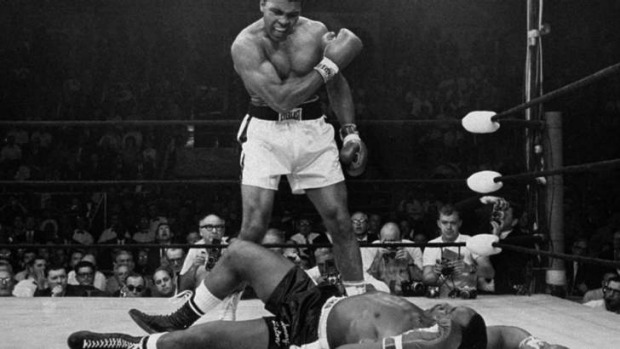
What If Muhammad Ali Ran for President?

As I listen to journalists and sports-talk radio hosts talk about the greatest fighter of all time, I keep thinking I understand the appeal of Donald Trump.

Just look at some of these juicy quotes:

Clay was 18: bounding, fearless, leading with his mouth.

“I’m not only a fighter. I’m a poet; I’m a prophet; I’m the resurrector; I’m the savior of the boxing world. If it wasn’t for me, the game would be dead,” he said.

Young Clay made boxing an art form. He was an original, a heavyweight who didn’t move around the ring — he danced. He’d thrill the crowd with his quick scissor-step shuffle. On defense, he’d slip and slide, Dundee said, and then flick that jab.

“He had a jab that was like a snake,” he said.

Float like a butterfly, sting like a bee; rumble, young man, rumble. Boxing reporters never had so much fun.

So Ali, though seemingly a good guy on numerous fronts, was a tad egotistical. Did that cost him with the media?

And then he could be pretty divisive:

After the Liston fight, Ali revealed he was a member of the black separatist movement Nation of Islam. He wanted to be called Muhammad Ali, a name he said was given to him by the group’s leader, Elijah Muhammad.

“That’s my original name; that’s a black man name,” Ali said. “Cassius Clay was my slave name. I’m no longer a slave.”

Muhammad, the Nation of Islam leader, preached that integration and intermarriage were wrong and that white people were devils. It was an idea Ali defended in a 1971 TV interview.

“I’m gonna look at two or three white people who’re trying to do right and don’t see the other million trying to kill me? I’m not that big of a fool, and I’m not going to deny it,” he said. “I believe everything he [Muhammad] teach, and if the white people of a country are not the devil, then they should prove they’re not the devil.”

Ali became a polarizing figure in America.

Again, did that cost Ali his reputation?

So I wander as I wonder.

BenOp There, Done That

Alan Jacobs explains why Rod Dreher’s Benedict Option is unobjectionable:

The Benedict Option, as I understand it, is based on three premises.

1. The dominant media of our technological society are powerful forces for socializing people into modes of thought and action that are often inconsistent with, if not absolutely hostile to, Christian faith and practice.

2. In America today, churches and other Christian institutions (schools at all levels, parachurch organizations with various missions) are comparatively very weak at socializing people, if for no other reason than that they have access to comparatively little mindspace.

3. Healthy Christian communities are made up of people who have been thoroughly grounded in, thoroughly socialized into, the the historic practices and beliefs of the Christian church.

From these three premises proponents of the Benedict Option draw a conclusion: If we are to form strong Christians, people with robust commitment to and robust understanding of the Christian life, then we need to shift the balance of ideological power towards Christian formation, and that means investing more of our time and attention than we have been spending on strengthening our Christian institutions.

Jacobs doesn’t understand why anyone would dissent. I largely agree, though I have to admit I’m not willing to give up on HBO or Phil Hendrie just yet. At the same time, I understand that certain — ahem — television shows and Phil’s humor may not be appropriate for children.

The dissent is not with the specifics of Rod’s BenOp. The dissent is with Dreher’s (and Jacob’s) sense of discovery. Some Christians for a long time have thought about American society, the necessity of alternative institutions, and the problem of passing on the faith in ways that Dreher seems only now (after Obergefell) to have recognized. The dissent also includes some frustration over people like Rod ignoring those earlier forms of opting out of the cultural mainstream. For a long time, the mainline Protestant churches, which is where I believe Rod started his Christian journey, thought the fears of fundamentalists about the wider society were delusional, based on conspiratorial thinking or worse. Only once the good taste of mainline church life needed to reckon with homosexual clergy and marriage did conservatives in mainline churches begin to entertain the sort of thoughts that fundamentalists (and some ethnic Protestants) had sixty years (or more) earlier. Even at Jacobs’ former institution (Wheaton College) and probably at his current one (Baylor), fundamentalism is/was something to be avoided. Why? It was separatist, sometimes even — trigger warning — double separatist. But now, not separating is a bad thing? Hello. The train left the station.

Will naming such cultural segregation after a saint and linking it to a moral philosopher (Alasdair MacIntyre) make fundamentalism look more attractive? Probably. But I’d like Dreher to acknowledge those saints who came in between Monte Cassino and After Virtue. They were ahead of this time even if coming after Benedict.

A Gospel for the King Penguin

This is how providence works. The same morning that I finish an article by Jonathan Franzen on his trip to Antarctica (and birding), I finish an interview that Ken Myers did with Norman Wirzba. The latter is trying to help Christians think wholistically about creation and has written a book about (in part) about the language we use. If we call the world out there “creation” instead of “nature,” will we think about it differently, more in relation to the creator? And then, what happens if we remember that Jesus is not merely savior but also creator? Doesn’t that invite thinking of Jesus as savior of creation? At one point, Wirzba even spoke of a gospel for non-human creatures.

That’s when the jaws clenched and the pace (of the constitutional) quickened. I understand the appeal of thinking about creation in broader terms so that Christians might care about the environment. Heck, I’ve read and still admire Wendell Berry and believe that I should try to live in a way that shows some respect for the created order. But that prevents me from venerating or sacralizing it, the classic way that pietists try to make something more important or permanent than it really is. If we can turn a cause into something holy or sacred or redemptive, then we must support it. If it is great instead of merely good, then not to support it is wrong, wicked, undesirable.

Here’s where Franzen came in as the conversation partner Myers and Wirzba need to have. The birds he adores, king penguins, survive by eating krill:

Krill are pinkie-size, pinkie-colored crustaceans. Estimating the total amount of them in the Antarctic is difficult, but a frequently cited figure, five hundred million metric tons, could make the species the world’s largest repository of animal biomass. Unfortunately for penguins, many countries consider krill good eating, both for humans (the taste is said to be acquirable) and especially for farm fish and livestock. Currently, the total reported annual take of krill is less than half a million tons, with Norway leading the list of harvesters. China, however, has announced its intention to increase its harvest to as much as two million tons a year, and has begun building the ships needed to do it. As the chairman of China’s National Agricultural Development Group has explained, “Krill provides very good quality protein that can be processed into food and medicine. The Antarctic is a treasure house for all human beings, and China should go there and share.”

So what would Wirzba propose as the gospel for krill? How does Jesus or his followers “save” krill?

One way that Franzen suggests is by humans being less fertile (which poses a few problems for Christians — Roman and Protestant — who believe the chief function of marriage is reproduction):

It’s true that the most effective single action that most human beings can take, not only to combat climate change but to preserve a world of biodiversity, is to not have children. It may also be true that nothing can stop the logic of human priority: if people want meat and there are krill for the taking, krill will be taken. It may even be true that penguins, in their resemblance to children, offer the most promising bridge to a better way of thinking about species endangered by the human logic: They, too, are our children. They, too, deserve our care.

And yet to imagine a world without young people is to imagine living on a Lindblad ship forever. My godmother had had a life like that, after her only child was killed. I remember the half-mad smile with which she once confided to me the dollar value of her Wedgwood china. But Fran had been nutty even before Gail died; she’d been obsessed with a biological replica of herself. Life is precarious, and you can crush it by holding on too tightly, or you can love it the way my godfather did. Walt lost his daughter, his war buddies, his wife, and my mother, but he never stopped improvising. I see him at a piano in South Florida, flashing his big smile while he banged out old show tunes and the widows at his complex danced. Even in a world of dying, new loves continue to be born.

The article makes perfect sense of the references to Franzen’s uncle here, a person who left the author enough money to splurge on a cruise to the South Pole and endure a long trip with very few young people (as the slide show on the last night of the cruise revealed).

The article also makes sense of a tragic dimension to creation that Wirzba’s inspiration neglects altogether. What if Darwin was right? What if nature is red in tooth and claw? And what if God created and sustained the world to run that way, not in a theistic evolution way, but in a way where critters survive on other critters? Even in a vegetarian world, plants die, humans cut down trees for warmth, and carnivores still eat critters. A gospel of creation does not fix that fundamental problem of survival. Granted, I’ve not read Wirzba’s books (reviews are here and here). But once again I am struck by the way people in the name of Christ blur fundamental distinctions (ecclesiastical-civil, sacred-secular, human-natural, redemption-creation) seemingly to transcend the very creatureliness they recommend.

What’s To Prevent the Nationality of the Church?

I have already wondered where the PCA’s corporate confession of the sin of racism will lead. Sean Lucas’ article on the spirituality of the church in the freshly e-minted theological journal, Reformed Faith and Practice, makes me wonder more.

One of the takeaways of Lucas’ article is the fair point that Southern Presbyterian ministers and assemblies used the spirituality of the church to avoid speaking out about Jim Crow or even to defend white supremacy. Lucas makes that point stick when he observes the way that Presbyterians ignored the spirituality of the church when it came to alcohol or evolution:

And southern Presbyterians had a difficult time knowing where the line was between spiritual and secular realms. One example of this was the church’s long-standing support and advocacy of abstinence from alcohol. From 1862 on, the southern Presbyterian General Assembly repeatedly advocated teetotalism, reprobated the sale of beverage alcohol, and urged people to “use all legitimate means for its banishment from the land.” Finally, in 1914, as the political process began that would produce the Volstead Act, the General Assembly declared, “We are in hearty favor of National Constitutional Prohibition, and will do all properly within our power to secure the adoption of an amendment to the Constitution forever prohibiting the sale, manufacture for sale, transportation for sale, importation for sale, and exportation for sale of intoxicating liquors for beverage purposes in the United States.” Notably, there was no hue and cry in the Presbyterian papers by conservatives about this action as a violation of the spiritual mission of the church.[11]

Another example of blurring the lines between the so-called spiritual and secular realms occurred in the 1920s over the teaching of evolution in the public schools. In North Carolina, the key leaders who opposed evolution both in the public schools and at the University of North Carolina were Presbyterian ministers, Albert Sidney Johnson and William P. McCorkle. In 1925, the Synod of North Carolina adopted resolutions that called for “a closer supervision to prevent teaching anything [in the public schools]…[that contradicted] Christian truths as revealed in the Word of God.” They also “demanded the removal of teachers found guilty of teaching evolution ‘as a fact.’” Again, beyond the rightness or wrongness of the action, the main point here is that the spirituality of the church doctrine did not prevent these Presbyterians from intermeddling in civil affairs outside the “spiritual” realm of the church.[12]

But does inconsistency really invalidate the principle? Political conservatives argue for U.S. independence in foreign affairs and then turn around and support a big military and wars of intervention in the Middle East. So we forget the policy and just send more troops to Syria? Or do you perhaps think about reaffirming the wisdom of the policy in the face of the inconsistency and ask for practice to reflect doctrine?

The problem is that Lucas is not merely calling for the PCA to be consistent. He wants the church to bring transformational grace to the world:

. . . the way forward for all of us will be our common commitment to what the church as church should be and should be doing. Central to that life together will be the ministry of the Word, the administration of the sacraments, and prayer. And as we use these effectual means of our salvation, what we will find is that the grace that comes to us through them will transform us. It will drive us out into our world to share the Good News of Jesus, but also to live that transforming Gospel in tangible ways, as we love justice and mercy, as we extend ourselves in risky ways into the lives of our neighbors. This Gospel will not leave us alone and cannot leave us the same. After all, King Jesus is making his world new now through you and me—his grace transforms everything.

That sounds pretty good, as if the world will be better when we stop erecting boundaries that cut “off the ‘spiritual’ from the rest of life.” But surely, Lucas recognizes the value of making distinctions between the civil and ecclesiastical realms. I mean, would he want the PCA to affirm a motion that called for the United States to make Christianity the official religion? Or would he want the PCA to endorse a roster of political candidates — Clinton over Trump? Or how about the PCA being salt and light with the State Department and opening diplomatic talks with North Korea? Does the ministry of the word, administration of baptism and the Lord’s Supper, or church discipline give the PCA leverage to apply its spiritual insights to the secular and temporal affairs of U.S. politics? Why stop with national borders? Why not Europe? Why not the world? I can’t believe Lucas favors that kind of mission creep. But from the Baylys in the Rust Belt to Tim Keller in NYC, many in the PCA want the communion to be transformational. Is race really the way to do this?

This is an odd development since the point of the spirituality of the church seems evident to many who are not even Machen groupies. Paul Helm once again contrasts favorably two-kingdom theology to the medieval one-kingdom approach among those nostalgic for Christendom:

The current focus on the Two Kingdoms has been on secular society and the fact that it is distinct from the church. That’s freedom, we rightly think, to be free from such things as the obligation to transform culture in the name of Christ. But actually it is only one side of freedom. Christian freedom has not only to do what we are commanded to do or to abstain from doing by the government of the day, but also from what some church or sect, or social group or cultural mood, may try to require of us, or do require of us, that would be sinful. Not permitted by the Word of God, but forbidden by it.

Meanwhile, Carl Trueman comes out for the Benedict Option precisely because of the inherent problems of ecclesiastical overreach:

Maybe the Benedict Option and my own proposed Calvary Option are really two ways of saying the same thing—that the church needs to be the church and Christians need first and foremost to be Christians before they engage the civic sphere. Maybe our current problem is therefore not that society is secularizing but rather the opposite—that the American church is finally being forced to desecularize. This will be painful. It will involve hard choices. It will involve increasingly obvious differences between the church and the world.

I doubt either Helm or Trueman would disapprove of efforts to acknowledge the racism that sometimes lurked among the proponents of the spirituality of the church. But does that acknowledgment necessarily involve abandoning a distinction between the kingdom of grace and the civil kingdom, between grace and the world, between redemption and external justice?

Why you can’t apologize for racism (in other ways) and continue to support the spirituality of the church is beyond me.

The New Calvinist Safe Space

I let it go and then Aquila Report picked up Tim Challies’ recommendations for how to find good books. In the context of debates about safe spaces on university campuses and some students’ desire to avoid the dark and less encouraging parts of human existence, Challies’ advice sounds familiar:

Who wrote you? Familiarize yourself with trustworthy authors. As a reader you should have your list of favorites, the short list of people you regard as especially influential and trustworthy. I believe there is a lot of value in tracking a few authors through the course of their career and reading—or at least considering—every one of their books. This is difficult with an R.C. Sproul since if you begin today you are 100 books behind, but much easier with younger authors who have a shorter list of works. Don’t know where to begin? Then ask a friend or pastor. Or ask me. I’d try people like H.B. Charles Jr., Kevin DeYoung, Gloria Furman, Russell Moore, Andy Naselli, Barnabas Piper, or Jen Wilkin—people like that. They have each written a few books but not so many that you’ll need to spend two years catching up, and they are all likely to write quite a few more. Find “your” authors and read what they write. But then also track who endorses their books, who speaks at conferences with them, and so on. Start to look for connections.

Who published you? You should familiarize yourself with Christian publishers and learn which of them are especially trustworthy. There are quite a lot of excellent publishers whose books may vary by quality and secondary theological issues but which will never fall outside the conservative Evangelical stream. Learn to trust these ones. Among them are Banner of Truth, Christian Focus, Crossway, Evangelical Press, Matthias Media, P&R, Reformation Heritage, Reformation Trust, The Good Book Company, (and, I hope, Cruciform Press since I was involved in founding it). If they publish it, you can be quite confident in it. Other publishers publish a much wider range of titles and, depending on the company, the imprint, or the department, their titles may range from very good to quite concerning or from very good to outright heretical. For these you will need to exercise a bit more caution. Here I refer to IVP, Eerdmans, Multnomah, Thomas Nelson, Zondervan, as well as the faith or Christian imprints of large mainstream publishers (Harper Collins, Penguin, and so on).

Two troubling aspects of this counsel stand out. One, it assumes that Christians are readers who only look for books that agree with their own outlook. This is a big difference between New Calvinists and Neo-Calvinists. The latter read widely, try to learn from the best scholars in a variety of fields, and have confidence that challenging reading material will not destroy a reader’s faith. In other words, Neo-Calvinists understand the merits of the Pulitzer Prize. New Calvinists cultivate a safe space shelf of books.

The other problem is this: Challies’ advice explains how the Gospel Coalition and celebrity pastors happen, or Jen Hatmaker for that matter. Readers who want trustworthy authors and publishers, and learn to associate certain names with edifying material, are not going to be critical or discerning of the books on the safe-space shelf. Instead of iron sharpening iron it’s pillow softening pillow. And it does become an echo chamber that is so far removed from the mainstream that I’m surprised Tim Keller is part of the enterprise. He seems to aspire to Big Apple relevance but has a following in a pietistic ghetto, or TKNY’s urbanism should scare off those who seek reassuring authors and publishers.

I give New Calvinists credit for not portraying themselves as the smartest Christians in the room, though their attachment to Jonathan Edwards shows a bit of intellectual ambition. But how in the world are Christians going to operate in a world where the most respected newspapers, magazines, and publishers are places where believers will not tread for fear of being challenged? And people think the Left is responsible for the polarization of our society. Challies provides just one more way for Christians to isolate themselves.

Only In America

From Julia Ward Howe, back to Jesus, and then forward to the Eucharist:

In the first moments of consciousness, Julia Ward Howe’s creativity penned what we now call “The Battle Hymn of the Republic.” Published in The Atlantic Monthly and sung to the tune of John Brown’s body, the song went viral, as we would say today, changing the war’s narrative from secession rights into a crusade for freedom.

Mine eyes have seen the glory of the coming of the Lord;
He is trampling out the vintage where the grapes of wrath are stored;
He hath loosed the fateful lightning of His terrible swift sword:
His truth is marching on.

I have seen Him in the watch-fires of a hundred circling camps,
They have builded Him an altar in the evening dews and damps;
I can read His righteous sentence by the dim and flaring lamps:
His day is marching on.

I have read a fiery gospel writ in burnished rows of steel:
“As ye deal with my contemners, so with you my grace shall deal”;
Let the Hero, born of woman, crush the serpent with his heel,
Since God is marching on.

In the beauty of the lilies Christ was born across the sea,
With a glory in His bosom that transfigures you and me.
As He died to make men holy, let us die to make men free,
While God is marching on.

Howe claimed that the song came to her on the border of consciousness, linking the Christ of long ago to the future of the war and the freedom of the slaves.

No one who preaches the Gospel can extol war. It is ever a curse and a sorrowful affliction. Yet consider the strength that Union soldiers took from this song, the consolation that Union families found in it. On June 8, 1968, as the train bearing the body of Senator Robert Kennedy rolled through Baltimore on its way to the capitol, the crowd along the tracks broke into the hymn’s refrain. I remember the song on the night of Sept. 11, in New York City. It wasn’t sung against someone; it was sung for those who had suffered a terrible injustice.

As America observes Memorial Day Weekend, the church celebrates Corpus Christi, the Solemnity of the Most Holy Body and Blood of Christ. The feast exists to foster devotion to the presence of Christ in the Eucharist. Paradoxically, pondering the humanity of our Savior is one way to see the extraordinary divine gift, which is the Eucharist.

The church professes that Christ was always “true God and true man” but that declaration doesn’t address the nature of his consciousness, his creativity. We have no interior access to the mind of Jesus, no way to watch how his divine and human natures interacted with one another. We do know that Christ possessed faith, which suggests that his incarnation represented some emptying of his divine consciousness. So our Lord would have come to that supper, the night before he died, a true man, one who had even reason for fear for his future, knowing that death was nigh.

That night Jesus did something similar to Julia Ward Howe. Seeking solace and strength in the past, he immersed himself in the faith of his people, reciting the promises made to Israel. And with radical hope for the future, the Son of Man gave himself over to the God of Israel, calling him “Father.”

When the church prays in that same voice and measure, expressing the very same surrender to the Father, we believe that Christ is truly present among us, in the mystery of his Body and his Blood, a sacramental splice between the ancient past and the, yet distant, future. By the power of the Holy Spirit, the church stands with the Son, giving herself completely into the hands of the Father.

Americanism lives. Sloppiness beats scholasticism again.

Did Memorial Day Give Us the Confederate Flag?

What’s the difference between Memorial Day and Veterans Day? The straight answer is that the former commemorates soldiers who died in battle, the latter honors all soldiers (even Bowe Bergdahl?). The funny answer is we get Memorial Day off as part of a three-day weekend to kick-off summer. On Veterans day we work in preparation for Thanksgiving and the big holiday season (some call Advent).

The difficult answer is that Memorial Day started to remember soldiers who died in the Civil War, Veterans Day for troops in The Great (Pretty Good?) War. Now, just like with three-day weekends for Presidents, Labor, and Columbus, we lump all soldiers into holidays that originally referred to specific wars.

You have to wonder if this is the best way to remember veterans or deceased soldiers when you get one day for all of those soldiers. David Rieff has a new book out arguing that remembering the past can actually be harmful:

What I’m saying is, there are examples—not a few, but quite a number of examples—where remembering, far from leading to truth, justice, and reconciliation, has led to more war. Three obvious examples of that are the Balkans in the 1990s, where I was a correspondent; Northern Ireland, for 30 years and, some people would say, for 800 years; and the Middle East. And in all three of those cases it seems to me that invoking history, invoking the wounds of the past, the crimes of the past, the conflict of the past, has led to more bloodshed.

In the case of the United States, our memories of the past don’t necessarily lead to bloodshed, but they do make us uncomfortable. Memories of slavery and segregation put whites and blacks in awkward relations that leave persons with no experience of owning slaves or Jim Crow feeling the legacy of racism should all inform interactions between whites and black, from chance encounters on the subway to public school hiring practices.

But how much is our own government to blame for the way some southerners keep the memory of the Confederacy alive? Memorial Day originally was all about remembering the Civil War, with blacks, Yankees, and Southerners all vying to honor their side:

COLUMBUS, Ga. — Right on either side of Alabama, there are two places with the same name.

Like the one over in Mississippi, this Columbus was founded in the 1820s and sits just a few minutes from countryside in almost any way you drive.

Residents say it was here, in the years after the Civil War, that Memorial Day was born.

They say that in the other Columbus, too.

It does not take much for the historically curious in either town — like Richard Gardiner, a professor of teacher education at Columbus State University here — to explain why theirs is the true originator of a revered American holiday and why the other is well-meaning but simply misguided. . . .

Waterloo, N.Y., was designated the official birthplace of Memorial Day by presidential proclamation in 1966, and indeed, beginning in May 1866, Waterloo held an annual townwide commemoration.

But women in Boalsburg, Pa., which has a claim as the holiday’s birthplace, began decorating graves each year as early as October 1864. In and around Carbondale, Ill., according to the Jackson County Historical Society, there are two markers making such an assertion in two different cemeteries. James H. Ryan, a retired Army colonel, has descended into the Logan archives and come out with a strong case for the town where he lives, Petersburg, Va.

This — readers, please take note — is just a partial and by no means definitive list.

But the claims of the two Columbuses, eyeing each other across Alabama, are among the more nuanced and possibly the most intertwined.

Maybe the solution is Rieff’s distinction between memory and history:

History is really about the past. There’s the great English novelist L.P. Hartley, who wrote a book called The Go-Between. And the first line of that book is “The past is another country. They do things differently there.” History is about the difference between the past and the present. Memory is about using the past for the purposes of the present, or for some group in the present. History is critical history … Memory serves the present. History is the material out of which this collective memory is made. But collective memory, commemoration, is not history. If it is history, it’s so simplified and reduced to be, as I say, to be closer to myth than to history in any usable sense.

That distinction may explain why this Old Life historian gets the last Monday of May 2016 off from research to do yard work.

Make Christianity Pretty Good Again

That is more or less the idea that Donald Trump (on America) inspired Chris Gerhz to ponder. Here is an indication of when Trump supporters thought/think the nation was greatest (compared to other voters):

In general, Republican respondents favored the Eisenhower and Reagan eras. Democrats looked to the much more recent past: the 1990s, or even later. 2016 was the second most popular choice among Democrats.

Even among Trump supporters, the year 2015 was one of the 10 most popular choices. But there was no discernible pattern: 1955, 1960, 1970, and 1985 were all mildly popular, and the single most common response (8%) was the year 2000.

And that was true in general for Americans, regardless of party or other variables. Sanger-Katz observed that “The year’s popularity may partly reflect people’s fondness for round numbers. But many voters explained their choice by referring to a greater sense of security. The Sept. 11 attacks occurred the following year.”

The vast majority of votes were cast for years since the end of WWII, and almost no one opted for a year before 1900. (1776 did get some support.)

So I’ll ask Gerhz’s question: when was the church at its best? I imagine Protestants will not select dates between 350 and 1515. I’ll also wager that Roman Catholics (who read here) will not choose dates between 1965 and 2015. But in light of recent discussions about Mary, will Roman Catholics and Eastern Orthodox pick a date when the virgin lived on earth. In the realm of sectarian Protestantism, I suspect that Orthodox Presbyterians will not choose from the 1936 to 2016 era but prefer instead the time of the Puritans, Westminster Assembly, John Knox, or John Calvin’s Geneva.

My own preference is the antebellum period (after 1837) when Old School Presbyterians was at its height. The church was pretty sound, liturgy was sensible, theologians knew to be on the lookout for compromise, and Presbyterians were not tempted by the status (and loss of independence) that comes with ecclesiastical establishment.