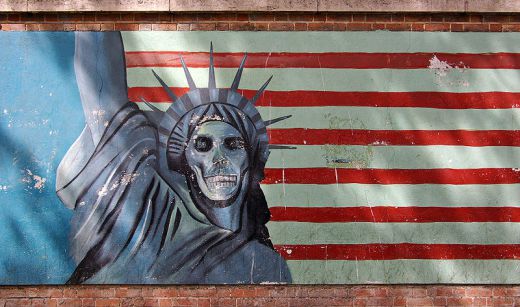
Christendom or America

Mark Noll made me aware of Hugh McLeod’s definition of Christendom:

a society where there are close ties between leaders of the church and secular elites

the laws purport to be based on Christian principles

apart from some clearly defined outsider communities, everyone is assumed to be a Christian

Christianity provides a common language, shared alike by the devout and the religiously lukewarm

A 2ker has to wonder where any reader of the New Testament supposes this is the blueprint for society. The Roman Empire was pagan. The apostles knew that and sought to make the gospel known to those whom God foreknew as his people. They also expected seemingly a quick return by their ascended Lord.

If you want that kind of society from the pages of Scripture, you go to the Old Testament. Say hello to theonomy. But Christ and the apostles failed to measure up to Christendom on all these grounds:

They had bad relations with pagan elites. That’s why they were executed — hello.

They had no instruction about laws being based on the gospel (or even “Christian principles”).

Shouldn’t have to be said, but they did not — get this — assume everyone was a Christian. Nero? Hello.

They had a firm sense of the antithesis. The difference between believers and the world pervades the New Testament.

One could reasonably conclude that Christendom is not Christian.

That makes secular America Christian. Christians have bad relations with secular elites. 2kers at least don’t expect laws to be based on Christian principles (whatever that is). No Christian (not sure about some progressive Roman Catholics) assumes every American is Christian (mainline Protestants are equally progressive but they draw the Christian line to keep Trump voters out of the kingdom). And most serious Christians in the United States go through life recognizing a gap between Christian and American cultural norms — shops are open on Sunday.

In other words, 2kers live more in line with the teaching and experience of Christ and the apostles. Christendom-inspired critics of 2k use as their norm Christian developments after Constantine, not those after Christ. Indeed, the novos ordo seclorum of 1789 was a return to the kind of society Christ and the apostles lived and breathed in. They did not know Constantinianism or Christendom which America rejected.

That also means critics of 2k are anti-American. For shame!!!

But there’s hope for Christendom. Even as Norway secularizes it still has a national church:

On Jan. 1, the Scandinavian country cut some ties with its Evangelical-Lutheran Church of Norway, rewording the national constitution to change the denomination from “the state’s public religion” to “Norway’s national church.”

The change means the nation of just over 5 million people – about 82 percent of them Evangelical-Lutherans – will still fund the church but will no longer appoint its clergy, who will still be considered civil servants. . . .

Secularism has been on the rise in Western Europe since the 1960s, with church attendance declining and strict laws on public displays of religion in nations such as France. But the past decade has seen the rise of anti-secular groups and politicians in England, Germany and France.

Meanwhile, some Norwegians feel the divorce is not sharp enough. Kristin Mile, the secretary-general of the Norwegian Humanist Association, told The Local No, an English-language Norwegian news site, that the change only muddies the relationship between church and state.

“As long as the constitution says that the Church of Norway is Norway’s national church, and that it should be supported by the state, we still have a state church,” she said.

Is that what piners for Christendom want?

2 Paradigms and a 2K Wrinkle

Maura Jane Farrelly thinks the difference between the way Roman Catholics and Protestants know God also explains support for political freedom:

What is curious about this unwillingness of non-specialists in American Catholic history to entertain the possibility that nineteenth-century anti-Catholicism might have been rooted in something real is that historians who focus on the American Catholic experience have acknowledged for many years now that there was (and to some extent still is) a fundamental tension between “American” and “Catholic” values. Granted, polemicists like George Weigel and Michael Novak would have us believe that there is a seamless philosophical and even theological line running from “Thomas Aquinas to [the Italian Jesuit] Robert Bellarmine to the Anglican divine, Richard Hooker; then from Hooker to John Locke to Thomas Jefferson.” In an essay kicking off the American Catholic bishops’ campaign against the Affordable Care Act in 2012, Weigel insisted that the United States owes more to Catholics for its tradition of religious liberty “than the Sage of Monticello likely ever knew.”

But among those writers on Catholicism who have been motivated by a desire to engage with a faithful rendering of the past (rather than a desire to use history to dismantle the signature legislative achievement of a Democratic president), the consensus is that American Catholics have been animated, in historian Jay Dolan’s words, by “two very diverse traditions,” one exemplified by “Thomas Aquinas and Ignatius of Loyola,” and the other exemplified by “Jefferson and Lincoln.”

Dolan has been joined by John McGreevy, Jim O’Toole, Mark Massa, and others in acknowledging that—to quote Massa —”in the history of Western Christianity, there have been two distinctive (and to some extent, opposing) conceptual languages that have shaped how Christians understand God and themselves.” The first language—which shapes the world of people who have been raised as Catholics, American or otherwise—”utilizes things we know to understand things we don’t know, including and especially God.” The Church, in this language, becomes an incarnation of Jesus—its community and the doctrines and hierarchies that govern that community and can be known and experienced by the community’s members become a tangible (dare we even say “fleshy”?) way for Catholics to comprehend God and the salvation that God promises. The mindset that emerges from a language such as this, according to Mark Massa, is one that exhibits a “fundamental trust and confidence in the goodness of … human institutions.”

The second language, utilized by Protestant theologians from Martin Luther and Jean Calvin to Reinhold Niebuhr and Paul Tillich, emphasizes the “fact of human estrangement and distance from God.” In this language, it is the Word—the message of judgment and grace, embodied in Christ and found not in the institution of the Church, but in the sanctified lines of Scripture—that convicts the soul, convinces it of its sinfulness, and “prepares us for an internal conversion that makes us true children of God.” The mindset that emerges from language such as this is one that tends to be suspicious of institutions and sees them as distractions that stand between the individual and the Word. Doctrines and hierarchies are “potentially an idolatrous source of overweening pride,” Massa writes; the danger in them is that they are corruptible examples of human beings’ mistaken belief that they can save themselves.

(Parenthetically, if a difference does exist between American and Roman Catholic ideals, then Pope Francis’ encyclical may be another indication of such.)

Farrelly goes on to use this difference — between respect for institutions and hierarchy and promoting civil liberties — to conclude that the U.S. bishops Fortnight for Freedom is more American than Roman Catholic:

It is probably still true that the politicians and religious leaders who railed against Catholicism in the first half of the nineteenth century were motivated by a certain degree of status anxiety—some, perhaps, such as Lyman Beecher, more than others. But it is also true that these leaders were motivated by a real sense that the Catholic understanding of freedom was different from theirs, and they were right to see Catholics’ support of the institution of slavery as the embodiment of this difference. Freedom, for Catholics, was corporate; it was born of the “reciprocal duties” that one priest from colonial Maryland insisted all people had to one another. Freedom, for Catholics, was not “personal,” the way it was for Protestants like Theodore Parker.

It is no small irony, therefore, that modern-day Catholics like Bishop William Lori of Baltimore have been appealing to personal freedom in their attempt to protect the collective freedom of the Catholic Church from the mandates of a law that supporters say defines healthcare as a “requirement of a free life that the community has an obligation to provide.” In 2012, on the eve of the Church’s first “Fortnight for Freedom”—a now annual event that highlights “government coercions against conscience” such as the birth control provision in the Affordable Care Act—Lori made his reasons for opposing the healthcare overhaul clear: “If we fail to defend the rights of individuals,” he warned, “the freedom of institutions will be at risk.”

The problem with this analysis is — see what I’m doing here — two-fold.

Conceptually, a religious conviction need not — and here I duck because of the A2K blow back — require a political practice or ideal. At least for confessional Protestants who distinguish between the civil and spiritual realms, one can, for instance, advocate aristocracy (Presbyterianism) in the church while still supporting monarchy in the kingdom (most Scottish Presbyterians did this). And if Roman Catholics were 2k, you could conceivably support hierarchy and submission in the church (say hello to papal monarchy) and republicanism in society. Think Richard John Neuhaus.

Practically, Farrelly’s distinction also fails to make sense of American Protestants and the civil religion they have cultivated. If God is only known in Scripture, then why can his ways be discerned either in the “redeemer nation,” the United States, or in the God-and-country party, the GOP? If only Protestants were as wary of nation-states and political parties as Farrelly suggests they are.

The difference between Roman Catholics and Protestants is this. The former are conflicted about the United States. The options appear to be either a sloppy wet kiss of America and its ways, or an ultramontanist critique of the United States as a land of self-centered, imperialistic ambition (see Laudato Si). Protestants are also conflicted but not in the same way. Evangelical and liberal Protestants think of America as a Christian nation — either it is a beacon of truth and liberty and justice or it should be condemned for failing to be such. Confessional Protestants who reside in America think about the nation not redemptively but politically and so appear to be insufficiently patriotic.