The Latest Nicotine Theological Journal

The October 2023 issue just went out to “subscribers.” The issue will be posted at this website in three months — but the way the editors keep schedules, don’t hold your breath.

For now, here’s a taste of the really late latest:

Celebrity Pastors Think, We Don’t Have To

Mark Noll’s The Scandal of the Evangelical Mind came out in 1994 about midway in the era of peak evangelical intellectualism. This was a period, 1980 to 2010, when evangelicals embraced the scholarly task with a zeal not before evident among born-again Protestants. The former date – 1980 – marked the founding of the Institute for the Study of American Evangelicals (ISAE) at Wheaton College. Launched by Mark Noll and Nathan Hatch, with inspiration from George Marsden, at the Harvard of the Bible belt, the ISAE sponsored important scholarship from historians who studied American Protestantism. The center of energy at Wheaton became a path for evangelical colleges (most notably Calvin College – now University) to receive grants from foundations in support a variety of research projects from scholars across the disciplines. The year 2010 is notable for the cover story in The Atlantic, “The Opening of the Evangelical Mind,” by the Jewish-American sociologist, Alan Wolfe, that highlighted the strides evangelicals had made in the corridors of American higher education.

Coming mid-way in this golden age of evangelical scholarly output, Noll’s Scandal warned about not going back to old ways of thinking. The old evangelical habits – perhaps characterized as hyper-spiritualized or biblicistic – led to fundamentalist fears of theological compromise, revivalist fixation on soul-winning, and premillennialist obsession with Christ’s immanent return. Each of these intellectual tics and spiritual instincts undermined the mental discipline required for genuine scholarship. At the same time that Noll was warning about the past, he was also cheering on contemporary evangelical scholars and hoping college and seminary administrators would nurture even more scholarship. It did not hurt that this was a period when foundations like Pew and Lilly were bankrolling evangelical institutions. Pew was the most significant and reflected an effort to move beyond theological education into the arts and sciences. The Lilly Endowment’s support, typically reserved for mainline Protestants, was a recognition that evangelical scholars were catching up to scholars within the network of established Protestant institutions.

Since 2010 the evangelical mind has been buffering (like when your web browser has too many cookies). The closing of the ISAE in 2014 was one indication that either evangelicals did not have scholars to carry on what Noll and Hatch had started or that leaders of evangelical colleges no longer thought scholarship was sufficiently important for Christian higher education. Christianity Today’s decision to cease publishing Books & Culture, was another indication of evangelical mental fatigue. The magazine had aspired to be evangelicalism’s New York Review of Books. Even so, Books & Culture had always depended on subsidies from its parent company or from foundations. By 2016 the heads of Christianity Today gave up on the dream of a heady evangelical publication that monitored books and ideas.

After all of this thinking, did evangelical scholarship prevail over the scandal about which Noll warned? Do evangelicals think about the world and their faith better now than they did before the evangelical renaissance? One test is to see whether evangelicals read non-evangelicals for insights into the world. After all, evangelical scholars, if they are doing good scholarship need to keep abreast of the best scholars in their field – most of whom are not Christian. If evangelical scholars know how to use and evaluate the work of non-Christians, can ordinary Protestants in a similar way take counsel and instruction from pundits and observers who make no profession of faith?

Tim Keller may have benefitted as much as any pastor from the flowering of the evangelical mind. His ties to the seminary world (Gordon-Conwell, Westminster, Reformed) prevented his easy circulation among the historians and philosophers at colleges who were at the forefront of the evangelical mind. But Keller’s years of greatest influence coincided with those of peak evangelical mind. The atmosphere of evangelical scholarship made plausible a pastor in the wealthiest and most influential city in the world conducting a ministry that made Christianity seemingly plausible to secular elites. Evangelical minds also encouraged pastors to have a take on contemporary affairs and to do so in a distinctly Christian voice.

In 2020, the most recent Year Zero, Keller wrote a series of articles on the current things that were agitating the American people and the rest of the world (thanks in part to a global obsession with Donald Trump). The topics that absorbed Keller’s attention were Race, Racism, and Justice. The last article in the group – the big finish – was “A Biblical Critique of Secular Justice and Critical Theory.” This was precisely the sort of thinking the evangelical mind was supposed to produce. Keller spent 6,900 words – the average length of the NTJ – showing how he evaluated social justice as a Christian thinker. . . .
When Freemasonry is a False Religion and Critical Race Theory is “A Problem”

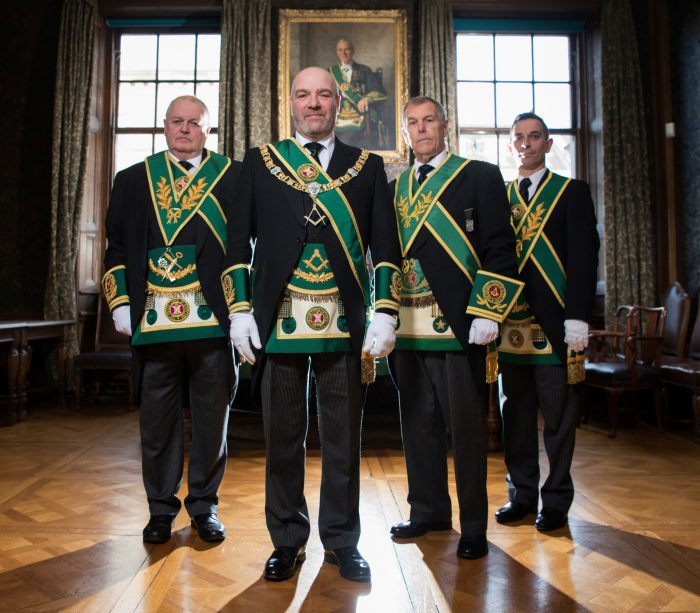
I was surprised to see the Gospel Coalition come out so forcefully against Free Masons, not that I’m a fan, just that the Allies are not known for being mean the way Orthodox Presbyterians are. But Joe Carter did write the following:

Christians involved in Freemasonry may justify their involvement by claiming that it’s a matter of conscience. While they may be correct, a naked appeal to conscience is insufficient to resolve the question. As we’ve repeatedly seen over the past decade, appealing to one’s conscience has become the primary way Christians in America justify their engagement in unbiblical behavior and alignment with anti-Christian associations. A better test would be for Christians who are Masons to ask themselves, Is my participation in Freemasonry bringing glory to God?

To answer that question in the affirmative would require, at a minimum, addressing the multitude of concerns that Christians have raised for centuries about Freemasonry.

Christians involved in Freemasonry should also ask why their rituals and practices are considered sacrosanct. Protestants have long maintained a position of Ecclesia semper reformanda est (Latin for “the church must always be reformed”)—that in order to maintain its purity, the church must always be willing to reconsider its belief and practice. Yet it’s rare to find a Christians in Masonic Lodges who forcefully advocate the jettisoning of any teachings and rituals of Freemasonry that are antithetical to the teachings of Jesus. They may claim, for example, that the “bloody oaths” they take are non-binding and shouldn’t be taken literally—and yet they will reject recommendations that such oaths be done away with.

This is a baffling inconsistency that hints at idolatry. If the pagan and occultic elements are not essential to Freemasonry, then Freemasons who follow Jesus should be advocating for their removal as a condition of their continued participation. But if those elements are essential—even if only as venerated tradition—then Christians should explain how they can, in good conscience, participate in such a system of religious practices and beliefs (1 Cor. 10:7).

When it comes to Critical Race Theory or Cultural Marxism or intersectionality, Carter is not so direct although even non-Christians argue intersectionality and CRT have religion-like qualities. Could Carter’s reluctance have to do with a prominent Gospel Allie being outspoken about systemic racism and social justice in ways Cultural Marxism Adjacent? If so, then this way of raising questions about critical theory makes sense:

The problem with intersectionality arises when it ceases to be an insight and becomes an ideology. As with many useful concepts, intersectionality can be used to promote the flourishing of the human community or can be used to create new forms of systematic sin. And over the past decade, the concept has frequently, as Sullivan noted, been used as a tool for building division not only between the “oppressors” (i.e., white males) and the oppressed (i.e., almost everyone else), but separation between groups deemed to be victims. . . .

As an analytic framework for identifying the effects of systemic sin, intersection theory may be of some use to Christians. But when it is used to justify the creation of ever more narrow and increasingly divisive identity groups, it becomes another secular worldview that Christians must reject.

While characteristics such as race and gender are not erased when a person becomes a member of God’s kingdom, our identity as Christians is rebuilt around Jesus. As the apostle Peter says, “you are a chosen race, a royal priesthood, a holy nation, a people for his own possession, that you may proclaim the excellencies of him who called you out of darkness into his marvelous light” (1 Pet. 2:9).

The lesson appears to be that political ideology is not as bad as false religion. Good to know that w-w doesn’t include ideology.

First Evangelicalism, Now W-w, but Still Hope for U.S.A.

Thabiti Anyabwile concludes his interaction with agitated Southern Baptists over social justice by making some odd concessions. If race relations started to unravel big eva in 2014, with a major goose from the 2016 election, it now looks like racism is making Neo-Calvinist w-w diagnosis look like nonsense.

How? Anyabwile faults Tom Ascol’s evidence for the influence of critical race theory (aka cultural Marxism) in evangelical circles as insufficient or anecdotal:

Sometimes people note a correlation or a suspicion and pronounce with certainty that a movement or an infiltration is there. I think that’s largely what’s happening when people claim a “movement” exists. Some look at the number of followers on Twitter or the number of returns on a search as “evidence.” But raw numbers tell us nothing about whether those Twitter followers agree with the one they follow or whether the followers were even purchased. Raw numbers of “hits” on searches tell us nothing about whether the content of the hits were for or against the subject searched.

The entire discussion is being built on an inadequate evidentiary approach. We have a low bar that actually breaks the rules of evidence in most every field, and it proves too much.

It used to be in New Calvinist and Neo-Calvinist circles that w-w was sufficient to spot a problem. You did not need to rise to the level of a movement to show that an idea or practice was sinful or destructive. Now, Anyabwile wants Ascol to show the institutional apparatus seemingly if he is going to prove that critical race theory is present in evangelicalism. Would that also mean that we need evidence of a movement to prove that sexual infidelity is making some gains in American society and the church?

Oddly, though, Anyabwile concedes that critical race theory is behind one of Truth Table’s hosts’ recent comments:

On the first point, consider Tom’s listing of Ekemini Uwan’s comments at the Sparrow Conference. He offers it as proof of secular social-justice ideologies infiltrating evangelical spaces. It’s true that Ekemini’s comments have much in common with the fields of whiteness studies and CRT. She uses “whiteness” not as a reference to skin color or even race but to a social ideology rooted in power and greed. But that’s a view at least as old as Frederick Douglass’s writing, well before CRT/IS, cultural Marxism, or today’s social-justice trends.

As long as Frederick Douglass argued that way, the ideas must be okay. So much for Abraham Kuyper.

But Anyabwile leaves room for hope. He argues that just because the founders of the SBC held slaves, we do not throw out their entire theology:

Tom leads an organization called “Founders Ministries.” It’s a reference to the theology and ministries of the founders of the SBC. Founders is dedicated to calling the convention back to the theological commitments (doctrines of grace) of those founders, among whom were men like Basil Manly Jr, who owned 40 slaves. Manley would not be the only early leader of the convention who owned slaves. In fact, the convention was formed following a split on the question of slave owning. You could say the SBC was the pro-slavery denomination. Its flagship seminary, The Southern Baptist Theological Seminary, recently issued a report documenting that institution’s history on the question of slavery and racism. The report indicates that the seminary’s founding faculty—James P. Boyce, John A. Broadus, Basil Manly Jr., and William Williams—all held slaves and, in some cases, actively defended the practice. Yet such men are cited in books and sermons as heroes of the convention and of evangelicalism.

Now, here’s the question: Are we to attribute all the beliefs and commitments of the founding leaders of the SBC and Southern Seminary to Tom as a leader of “Founders Ministries”? If a person expresses indebtedness to Boyce, Broadus, Manly, or Williams for their writing on some subject, are we to attribute to that person anything or everything we find repugnant in Boyce and company or their writings on that subject? I would answer an emphatic “No” to both questions.

By way of analogy, the same point applies to Americans who defend and memorialize the American Founding. Just because Thomas Jefferson and Ben Franklin owned slaves, we do not reject all that they did, especially the institutions and political rationales they left behind.

If Anyabwile is willing to entertain that sort of sifting of the American past, he needs to write a letter to the New York Times (and maybe send an email message to Jemar Tisby).