Make America Sane

I won’t reveal how I voted. Nor can I claim to be happy about yesterday’s outcome (I married a woman who took it hard). But a piece of me thinks that a Donald Trump presidency may make it harder for certain sorts of outlooks or activities to be taken seriously.

The first is the grief counseling offered to students at U Mass Lowell:

Dear Students,

We at the Multicultural Affairs Office hope this email reaches you and you are doing ok. We know many of you stayed up waiting to hear of the election results. These are unprecedented times. The nation as well as our community is reacting in many different ways. We are reaching out to each of you because we know that this was an intense election and we are already hearing a number of reactions, feelings and emotions. This is a critical time to make sure that you, your friends, classmates, neighbors are doing ok and seeking the appropriate support especially if they need a place to process or work through what they’re feeling.

You may hear or notice reactions both immediate and in the coming weeks, some anticipated and many that may be difficult to articulate or be shared. While it may take some time to fully take in all the recent events, please also know that the OMA office is here for you. Our UMass Lowell community is here for you. Do not hesitate at all to come in or ask for support.

Today there is a Post-election self-care session from 12-4pm in Moloney. The event will include cookies, mandalas, stress reduction techniques and mindfulness activities. Counseling and Health Services will also be available. We have sent out messages through our Social Media sites as well as encouraging students to drop in all week. Above all, take good care and know that there is strength in our community that you can lean on.

Kind regards,
Office of Multicultural Affairs Staff

Do these people cower when reading accounts of the American founding for all of the self-actualized agency that colonists displayed in seeking self-determination and limited government? (Read: are they American?)

The second is Damon Linker’s description of the cosmopolitan w-w that has dominated the Obama years (thanks to Rod Dreher):

Underlying liberal denigration of the new nationalism — the tendency of progressives to describe it as nothing but ‘racism, Islamophobia, and xenophobia’ — is the desire to delegitimise any particularistic attachment or form of solidarity, be it national, linguistic, religious, territorial, or ethnic… cosmopolitan liberals presume that all particularistic forms of solidarity must be superseded by a love of humanity in general, and indeed that these particularistic attachments will be superseded by humanitarianism before long, as part of the inevitable unfolding of human progress.

For those of us 2k Protestants who have managed to hyphenate ourselves, and found ways to recognize our multiple loyalties, the notion that all attachments to what Edmund Burke called little platoons block national progress is — well — unwelcoming. It’s also dumb. Were the Students for a Democratic Society wrong to exclude Young Americans for Freedom?

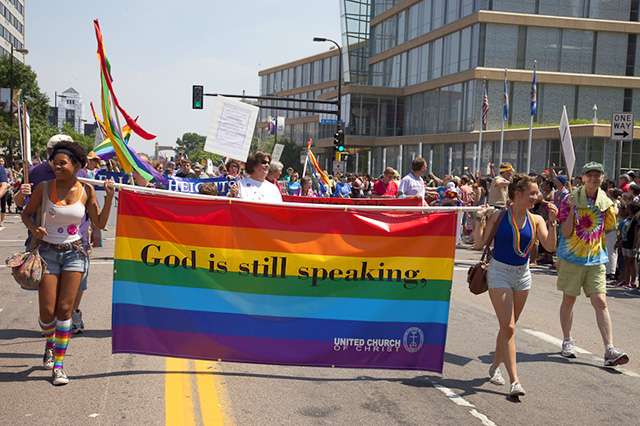
I don’t think President Trump will issue executive orders for colleges students to human-up or for Orthodox Presbyterians to sponsor OPC Pride Parades. But I do sense that he will not lend the support of the White House to the touchier and more ethereal sides of American character.

Day After Perspective

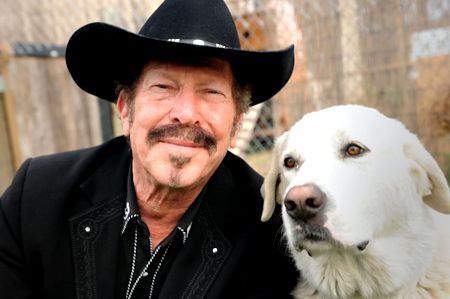
One of our many southern correspondents sent Kinky Friedman’s remarks about the election. Since the Bible tells us that all is vanity, Friedman is sounding 2k (there’s a syllogism in there somewhere):

Trump is not my hero. I prefer Mr. Anonymous. I like the guy who gives a million bucks to the children’s hospital and doesn’t insist that his name has to be up there. But that’s who Trump is, that’s who he’s been. It should be pointed out that we’re not in a position to know where greatness comes from. Not only did Jesus ride in on a jackass, but Gandhi was a yuppie lawyer living in London, with no interest in helping people.

If you look at the great ones, Mother Teresa, Winston Churchill, FDR, they were all aristocratic freaks with very little interest in others. They’re very much like Trump. I mean, particularly Churchill. He was a polo player in India and an adult butterfly collector. They liked to hang out at the country club, Rachel. They were very privileged people.

When they got into office, Churchill and FDR, they did something that Obama was never able to do: change. The agent of change, Obama, could not change himself. He remained a fixed point in a changing world. It’s just too bad; it’s who he is. He’s not the smartest guy in the room. He may be the glibbest. He may be the most facile. I believe, if he’s concerned about a legacy, I believe he can pretty well forget that.

All I’m saying is, we don’t know who the hero is until the ship sinks. Or when the plane is crashing. You don’t know who’s going to run back and save somebody, or who’s going to dress up like a woman so he can hide in a lifeboat.

I’m not moving to Canada yet, but if Michigan wants to secede and join the great North Country, I won’t fight.

Protestantism as Trump

While Pope Francis is commemorating Martin Luther in Sweden, Karl Keating is doing what apologists do — deriding Protestantism:

We commemorate December 7, the “day that will live in infamy,” because it was the prelude to a long and costly war. Again, there was heroism, but we wish that heroism had never needed to be called up.

We commemorate Bastille Day and the October Revolution not because what came from them, the French Revolution and the Russian Revolution, were good but precisely because they were evil, and we want to remember that evil so that it won’t return in another guise. . . .

I see nothing to celebrate in the Protestant Reformation. It was the greatest disaster the West suffered over the last millennium. It brought theological confusion, political turmoil, and decades of war. The religious wars of the sixteenth and seventeenth centuries killed about three percent of the world’s population, the same proportion that died in World War II. The religious wars would not have occurred had the Reformation not occurred.

But unlike the critics of Trump, Keating acknowledges that the other candidate has problems:

Much was wrong in the Catholic Church of the late fifteenth and early sixteenth centuries. Personal morality was lax (though not matching today’s laxity), and corruption was widespread among the clergy and was particularly scandalous the higher one’s gaze went up the hierarchical ladder. One should keep in mind, though, that, however bad things were in the decades before Luther took out his hammer, they had been worse in the tenth century. If there were a few “bad popes” in Luther’s era, there were worse popes, and more of them, five or six centuries earlier.

The Church of the tenth century desperately needed reform, not revolution, though it might have fallen into the latter if reform hadn’t come about. But reform did come about, and the Church not only soldiered on but prospered. The result was the High Middle Ages, the era in which Catholic principles most effectively (but still inadequately) undergirded Western society.

By the turn of the 1500s a once-again-complacent Christendom was in trouble. It again needed reform, but what it got was the Reformation.

What Keating doesn’t answer is whether his communion ever experienced reform, or if his very different interpretation of the Reformation compared to Pope Francis is another indication that calls for reform, like the poor, are always with us.

He Dehumanized First

With all the talk of human dignity these days, and all the recognition that Donald Trump doesn’t recognize it in Mexicans and Muslims, what happened to the capacity to recognize Trump himself as human? In other words, why don’t Christian historians model the charity and perspective in discussing Trump that they expect the Republican to display? John Fea (sorry to write so much about you big guy but you know, iron-sharpening-iron and all) once again sees what so many already see:

As Christian students of the past they strive to tell the stories of all human beings. The goal of such teaching and writing is not political correctness, but a fundamental belief in the dignity of individuals. Everyone’s story counts.

When Trump disparages women and people of different races and religions he dehumanizes them. He sends the message that some human beings are not as important as others. In the process he fails to recognize the Imago Dei in all of God’s human creation.

Historians know a few things about this kind of dehumanizing rhetoric. We have studied its manifestation in the past and are trained to recognize it in the present.

I have already commented on evangelical historians who seem to pride themselves on the value they add to discussion of the present.

But I don’t for the life of me understand why the historians who are so quick to condemn Trump don’t admit that the really challenging part of studying the past is to humanize characters like the Republican nominee. How a scholar does that is not obvious and that is why they pay historians the big bucks. To look beyond the surface and see the wider set of circumstances that contribute to a human being’s assets and liabilities is what makes history valuable (and for me fun).

Regarding a person in merely moral categories doesn’t measure up to the standards of good historical knowledge. It does what everyone else already does. And when done in the name of evangelical history it actually shows that born-again historians have a moral imagination but little removed from Jerry Falwell (Sr.) or James Dobson. What they did to President Clinton, evangelical historians are ready and willing to do to Donald Trump.

The Trump Will Set You Free

Free to criticize that is.

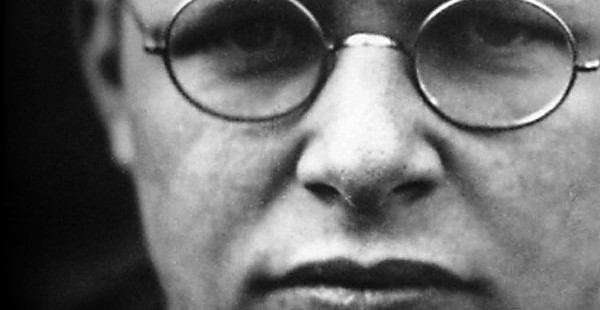
In 2014 when Charles Marsh’s highly acclaimed biography of Dietrich Bonhoeffer came out, the author avoided taking on Eric Metaxas. In an interview with John Fea, this is the worst he could do:

I’m pleased that Eric Metaxas has inspired such a spirited and intense conversation on Bonhoeffer’s life and legacy. Nevertheless, I wanted to tell the story anew by relying primarily on a treasure of recent archival and scholarly discoveries, on letters, journals, and other documents, as well as my own interviews. I spent a lovely afternoon in the home of Eberhard Bethge, shortly before his death, talking candidly about aspects of Bonhoeffer’s character that had been largely ignored. Metaxas’s book also offered me a cautionary tale on the political misuses of biographical writing; had I not been able to see what havoc his own heavy-handed political agenda wreaked on the telling of Bonhoeffer’s life I might have been inclined to tweak it in the direction of my partisan biases.

In his review of Marsh’s book for the Wall Street Journal, Christian Wiman even faults Marsh for failing to correct Eric Metaxas’ popular biography of Bonhoeffer:

Mr. Marsh does not even mention the Metaxas book or the enormous attention it brought to Bonhoeffer. He is a scholar, and Mr. Metaxas is a popular biographer, and it’s possible that Mr. Marsh found no new information in the Metaxas book that he needed for “Strange Glory.” Still, though Mr. Marsh deals quite well with the intractable contradictions of Bonhoeffer’s beliefs and actions, he misses the chance to situate the theologian and his ideas more clearly within the contemporary context. A simple preface would have helped.

That is why Marsh’s recent post about Metaxas was a surprise:

WRITTEN WITH BUT the slightest familiarity with German theology and history, Metaxas’s best-selling Dietrich Bonhoeffer: Pastor, Martyr, Prophet, Spy was published by Thomas Nelson in the spring of 2010 and launched at the Young Republicans Club of New York City. Christians in the United States needed to learn some very important lessons from Bonhoeffer’s story, and Eric Metaxas, who some followers call “the American Bonhoeffer,” had been called by God to deliver these lessons in our own hour of decision: It is not the role of the state to take care of people. America is the greatest nation in the world. People can take care of themselves; small government is the best government. Germans turned to Hitler to do the things that other people ought to be doing, and we in America are in danger of the same mistake. People who like big government don’t believe in God; they’re secularists and can be compared to the Nazis. We need Bonhoeffer’s voice today—Metaxas told an interviewer—“especially in view of the big government ethos of the Obama administration.”

With a literary background that includes a popular biography of the abolitionist William Wilberforce and the VeggieTales children’s series, Metaxas said that his purpose in writing the book was to save Bonhoeffer from the liberals, from the globalists, the humanists, and the pacifists. His Bonhoeffer was a born-again Christian who espoused traditional family values.

This is complete nonsense.

What explains the change? Metaxas has endorsed Trump and Marsh disapproves. The Trump will set you free.

But the editors at Religion & Politics and Dr. Fea should remember that just because Marsh is agreeable about Trump, it doesn’t make him right about Bonhoeffer. In fact, both Marsh and Metaxas may reflect their own “American” perspective. Ferdinand Schlingensiepen, a German biographer of Bonhoeffer, sure thought so:

Marsh and Metaxas have dragged Bonhoeffer into cultural and political disputes that belong in a U.S. context. The issues did not present themselves in the same way in Germany in Bonhoeffer’s time, and the way they are debated in Germany today differs greatly from that in the States. Metaxas has focused on the fight between right and left in the United States and has made Bonhoeffer into a likeable arch-conservative without theological insights and convictions of his own; Marsh concentrates on the conflict between the Conservatives and the gay rights’ movement. Both approaches are equally misguided and are used to make Bonhoeffer interesting and relevant to American society. Bonhoeffer does not need this and it certainly distorts the facts.

Years ago Charles Marsh described his Bonhoeffer biography project. This reviewer remembers a passage about him wanting to approach the topic in a more ‘writerly’ way than Bethge, using a talent for storytelling for which the Southern States are famous. It is true that his book surpasses that of Bethge in terms of writerly skill, but is has become ‘A Life of Bonhoeffer’ that never existed in this form. A number of mistakes found in Marsh’s book have been referred to above. There are more, but I have deliberately concentrated on those that do most to distort the picture of Bonhoeffer.

I have no doubt that Schlingensiepen would disapprove of Trump. I do doubt he would let his view of Trump inform his understanding of the past.

2K Makes You (and mmmeeeeEEEE) Virtuous

That’s because two-kingdom theology allows you to distinguish between what is and isn’t explicitly a matter of faith.

For instance, Rod Dreher goes batty over Ben Carson’s remark (in support of Trump) that “Sometimes you put your Christian values on pause to get the work done.”

Unless Rod is thinking about joining the Covenanters, his very citizenship is an instance of putting aside Christian convictions — the Constitution, hello! — in order to accomplish a measure of social order among a people with different religious (and other) convictions. Or is Dreher in favor, as an Orthodox Christian, of some kind of Constantine political order? Then please send back the advance on the book on the Benedict Option since the original Benedict Option arose out of a sense that political establishment compromised genuine faith.

A little 2k could also help Archbishop Chaput who seems to be doing his impersonation of college undergraduates who fear the campus of Princeton University is but little removed from Ferguson, Missouri. The wikileaks of emails with critical remarks about Roman Catholic political maneuvering shows a hyper-sensitivity normally associated with 19-year olds (maybe spoiled ones at that). Chaput quotes approvingly an email from a non-Roman Catholic friend:

I was deeply offended by the [Clinton team] emails, which are some of the worst bigotry by a political machine I have seen. [A] Church has an absolute right to protect itself when under attack as a faith and Church by civil political forces. That certainly applies here . . .

Over the last eight years there has been strong evidence that the current administration, with which these people share values, has been very hostile to religious organizations. Now there is clear proof that this approach is deliberate and will accelerate if these actors have any continuing, let alone louder, say in government.

These bigots are actively strategizing how to shape Catholicism not to be Catholic or consistent with Jesus’s teachings, but to be the “religion” they want. They are, at the very core, trying to turn religion to their secular view of right and wrong consistent with their politics. This is fundamentally why the Founders left England and demanded that government not have any voice in religion. Look where we are now. We have political actors trying to orchestrate a coup to destroy Catholic values, and they even analogize their takeover to a coup in the Middle East, which amplifies their bigotry and hatred of the Church. I had hoped I would never see this day—a day like so many dark days in Eastern Europe that led to the death of my [Protestant minister] great grandfather at the hands of communists who also hated and wanted to destroy religion.

Michael Sean Winters thinks that the charge of anti-Catholic bigotry is overheated and shows the calming effects of 2k:

The supposed “bigotry” towards the Catholic Church exposed in the emails of Clinton campaign chairman John Podesta, released by Wikileaks last week, is nothing of the sort, despite the best attempts of some to make it so. This whole controversy is simply an effort, a stupid effort, to stop Clinton’s ascent to the White House. I say stupid because crying “wolf” is never a smart political or cultural strategy and, besides, anyone who is genuinely concerned about bigotry could not possibly be supporting Trump. This is about Republican operatives who hold the portfolio for Catholic outreach doing their part to ingratiate themselves with Trump.

Even though Winters is Roman Catholic and writes for the National Catholic Reporter, his additional comments reveal that he understands 2k and is willing to employ it:

First, conservative Catholics have every right to be Republicans, to try and play their faith in ways that correspond to their conscience, to reach conclusions that might differ from that of more liberal Catholics. They sometimes leave aside certain concerns that I think are central to the relevance of our faith at this time in history, but as Halpin said in explaining the context of the email, there are those on the left who do the same. The bastardization came when conservative Catholics claimed theirs was the only acceptable application of faith. Second, by aiding the reduction of faith to morals, these conservative Catholics have unwittingly been agents of the very same secularization they claim to oppose. As soon as our faith is no longer about the empty tomb of Jesus Christ, it has no claims to authority and people will walk away.

The only problem for Winters is that his bishops and pope keep commenting on political matters that invite the laity to bastardize the faith by seeking papal authority to back up — like — their own opinions — man.

Even Kevin DeYoung sheds a little 2k light to the allies who are usually tongue-tied by the transformationalist rhetoric of its NYC celebrity preachers:

This does not mean I think every Christian must come to the same decision in order to be a good Christian. There are simply too many prudential matters in the mix for Christians to be adamant that you absolutely cannot vote for so and so. . . . While our church might discipline a member for holding the positions Clinton holds or for behaving the way Trump has behaved, this does not mean we have biblical grounds for disciplining a church member who, for any number of reasons and calculations, may decide that voting for either candidate (or neither) makes the most sense. And if we wouldn’t discipline someone for a presidential vote, we should stop short of saying such a vote is sinful and shameful.

Now just imagine if Pastor DeYoung’s church or those of his gospel co-allies actually disciplined ministers who supported ministries of different faith and practice. It would be like having the Gospel Coalition show precisely the opposite of what DeYoung recommends for Christians when sorting out politics — firm about theology and ministry, soft about policy. But as we now know, the opposite is usually par for the course — indifferent about denominational distinctness and aggressive about civil affairs.

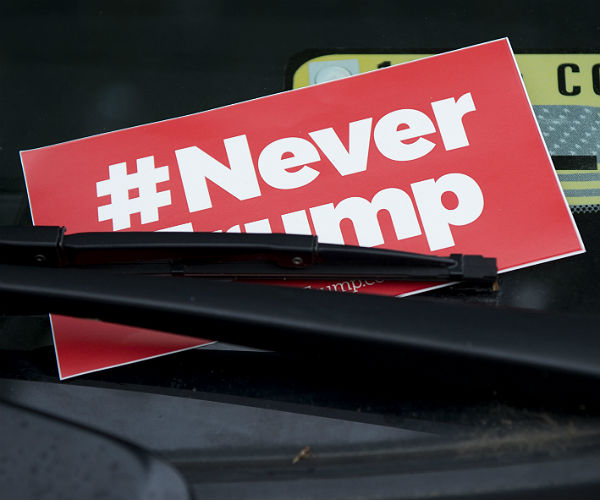
More 2k, more confessionalism, healthier churches, better citizens. Will that fit on a bumper sticker?

Michelle Obama is the Most Christian First Lady Ever

Okay, I’m borrowing a claim already made elsewhere about the First Lady’s husband.

But it is instructive when blessing Hillary Clinton as the Christian candidate in this year’s presidential contest to remember what Mrs. Obama said about Mrs. Clinton.

First, the baptism of Clinton (by a Fuller Seminary turned Yale University theologian no less):

The best case to be made for Hillary Clinton is that on balance she better represents the convictions and character that should concern Christian citizens. No candidate is perfect. There are certainly areas where Secretary Clinton’s policies and record might give Christians pause. But she takes the threat posed by climate change seriously. Her policies, such as paid family leave, would actually strengthen American families. She is committed to a just and welcoming approach to immigration that does not unduly compromise the legitimate good of security. She supports major reforms to America’s overly retributive and racially-biased criminal justice system. And, perhaps most importantly, she has demonstrated much deeper commitment to supporting the disadvantaged and the vulnerable than her opponent has, his grandiose rhetoric notwithstanding.

Second, keep in mind what Obama said about Clinton:

One of the important aspects of this race is role modeling what good families should look like. And my view is that if you can’t run your own house, you certainly can’t run the White House. Can’t do it.

Of course, Mrs. Obama and the president have not always been so discerning about certain popular entertainers or the lyrics to their songs which rival most of what Donald Trump has said.

Still, sorting out the Christianness of the candidates and their observers is getting really hard to do especially when partisanship clouds judgment.

What Would Trump Be Like as POTUS?

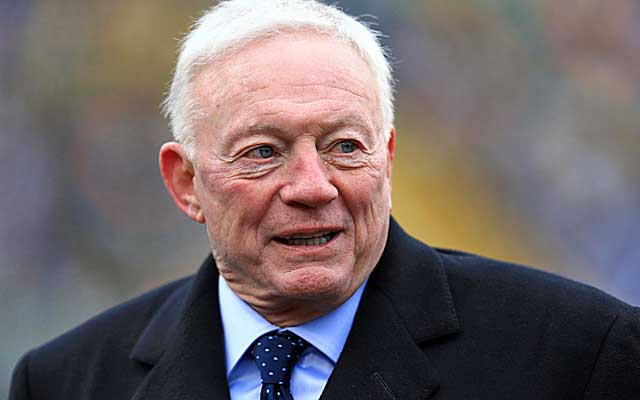
Think Jerry Jones as president of the Dallas Cowboys?

In charge but not and outspoken about it:

In the locker room after Sunday night’s 31-17 win over the Chicago Bears, Cowboys owner and general manager Jerry Jones said Dez Bryant had X-rays on his injured right knee. He said they revealed a sprain and the star receiver would have an MRI Monday.

However, during his Tuesday morning radio interview, Jones said Bryant still had not had an MRI.

“He hasn’t taken an MRI, to my knowledge,” Jones said on 105.3 The Fan’s Shan and RJ show [KRLD-FM]. “I’m assuming that he’s on go [for Sunday]. Will he get an MRI here probably later today? Maybe.

“But he certainly finished the game out. That in and of itself is a good indication. It doesn’t mean he’s going to be free of the symptoms of the injury, but again, we may look at an MRI before this day is over.”

He’s rich, he hangs out with celebrities, and he’s outspoken about it:

Jerry Jones seems to have a story about everyone he’s ever met.

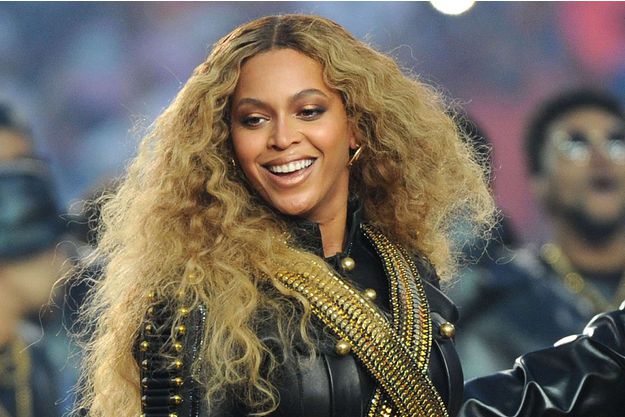
This includes Grammy Award-winning couple Jay Z and Beyonce. The two attended Sunday night’s Cowboys game at AT&T Stadium.

During his Tuesday morning radio interview, Jones said he’s known Beyonce since her former group, Destiny’s Child, performed at halftime of the Cowboys’ 2004 Thanksgiving Day game at Texas Stadium.

“As a matter of fact, they were planning to perform and it was so cold you couldn’t stand it out there on Thanksgiving Day,” Jones recalled on 105.3 The Fan’s Shan and RJ show [KRLD-FM]. “And I got them all coats from Neiman Marcus. And to this day, one of the things that we kind of smile about are those jackets that we got them so that they could go out there and do a good job and give us Thanksgiving Day halftime. Boy, I’m telling you, she’s phenomenal.

What does Jones think about her husband?

“He, as an individual, is one of the neatest people that I’ve met,” Jones said. “Make no mistake about it, he’s the real deal. He’s as easy to be around, talk to, as sharp as anybody I’ve met. I see what she sees in him.”

Don’t forget that Jerry Jones is a patriot and want a great America:

“I got to give a big pat on the back to our entire team, our coaching staff, our entire organization,” Jones told the Cowboys’ flagship station. “We strongly, strongly support the flag in every way we support — and it’s almost ridiculous to be saying it — the people who for generations and generations have given it all up so that we can get out here and show off in front of millions of people on television.

“We respect that so much. That’s the real business. The forum of the NFL and the forum on television is a very significant thing. I’m for it being used in every way we can to support the great, great contributors in our society, and that’s people that have supported America, the flag, and there’s no reason not to go all out right there. And for anybody to use parts of that visibility to do otherwise is really disappointing.”

Is there room in the Constitution for Jerry Jones?

Forgiving a Scapegoat?

Alan Noble raised the bar pretty high — as high as church membership mind you — when he explained why evangelicals should be never Trump:

In response to these profound violations of human decency, he scoffs, changes the subject, denies he even said it, or doubles down. As he has said, he does not ask God for forgiveness, because he doesn’t believe he needs it.

That insight into Trump’s perception of his own soul should tell evangelicals all they need to know about him as a leader. Any man who is so unaware of his own depravity that he cannot recognize his need for forgiveness is incapable of justly leading any country. There simply is no way around this fact for evangelicals.

Has anyone asked Hillary Clinton of her need for forgiveness? At least, Noble should give equal time to both candidates. He might also want to consider the constitutional qualifications for holding the office of POTUS. No religious tests. So does Noble understand how much he sounds like a Jerry Falwell (Sr.)?

At least Roman Catholics are less driven by piety than by policy. Here are the items to worry about in a Clinton presidency (via her appointments to SCOTUS):

Religious Liberty: In the highly-publicized case of Burwell v. Hobby Lobby, the Supreme Court ruled that closely held for-profit companies like Hobby Lobby could be exempt from laws that violate its religious beliefs, in this case Obamacare’s contraception mandate. This was an enormous win for religious liberty, but it was only decided by a slim 5-4 margin. With a liberal majority, you can expect the Court to rule against companies like Hobby Lobby or non-profits like Little Sisters of the Poor. Religious corporations and organizations around the country would be forced to chose between violating their consciences or paying penalties that would likely put them out of business. If liberals have their way, say goodbye to many religious retailers, charities, bookstores, hospitals, medical centers, and so on.

Transgender Bathrooms: Thirteen states are currently suing the Obama administration over its directive to public schools mandating that transgender students be able to use the bathrooms and locker rooms of their choice without having to prove their gender identity. Perhaps no issue more directly impacts the lives of our children than this. A liberal Supreme Court will undoubtedly uphold the Obama administration’s rule and force states to comply. The consequences will be catastrophic. Don’t be so naive as to think boys won’t abuse these policies and force their way into female bathrooms and locker rooms. Parents and teachers won’t be able to stop them. And aside from sexual misconduct and assault, this policy could mean the end of men’s and women’s competitive athletics as we know it.

Second Amendment: Without a doubt, the Second Amendment would become a primary target of a liberal Supreme Court. In recent years, two landmark decisions protecting an individual’s right to own and bear arms – Heller v. District of Columbia and McDonald v. City of Chicago – were each decided by just one vote. (Are you noticing the 5-4 trend yet?) Given the opportunity, a liberal Court wouldn’t hesitate to overturn those decisions. We got a glimpse of this in June, when the notoriously liberal Ninth Circuit Court of Appeals ruled that the Second Amendment does not permit the public to carry concealed firearms. A liberal Supreme Court would certainly uphold this ruling and continue to hack away at the rest of the Second Amendment.

Abortion: It was an activist, liberal Supreme Court in 1973 that decided Roe v. Wade and legalized abortion. A liberal Supreme Court in 2017 will only reinforce and protect that decision. It will likely strike down majority-supported, common sense abortion laws that have been passed in the states, like late term and partial birth abortion restrictions and pain-capable legislation. Just this June, the Supreme Court invalidated the Texas law requiring basic health standards for abortion facilities, a law passed to prevent another Kermit Gosnell house of horrors from occurring.

But the best perspective on Trump and Clinton may come from those without a faith-based dog in the hunt:

But Trump is a monster! Yes, but given the right circumstance, so are you. His ugliness is simply more apparent than that of other managers of the state’s sacred violence. Let’s be frank here: though his speech is scarily vulgar, the violence he promises is already occurring.

Think his call to deport illegally undocumented workers is fascist? The Obama administration, garbed as it is with the shimmering rhetoric of victimhood, has already deported over 2,500,000 human beings—23 percent more than Bush.

How about his pledge to torture suspected terrorists? Clinton-Bush-Obama beat him to it. They just don’t talk about it like he does. And let’s not limit it to foreigners; Obama didn’t bat an eye as elderly tax protester Irwin Schiff died of cancer chained to a prison bed far away from his family for breaking the sacred taboo against being too stingy in sharing his resources with the collective.

How about the time Trump promised to target terrorists’ families? Obama, the great defender of Islam, already trumped that when he murdered people like U.S. citizen Anwar al-Awlaki’s 16-year-old son Abdulrahman, who hadn’t seen his father for two years. This teen and his friends were blown apart by the Nobel prize winner while having a campfire dinner, apparently for the sinful dreams of his father.

Actually, a faith-based perspective makes sense of Never Trump. He’s our Scapegoat:

In today’s Christ-haunted West, we no longer have complete unanimity in our identification of common enemies, but we still seek it in the sub-factions we continually form. Yet Donald Trump’s faction is not going to prevail in any lasting way: his sacred dogma is built on “Winners.” His brand is a throwback to Nietzsche, who was himself a kind of throwback to a still older “golden age,” a time when pagan religion celebrated history’s winners, who were deemed right because of their might.

Trump even viscerally looks the part of the old scapegoat kings who would be ceremonially paraded before being sacrificed: he is often mocked for having small hands and goofy orange hair; he eats profane food like McDonald’s; he loves gaudy decoration in an age of “shabby chic”; he calls himself a winner in a culture where people must offer faux humility to gain status. Trump, who has repeatedly said that were he not her father he would be dating his daughter, is even accused of breaking the age-old taboo against incestual lust.

In the ancient cultic world of our past pagan order, hierarchies of kings, priests, and elites often killed or excluded the odd, weak, infirm, disabled, ethnic minority, or child based on the cultural fact that they were intrinsically inferior and thus deserving of a worse lot in life. But since the crucifixion meme began dominating the West, our modern cultures are increasingly self-critical and haunted by victims. Jesus robbed us of our blindness to the unjust order of “might makes right,” but he didn’t create an alternative ideology to deny us choice. We still have to choose, to a person, to model forgiveness and nonviolence as we seek to heal the victims most vulnerable to exploitation. But we’re stubborn in doing this work, and so we try to create cathartic peace and order through scapegoating—this time in the name of victims.

Historians Against Trump (sort of)

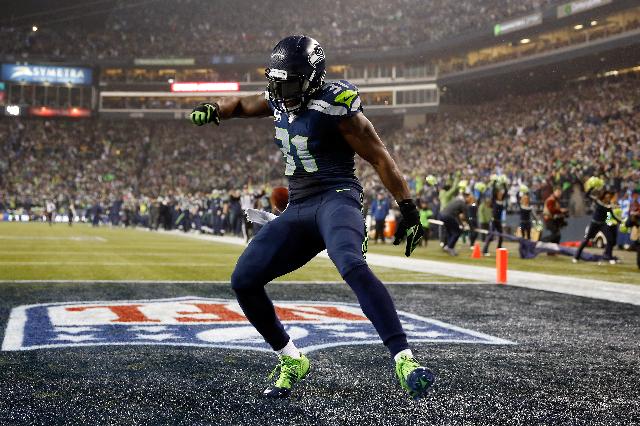
The study of the past is supposed to be good for nurturing empathy. I (mmmmeeeeEEEE) personally think history is good for preventing celebratory dances after scoring a touchdown. History teaches what it feels like to have been here before — which is how players who score touchdowns might want to act.

Today’s homily on history:

“History offers a critical perspective on the present and satisfies a natural longing most people have to situate themselves in a larger context and stream of time,” they write. And “a historical consciousness fosters perspective taking and empathy.”

In the wake of a recent spate of police shootings, historian John Fea reflected on history and empathy. The study of history isn’t just about learning facts, Fea pointed out. It’s really about fostering empathy. Fea included a powerful quote from Cold War historian John Lewis Gaddis: “Getting inside other people’s minds requires that your own mind be open to their impressions—their hopes and fears, their beliefs and dreams, their sense of right and wrong, their perception of the world and where they fit within it.”

Okay. I’m agreeable.

But then why doesn’t this ever seem to apply to Donald Trump? Shouldn’t historians, because they have seen this stuff before, not be surprised or outraged by Trump? Might they even imagine through empathy what it feels like to find Trump attractive? Not saying I do, mind you. I just like to point out how one-sided his opponents can be and how they don’t seem to learn the lessons of history. Like this?

But can evangelicals really trust Trump to deliver on his Supreme Court promises? According to the bipartisan website PolitiFact, 85 percent of the claims Trump has made on the campaign trail (or at least the statements PolitiFact checked) are either half true or false. (Compare that with Clinton, at 48 percent).

Of course many evangelicals will respond to such an assertion by claiming that at least they have a chance to change the court with Trump. Though he may be a wild card, evangelicals believe that Clinton would be much more predictable. A Clinton presidency would result in a crushing blow to the Christian right’s agenda — perhaps even a knockout punch.

So this is where many evangelicals find themselves. They want the Supreme Court so badly they are willing to put their faith and trust in someone who is nearly incapable of telling the truth.

Let’s remember that choosing the lesser of two evils is still choosing evil.

Fair enough. But when oh when will that point also be used against Hillary who seems to have a little trouble with the truth?

The people are calling. Historical understanding doesn’t seem to be answering.