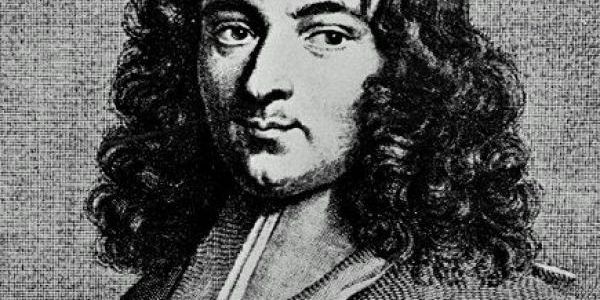
The Patron Saint of Calvinist 2k?

The Anabaptists may have seen the problems with Constantinianism, but they weren’t fans of religious tolerance the way Pierre Bayle was:

Bayle’s passion for religious liberty reflected his circumstances. Unlike better-known champions of tolerance such as Voltaire or John Locke, he had first-hand experience of persecution. He was the son of a poor Calvinist pastor in a small French town near the Spanish border. Protestants such as the Bayles were a harassed minority in France, where roughly 95 per cent of the population was Catholic.

Thousands of Bayle’s co-religionists had been massacred in the late 16th century, and even though Protestants won some freedoms at the end of the French wars of religion in 1598, their position worsened during Bayle’s lifetime. He fled to the Netherlands in 1681, when he was in his early thirties. A few years later, one of his brothers was arrested and died in a French prison. If he had converted to Catholicism, he would have been released. Bayle never got over his brother’s death.

Bayle had the misfortune to be not only a heretic in Catholic eyes, but also an apostate, for which the punishments were still worse. In his youth, he had briefly been convinced by the intellectual case for Catholicism and had converted. After about a year and a half as a Catholic, however, he decided that he had been mistaken and switched back. He followed his conscience, and this became the linchpin of his case against persecution. Why would God have given us a conscience if He did not mean us to use it?

Even if an alleged heretic, such as Bayle, was in error and was worshipping the wrong God, or worshipping Him in the wrong way, might this not be an honest mistake? He used a well-known example of mistaken identity to make his point. The wife of the peasant Martin Guerre sincerely believed an impostor to be her long-lost husband. When the real Martin Guerre returned to his village, the impostor confessed and was executed for adultery and fraud. But Guerre’s wife went unpunished, because her error had been made in good faith. Bayle reasoned that “heretics” should be treated in the same way. If they had searched diligently for the truth and acted conscientiously, they were guilty of no sin. Nobody should punish them or try to compel them to act against their honest beliefs.

Do we need religion to prop up morality? Bayle didn’t think so (and he hadn’t even listened to Angelo Cataldi):

Nor was Bayle much troubled by the notion of atheism, either, which is perhaps the most modern thing about him. Locke maintained that unbelief cannot be tolerated, because it is bound to lead to the moral collapse of any society foolish enough to allow it. Voltaire thought the same. Bayle seems to have been the first person in the Christian world to deny this conventional opinion. Morality, he reasoned, can exist perfectly well without religion.

Bayle was also unimpressed by contemporary apologists:

When an exceptionally bright comet was spotted by a German astronomer in late 1680, it caused a panic. Comets had presaged countless disasters, from the fall of Carthage to the Norman invasion of Britain, or so it was widely believed. Hundreds of alarmist pamphlets were published across Europe and in North America, announcing that the new comet was a dire warning from God to repent immediately.

Bayle set out to show that it would be against God’s nature to use celestial phenomena to send messages to mankind. With typical thoroughness, he offered eight main arguments for this conclusion, supported them with several hundred texts, ancient, medieval and modern, and made sideswipes at dozens of other superstitions along the way.

The argument of which he was most proud was original, effective and simple. It was that any such divine warnings would be bound to backfire and achieve the opposite of what God supposedly intended.

It was easy to show from scripture that God abhorred the worship of false gods. ­According to the prophets, idolatry seemed to rile Him even more than murder, theft or adultery. Yet most people on the planet are not Christians. As Bayle put it, the majority of human beings “remain idolators or have become Mohammedans”. So, if God put awe-inspiring warnings in the sky, most people would just embrace their false religions even more fervently. Why would He send harbingers of doom that could only “reanimate false and sacrilegious devotion almost everywhere on Earth” and “increase the number of pilgrims to Mecca”?

Bayle didn’t try to play God (which should be obvious to Reformed Protestants):

Why is there so much wickedness and suffering in the world? Bayle went through the standard theological answers to this question and knocked down each one, often with a vivid analogy. Is God absolved of man’s evil by His gift of free will – which makes everything man’s fault? No, Bayle answered: that would be like giving a knife to a man when you know he will use it to commit murder. The gift does not absolve the giver. Did God permit man to rebel so that He could send Jesus as a redeemer? That, Bayle replied, would make God “like a father who allows his children to break their legs so that he can show everyone his great skill in mending their broken bones”.

The real answer, he insisted, is that we cannot comprehend why God allows evil. A true Christian must simply accept that He does.

I can’t vouch for Bayle’s personal devotion, but he may be one of those many bridges between Protestantism and Enlightenment.

Reformation Day Sobriety Test

Travels and responsibilities from a former life have taken me to Wheaton College this weekend for the closing public events of the Institute for the Study of American Evangelicals. I directed the place from 1989 to 1993 and learned much from the Institute’s senior directors and many programs. In reflecting on my time at the Institute the past few weeks, I recognized that much of the literature on evangelicalism has accentuated the positive, from the upbeat corralling a disparate group of Protestants under the seemingly tidy umbrella of evangelical to telling stories of evangelical figures or institutions that have been filled at times more with wonder than woe. This positive disposition certainly goes with evangelicalism more than with Calvinism. Having Jesus in your heart is a different mindset from remembering your sinfulness and the need for a savior. But this sunny side of evangelical history may also explain the need I felt to hit back with Deconstructing Evangelicalism.

Enough about me.

During my perusal of Wheaton’s campus I came across a display by the French department on — of all things — the Reformation, Reformation Day and all that. Among the factoids on the brochure that audience members of the booth could take away was this one about Protestantism in France (would we call it “evangelical”?):

Today, the nation of France practices religious tolerance. However, the majority of French citizens consider religion to be a private affair. In spite of this, the number of Protestant churches in France has been rapidly growing since the 1800s; there are approximately 600,000 practicing Protestants in France today.

To evangelicals used to reading of up to 35 percent of Americans identifying as evangelical (roughly 120 million), that seems like a paltry figure. From the perspective of the little old OPC which continues to hover around 30,000 members, the France figures seem like a hades of a lot. But to keep it all in perspective, the figures from sixteenth-century France may be the most relevant. Considering that Reformed Protestants had captured 10 percent of the kingdom’s population, which numbered roughly 15 million Huguenots, 600k looks pretty feeble.

So to all those celebrating the Reformation today, drink to console your sorrows.

Two Kingdom Tuesday: No Confusion, No Massacre

August 24 is the anniversary of the St. Bartholomew’s Day Massacre, a time when in 1572 the hostilities between Roman Catholics and Huguenots reached historic proportions. Thousands of Protestants lost their lives in a string of anti-Reformed riots, aimed a eliminating the “heretics.” According to Philip Benedict, the Massacre marked a turning point in the French Reformation. After the incident, “the once buoyant Huguenot minorities that had taken control of cities like Lyon, Rouen, and Orleans in 1562 amounted to at most a few hundred families. Many of the smaller, more isolated Reformed churches had been extinguished” (146).

One of the casualties of the Massacre was Gaspard de Coligny, a military leader by most accounts of remarkable ability and courage. During Henry II’s reign, Coligny was a friend and close ally of the king. Once Coligny converted to Protestantism, he lost such access but did emerge as a patron and strategist for the Reformed cause. He even supported the establishment in 1557, of an ill-fated French colony in Brazil, complete with ministers supplied by the Company of Pastors in Geneva. On August 24, 1572 Coligny lost his life to an assassin’s sword. His death was the opening act in the subsequent massacre of Huguenots.

As much as the courage and conviction of Coligny and the Huguenots inspire today — and possibly provoke severe cases of head shaking at the thought of a Roman Catholic presiding over a Protestant college — the St. Bartholomew’s Day Massacre also teaches important lessons about the virtue of distinguishing the affairs of the civil polity from those of the church. Although Paul taught that “to die is gain,” he also counseled Christians to seek quiet and peaceful lives. In which case, secular regimes that are neutral to religion (as opposed to the ones that are explicitly anti-clerical) are far preferable to the confusion of kingdoms that was at least partly responsible for the good Admiral’s death.

Getting over the Puritans, Say Hello to the Huguenots

I cannot say enough good things about Philip Benedict’s Christ’s Churches Purely Reformed: A Social History of Calvinism (Yale University Press, 2002). Among the reasons for recommending the book, aside from careful scholarship and judicious conclusions, is Benedict’s attention to the variety of Reformed expressions as they took shape in diverse cultural and political contexts. This is what historians do and Benedict does it greatly.

One of the arresting parts of Benedict’s narrative is his account of the French Reformation. Obviously, the politics of France never cooperated with the aims of church reform (as if they did in England). As a result, the Huguenots failed to institutionalize a reformed church in ways that could be sustained in France, or that served as the inspiration for colonial churches in the New World where Calvinism of British descent would dominate the Reformed experience. Even so, his comments about the French Reformed church prior to St. Bartholomew’s Day Massacre are music to Reformed confessionalist’s ears:

The achievements of the Reformed by early 1562 were little short of remarkable. Within just a few years, hundreds of congregations had assembled across the kingdom. A set of national church institutions had been defined that would endure for more than a century with only minor modifications. Reformed worship had obtained legal toleration. In a few locales, it had even displaced Catholicism. . . .

. . . [T]he wars of Religion taught the churches to rely on their own resources to survive. At successive national synods, they increasingly marked their distance from the secular authorities. Synodal decrees warned against selecting magistrates to serve as elders, forbade consistories to denounce church members discovered to be guilty of heinous crimes to the secular judges, and declared all consistory proceedings secret, even those in which consistory members were insulted in manners that might be actionable before the secular courts. All this was a far cry from the sort of defense of consistorial authority that Calvin sought and obtained from the Genevan magistracy. The French Reformed churches thus became the enduring model of a network of churches that maintained purity of doctrine, quality control over local clergy, ecclesiastical discipline, and reasonable uniformity of practice with a minimum of reliance on secular authorities. (pp. 144, 148)

Not to mention that the Gallican Confession wasn’t too shabby.

If only the Huguenots were more the model for American Reformed church life than the Puritans.