And Here I Thought W-w Was Hard

Turns out, obedience is harder:

In the first place, it seems that Gahl does not consider adequately the role of conscience. Is it sufficient that the confessor enunciates a principle such that it can be assumed that the conscience has been sufficiently enlightened? Perhaps not. Cardinal Newman made an illuminating distinction between a merely notional assent and a real assent of the conscience. It is possible that the penitent does not understand or does not accept the confessor’s admonition and refuses to promise that, in the same situation, he will not act once again in the same manner. The conscience will be enlightened only in the moment in which it has given real assent. What should be done if the penitent does not give real assent to the confessor’s admonition?

Pity the potato farmer who needed to find Denzinger‘s entry on notional assent.

The Trinity is so Fourth Century

While New Calvinists decide how to receive the teachings of Eastern bishops, Roman Catholic cardinals have moved on. According to Christoph Cardinal Schonborn:

AL [Amoris Laetitia] is an act of the magisterium that makes the teaching of the Church present and relevant today. Just as we read the Council of Nicaea in the light of the Council of Constantinople, and Vatican I in the light of Vatican II, so now we must read the previous statements of the magisterium about the family in the light of the contribution made by AL.

The funny thing about the evangelical controversy over the Trinity, the updated version offered by the likes of Ware and Grudem comes for the sake of outdated views of women’s roles.

Appropriating the past is tricky. Best to hire a historian.

Aggiornamento Has Its Limits

Many bloggers and reporters are trying to make sense of Pope Francis’ remarks as reported here:

Pope Francis spoke yesterday at a pastoral congress on the family for the Diocese of Rome, and his remarks are causing consternation among faithful Catholics. In off-the-cuff remarks, the pope made the dual claim that the “great majority” of Catholic marriages are “null” – in other words, not actual marriages – and that some cohabitating couples are in a “real marriage,” receiving the grace of the Sacrament.

“I’ve seen a lot of fidelity in these cohabitations, and I am sure that this is a real marriage, they have the grace of a real marriage because of their fidelity,” he said.

Ed Peters wonders if the modern world has suddenly turned red in tooth and claw:

The collapse of human nature presupposed for such a social catastrophe and the massive futility of the Church’s sanctifying mission among her own faithful evidenced by such a debacle would be—well, it would be the matrimonial version of nuclear winter. I am at a loss to understand how anyone who knows anything about either could seriously assert that human nature is suddenly so corrupted and Christ’s sacraments are now so impotent as to have prevented “the great majority” of Christians from even marrying!

Phil Lawler questions the implications for Vatican II’s effort to engage modern society:

The Pope’s statement—if it was relayed accurately and meant seriously—would mean that our society is so thoroughly perverse that it has actually debased human nature. If that were the case, the Catholic Church could not reconcile herself to modern society; the faith would be in open conflict with the modern age. Yet in Amoris Laetitia, Pope Francis delivered a very different sort of message, suggesting that pastors should learn to work patiently, gradually, and sympathetically with people who do not share the Catholic understanding of marriage.

It is curious how Pope Francis’ openness to the less than ideal circumstances of modern romance and marriage is cheek by jowl next to an anti-modern prejudice (think industrial capitalism and modern finance).

Not holding my breath for Bryan and the Jasons’ authoritative interpretation.

How Far Will Conservatives Bend?

Ross Douthat finds the progressive fundamentalist inner-self of conservative Roman Catholics (is this what Bryan and the Jasons signed up for?):

Let’s make a partial list of the changes that most conservative Catholics have accepted — sometimes grudgingly, sometimes enthusiastically — in their church since the 1960s. A transformation in the church’s attitude toward liberal democracy and religious freedom. A transformation in the church’s attitude toward other Christian churches and non-Christian religions. A total renovation of the church’s liturgy, one with inevitable implications for sacramental life, theology, biblical interpretation, the works, that was staggering in hindsight but accepted at the time by everyone except a tiny minority. A revolution in sacred architecture, albeit one that stalled out once it became apparent that it was, you know, kind of terrible. Massive shifts in church rhetoric around issues of personal morality (sexual morality very much included) even where the formal teaching remained intact. Stark changes in the way the church talks about sin, hell and damnation, and openings (again, including among conservative Catholics) to theological perspectives once considered flatly heterodox. Clear changes, slow-moving or swift, in the Vatican’s public stance on hot-button issues like the death penalty and torture (and perhaps soon just war theory as well). The purging or diminution of a host of Catholic distinctives, from meatless Fridays to communion on the tongue to the ban on cremation to … well, like I said, it’s a partial list, so I’ll stop there.

So whatever the conservative religious psychology, however strong the conservative craving for certainty and stability, nobody looking at the changes wrought in the church over the last fifty years could possibly describe conservative Catholicism as actually committed, in any kind of rigorous or non-negotiable sense, to defending a changeless, timeless church against serious alteration. (Indeed, this is a point that traditionalist Catholics make about the mainstream Catholic right at every opportunity!)

Rather, conservative Catholicism has been on a kind of quest, ever since the crisis atmosphere of the 1960s and 1970s, to define certain essentials of the faith in a time of sweeping flux and change, while effectively conceding (to borrow Linker’s architectural image) that reformers can rearrange and remove the bricks of Catholicism so long as they don’t touch those crucial foundations. For a long time this conservative quest was lent a certain solidity and rigor and self-confidence by John Paul II and Benedict XVI. But the advent of Francis has made it clear that conservative Catholicism doesn’t have as clear a synthesis as conservatives wanted to believe, and that in some ways the conservative view of the post-Vatican II church is a theory in crisis — or the very least that it lacks a clear-enough account of itself, and of what can and cannot change in its vision of Catholicism, to navigate an era in which the pope himself does not seem to be “on side.”

The parallel here between Douthat and Carl Henry & Co. is striking. Try to preserve conservative Protestantism by identifying essentials like the National Association of Evangelicals list of doctrinal non-negotiables. The point about how to interpret history is also apt. Neo-evangelicals had to find a narrative that placed them in the mainstream of American Protestantism without offending Arminians, Calvinists, or Pentecostals. The way to do that was to read sixteenth-century Protestantism (Reformation) into the First and Second Pretty Good Awakenings. Meanwhile, like conservative Roman Catholics, Douthat has to distance himself from the SSPXers just as Henry and Billy Graham disavowed fundamentalism as mean.

That sort of spiritual and theological retrieval may have its moments, but it is hardly — as the those inclined to overstatement like to put it — “robust.”

Douthat goes on to do a pretty good impersonation of what it felt like to be an evangelical in the PCUSA who also belonged to the NAE while General Assembly after General Assembly did not perform as badly as it might:

. . . if Pope Francis was blocked from going the full Kasper, he still produced a document that if read straightforwardly seems to introduce various kinds of ambiguity into the church’s official teaching on marriage, sin and the sacraments — providing papal cover for theological liberalism, in effect, without actually endorsing the liberal position. It’s not the first time this has happened; as Joseph Shaw notes, it’s very easy to find “examples of Popes and other organs of the Church issuing documents which seemed, if not actually motivated by a rejection of traditional teaching, then are at least motivated by a desire not to be in conflict with those who reject it.” But it’s the first time it’s happened recently on a controversy of this gravity, on an issue where conservative Catholics have tried to draw a clear line and invested so much capital … and I think it’s fair to say that they (that we) don’t know exactly how to respond.

Do conservatives simply declare victory, because the worst didn’t happen, the full theological crisis didn’t come, and it’s important to maintain a basic deference to papal authority (itself a big part of the JPII-era conservative synthesis) so long as no doctrinal line is explicitly crossed? Do they acknowledge the document’s deliberate ambiguities, as my own treatment did, when doing so might give aid and comfort to liberals who are eager to make the most of any perceived shift? Do they deny that any real ambiguity exists, not out of pure deference to Francis but because given conservative premises this document should be read in the context of prior documents, not as a stand-alone, and if you read it that way there’s no issue, no rupture, everything’s fine? Do they stress the technicalities of what counts as magisterial teaching to make the document’s seeming ambiguity less important or less binding? Do they attack the document (and the pope) head-on, on the theory that conservative Catholicism’s essential problem is its vulnerability to constant end-arounds, constant winking “pastoral” moves, and that these need more forthright opposition?

Conservatives have tried all of these strategies and more. Some sincerely believe that the letter of the document is a defeat for liberals and that anxious Catholic pundits are overstating the problems with its spirit. Some think the problems with its spirit are real but also think the church will be better off if conservatives simply claim the document as their own and advance the most orthodox reading of its contents. Some think the best course is to downplay the document’s significance entirely and wait for a different pope to clarify its ambiguities. Some (mostly journalists, as opposed to priests or theologians) think it’s important to acknowledge that this pope has significantly strengthened liberal Catholicism’s hand, and to describe that reality accurately and answer his arguments head-on where they seem to cut against the essentials of the faith. Some think that this document, indeed this entire pontificate, has vindicated a traditionalist critique of post-conciliar Catholicism, and that the time has come for a complete rethinking of past concessions and compromises, past deference to Rome. Some are ambivalent, uncertain, conflicted, unsure of what comes next. Some have shifted between these various perspectives as the debate has proceeded. (And this long list excludes the many moderately-conservative Catholics who didn’t see a grave problem with the Kasper proposal to begin with, or who have simply drifted in a more liberal direction under this pontificate.)

Consequently, while conservative Roman Catholics discern the best defense of Pope Francis, the claims of papal audacity by Bryan and the Jasons look all the more dubious. If the interpret in chief nurtures uncertainty, what’s the point of abandoning Protestant diversity?

I do not have an answer, alas, to all of this uncertainty. But I do think it’s important to acknowledge its existence, rather than taking a kind of comfort, as some conservative Catholics do, in being accused of Total Inflexibility in Defense of Absolute Truth by writers like Damon Linker. For good or ill (or for good in some cases, and ill in others), that has rarely been an accurate description of the conservative position in the modern church, and it clearly isn’t accurate at the moment. Conservative Catholicism isn’t standing athwart church history yelling stop; since (at least) the 1960s it’s always occupied somewhat more unstable terrain, and under Francis it’s increasingly a movement adrift, tugged at by traditionalism and liberalism alike, and well short of the synthesis that would integrate fifty years of rapid change into a coherent picture of how the church can remain the church, what fidelity and integrity require.

You mean the instability of post-Vatican II Roman Catholicism was the church Christ founded? Note to apologists: update your defense as much as your bishops updated your communion.

Evelyn Waugh Would Have to Re-Write Brideshead

Phil Lawler wonders about the pastoral implications of Pope Francis’ pastoral advice in Amoris Laetitia. Consider the plight of “regular” Roman Catholics:

In any Catholic community there will always be some devout believers who, following the Lord’s advice, “Strive to enter by the narrow door.” They will pray often and ardently, try to attend daily Mass, practice their own private devotions, and seek out spiritual direction from priests who demand a lot of them. For these people—let’s call them “high-octane” Catholics—Gresham’s Law will not apply. They are the equivalent of the folks who demand payment in doubloons.

But most Catholics, in most times and places, are not of the high-octane variety. Most “regular” parishioners will do what the Church demands of them, but will not seek out extra rigors. They will attend Sunday Mass on a regular basis, raise their children in the faith, follow the precepts of the Church as they understand them, contribute to the parish. Faithful if not zealous, they will form the backbone of the Catholic community. Nourished by the sacraments and encouraged by their pastors, they will grow in faith; some will eventually become high-octane Catholics.

Now notice how these “regular” Catholics—who sincerely intend to meet their obligations, without taking on extra burdens—are likely to choose between two hypothetical parishes:

In Parish A, Sunday Mass lasts 90 minutes or more; the liturgy is “high” and solemn; the Gregorian chant is unfamiliar. In Parish B, Mass is out in 40 minutes; the hymns sound like (and sometimes are) snappy show tunes.

In Parish A, religious-education classes are demanding, and students who do not master the basic catechism lessons do not advance. In Parish B, teachers assume that “they’re good kids” and don’t worry about details.

In Parish A, when a young couple comes to discuss marriage, and the pastor notices that they list the same home address on their registration forms, he tells them that they must live separately. In Parish B the pastor “doesn’t notice” the matching addresses, and plans for the wedding can move forward.

In Parish A, priests often preach on controversial topics, driving home the Church’s least popular messages, reminding the parishioners of their sins. In Parish B, the homily is always a gentle reminder that we should be kind to one another, and not too rough on ourselves.

Needless to say, high-octane Catholics will flock to Parish A. Regular Catholics will gravitate toward Parish B. Human nature being what it is, most people will choose the less demanding of two options.

Now notice what happens to priests in these parishes when they meet a couple that has been re-married:

In his apostolic exhortation, Pope Francis sets up the model of a pastor who will meet with these couples, help them to review and assess their lives, to repent their past failings, to bring their lives closer to the Christian ideal, and to do everything that they can in their current circumstances to grow in holiness. Exactly how this process will unfold is unclear, because, as the Pope explains, it is impossible to anticipate all the unique circumstances of any individual case. But clearly the Pope is describing a rigorous process, rather than a quick solution.

But what sort of priest would insist on that rigor in his dealings with a remarried couple? The pastor of Parish A, probably. But that pastor would very likely tell the couple that if they wish to receive the sacraments they must live as brother and sister. And the couple, for that matter, if they were active parishioners in Parish A, would probably have reached that conclusion for themselves already. So Amoris Laetitiae would bring no change in their case.

In Parish B, on the other hand, the pastor—having long ago established the pattern of requiring only the minimum—would be far more likely to tell the couple that they should not worry about details, that they should feel free to receive the Eucharist. In all likelihood he would already have conveyed that message, and they would already be in the Communion line every Sunday. Again, the apostolic exhortation would cause no significant change.

But consider what might happen in the marginal cases, where change is most visible. What will happen to divorced/remarried couples who, after years away from the faith, are inspired by the Pope’s message to return to the fold? If they happen to meet with a priest who expects them to go through a long and difficult process, aren’t they likely to seek a second opinion, and maybe a third, until inevitably, they find a pastor who will welcome them back immediately, with no requirements and no strings attached? Hasn’t that pattern already been clearly established by the young couples who want their wedding scheduled without a demanding marriage-prep program, or want their children confirmed without a rigorous CCD requirement?

This is not exactly the church that was opposed to any trace of modernity for at least 150 years.

Now imagine the real life (fictional couple) of Rex Mottram and Julia Marchmain:

Julia manages to match Sebastian’s dissolute lifestyle through her own acts of intransigence. She eventually plans to marry Rex Mottram, a Protestant Canadian, who has managed to gain a seat in the House of Commons. It is this relationship with Rex that marks Julia’s descent into chronic sin. Julia learns that Rex may be carrying on an affair with a mistress. She thinks that if they become engaged, this can put an end to the affair. When it doesn’t, she then begins to reason that if she is going to keep Rex from being unfaithful, she will have to offer sexual gratification to her fiancé before they are married. Julia justifies this in her own mind and presents the proposition to a priest: “Surely, Father, it can’t be wrong to commit a small sin myself in order to keep him from a much worse one?” The Jesuit responds in the negative and suggests that she make her confession. It is this moment, when Julia does not receive what she wants, that she turns against the faith: “‘No, thank you,’ she said, as though refusing the offer of something in a shop. ‘I don’t think I want to today,’ and walked angrily home. From that moment she shut her mind against her religion.”

During their engagement, Rex agrees to receive instruction so that he can convert to Catholicism. However, matters are exasperated when it is revealed that Rex was previously married and divorced in Canada. Rex does not understand how this can be an impediment to a prospective marriage to Julia and he sees no difference between his divorce and the granting of an annulment. When it is obvious that nothing can be done with only a few weeks before the wedding, Julia and Rex agree to marry in a Protestant ceremony, separating themselves from Catholic society and the Marchmain family. Julia’s intransigence reaches its peak as she voices a modern refusal to recognize objective sin: “I don’t believe these priests know everything. I don’t believe in hell for things like that. I don’t know that I believe in it for anything.”

So which priest would Rex and Julia seek? Parish A or Parish B? This writer thinks Parish B’s priest is closer to Pope Francis’ instruction in his apostolic exhortation:

If they were alive today, would Julia and Charles have had to part ways? Amoris Laetitia offers alternatives: “Because of forms of conditioning and mitigating factors, it is possible that in an objective situation of sin – which may not be subjectively culpable, or fully such – a person can be living in God’s grace, can love and can also grow in the life of grace and charity, while receiving the Church’s help to this end.” Couldn’t Julia and Charles have spoken with Father MacKay in the internal forum for the sake of contributing to the “formation of a correct judgment”?

Even the idea of living as brother and sister seems to be impossible in this modern age. While Julia explains to Charles that she plans to “[j]ust go on – alone” this is not a sad revelation because she is finally able to receive God’s mercy and to return to a right relationship with Him. However Amoris Laetitia makes it seem that “going on alone” or abstaining from sexual intercourse is impossible in 2016. Pope Francis explains that “many people, knowing and accepting the possibility of living ‘as brothers and sisters’ which the Church offers them, point out that if certain expressions of intimacy are lacking, ‘it often happens that faithfulness is endangered and the good of the children suffers.’” In the age of Brideshead, one didn’t die if they abstained from sexual intimacy. Apparently, in this sex-obsessed age, it is impossible for one to live without it.

Some will say that no dogma has changed. And sure the dogma of mortal and venial sins have not changed. But if priests’ pastoral counsel, with a green light from the magisterium, is defective by not warning the flock from sin, if it tolerates sinful practices under the guise of being pastoral, something has changed.

Evelyn Waugh knew that the Church of England had changed (even when dogma hadn’t). Do Roman Catholic apologists think Waugh wouldn’t notice this?

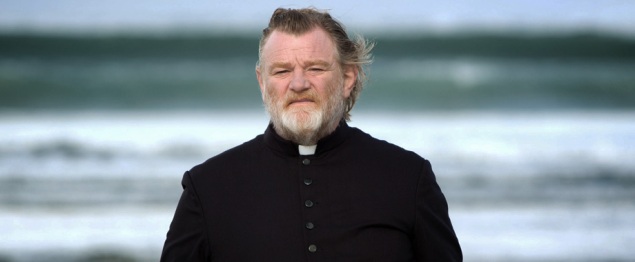
Why Worry About Change?

When you can always interpret.

George Weigel tries to get out in front of Pope Francis’ upcoming encyclical on the family. But he couldn’t beat Cardinal Kasper (and, oh, by the way doesn’t a Cardinal outrank a layman in teaching authority?):

As is his wont, Cardinal Walter Kasper was first out of the starting blocks, announcing that the apostolic exhortation (whose date of publication he got wrong) would be a first step in vindicating his proposals for a “penitential path” by which the divorced and civilly remarried could be admitted to holy communion—despite the fact that his proposal had been roundly criticized and rejected at both Synods and in various scholarly articles and books in between. The Kasper spin was then picked up by some of the usual media suspects, who called on the usual Catholic talking heads on the port side of the Barque of Peter, who took matters further by speculating that the apostolic exhortation would open up even more revolutionary paths, involving the Church’s eventual acceptance of same-sex marriage and other matters on the LGBT agenda.

But not to worry, the Council that many think unsettled the church has actually settled what popes can do:

By declining Paul VI’s suggestion about a papacy “accountable to the Lord alone,” Vatican II made clear that there are limits to what popes can do. On the bottom-line matters at issue in the two recent Synods, for example, no pope can change the settled teaching of the Church on the indissolubility of marriage, or on the grave danger of receiving holy communion unworthily, because these are matters of what the Council’s Theological Commission called “revelation itself:” to be specific, Matthew 19.6 and 1 Corinthians 11.27-29. Nor has Pope Francis indicated in any public statement that he intends any deviation from what is written by revelation into the constitution of the Church.

Michael Sean Winters is even later to the pre-publication spin and offers his own prebuttal.

But what if the bishop whose job it is to interpret Scripture and tradition interprets dogma so it doesn’t change but its meaning does? This was the option favored by Protestant and Roman Catholic modernists. If modernism could happen once, why couldn’t it happen again (as if it ever went away)?

And then we have the problem of reason and what people with minds do to texts. Sam Gregg recently invoked Benedict XVI’s Regensburg address to call not his communion but the entire West to its former high esteem for reason:

One of the basic theses presented by Benedict at Regensburg was that how we understand God’s nature has implications for whether we can judge particular human choices and actions to be unreasonable. Thus, if reason is simply not part of Islam’s conception of the Divinity’s nature, then Allah can command his followers to make unreasonable choices, and all his followers can do is submit to a Divine Will that operates beyond the categories of reason.

Most commentators on the Regensburg Address did not, however, observe that the Pope declined to proceed to engage in a detailed analysis of why and how such a conception of God may have affected Islamic theology and Islamic practice. Nor did he explore the mindset of those Muslims who invoke Allah to justify jihadist violence. Instead, Benedict immediately pivoted to discussing the place of reason in Christianity and Western culture more generally. In fact, in the speech’s very last paragraph, Benedict called upon his audience “to rediscover” the “great logos”: “this breadth of reason” which, he maintained, orthodox Christianity has always regarded as a prominent feature of God’s nature. The pope’s use of the word “rediscover” indicated that something had been lost and that much of the West and the Christian world had themselves fallen into the grip of other forms of un-reason. Irrationality can, after all, manifest itself in expressions other than mindless violence.

Gregg warns rightly that “irrationality is loose and ravaging much of the West—especially in those institutions which are supposed to be temples of reason, i.e., universities.”

But if Father Dwight is any indication, irrationality also has its moments well within the confines of Roman Catholic parishes (even beautiful ones). If you wonder why the virgin Mary is the Queen of Heaven, just take a rational look at your Bible:

We simply have to read the Scriptures with Catholic eyes and understand the Jewish context of the Scriptures to see how the Catholic beliefs about Mary are all contained in the Scriptures. The problem is, they are not stated explicitly. Instead they are locked in the Scriptures to be understood and teased out. As the church came to understand more fully who Jesus really was they then began to understand more fully the role of his Mother, and as that became clear they also began to see that these truths were already there in the Scriptures. . . . The truths about Mary are subservient to the truths about Jesus because she is always subservient to her Son and always points to her Son. It is about him. It is not about her. . . .

Luke chapter 1:26-38 and Revelation 12. Consider first the passage from Luke. This is, of course, the story of the Annunciation of Jesus birth by the Angel Gabriel to the Virgin Mary. . . . The angel Gabriel is called “the Angel of the Lord”. He is the main messenger direct from God. Therefore his words can be taken as a direct revelation from God. His message to Mary is therefore God’s message to the world. He declares solemnly that Mary’s Son will be the Son of the Most High, but he will also be the heir of David and the King of the Jews and furthermore his kingdom will have no end. In other words, he is king of heaven.

In the Jewish understanding of monarchy the Queen of heaven was not the king’s wife, but the king’s mother. Solomon’s mother Bathsheba played this role in the Old Testament. It follows therefore that if Jesus is to be the heir of David’s throne and be king, then his mother would be the Queen. Furthermore, if Jesus is also to reign over the kingdom of heaven, then his mother would be the Queen of Heaven.

At some level, Christians on both sides of the Tiber need to give up the idea that their convictions are rational in the sense that people with well functioning minds will recognize the point of Christianity. Aside from the noetic affects of the fall which predispose unbelievers to suppress the truth in unrighteousness, Christians also affirm truths that defy reason — like the resurrection and the Trinity.

But if what Father Dwight does with Scripture is any indication of the interpretations that attend sacred and infallible texts, no amount of bishops and cardinals bringing their conciliar foot down on papal authority will prevent interpreters from interpreting.

#interpretationhappens

Is It Too Much to Ask?

For honesty?

Why can’t Roman Catholic apologists be as realistic as Boniface (on Synod 2015)?

(5) Speaking of “failed marriages”, let us remember that marriage is a sacrament. Sacraments do not fail. Are there “failed” baptisms, “failed” ordinations, “failed” confirmations? One is either baptized or one is not. One is either confirmed or one is not. One was either ordained or one wasn’t. Similarly, one is either married or one isn’t. You cannot have a valid, sacramental marriage which has “failed” in the sense that the problems of one marriage can render it null and permit a person or persons to be subjectively convinced that they are now free to remarry. Sacraments do not fail. A marriage is a marriage. It is not an ideal that only the perfect arrive at. It is not “an authentic conjugal project.” It is a sacrament – a sacrament which more or less grace may be available depending on the disposition of the spouses, but a sacrament nonetheless – and it is brought into being in its fullness and immediacy by the consent of the parties before the Church’s minister. We must all be on guard against the subtle transformation of marriage from a fact to a mere ideal, and an excessive focus on its natural aspects versus its sacramental character. . . .

(8) The Kasperite Thesis is based on the theory that two people can be sleeping with each other whenever they want to without any intention to stop and not be responsible for doing so. This is what is mean by invoking “limitations on culpability.” The idea of the bishops who promote it is that people are oftentimes trapped in a situation where they do not wish to sleep with each other but find they have no choice–a kind of lack of consent. That’s rather demeaning to the couple, isn’t it? “Well, honey, we’re not really married, and, as a Catholic in the State of Grace, I love God above all things, but I am slave to our circumstances, unable to make a free choice, and so I am going to sleep with you, not as a free agent engaging in a personal act, but as an animal coerced by the unfortunate situation we find ourselves in.” Very romantic, huh? No. Actually, it’s pretty much rape. It is the old liberal talking point that sin is inevitable.

(9) The Pope may be moving towards permitting the question of absolution for those living in an adulterous second union to eventually be answered by episcopal conferences. He said:

“[W]e have also seen that what seems normal for a bishop on one continent, is considered strange and almost scandalous for a bishop from another; what is considered a violation of a right in one society is an evident and inviolable rule in another; what for some is freedom of conscience is for others simply confusion” (Papal Homily, 10/24/15)

This may in part be a reference to the fact that the African Bishops (and others, such as the American Bishops, for the most part) rejected the Kasperite thesis vociferously. . . .

(11) Though Synod I was a conservative “victory” and though Synod II did not incorporate the worst of the Kasperite heresy in its final document, we should not in any sense these Synods as successes. This 2014-2015 Synod on the Family was probably the most disastrous thing that has happened to the Church since Vatican II. It will take centuries for the damage to be undone – and the damage is already done, regardless of what the final document says, because it has given the impression that fundamental moral doctrines are up for debate. And either way, we should remember that in Synod I, the majority of bishops voted for the pro-homosexual passages; they were not included because the vote did not reach the requisite 2/3, but it did reach a simple majority. This should appall us. Similarly, the fact that one conservative commentator estimated that at Synod II not more than 35% of the episcopate would vote for the Kasper thesis should horrify us. for these numbers mean that between 1/3 and 1/2 of our global episcopate lacks the most basic understanding of Catholic moral theology. Our pastors. . . .

(13) However, while appealing to the memory of John Paul II and Familiaris Consortio may have helped save the day, traditionalist Catholics should not fall into the practice of opposing John Paul II or even Benedict XVI to Francis. Some Catholic blogs still like to paint Benedict as a traditionalist and compare the Benedictine “restoration” to Francis’ lio. But who appointed these Kasperite bishops? Who put these heretics in office? Blaise Cupich was appointed by John Paul II. Kasper was made a bishop by John Paul as well, years after his heretical views were known. Maradiaga was also a John Paul II appointment. Nunzio Galatino, the Secretary of the Italian Episcopal Conference – you know, the one who told the Italian newspaper La Nazione that “My wish for the Italian Church is that it is able to listen without any taboo to the arguments in favour of married priests, the Eucharist for the divorced, and homosexuality” – he was an appointment of Benedict XVI. Reinhard “Kirchensteuer” Marx, the arch-heresiarch of Germany, was appointed by John Paul II and elevated to the cardinalate by Benedict XVI. This nonsense about affirming the good things in homosexual relationships was started by Benedict XVI himself. If you are appalled at the apostasy of these liberals, blame John Paul II and Benedict XVI. They appointed or elevated them. The entire global episcopate – at least at its senior levels – is the creation of John Paul II. I know John Paul II and Benedict XVI look pretty good now compared to Frankie Uno, but John Paul II and Benedict XVI were innovators, too. Taking refuge from the chaos of Francis in the example of John Paul II will get us nowhere.

(all about) I feel Boniface’s pain. He understands he lives in a church militant. Bad things happen and Christians need to beware (even ones who think that papal infallibility solves everything or keeps Roman Catholics from being as inferior as Protestants).

I can’t feel Susan’s joy, Mermaid’s naivete, or James’ hyper-assurance. It doesn’t make sense of the real world.

If only the blogosphere had more voices like Boniface’s. We wouldn’t agree on the church or salvation. But we would agree about the importance and value of being circumspect.

Postscript: I listened to a very good interview with the person behind the pen-name and his experience as mayor of a small Michigan city. Turns out it’s hard to be an exceptionalist about the United States if your realistic about the church. But I’d vote for this guy. Augustinians all.

The Answer

James Fitzpatrick has doubts and James Martin’s advice about discernment are not resolving them. The source of these doubts and advice is the 2015 Synod of Bishops. Martin appears to be optimistic about the direction of the Roman Catholic Church:

“Discernment,” Martin continues, “is the term used by Jesuits and their colleagues to describe the way that decisions are made in a prayerful way. St. Ignatius Loyola, the Jesuit founder, lays out many of these methods in his classic text The Spiritual Exercises. At heart, the process begins with the belief that God wants a person, or a group, to make good, healthy and life-giving decisions; and through the ‘discernment of spirits’ sort out what is coming from God and what is not.”

What does “discernment” look like in practice? Martin writes, “At the heart of every group discernment is the idea that everyone should be…radically free to follow God’s will wherever it may lead.” This means that the participants in the group should free themselves from “disordered attachments,” including “fealty to things, ideas and people” — including previously accepted beliefs and figures in authority — “that prevent one from thinking, speaking and acting freely. The most essential element of group discernment is this absolutely radical freedom.”

Martin acknowledges that this freedom may “create tension among those who feel that any movement away from the status quo is in opposition to fidelity to the church or that change itself would cause confusion.” This fear, Martin claims, must be rejected: “Group discernment calls for a willingness to be open with one’s thoughts and feelings, and also to be open to another person’s thoughts and feelings, no matter how threatening they may seem,” since “in group discernment it may be the least likely person or group through whom the Spirit moves most strongly.” It well may be, he continues, that the Spirit is moving in opposition to “those who feel that those with the most authority, learning, or experience naturally have the correct ‘answer’.”

It is for this reason, Martin asserts, that we should not overreact when we hear leaks about things said at the synod. Many of these early positions taken by participants will be rejected before the synod ends; they will not be part of the final report. We must have patience: “The Spirit blows where it will. It takes its time for people to offer their reflections, for questions, for discussion, for clarifications, for prayer and discernment. The Holy Spirit cannot be rushed.”

It is amazing to see a Jesuit appeal to the Holy Spirit as freely as Gilbert Tennent.

But Fitzpatrick, a conservative I suppose by virtue of his writing for The Wanderer, is not so reassured by Martin’s advice:

How can we feel confident that the participants at the synod are proceeding with a “prior commitment and fidelity” to the teachings of the Church, when recent years have given us so many examples of members of the clergy who have demonstrated their opposition to what the Church teaches?

We have seen Archbishop Rembert Weakland of Milwaukee retire in 2004 after it was revealed that he had used $450,000 in archdiocesan funds to settle a lawsuit accusing him of sexual harassment of a male lover.

We remember how Pope John Paul II in 2003 found it necessary to remove Hans Hermann Cardinal Gröer from office because of allegations of sexual misconduct with young students in his care. In September 2005, Juan Carlos Maccarone, the bishop of Santiago del Estero in Argentina, was forced to resign after pictures were released of him engaged in sexual activity with another man.

More recently, Pope Francis accepted the resignation of Keith Cardinal O’Brien, leader of the Catholic Church in Scotland, because of allegations from three priests and one former priest that O’Brien had engaged in improper sexual conduct with them during the 1980s.

And just a few weeks ago, Fr. Krzysztof Charamsa, a Polish priest and Vatican official, came out publicly as an active homosexual with a male partner. Charamsa condemned what he called the “institutionalized homophobia in the church,” calling for a change in the Church’s teaching on homosexual sex.

And just this past week, according to crux.now, Archbishop Basil Cupich of Chicago said, concerning Communion for divorced and remarried Catholics, that there are some ideas surfacing in the synod hall about “penitential paths” in order to integrate people back into the life of the Church.
“[Archbishop Cupich] pointed to the so-called Kasper Proposal, an idea floated by German Cardinal Walter Kasper that would create a pathway to Communion for the divorced and remarried, and he expressed support for the theology behind the idea, published in a book last year,” reported crux.now.

LifeSiteNews reported: “When asked by LifeSiteNews if the notion of accompanying people to ‘the Sacrament’ who had a clear indication of conscience to do so also applied to gay couples in the Church, Cupich indicated an affirmative answer.

“‘I think that gay people are human beings too and they have a conscience. And my role as a pastor is to help them to discern what the will of God is by looking at the objective moral teaching of the Church and yet, at the same time, helping them through a period of discernment to understand what God is calling them to at that point. It’s for everybody….”

So, I ask this question sincerely, without an axe to grind: How can we feel confident, given the above history and with some of the statements that have come from certain synod fathers?

Is the cure for such worries two multi-syllabic words — wait for it — papal infallibility?

Seeker Sensitivity Comes Home

Wasn’t this the rationale for megachurches and Praise & Worship worship?

“The church’s teaching is quite clear,” said Wuerl. “But the church’s pastoral life is the application of the teaching to where people are. And that’s always been the pastoral challenge of the church.”

“You have to speak with clarity, but then knowing what the fullness of the teaching is, you go out and meet people where they are,” he continued. “And the Holy Father keeps saying to us, ‘Accompany them.'”

“You don’t go out to meet people where they are to scold them,” he said. “You go out to bring them the truth but sometimes to be heard you have to let the person know you know their struggle if you’re going to accompany them at all.”

Giving as example his own ministry as a bishop for nearly 30 years, the cardinal said a church leader must first listen to know what people need in their lives.

“You have to listen in order to know how to say what you want to say so that you’ll be heard,” said Wuerl.

“I think that’s what the tension is between those who put the greatest emphasis on simply saying it — and saying it over and over again — and those who are saying if it’s not being heard, we have to go out and begin to listen so that we know how to say this in a way it will be heard,” he said. “That’s the difference. In neither case are we changing the teaching.”

Exactly. Bill Hybels and Rick Warren changed no doctrine.

Puritans Weigh In on Marriage Debate

From David Hackett Fischer, Albion’s Seed:

The Church of England had taught that matrimony was a sacred union that must be solemnized by a priest. Anglicans also insisted that after the sacred knot was firmly tied, it could never be “put asunder” by mortal hands. Exceptions were allowed for monarchs and great lords, but for ordinary English men and women there was virtually no possibility of divorce in the seventeenth century.

The Puritans of New England rejected all of these Anglican ideas. They believed that marriage was not a religious ceremony but a civil contract. They required that this covenant must be “agreed” or “executed” (not “performed” or “solemnized”) before a magistrate, and not a minister. They also insisted that if the terms of the marriage covenant were broken, then the union could be ended by divorce. (77-78)